14 Days of Paranoia #3: The Lincoln Conspiracy (dir by James L. Conway)


When it comes to conspiracy theories involving presidential assassinations, the theories surrounding JFK may get all the attention but it’s the theories surrounding the death of Abraham Lincoln are usually far more plausible.

Unless, of course, it’s the theories that are pushed in the 1977 docudrama, The Lincoln Conspiracy.

A mix of documentary-style narration and really cheap-looking historical reenactments, The Lincoln Conspiracy essentially indicts almost everyone who was alive in 1865 as being a part of either the conspiracy or the subsequent cover-up.  Really, it’s remarkable how many historical figures are implicated in this film.

With the Civil War coming to a close, President Lincoln (John Anderson) hopes to pursue a generous reconstruction policy for the former Confederate States.  Secretary of War Edwin Stanton (Robert Middleton), Senator Ben Wade (Dick Callinan), and a host of other are all opposed to this plan, both because they want vengeance and they also want to make as much money as possible off of the Southern cotton fields.  They come up with a plan to impeach Lincoln but, in order to draw up the articles, they have to make sure that Lincoln is not seen for a few days.  When Col. Lafayette Baker (John Dehner) discovers that an actor named John Wilkes Booth (Bradford Dillman) is planning on kidnapping Lincoln, Stanton and his conspirators decide to give Booth their unofficial support.  However, when the plan changes at the last minute and Stanton decides that it would actually be a bad idea to kidnap Lincoln, an angry Booth decides to just kill Lincoln, Andrew Johnson, and William Seward.

Booth succeeds in shooting Lincoln and making his escape.  The other members of Booth’s group all fail in their assignments.  Andrew Johnson becomes president.  Though grievously wounded, William Seward survives.  Booth flees to Canada and …. oh, you thought Booth died?  No, that was just a look alike who was shot by a bizarre soldier named Boston Corbett.  By allowing everyone to believe that Booth was killed, Stanton is able to cover up any role he and his allies played in inspiring the assassination.  Unfortunately, Col. Baker keeps a diary and it seems like he might be planning on revealing the truth but he dies mysteriously before he can.

(And, to give the film some credit, Col. Baker’s sudden death at 41 was an odd one.  And, though it’s not really explored in the film, Boston Corbett, the man who shoot Booth, really was a weirdo who was described by contemporaries as being a religious fanatic who castrated himself and claimed to hear the voice of God.)

It’s a big conspiracy theory that is presented in The Lincoln Conspiracy.  In fact, it’s a bit too big to really be taken seriously.  The film pretty much accuses everyone in Washington of having a part in the assassination.  The film itself has the cheap look of a community theater production and the use of Dr. Samuel Mudd as a narrator only adds to the film’s silliness.  If you’re a fan of gigantic and thoroughly implausible conspiracy theories, as I am, the film is entertaining in its way.  If nothing else, Bradford Dillman certainly looks like how most people probably imagine John Wilkes Booth to have looked.  Otherwise, The Lincoln Conspiracy is far-fetched and not at all realistic, which is why I assume that a lot of people in 1977 probably believed every word of it.

Previous entries in 2025’s 14 Days Of Paranoia:

  1. The Fourth Wall (1969)
  2. Extreme Justice (1993)

Book Review: Mike Nichols: A Life by Mark Harris


Mike Nichols.

That’s a name that should be familiar to anyone who claims to be a student of film or a lover of Broadway.  Originally born Mikhail Igor Peschkowsky in Berlin, Germany, the rise of the Hitler led to Nichols and his family immigrating to the United States in 1939.  By that time, the seven year-old Nichols had already been completely bald for three years, the result of a bout of whooping cough.  Like many who have had first-hand experience with trauma, Nichols developed an appreciation for the absurdity of life and a rather dark sense of humor.  After studying to be an actor, Nichols found fame as a satirist and a comedian, performing with Elaine May.  He would later go on to become not only an important theatrical director but also an important film director.  With his directorial debut, Who’s Afraid of Virginia Woolf?, he helped to destroy what was left of the production code.  With The Graduate, he helped to define the generation gap.  With Carnal Knowledge, he explored sexual frustration and ennui.  With Catch-22, he proved that even a great director can struggle to adapt an unfilmable book.

Mike Nicholas was an important director but, because his work was never quite as flashy as some of his contemporaries and because he spent as much time directing for the stage as for the movies, it always seems as if he runs the risk of being overlooked by film lovers.  Luckily, Mark Harris’s biography, Mike Nichols: A Life, not only presents the details of his life and career but it also makes a convincing case that Nichols is a director who, despite all of his awards and the admiration of those who worked with him, has been a bit underrated.  Harris convincingly argues that, while Nichols’s films dealt with timeless issues, they also often defined the era in which they were made.  Who’s Afraid of Virginia Woolf? and The Graduate are both definitive films of the 60s.  Carnal Knowledge is a film that captures the disillusionment of the early 70s, with Jack Nicholson and Art Garfunkel playing men destined to never escape their self-imposed mental prisons.  Working Girl captured the greedy atmosphere of the 80s while Primary Colors epitomized America in the 90s and Closer captured the confused morality of the aughts.

To his credit, Harris doesn’t make the mistake of idealizing Nichols.  Harris is just honest about the Nichols films that don’t work as he is about the ones that do.  The failure of Catch-22 was as due to Nichols’s new-found cockiness as a director as it was to the unwieldy source material.  On What Planet Are You From?, Nichols develops an almost instant and somewhat irrational dislike of comedian Garry Shandling, which is a bit unfortunate as Shandling was not only the star of the film but also in need of a director who would work with him to conquer his insecurities.  This biography is honest about both Nichols’s strengths and his weaknesses and, as such, it becomes a fascinating look at one artist’s creative process.

It also become a look at how American culture changed from the 1960s to the first decade of the 21st Century.  Nichols made his directorial debut in 1965 and directed his final film in 2007.  For 42 years, Nichols recorded the cultural transformation of America, from scandalizing America by having Elizabeth Taylor and Richard Burton curse at each other to making a film about the policy decisions that would eventually contribute to 9-11 and the new America that was formed as a result of that tragedy.  Mike Nichols: A Life isn’t just about Mike Nichols.  It’s about how American culture, for better and worse, has developed and changed over the last century.

If you’re looking for a good and in-depth biography about a director who deserves to be rediscovered, Mike Nichols: A Life is the one to go with.

2021 In Review: Lisa Marie’s 10 Top Non-Fiction Books


Be sure to check out my previous picks for 2020, 2019, 2018, 2017, 2016, 2015, 2014, and 2013!

  1. Come Fly The World: The Jet-Age Story of the Women of Pan Am by Julia Cooke
  2. The Babysitter: My Summers With A Serial Killer by Liza Rodman and Jennifer Jordan
  3. Trejo: My Life of Crime, Redemption, and Hollywood by Danny Trejo
  4. Brat by Andrew McCarthy
  5. Shooting Midnight Cowboy by Glenn Frankel
  6. Mike Nichols: A Life by Mark Harris
  7. The Case of the Murderous Dr. Cream: The Hunt For A Victorian-Era Serial Killer by Dean Jobb
  8. Dress Codes: How The Laws of Fashion Made History by Richard Thompson Ford
  9. Hollywood Eden by Joel Selvin
  10. Rock Me on the Water: 1974-The Year Los Angeles Transformed Movies, Music, Television, and Politics by Ronald Brownstein

Lisa Marie’s 2021 In Review:

  1. 10 Worst Films
  2. 10 Favorite Songs

Classic Film Lovers Rejoice! Here’s The Trailer for Five Came Back!


If you love classic movies, you’re going to love this trailer for the new Netflix documentary, Five Came Back!

Based on Mark Harris’s brilliant non-fiction book, Five Came Back takes a look at the work that five great directors — Frank Capra, William Wyler, John Huston, George Stevens, and John Ford — did during World War II.  It’s a fascinating story and it was a fascinating book.  I just hope this documentary does it justice.

We’ll find out on March 31st!

(Incidentally, Five Came Back is narrated by Meryl Streep so expect to see her nominated for Best Actress next year…)

2014 In Review: Lisa’s Top 10 Non-fiction Books of 2014


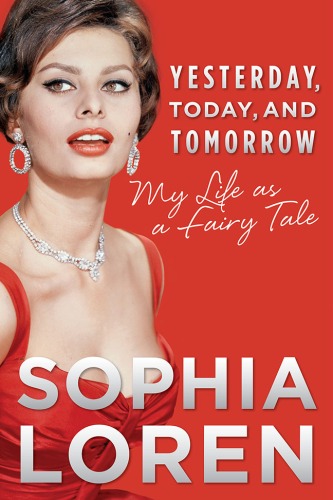
Yesterday_Today_and_Tomorrow_Cover_embed


I should admit that the title of this post is misleading.  While it is true that listed below are 10 of my favorite non-fiction books of 2014, I’ve specifically limited my picks to books that dealt with entertainment, pop culture, and the creative process.  With that in mind, here are my 10 favorite non-fiction books of 2014:

(And yes, you should read everyone of them.)

  1. Yesterday, Today, Tomorrow: My Life As A Fairy Tale by Sophia Loren
  2. Five Came Back: A Story of Hollywood and the Second World War by Mark Harris
  3. Life In Motion: An Unlikely Ballerina by Misty Copeland
  4. Werner Herzog: A Guide for the Perplexed by Paul Cronin
  5. My Salinger Year by Joanna Rakoff
  6. The Year of Reading Dangerously by Andy Miller
  7. Tinseltown: Murder, Morphine, and Madness at the Dawn of Hollywood by William J. Mann
  8. Scandals of Classic Hollywood: Sex, Deviance, and Drama From the Golden Age of American Cinema by Anne Helen Petersen
  9. As You Wish by Cary Elwes
  10. Heavy Metal Movies by Mike McPadden

primary_FiveCameBack-678x1024

Tomorrow, I conclude my look back at the previous year with the list that everyone has been waiting for: my 26 top films of 2014!

Previous Entries In TSL’s Look Back At 2014

  1. 2014 In Review: Things Dork Geekus Dug In 2014 Off The Top Of His Head
  2. 2014 In Review: The Best Of Lifetime and SyFy
  3. 2014 In Review: Lisa’s Picks For The 16 Worst Films Of 2014
  4. 2014 In Review: 14 Of Lisa’s Favorite Songs Of 2014
  5. 2014 In Review: Necromoonyeti’s Top 10 Metal Albums of 2014
  6. 2014 In Review: 20 Good Things Lisa Saw On TV In 2014
  7. 2014 In Review: Pantsukudasai56’s Pick For The Best Anime of 2014
  8. 2014 in Reivew: Lisa’s 20 Favorite Novels of 2014

Here Are The AFI’s Top Eleven Films Of The Year!


AFI

Earlier today, the American Film Institute announced their picks for the top 11 movies and top 10 television shows of 2014!  As much as it pains me to admit it, Sasha “You Know Who I Am”  Stone of Awards Daily actually makes a valid point when she says that the AFI picks are actually a pretty good guide to what the Academy voters are responding to.  While Oscar watchers like me might get excited when Tom Hardy wins at LAFCA, the AFI is actually probably a better precursor to what actually will be nominated.

(Of course, immediately after making that point, she starts in on her usual “it’s all about me” nonsense because that’s what she does, after all.)

So, with all that in mind, here are the AFI’s picks:

AFI MOVIES OF THE YEAR
“American Sniper”
“Birdman (Or the Unexpected Virtue of Ignorance)”
“Boyhood”
“Foxcatcher”
“The Imitation Game”
“Interstellar”
“Into the Woods”
“Nightcrawler”
“Selma”
“Unbroken”
“Whiplash”

AFI TV PROGRAMS OF THE YEAR
“The Americans”
“Fargo”
“Game of Thrones”
“How to Get Away With Murder”
“Jane the Virgin”
“The Knick”
“Mad Men”
“Orange Is the New Black”
“Silicon Valley”
“Transparent”

And, here are the names of the 20 members of the AFI jury:

Tom Pollock,

Jeanne Basinger,

Bob Gazzale,

Mark Harris,

Marshall Herskovitz,

Patty Jenkins,

Lisa Kennedy,

Kasi Lemmons,

Matthew Libatique,

Akira Mizuta Lippit,

Leonard Maltin,

Claudia Puig,

Peter Travers