In our music video of the day, Roberts nearly marries Mariah Carey, just for her to leave him for Wentworth Miller. This video is a sequel to the video for It’s Like That and Mariah wears the same wedding dress when she married music exec Tommy Mottola. (Make of that, what you will.) Personally, I think Eric dodged a bullet here because everyone knows that he and Eliza were meant to be.
Enjoy!
Previous Eric Roberts Films That We Have Reviewed:
People tend to forget that there was a time when you couldn’t go on twitter without immediately getting assaulted by a thousand Bieber stans. Belieber was once a widely used and widely feared term. Thankfully, things have calmed down a bit on that front. The important thing is that it’s the holidays.
If you haven’t, you’re probably just old or else you don’t keep up with what’s happening in the world of popular music. His real name is Conner Friel and he used to be a member of the Style Boyz. Of course, the Style Boyz eventually broke up. Kid Brain became a farmer. Kid Contact became a DJ. And Kid Conner — well, he became Conner4Real and he became a bigger star as a solo artist than he ever was as a Style Boy. His debut album, Thriller, Also, broke records.
But the follow-up, Connquest … well, Connquest wasn’t quite as acclaimed. In fact, it was hated by just about everyone. This is despite featuring classic songs like:
Finest Girl (Bin Laden Song)
Mona Lisa
and Equal Rights (featuring P!nk).
Fortunately, when Conner4Real was facing his greatest existential crisis, a film crew was present to record his struggle. For those of us who were fascinated by the career of Conner4Real, Popstar: Never Stop Never Stopping is a chance to see how Conner dealt with everything from his terminally ill pet turtle to the elaborate marriage proposal ceremony that led to Seal being attacked by wild wolves. We would have gotten to see Conner and his manager defeat a swarm of mutant bees but, unfortunately, that happened right after the only time that Conner’s manager asked the film crew to stop filming.
Oh well, these things happen.
So, as you should have guessed from all that, Popstar is not a serious film. It’s a mockumentary, with the emphasis on mock. It was also one of the funniest films of 2016, a spot-on parody of the silliness and pretensions of fame. Conner is a combination of Justin Bieber and Macklemore at their shallowest, a well-meaning but thoroughly empty-headed singer. In fact, if Conner was played by anyone other than Andy Samberg, he would be so annoying that the film would run the risk of being unwatchable.
But fortunately, Conner is played by Andy Samberg. It’s hard to think of anyone who plays dumb with quite the same panache as Andy Samberg does. There are plenty of lines in Popstar that shouldn’t work but they do, specifically because they’re being delivered by Samberg. He brings just the right amount of sweetly sincere stupidity to the role. Almost despite yourself, you find yourself hoping that things will work out for Conner and the other Style Boyz. Conner may not deserve to be as big a star as he is but it was obviously going to happen to some idiot so why not a sincere one?
Samberg is not the only funny person in Popstar. The movie is full of funny people, from Sarah Silverman to Bill Hader to the always underrated Tim Meadows. It’s also full of celebrity cameos and I have to admit that I usually tend to cringe when I see too many people playing themselves. But in Popstar, it works. One need only rewatch something like Zoolander 2to see how well Popstar pulls off its celebrity cameos.
Sadly, as funny as Popstar was, it was also one of the biggest bombs of 2016. (The trailer, it must be said, did not do the film justice.) However, I expect that it will soon develop a strong cult following. In a few years, we’ll get a sequel. It probably won’t be as as good.
I made a mistake yesterday when I spotlighted Fantasy by Mariah Carey. I only relied on mvdbase for directing credits, so I thought this music video was solely directed and shot by Daniel Pearl. It turns out, she co-directed it with him. He still shot it, but they made the video together. You can still see the strong influence that a talent of Pearl’s caliber had on the music video. It also makes it more interesting to talk about since this video does share aspects with Fantasy, that was directed only by Carey, and those elements are used correctly this time.
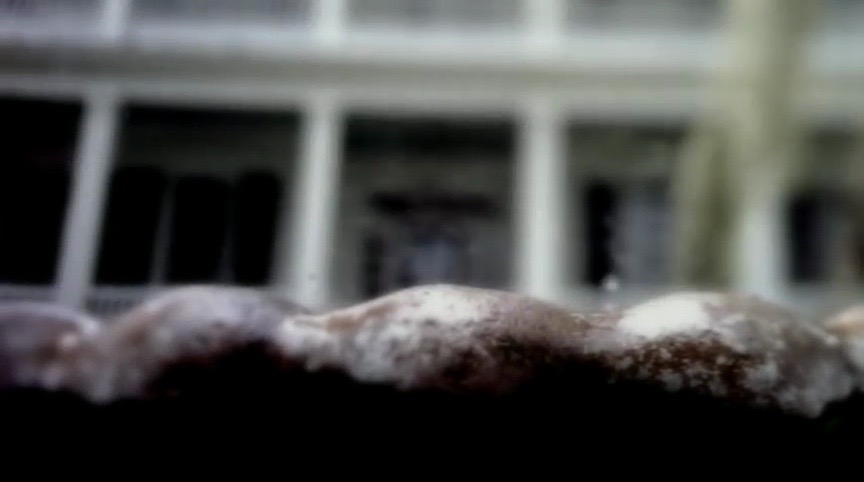
The video starts us outside the house as we rise up from behind a birdbath. You’re immediately greeted with white columns that are like prison bars. It is raining. That means that inside of the two seconds that the initial shot lasts, we get a hint that there was once something here that is now empty, the house is like a prison, and the rain sets the sad tone the video begins on.
The next shot we see a man walking past what could be flowers lying on the ground.
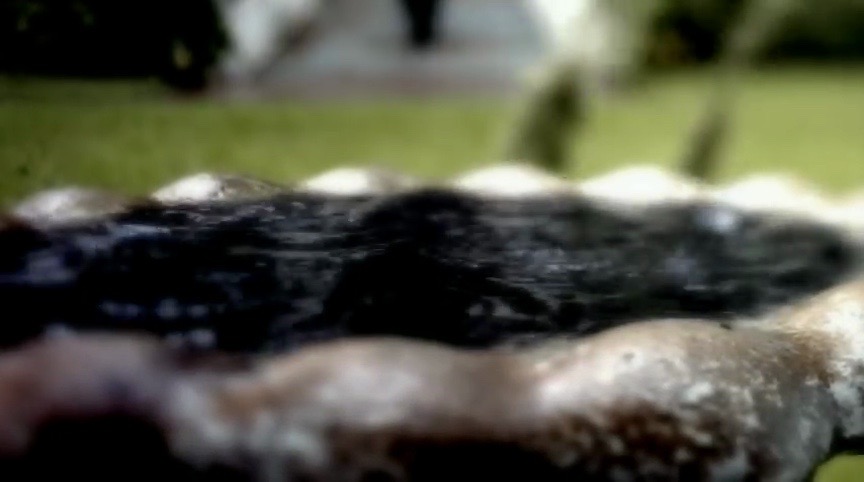
That shot is followed by a clear shot into the rain-filled birdbath with the faceless man way in the background, and out of focus, climbing the stairs onto the porch of the house. That confirms to the audience that the birdbath is now only filled with rain that acts as a stand-in for tears while also telling us that the video is now moving from the emptiness of the outside to the interior of this prison. Him being out of focus also highlights his faded existence in Carey’s life.
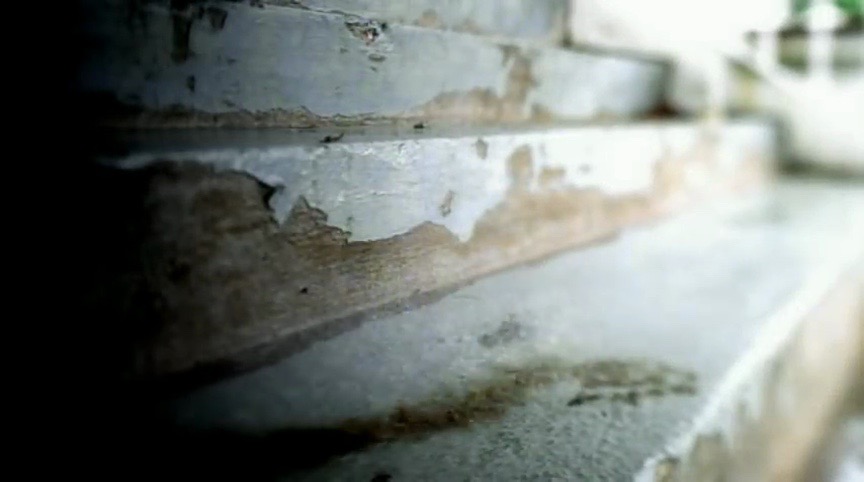
The rain is then shown washing off the mud his footprint left on the stair. Tears may be sad, but that shot tells us that we are supposed to see them as a cleansing force rather than something that is going to drive Carey deeper into herself. It is also another sign that he is being washed out of her life as he is in the present.
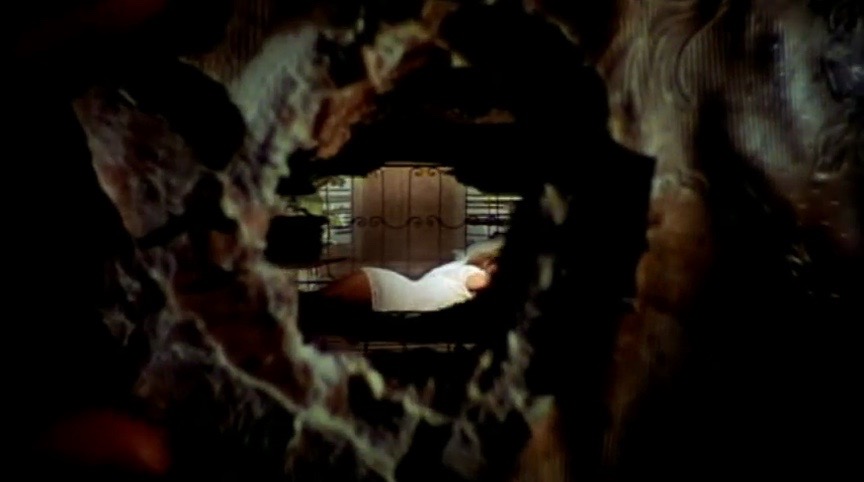
Then we begin our trip into the house through the Baby Doll inspired hole-in-the-wall. You can just barely see the man’s finger in the lower lefthand-corner as the camera moves forward to show us Carey on a bed with a rocking horse behind it. Then, in a split-second, we see Carey get a small smile on her face. That is followed by a shot of her legs that, along with everything else about the shot, indicates to us that she is an attractive person that is cooped up in this house in bed like she is a baby in the safety of her crib. Then the lyrics kick in, we start to get to know her, and begin her journey.
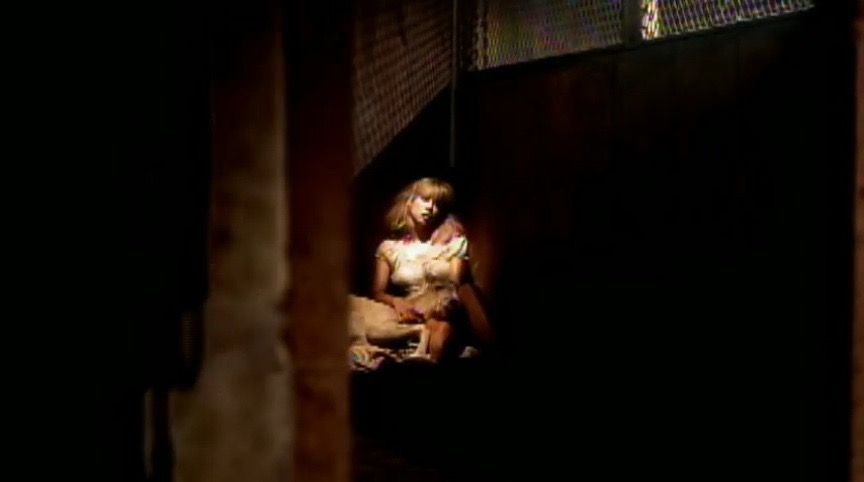
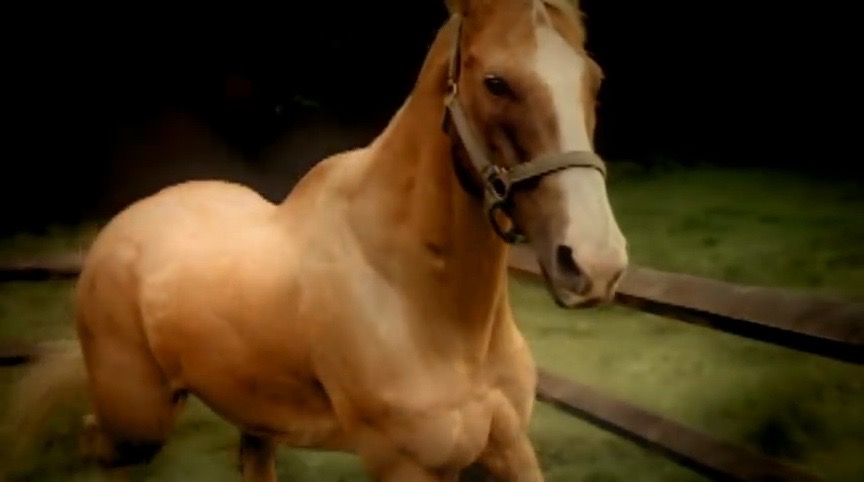
The next shot is of Carey in a barn with a baby horse. You can also see a shadow that moves across the entrance and quickly disappears. We’ve gone from his feet to a quick shot of his hands to a shadow. The horse has gone from something wooden in a room that obviously means something to him since he is making one last visit to it, but that we and Carey are already moving past it. These parts are memories that she is thinking of as she lies half-asleep in bed.
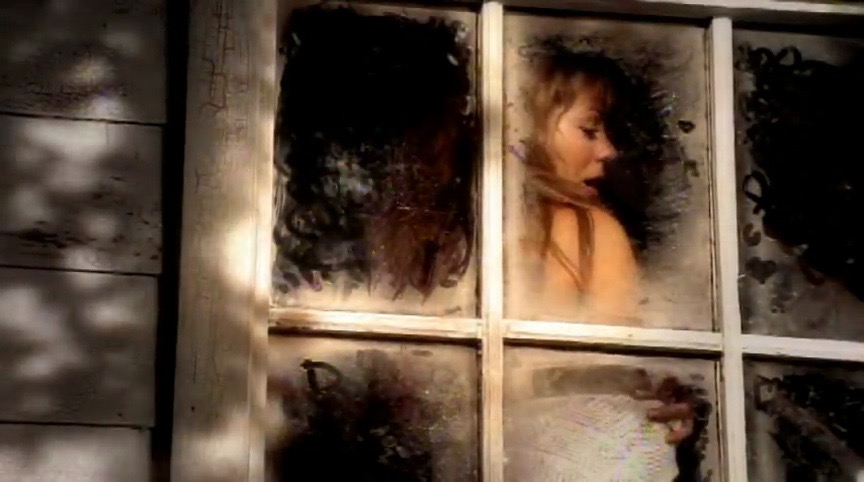
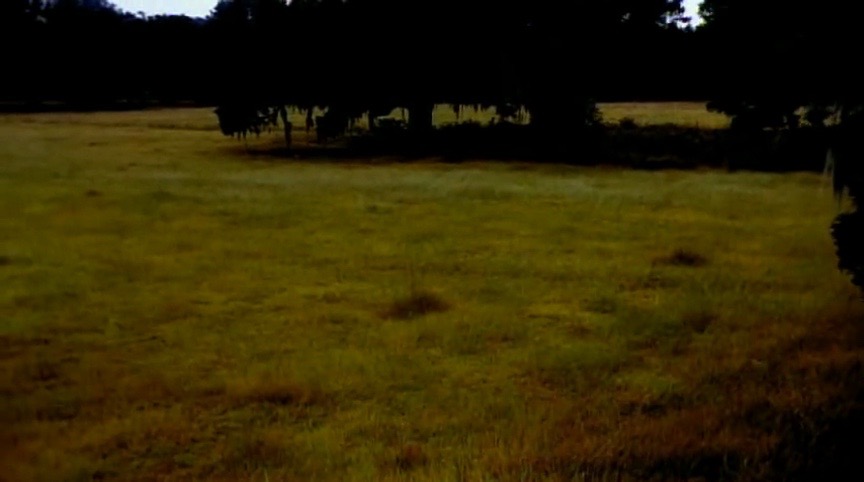
We get a few more shots into the house through the hole, and our last shot of the guy as he pulls away. Awake and still in the bed, she visualizes the horse in the barn again and it running around a small patch of grass surrounded by a wooden fence. She sees the outside via a window that we can see has had been wiped away at to make it possible to see through it–probably on numerous occasions. It cuts between these window shots and her getting progressively up from lying in the bed before she finally rises to move onto the next stage of her recovery.
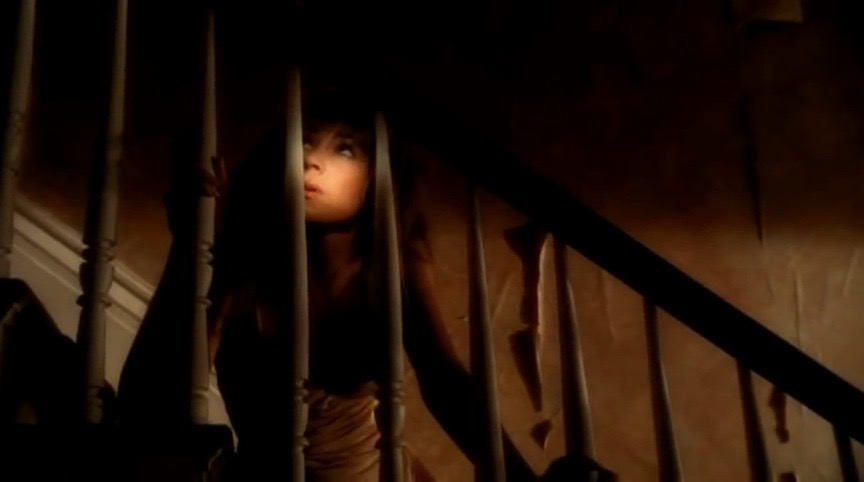
Now we see her on the stairs. But we see her from behind the bars of the stairs.
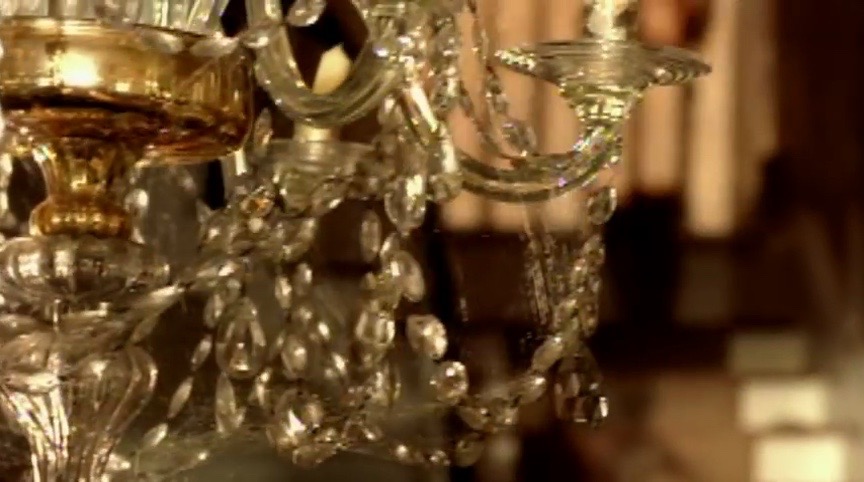
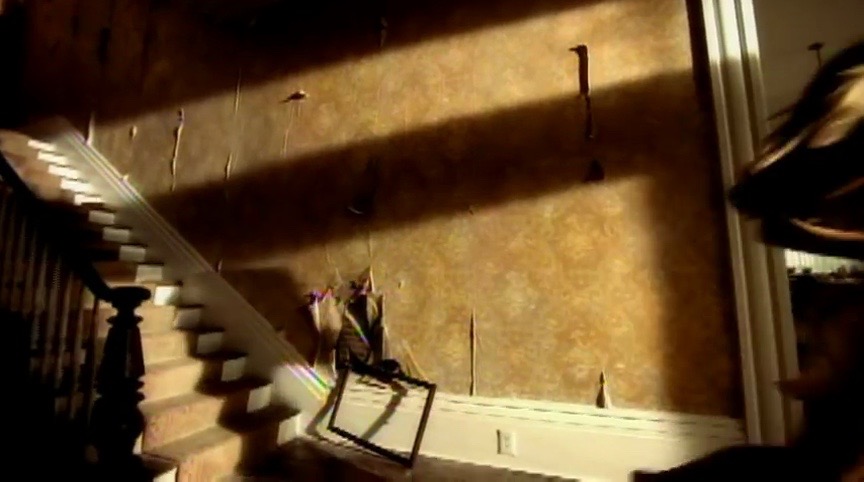
We also see the chandelier that is beautiful, but abandoned, as shown by the cobwebs on it. It’s another sign that there was something here once and that this house has now become a prison that needs to be escaped from no matter how gorgeous it once was. This is done at the same time as we see the golden-light shining in from outside representing hope, and indicating to the audience that the video will now move Carey to the next stage of her recovery, which she does as she runs down the stairs outside.
As she does it, we can see that there is not only the peeling on the wall that we could see before, but also another hole in a wall.
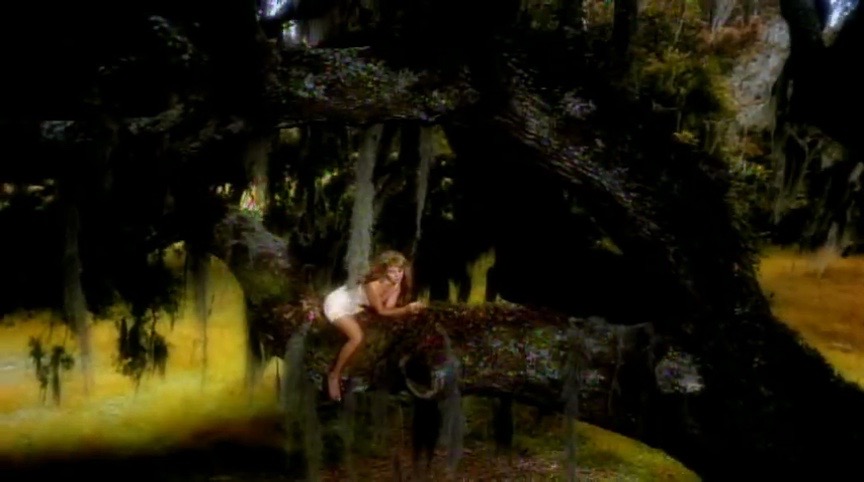
We next see Carey outside straddling a tree branch like she would if she were riding a horse. The tree is an intermediary step. It reminds her of both riding the horse and stability–since the tree won’t move.
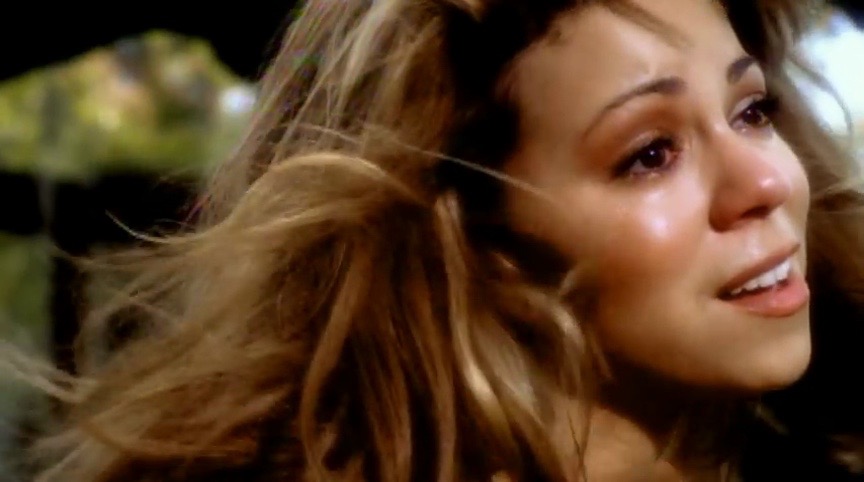
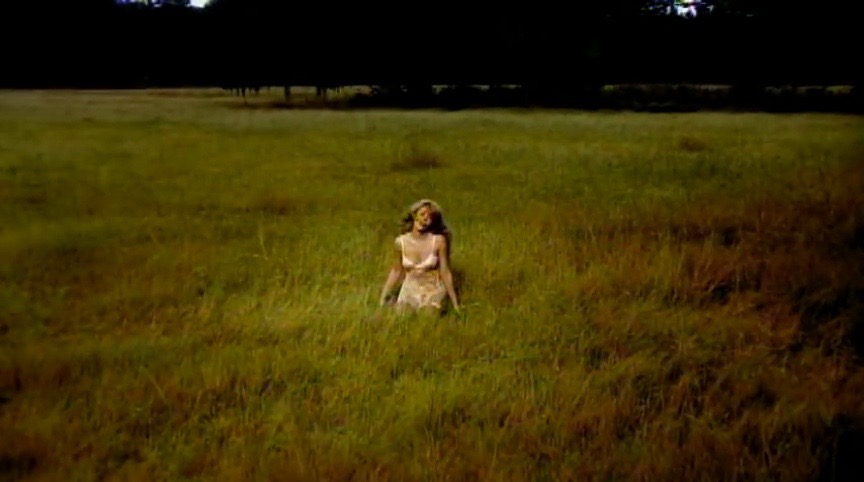
We can also see the wind blowing in her hair that is in contrast to her hair being stationary inside the house. We also get conflicting images of the horse still in the little gated area and running wild with other horses. It is also no longer raining outside, but can see tears on Carey’s face. She’s beginning to let go.
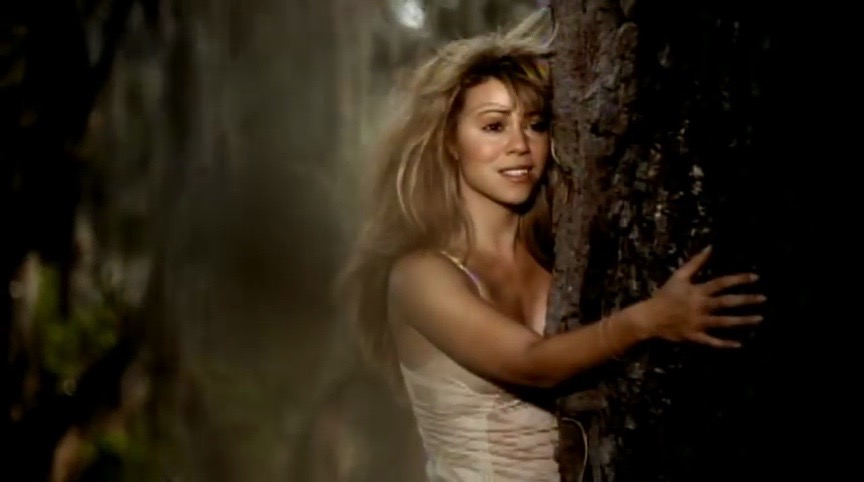
We now see Carey holding onto the trunk of the tree. She is no longer in its embrace. She is standing on her own two feet, but leaning against it for comfort because she hasn’t completely let go yet. It cuts back a few times to her in the tree before she runs away from it.
Next, we see Carey finally taking the horse out from the first gate that kept it in a very small area.
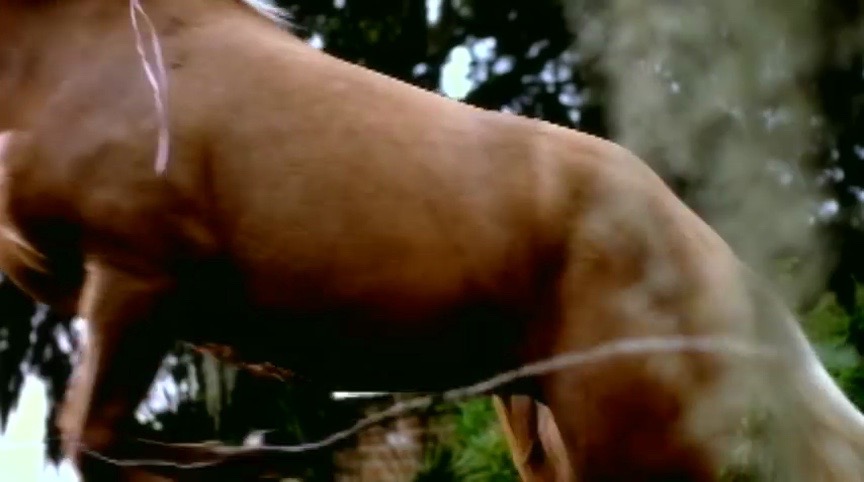
That is followed by the horse jumping the barb-wire fence. While the horse makes it over the fence, it still catches its legs on it.
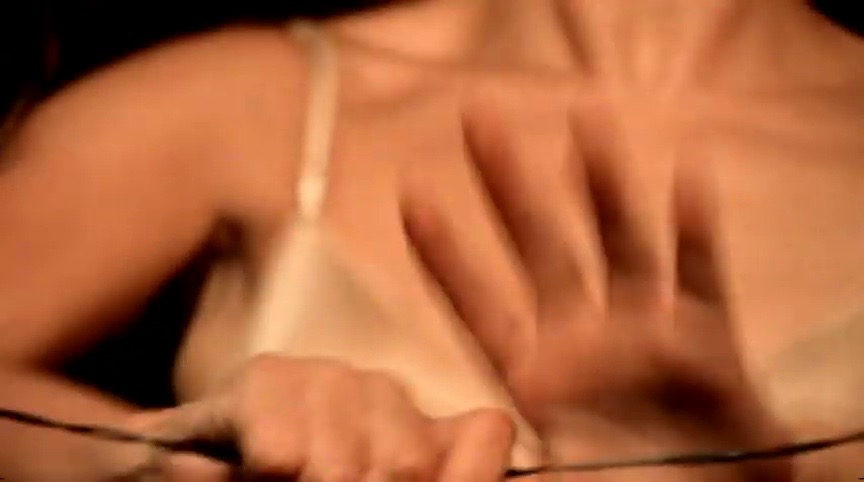
Carey then runs up and grabs the fence herself, wounding her hand. It cuts back to her in the tree at first, then follows that with her knocking down the fence. Her and the horse are escaping free, yet wounded. This nicely ties the horse and Carey together. Both were trapped, and in releasing one, the other also gained their freedom. The cut tells us that while necessary, it isn’t painless, no matter how strong she has become at this point.
We now see her ride the horse for the first time in the video.
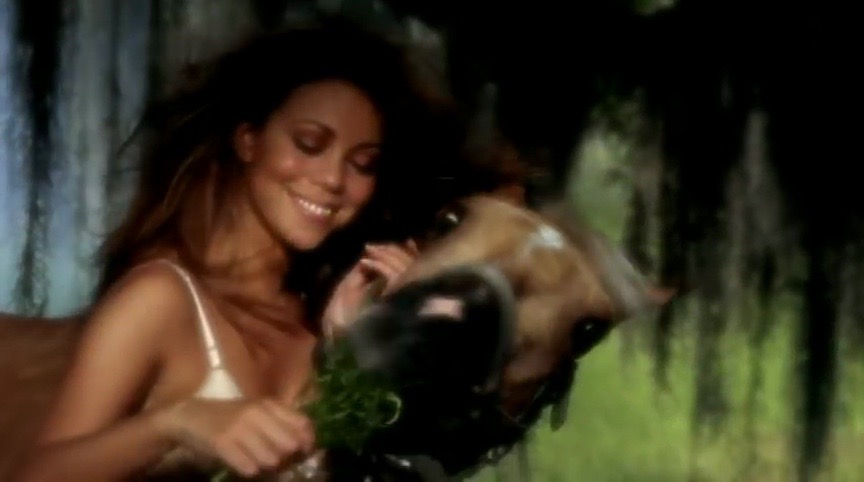
We see her feed it, and have some last moments with the horse before the camera pans up to show that she is alone again like she was at the start.
The difference is she is outside in the sun, hopeful, ready to start again, and free of the memories of the relationship that were comforting and confining.
The whole time, these images and transitions correspond with the music and lyrics. In particular, she keeps talking about what she is letting go returning to her if they were meant to be together. We see that it doesn’t. I like how you can read this apparent contradiction in different ways.
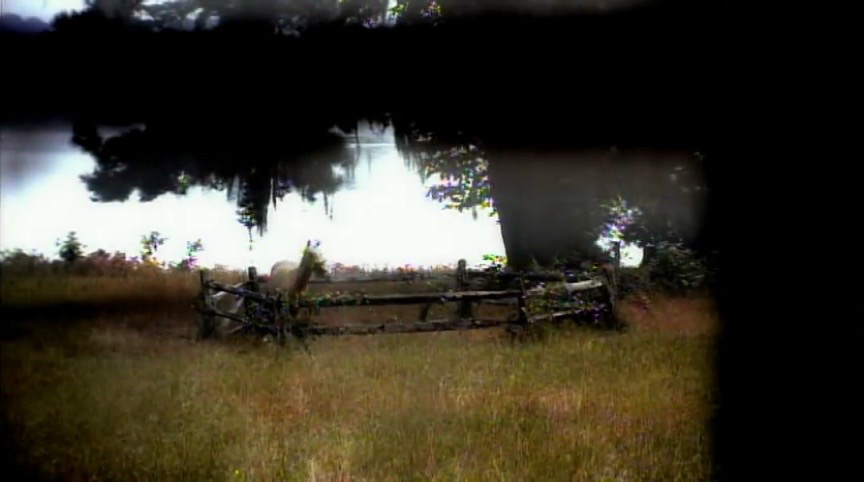
There are a couple of other things to notice while you watch the music video. There are several indicators of the passage of time. One of my favorite ones is the way the wood that makes up the wood fence changes. Sometimes it looks new.
Other times it appears to be rotting with vines growing on it.
The other thing I like is that it is usually not a single horse running free. You can read that several ways too.
————–
In Fantasy, the rollercoaster elements are isolated and don’t appear throughout the video. It’s a memorable visual, but that’s it. It is also gone at about a minute-and-forty seconds out of the approximately four-minute runtime. The Butterfly equivalent to the rollercoaster is the horse. The difference is that the horse, and what it represents, is interwoven throughout the video from it being a rocking horse behind the bed to running wild beyond both of the fences–wooden and barbed-wire. Yes, the two songs are quite different in their subject matter, but it could have served the same purpose. It kicks off the song, but doesn’t bookend the video even though it should since it can stand in for a ride through the “fantasy” as well as the song itself.
The other thing that is used better is blur. It is distracting in Fantasy, feels like someone trying out a new feature they discovered on their camera, and almost gives you the impression that Carey wanted to blur out everyone else to place the sole focus on her. Here, you only really notice it when someone tells you to look for it. Otherwise, just like the progression of the horse, it feels seamless.
“I’d done a lot of videos and wasn’t always a hundred percent thrilled. For the most part, I was never thrilled with the results, so I figured I would give directing a shot. It was a pretty simple concept. Most of the scenes were featured at the amusement park, at a late-night outdoor celebration. I was really happy to be able to include O.D.B in the remix video.” — Mariah Carey
If Carey wasn’t thrilled with her earlier videos because they were too well-made, then she sure changed that for this music video. I guess it shouldn’t come as any surprise seeing as twenty years later she would get behind the camera to make her first feature film for Hallmark called A Christmas Melody (2015). I saw it this year, and its one of the worst I’ve seen of the current 263 Hallmark films I have watched almost entirely because of the directing. If that movie is any indication, then she shouldn’t be behind the camera.
As “simple” as Fantasy is, she could have done a much better job. The dancing scenes at night aren’t done very well even if they sort of cap a storyline that is told by the setting sun. There is a drastic overuse of blur (not really a reflection of the title). Also, her earlier music videos had her as the singer surrounded by other people who appeared to organically gather around someone who was a good singer. In Fantasy it feels artificial (again, not a reflection of the title), dated even faster than her earlier stuff, and makes the whole thing feel like two videos spliced together. Carey started it right by shooting it during the day at the Playland amusement park in Rye, New York. So many of her earlier videos were done on studio sets/interiors. I love those rollercoaster bits and when I went into writing this post, I was surprised when it switched to the night dancing sequence. They are so forgettable, while the rollercoaster parts are so memorable, that even 20+ years later, I remembered them distinctly. I forgot that there were any other parts to the video.
However, if Carey wasn’t thrilled with her earlier music videos because they were last generation and made her seem interchangeable with other female artists of the time, then it’s a good thing she made this music video regardless of quality. Her earlier music videos portrayed her like Céline Dion or Whitney Houston. Excellent singers, but whether you like, or can’t stand Carey looking unreal and dolled-up, it is her thing. It makes her stand out and is the stamp of Mariah Carey so much so that you can still find comments on IMDb for Precious (2009) from people surprised that it was her in the movie. It’s her brand.
In summary, I don’t think Carey did a good job here, but she did need a break in the style of her music videos even if that meant ending up with something substandard. It sent a message to other directors–some of whom she had worked with before–that this was the way to film her. You can even see the difference in One Sweet Day that was done by Larry Jordan who directed at least five of her pre-Fantasy music videos, and that was just her in a studio with Boyz II Men. She would go on to direct the music video for Always Be My Baby before largely returning to other directors.
There is also a reworking of this music video that Carey did, which incorporated O.D.B.
That’s all it is. She just added a few bits with him singing, and rearranged the scenes from the original video.
One last thing. I’m sure I will mention it again, but Carey is one of those artists that clearly recognized the talents of legendary music video cinematographer Daniel Pearl. From what I can gather, he has shot about twenty of her music videos. He also shot her movie Mariah Carey’s Merriest Christmas (2015). She even got him to direct two of her music videos. To my knowledge he has only done that five times in his close to fifty-year career. That’s amazing since Pearl has even been quoted as saying that he is perfectly happy with being a cinematographer, and doesn’t see cinematography as a stepping stone to becoming a director–at least for him. Seeing as I did this music video today because I did Genius Of Love by Tom Tom Club yesterday, then I guess I will do one of the music videos Daniel Pearl shot and directed for Carey tomorrow. It’s night-and-day by comparison to this one.
When I saw Lee Daniels’ The Butler, I was not impressed.
Yes, the audience applauded as the end credits rolled. And yes, I know that almost all of the mainstream critics have given it a good review. I know that Sasha Stone has been hyping it as a surefire Oscar contender. I know that, up until 12 Years A Slave introduced us all to an actress named Lupita Nyong’o, Oprah Winfrey was considered to be the front-runner for the Best Supporting Actress Oscar.
But it doesn’t matter. The Butler did little for me.
I also realize that the film ended with a title card that announced that what I had just watched was dedicated to the American civil rights movement. In many ways, that title card felt like emotional blackmail, implying that if you criticized The Butler than that meant you were also criticizing the brave, real life men and women who risked their lives to fight for equal rights.
However, when you put emotions and good intentions to the side, the fact of the matter is that Lee Daniels’ The Butler is not that good of a movie. One need only compare The Butler to some of the other films that were released this year that dealt with the African-American experience — films like 12 Years A Slave and Fruitvale Station — to see just how safe and uninspiring The Butler truly is.
The Butler tells the story of Cecil Gaines (Forrest Whitaker), the son sharecroppers (played by David Banner and Mariah Carey) in the deep south. After Cecil’s father is murdered by plantation owner Thomas Westfall (Alex Pettyfer), Cecil is raised and educated by the wealthy Annabeth Westdall (Vanessa Redgrave). Eventually, the teenaged Cecil leaves the plantation and ends up working in a hotel where he’s educated in how to be a master servant by the elderly Maynard (Clarence Williams III, who brings a quiet dignity to his role). Cecil eventually gets promoted to a hotel in Washington, D.C. It’s there that he meets and marries Gloria (Oprah Winfrey).
In 1957, Cecil is hired to work at the White House. Along with befriending two others butlers (played by Cuba Gooding, Jr. and Lenny Kravitz), Cecil also gets the chance to observe history play out first hand. Starting with Dwight Eisenhower (played by Robin Williams) and ending with Ronald Reagan (Alan Rickman, giving a performance that is incredibly bad), Cecil watches as President after President deals with the civil rights movement. Some presidents, like John F. Kennedy (James Marsden) are portrayed as being heroes while others, like Richard Nixon (John Cusack), are portrayed as being villains but all of them have the watchful eye of Cecil Gaines in common.
Meanwhile, at home, Gloria has a brief affair with Howard (played by Terrence Howard and really, you have to wonder what Cecil was thinking leaving his wife alone with anyone played by Terrence Howard) and Cecil’s oldest son, Louis (David Oyelowo), gets involved with the civil rights movement and grow increasingly estranged from his father.
The Butler actually starts out pretty well. There’s a lengthy sequence where Louis and a group of students are trained on how to conduct a sit-in that’s extremely compelling to watch. However, then John Cusack shows up wearing a big fake nose and the entire film starts to fall apart.
From a cinematic point of view, the film fails because it ultimately seems to be more dedicated to trotting out a parade of celebrity cameos to actually telling a compelling story. As is his usual style, Lee Daniels directs with a heavy hand and, as a result, the film is full of emotionally-charged scenes that fail to resonate for longer than a handful of minutes.
My main issue with The Butler is that the film literally contains no surprises. Nothing out of the ordinary happens and, at no point, is the audience actually challenged to consider the way they view history or race relations. Whereas films like Fruitvale Station and 12 Years A Slave truly challenge our assumptions, The Butler encourages us to pat ourselves on the back for being so enlightened. Every single frame of The Butler is specifically designed to fool us into thinking that we’re watching an important and challenging movie.
Because of a silly copyright lawsuit, the official title of The Butler is Lee Daniels’ The Butler. However, that title is very appropriate because The Butler is definitely a Lee Daniels film. Even if you didn’t know it beforehand, it would be easy to guess that the same man who directed Precious and The Paperboy also directed The Butler. As a director, Daniels specializes in making simplistic points in the most bombastic way possible. The results are films, like The Butler, that are more concerned with manipulating an audience than challenging an audience. When audiences applaud at the end of The Butler, they aren’t so much applauding the film as much as they are applauding themselves for having seen it.


 Through the Shattered Lens