14 Days of Paranoia #5: Bloodknot (dir by Jorge Montesi)


In 1995’s Bloodknot, we are introduced to a grieving family.

Evelyn (Margot Kidder) and Arthur (Allan Royal) are mourning the death of their oldest son, who was in the military and who died during a military operation in the Middle East.  Their other son, Tom (Patrick Dempsey), spends his time working on cars and helping out local racecar driver Mike (Craig Sheffer).  Youngest daughter Gail (Ashleigh Ann Wood) doesn’t really have much of a personality but she’s definitely worried about her mother.

Suddenly, Connie (Kate Vernon) shows up in town.  Wearing a uniform that is slightly too large for her, Connie claims that she served with Evelyn’s dead son and that they eventually became more than just friends.  That’s strange, Evelyn says, he never mentioned you.  Connie replies that she encouraged him to write more but, for whatever reason, he didn’t.  Everyone agrees that what’s important now is that Connie has introduced herself to the family.  Soon, Connie is living at the mansion and making flirtatious eye contact with both Arthur and Tom.  One might expect Evelyn to be concerned about this but instead, Evelyn is too busy walking around in a depressed daze and blaming her “sinful” past for all the recent tragedy.

You probably already guessed that Connie is not who she says she is.  Indeed, Connie has come to the family with an agenda of her own.  She’s looking for vengeance and I won’t spoil it by revealing what she’s upset about but I will say that it’s fairly dumb and makes less sense the more that you think about it.  Tom’s girlfriend, Julie (Krista Bridges), suspects that Connie is a liar but can she prove it?  Julie even talks to the officer from whom Connie stole her uniform after Connie met and seduced her at a bar.  Why would Connie, who seems to be willing to kill anyone, leave that one person alive?  Obviously, it’s so Julie can learn the truth but still, it’s an oversight on Connie’s part that makes little sense.

(Julie isn’t a very interesting character but she does get to wear a really nice pair of boots so at least she’s got that going for her.)

Looking at the members of this film’s cast — Patrick Dempsey, Craig Sheffer, Kate Vernon — and you have to wonder if someone specifically said, “Let’s make an paranoia-themed, erotic thriller with the least interesting actors of the 90s.”  (Yes, Dempsey got better but, in this film, he was still doing the goofy awkward thing.)  This film goes through all the usual steps.  Connie starts out as being friendly and then progressively reveals herself to be more and more unhinged.  The men are reduced to stuttering incoherence by the sight of Connie smiling at them.  For this type of film to work, the actors have to be fully willing to embrace the melodrama but instead, both Kate Vernon and Patrick Dempsey give oddly lowkey performances, with Vernon’s attempt at a seductive smile instead coming across like a smirk that should have clued everyone in to the fact that she was not to be trusted.  If you’re appearing in a film like this, you should at least have a little fun.  As for Craig Sheffer, he’s as mind-numbingly dull as ever.

The film does improve a bit towards the end, largely because Connie’s secret reason for harassing the family is so implausible that it can’t help but be a bit entertaining to listen to the characters discuss it.  Overall, though, this was pretty boring.  Let this film be a lesson to all — embrace the melodrama!

Previous entries in 2025’s 14 Days Of Paranoia:
  1. The Fourth Wall (1969)
  2. Extreme Justice (1993)
  3. The Lincoln Conspiracy (1977)
  4. Conspiracy (2007)

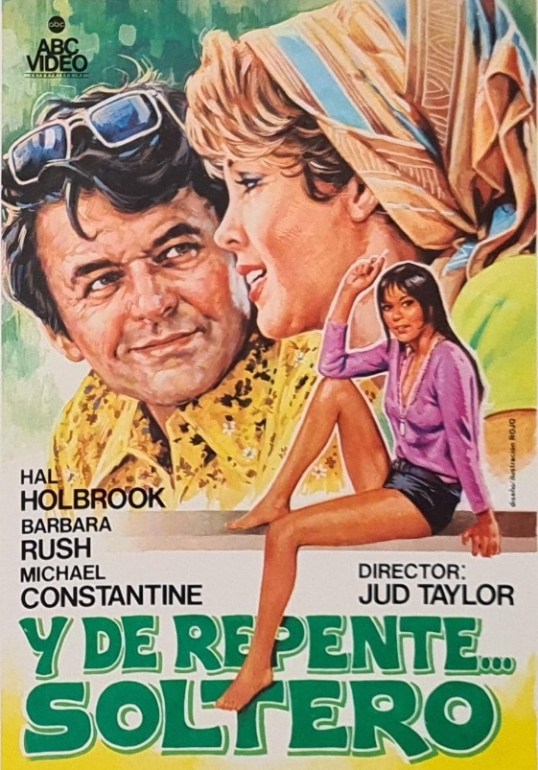
Retro Television Reviews: Suddenly Single (dir by Jud Taylor)


Welcome to Retro Television Reviews, a feature where we review some of our favorite and least favorite shows of the past!  On Sundays, I will be reviewing the made-for-television movies that used to be a primetime mainstay.  Today’s film is 1971’s Suddenly Single!  It  can be viewed on YouTube.

Suddenly Single opens with middle-aged Larry Hackett (Hal Holbrook) loading his suitcases into the back of his car.  His neighbors (David Huddleston and Pamela Rodgers) come over to say goodbye.  Larry has just gotten divorced and, as a result, he’s lost his perfect house in the suburbs.  Now, he’s going to have to move into the city and start a new life but he assures his neighbors that he’ll be okay and that there aren’t any hard feelings between him and his ex, Joanne (Cloris Leachman).  Sometimes, marriages just don’t work out….

Then Joanne shows up….

With her new husband, Ted (Fred Bier)!

While Larry can only watch, Ted insists on picking up Joanne and carrying her over the threshold of what used to be Larry’s house.  As it dawns on him that Joanne was having an affair during the final days of their marriage, Larry is understandably miffed.

Larry just isn’t ready to find himself in the world of the early 70s.  He’s an extremely conservative pharmacist who will now have to deal with hippies and the single scene.  His co-worker (Harvey Korman) encourages Larry to hit the bars.  Marlene (Agnes Moorehead) encourages him to figure out what he wants to do with his life.  His new and much younger neighbor, Jackie (Margot Kidder), tells him that he needs to get a gym membership and be more open-minded.  At first, Larry pursues a relationship with the classy Evelyn Baxter (Barbara Rush) but then he’s drawn to Jackie.  And Jackie, oddly enough, is drawn to him….

Quicker than you can say Breezy, Larry is dating the much younger Jackie and he’s starting to wear hip clothes and hang out with cool, long-haired people.  When he runs into his old neighbors on the street, he discovers that he no longer has much in common with them.  However, Larry still finds himself becoming jealous and possessive of Jackie, who is not the type of to give up her freedom for a relationship.  In the end, Larry is forced to admit that, while he has become more open-minded following his divorce, he still can’t magically change who he is.

Suddenly Single has a great cast and it’s not surprising that it’s a well-acted film.  At the same time, Larry can be a bit of a jerk.  Evelyn is the nicest person in the entire movie and Larry basically breaks her heart so that he can pursue an obviously doomed relationship with the younger Jackie.  It’s a bit sad to watch because everyone but Larry can see what he’s doing.  Larry may be wiser by the end of the film but that’s small solace to Evelyn.  Suddenly Single is about flawed characters and, as such, it can be easy to get annoyed with Larry and Jackie while also appreciating the fact that, like all of us, they’re just trying to figure out life as they go along.

Suddenly Single acts as a bit of time capsule and watching it is as probably as close as one can get to 1971 without a time machine.  It’s a trip to the past with some of the best actors of the era.

Horror Film Review: The Amityville Horror (dir by Stuart Rosenberg)


Based on a true story!

(Or maybe not. Actually, probably not…)

This 1979 film tells the story of George and Kathy Lutz (James Brolin and Margot Kidder), a young married couple who move into a big house in Amityville, New York. George and Kathy are having financial trouble so it’s good thing that they were able to find such a nice house at such a low price. Of course, it’s possible that the house was cheap because it was built on a native burial ground. Plus, the previous owners were murdered by their son, who later claimed that he was possessed by evil spirits. The house has a less than savory history but then again, what house doesn’t?

Anyway, strange things start to happen as soon as the Lutzes move in. Noxious black liquid floods the plumbing. Crosses are turned upside down. Their priest (Rod Steiger) gets violently ill when he attempts to bless the house. George starts to act weird, getting angry at strange moments and walking around with an ax. Kathy’s daughter from a previous marriage says that she’s made a new imaginary friend named Jodie and, apparently, Jodie doesn’t like George or her babysitter. Flies swarm through the house and weird noises are heard in the middle of the night. Kathy has nightmares. George screams, “I’m coming apart!” Even the family dog seems to be worried about the house, especially after a secret room is discovered in the basement.

Could the house be possessed!? Is a terrible, other worldly evil trying to destroy the George and Kathy? Will the Lutzes be able to escape and hopefully make a lot of money by selling their story? Watch the film and find out. And, if for some reason, you can’t watch this film, you can watch one of the dozen or sequels or maybe even the remake…

The original Amityville Horror was based on a book that claimed to tell the true story of the Lutzes. For the record, it is generally agreed that Ronald DeFeo murdered his family in Amityville, New York and that George and Kathy Lutz later moved into the DeFeo house. It’s also known that the Lutzes left the house after 30 days. The Lutzes claimed that the house was possessed. Others said that the Lutzes left because they couldn’t afford the house payments. Regardless of why the Lutzes actually left, the book that claimed to tell their story was a best seller.

As for the film adaptation, The Amityville Horror is frequently described as being a classic of horror cinema. However, I have to admit that, whenever I’ve tried to watch it, I’ve always ended up giggling after the first ten minutes or so. Some of that is because the film is such a blatant rip-off of The Exorcist, right down to including a bratty child with a invisible friend and a troubled priest who struggles with his faith. Just as The Exorcist featured Linda Blair throwing up on Max von Sydow and Jason Miller, The Amityville Horror seems to take a good deal of unsavory delight in tormenting Rod Steiger. From the minute he first shows up, the house really has it out for him. He gets swarmed by flies. He gets physically ill. His car stops working on him. It’s like, seriously, just leave Rod Steiger alone!

(Interestingly, Don Stroud plays Steiger’s protegee and their relationship is largely reminiscent of the relationship between Father Merrin and Father Karras in The Exorcist. Later, a police detective shows up and acts exactly like Lee J. Cobb’s Detective Kinderman. Val Avery, who plays the detective, even bears a resemblance to Lee J. Cobb. Considering just how successful The Exorcist was, it’s not surprising that the Amityville Horror would be influenced by it but, again, it’s still hard not to be a little bit amazed at just how blatant a rip-off Amityville really is.)

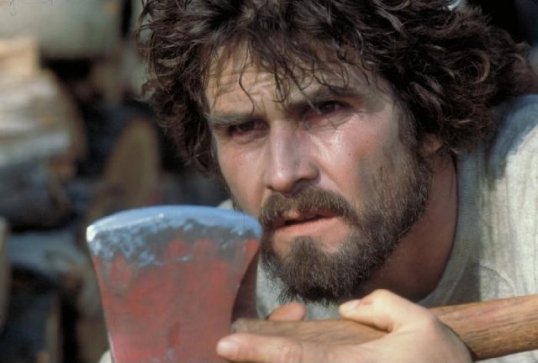
When the film isn’t tormenting Steiger, it’s concentrating on George going crazy. Unfortunately, as played by James Brolin, George seems to be in a permanently cranky mood even before he and Kathy move into their new home. Once the Lutzes movie into the house you find yourself wondering if George is possessed or if he’s just a jerk? Sometimes, it’s hard to tell. One thing is for sure: shortly after moving into the house, George becomes absolutely obsessed with chopping firewood and polishing his ax. I know the sight of Brolin with that axe is supposed to be ominous and scary but I have to admit that I started to laugh every time he started chopping away. Far more convincing was Margot Kidder in the role of Kathy but the film really didn’t give her much to do other than scream and worry about why her husband was always in such a sour mod.

Anyway, the most interesting thing about The Amityville Horror is that this rather slow and derivative film was such a box office success that it’s been followed by 20 sequels and one remake! Someday, when I’m feeling really, really brave, I’ll get around to reviewing all of the Amityville films. Until then, I leave you with George Lutz and his beloved ax.

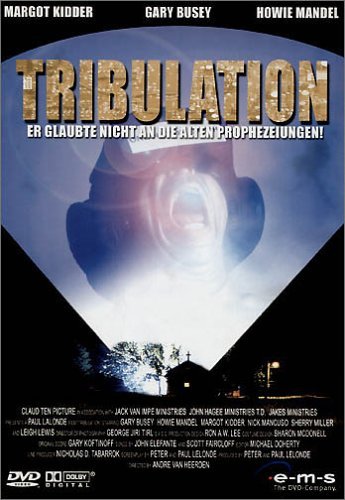
Film Review: Tribulation (dir by Andre Van Heerden)


The Apocalypse saga continues with 2000’s Tribulation!  This is the film that answers the question: How do you get an outspoken atheist and a prominent Jewish entertainer to star in your evangelical Christian propaganda film?  Apparently, you do it by not revealing what type of film that you’re making.

At least, that’s what Margot Kidder said happened.  In an interview with the AV Club, Kidder said that neither she nor Howie Mandel realized that they were appearing in a Christian film until they got on the set, looked at the complete script, and asked why Kidder’s character mysteriously vanished from the film.  According to Kidder, this was a film that she did because she was broke, she couldn’t get a job because she had a reputation for being difficult, and she was offered a lot of money to go up to Toronto for a week and shoot a few scenes.  And so, Kidder, who was not a fan of religion in general, was cast as Eileen Canboro, the outspoken Christian who tries to teach everyone about the rapture.

To quote Kidder: “And I still get stopped by those freaky fundamentalists going “Oh, I’m so glad you did Tribulation.” And I wanna go, “Don’t count me into your group, honeybuns. I’m not one of you.”

As for the film itself, it stars Gary Busey as Tom Canboro, a police detective who is indifferent to religion.  His brother-in-law is Jason Quincy (Howie Mandel), an occultist who, early on in the film, gets possessed by a bunch of Satanists.  The film never really makes it clear why Jason was possessed, beyond I guess to warn against using Ouija boards or reading New Age literature.  After Jason is briefly possessed, the Satanists decide that they have to kill everyone who saw him possessed so that no one learns of their existence.  (But it seems like it would have just been simpler to not possess anyone in the first place.)  All of this leads to Tom eventually slipping into a coma.  Don’t ask how.  It just does.

While Tom’s out of it, the events of the first two movies happen.  Franco Manculousso (Nick Mancuso) magically rids the world of nuclear missiles and declares himself to be the messiah.  Millions of people — including Margot Kidder — mysteriously vanish.  An underground rebellion — labeled “The Haters” by Manculousso — forms against the one world government.  Everyone in the world is given a VR headset that will allow Manculousso to either kill them or steal their soul by giving them the mark of the beast.

(In this film, getting the mark of the beast means that you literally end up with 666 tattooed on your hand.  One thing I always find interesting about films like this is how they take everything in Biblical prophecy so literally.  For instance, 7 is the number of God so therefore it makes sense that the number of the Beast’s number would be 6 because the Beast will always be powerful but ultimately inferior.  He’ll be “one away” from God.  However, films like this always feature people wandering around with 666 prominently displayed on their body and oddly, no one ever says, “Hey, have you ever seen that Omen movie?”)

Anyway, Tom eventually wakes up and finds himself trapped in this brand new world.  It turns out that his sole remaining brother is now prominent follower of Manculousso’s and Jason is now involved in the Hater underground.  A few characters from the previous films pop up, largely so they can be executed by Manculousso.  You know how it goes.

Anyway, if Apocalypse was basically a found footage film and Revelation was an action film, Tribulation is a horror film, complete with demonic possession, exploding heads, and virtual reality snakes.  It’s also a bit slow — it takes forever for Tom to actually enter that coma — but it has a few effective scenes.  Howie Mandel, for instance, really throws himself into being possessed.  As for Gary Busey, Margot Kidder said in that previously cited interview that he was a “pain in the ass” to work with but he actually gives a …. well, I don’t know if it’s really a good performance but it’s definitely interesting.  He’s credible during the first half of the film and then, during the second half of the film, he seems to be genuinely confused.  There’s a few weird moments where he smiles when he definitely shouldn’t be smiling but otherwise, Busey’s okay in this film.

There would be one more film in the Apocalypse saga, Judgment.  I’ll be posting a review of that film in 15 minutes.  Hope to see you there!

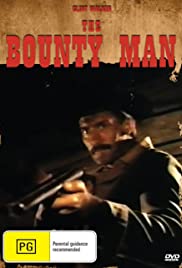
The Bounty Man (1972, directed by John Llewellyn Moxey)


Kinkaid (Clint Walker) is a bounty hunter in the old west who doesn’t have time for sentiment or friendship.  All he cares about is the money that his next bounty is going to bring in.  When he captures outlaw Billy Riddle (John Ericson), it should be a cool $5,000 payday.  The only problem is that Billy’s girlfriend, a prostitute named Mae (Margot Kidder), insists on accompanying Kinkaid while he takes Billy to jail.  Though she initially conspires to help Billy escape, Mae soon starts to fall for the outwardly unemotional Kinkaid, especially when she discovers the details of his tragic backstory.  (Every bounty hunter has one!)

However, the three of them soon run into another problem.  Angus Keogh (Richard Basehart) and his gang have decided that they want to collect the bounty for themselves.  Kinkaid, Billy, and Mae find themselves trapped in a canyon, under siege and with no food or water.  The three of them will have to work together to survive but can they trust one another?

The Bounty Man was a made-for-TV western and it feels like it was originally mean to be a pilot.  There’s not really much to the story, beyond establishing Kinkaid and Mae as characters who could potentially have a new adventure every week.  I did like the performance of Richard Basehart, especially in the scene where he taunts the trapped Kinkaid by demonstrating that he has so much water that he can pour it out of his canteen without having to worry about running out.  Basehart was a good villain and Walker was a believable hero, even if the character wasn’t very interesting.  Margot Kidder, not surprisingly, is the best thing about the film.  Mae is stock role, the prostitute with a heart of gold, but Kidder brings a lot of life to the part.

The Bounty Man was one of many TV movies directed by John Llewelleyn Moxey.  He does a good job moving the action along.  The Bounty Man is a quick, 70-minute diversion for undemanding western fans.

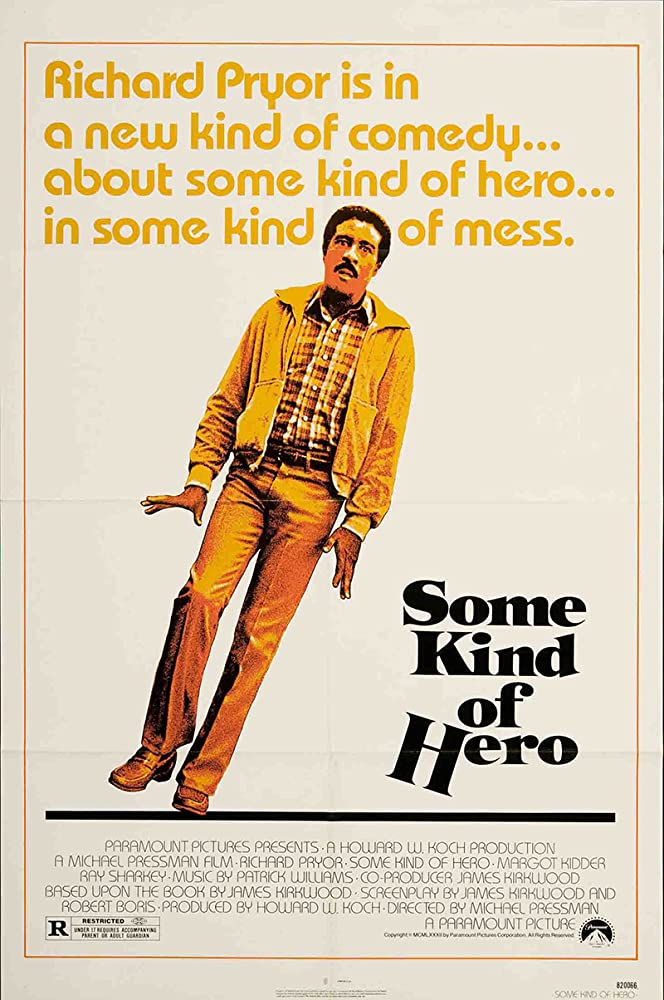
Some Kind of Hero (1982, directed by Michael Pressman)


Eddie Keller (Richard Pryor) is a member of the U.S. Army, serving in Vietnam when he gets captured by the VC and spends the next few years in a POW camp.  During that time, he befriends another POW named Vinnie (Ray Sharkey).  Though the quick-witted Eddie is often able to outsmart his captors and their attempts to turn him into a propaganda tool, he finally snaps when he’s told that Vinnie will be allowed to die unless Eddie signs a “confession” in which he renounces both America and the war.  Hoping to save his friend’s life, Eddie signs the paper.

After 5 long years in the camp, Eddie finally returns to America.  He’s given a momentary hero’s welcome and then he is quickly forgotten about.  After all, everyone wants to move on from Vietnam and Eddie, by his very existence, is a reminder of the war.  However, Eddie can’t move on.  His wife (Lynne Moody) left him for another man while he was missing.  His mother (Olivia Cole) suffered a stroke and is now in a nursing home.  Worst of all, because Eddie signed that confession, the army considers him to be a traitor and is refusing to release his backpay.

What can Eddie do?  How about a rob a bank and then run off with Toni (Margot Kidder), a hooker with a heart of gold?

Like a lot of Richard Pryor’s starring vehicles, Some Kind of Hero is an uneven film.  Pryor was a skilled dramatic actor but he was best known as a comedian and, in most of his starring roles, there was always a conflict between his serious instincts and the demand that all of his films be funny.  Some Kind of Hero starts out strong with Pryor in Vietnam.  The scenes with Pyror and Sharkey in the POW camp are strong.  (In the novel on which the film was based, Eddie and Vinnie were lovers.  In the film, they’re just friends.)  Though there are funny moments during the first half of the film, the humor arises naturally out of the situation.  During the first half of the film, Pryor may make you laugh but he also makes sure that you never forget that he’s on joking to maintain his sanity.  But once Eddie returns to the U.S., Some Kind of Hero awkwardly turns into a heist film and the comedy goes from being darkly humorous to being broadly slaptstick.  Eddie, who could survive being a prisoner of war and who could usually outsmart the VC, is suddenly transformed into a naive klutz.  Richard Pyror does his best but the two halves of the film never seem to belong together.

Unfortunately, Hollywood never really figured out what to do with Richard Pryor as an actor.  Some Kind of Hero at least shows that Richard Pryor could be a strong dramatic actor.  Unfortunately, the film doesn’t really live up to his talents.

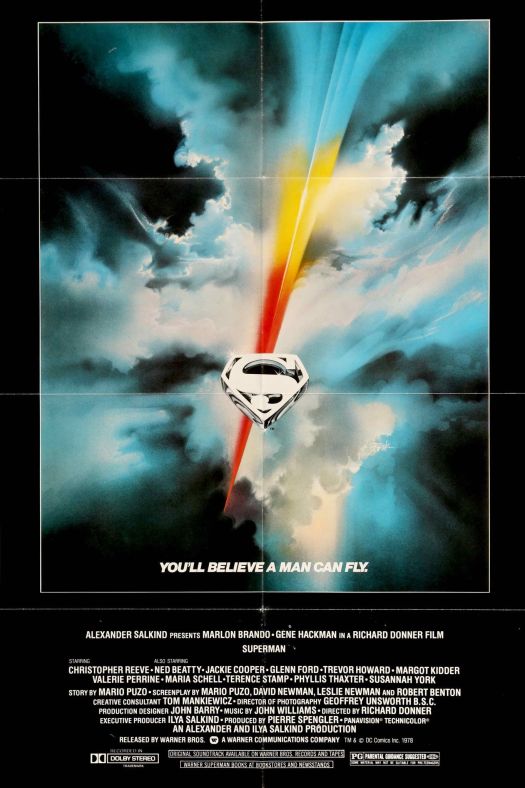
40 Years of SUPERMAN: THE MOVIE (Warner Brothers 1978)


gary loggins's avatarcracked rear viewer

Unlike today, when superheroes dominate at the box office and your local multiplex, costumed crusaders were dead as the proverbial doornail in theaters of the 1970’s. The last was 1966’s BATMAN, at the height of the camp craze, but after that zer0… zilch… nada. I didn’t care; my comic book reading days were pretty much at an end by 1978, driven away by other distractions, like making money, girls, beer, and girls. I had moved on.

But when Warner Brothers announced they were making a new, big budget Superman movie, I was intrigued. I’d always loved the old 50’s TV series starring George Reeves as the Man of Steel, corny as it was, and with a cast featuring Marlon Brando , Gene Hackman , and Glenn Ford , not to mention that girl from Brian DePalma’s SISTERS as Lois Lane, I wanted to see this new version. I also wanted…

View original post 979 more words

RIP, Margot Kidder


Margot Kidder was born in Yellowknife, a mining town in Northern Canada that was so remote that it didn’t even have a movie theater.  She didn’t see her first movie until she was 12, when she and her mother were visiting New York City.  Kidder later said, “I saw Bye Bye Birdie, with people singing and dancing, and that was it. I knew I had to go far away.”

Kidder started her career in her native Canada, appearing in 1968’s The Best Damn Fiddler from Calabogie to Kaladar and going on to appear in films like Black Christmas and Quackser Fortune Has A Cousin In The Bronx.  Even after Kidder found stardom in the United States, she continued to appear in Canadian films and won two Canadian Film Awards and one Genie Award for her performances.

In 1973, she played dual roles in Brian DePalma’s Sisters.  As detailed in Peter Biskind’s Easy Riders, Raging Bulls, it was during this time that she and her Sisters co-star Jennifer Salt shared a Malibu beach house that became a gathering place for such up-and-coming Hollywood directors as DePalma, John Milius, Martin Scorsese, George Lucas, and Steven Spielberg.  Briefly, she and Spielberg even dated.


For a generation of filmgoers, though, Margot Kidder will always be Lois Lane!  In 1978, Kidder beat out over 100 other actresses for the role of Lois.  (Among the others who tested:  Anne Archer, Susan Blakely, Lesley Ann Warren, Deborah Raffin and Stockard Channing.)  Superman was the first great comic book film.  In the aftermath of both Watergate and Vietnam, Superman made audiences that a man could fly.  As important as Christopher Reeve was to the success of Superman, Margot Kidder was just as important.  In many ways, Kidder’s Lois was the audience surrogate.  We saw Superman through her eyes.  At the same time, Kidder gave such a lively performance that it was impossible not to join Superman in falling in love with Lois.  When Superman spun the world backwards to bring her back to life, nobody questioned it because they would have all done the same thing.

Kidder was even better in Superman II but, unfortunately, she was also forever typecast as Lois.  In her later years, she would be better known for her health struggles than her acting.  After having a widely publicized manic episode in 1996, Kidder became just as well-known as an outspoken mental health activist as an actress.  Though her acting career may have slowed down, Kidder never stopped working, appearing in movies and television shows up until her death.

Margot Kidder died yesterday in Montana, at the age of 69.  To many, she’ll always be Lois but she was so much more as well.  Rest in Peace, Margot Kidder.