In late summer of 2010 the anime and film community lost one of its brightest stars with the passing of Satoshi Kon. With Miyazaki getting up there in age there was now a clamor to see who would take on the mantle that Kon had left behind with his passing. It didn’t take long for many fans of anime to finally look at Mamori Hosoda as the heir apparent. While Hosoda’s body of work as a feature-length animation film director hasn’t been as extensive as Kon’s or Miyazaki’s what he has done has garnered a near universal acclaim for their excellent storytelling, fully-conceived characters and lush, humanistic animation style.
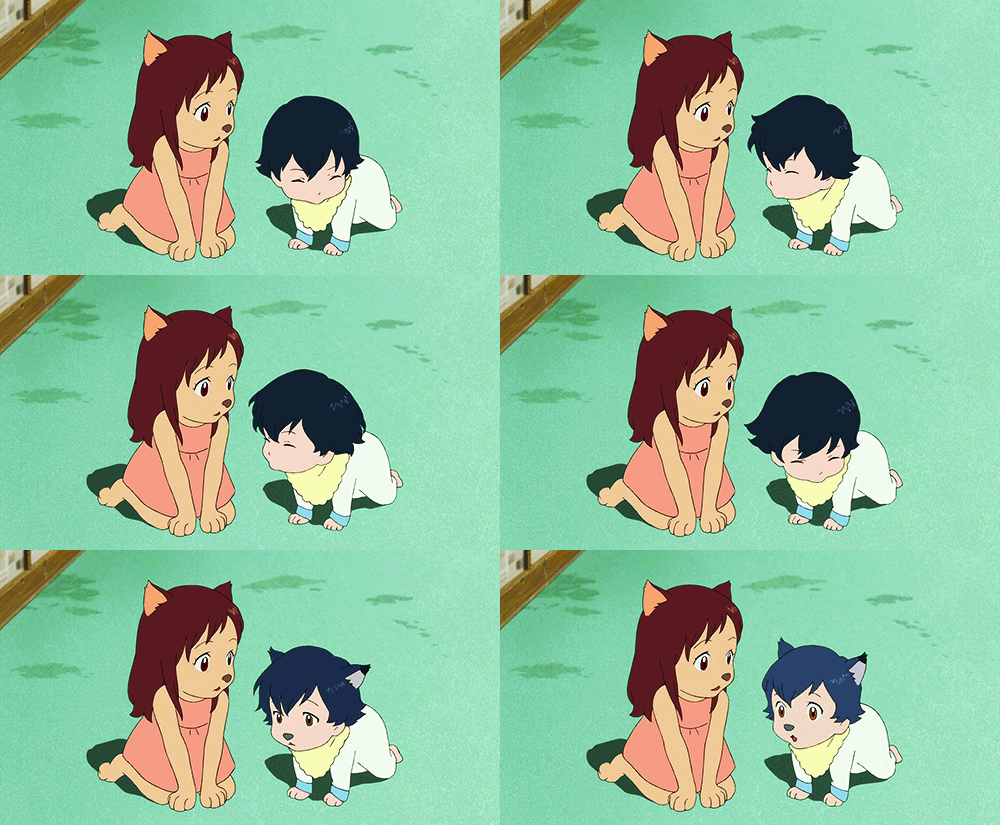
In 2009’s most people were finally made aware of Hosoda’s skill as a director with the worldwide success of Summer Warsand this success made people look forward to what his next film would be. It took three years, but in 2012 Hosoda and anime fans were finally given his next film with the animated film Wolf Children Ame and Yuki (Ōkami Kodomo no Ame to Yuki). It would be a departure from the scifi themes which has been Hosoda’s go to themes for his first two films.
Wolf Children explores the themes of the unconventional family unit of a single mother of two children born of her love and relationship with an Okami (a sort of spirit-animal who can turn from human to wolf). It’s these two young children, Ame and Yuki (who have inherited their father’s gift for turning into wolves themselves), who become the focus of the film. The two children must navigate their childhood and teenage years knowing that they’re different from the rest of the kids in school and both must make the life-altering decisions to follow their own paths whether it be as a human or as a wolf.
To say that the film skews more towards the naturalistic and humanistic themes of the Hayao Miyazaki films would be an understatement. Hosoda doesn’t steal from the master, but instead takes what made the Miyazaki films such timeless and global classics to spin his own tale on the role of a mother’s love for her children even after suffering through a terrible loss and right up to the exploration of nature. So much of the wonder in this film comes from the two children exploring the wild nature around them. It’s a joy to see and at times will even bring tears to some.
It’s no wonder that Hosoda has become the latest name to be seen as Miyazaki’s next heir apparent. While it’s unfair to put so much on Hosoda to accomplish he seems to be more than willing to take on the task and have done so with surprising success.
Wolf Children Ame and Yukimight be a slight departure from Hosoda’s two previous works, but it just goes to show that he’s a director who is willing to branch out thematically and stylistically. This latest film might not be on the same level as his two previous, but it’s definitely one that should help build his reputation as one of the best director’s in the anime and film community.
Hi, everyone! Sorry for the delay in getting out this latest edition of Lisa Marie’s Favorite Grindhouse and Exploitation Film Trailers. What can I say? The holidays are a crazy, crazy time. If you promise to keep reading and watching then I promise to not be late again in the future. Deal? Deal.
And now, without further delay, here’s 6 more trailers!
1) Silent Night, Deadly Night 3: Better Watch Out (1989)
This film was directed by Monte Hellman, who directed some of the best films of the 60s and 70s. So, in case you were wondering what you get for directing a work of art like Two-Lane Blacktop, well, here you go.
2) Black Christmas (1974)
Continuing the holiday theme, here is the trailer for the original Black Christmas. This film was directed by the late Bob Clark, who later went on to direct a totally different Christmas movie called A Christmas Story.
3) Madhouse (1974)
I love this trailer for the melodramatic opening. I love the way the old grindhouse and exploitation movies would literally dare filmgoers to stay away. That takes confidence!
4) The Freakmaker (1974)
With a title like The Freakmaker, it has to be good.
5) The Creatures The World Forgot (1971)
The World, I am sure, had its reasons for forgetting.
6) Prehistoric Women (1967)
This film is also known as Slave Girls and I’m sure there’s probably prints out there entitled Slave Women and Prehistoric Girls as well.
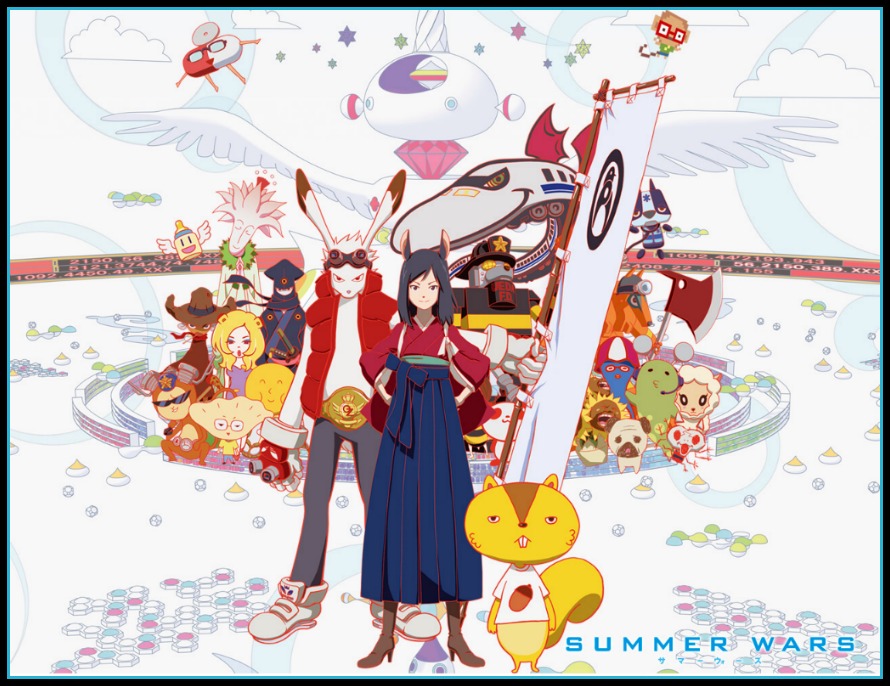
Anime films have been the type to make a major crossover from Japan to the United States when it comes to the US mainstream audience. While anime series typically still remain the realm of the hardcore fans of the genre the stand-alone films get much more love from mainstream critics and audiences in addition to the hardcore. One such film which looks to have made a successful mainstream crossover to the United States was the anime film Summer Wars which was originally released in Japan in August 1, 2009. The film saw it’s American debut at film festivals around the country in 2010, but since I saw it in late May 2011 I consider it a 2011 release for me thus qualifying it as one of the best films of 2011.
Summer Wars was the project of director Hosada Mamoru whose previous stand-alone anime film, The Girl Who Leapt Through Time, was well-received by fans and critics alike. Working from a screenplay by Okudera Satoko (adapted from a story written by Hosada himself), Summer Wars was a nice blend of science-fiction, romance and Japanese slice-of-life. The story begins with the introduction and explanation of the OZ on-line community which becomes a major focal point to the film’s story and the many characters in it. OZ was explained as an on-line, social networking community which has become so ingrained in the world community that everything anyone does was done through it’s portals. Think of OZ was an amalgamation of Facebook, Second Life, iTunes, Netflix and every other social networking site all working under one umbrella. It’s a virtual world where people just don’t socially interact through games and chat lobbies, but also a place where every real-world store has a portal where people could purchase things online. It’s also become a palce where governments from local cities to whole countries have set-up their own areas that would control their cities and countries’ infrastructures. It’s Facebook on steroids.
One of the film’s main characters happens to work as a part-time moderator for OZ. Koiso Keiji also happens to be a 17-year old math whiz who would become instrumental in the story to come. The bulk of the story has Keiji being invited by a high school friend in Shinohara Natsuki (explained to him as a job she needs for him to do) to come with her to her family estate where he ends up meeting the rest of Natsuki’s very extended family and also it’s soon-to-be 90-year old matriarch in Jinnouich Sakae. This part of the film makes up the romance and it’s comedic aspect as Keiji gets introduced by Natsuki to her great grandmother Sakae as her boyfriend and future fiance much to Keiji’s surprise. As Keiji tries to awkwardly play along with Natsuki’s plan the second part of the film’s story kick’s in as he inadvertently assist someone or something into hacking into OZ and begin a sequence of events which threatens every account in OZ, but later on even threaten the world.
This part of the story actually worked quite well due to the recent major hacking of Sony’s Playstation and Qriocity networks which gave hackers access to tens of millions of account users’ info. It was hard not to think about this real-life event as something similar (albeit much more massive and danegrous in scope) occurred in Summer Wars. The fact that the film was completed in 2009 and the Sony hack happened just a month ago was real life copying fiction instead of the other way around. It’s this part of the story’s plot which added to the thrilling aspect of the film as Keiji and others (mostly the extended Jinnouichi Clan he meets) try to take on the cause of the OZ hack (which we quickly learn wasn’t a person but an advanced A.I. program released by the U.S. Army into OZ to test it’s capabilities not knowing it would become self-aware and hard to control).
Weaving in and around this science-fiction are some of what makes some Japanese anime so easily accessible to those outside of Japan. We see a slice-of-life that, at first looks to be typical Japanese daily life, but as the story moves along becomes something that everyone would recognize and have some sort of kinship with no matter their race or culture. It’s the theme of family togetherness even through adversity and the occassional disagreements between family members. It’s here we see Natsuki’s great grandmother Sakae show the need for the family to always find time to sit down and eat dinner together no matter what problems each and everyone may be having. It’s these very serene, at times quite hilarious, scenes of family life with the Jinnouichi Clan that Summer Wars will tug at audiences’ heartstrings and cause more than just a few to tear up. Some have said these scenes were too maudlin and corny, but I look at that complaint as people trying to project their own cynical nature on what was really an honest look at family life and how keeping a family together through adversity (both big and small) becomes a reward unto itself.
The Japanese voice cast did quite a good job bringing their animated characters to life from the main leads in Keiji, Natsuki and Sakae right up to the little children who added some levity to the situation. While I try to always watch anime with the Japanese language on with English subtitles for Summer Wars I also watched it with the English-voice dubbing. I was surprised to hear that the English-dubbed version was not as bad as most anime dubs and was actually quite good. Summer Wars looks to boast a who’s-who of English dub voice actors which probably lent itself to a quality dubbing in the end.
Summer Wars was produced by one of Japan’s major animation studios with Madhouse and the look of the film bears this out. The virtual world which made up OZ looked beautiful and made great use of CGI-animation. The avatars used by OZ account members were inventive and a menagerie of characters that all looked to be very distinct each and everytime a new one came on the screen. The animation for the real-world aspect of the film used traditional hand-drawn animation. While it didn’t have the sheen and flash of most anime series the flat-look and natural color scheme used for scenes when outside OZ lent a sense of realism and the natural that made it easier to get into the film. These two contrasting animation styles really helped in pointing out just how different OZ was to everything else.
Hosada Mamoru’s direction keeps everything from becoming a jumbled mess as the film juggles not just two major plot threads concurrently but smaller subplots involving certain individual family members of the Jinnouichi Clan. It’s a testament to his handling of the film that we’re never lost as the film’s story unfolds. Whether it’s the fake relationship between Keiji and Natsuki becoming something more real to the prodigal son coming back to the family after a self-imposed exile of ten years right up to a high school baseball tournament involving one of the family’s younger members who also happens to be a star pitcher.
In the end, Summer Wars should be seen as a landmark film that officially heralds the arrival of one of anime’s great filmmakers. With the untimely passing of Satoshi Kon there’s been a scramble within the anime community to find his heir apparent. Hayao Miyazaki will continue to be one of anime’s godfathers and pillar of quality work, but amongst the younger generation there was really no one stepping up the way Satoshi Kon did in so short a time. I think with Summer Wars it wouldn’t be too farfetched to say that Hosada Mamoru has also stepped up to join Miyazaki as one of the creative geniuses in the anime world. It also shows younger anime filmmakers that there is success to be had doing anime outside the usual mecha, mahou shoujo and shonen series which remains the backbone and meal-ticket for animation studios in Japan.
Summer Wars is an anime film that I’d highly recommend to all whether they’re fans of anime or have no idea what an anime was. This anime is that good and one that deserves to be called just film without the anime tag. It will be interesting to see what Hosada Mamoru comes up with next. I, for one, can’t wait to see what it is. Also, I recommend people watch this on Blu-Ray. The difference in how the animation comes across between Blu-Ray and DVD is leagues apart.
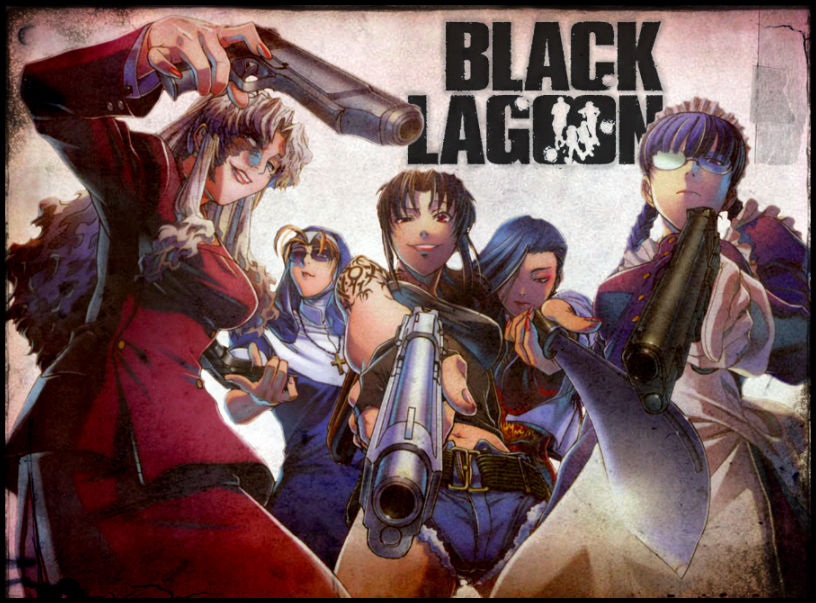
As I continue my current binge on all things anime and manga there’s one anime series that I thought deserved to be profiled in the usual “Anime of the Day” segment. This series comes from the action genre and heavily promoted towards the seinen (Males 18-30) demographic. While girls and women love this show as much as their male counterpart it definitely appeals very much to boys and young men. The anime I speak of is Black Lagoon (Burakku Ragūn in its original Japanese title).
Black Lagoon is the brainchild of mangaka Horie Rei. The manga began in the Spring of 2002 and continues a strong showing to this day. Like most manga that gain a large following it was just time before an anime adaptation was made and in 2006 the first season was released by anime studio Madhouse with Katabuchi Sunao handling director duties. To say that the anime became as popular as the original manga source would be an understatement.
The book’s main leads in Revy and Rock became fan favorites. One cannot go into an anime conventions anywhere around the world without seeing at least a dozen young women in Revy cosplay. She’s a character that actually is the most kickass in the group of mercenaries she works with and they’re all men. That just showed how appealing she became not just to the boys and men who followed the manga and anime, but to girls and young women who usually do not see such a powerful and kickass female protagonist who puts her male counterparts to shame.
The animation by Madhouse is its usual excellent self which also one reason why this series has caught on with anime fans worldwide. Black Lagoon has been released in the US by now-defunct Geneon Entertainment. They released the first two seasons (the series is just now into it’s third) and with that companies folding it’s quite difficult to find those two season box sets. It’s the hope of legion if anime fans that FUNimation Entertainment (who took over some of the licenses that Geneon Entertainment used to have) will re-issue those two seasons and give fans a price respite.
Black Lagoon might have been targeted towards the boys and young men demographic, but it’s success and popularity across the board makes it one of the growing lists of titles who break through prescribed genre labelings and why it does continue to grow in popularity. Plus, I think it doesn’t hurt the show that it’s main character in Revy is one kickass example of why some of the strongest fictional female roles are in anime (despite being drawn to be sexy to draw the male audience). This past Spring’s Sucker Punch may not be anime, but it’s kickass female characters definitely owe some of their foundations on characters like Revy.
A sneak peek of Season Three: Black Lagoon: Roberta’s Blood Trail
Ever since it was announced in around Fall of 2010 that an anime series was going to be made based on the first two seasons of the popular CW drama series, Supernatural, I knew I had to get the DVD and/or Blu-Ray release of this series.
Like most Japanese anime series they rarely got shown in the US unless it was part of a video set. It’s rare to find newly shown episodes in Japan shown in the US at the same time. Lately, a new practice of streaming new episodes on-line through official anime streaming sites has given American anime fans the same access to new episodes as their Japanese counterparts. A fine example of this recent practice was the simultaneous airing of each new episode for the horror-ecchi series, Highschool of the Dead. Unfortunately, this wasn’t the case for the Supernatural anime series.
So, it was a relief to read the news release earlier this week about the anime series being released in the US through DVD and Blu-Ray sets of Supernatural the Animation season 1.
The DVD and Blu-Ray Season 1 sets will be released by Warner Home Video on July 26, 2011.
If there was ever a series that belongs to be redone in anime fashion it was, and is, Eric Kripke’s Supernatural. As I joked with people about this news once it was confirmed, the Supernatural slashfic community will now have to deal with an equally rabid yaoi community which has already sprouted since Supernatural the Animation premiered on Japanese TV earlier this year.
One thing that should please both subbed and dubbed warring camps is that the DVD and Blu-Ray release should have both original Japanese voice cast (which includes the very Japanese voice actors who dub the Dean and Sam Winchester characters in the live-action showing of the series in Japan) and the stars of the series itself, Jensen Ackles and Jared Padelecki dubbing the anime series in English (though it would seem Padelecki will be voicing all 22-episodes while Ackles only select episodes).
People I know who have seen the series while it aired in Japan have spoken nothing but positive things about the first season. So, far the announcement hasn’t been followed up with the items being put up for pre-orders on Amazon.com or any of the online video retailers. I’m sure that will change once more details about the DVD and Blu-Ray release come down in the coming weeks.
A couple weeks back I posted an article about Warner Home Video and Madhouse (anime studio) collaborating to adapt the very popular CW supernatural series Supernatural into anime. The series will comprise of 22-episodes and has a tentative release date in Japan around January 2011. More news has since come down the pipeline that the 22-episode season will see a DVD release with English-subtitles a couple months later.
From the preview trailer which has come out since it looks like the anime keeps the core theme of the show with the two Winchester Brothers fighting not just through demons, monsters-of-the-week and other supernatural problems, but also their own familial issues. The animation by Madhouse should appeal to non-anime fans since it skews more towards a realistic style instead of the hyper-kinetic wide-eyed animation style many non-fans think all anime looks like. I like to compare the animation to this series to a classic supernatural action anime which came out during the early 1990’s, Ninja Scroll.
The use of deep blacks to shade the character animations and give some definition to their faces gives the whole animation style quite the fleshy, rounded look instead of the angular, almost mechanical style of current anime. The incorporation of typical anime-style monsters was a nice touch. That was definitely tentacles coming out of that monster/demon. Though I must say that I’d be surprised if this series used said tentacles in other ways other than to be an instrument of destruction and bloodletting. I don’t think Supernatural the Animation will have much hentai qualities in it.
Anime horror usually don’t come out as often and when they do they’re usually of the hentai variety. If the folks at Madhouse even do half a good job in adapting the original tv series then this is one anime series I will have on my must-see list.
….And yes, that is a Japanese band cover of Kansas’ classic rock song, “Carry On Wayward Son“, which has become the tv series’ unofficial theme song.
CW Network’s very popular tv series Supernatural looks to expand into a new media as Warner Home Video plans to release a 22-episode anime adaptation of the tv series. The series will come out in Japan this January of 2011 with acclaimed anime studio Madhouse doing the animation. The series’ first season will encompass the breadth of the original series’ first two season, but will have room for new content which explore and expand of the two Winchester Brothers’ early childhood as Hunters. Some secondary characters from the original show will also get a much more expanded role within the anime series.
I, for one, was quite excited when I first learned of this development. The original show has been a favorite of mine since it first debuted in the Fall of 2005. While for some the idea of an American TV series getting an anime adaptation might seem farfetched, but I think Supernatural‘s aesthetics lends itself well to the hyper-realistic conventions of anime. Madhouse has already shown it could do straight up horror with its very popular zombie anime series Gakuen Mokushiroku (Highschool of the Dead), so creating a series out of a show based on the supernatural and monsters and demons wouldn’t be too much of a stretch for the studio.
The Winchester Brothers in the anime will be voiced by the two same actors who dub the original series for airing in Japan: Yuya Uchida and Hiroki Touchi. There’s no word on whether the series will get an American dub version when the dvd/Blu-Ray comes out in the US so fans hoping to hear Jared Padelecki and Jensen Ackles voicing their anime counterparts may have to temper their hopes.
Time will tell if this anime adaptation will catch on in the US, but with Supernatural having such a huge and vocal fan-base there’s a chance it may just and allow a second season to be made.
We are down to the last final episodes of this first season of Madhouse’s anime series adaptation of the zombie and ecchi manga series, Highschool of the Dead. The last episode was the start of the calm before what I hope to be the major storm that will take this series into a second season.
Episode 11 didn’t linger on too much on the fanservice side of the series with the exception of an all-too-brief look inside the school bus of Shido-san and his sex cultists. We get a glimpse at how Shido deals with the students who don’t conform to his twisted (albeit must be quite fun) outlook on the new world order as it stands now. The manga had shown that particular sequence of why that one student was thrown off the bus to be taken by the zombies. In this episode we didn’t see what caused his expulsion, but got a sense that the student didn’t want to join in on the bus orgy going on between the students with Shido-san acting as a sort of Aleister Crowley-like figurehead.
While inside the Takagi compound it looks like the episode skipped some more of the manga and didn’t show how Takagi’s father was finally swayed to allow Kohta to keep the groups weapons. I can understand the Madhouse writers trying to cram as much of the manga into a 13-episode season, but the way they’re going about things they could catch up to the manga by episode 13 which would definitely might be a sign that a second season won’t be in the offing. Here’s to hoping that the writers were just trying to move things along to the crisis which sends the group out of the compound and back into the dangers of the city-proper.
While the fanservice was limited the harem aspect of the story continued to grow as Rei literally threw herself at the mercy of Komuro but to no avail. Does Rei know that Saeko and Saya may be competing with her for Komuro’s attention? If that’s the case then Komuro definitely has shown quite a bit of restraint when it comes to Rei’s increasingly aggressive advances. There’s also the fact that Komuro and Saeko may have already sealed their partnership a few episodes past though we never really saw it but definitely implied.
The arrival of Shido-san into the compound definitely explains why Rei was so adamant to leave the safety of the bus early in the season. The fact that Rei dismissed Shido-san as less than worthy of her attention was a nice touch even though this could become a major problem for the group down the line. Even in the manga the fate of Shido-san and his group of students were not truly explained though not all of them could’ve survived their subsequent exile.
With two episodes left and with the major superpowers throwing nukes at each other, I hope that this calm has finally ended and the storm that’s been brewing since the group arrived at the Takagi compound can finally smash into the city. If there’s to be no second season then these last two episodes need to put the previous 11 in terms of action, horror and fanservice to shame. It’s the only way for the series to go out with a huge bang.
We’re now heading towards the end of this first season of Madhouse’s anime adaptation of the zombie manga Highschool of the Dead. It is still up in the air whether this 13-episode initially produced will be the first season or just the first half of what will end up being the only season. If the latter is the case then the series just took a relaxing calm before the storm of what will be episode 11 thru to 13.
Episode 10 brings everyone in the group back together as Takashi Komuro and Busujima Saeko finally makes it back to the relative safety of the Takagi fortress-compound in the previous episode. This episode was actually pretty devoid of much of the fanservice which were prevalent in the last 5 previous episodes. The only nod to it’s ecchi side of the series was in the beginning where one might think Rei and Komuro might just end up going all the way (something that suspiciously might have already happened between Komuro and Saeko in the last episode), but alas it was not meant to be. It was just a medical intervention to help Rei heal up from being sorely bruised from the action of episode 8.
While within the Takagi compound we get to know more about the life of Saya and her relationship with her parents. To say that she has lived quite the privileged life would be an understatement. But while in other media the privileged children of rich and powerful parents end up being useless beyond being spoiled and entitled, Saya seems to have grown past being just a spoiled brat and into a child who has tried to live up to the perfection that are her parents. I mean her father is the lord of the manor in more ways than one as the Takagi-clan looks to have been the same clan in centuries past which ruled over the city during the Feudal-era of Japan. Takagi Souichiro and his wife Yuriko are quite formidable parents and we see where Saya gets both her beauty and coldly, logical brain.
This episode to me also shows us just how far Hirano Kohta has come from the geeky and shy introduction from the first couple episodes. We’ve seen him become quite the badass to help bookend Saeko in terms of pure zombie killing power. He’s been the most useful of the group not just in how expertly he handles the guns the group comes across, but in teaching others how to operate them. This new zombie apocalypse world has made Kohta useful in his eyes. So, when the demand by the “adults” at the Takagi compound for him to hand over the weapons he and his group brought with them his reaction was both understandable and quite saddening.
To survive the last couple days as a highschool student while adults around them died and became “Them” it’s jarring to Kohta and the rest of the group to suddenly be treated as children once more. While his tear-filled reaction to not wanting to go back to being a helpless otaku seemed overly dramatic it’s easy to sympathize with him. Thus, it was great to see not just for the group to have his back and support his decision to hold on to the weapons, but to see Saya do the same. The fact that she uses Kohta’s help in securing her safety a way to show her contempt for her parents for not trying to find a way to save her shows the rift between daughter and parents.
While this respite from the doom and gloom action of the previous 3-4 episodes was quite good, this partcular calm before the storm looks to be ending quite quickly as the sneak preview for the next episode show the return of Shido-san and his bus of cult followers. Plus, just when I thought Madhouse was going to cut the bus orgy scene from the manga it looks like they just kept it for the end of episode 10. Now all is right with the world.
yandere: A Japanese anime/manga character archetype, a character that is loving, sweet & gentle that can suddenly switch to brutal psychotic or deranged behavior
Why the quick brief lesson in Japanese anime/manga terms?
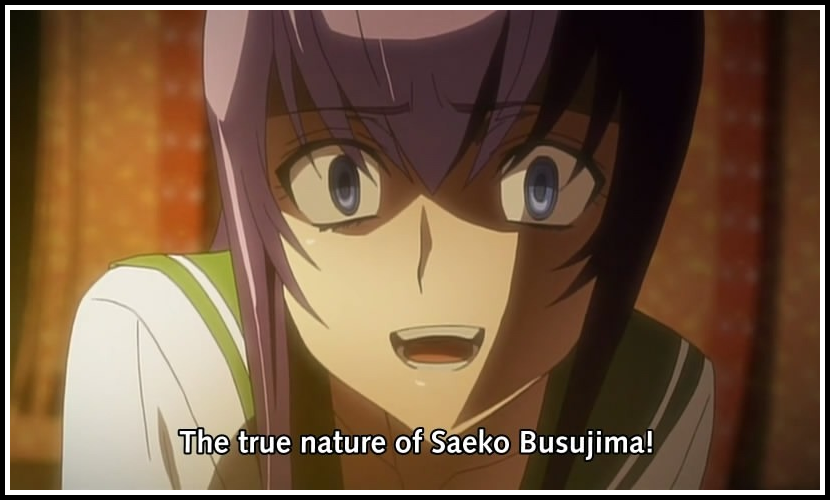
This brief lesson is due to the nature of episode 9 for Madhouse’s anime tv series adaptation of the horror manga title, Highschool of the Dead. This latest episode finally unleashed the dark secret one of the coolest characters in the series has been keeping to herself. For those who have been reading the manga on a regular basis already know of this secret, but for those whose experience of this title is only the anime this episode will open up Busujima Saeko.
The bokken wielding senior-class in the group has been one of the most level-headed in the group surviving since episode 1. Saeko never seems to panic and has shown to be expertly skilled in dispatching the unending stream of zombies with her wooden sword. Outside of the gun otaku himself, Kohta Hirano, she seems to be the one character in the group who has adapted well to the sudden and apocalyptic change in the world around them.
This episode puts her and Takashi Komuro (who is starting to gather quite the harem of hotties) on the run to find a way to the safety of Takagi Saya’s parents’ fortress compound. During their time running from the zombies to find a safe passage Saeko and Komuro get into all sorts of troubles with Saeko getting wet in more ways than one during their run. It’s during this time away from the rest of the group that we learn of Saeko’s penchant for just a bit of sadism.
A past encounter in her early highschool years convinced Saeko that she enjoys inflicting pain on those weaker than herself. This revelation becomes a huge 180 degrees from her earlier behavior. Out of the outside facade of being the cool-headed, elder student who never panics lies the heart of a sadistic yandere who has enjoyed killing “Them” with impunity. The changes in the world has allowed Saeko to indulge in her sadistic tendencies and maybe she’s in the right as it has helped her and her group survive the apocalypse, so far. Even Komuro has accepted this side of Saeko and sees it as a necessary evil in the days ahead.
The episode also hints at what could become a major love triangle (or is it quadrangle) as the relationship between Saeko and Komuro may have turned a particular intimate turn (before the scene faded to black). This episode has deftly laid the groundwork in what could become this series’ version of School Days and Higurashi no Naku Kuru ni. This new development in the series should quiet some of the nitpickers and naysayers (who still continue to watch despite their constant bitching about the series’ heavy fanservice) who wish for more character development and storytelling minus the constant oppai and pantsu shots.
One thing for sure, the anime has begun to take some liberties with details from the manga. This episode has changed the order of certain events and even changed the circumstances of how certain things occur. With four more episodes left in the season the question now is whether the series first season will end caught up to the manga (currently on chapter 26 or 27) or will it end on a cliffhanger that combines chapters 14-16 of the manga. Here’s to hoping that it’s the latter that way we get a follow-up season.



 Through the Shattered Lens