1957’s I Was A Teenage Werewolf combines two genres that were very popular in the late 50s.
On the one hand, it’s a film about a teenage rebel. Tony Rivers (Michael Landon) is a teenager that means well but he keeps losing his temper. If he can’t learn to control his anger, he could very well be looking at a life behind bars.
On the other hand, it’s also a horror film. When Tony visits a hypnotist (Whit Bissell), the end result is Tony turning into a werewolf and going on a rampage, all while still wearing his letterman jacket.
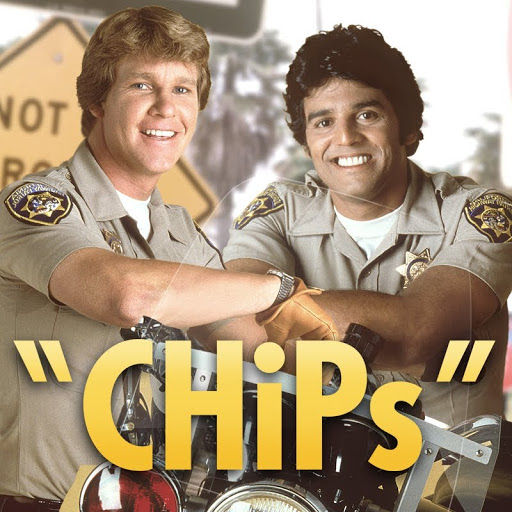
Welcome to Late Night Retro Television Reviews, a feature where we review some of our favorite and least favorite shows of the past! On Mondays, I will be reviewing CHiPs, which ran on NBC from 1977 to 1983. The entire show is currently streaming on Prime!
A recently released thief and a bank error are no match for the smiley charisma of Erik Estrada!
Episode 4.9 “Crash Course”
(Dir by Phil Bondelli, originally aired on January 4th, 1981)
Former getaway driver Sonny Matson (Don Stroud) has just been released from prison and he’s fallen back into his old habits. Everyday, he steals a different car and then robs a different business. His crimes are getting progressively more bold and Baker is determined to catch him.
Meanwhile, Ponch notices that he has an extra $4,000 in his bank account. Trying to do the right thing, Ponch reports the discrepancy. The bank accidentally drains all the money from his account. With his checks bouncing all over town, Ponch tries to get the bank fix their error. Good luck with that, Ponch! Luckily, when one of Sonny’s associates tries to rob the bank, it gives Ponch a chance to play the hero….
It’s The Ponch Show! Baker may be the one with a personal stake in capturing Sonny but Ponch is the one with big grin and the majority of this episode’s screentime. Whether he’s thwarting a bank robbery or recruiting all of his co-workers to help him find proof of the bank’s error, Ponch dominates. Poor Baker.
The best thing about this episode was Don Stroud’s performance as Sonny Matson. Stroud played a lot of low-level criminals over the course of his career. With his quick but unfriendly smile, his paranoid eyes, and his cocky attitude, Stroud is actually rather intimidating as Sonny. Whenever Stroud is onscreen, CHiPs actually feels a little bit dangerous! That this episode was memorable was largely due to Don Stroud and the hideous 70s decor of Ponch’s bank. Tacky and dangerous, that’s our CHiPs!
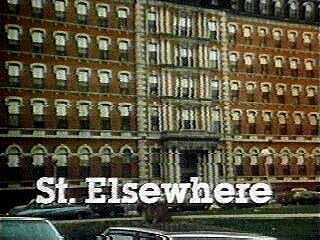
Welcome to Retro Television Reviews, a feature where we review some of our favorite and least favorite shows of the past! On Fridays, I will be reviewing St. Elsewhere, a medical show which ran on NBC from 1982 to 1988. The show can be found on Hulu and, for purchase, on Prime!
This week, we start season 2!
Episode 2.1 “Ties That Bind”
(Dir by Bruce Paltrow, originally aired on October 26th, 1983)
The second season is here and there are changes to be found in the opening credits.
David Birney and G.W. Bailey are no longer listed in the opening credits. I’m not sorry to see Birney go as Dr. Samuels was never that interesting of a character. I will miss Bailey’s performance as Dr. Beale.
Norman Lloyd is now listed in the credits, appearing right after Ed Flanders. Ellen Bry, Kim Miyori, and Eric Laneuville are also now listed in the opening credits. That’s good. Last season, Shirley Daniels (played by Ellen Bry) was one of the most important characters on the show and it always seemed strange that she was left out of the opening. Mark Harmon, sporting a mustache, appears in the credits, though he didn’t appear in this episode. The final addition to the opening credits is Nancy Stafford, who does appear in this episode.
Stafford plays Joan Halloran, the new city budget advisor who has been assigned to cut St. Eligius’s budget. She tells Westphall and Auschlander that St. Eligius is not popular downtown. “They call you St. Elsewhere,” she says. Joan wants to do away with the animal research lab, which is a part of the hospital that has never been mentioned before. (And with good reason. Boo, animal research, boo!) Westphall finally agrees, on the condition that the city fund Dr. Craig’s attempt to perform a heart transplant on teacher Eve Leighton (Marian Mercer).
Wisely, Dr. Craig gets a lot of screentime in this episode. If the first season seemed to often be unsure of just how abrasive the show should allow Craig to be, the second season premiere would seem to suggest that the show’s writers realized that the more abrasive Craig is, the better. Of course, Dr. Craig has good reason to be in a bad mood. As he confesses to Nurse Rosenthal, he caught his son doing drugs. Craig explains he kicked him out of the house and now, he wants nothing to do with him.
Speaking of drugs, orderly Luther (played by Eric Laneuville) finally manages to capture the thief who has been stealing all the drugs from the hospital. Dr. White is no longer under suspicion! Yay, I guess. I don’t know. Dr. White wasn’t in much of this episode but he still cames across as being a jerk. I have to admit that I groaned a little when I saw he was still on the show. A part of me is hoping he’ll get a redemption arc this season but, from his behavior during rounds, he still seems to be a jackass.
Speaking of jackasses, when Jerry Singleton (Alan Arkin) discovers that his wife, Fran (Piper Laurie), has had a stroke, he responds by crashing his car into the ER and then refusing to leave the doctors along while they try to save his wife’s life. Jerry is convincing that he knows everything and he’s very demanding. Naturally, Fran’s doctor is Jack Morrison because Morrison always gets the really depressing cases. Fran does wake up from her coma but she neither speaks no seems to hear anything anyone says to her. I can’t imagine this is going to end well, mostly because she’s Morrison’s patient and things never seem to go well when Morrison is involved. (What’s really sad is that Morrison, unlike Peter White, is a good doctor! He just has rotten luck.)
Shirley Daniels finds out that Fiscus is cheating on her with Kathy Martin, who spends most of this episode promoting cryogenics. Shirley responds by dumping Fiscus and telling him that he’s a pig. Fiscus tells Kathy that they no longer have to sneak around, just for Kathy to say that the sneaking around was the whole point. She promptly dumps Ficus.
Finally, Dr. Ehrlich meets a woman, Bobbi (Jean Bruce Scott) at the laundromat. They go back to her apartment. She strips down to her underwear. She has Ehrlich tie her to the bed. Ehrlich realizes that he has to get something from his car so he runs outside and …. gets locked out. And then he nearly gets arrested while trying to use his credit card to open the building’s door. However, the next day, Bobbi shows up at the hospital for her “encounter group,” and the two of them are reunited. Again, I have a feeling this is not going to end well, just because it involves Dr. Ehrlich.
Hey, this episode was pretty good! It moved quickly, it reintroduced us to the cast, and all of the stories were actually fairly interesting. It’s obvious that show’s producers paid attention with what didn’t work during season one and they made an effort to improve things with season two. Compared to the majority of this first season’s episodes, the pace was quicker, the humor was sharper, and just about everyone got a moment or two to shine. I’m looking forward to next week!
1957’s I Was A Teenage Werewolf combines two genres that were very popular in the late 50s.
On the one hand, it’s a film about a teenage rebel. Tony Rivers (Michael Landon) is a teenager that means well but he keeps losing his temper. If he can’t learn to control his anger, he could very well be looking at a life behind bars.
On the other hand, it’s also a horror film. When Tony visits a hypnotist (Whit Bissell), the end result is Tony turning into a werewolf and going on a rampage, all while still wearing his letterman jacket.
1957’s I Was A Teenage Werewolf combines two genres that were very popular in the late 50s.
On the one hand, it’s a film about a teenage rebel. Tony Rivers (Michael Landon) is a teenager that means well but he keeps losing his temper. If he can’t learn to control his anger, he could very well be looking at a life behind bars.
On the other hand, it’s also a horror film. When Tony visits a hypnotist (Whit Bissell), the end result is Tony turning into a werewolf and going on a rampage, all while still wearing his letterman jacket.
1957’s I Was A Teenage Werewolf combines two genres that were very popular in the late 50s.
On the one hand, it’s a film about a teenage rebel. Tony Rivers (Michael Landon) is a teenager that means well but he keeps losing his temper. If he can’t learn to control his anger, he could very well be looking at a life behind bars.
On the other hand, it’s also a horror film. When Tony visits a hypnotist (Whit Bissell), the end result is Tony turning into a werewolf and going on a rampage, all while still wearing his letterman jacket.

 Through the Shattered Lens