Late Night Retro Television Review: Pacific Blue 1.2 “First Shoot”


Welcome to Late Night Retro Television Reviews, a feature where we review some of our favorite and least favorite shows of the past! On Tuesdays, I will be reviewing Pacific Blue, a cop show that aired from 1996 to 2000 on the USA Network!  It’s currently streaming everywhere, though I’m watching it on Tubi.

This week, the bicycle cops continue to expect to be taken seriously.

Episode 1.2 “First Shoot”

(Dir by Michael Levine, originally aired on March 9th, 1996)

It’s a busy time for the bicycle cops of Santa Monica.

Elvis (David Lander), the bicycle repairman who speaks with an indecipherable accent, is paranoid because a group of Bulgarian men are wandering the beach and asking if anyone knows where they can find him.  It turns out that the men are not dangerous but instead, they are the members of Bulgaria’s Olympic bicycling team.  They want Elvis to be their official team repairman.  However, Elvis previously had an affair with the girlfriend of one of the Olympians so he declines the offers.  He prefers the glamour of California.

Meanwhile, a pickpocket is robbing people on the boardwalk.  When he makes the mistake of grabbing the wallet of an old Italian man named Mr. Tataglia (Joseph Campanella), Tataglia goes to Lt. Palermo and explains that he wants the wallet back because it contains a picture of his wife.  He would consider it a matter of personal respect if Palermo retrieved the wallet and he promises to repay the favor.  Fortunately, the brave bicycle cops do catch the pickpocket.  Mr. Tataglia watches from a distance and nods.  I guess Mr. Tataglia is meant to be a mobster.  Believe it or not, not all Italians are in the Mafia.  I’m a fourth-Italian and I’m fairly sure that side of my family is not mob-related.

While that’s going on, Chris and Del Toro ride their bikes out to a film set and provide security for a spoiled movie star named Scott Magruder (Bojesse Christopher).  Chris is the one who has a crush on Magruder but it’s Del Toro who is seduced by the prospect of fame.  When Magruder gives Del Toro a line in the movie, Del Toro has visions of movie stardom in his head.  But then the scene gets cut.  Sorry, Del Toro, looks like you’re just going to have to spend the rest of your life riding around the beach on a Schwinn like a dumbass.  Scott later gets arrested in a bar fight but it turns out it was a publicity stunt.  Chris is saddened to learn that celebs aren’t as likable in real life as they are in the gossip pages.  Myself, I’m just wondering why Chris has gone from being the smart and driven character that she was in the pilot to being a total airhead just one episode later.

Finally, Cory and the bike cops help the real cops bust a group of drug dealers.  Cory shoots an aspiring rapper named Rasheed (Jeremiah Birkett).  Rasheed claims that he didn’t have a gun.  Cory is determined to prove that he did.  Apparently, this was the first time that Cory ever shot anyone.  Strangely, it doesn’t seem to rattle her at all that she nearly ended someone else’s life.  I mean, it seems like most people would have a more emotional reaction to nearly killing a man, even if that guy was a criminal with a gun.  Cory, however, is cool and calm and kind of creepy about it.  It’s established that Cory comes from a family of cops so maybe that’s why the shooting doesn’t faze her.

There was a lot going on in this episode.  Actually, there was probably too much going on.  This is only the second episode of the show and it’s not like any of the characters have really developed much of an individual personality.  Everyone is still pretty much interchangeable.  As a result, none of the action in this show carried much of an emotional impact.  The characters are all still strangers to me.

Maybe things will improve next week.

(Seriously, let’s hope so!  I’ve got a lot of episodes to make my way through before I’m done with Pacific Blue.)


Lisa Marie Reviews An Oscar Nominee: Alice Adams (dir by George Stevens)


Katharine Hepburn was famous for both her relationship with Spencer Tracy and the films that she made with him.  They were such frequent co-stars and so associated with each other that “Hepburn-Tracy” became a film genre in and of itself, one that promised a bit of comedy, a bit of drama, and some sharp-witted romance.  That said, I have to admit that one of my favorite of Katharine Hepburn’s film is one that she made not with Spencer Tracy but instead with Fred MacMurray.  Alice Adams is a Tracy-Hepburn film without Tracy.

First released in 1935 and based on a novel by Booth Tarkington (who was quite a big deal back in the day even if, like Arrowsmith‘s Sinclair Lewis, he’s somewhat forgotten today), Alice Adams stars Hepburn as the title character.  Alice is the daughter of Virgil Adams (Fred Stone) and his wife, who is only referred to as being Mrs. Adams (Anne Shoemaker).  Virgil is a sickly man who has worked as a clerk at a glue factory for several years.  Despite living in a rather large house and having a maid named Malena (Hatti McDaniel), the Adams family is not wealthy.  However, Mrs. Adams desperately wants the family to be rich and Alice carries herself with the airs of a wealthy woman, despite the fact that everyone in town knows that she’s not.  Alice love her family and is loyal to them, even if her younger brother (Frank Albertson, who later played Sam “Hee Haw” Wainwright in It’s A Wonderful Life) appears to be addicted to gambling and her mother is constantly browbeating her father for not being more ambitious.  Her family may embarrass her but we know she wouldn’t trade them for all the money in the world.  That’s why we like Alice, even if she does sometimes act like a snob.

However, when Alice meets and falls for the wealthy Arthur Russell (Fred MacMurray), she lies about her social background and tries to present herself as being just as rich as him.  When she invites Arthur and his parents to her house for a dinner party, she frantically tries to keep up the charade of being wealthy.  Meanwhile, Virgil finds himself wrongly accused of stealing from his boss (Charley Grapewin) and, as a result, the family’s financial future is put in jeopardy.

Alice Adams is a mix of screwball comedy and social drama.  On the one hand, Alice’s desperate attempts to throw the perfect party are frequently very funny.  Katharine Hepburn was always at her best when she played a flighty character and the contrast between Alice’s sophisticated airs and Alice’s actual personality makes me laugh every time that I watch the film.  At the same time, there’s a definite undercurrent of melancholy to the film.  Alice and her mother are both so desperate to be rich that they’ve both been blinded to just how wonderful their lives really are.  Alice may like Arthur and Arthur definitely likes Alice but one never forgets that a part of Alice’s attraction to Arthur is that Arthur can give her the life to which she aspires.

Alice Adams features one of Hepburn’s best performances and it’s a rare Hepburn performance to which anyone watching should be able to relate.  At some point in our lives, we’ve all felt like Alice.  We’ve all been Alice, even if we don’t want to admit it.  Fred MacMurray’s natural likability serves him well as Arthur.  He comes across like a genuinely nice guy and we definitely want him and Alice to end up together.

Alice Adams was nominated for Best Picture but it lost to a much bigger production, Mutiny on the Bounty.  Bette Davis beat Katharine Hepburn for Best Actress.  Davis later said that she felt Hepburn should have won.

Retro Television Review: Fantasy Island 6.1 “Curse of the Moreaus/My Man Friday”


Welcome to Retro Television Reviews, a feature where we review some of our favorite and least favorite shows of the past!  On Tuesdays, I will be reviewing the original Fantasy Island, which ran on ABC from 1977 to 1984.  Unfortunately, the show has been removed from most streaming sites.  Fortunately, I’ve got nearly every episode on my DVR.

Welcome to the sixth season of Fantasy Island!

Episode 6.1 “Curse of the Moreaus/My Man Friday”

(Dir by Bob Sweeney, originally aired on October 16th, 1982)

A new season has begun and the fifth season’s Julie experiment is officially over.  Mr. Roarke is back and Tattoo is once again his only assistant.  Julie is not only missing but she’s not even mentioned in this episode.  Personally, I think Julie went to college on the mainland or maybe she married Gopher from the Love Boat.  Either way, Julie is gone and Fantasy Island is back to normal.

This week’s fantasies both felt familiar.  It was another haunted house fantasy and another “secretary-becomes-the-boss fantasy.”  After spending nearly ten years as a secretary at an ad agency, Linda Whitney (Pamela Hensley) has watched as her stupid boss, Ed Turner (Avery Schrieber) has taken credit for all of her ideas and as everyone has gotten promoted but her.  Linda wants to be an executive and fortunately, Mr. Roarke knows the president of her company.  Linda has received a promotion to the executive suite.  She has 48 hours to prove herself or she’ll be “demoted” back to secretary.

(Demoted is in scare quotes because, right out of college, I worked as an administrative assistant and let me just say that a good assistant is the most important person in any office.)

What’s odd about this fantasy is that Mr. Roarke arranges for Linda’s office to be transported to Fantasy Island.  But all of Linda’s co-workers are transported to the Island as well.  In fact, the entire building seems to now be on Fantasy Island.  I mean, at this point, we all know that Mr. Roarke can pretty much do anything but even this seems a bit extreme for a fantasy that is clearly established as not being something that’s just happening in Linda’s head.  Mr. Roarke is somehow transporting office buildings now.  Were Linda’s co-workers given any warning before being transported to the Island?

It’s not easy being an executive.  Her old boss wants her to fail.  All of her former secretarial colleagues want her to fail.  Can Linda get land the big account?  Sure, she can.  Luckily, she has a male secretary named Jack Friday (James Houghton) to help out!  By the end of the episode, Linda has come to realize that she treated the handsome Jack almost as poorly and objectified Jack almost as much Ed Turner did to her.  Then again, Jack does introduce himself by saying that he likes working for women because they have “better legs.”  All that said, I liked the fantasy.  I liked that Linda kept her promotion.  I liked that she worked with Jack without falling in love with him.  I like that she left the Island on her own, satisfied with her new career.

As for the other fantasy, Jack Moreau (Stuart Whitman) is haunted by nightmares in which he kills his wife, Kathy (Barbara Rush).  Agck!  It turns out that Moreau men are cursed.  They murder their wives on their 50th birthday.  Jack failed to mention this to Kathy when they got married.  That’s probably grounds for divorce.  Anyway, Mr. Roarke sends them to spend Jack’s birthday weekend in the Moreau plantation, where they are watched by a mysterious servant (Raymond St. Jacques) who seems to be all about driving Jack to murder his wife.  Fortunately, Jack does not murder his wife.  Kathy tells Jack that she loves him and the curse is broken.  Hey, that was easy!  That said, I enjoyed this fantasy.  The Fantasy Island haunted house stories always have a lot of atmosphere to them.  They’re fun to watch.

This was a good start of the season.  It was nice to see Tattoo and Roarke joking again.  Tattoo points out that a good boss needs good people working for him and Tattoo’s absolutely right.

Song of the Day: The Happening by The Supremes


Today is Faye Dunaway’s birthday and today’s song of the day is The Happening, which was the theme song of Dunaway’s first movie, 1966’s The Happening!  Faye played a hippie who, with George Maharis and Michael Parks, kidnapped Anthony Quinn.  The film wasn’t a hit but the song was.

Here are The Supremes with The Happening.

Hey, life, look at me
I can see the reality
‘Cause when you shook me, took me out of my world
I woke up
Suddenly I just woke up to the happening
When you find that you left the future behind
‘Cause when you got a tender love
You don’t take care of
Then you better beware of the happening

One day you’re up, then you turn around
You find your world is tumbling down
It happened to me, and it can happen to you

I was sure, I felt secure
Until love took a detour
Yeah, riding high on top of the world
It happened, suddenly it just happened
I saw my dreams fall apart
When love walked away from my heart
And when you lose that precious love you need
To guide you
Something happens inside you, the happening

Now I see life for what it is
It’s not all dreams, ooh, it’s not all bliss
It happened to me and it can happen to you

Once
Ooh, and then it happened

Is it real, is it fake
Is this game of life a mistake?
‘Cause when I lost the love I thought was mine
For certain, suddenly I started hurting
I saw the light too late
When that fickle finger of fate
Yeah, came and broke my pretty balloon
I woke up
Suddenly I just woke up to the happening

So sure, I felt secure
Until love took a detour
‘Cause when you got a tender love you don’t
Take care of, then you better beware of

Songwriters: Alex Mungo / David Taylor / Jasper John Nielson Stainthorpe / Mark Robert Tiplady / Rob Downes / Stephen Wren

Scenes That I Love: Marjoe Gortner in Earthquake


Today is Marjoe Gortner’s 81st birthday!

The former child evangelist-turned-whistleblower-turned-recording-artist-turned-golf-tournmanet-organizer appeared in some of the most memorable exploitation films of the 70s and 80s, usually playing villains.  (Personally, I’ve always liked his heroic performance in Starcrash.)

In today’s scene, from 1974’s Earthquake, Marjoe gives au unforgettably creepy performance as the type of character who, today, would probably be called an incel.  Usually, no one takes him serious but, when an earthquake hits, he puts on his uniform and becomes a mini-tyrant.  Few actors were as effective at playing crazy as Marjoe Gortner.


The Films of 2025: Alone In Venice (dir by Jules East)


Venice is my favorite city in Italy.

I mean, it’s such a cliché, isn’t it?  Tourists always fall in love with Venice, even though the majority of us really don’t know much about the city beyond the canals and the gondolas.  I spent a summer in Italy and Venice was definitely the city that had the most American visitors.  Sadly, the majority of them didn’t do a very good job representing the U.S. in Europe.  One night, a bunch of drunk frat boys approached me, all wearing University of Texas t-shirts.  One of them asked, “Are you from Texas?”

“No,” I lied.

“You sound like you’re from Texas!” his friend said.

“No, ah’m not from Texas,” I said, “Sorry, y’all.”

That’s not something that would have happened in Florence or even Naples!  In Rome, handsome men on motor scooters gave me flowers.  In Venice, on the other hand, I had to deal with the same jerks that I dealt with back home!

I still fell in love with Venice.  And yes, it did happen while riding in a gondola.  At that moment, I felt like I was living in a work of art.  I can still remember looking over the side of the gondola and watching as a small crab ran across someone’s front porch.  That’s when I realize that, by its very existence, Venice proved that anything was possible.

It is said that Venice is slowly sinking.  That Venice has a reputation as being a dying city would probably have come to a surprise to the drunk Americans who were just looking for a girl from Texas that summer.  And yet, Venice has always been associated with death.  Just consider Thomas Mann’s Death in Venice and the subsequent film adaptation from Luchino Visconti.  Consider the controversial Giallo in Venice and Don’t Look Now.

Venice is a city that is beautiful at day and ominous and menacing at night.  That’s certainly something that’s captured in Alone in Venice.

Made for an obviously low-budget but featuring some stunning shots of its title city, Alone In Venice tells the story of Saul Larson (Apollo Luce), a young actor who has spent the last year in Venice.  He says that he was told to stay in the city by a Chinese film director who is in love with him.  He says that he’s waiting for her to come out to Venice to join him.  At one point, he says that she has even arranged for him to be classified as a permanent resident of the city so that he doesn’t have to worry about his visa expiring.  How she did that is never really explained, though its implied that, while she’s arranged for him to stay in Venice forever, she’s also trapped him there.  He can live in Venice but he can’t leave it.

A friend from America (played by Lisa Jacqueline Starrett) visits him and tells him that she thinks that he’s being used.  She points out that he’s living in a crummy apartment that doesn’t even have a good view and that the director is 1) married and 2) hasn’t contacted him in months.  A man named Tommaso (Luca Rosini) invites Saul back to his place and it’s implied that the two have a brief affair, though Saul continues to obsess  over the director and her love of orchids.  When the prostitute who lives down the hall offers herself to Saul for free, Saul appears to have a panic attack.  Saul insists that the director exists and that she will be coming for him in just a few days.

The majority of the film is made up of scenes of Saul walking around and sometimes running through Venice.  The city is the main attraction here.  At day, the city is vibrant and full of life.  At night, the city is full of shadows and a frightening clown makes an appearance.  There’s more than few shots that owe a debt to Don’t Look Now and its sequences of Donald Sutherland chasing after the figure in the red raincoat.

What does it all mean?  The film largely leaves that up to the viewer.  Whether or not the film works will depend on how much tolerance the viewer has for open-ended storytelling and unanswered questions.  (As you may have guessed, neither one is particularly an issue for me.)  Saul is committed to believing that his director is coming for him and occasionally, there’s something a bit disturbing about his obsession with her.  Throughout the film, he’s given plenty of opportunities to move on, whether it’s returning to America with his friend or pursuing a new relationship.  Instead, he chooses again and again to be alone in Venice.


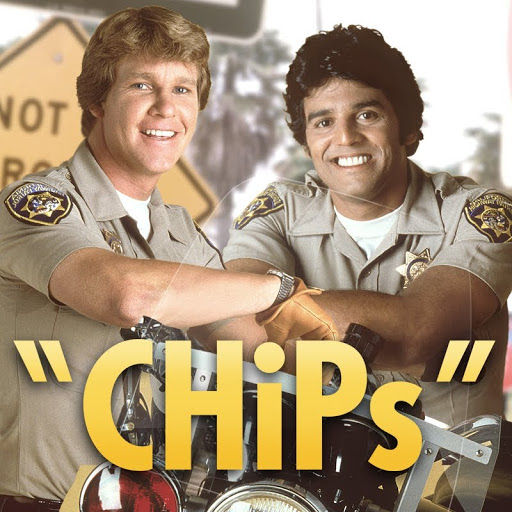
Late Night Retro Television Review: CHiPs 3.4 “High Octane”


Welcome to Late Night Retro Television Reviews, a feature where we review some of our favorite and least favorite shows of the past!  On Mondays, I will be reviewing CHiPs, which ran on NBC from 1977 to 1983.  The entire show is currently streaming on Prime!

This week, CHiPs deals with the oil crisis!

Episode 3.4 “High Octane”

(Dir by John Florea, originally aired on October 6th, 1979)

Tonight’s episode of CHiPs is a real history lesson.

The episode was aired at a time when the U.S. was suffering from a shortage of gasoline.  Conflict in Iran had led to both the Shah fleeing the country and Americans being taken hostage.  Oil production fell, OPEC raised its prices, and people panicked and started to hoard gasoline.  Many states instituted odd-even gas rationing, which meant that only people with an odd-numbered license plate could purchase gas on an odd-numbered day and only people with an even-numbered license plate could purchase gas on an even-numbered day.  As so often happens when the government attempts to micromanage a crisis, this only made things worse as there were soon long lines at the pump and reports of fights breaking out between people at gas stations.  Even with the rationing, many gas stations ran out of gasoline before they could serve every customer.  If you didn’t arrive early enough, chances were that you would not be able to put gas in your car,

California was one of the many states to institute odd-even rationing and this episode of CHiPs is all about the battle over gasoline.  Two crooks are siphoning gas from independent gas stations and then reselling it to other stations.  (Their biggest customer is played by veteran screen tough guy, Aldo Ray.)  Getraer is injured when he crashes his bike while chasing the two crooks, which makes this case personal for Ponch and Baker.  Meanwhile, Ponch and Baker have to break up fights at the gas station, chase yet another guy who was caught siphoning gas from a car, and save yet another motorist who passes out from the fumes of all the gas cans that he had in the backset of his car.  Ponch even starts to date Beth (Ellen Bry), because she works at a gas station and can tell him the best time to show up to make sure that he and Baker are able to fill up their bikes.  Meanwhile, at headquarters, Harlan is giving lessons on the best way to keep unused fuel from evaporating.

Of course, it wouldn’t be CHiPs if there wasn’t also a light-hearted sports angle.  This week, everyone’s into roller hockey.  Ponch serves as the referee for the CHP-sponsored kids’ roller hockey game and everyone agrees that he’s the best referee that they’ve ever seen.  And why not?  He’s Ponch and, by the time the third season rolled around, CHiPs was definitely The Ponch Show.  Later, the adult officer play roller hockey as well.  It’s the show’s way of saying, “California’s still fun, even with the gas rationing!”

I enjoyed this episode because I’m a history nerd and it was interesting to see how the show dealt with the 1979 oil crisis while it was occurring.  It’s interesting that this episode was a bit cynical about rationing, as CHiPs was usually a show that portrayed the government and its policies as positively as possible.  In 1979, even the audiences of CHiPs was fed up with having to pay — let me check my notes to make sure I have this right — nearly a dollar a gallon for gas.

Really?  Just 90 cents for a gallon gas?  Get me a time machine.  I’m going to 1979!

Lisa Reviews An Oscar Nominee: Gravity (dir by Alfonso Cuaron)


Remember Gravity?

Released in 2013, Gravity is largely a two-person film.  There are a few other characters who appear at the start of the film and we hear different voices throughout the movie (including the voice of Ed Harris, cast once again as the voice of NASA) but, for the most part, this film centers on George Clooney and Sandra Bullock floating through space.  Clooney is Kowalski.  Bullock is Stone.  They’re two astronauts who are in space trying to fix the Hubble Telescope when their shuttle is struck by a wave of space debris.  When the shuttle inoperable and the rest of the crew dead, Kowalski and Stone try to figure out how to get back down to Earth.

Space, it turns out, is not as empty as we tend to assume.  Along with the space debris that caused them to get stranded in space in the first place, there’s also a lot of abandoned equipment and outposts that they can use to get back to Earth.  Unfortunately, they’ve got limited oxygen and limited time with which to reach any of that equipment and, even if they do reach it, there’s no guarantee that they’ll be able to get any of it to work.  After Kowalski sacrifices himself to help Stone reach the International Space Station, Stone alone must find a way to return to Earth before the space debris complete their orbit and again threaten to send her hurtling into space.

Gravity is one of those films that demands to not only be seen on the big screen but also to be seen in 3D.  (I say this as someone who was not exactly a fan of the post-Avatar 3D boom.  Too often, 3D felt like a distraction.  In Gravity, it feels like a key part of the story.)  The film not captures the terror of being alone in the emptiness of space but, at the same time, it also captures the beauty of having the entire universe in front of you.  It’s a visually stunning and beautiful film.  Kowalski says, at one point, that he has a hell of a view and it’s hard not to agree with him.  Space may be deadly but it’s beautiful as well.  Stone finds herself tempted to simply allow herself to spend the rest of eternity floating lifelessly in space but ultimately, she embraces life.  She refuses to give up and the film refuses to give up on her or, by extension, the rest of humanity.  Gravity celebrates the beauty of space and creation while also showing that life on Earth has its own beauty as well.  By the film’s end, one can argue that Stone has literally been reborn.

It’s a powerful film, one that is well-acted by both Bullock and George Clooney, both of whom have the star power necessary to hold our interest even when the overwhelming grandeur of space threatens to steal our attention.  (I would argue that Bullock’s performance here is far superior to her Oscar-winning turn in The Blind Side.)  Gravity received ten Oscar nominations and it won seven of them, including the Best Director award for Alfonso Cuaron.  However, it lost Best Picture to another powerful film, 12 Years A Slave.

Retro Television Review: Miami Vice 3.13 “Down For The Count: Part Two”


Welcome to Retro Television Reviews, a feature where we review some of our favorite and least favorite shows of the past!  On Mondays, I will be reviewing Miami Vice, which ran on NBC from 1984 to 1989.  The entire show can be purchased on Prime!

This week is all about justice for Zito!

Episode 3.13 “Down For The Count: Part Two”

(Dir by Richard Compton, originally aired on January 16th, 1987)

Picking up where last week’s episode ended, Down For The Count: Part Two finds almost the entire Vice Squad mourning the death of Larry Zito.  I say “almost” because, as usual, Castillo refuses to show any emotion or even look anyone in the eye.  When he first appeared, Castillo’s stoicism made him an interesting character but I have to admit that I’m starting to get a bored with the character and his refusal to speak in anything more than terse growls.  ZITO’S DEAD!  WAKE UP, CASTILLO!

Switek, needless to say, is heart-broken.  Trudy tells Gina that she had a totally meaningless one night stand with some guy she met at a club because she was depressed.  (“Did it make you feel better?” Gina asks.  “No!” Trudy wails.)  Crockett is determined to take down crooked boxing promoter Oswaldo Guzman (Pepe Serna) and prove that Zito was not a junkie but that he was instead murdered by Guzman’s goons.  As for Tubbs, he makes a few jokes.  WHAT’S WRONG WITH YOU, TUBBS!?  ZITO’S DEAD!

Crockett and Tubbs go undercover as Burnett and Cooper and, once again, I find myself wondering how they can keep successfully doing that when their cover has gotten blown over a dozen times over the course of the series.  Do criminals in Miami not talk to each other?  This time, Crockett pretends to be involved with a cable sports network that wants to make a deal to air the fights that Guzman sponsors.  When a Las Vegas gangster named Guilinni (former Warhol superstar Joe Dallesandro) shows up looking to kill Guzman, Crockett and Tubbs effortlessly manipulate both sides.  It turns out that criminals aren’t that smart.

Meanwhile, Trudy and Gina meet one of Crockett’s associates from the Vietnam War.  His name is Danny Allred (Chris Elliott) and he’s a former CIA agent who now lives in an abandoned airplane.  Danny is a codebreaker and he helps them to figure out the code that Guzman was using to keep track of all of his crooked fights.  Danny is a fun character and I hope he shows up in more episodes.  He added some moments of levity to what was otherwise a pretty grim episode.

This episode had plenty of good moments.  The scene where Crockett and Tubbs visited Zito’s apartment was both poignant and nicely-acted by both Don Johnson and Philip Michael Thomas.  The final shoot-out was violent even by the standards of Miami Vice.  That said, I’m a bit surprised that the episode didn’t revolve around Switek.  Switek gets to express his anger and argue with Internal Affairs at the start of the episode and gets to repeatedly shoot Guzman at the end of the episode but he’s largely absent for the middle part of the story.  As Switek was both Zito’s partner and his best friend, it really does seem like he should have been at the center of the entire episode.

Still, I was glad that Zito’s name was cleared and that Guzman ended up getting shot multiple times until he fell out a window.  The show’s final credits featured still shots of John Diehl as Zito.  I’m going to miss Larry.