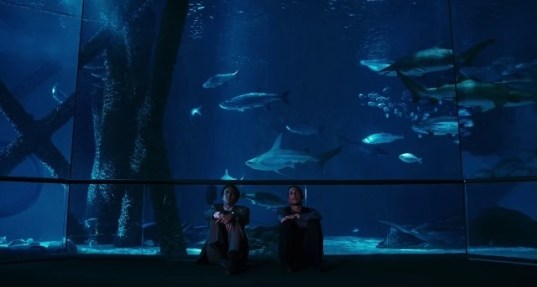
4 Shots From 4 Films: Special Pier Paolo Pasolini Edition


4 Shots From 4 Films is just what it says it is, 4 shots from 4 of our favorite films. As opposed to the reviews and recaps that we usually post, 4 Shots From 4 Films lets the visuals do the talking!

103 years ago, on this date, Pier Paolo Pasolini was born in Italy.  His controversial films and his mysterious death continue to inspire debate to this very day.  Both the man and his works were full of intriguing contradictions.  Pasolini was an atheist who made one of the best Biblical films ever made.  He was a communist who made films that celebrated individual freedom and who had little use for the upper class liberals who made up much of the European counterculture of the 1960s.  In the end, he was an artist unafraid to challenge all assumptions, whether they were found on the right or the left.  His final film, Salo, was the most controversial of his career.  It was also projected to be the first part of a trilogy, though those plans were ended by Pasolini’s murder.

It’s time for….

4 Shots From 4 Pier Paolo Pasolini Films
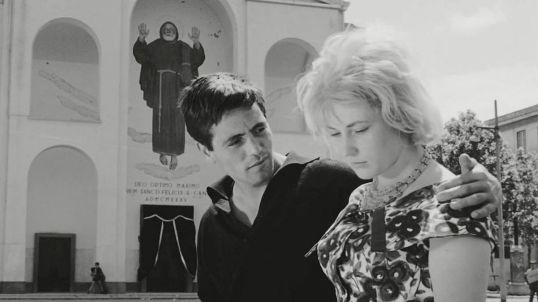
Accatone (1961, dir by Pier Paolo Pasolini, DP: Tonino Delli Colli)
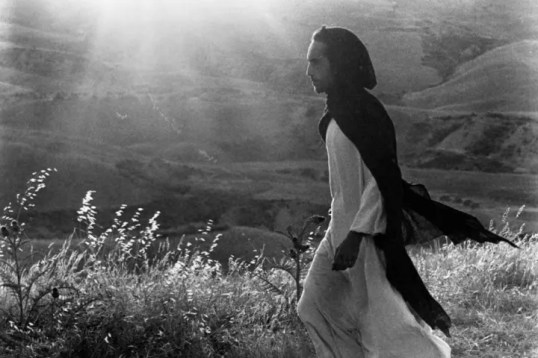
The Gospel According To St. Matthew (1964, dir by Pier Paolo Pasolini, DP: Tonino Delli Colli)
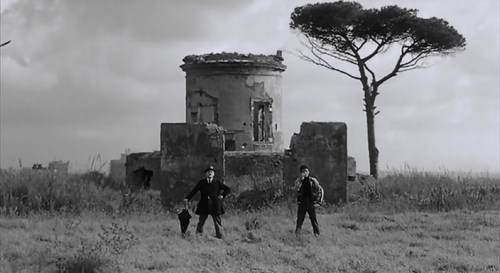
The Hawks and The Sparrows (1966, dir by Pier Paolo Pasolini, DP: Mario Bernardo and Tonino Delli Colli)
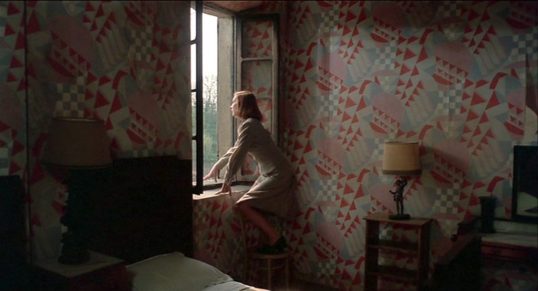
Salo (1975, dir by Pier Paolo Pasolini, DP: Tonino Delli Colli)
Song of the Day: Ashes to Ashes by David Bowie


It’s Ash Wednesday!

I remember, when I was like 14, I got up early in the morning and I woke up my sisters by shouting, “It’s Ash Wednesday, bitches!”  My mom was not amused.  That said, Ash Wednesday is one of my favorite days.  I just love the ritual of it all.  Of course, I also usually wash my forehead fairly early in the day.  That’s allowed, by the way.

Now, before anyone leaves any snarky comments, I fully understand that David Bowie’s Ashes to Ashes is not actually about Ash Wednesday nor are the ashes mentioned in the song literal ashes.  I understand that but hey, this is a good song.

Do you remember a guy that’s been
In such an early song?
I’ve heard a rumor from Ground Control
Oh no, don’t say it’s true

They got a message from the Action Man
“I’m happy, hope you’re happy too
I’ve loved all I’ve needed, love
Sordid details following”

The shrieking of nothing is killing, just
Pictures of Jap girls in synthesis and I
Ain’t got no money and I ain’t got no hair
But I’m hoping to kick but the planet it’s glowing

Ashes to ashes, funk to funky
We know Major Tom’s a junkie
Strung out in heaven’s high
Hitting an all-time low

Time and again I tell myself
I’ll stay clean tonight
But the little green wheels are following me
Oh no, not again
I’m stuck with a valuable friend
“I’m happy, hope you’re happy too”
One flash of light but no smoking pistol

I never done good things (I never done good things)
I never done bad things (I never done bad things)
I never did anything out of the blue, woh-o-oh
Want an axe to break the ice
Wanna come down right now

Ashes to ashes, funk to funky
We know Major Tom’s a junkie
Strung out in heaven’s high
Hitting an all-time low

My mother said, to get things done
You’d better not mess with Major Tom

My mother said, to get things done
You’d better not mess with Major Tom

My mother said, to get things done
You’d better not mess with Major Tom

My mother said, to get things done
You’d better not mess with Major Tom

Songwriter: David Bowie

Music Video of the Day: I’m A Woman by Jennifer Love Hewitt (2013, dir by ????)


Don’t mess with Jennifer Love Hewitt!

I’ve always liked Jennifer Love Hewitt, largely because we’re both Texas girls, we both have what others seem to consider to be an unusual sense of humor, and I imagine that we both share the same struggle when it comes to having to remind men that our eyes are up here.  Of course, for all that we have in common, a huge difference between the two of us is that Jennifer Love Hewitt can actually sing whereas I can barely carry a tune.  (That said, I’ve always felt that my karaoke version of All Time High was better than all the other karaoke versions.)  Jennifer Love Hewitt has released four albums, which is four more than I’ve released.

This video and song were done for the second season of the wonderfully silly and over-the-top The Client List.  Hey, Lifetime …. BRING IT BACK!

Enjoy!

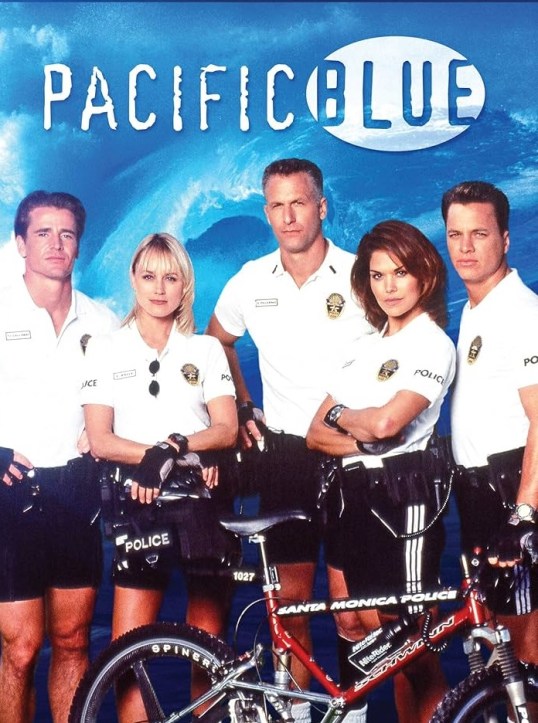
Late Night Retro Television Review: Pacific Blue 1.8 “Burnout”


Welcome to Late Night Retro Television Reviews, a feature where we review some of our favorite and least favorite shows of the past! On Tuesdays, I will be reviewing Pacific Blue, a cop show that aired from 1996 to 2000 on the USA Network!  It’s currently streaming everywhere, though I’m watching it on Tubi.

Oh no!  It’s the cops!

Episode 1.8 “Burnout”

(Dir by Lyndon Chubbuck, originally aired on April 20th, 1996)

This episode of Pacific Blue opens with a hilarious scene of Victor and Cory sneaking up on some drug dealers that they’ve spotted making a sale.  What makes it hilarious is that Victor and Cory somehow manage to do this while 1) wearing their blindingly white t-shirts and 2) riding their bikes.  There’s not much good to say about this show but there’s an undeniable amusement factor in the show’s insistence that bicycle cops don’t look massively dumb creeping up on people while on their bikes.

It turns out that the dealers aren’t selling the usual “smack,” as Cory puts it.  Instead, they’re selling steroids!  Sheila (Shannon Tweed) is upset that one of her waitresses had gotten hooked on steroids and…. wait, who?  Sheila briefly appeared in the pilot episode but she hasn’t been mentioned since and this is certainly the first time that we learn that Lt. Palermo’s girlfriend owns a restaurant.  This episode acts as if Sheila is a regular character that we all know and love.

I get the feeling this episode was meant to air earlier in the season.  Not only does Sheila return but Chris is back to being her arrogant, bitter self.  Chris was a fighter pilot until her eyesight failed, a story we hear again and again in this episode.  (She no longer has 20/20 eyesight but whenever she talks about it, she makes it sound as if she literally went blind.)  Another pilot, Greg (Peter Barton), comes to visit her and makes a few jokes about how riding a bicycle is lame.  This gives Chris a chance to defend her job and to also call out Greg for being a sexist who just wants to get laid before returning to the skies.  Chris may be right about Greg but he’s played by the totally adorable Peter Barton so really, why not?

Meanwhile, on the beach, a schizophrenic man annoys the owner of a bodega by playing his saxophone.  Fights break out,  Cory tells the saxophone man to play his instrument under the pier.  Presumably, it will be easier for him to get mugged or murdered under there.  I like that the solution when it came to the crazy homeless man was just to find somewhere else for him to be crazy and homeless.  Don’t take him to a shelter or a hook him up with mental health professionals or anything silly like that.

This show …. ugh.  I’m really hoping the first season is an outlier and the subsequent seasons will be an improvement.  The only thing worse than bicyclists are people who are cocky about being bicyclists.  For 8 episodes now, it’s been one person after another expressing shock at the whole bicycle thing.  We get it.  We understand.  The cops look stupid on their Schwinns.  But, that’s the show.  If Pacific Blue is still trying to justify its existence after eight episodes, that’s not a great sign.

Scenes That I Love: Mardi Gras in Easy Rider


Happy Mardi Gras!

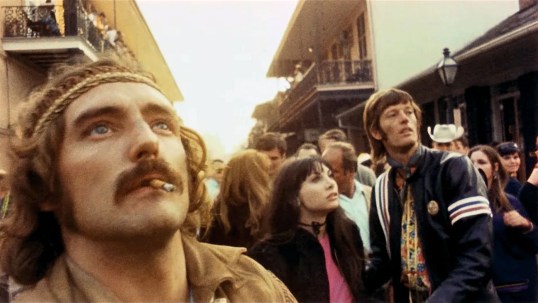
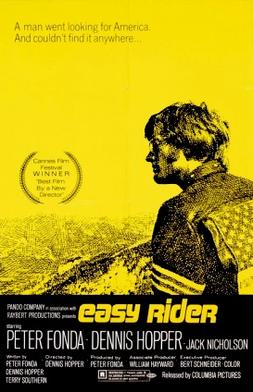
For today’s scene that I love, here is the Mardi Gras sequence from 1969’s Easy Rider.  Featuring Peter Fonda, Dennis Hopper, Karen Black, and Toni Basil walking through the streets of New Orleans, this scene was actually filmed during Mardi Gras.  Those are real Mardi Gras floats and real Mardi Gras participants staring at the camera.  That’s an actual citizen of New Orleans with whom Dennis Hopper appears to have nearly gotten into a fight.  Personally, I relate to Toni Basil in this scene.  She is having a good time no matter what!

I just love how Toni Basil can’t help but dance, no matter what.

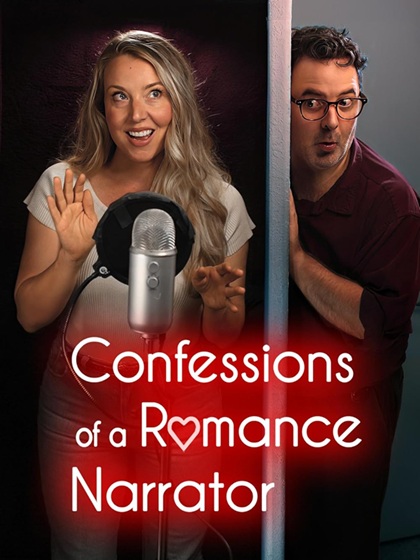
The Films of 2025: Confessions of a Romance Narrator (dir by April Grace Lowe)


Confessions of a Romance Narrator introduces us to Jasalyn (played by the film’s director, April Grace Lowe).

Jasalyn is a romance audio book narrator, spending her time in her closet with a microphone and reading aloud the chapters of books that depict the type of romances that everyone dreams about but rarely experiences.  Jasalyn works hard, trying to make sure that each narration is perfect.  She comes up with a different voice for each character.  She video chats with her acting coach and, together, they practice the perfect “O” sound while her new upstairs neighbor listens with his pressed to the floor.  Jasalyn pines for a co-worker, an egotistical narrator named Richard (Cody Roberts) who doesn’t feel the need to do individual voices for each character because he has …. THE VOICE!  And you know what?  From the minute that Richard first appeared, I knew he wasn’t good enough for Jasalyn but I probably would have fallen for him too because damn, that man has a sexy voice.

The film’s a comedy so it’s not a surprise that things rarely seem to go Jasalyn’s way.  An attempt to leave a flirty message for Richard leads to an author thinking that Jasalyn isn’t professional enough to narrate her book.  (Richard, of course, didn’t listen to the message.)  Her attempts to look perfect for a facetime call with Richard only leads to Richard calling her back while she’s in the middle of eating a chocolate cake.  Her upstairs neighbor (Craig Jessen) is a bit noisy and plays the ukulele.  Convinced that Jasalyn is a sex worker, he’s thrilled when she comes up to his apartment to complain about the noise.  From the minute we see Jasalyn opening and closing her closet as she attempts to meet an all-important deadline, we know that there’s no way this movie is going to end without featuring her somehow getting trapped in the closet while only wearing a towel.  And the movie doesn’t let us down.  It’s a lot to happen to one person but, by the end of the movie, you’re convinced that it is something that could all happen to Jasalyn.  We’ve all had a friend like Jasalyn.  A lot of us have been her at some point in our lives.

Confessions of a Romance Narrator is a breezy and likable 78 minute film, one that examines the life of a romance narrator and includes enough small details that you’re left with no doubt that the film knows what it’s talking about.  There are two types of romance narrators, the film tells us in voice-over, those who stand and those who sit.  Jasalyn stands but her mom thinks that she sits and sends her a hemorrhoid pillow for her birthday.  And, from the minute we see it arrive, we know her loud neighbor is going to be the one to grab it and take it up to her apartment.  It’s a bit predictable but it’s cute, much like the film itself.  April Grace Lowe gives a likable performance as Jasalyn.  The film is, I believe, edited together from a series of 10-minute short films that Lowe made about the character.  It’s a likable movie.  Much like a good romance novel, it’s fun, quick, and satisfying.

4 Shots From 4 Films: Special New Orleans Edition


4 (or more) Shots From 4 (or more) Films is just what it says it is, 4 (or more) shots from 4 (or more) of our favorite films. As opposed to the reviews and recaps that we usually post, 4 (or more) Shots From 4 (or more) Films lets the visuals do the talking.

Today, the Shattered Lens pays homage to the greatest of Mardi Gras cities, New Orleans!

4 Shots From 4 New Orleans-Set Films

Easy Rider (1969, dir by Dennis Hopper, DP: Laszlo Kovacs)

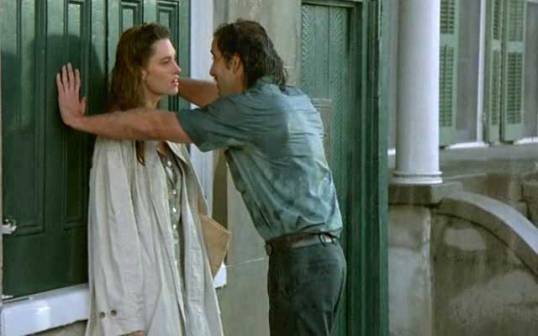
Zandalee (1990, dir by Sam Pillsbury, DP: Walt Lloyd)

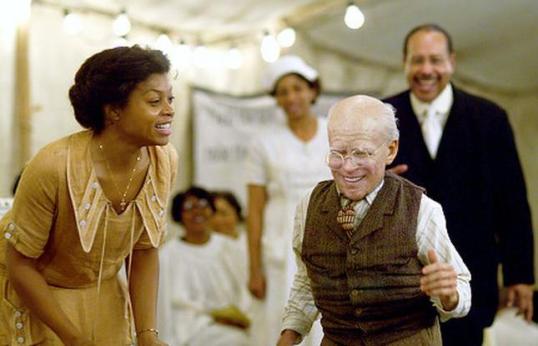
The Curious Case of Benjamin Button (2008, dir by David Fincher, DP: Claudio Miranda)

Bad Lieutenant: Port of Call New Orleans (2009, dir by Werner Herzog, DP: Peter Zieitlinger)


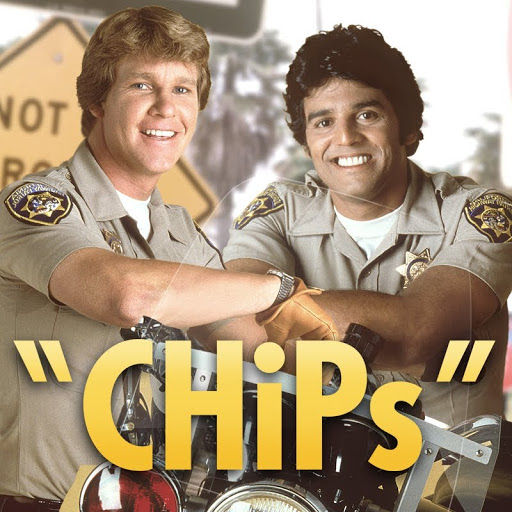
Retro Television Review: CHiPs 3.11 “The Watch Commander”


Welcome to Late Night Retro Television Reviews, a feature where we review some of our favorite and least favorite shows of the past!  On Mondays, I will be reviewing CHiPs, which ran on NBC from 1977 to 1983.  The entire show is currently streaming on Prime!

This week, a new boss gets on everyone’s nerves!

Episode 3.11 “The Watch Commander”

(Dir by Don Weis, originally aired on November 17th, 1979)

There’s a new watch commander and he’s not making any friends.  Lt. Harold Bates (Granville Van Dusen) previously worked in the PR Department at Sacramento and he sets out to make a bad impression from the minute that Sgt. Getraer first introduces him to the cops working out of the Los Angeles precinct.  Lt. Bates is all about following the book.  He notes every flaw, from a missed button to poor gas mileage.  Getraer tries to get him to understand that there’s more to being a cop than just following regulations and that being a member of the Highway Patrol means having to make split-second decisions.  Bates wants to know why Ponch isn’t wearing a regulation shirt.

In some ways, this is as close as CHiPs will ever get to The Caine Mutiny.  Nobody removes Bates from command but Bates still struggles to recover from making a terrible first impression and his own Queeg-like personality doesn’t help things.  His attempts to call out the members of the Highway Patrol who get the worst gas mileage backfires when Officer Grossman siphons gas out of Bates’s car, leading to Bates appearing at the bottom of the list.  Bates has no idea how to talk to or trust people.  Jon Baker tries to offer a helping hand, especially since both he and Bates served in Vietnam.  He invites Bates to go skydiving with him over the weekend.  Bates assumes it’s a set-up and turns him down.

We do get the usual car crashes and a subplot about a bunch of thieves who are stealing trucks from loading docks but the majority of this episode takes place at headquarters.  Ponch, who is said to still be on limited duty, is recovering from his accident and one gets the feeling that this episode was developed so Erik Estrada could be a part of the story without actually having to spend too much time on his bike.  (Estrada actually did injure himself during filming and those injuries were written into the show.)  In some ways, this is CHiPs at its most realistic because everyone always hates the new boss, especially one who thinks that he knows everything.

Going back to The Caine Mutiny, it was impossible not to feel sorry for Queeg, who was not a bad guy but instead just someone who wasn’t good at talking to people and who ultimately was let down by the people who should have been supporting him.  I never felt that type of sympathy for Bates, who really did just come across as being a jerk.  Thank goodness for Robert Pine, whose steadiness as Sgt. Getraer is well-used by this episode.  Pine is there to support Bates but he also protects his men.  This episode features Getraer at his most likable.  Everyone should be so lucky as to have a Getraer in their life.

The TSL Grindhouse: Mad Max (dir by George Miller)


I was a bit shocked to discover that I’ve neve actually sat down and written up a real review of 1979’s Mad Max for this site.  Considering how much I like this film and all the scenes and shots that I’ve share from Mad Max, you would think that I would have at least written about why I like this violent but intriguing film so much.  Today is George Miller’s birthday so let’s talk about the film that launched his career.

Mad Max is often described as being a post-apocalypse film but that’s not quite true.  It does take place in a “near future,” one in which there seems to be noticeably less people around.  The roads of Australia are dominated by crazed punks who have taken their obsession with their cars and motorcycles to the extreme.  (Director George Miller trained as a doctor and has said that this film was partially inspired by the auto crash victims who were brought into the emergency room on a nightly basis.)  Civilization is on the verge of collapsing but it is still hanging on by a thread.  For every Night Rider (Vincent Gil), ranting as he crashes into people, and for every psycho gang leader like Toecutter (Hugh Keays-Byrne), there are people just trying to survive day-to-day.  The nightly news is still televised though the news is always so bad that no one seems to pay it much mind anymore.  There are still cops, like Max Rockatansky (Mel Gibson) and Goose Rains (Steve Bisley), who patrol the roads in their cars and who do whatever is necessary to chase down the people who appear to be destined to inherit a world that they very much want to destroy.  Society still exists but it’s obviously on its last legs and the attempts to maintain some sort of normalcy — laws, news, vacation homes, sexy saxophone playing — can’t hide the fact that the world is coming to a violent end.  Max tries to deny that reality until, finally, he has no choice but to accept both the new world and his place in it.

Whenever I watch Mad Max, I’m always surprised by the fact that Mel Gibson almost seems like a supporting character for the majority of the movie.  When the movie starts, Max is tightly wound and in control and he doesn’t show much emotion while he’s on the job.  The flamboyant and always joking Goose seems like a much more likable protagonist.  He’s the guy that the viewer wants to spend time with and, when he ends up getting burned nearly to death by Toecutter and Toecutter’s protegee, Johnny the Boy (Tim Burns, cast as one of the most loathsome characters ever to appear in a film), it’s a shocking moment.  Goose had so much life to him.  The attention then shifts to Max’s wife, Jessie (Joanne Samuel).  When she finds herself being menaced by Toecutter and his gang, it’s alarming because she’s both a mother and she’s eventually isolated from both her family and from Max.  We don’t want to see anything bad happen to Jessie.  When something bad does happen, we’re more than ready for Max to step up and get some vengeance.  And that’s exactly what Max does.  One of the film’s most iconic images features Max not even flinching at the sound of an explosion in the distance.  He’s gotten his vengeance but at the price of his soul.  And, even as the film comes to an end, it’s obvious that nothing can be done to stop society’s collapse.  Max has accepted what neither Goose nor Jessie could.  There is no safety or society in the new world.  There is only the road and the battle to control the remains of the world.

What makes Mad Max such a thrilling film?  A lot of it has to do with the stuntwork, which remains truly spectacular to this day.  Made in the era before CGI, Mad Max features real cars that are being driven by real people who put themselves into real danger to capture some of the most stunning crashes captured on film.  As well, the cast truly brings their characters to life.  Tim Burns makes Johnny the Boy into a truly hateful character, one who manages to somehow be both whiny and dangerous at the same time.  Joanne Samuel and Steve Bisley are sympathetic as Jessie and Goose.  And then you’ve got Mel Gibson, young and on the verge of the superstardom that people now tend to pretend never happened, showing the intensity that would become his trademark as the increasingly unhinged Max.  (I love Tom Hardy but, as good as he was in Mad Max: Fury Road, he never came close to capturing the soul-shattering intensity of Gibson’s thousand-yard stare,)

That said, I think the main reason why Mad Max continues to resonate is because it all feels so plausible.  One looks at the world of Mad Max and it’s very easy to imagine finding yourself there.  Unlike other apocalypse films that often seem to be taking place in an entirely different universe, Mad Max feels like it could be playing out just a few miles away from the closet motorway.  For all of the spectacular stunts and flamboyant characters, Mad Max is a film that continues to feel very real.  For that, George Miller deserves a lot of credit.  Mad Max is a true classic of grindhouse filmmaking, featuring a story that feels more powerful with each passing year.