4 Shots From 4 Films is just what it says it is, 4 shots from 4 of our favorite films. As opposed to the reviews and recaps that we usually post, 4 Shots From 4 Films lets the visuals do the talking.
With today’s edition of 4 Shots From 4 Films, we wish a very happy birthday to the one and only Leon Isaac Kennedy! Born in 1949, Leon Isaac Kennedy was working as a successful disc jockey by the time he turned 17. (He was known as Leon the Lover.) Kennedy went on to achieve cult fame by starring as prison boxer Too Sweet in the Penitentiary films, along with appearing opposite Muhammad Ali in Body and Soul and Chuck Norris in Lone Wolf McQuade. Kennedy, who turns 77 today, has retired from acting and became an evangelist in the 90s.
4 Shots From 4 Leon Isaac Kennedy Films:
Death Force (1978, directed by Cirio H. Santiago)
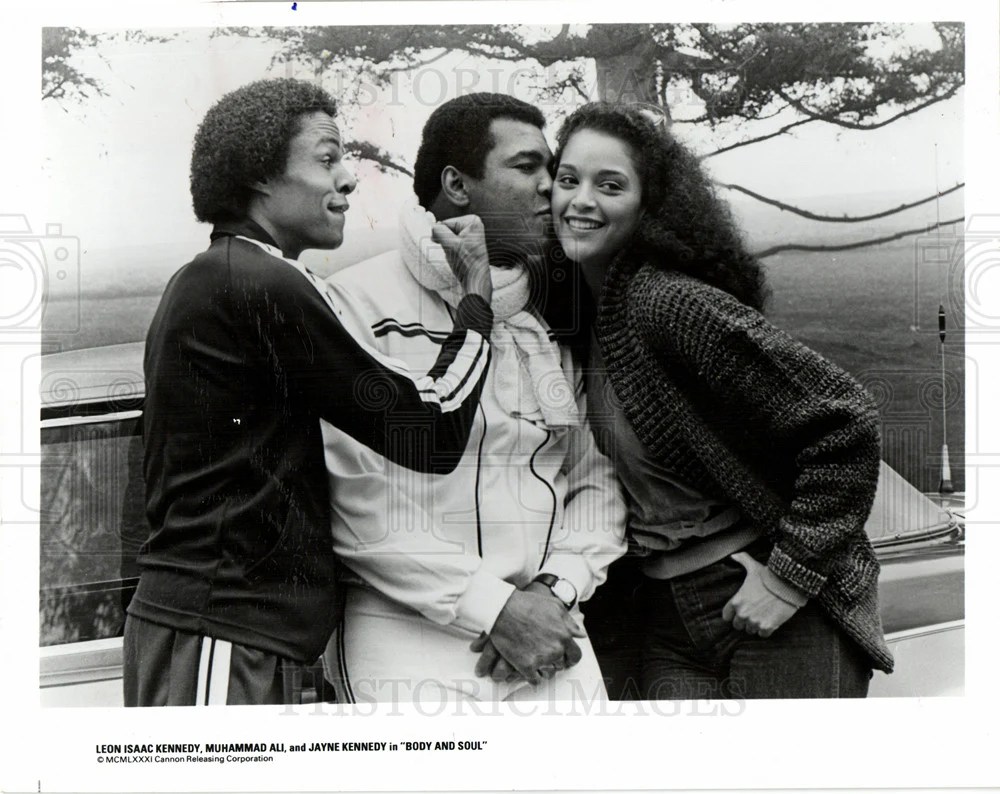
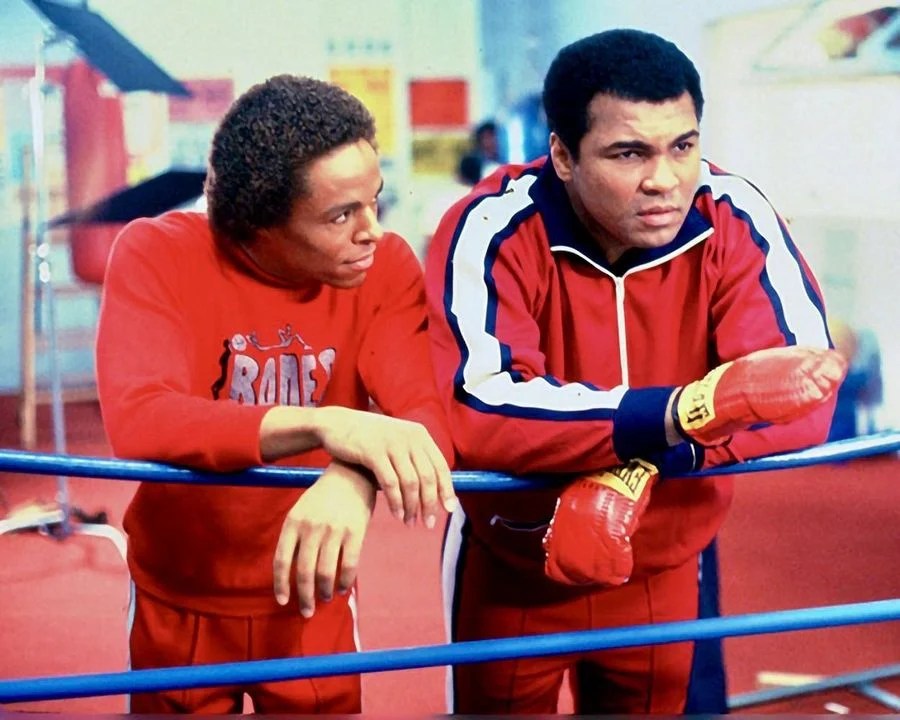
Body and Soul (1981, directed by George Bowers)
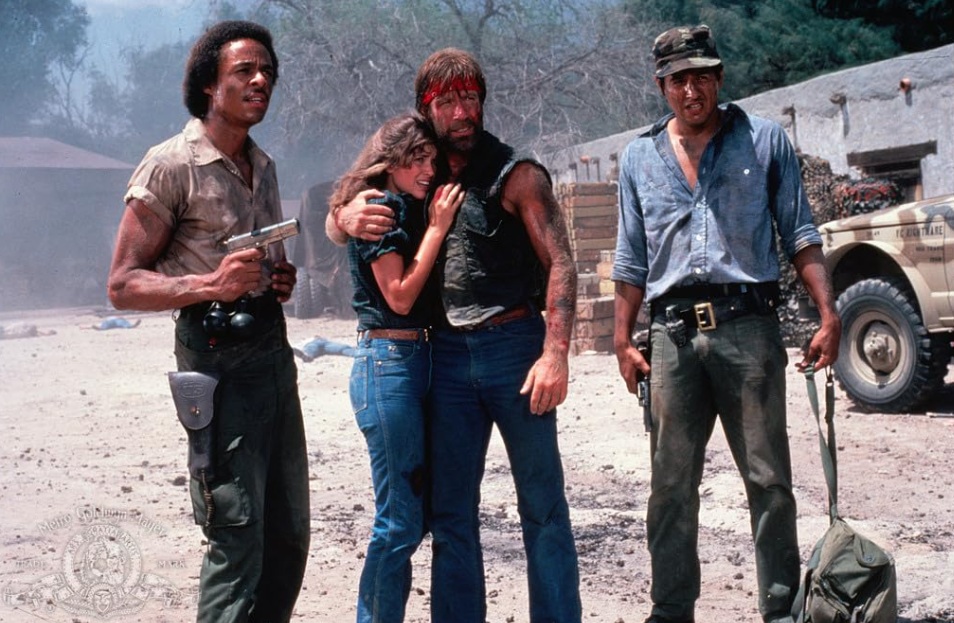
Lone Wolf McQuade (1983, directed by Steve Carver)
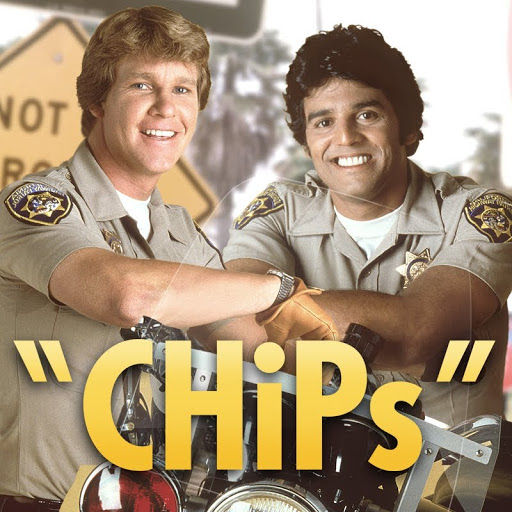
Welcome to Late Night Retro Television Reviews, a feature where we review some of our favorite and least favorite shows of the past! On Mondays, I will be reviewing CHiPs, which ran on NBC from 1977 to 1983. The entire show is currently streaming on Prime!
This week, it’s a special two-hour episode of CHiPs!
Episodes 3.9 and 3.10 “Drive, Lady, Drive”
(Dir by Don Weis, originally aired on November 10, 1979)
The police at nearby Palma Vista are on strike and the state of California has agreed to allow some members of the Highway Patrol to patrol the town until the strike is over. Getraer assigns Baker, Ponch, Bear, and some new guy named Lenny (Leon Isaac Kennedy) to head over to the town, Baker is named the OIC, which I eventually figured out stood for “Officer in Charge.” Getraer knows better than to give the job to Ponch.
Ponch, by the way, is back! After being absent for two episodes due to Erik Estrada actually injuring himself in a motorcycle crash, Ponch returns in this episode and he goes through the entire episode with this huge grin on his face as if he’s saying, “You know you missed me.” Ponch’s return means that Baker is once again relegated to being the strong, silent partner who doesn’t really get to do anything. In fact, Baker crashes his motorcycle early on in this episode, as if the show was trying to tell us, “See? It could happen to anyone!”
The striking cops accuse Baker, Ponch, Bear, and Lenny of being scabs and strike breakers. I’m not really a fan of public sector unions. (When it comes to the police striking, my hero is Calvin Coolidge, who came to fame when he broke up a policeman’s strike in Massachusetts.) Still, it felt strange to watch the show’s heroes cross that picket line. That would definitely not happen on television today.
There’s a lot going on in Palma Vista. There’s some rich kids who keep joyriding in a dune buggy and who think they can escape prosecution by crossing the city limits. (Joke’s on them! The Highway Patrol has jurisdiction everywhere!) There’s some truck hijackers who are setting up a headquarters in town. There’s an angry city councilman (Michael Conrad) who doesn’t feel his children should be held accountable for their actions.
That said, the majority of this two-hour episode centered on a stock car race and one of the racers, Candi Wright (Kelly Harmon). Will Candi win the big race or will she lose to her friendly rival (and possible future romantic partner) Don Croyden (Jordan Clarke)? Will Ponch be able to both date her and do his job? And most importantly, will she be able to adopt a traumatized little girl (played by Tracey Gold) who Candi discovered outside of a burning house? That’s a lot of storylines for someone who wasn’t even a regular cast member and a part of me wonders if maybe this episode was meant to be a secret pilot for a Candi Wright television series. It would explain a lot.
This really was a basic episode of CHiPs, with the only real difference being that it was two-hours long for some reason. A lot of what happened in the episode, especially the racing footage, felt like filler. There was really no need for this to be a double-sized episode. It also doesn’t help that, as opposed to the lovely Los Angeles scenery that we usually see, this episode took place in a rather ugly town. There was some appropriately spectacular crashes but, in the end, this episode ran too long and felt a bit pointless. Get the Highway Patrol back on the highways!
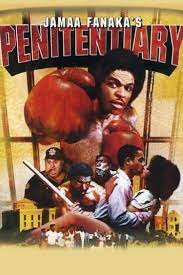
In the 1979 prison/blaxploitation film Penitentiary, everyone gets a nickname.
For instance, the main character, played by Leon Isaac Kennedy, may be named Martel Gordone but everyone calls him “Too Sweet,” because he’s addicted to Mr. Goodbar candy bars. Just because Gordone has been sent to prison for a murder that he didn’t actually commit, that’s not going to stop him from going out of his way to eat all the candy that he can. Fortunately, all that candy has not effected his ability to throw a punch or win a fight because this prison is obsessed with boxing.
Too Sweet’s first cellmate is known as Half-Dead (Badja Dola). Half-Dead got his name because he’s already dead on the inside. At least, that’s what I assume the nickname means. It could also mean that, if you find yourself sharing a cell with him, you’re already as good as dead. Half-Dead is violent and sadistic and when he feels that Too Sweet isn’t showing him enough respect, Half-Dead attacks. After an extremely long and grueling fight (one that is made all the more intense by the fact that it’s taking place in a cramped cell), Too Sweet succeeded in kicking Half-Dead’s ass.
Seldom Seen (Floyd Chetman) is Too Sweet’s second cellmate. Seldom Seen is …. well, he’s seldom seen. He has spent 50 of his 65 years in prison. Seldom avoids all of the prison drama and instead, he spends his time in his cell, reading books while sitting in front of a poster of Malcolm X. Seldom Seen, it turns out, used to be a boxer and, when Too Sweet decides to enter the prison boxing tournament, Seldom Seen not only serves as his trainer but also as his mentor.
Jesse “The Bull” Amos (Donovan Womack) is also entering the boxing tournament. Jesse is know as the Bull because he’s big, he’s tough, and he never stops coming after his opponents. He becomes angry when Too Sweet encourage the Bull’s cellmate, “Genie” (Thommy Pollard), to stand up for himself and to not let any man treat him as being “property.” The Bull wants revenge.
Of course, there’s more to the prison boxing tournament than just getting revenge. Win a fight and the warden will allow you an entire week of conjugal visits. Win the tournament and you’ll get early parole and …. wait, a minute, what? I’m all for emptying the prisons and giving people second chances but I’m pretty sure that’s not how parole works. Oh well, it’s a movie, right?
Penitentiary was directed by Jamaa Fanaka, who also directed the very first film that I ever reviewed for this site, Welcome Home Brother Charles.Like Brother Charles, Penitentiary is a film that is obsessed with the idea of being a prisoner of not just the legal system but also of society as a whole. Too Sweet doesn’t just learn how to box. He also learns, from Seldom Seen, that the key to being the “freest man in the world” is to learn how to control your desires and to exercise the self-discipline necessary to make something of yourself. Penitentiary never quite reaches the lunatic heights of Welcome Home Brother Charles, of course. Penitentiary is a far more straight-forward film. Welcome Home Brother Charles featured the title character using his penis to strangle his enemies. In Penitentiary, Too Sweet is content to just beat them up in the boxing ring.
Penitentiary gets off to a strong start. Leon Isaac Kennedy gives a likable performance as Too Sweet and the initial fight between Too Sweet and Half-Dead is handled well. Surprisingly enough, it’s during the boxing scenes that the film starts to run out of energy. The boxing matches go on forever and Fanaka gets bogged down with repetitive scenes of prisoners ducking into a prison restroom to get it on while the guards are distracted by the fight. The film’s narrative momentum stalls out long before the inevitable match between Too Sweet and the Bull. For all the build-up, the final fight turns out to be oddly anti-climatic.
Penitentiary has some strong moments but it doesn’t really come together as a whole. Still, it did well-enough at the box office that Fanaka would go on to direct two increasingly surreal sequels.
4 Shots From 4 Films is just what it says it is, 4 shots from 4 of our favorite films. As opposed to the reviews and recaps that we usually post, 4 Shots From 4 Films lets the visuals do the talking.
With today’s edition of 4 Shots From 4 Films, we wish a very happy birthday to the one and only Leon Isaac Kennedy! Born in 1949, Leon Isaac Kennedy was working as a successful disc jockey by the time he turned 17. (He was known as Leon the Lover.) Kennedy went on to achieve cult fame by starring as prison boxer Too Sweet in the Penitentiary films, along with appearing opposite Muhammad Ali in Body and Soul and Chuck Norris in Lone Wolf McQuade. Kennedy, who turns 71 today, is also an evangelist.
When his little sister falls ill with sickle-cell anemia, Leon Johnson (Leon Isaac Kennedy) has to make a decision. He can either finish his education, graduate from medical school, and treat her as a doctor or he can drop out of school, reinvent himself as “Leon the Lover,” and make a fortune as a professional boxer! At first, Leon’s career goes perfectly. He is winning fights. He is making money. He has a foxy new girlfriend (played Leon Isaac Kennedy’s then-wife, Jayne Kennedy.) But then the fame starts to go to Leon’s head. He forgets where he came from. He’s no longer fighting just to help his sister. Now, he’s fighting for his own personal glory. When Leon finally gets a title shot, a crooked boxing promoter known as Big Man (former JFK in-law Peter Lawford, looking coked up) orders Leon to take a dive. Will Leon intentionally lose the biggest fight of his life or will he stay in the ring and battle Ricardo (Al Denava), a boxer so evil that he literally throws children to the ground? More importantly, will he make his trainer (Muhammad Ali, playing himself!) proud?
Leon Isaac Kennedy, Muhammad Ali, and Peter Lawford all in the same movie!? No surprise here, it’s a Cannon film. Leon Isaac Kennedy was best known for playing a jailhouse boxer in the Penitentiary films and he was a good actor with charisma to burn so it probably made perfect sense to not only cast him in a remake of John Garfield’s Body and Soul but to let him write the script too. The end result is a film that is too heavy-handed to be taken seriously but it is still an entertaining movie. Body and Soul leaves not a single sports cliché unused but Kennedy was a convincing fighter and the boxing scenes are well-directed. Muhammad Ali did a better job playing himself here then he did in The Greatest. All in all, Body and Soul is a good movie for fight fans.
Body and Soul was not a box office success and Kennedy ended his film career a few years after it was released. He is now the head of Leon Kennedy Ministries, Inc of Burbank, California.
J.J. McQuade is a former Marine who keeps the peace in El Paso through a combination of karate and machine guns. McQuade lives in a house in the desert, with only a wolf and refrigerator full of beer to provide companionship. He prefers to work alone, even though his captain (R.G. Armstrong) insists that McQuade partner up with a rookie named Kayo Ramos (Robert Beltran). Ramos is eager to prove himself but Lone Wolf McQuade has to work alone. Otherwise, his nickname would not make any sense.
Things change when McQuade’s teenage daughter (Dana Kimmel) is put in the hospital by an arrogant and sleazy arms dealer named Rawley Wilkes (David Carradine). McQuade is out for both justice and revenge and Ramos’s knowledge of how to turn on a computer proves to be helpful. Also teaming up with McQuade: an FBI agent (Leon Isaac Kennedy), a retired Ranger named Dakota (L.Q. Jones), and Rawley’s former lover (Barbara Carrera), who now happens to be McQuade’s current lover.
The predictable storyline is not what makes Lone Wolf McQuade a classic. Instead, it’s that this movie features both Chuck Norris and David Carradine at the height of their abilities. The whole film is directed like a grand western, with Norris and Carradine taking the roles that would usually go to Clint Eastwood and Lee Van Cleef. The plot may be full of holes but when these two face off, none of that matters. Neither Carradine nor Norris used stunt doubles for their fight scenes and it makes all the difference.
This was one of the first movies to feature Chuck Norris with the beard that’s become his trademark. Wisely, Chuck doesn’t say much in the movie and leaves most of the heavy-duty acting to his co-stars. (Though he may be an icon of cool, Chuck has never been anyone’s idea of a great actor.) Carradine’s performance as Rawley feels like an early version of his best known role, Bill in Kill Bill. L.Q. Jones and R.G. Armstrong both bring their own history as members of the Sam Peckinpah stock company to the film while Barbara Carrera livens up her part with a sultry spark. Keep an eye out for both William Sanderson and Sharon Farrell in small roles. Speaking of small roles, Daniel Frishman almost steals the entire damn movie as a rival arms dealer.
Though it wasn’t produced by Cannon, Lone Wolf McQuade is an essential for fans of Chuck Norris.
 4 Shots From 4 Films is just what it says it is, 4 shots from 4 of our favorite films. As opposed to the reviews and recaps that we usually post, 4 Shots From 4 Films lets the visuals do the talking.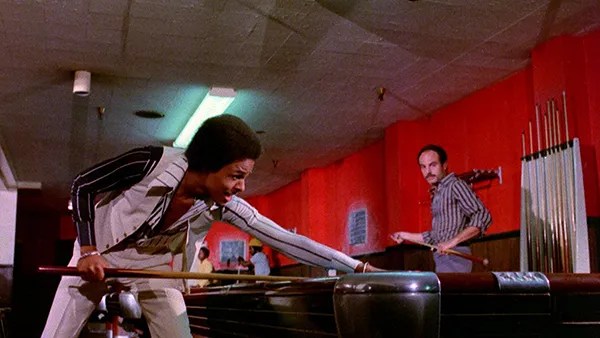


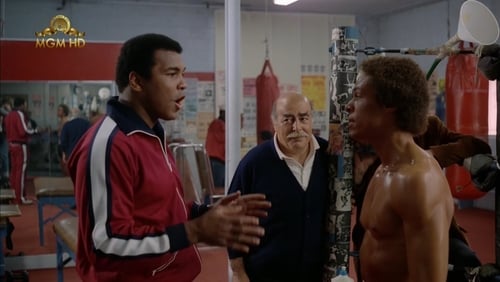


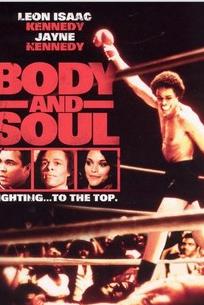 When his little sister falls ill with sickle-cell anemia, Leon Johnson (Leon Isaac Kennedy) has to make a decision. He can either finish his education, graduate from medical school, and treat her as a doctor or he can drop out of school, reinvent himself as “Leon the Lover,” and make a fortune as a professional boxer! At first, Leon’s career goes perfectly. He is winning fights. He is making money. He has a foxy new girlfriend (played Leon Isaac Kennedy’s then-wife, Jayne Kennedy.) But then the fame starts to go to Leon’s head. He forgets where he came from. He’s no longer fighting just to help his sister. Now, he’s fighting for his own personal glory. When Leon finally gets a title shot, a crooked boxing promoter known as Big Man (former JFK in-law Peter Lawford, looking coked up) orders Leon to take a dive. Will Leon intentionally lose the biggest fight of his life or will he stay in the ring and battle Ricardo (Al Denava), a boxer so evil that he literally throws children to the ground? More importantly, will he make his trainer (Muhammad Ali, playing himself!) proud?
 Chuck Norris is J.J. McQuade, Texas Ranger!
 Through the Shattered Lens