The 1971 The Panic in Needle Park tells the story of two young lover in New York City.
Helen (Kitty Winn) is an innocent runaway from Indiana who, when we first meet her, has just had a back alley abortion. Her boyfriend, Marco (Raul Julia), doesn’t seem to be too concerned about her or anyone else for that matter. Instead, it’s Marco’s dealer, Bobby (Al Pacino), who checks in on Helen and who visits her when she eventually ends up in the hospital. It’s also Bobby who gives her a place to stay after she gets out of the hospital.
Bobby is a small-time dealer. He’s not book smart but he knows how to survive on the streets and it’s hard not to be charmed by him. He literally never stop talking. As he explains it to Helen, he’s been in jail 8 times but he’s not a bad guy. His brother, Hank (Richard Bright, who also co-starred with Pacino in The Godfather films), is a burglar and he legitimately is a bad guy but he and Bobby seem to have a close relationship. Bobby also swears that he’s not a drug addict. He just occasionally indulges. It doesn’t take long to discover that Bobby isn’t being completely honest with either Helen or himself.
Together, Bobby and Helen ….
Well, they don’t solve crimes. In fact, they really don’t do much of anything. That’s kind of the problem with movies about drug addicts. For the most part, drug addicts are boring people and there’s only so many times that you can watch someone shoot up before you lose interest. Heroin may make the addicts feel alive but, with a few notable exception (Trainspotting comes to mind), it’s always been a bit of a cinematic dead end. The film takes a documentary approach to Bobby and Helen’s descent into addiction and it’s not exactly the most thrilling thing to watch.
Bobby and Helen live in an area of New York that’s known as needle park, largely due to the fact that it’s full of addicts. It’s a place where people sit on street corners and nod off and where everyone’s life is apparently fueled by petty crime. An unlikable narcotics detective (Alan Vint) occasionally walks through the area and tries to talk everyone into betraying everyone else. It turns out that being a drug addict is not like being in the mafia. Everyone expects you to betray everyone else.
As I said, it’s a bit of a drag to watch but you do end up caring about Bobby and Helen. They come across as being two essentially decent people who have gotten caught up in a terrible situation. Even when they piss you off, you still feel badly for them because you know that they’ve surrendered control of their lives to their addictions. It helps that they’re played by two very appealing actors. This was only Al Pacino’s second film and his first starring role but he commands the screen like a junkie James Cagney. Meanwhile, making her film debut, Kitty Winn gives a sympathetic and likable performance as Helen. You watch Winn’s vulnerably sincere performance and you understand why Helen would have looked for safety with undeserving losers like Marco and Bobby and, as a result, you don’t hold it against her that she seems to be addicted not just to heroin but also to falling for the wrong men. Helen does a lot of stupid things but you keep hoping that she’ll somehow manage to survive living in needle park.
Pacino, of course, followed-up The Panic In Needle Park with The Godfather. As for Kitty Win, she won best actress at Cannes but the role didn’t lead to the stardom that it probably should have. Her best-known role remains playing the nanny in The Exorcist.
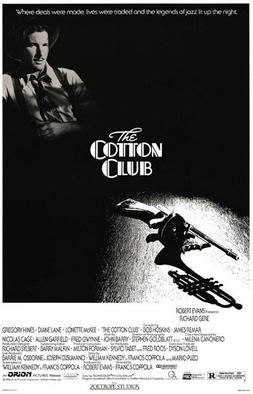
The time is the 1930s and the place is New York City. Everyone wants to get into the Cotton Club. Owned by British gangster Owney Madden (Bob Hoskins), the Cotton Club is a place where the stage is exclusively reserved for black performers and the audience is exclusively rich and white. Everyone from gangsters to film stars comes to the Cotton Club.
It is at the Cotton Club that Dixie Dwyer (Richard Gere) meets everyone from Dutch Shultz (James Remar) to Gloria Swanson (Diane Venora). Shultz hires Dixie to look after his girlfriend, Vera (Diane Lane). Swanson arranges for Dixie to become a movie star. Meanwhile, Dixie’s crazy brother, Vincent (Nicolas Cage), rises up through the New York underworld. Meanwhile, dancing brothers Sandman and Clay Williams (played by real-life brothers Gregory and Maurice Hines) are stars on stage but face discrimination off, at least until Harlem gangster Bumpy Rhodes (Laurence Fishburne) comes to their aid.
The Cotton Club was a dream project of the legendary producer, Robert Evans, who was looking to make a comeback after being famously charged with cocaine trafficking in 1980. Having commissioned a screenplay by his former Godfather collaborators, Mario Puzo and Francis Ford Coppola, Evans originally planned to direct the film himself. At the last minute, Evans changes his mind and asked Coppola to direct the film. After working with him on The Godfather, Coppola had sworn that he would never work with Evans again. (When he won an Oscar for The Godfather‘s screenplay, Coppola pointedly thanked everyone but Robert Evans.) However, by 1984, a series of box office flops had damaged Coppola’s standing in Hollywood. Needing the money, Coppola agreed to direct The Cotton Club.
Evans raised the film’s $58 million budget from a number of investors, including Roy Radin. Roy Radin was best known for putting together Vaudeville reunions in the 70s and being accused of raping an actress in 1980. Radin and Evans were introduced to each other by a drug dealer named Lanie Jacobs, who was hoping to remake herself as a film producer. During the production of The Cotton Club, Radin was murdered by a contract killer who was hired by Jacobs, who apparently felt that Radin was trying to muscle her out of the film production.
While all of this was going on, Coppola fell into his familiar pattern of going overbudget and falling behind schedule. This led to another investor filing a lawsuit against Orion Pictures and two other investors, claiming fraud and breach of contract. When the film was finally released, it received mixed reviews, struggled at the box office, and only received two Oscar nominations.
With all of the murder and drama that was occurring offscreen, it is not surprising that the film itself was overshadowed. The Cotton Club is a disjointed mix of gangster drama and big production numbers. As always with post-Apocalypse Now Coppola, there are flashes of brilliance in The Cotton Club. Some of the production numbers are impressive and visually, this movie has got style to burn. However, among the leads, neither Richard Gere nor Diane Lane seem to be invested in their characters while the talented Hines brothers are underused. The supporting cast is full of good character actors who are all in a search of a better script. A few do manage to make an impression: James Remar, Bob Hoskins and Fred Gwynne as veteran gangsters, Nicolas Cage as the film’s stand-in for Mad Dog Coll, and Joe Dallesandro as Lucky Luciano. The Cotton Club is sometimes boring and sometimes exciting but the onscreen story is never as interesting as what happened behind the scenes.
The 1973 film, Jesus Christ Superstar, opens with a desert in Israel. All is still. All is quiet. Suddenly, we see a cloud of dust in the distance. A bus is speeding through the desert and the music on the soundtrack explodes with a sudden urgency.
The bus comes to a stop and we notice that there’s a big cross tied to the top of it. The doors open and suddenly — oh my God, it’s hundreds of hippies! American hippies In Israel! They’re climbing off the bus, one after another. Some of them are being tossed sub machine guns. Another gets a whip. One of them puts on a purple robe and looks like he is slightly disturbed. Others are dressed in black. Makeup is applied. Everyone’s having a great time. One heavy-set fellow, with frizzy hair, climbs to the top of the bus and sits down on a throne. He watches as everyone else pulls down the cross. One long-haired man, who was never seen leaving the bus, is suddenly among the hippies. He’s dressed in white and everyone is suddenly bowing before him.
Well, almost everyone. One of the bus’s passengers, a serious-looking man (Carl Anderson), has walked away from the hippies. From a safe distance, he looks back at them and he seems to be as confused by all of this as we are.
Why is everyone in the desert? That’s relatively easy to explain. They’re performing a Passion Play. Carl Anderson is playing Judas. The man in white is Ted Neeley. Whether he is meant to be an actor playing Jesus or Jesus himself is a question that the movie leaves for you to decide. We never see him get off the bus and, perhaps more importantly, we don’t see him get on the bus at the end.
(Just you watch. I’ll mention that Jesus gets crucified at the end of this movie and someone will pop up in the comments and say, “How about a spoiler alert?”)
Hmmm…religion and hippies. Those are two things that, in the past, I have definitely had issues with. In fact, you would totally be justified in assuming that I would hate Jesus Christ Superstar. And yet, I don’t. I actually rather like it.
True, there are some things that make me cringe. The sound of all the disciples singing, “What’s the buzz, tell me what’s a happening?” always makes me shudder and say, “Oh my God, this is so 1973!” A scene where Judas suddenly finds himself being chased through the desert by a modern tank is just a bit too on-the-nose. Finally, I understand that Ted Neeley’s stage performance as Jesus is highly acclaimed but, to me, his performance in this film will always be known as the Screaming Jesus. Too often, it’s obvious that Neeley is still performing as if he’s on stage and has to project to the back row. It’s interesting to compare him to Carl Anderson, who also played Judas on stage but who, in the movie, gives a performance that is powerful specifically because it’s a cinematic performance, as opposed to a stage performance.
But, even with all that in mind, there’s so much about this movie that works. Based on the rock opera by Tim Rice and Andrew Lloyd Webber, Jesus Christ Superstar is definitely a product of its time, serving as a time machine for amateur historians like me. (Then again, I guess you could say that about any movie the opens with hippies driving a school bus across Israel.) Sometimes, the lyrics are a bit obvious but the songs still stick around in your head. And it’s not just Carl Anderson who gives a good performance. Yvonne Elliman, Josh Mostel, Bob Bingham, Larry Marshall, Barry Dennen — they all contribute strong work, both musically and otherwise.
And then there’s the big Simon Zealotes/Poor Jerusalem production number:
There’s several reasons I love this scene but mostly it just comes down to the fact that it captures the explosive energy that comes from watching a live performance. Larry Marshall (who plays Simon Zealotes) has one of the most fascinating faces that I’ve ever seen in a film and when he performs, he performs as if the fate of the entire world depends on it. As previously stated, I’ve never been sold on Ted Neely’s performance as Jesus but Carl Anderson burns with charisma in the role of Judas.
Mostly, however, I just love the choreography and watching the dancers. I guess that’s not that surprising considering just how important dance was (and still is, even if I’m now just dancing for fun) in my life but, to be honest, I’m probably one of the most hyper critical people out there when it comes to dance in film, regarding both the way that it’s often choreographed and usually filmed. But this scene is probably about as close to perfect in both regards as I’ve ever seen. It goes beyond the fact that the dancers obviously have a lot of energy and enthusiasm and that they all look good while dancing. The great thing about the choreography in this scene is that it all feels so spontaneous. There’s less emphasis on technical perfection and more emphasis on capturing emotion and thought through movement. What I love is that the number is choreographed to make it appear as if not all of the dancers in this scene are on the exact same beat. Some of them appear to come in a second or two late, which is something that would have made a lot of my former teachers and choreographers scream and curse because, far too often, people become so obsessed with technical perfection that they forget that passion is just as important as perfect technique. (I’m biased, of course, because I’ve always been more passionate than perfect.) The dancers in this scene have a lot of passion and it’s thrilling to watch.
Beyond that, there’s the insane burlesque of Josh Mostel’s performance as Herod and Barry Dennen’s neurotic interpretation of Pilate. There’s Yvonne Elliman’s performance of I Don’t Know How To Love Him. There’s that famous closing shot, a happy accident that was achieved when a shepherd just happened to wander past the camera.
And, of course, there’s this:
The performance above pretty much sums up the appeal of Jesus Christ Superstar. It’s both ludicrous and powerful at the same time.
I know there’s some debate as to whether Jesus Christ Superstar is sincere or sacrilegious. In college, there was this girl in my dorm who started the semester as a pagan, spent a month as an evangelical, and then ended the semester as a pagan again. When she was going through her evangelical phase, she would listen to the Jesus Christ Superstar soundtrack constantly. Seriously. 24 hours a day. 7 days a week. After three days, I was sick of hearing it. I found myself wondering if anyone had ever been driven to murder over having to listen to Heaven On Their Minds one too many times. Fortunately, something happened to cause her to once again lose her faith and she went back to listening to Fall Out Boy.
I don’t think that, as conceived by Rice and Lloyd Webber, Jesus Christ Superstar is in any way sacrilegious. At the same time, it does have a potentially subversive streak to it. This is especially true of the film version. At times, director Norman Jewison seems to be almost deliberately parodying the excesses of more conventional religious films. Instead of spending millions to recreate the ancient world, Jesus Christ Superstar uses ruins and desert. Instead of featuring ornate costumes, Jesus Christ Superstar features Roman soldiers who wear pink tank tops. Ultimately, Jesus Christ Superstar reveres Jesus but dismisses the conventions of both organized Christianity and epic filmmaking. Judah Ben-Hur would not have known what to do with himself if he wandered onto the set of Jesus Christ Superstar.
It’s over the top, silly, ludicrous, and ultimately rather powerful. Jesus Christ Superstar is a film that shouldn’t work and yet it does.
Today, Arleigh and Pantsukudasai have left town to attend the Anime Expo and I find myself momentarily alone here at the TSL Bunker, curled up on the couch in my beloved Pirates t-shirt and Hello Kitty panties, and cursing my asthma. As I lay here, it occurs to me that it’s been a while since I’ve shared a “scene that I love” here on the site. So, why not rectify that situation now?
Norman Jewison’s 1972 film version of Jesus Christ Superstar is a film that I’ve been meaning to review for a while but for now, I just want to share my favorite scene from that film, the performance of Simon Zealotes/Poor Jerusalem.
There’s several reasons I love that scene but mostly it just comes down to the fact that it captures the explosive energy that comes from watching a live performance. Larry Marshall (who plays Simon Zealotes) has one of the most fascinating faces that I’ve ever seen in film and when he sings, he sings as if the fate of the entire world depends on it. That said, I’ve never been sold on Ted Neely’s performance as Jesus but Carl Anderson burns with charisma in the role of Judas.
Mostly, however, I just love the choreography and watching the dancers. I guess that’s not that surprising considering just how important dance was (and still is, even if I’m now just dancing for fun) in my life but, to be honest, I’m probably one of the most hyper critical people out there when it comes to dance in film, regarding both the the way that it’s often choreographed and usually filmed. But this scene is probably about as close to perfect in both regards as I’ve ever seen. It goes beyond the fact that the dancers obviously have a lot of energy and enthusiasm and that they all look good while dancing. The great thing about the choreography in this scene is that it all feels so spontaneous. There’s less emphasis on technical perfection and more emphasis on capturing emotion and thought through movement. What I love is that the number is choreographed to make it appear as if not all of the dancers in this scene are on the exact same beat. Some of them appear to come in a second or two late, which is something that would have made a lot of my former teachers and choreographers scream and curse because, far too often, people become so obsessed with technical perfection that they forget that passion is just as important as perfect technique. (I’m biased, of course, because I’ve always been more passionate than perfect.) The dancers in this scene have a lot of passion and it’s thrilling to watch.

 The time is the 1930s and the place is New York City. Everyone wants to get into the Cotton Club. Owned by British gangster Owney Madden (Bob Hoskins), the Cotton Club is a place where the stage is exclusively reserved for black performers and the audience is exclusively rich and white. Everyone from gangsters to film stars comes to the Cotton Club.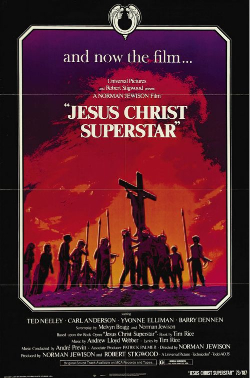
 Through the Shattered Lens