Every Monday night at 9:00 Central Time, my wife Sierra and I host a “Live Movie Tweet” event on X using the hashtag #MondayMuggers. We rotate movie picks each week, and our tastes are quite different. Tonight, Monday, August 11th, we’ll be watching RUNNING SCARED (1986), starring Gregory Hines, Billy Crystal, Steven Bauer, Darlanne Fluegel, Joe Pantoliano, Dan Hedaya, Jon Gries, Tracy Reed, and Jimmy Smits.
The plot:Two street-wise Chicago cops have to shake off some rust after returning from a Key West vacation to pursue a drug dealer who nearly killed them in the past.
Peter Hyams directed RUNNING SCARED, and it’s one of the very best “Buddy Cop” films out there. So, if a night full of action and laughs sounds good to you, join us on #MondayMuggers and watch RUNNING SCARED. It’s on Amazon Prime, Tubi, and PlutoTV! I’ve included the trailer below:
I love Thanksgiving because I love spending time with my family. My Mom is one of 15 kids from a large Catholic family in central Arkansas, so this is the time of year that I get to see a big part of that extended family. A lot of people are spread out across the state and country so we don’t get to see everyone at Thanksgiving, but we do get to see a lot of people. We go to my aunt Jo Ellen’s house, and I get to hang out with a bunch of my aunts, uncles and cousins. We’ll have a giant feast from a potluck of items we’ve grown to love over the years…Aunt Jo Ellen’s turkey and dressing, Mom’s candied yams, Aunt Connie’s deviled eggs, the giant table of desserts, etc. Our family is all about traditions, and this is the time of year we share those with each other. I just love it!
One of our movie-watching traditions is watching PLANES, TRAINS AND AUTOMOBILES together. And we do it every year. We still laugh at all the right parts…Kevin Bacon getting Steve Martin’s cab thanks to a mysteriously large trunk on the curb, John Candy reading The Canadian Mounted, Doobie’s Taxiola, “Those Aren’t Pillows,” Owen’s strange facial expressions and throat noises, “a couple of balls and an extra set of fingers,” the runway crossing, the car rental counter meltdown, “you’re going the wrong way,” the hotel destruction getaway, and the indestructible car radio. Odds are many of you are smiling as you read this quick summary of some of my favorite parts. We’ll watch the movie together while we’re settling in back at Dad and Mom’s house after a wonderful Thanksgiving lunch. It’s a guarantee that Dad will be snoring at some point.
As much as I love to eat, to me, Thanksgiving is all about spending time with the ones I love. We’ll tell a lot of the same stories that we’ve told many times over the years, and we’ll laugh at them all over again. We’ll truly enjoy our time together. Our family is not perfect, and we don’t always see eye to eye on everything, but we love each other and that is more important than just about anything else. That’s a Crain family tradition passed down from my parents. One of the best things about PLANES, TRAINS AND AUTOMOBILES is that there are times when the laughs die completely down, and that’s when the movie reveals its heart. The same can be said for my family, and that’s something I’m truly thankful for.
A series of murders have occurred at Harrison State Prison in California. What better way to investigate the crimes and catch the guilty than to send in an undercover cop? Who can enter a California prison and investigate the crime without drawing too much attention to himself? It would have to be someone who could blend in with the population without seeming out of place.
How about Jean-Claude Van Damme?
Van Damme, in one of his early films, stars as Louis Burke, a Canadian with a Belgian accent who comes to Los Angeles to track down a serial killer known as the Sandman (Patrick Kilpatrick, who was last seen running for governor of California in 2021) and then just sticks around. Burke enters the prison and somehow, he is not immediately tagged as being a B-movie star who is working for the police. I guess California prisons are full of Belgian kickboxers.
A realistic portrait of prison and police work, this is not. But it is Van Damme at his most berserk, flexing his muscles and shouting at his enemies and getting hit in the head by a flying wrench at one point. To the surprise of no one, the Sandman eventually ends up in the prison with Burke and it leads to an epic showdown that takes place in the middle of a prison riot. The fight is exciting because Van Damme and Kilpatrick were two tough actors who, at that point in their careers, had nothing to lose by going all out on screen.
(Of the three major B-action stars of the 90s, Dolph Lundgren was the one you watched because he could actually act. Steven Seagal was the one you watched because you hoped someone would beat him up. Jean-Claude Van Damme was the one you watched because he could actually do everything he did in the movies in real life as well.)
There are many good actors to be found in Death Warrant, playing paper-thin characters. Robert Guillaume is the one-eyed clerk who takes Burke under his wing. Larry Hankin is the biggest weasel in the prison. Art LaFleuer is the prison guard from Hell. George Dickerson is the obviously corrupt official. Abdul Salaam El-Razzac is the voodoo priest who watches over the prison. Cynthia Gibb is the attorney who pays Burke a conjugal visit. It’s good to see them all.
Death Warrant is a dumb and entertaining B-movie that doesn’t take itself too seriously. It’s not Van Damme’s best but it’s not his worst either. It’s Damme fun.
The 1979 film, Escape from Alcatraz, opens with Clint Eastwood and a group of policeman taking a barge across San Francisco Bay, heading towards Alcatraz Island. As any fan of Eastwood’s 1970s film work can tell attest, this is hardly the first time that Eastwood has gone across the bay to Alcatraz. In The Enforcer, Eastwood went to Alcatraz to kill a bunch of hippies and save the Mayor of San Francisco. It wasn’t easy but, fortunately, Clint found a rocket launcher.
However, in Escape from Alcatraz, it’s hard not to notice that Clint is wearing handcuffs. And the cops beat him up while traveling to the island. And once they reach the prison …. oh my God, they’re making Clint Eastwood walk down a prison hallway naked and shoving him into a cell! Is this some early form of 60 Days In or could it be that Clint Eastwood is playing a convict? After starting the 70s in the role of Dirty Harry Callahan, Clint Eastwood ended the 70s playing one of the people who Callahan would have arrested. (Or, if we’re going to be totally honest, shot.)
Specifically, Clint Eastwood is playing Frank Morris. The real-life Morris was a career criminal. He had a genius IQ but he loved to steal and he spent most of his known life in prison. He was specifically sent to Alcatraz because he had a history of escaping from other prisons. Because Alcatraz was sitting on an island in the middle of the difficult-to-cross San Francisco Bay, it had a reputation for being inescapable and, indeed, every previous escape attempt had failed and led to someone getting gunned down by the guards. Morris, of course, immediately started to plot his escape. Working with three other prisoners, Morris managed to tunnel his way out of the prison. (Famously, Morris and his accomplices also managed to create papier-mâché dummy heads, which were left in their beds and kept the guards from realizing that they had escaped from their cells.) No one knows whether Morris and his accomplices managed to cross the bay, though I think most people would prefer to think that they made it to freedom. Our natural tendency is to root for the underdog, even if they are a group of car thieves fleeing from a federal prison.
For the most part, Escape from Alcatraz sticks to the facts of Morris’s escape. Of course, because Frank Morris is played by Clint Eastwood, there’s never really much doubt as to whether or not he’s going to figure out a way to get out of the prison. There’s not a prison in the world that could hold 70s-era Clint Eastwood!
The casting of Eastwood, however, adds another layer to the story because Eastwood, especially at the time that Escape from Alcatraz was made, was the ideal representation of individualism. From the minute the smug warden (played by Patrick McGoohan) tells Morris that it will be impossible to escape from Alcatraz, it becomes obvious why Morris has no other option but to escape. The warden thinks that he can tell the prisoners what to do, when to talk, and what to think. The warden expects his prisoners to live and act like monks who have taken a vow of silence but, instead of offering the hope of salvation, the warden is more concerned with exercising his own power. The warden doesn’t flinch at taking away the rights of the prisoners, even after his actions lead to an otherwise harmless prisoner having a mental breakdown and chopping off his own fingers. As such, Escape from Alctraz is not just another mid-budget, 70s action movie. Instead, it’s the story of the State (represented by McGoohan) vs the Individual (represented by Eastwood). It’s a film that says that yes, Frank Morris may be a criminal but he still has a right to his humanity. Society may want to forget about the prisoners in Alcatraz but Frank Morris has no intention of being forgotten,
Escape from Alcatraz was Eastwood’s final collaboration with the director Don Siegel. Siegel instinctively understood how to best use Eastwood’s laconic presence. Siegel previously directed Eastwood in Dirty Harry, another film that featured a conflict between the State and the Individual. Perhaps even more importantly, Siegel directed the original Invasion of the Body Snatchers, another film in which one man struggles to maintain his humanity and his sense of self. In many ways, both Alcatraz’s warden and the alien body snatchers are portrayed as having the same goal. They both want to eliminate free will and human emotion. In the end, the viewer doesn’t just want Morris to escape because he’s Clint Eastwood. Instead, the viewer knows that Morris has to escape before he’s robbed of his soul.
(Sadly, Siegel and Eastwood had a bit of a falling out during the direction of Escape from Alcatraz, with Siegel apparently buying the rights to the story before Eastwood could purchase them in order to make sure that Siegel and not Eastwood would be credited as the film’s producer. This led to a rift between the two men, one that was wasn’t healed before Siegel’s death in 1991. However, even after their rift, Eastwood continued to say that everything he knew about directing, he learned from watching Sergio Leone and Don Siegel. Unforgiven was dedicated to both of them.)
Escape from Alcatraz is an enjoyable and entertainingly tense action film, one that convinces us that prison is Hell and which also features one of Eastwood’s best performances. (Like many actors, Eastwood seems to have more fun playing a rule-breaking rebel as opposed to an upholder of law and order.) The supporting cast is also great, with McGoohan turning the warden into a truly hissable villain. Fred Ward, Jack Thibeau, and Larry Hankin all make good impressions as Morris’s accomplices while Roberts Blossom will break your heart as a prisoner who just wants to be allowed to paint.
Personally, I don’t know if Frank Morris survived his escape attempt but I know that Clint Eastwood definitely did.
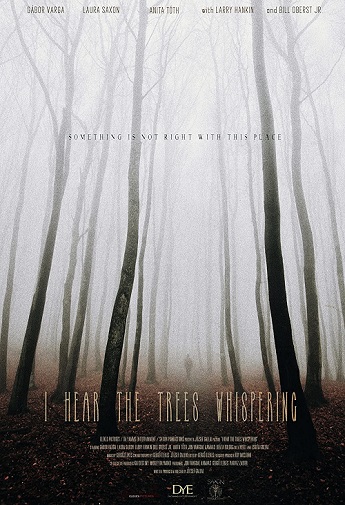
A man named Will (Gabor Varga) has a new job. He spends his days in the wilderness, living in a small cabin and essentially keeping an eye out for anyone who might need help or who might be doing something that they shouldn’t be doing. His only company is his supervisor, June (Laura Saxon). He never meets June. He just hears her voice as he spends his days exploring the forest. Her voice sounds familiar to him, like someone from his recent past,
Will is a man hiding from the traumas of that past. His wife died in a tragic accident. His daughter is currently being raised by her grandfather (Larry Hankin). Will has next to no contact with her. He says it’s better that way. June tells him that almost everyone who accepts a job in the forest is trying to avoid something or escape some sort of tragedy. The forest is where people go to disappear.
June also explains that strange things are hidden in the forest,. Will comes across creepy and deserted buildings. He finds a backpack and makes a shocking discovery when he searches it. Some nights, he thinks that he might see a figure in the distance trying to give him some sort of coded message.
The latest film from director Joszef Gallai, I Hear The Trees Whispering is full of atmosphere. The majority of the film is shot from Will’s point of view. Indeed, we never see Will’s face. Instead, we hear his voice and occasionally, we see his hands while he’s searching for something. It’s a technique that puts us directly into Will’s mind. Just as he’s lost in the wilderness, so are we. Just as he’s hearing strange noises and trying to see where they’re coming from, so are we. It’s a technique the allows the film to capture the forest in all of it ominous beauty. One can see why Will would want to escape to the forest while also understanding how the isolation could drive someone to the point of madness. However, there’s another reason why the majority of the film is shot from WIll’s point of view, one that I won’t spoil beyond to say that it all pays off in an unexpected but effective twist during the film’s third act.
With a 78-minute running time, I Hear The Trees Whispering moves at a deliberate pace, Once again, it’s a film that’s far more concerned with setting the proper atmosphere and developing the characters of Will and June than with tossing in any cheap jump scares. The audience’s fear and anxiety comes from the fact that it’s impossible to watch the film without imagining how you would react if you found yourself in the same situation. Would you have the courage to leave the cabin and see where the noises were coming from? I probably wouldn’t but Will doesn’t really have a choice. He’s as much a prisoner of fate as he is a prisoner of his tragic past. Just as Jack Torrance was always meant to be the caretaker of the Overlook Hotel, Will was always meant to search the forest in search of answers.
As I mentioned earlier, there’s a big twist in the third act, one that I guarantee will take you by surprise and which will force you to reconsider everything that you’ve previously seen. That’s what a good twist does!
I Hear The Trees Whispering is an effectively atmospheric thriller, one that will leave you thinking long after the end credits have rolled.
As one might expect from the sequel film to Breaking Bad, the shadow of Walter White hangs over very minute of El Camino.
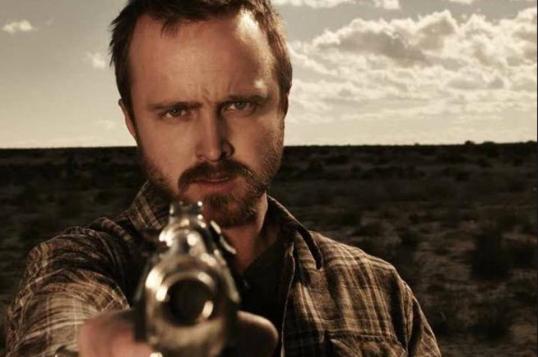
Physically, Bryan Cranston doesn’t have a large role in El Camino. Like many of the characters from Breaking Bad, he appears only in a flashback. Jesse Pinkman (Aaron Paul) spends a good deal of this movie dwelling on the past, perhaps because the only way that he can have a future is by mentally forgiving himself for all the stuff that went on while he was cooking meth with Walter White and, later, for the Nazi bikers who kept him chained up in a cage like an animal. So, it makes sense that we would see a lot of flashbacks, the majority featuring characters who are no longer alive. Cranston’s Walter White only appears towards the end of the film, when Jesse remembers the conversation they had at a diner about what Jesse was going to do with the money that they were making. It’s a bit jarring to see them, largely because Walter still looks like an earnest and frail science teacher while Jesse is still young, loud, and more than a little obnoxious. It’s quite a contrast to what we know will eventually happen to both characters.
For obvious reasons, Walter White isn’t in much of El Camino but his ghost seems to following Jesse through the entire movie. For that matter, so does the ghost of Tod Alquist (Jesse Plemons). It’s not just that a good deal of the movie deals with Jesse trying to figure out where Tod hid all of his money. (Jesse is planning on using the money to hopefully escape New Mexico and start a new life in Alaska.) It’s also that Jesse has been scarred, both physically and mentally, by the Hellish time that he spent as Tod’s …. well, Tod’s pet. Tod treated Jesse like a dog, keeping him on a leash, punishing him for being “bad,” and then offering Jesse pizza as a reward whenever Jesse did something right. To be honest, the flashbacks with Tod take some getting used to, largely because Plemons has obviously aged quite a bit between the finale of Breaking Bad and the shooting of El Camino. But, still, Plemons is absolutely terrifying as the unfailingly polite but definitely sociopathic Tod. At one point, Tod casually brings Jesse over to his apartment so that Jesse can help dispose of the body of his cleaning lady. Tod murdered her because she came across some money that he was hiding in a hollowed-out book. Tod shrugs as he tells the story of her murder, as if his actions are as commonplace as waking up and going to bed.
Throughout Breaking Bad, Jesse spent most of the series being manipulated by evil men. What was ironic, of course, was that Jesse was the only one of those men who must people automatically considered to be a criminal. Everyone thought that Walter was a tragic family man. Tod was largely anonymous and those who did notice him usually assumed he was just an eccentric weirdo. Jesse, on the other hand, was the guy who was continually getting hauled in by the police and harassed by the DEA. He was the one who was viewed as being a danger to society even though he eventually proved himself to be one of the few characters with anything resembling a conscience. In El Camino, Jesse finally gets a chance to determine his own fate. Will he embrace the lucrative but soul-destroying greed of Walter and Tod? Or will he escape and try to make a new life for himself?
El Camino is a visually stunning tour-de-force, anchored by Aaron Paul’s empathetic performance as Jesse. Jesse is no longer as loud as he may have been in Breaking Bad. He’s a man haunted by the past and, watching the film, you know, regardless of whether he makes it to Alaska, the scars will never fully heal. He has the haunted eyes of a man who is never going to be fully okay, regardless of where he ends up. In fact, if we’re going to be realistic, he probably doesn’t have much of a future ahead of him. Those ghosts are always going to follow him and, as Robert Forster’s Ed sagely explains it, much of what has happened is due to Jesse’s own poor decisions.
Still, whatever mistakes he’s made in the past, you can’t help but wish the best for Jesse Pinkman.
Here’s a good example of why I need to clean out my DVR more regularly:
I recorded the 1983 legal thriller, The Star Chamber, off of Starz on March 14th. I know what you’re saying. “Big deal! That wasn’t that long ago.” Well, did I mention that it was March 14th, 2017?
That’s right! The Star Chamber sat on my DVR for over a year before I finally got around to watching it last night. You’d be justified in asking why it took me so long and I’m afraid that I really couldn’t give you a definite answer. I can, however, tell you the four main reasons why I recorded it in the first place:
I’m always intrigued whenever I come across a movie of which I haven’t previously heard.
The movie was described as being about a conflicted judge and I just happen to love legal films.
I really, really liked the title. The Star Chamber? Did that mean it took place in a room full of stars?
Before I recorded The Star Chamber, I only had 55 films on the DVR. Since I don’t like odd numbers, recording The Star Chamber took care of that problem.
As for the film itself, The Star Chamber is another one of those movies where a group of vigilantes end up getting pissed off because liberal California judges are letting too many murderers go free because of pesky, constitutional technicalities. The twist here is that the vigilantes are the same judges who keep tossing out evidence and ruling that confessions are inadmissible in court. After spending their day setting free the dregs of society, the judges all gather in a nearby house and review the evidence before voting on whether or not they believe the accused was actually guilty. If the verdict is guilty, the judges promptly hire a hit man who proceeds to clean up the streets.
The newest member of this tribunal is Judge Steven R. Hardin (Michael Douglas). Hardin is haunted by the technicalities that forced him to toss out a case against two accused of child murderers. (Making things even worse, the child’s father commits suicide afterward.) Despite his initial reservations, Judge Hardin signs off on hiring an assassin to take the two men out. But, when it becomes apparent that the two men actually were innocent, Judge Hardin is horrified to discover that there’s no way to call off the hit…
The Star Chamber is an oddly constructed movie. When the movie starts, it feels like a typical police procedural. From there, the movie turns into a rather talky examination of the U.S. legal system, with Judge Hardin trying to balance his idealism with the often frustrating reality of what it takes to uphold the law. The movie then briefly turns into a conspiracy film, featuring middle-aged men in suits holding secret meetings and debating whether or not they’re serving the greater good. And then, towards the end of the movie, it turns into an action film, with Judge Hardin being chased by two drug dealers, a contract killer, and a suspicious police detective (Yaphet Kotto). Judge Hardin may start the movie as a conflicted liberal but he ends at someone who can blow up the entire second floor of a drug lab. In many ways, The Star Chamber is a deeply silly film but, as directed and co-written by Peter Hyams, it’s also just pulpy enough to be entertaining. The dialogue may be over-the-top but so is Michael Douglas’s performance so it all evens out in the end.
It may have taken me a while to get around to watching The Star Chamber but I’m glad that I finally did. It’s a ludicrous film and all the more entertaining as a result.
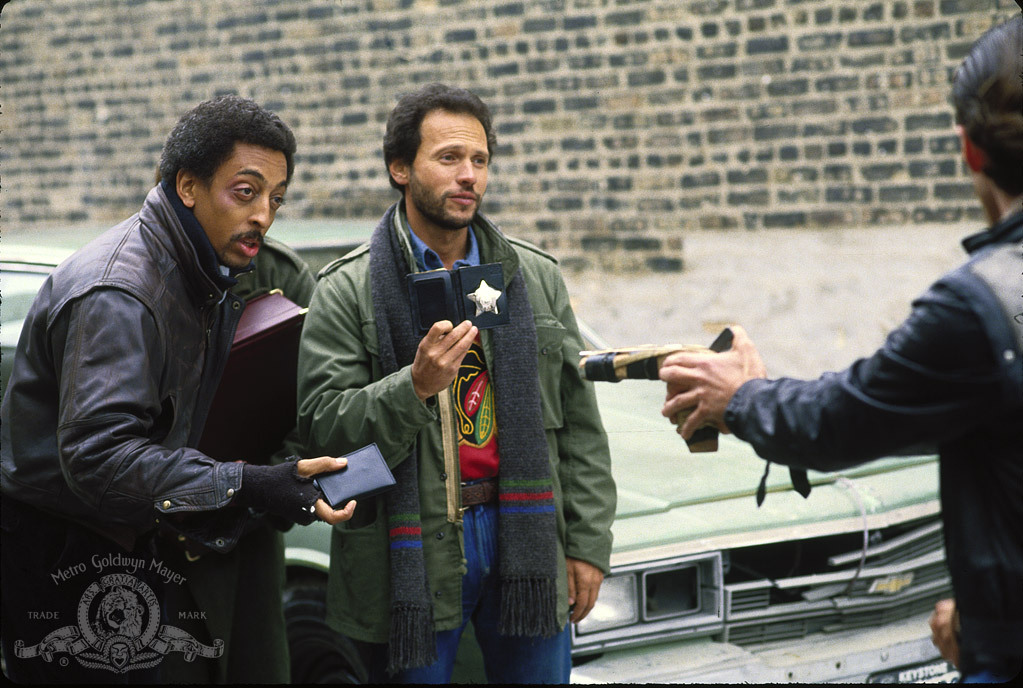
Ray Hughes (Gregory Hines!) and Danny Costanzo (Billy Crystal!!!) are two tough detectives in Chicago. All they want to do is three things: retire, open a bar in Florida, and bust Chicago’s most ruthless drug dealer, Julio Gonzalez (Jimmy Smits). Their captain (Dan Hedaya) wants them to leave for Florida as soon as possible but they are determined to take down Julio first.’
There are two strange things about this otherwise formulaic crime film. First off, the two tough cops are played by Gregory Hines and Billy Crystal. According to the film’s Wikipedia page, director Peter Hyams realized that Running Scared‘s plot was nothing special so he decided that the only way to make the movie stand out was by doing it “with two actors you would not normally expect to see in an action movie.” The other strange thing is that Hyams’s gambit worked. Gregory Hines may have been best known as a dancer and Billy Crystal as a comedian but both of them were surprisingly believable as Chicago cops. Running Scared is actually one of Billy Crystal’s best performances. For once, he’s believable as being someone other than a version of himself. Even his frequent one liners seem like something that a detective would say instead of Crystal recycling punch lines from his act. Whether they are chasing down perps and firing their guns at a moving vehicle, Hines and Crystal are never less than credible as action stars. LorenzoLamashas gotnothing on the team of Hines and Crystal.
Predictable though it may be, Running Scared is one of the better late 80s cop films. The action scenes are exciting and Hyams does a good job capturing the grittiness of Chicago. Jimmy Smits is a good villain and Joe Pantoliano, Steven Bauer, and Jon Gries all shine in supporting roles. Keep an eye out for the always underrated Darlanne Fluegel, playing Danny’s ex-wife.
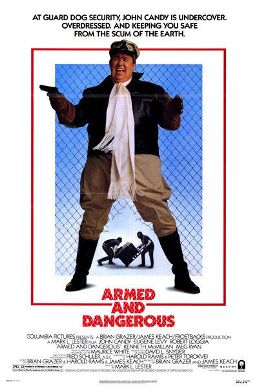
John Candy and Eugene Levy make a great team in the underrated comedy, Armed and Dangerous.
John Candy plays Frank Dooley, a member of the LAPD. One of the first scenes of the movie is Frank climbing up a tree to save a little boy’s kitten and then getting stuck in the tree himself. When Frank discovers two corrupt detectives stealing televisions, Frank is framed for the theft and kicked off the force.
Eugene Levy plays Norman Kane, a lawyer whose latest client is a Charles Manson-style cult leader who has a swastika carved into his head. After being repeatedly threatened with murder, Norman asks for a sidebar and requests that the judge sentence his client to life in prison. The judge agrees on the condition that Norman, whom he describes as being “the worst attorney to ever appear before me,” find a new line of work.
Frank and Norman end up taking a one day training course to act as security guards and are assigned to work together by their tough by sympathetic supervisor (Meg Ryan!). Assigned to guard a pharmaceutical warehouse, Frank and Norman stumble across a robbery. The robbery leads them to corruption inside their own union and, before you can say 80s cop movie, Frank and Norman are ignoring the orders of their supervisors and investigating a crime that nobody wants solved.
Armed and Dangerous was one of the many comedy/cop hybrid films of the 1980s. Like Beverly Hills Cop, it features Jonathan Banks as a bad guy. Like the recruits in Police Academy, all of Frank and Norman’s fellow security guards are societal misfits who are distinguished by one or two eccentricities. There is nothing ground-breaking about Armed and Dangerous but Mark Lester did a good job directing the movie and the team of Candy and Levy (who has previously worked together on SCTV) made me laugh more than a few times.
Armed and Dangerous was originally written to be a vehicle for John Belushi and Dan Aykroyd. It’s easy to imagine Belushi and Aykroyd in the lead roles but I think the movie actually works better with Candy and Levy, whose comedic style was similar to but far less aggressive than that of Belushi and Aykroyd. One of the reasons that Armed and Dangerous works is because John Candy and Eugene Levy seem like the two last people to ever find themselves in a shootout or a car chase. With Belushi and Aykroyd, it would have been expected. After all, everyone’s seen The Blues Brothers.





 Running Scared is weird but good.
 John Candy and Eugene Levy make a great team in the underrated comedy, Armed and Dangerous.
 Through the Shattered Lens