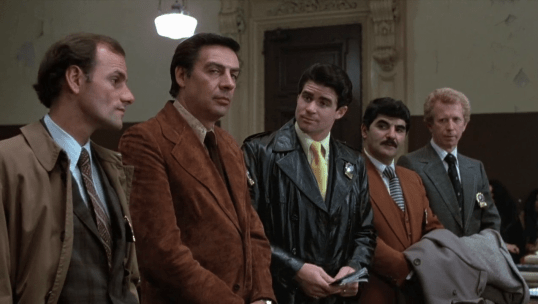
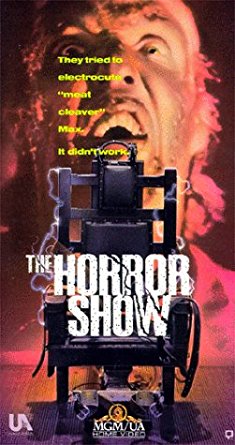
A Movie A Day #269: The Horror Show (1989, directed by James Isaac and David Blyth)


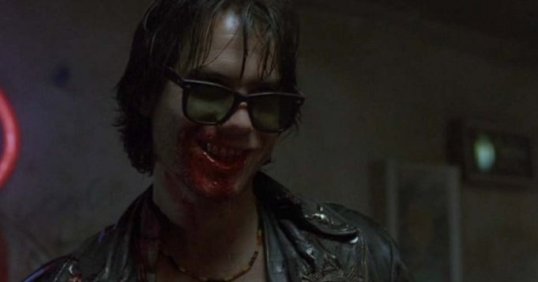
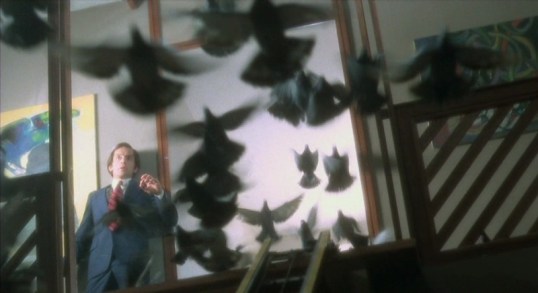
For the crime of having murdered over a 100 people, “Meat Cleaver Max” Jenke (Brion James) is sentenced to death and sent to the electric chair.  Even though everyone thinks that Max was electrocuted, his electricity-fueled spirit is still alive and pissed off.  If this sounds familiar, that is because it is the exact same premise that was used in Destroyer.  The only difference is that Max is not haunting a prison and killing a film crew.  Instead, he is living in a basement and seeking revenge on Lucas McCarthy (Lance Henriksen), the cop who arrested him.

Lucas is already tightly wound.  There is a scene where Lucas is watching as his family laughs uproariously at a late night comic who is telling a not very funny joke about then-Vice President Dan Quayle.  When Lucas thinks that he sees Max on TV, he pulls out his gun and shoots the screen.  His wife, son, and daughter will probably never laugh at another joke about any vice president.  Soon, Lucas is seeing and hearing Max everywhere.  Max says that he is going to tear Lucas’s world apart and he means it.

That The Horror Show is going to be a mess is obvious from the opening credits, where the screenplay is credited to Alan Smithee.  The credited director is visual effects specialist James Isaac but most of the film was reportedly directed by David Blythe.  Isaac stepped in when Blythe was fired by producer Sean S. Cunningham.  Full of false scares and scenes where people go down into the basement for no reason other than to become Max’s latest victim, The Horror Show is usually boring, except for when it is violent, gory, and mean-spirited.  There are moments of strange attempts at humor that do not seem to belong.  In the middle of all the carnage, there is a subplot about McCarthy’s son (Aron Eisenberg) ordering case after case of Nestle Quick.  Did Nestle pay for the product placement?  Were they happy to be associated with a movie where Lance Henriksen has a nightmare that his daughter (played by DeeDee “sister of Michelle” Pfieffer) is pregnant with Max Jenke’s baby?

The Horror Show provided both Lance Henriksen and Brion James with rare starring roles and they did their best what they had to work with.  Also keep an eye out for veteran tough guy Lawrence Tierney as the warden who supervises Max’s execution.

A Movie A Day #185: Emperor of the North Pole (1973, directed by Robert Aldrich)


Emperor of the North Pole is the story of depression-era hobos and one man who is determined to kill them.

The year is 1933 and Shack (Ernest Borgnine) is one of the toughest conductors around.  At a time when destitute and desperate men are riding the rails in search of work and food, Shack has declared that no one will ride his train for free.  When Shack is first introduced, the sadistic conductor is seen shoving a hobo off of his train and onto the tracks.  Shack smiles with satisfaction when the man is chopped in half under the train’s wheels.

A-No.1 (Lee Marvin) is a legend, the unofficial king of the hobos.  A grizzled veteran, A-No. 1 has been riding the rails for most of his life.  (The title comes from the hobo saying that great hobos, like A-No. 1, are like the Emperor of the North Pole, the ruler of a vast wasteland).  A-No. 1 is determined to do what no hobo has ever done, successfully hitch a ride on Shack’s train.  He even tags a water tower, announcing to everyone that he intends to take Shack’s train all the way to Portland.

If A-No. 1 did not have enough to worry about with Shack determined to get him, he is also being tailed by Cigaret (Keith Carradine), a young and cocky hobo who is determined to become as big a legend as A-No. 1.  Cigaret and A. No. 1 may work together but they never trust each other.

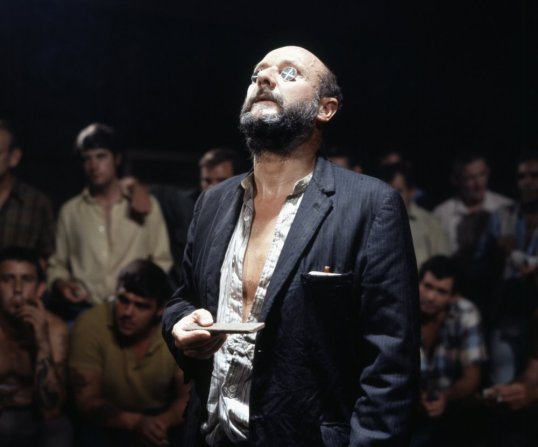
Like many of Robert Aldrich’s later films, Emperor of the North Pole is too long and the rambling narrative often promises more than it can deliver.  Like almost all movies that were released at the time, Emperor of North Pole attempts to turn its story into a contemporary allegory, with Shack standing in for the establishment, A-No. 1 representing the liberal anti-establishment, and, most problematically, Cigaret serving as a symbol for the callow counter culture, eager to take credit for A-No. 1’s accomplishments but not willing to put in any hard work himself.

As an allegory, Emperor of the North Pole is too heavy-handed but, as a gritty adventure film, it works wonderfully.  Lee Marvin is perfectly cast as the wise, no-nonsense A-No. 1.  This was the sixth film in which Marvin and Borgnine co-starred and the two old pros both go at each other with gusto.  Carradine does the best he can with an underwritten part but this is Borgnine and Marvin’s film all the way.  Marvin’s trademark underacting meshes perfectly with Borgnine’s trademark overacting, with the movie making perfect use of both men’s distinctive screen personas.  As staged by Aldrich, the final fight between Shack and A-No. 1 is a classic.

Even at a time when almost every anti-establishment film of the early 70s is being rediscovered, Emperor of the North Pole remains unjustly obscure.  When it was first released, it struggled at the box office.  Unsure of how to sell a movie about hobos and worrying that audiences were staying away because they thought it might be a Christmas film, 20th Century Fox pulled the movie from circulation and then rereleased it under a slightly altered name: Emperor of the North.  As far as titles go, Emperor of the North makes even less sense than Emperor of the North Pole.  Even with the title change, Emperor of the North Pole flopped at the box office but, fortunately for him, Aldrich was already working on what would become his biggest hit: The Longest Yard.

Keep an eye out for Lance Henriksen, in one of his earliest roles.  Supposedly, he plays a railroad worker.  If you spot him, let me know because I have watched Emperor of the North Pole three times and I still can’t find him.


20 Horror Icons Who Were Never Nominated For An Oscar


Though they’ve given some of the best, iconic, and award-worthy performances in horror history, the actors and actresses below have never been nominated for an Oscar.

Scarlet Diva

  1. Asia Argento

Perhaps because of charges of nepotism, people are quick to overlook just how good Asia Argento was in those films she made with Dario Argento.  Her work in Trauma especially deserves to be reevaluated.  Outside of her work with Dario, Asia gave great, self-directed performances in Scarlet Diva and The Heart is Deceitful Above All Things.

2. Jamie Lee Curtis

“Prom Night!  Everything is all right!”  Did you know that Jamie Lee Curtis received a Genie Nomination for her performance in Prom Night?  That could be because, in 1980, there weren’t that many movies being produced in Canada but still, Jamie was pretty good in that film.  And, of course, there’s a little film called Halloween

3. Peter Cushing

The beloved Hammer horror veteran did wonderful work as both Frankenstein and Van Helsing.  Personally, I love his odd cameo in Shock Waves.

4. Robert Englund

One, two, Freddy’s coming for you…

5. Lance Henriksen

One of the great character actors, Lance Henriksen gave one of the best vampire performances of all time in Kathryn Bigelow’s Near Dark.

David Hess, R.I.P.

6. David Hess

In just two films — Wes Craven’s Last House On The Left and Ruggero Deodato’s The House On The Edge of the Park — Hess defined screen evil.  If nothing else, he deserved an Oscar for composing The Road Leads To Nowhere.

boris-karloff-1939-the-man-they-could-not-hang

7. Boris Karloff

As our own Gary Loggins will tell you, it’s a crime that Boris Karloff never received an Oscar nomination.  He may be best remembered for Frankenstein but, for me, Karloff’s best performance was in Targets.

8. Camille Keaton

Yes, Camille Keaton did deserve a Best Actress nomination for I Spit On Your Grave.

Kinski and Butterfly

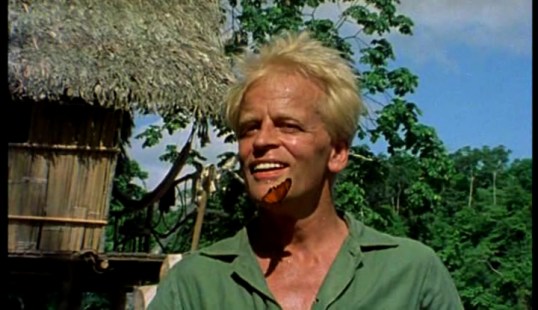
9. Klaus Kinski

The notorious and talented Klaus Kinski was never nominated for an Oscar.  Perhaps the Academy was scared of what he would do if he won.  But, that said, Kinski gave some of the best performances of all time, in films for everyone from Jess Franco to Werner Herzog.

Christopher Lee Is Dracula

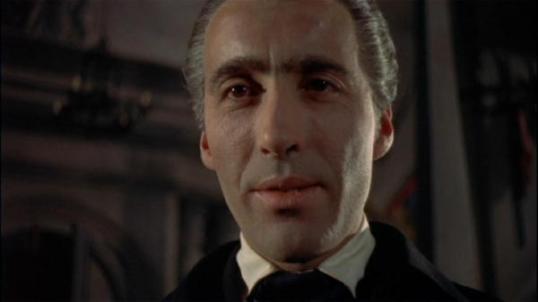
10. Christopher Lee

That the amazing Christopher Lee was never nominated is a shock.  Though he will always be Dracula, Lee gave wonderful performances in films of all genres.  Lee always cited the little-seen Jinnah as being his best performance.


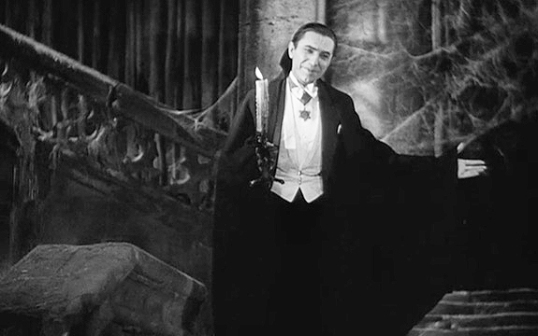
11. Bela Lugosi

The original Dracula, Lugosi never escaped typecasting.  Believe it or not, one of his finest performances was in one of the worst (if most enjoyable) films of all time, Ed Wood’s Bride of the Monster.

12. Catriona MacColl

This English actress gave three excellent performances in each chapter of Lucio Fulci’s Beyond Trilogy, with her performance in The House By The Cemetery elevating the entire film.

13. Daria Nicolodi

This Italian actress served as a muse to two of the best directors around, Dario Argento and Mario Bava.  Her award-worthy performances include Deep Red and, especially, Shock.

Near-Dark-Bill-Paxton

14. Bill Paxton

This great Texas actor gave award-worthy performances in everything from Near Dark to Aliens to Frailty.  RIP.

15. Donald Pleasence 

Dr. Loomis!  As good as he was in Halloween, Pleasence also gave excellent performances in Roman Polanski’s Cul-de-Sac and a nightmarish Australian film called Wake in Fright.

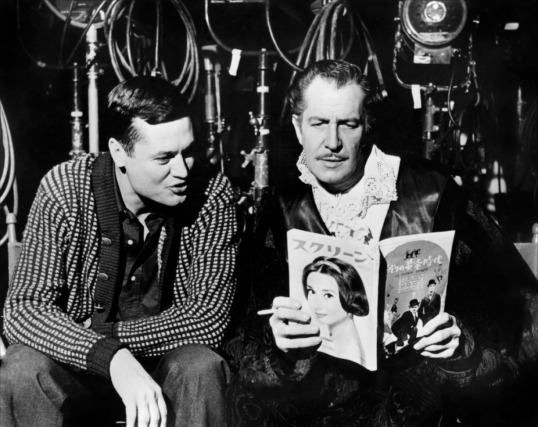
Roger Corman and Vincent Price

16. Vincent Price

The great Vincent Price never seems to get the respect that he deserves.  He may have overacted at times but nobody went overboard with as much style as Vincent Price.  His most award-worthy performance?  The Witchfinder General.

17. Giovanni Lombardo Radice

The greatest of all the Italian horror stars, Radice is still active, gracious, and beloved by his many fans.  Quentin Tarantino is a self-described fan so it’s time for Tarantino to write him a great role.

HenryPortrait

18. Michael Rooker

To many people, this great character actor will always be Henry.

19. Joe Spinell

This character actor will always be remembered for playing the lead role in the original Maniac but he also appeared in some of the most acclaimed films of all time.  Over the course of a relatively short career, Spinell appeared in everything from The Godfather to Taxi Driver to Rocky to Starcrash.  He was the American Klaus Kinski,

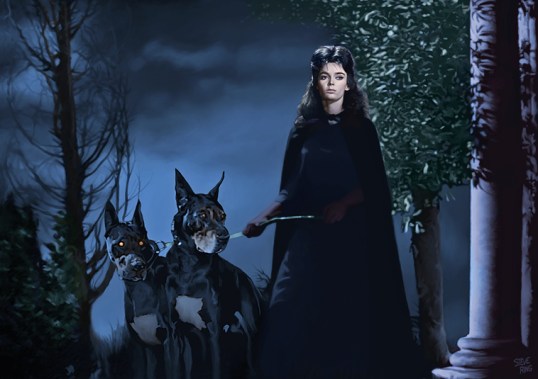
20. Barbara Steele

Barbara Steele has worked with everyone from Mario Bava to Jonathan Demme to David Cronenberg to Federico Fellini.  Among her many excellent performances, her work in Black Sunday and Caged Heat stands out as particularly memorable.

black-sunday

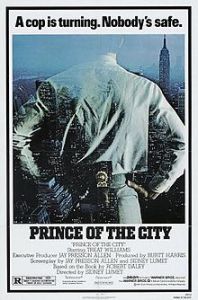
A Movie A Day #30: Prince of the City (1981, directed by Sidney Lumet)


220px-prince_of_the_city_foldedIn 1970s New York City, Danny Ciello (Treat Williams) is a self-described “prince of the city.”  A narcotics detective, Ciello is the youngest member of the Special Investigations Unit.  Because of their constant success, the SIU is given wide latitude by their superiors at the police department.  The SIU puts mobsters and drug dealers behind bars.  They get results.  If they sometimes cut corners or skim a little money for themselves, who cares?

It turns out that a lot of people care.  When a federal prosecutor, Rick Cappalino (Norman Parker), first approaches Ciello and asks him if he knows anything about police corruption, Ciello refuses to speak to him.  As Ciello puts it, “I sleep with my wife but I live with my partners.”  But Ciello already has doubts.  His drug addict brother calls him out on his hypocrisy. Ciello spends one harrowing night with one of his informants, a pathetic addict who Ciello keeps supplied with heroin in return for information.  Ciello finally agrees to help the investigation but with one condition: he will not testify against anyone in the SIU.  Before accepting Ciello’s help, Cappalino asks him one question.  Has Ciello ever done anything illegal while a cop?  Ciello says that he has only broken the law three times and each time, it was a minor infraction.

For the next two years, Ciello wears a wire nearly every day and helps to build cases against other cops, some of which are more corrupt than others.  It turns out that being an informant is not as easy as it looks.  Along with getting burned by malfunctioning wires and having to deal with incompetent backup, Ciello struggles with his own guilt.  When Cappalino is assigned to another case, Ciello finds himself working with two prosecutors (Bob Balaban and James Tolkan) who are less sympathetic to him and his desire to protect the SIU.  When evidence comes to light that Ciello may have lied about the extent of his own corruption, Ciello may become the investigation’s newest target.

prince-of-the-city

Prince of the City is one of the best of Sidney Lumet’s many films but it is not as well-known as 12 Angry Men, Dog Day Afternoon, Network, Serpico, The Verdict, or even The Wiz.  Why is it such an underrated film?  As good as it is, Prince of the City is not always an easy movie to watch.  It’s nearly three hours long and almost every minute is spent with Danny Ciello, who is not always likable and often seems to be on the verge of having a nervous breakdown.  Treat Williams gives an intense and powerful performance but he is such a raw nerve that sometimes it is a relief when Lumet cuts away to Jerry Orbach (as one of Ciello’s partners) telling off a district attorney or to a meeting where a group of prosecutors debate where a group of prosecutors debate whether or not to charge Ciello with perjury.

Prince of the City may be about the police but there’s very little of the typical cop movie clichés.  The most exciting scenes in the movie are the ones, like that scene with all the prosecutors arguing, where the characters debate what “corruption” actually means.  Throughout Prince of the City, Lumet contrasts the moral ambiguity of otherwise effective cops with the self-righteous certitude of the federal prosecutors.  Unlike Lumet’s other films about police corruption (Serpico, Q&A), Prince of the City doesn’t come down firmly on either side.

(Though the names have been changed, Prince of the City was based on a true story.  Ciello’s biggest ally among the investigators, Rick Cappalino, was based on a young federal prosecutor named Rudy Giuliani.)

Prince of the City is dominated by Treat Williams but the entire cast is full of great New York character actors.  It would not surprise me if Jerry Orbach’s performance here was in the back of someone’s mind when he was cast as Law & Order‘s Lenny Briscoe.  Keep an eye out for familiar actors like Lance Henriksen, Lane Smith, Lee Richardson, Carmine Caridi, and Cynthia Nixon, all appearing in small roles.

Prince of the City is a very long movie but it needs to be.  Much as David Simon would later do with The Wire, Lumet uses this police story as a way to present a sprawling portrait of New York City.  In fact, if Prince of the City were made today, it probably would be a David Simon-penned miniseries for HBO.

image-w1280

Harbinger Down Goes International


HarbingerDown

Kickstarter, GoFundMe, Indiegogo are just a couple of ways the general public have been able to crowdfund things they really like. Crowdfunding has even entered film production with a film set for release being one of my more anticipated films of 2015.

Harbinger Down is the brainchild of Practical FX artists Alec Gillis and Tom Woodruff, Jr. As more and more studios begin to rely heavily on CGI-effects for their films the practical effects and make-up FX industry has taken a major hit. We’ve already seen practical effects master Rick Baker announce his retirement from the industry and many smaller effects studios either close shop or sold to larger studios.

The film by Gillis and Woodruff, Jr. looks to bring back practical effects as not just a viable option for films looking to create fantastical creatures and effects, but also show that practical effects is an art form that lends a certain level of realism to those very fantastical ideas.

From the look of the trailer it looks like Harbinger Down takes some inspiration from two classic scifi horror films of the past with Alien and John Carpenter’s The Thing. With legendary genre veteran Lance Henriksen headlining the ensemble cast, Harbinger Down is something genre fans deserve.

Horror Film Review: The Visitor (dir by Giulio Paradisi)


The_Visitor_1979_film_poster

Do you want to see a strange horror film?

Just check out The Visitor, a 1979 Italian film that has recently been re-released by Drafthouse Films and occasionally shows up on TCM.  In many ways, The Visitor is a total and complete mess.  But, as is so often the case with Italian horror films, that very messiness — combined with some genuinely imaginative narrative and directorial choices — serves to make The Visitor into one of the most memorable films that you (possibly) have never heard of.

Like many of the Italian exploitation films released in the 70s and 80s, The Visitor is a rather blatant rip-off of a successful American film.  What makes The Visitor unique is the amount of different movies that it rips off.  The Visitor takes films that you would assume had no connection and mixes them together to create something wonderfully odd.

Franco Nero as Jesus in The Visitor

Franco Nero as Jesus in The Visitor

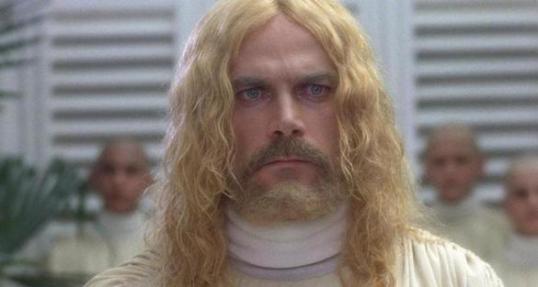
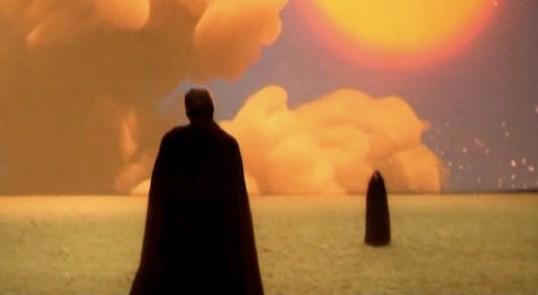
Much like Close Encounters of the Third Kind and 2001: A Space Odyssey, The Visitor opens with the idea that intergalactic beings have been visiting Earth for centuries and are subtly influencing the development of humanity.  The Visitor literally opens with Jesus Christ (played by Franco Nero!) sitting on a satellite and telling a version of the creation story to a bunch of bald children.  He explains that, long ago, he battled an evil intergalactic demon known as Sateen.  Sateen (who, the film implies, is better known on Earth as Satan) was eventually blown up but his genes were spread throughout humanity.  The bald children surrounding him are the descendants of Sateen.  Whenever one of them is born, Jesus sends an old man named Jerzy Colsowicz (played by director John Huston) to Earth so that Jerzy can bring the child to the satellite.  Of course, whenever Jerzy isn’t kidnapping kids for Jesus, he spends his time hanging out in a psychedelic dimension.

Yes, you did read that correctly.

This is where Jerzy lives.

This is where Jerzy lives.

Once you get past the intergalactic part of the story, The Visitor is a pretty obvious rip-off of both The Omen and Damien: Omen II, with the main difference being that the demon child here is not a cherubic little boy but instead is a rather bratty 8 year-old little girl named Katy (Paige Collins).  However, Katy is not the Antichrist.  Instead, her job is to mate with a male child who also has Sateen’s genes and then her baby will be the Antichrist.  In order to get this male child, Katy is pressuring her mother (Joanne Nail) to have sex with businessman Raymond Armstead (Lance Henriksen, who was also in Damien II: The Omen) so that Katy can have a half-brother to mate with.  (Ewwwwwwww!)  Raymond is a follower of Sateen and, adding to the film’s already odd feel, he also happens to own a basketball team.

(So, along with everything else going on, The Visitor also features a lot of basketball footage, which I guess would be exciting if I knew anything about basketball.)

Despite being a pretty powerful figure in the Sateenist hierarchy Raymond is not the head Sateenist.  No, the head Sateenist is played by Mel Ferrer, an actor who was once married to Audrey Hepburn and who will be familiar to anyone who has ever watched an Italian horror film.  (You can spot Ferrer in Zombie Holocaust, for example.)  Ferrer and the other Sateenists are all old, distinguished looking white men who spend all of their time meeting in an ornate corporate boardroom.

So, Jerzy comes down to Earth  to, with the help of a nanny played Shelley Winters, try to kidnap Katy but, for some reason, he doesn’t just do that.  Instead, he spends most of his time just watching Katy do destructive things.

Much as in The Omen, anyone who gets too close to discovering the truth about Katy ends up dying an elaborate and bloody way.  Often times, their death involves black crows, who the film suggests might actually be all of those little bald kids in animal disguise. So is Jesus sending those crows to kill people?  Seriously, this movie is weird.

Beware the Crows

Beware the Crows

Meanwhile, Katy’s mom is having doubts about both Raymond and her daughter.  She even goes and talks to her ex-husband, an abortionist who is played by yet another film director, in this case Sam Peckinpah.  Katy gets annoyed with her mom and, after happening to come across a gun hidden away inside of a birthday presents, shoots her in the back and leaves her paralyzed.

And did I mention that Katy is telekinetic, much like Carrie?  That’s right!  During my favorite scene, Katy goes skating at the local mall’s ice rink and, after a group of boys bully her, she uses her powers to send those bullies flying all over the mall.  Oddly enough, nobody seems to notice this chaos.  Except, of course, for Jerzy who just stands off in the corner and watches without doing anything…

Seriously, I love The Visitor.  Along with being surprisingly well-acted and visually inventive, the film is just so weird!  In many ways, it epitomizes everything that I love about the old Italian exploitation films.  While it is rather shameless about ripping off other movies, the film still brings its own unique spin to everything.

Normally, I’d say that The Visitor is a good film for Halloween but you know what?  Anytime is a good time for an Italian horror film!

Welcome

Welcome


Horror Film Review: Damien: Omen II (dir by Don Taylor)


DamienomenII

The first sequel to The Omen was 1978’s Damien: Omen II.  Damien: Omen II is an odd film, one that is not very good but yet remains very watchable.

Damien: Omen II takes place 7 years after the end of the original Omen.  Antichrist Damien Thorn (now played by Jonathan Scott-Taylor) is now 12 years old.  He lives with his uncle Richard (William Holden) and Richard’s 2nd wife, Ann (Lee Grant).  His best friend is his cousin Mark (Lucas Donat).  In fact, the only problem that Damien has is that his great-aunt Marion (Sylvia Sidney) can’t stand him and views him as a bad influence.  Fortunately, as usually seems to happen whenever someone puts an obstacle in Damien’s life, there’s always either a black dog or a black crow around to help out.

Damien and Mark are cadets at a local military academy where Damien deals with a bully by glaring at him until he falls to the ground, grabbing at his head.  In history class, Damien shocks his teacher by revealing that he knows the date of every battle ever fought.  Damien’s new commander, Sgt. Neff (Lance Henriksen), pulls Damien to the side and tells him to stop showing off and to quietly bide his time.

Meanwhile, Richard is busy running Thorn Industries.  One of his executives, Paul Buhler (Robert Foxworth), wants to expand Thorn’s operations into agriculture but his plans are opposed by Richard’s executive vice president, Bill Atherton (Lew Ayres), who considers Paul to be unethical.  However, during an ice hockey game, Bill falls through the ice and, despite the efforts of everyone to break through the ice and save him, ends up floating away.  Paul is promoted and pursues his plans to make money off of world famine.  In between all of this, Paul finds the time to speak to Damien and tell him that he has a great future ahead of him.

Along with Thorn Industries, Richard also owns the Thorn Museum in Chicago.  The museum’s curator is Dr. Charles Warren (Nicholas Pryor) who was a friend of the archeologist Karl Bugenhagen (Leo McKern) who, in the first film, revealed that not only was Damien the antichrist but that the only way to kill him was by stabbing him with the Seven Daggers of Meggido.  Dr. Warren is also friends with Joan Hart (Elizabeth Shepherd), a reporter who both knows the truth behind Bugenhagen’s death and who has also seen an ancient cave painting that reveals that the Antichrist looks exactly like a 12 year-old Damien Thorn.

Much as in the first film, just about everyone who comes into contact with Damien ends up getting killed in some odd and grotesque way.  Crows peck out eyes.  Trucks run over heads.  One unfortunate victim is crushed between two trains.  Another is chopped in half by an elevator cable.  At times, Damien: Omen II feels less like a sequel to The Omen and more like a forerunner to Final Destination.

Damien: Omen II is one of those films that I like despite myself.  It’s bad but it’s bad in a way that only a film from the 1970s could be and, as such, it has some definite historical value.  The script is full of red herrings, the acting is inconsistent, and the film can never seem to make up its mind whether Damien is pure evil or if he’s conflicted about his role as Antichrist.  As I watched the film, I wondered why the devil could so easily kill some people but not others.

And yet, Damien: Omen II is so ludicrous and silly that it’s undeniably watchable.  If the first film was distinguished by Gregory Peck’s defiant underplaying, the second film is distinguished by the way that William Holden delivers every line through manfully clenched teeth.  Everyone else in the cast follows Holden’s lead and everyone goes so far over-the-top that even the most mundane of scenes become oddly fascinating.

For me, the film is defined by poor Lew Ayres floating underneath that sheet of ice while everyone else tries to rescue him.  On the one hand, it’s absolutely horrific to watch.  I’m terrified of drowning and, whenever the camera focused on Ayres desperately pounding on the ice above him, I could barely bring myself to look at the screen.  But, at the same time, we also had William Holden screaming, “OH GOD!” and Nicholas Pryror enthusiastically chopping at the ice with a big axe and dozens of extras awkwardly skating across the ice.  Somehow, the scene ended up being both horrifying and humorous.  It should not have worked but somehow, it did.

And that’s pretty much the perfect description of Damien: Omen II.  It shouldn’t work but, in its own way, it does.

Duke Tries A Halloween Marathon…Part One.


So, I think it may be fair to say that of most of the posters on this great site, I am probably the one who least enjoys the horror genre…or at least is never as excited about it as everyone else. It isn’t that I do not like horror films – there are quite a few I really love – but I just expect a lot from them. Probably – unfairly – more than I expect from other films. Why? Because I honestly think that when done right, horror films can be some of the most emotionally affecting films from any genre. But when done wrong – as I think far too many of them are – it just feels cheap and manipulative – and as someone who loves film, who loves how they can generate empathy and tell interesting stories, it always just feels like a slap to the face.

This love/hate relationship usually makes me hesitant to watch most horror films, which of course is an issue come October. This month is wall to wall horror from 12:01AM on the 1st – to midnight on Halloween. With this comes the pressure to watch a ton of horror films, and although in the past I have watched a few, I’ve never taken part in any sort of marathon that so many bloggers partake in this time of year…until now. This is part one – of what I hope will be a month long series – of quick reviews for horror films I watch this month. I hope to watch at least one a day.

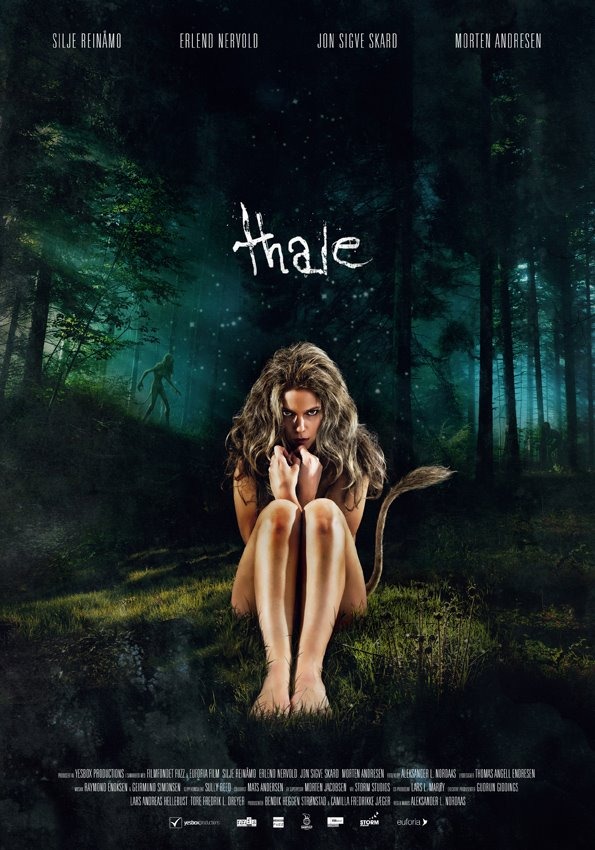
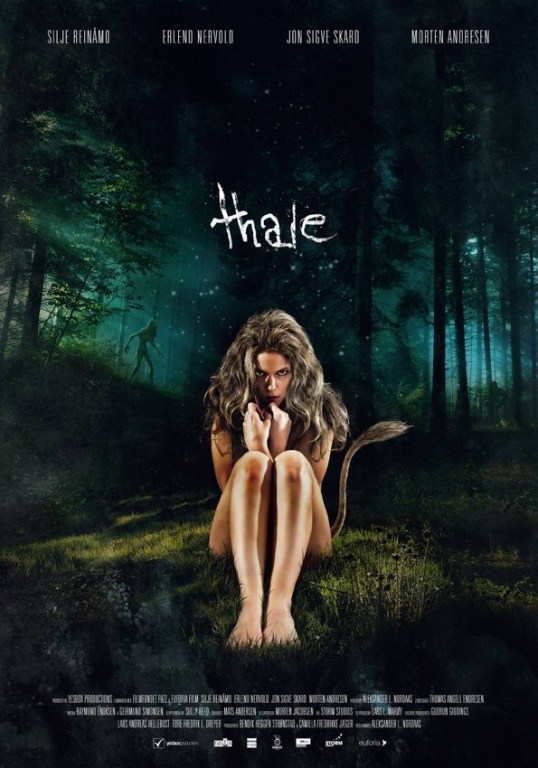
October 1st: ‘Thale’ (dir. Aleksander Nordaas)
tumblr_m490fyx40y1ruxqt3o1_1280

A very low budget Norwegian fantasy/horror film, with a lot of interesting ideas, that sadly doesn’t execute on enough of them to reach any level of greatness…which I think was possible.

‘Thale’ is about two friends, working in a crime scene cleaning service, who stumble upon a hidden basement at one of the locations they have been hired to clean. Within they find a lab of sorts, and a beautiful young woman who is unable to speak – and is most certainly more than she appears to be. The result is a rather unique horror film with fantasy elements; one that thrives on atmosphere for the first hour or so, building a genuine level of suspense and mystery. It is an intriguing story, one that is slow to build but never boring. There is certainly a lot under the surface.

The only real issue I had was that there is narration throughout that tries a bit too hard to add depth to the story, both narratively and thematically, without much success. Mainly because the exposition within would benefit more from a ‘show don’t tell’ approach – and also because the actual narrative comes off as so simple that many of the themes expressed through the narration have nothing to do with what we have actually been shown.

This isn’t too big of an issue really, and I can’t fault it for trying to give more meaning to the story, but had it executed on some of the ideas it alludes to under the surface than maybe this wouldn’t have been an issue at all – especially if it had been a half hour longer, and explored the fantasy element in more detail.

Still, the performances are very good and – given its very low budget – so are the effects and overall production. It certainly has its flaws, but it still warrants a recommendation.

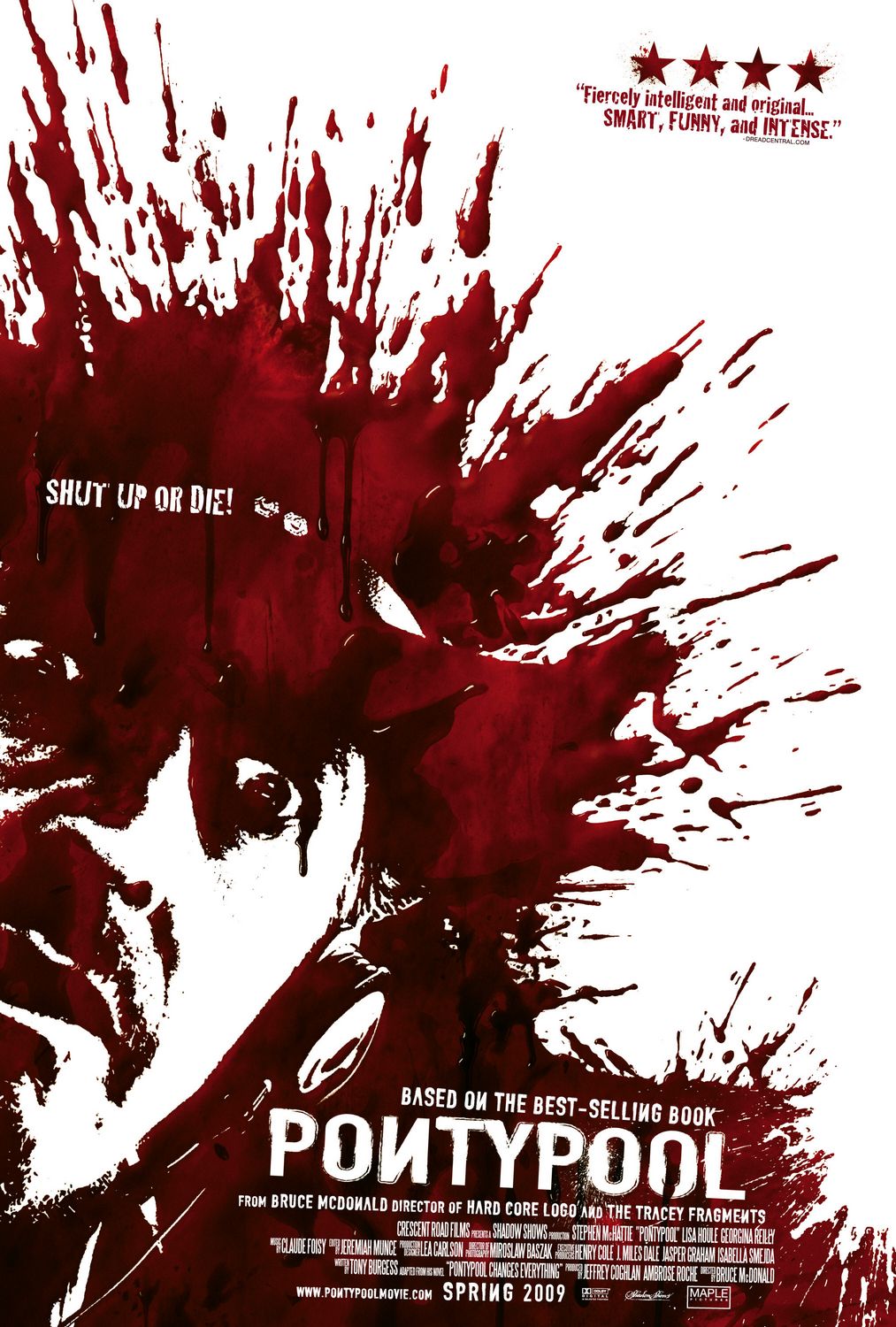
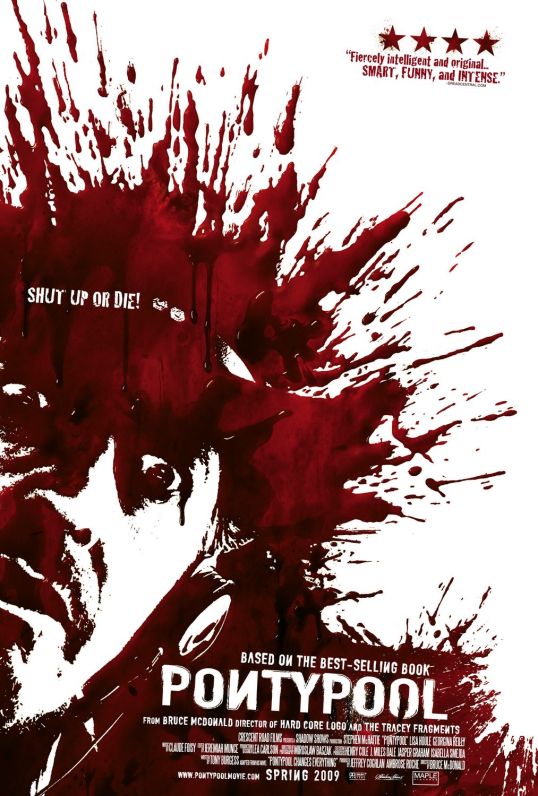
Oct. 2nd: ‘Pontypool’ (dir. Bruce McDonald)
pontypool_xlg

‘Pontypool’ is a mostly lean – though often convoluted – and creative horror film that builds slowly and contains just the right dash of humor. It is at times essentially ‘Welcome to Night Vale’ in film form.

It stars Stephen McHattie as an ex-shock jock who has reached a point in his career where he is stuck doing an early morning radio gig in a small Canadian town. He is quick to try to cause a stir, but his producer reminds him that the listeners just want to know the weather. As the morning slowly passes by the station begins to get weird reports of people, herds of people, swarming the streets. Whats seems to them to initially be a joke begins to turn into a life or death emergency situation where a virus is infecting the town, keeping the workers at the studio locked indoors, trying to figure out how it all started.

This isn’t the scariest horror film you will ever see, neither is it the most suspenseful – yet the development of the story, the unraveling mystery and the urgency of the performances make it an absorbing viewing experience. Things do start to get a little convoluted as we begin to better understand how the “virus” infecting people is being spread. The film seems to be making it up as it goes, and ironically it can’t seem to think of the rights words to explain what is actually happening.

But it does managed to create an interesting subtext on how language has been simplified and diminished by gossip, social websites and the media. It would also probably benefit from multiple viewings. But for now, I recommend you at least watch it once.

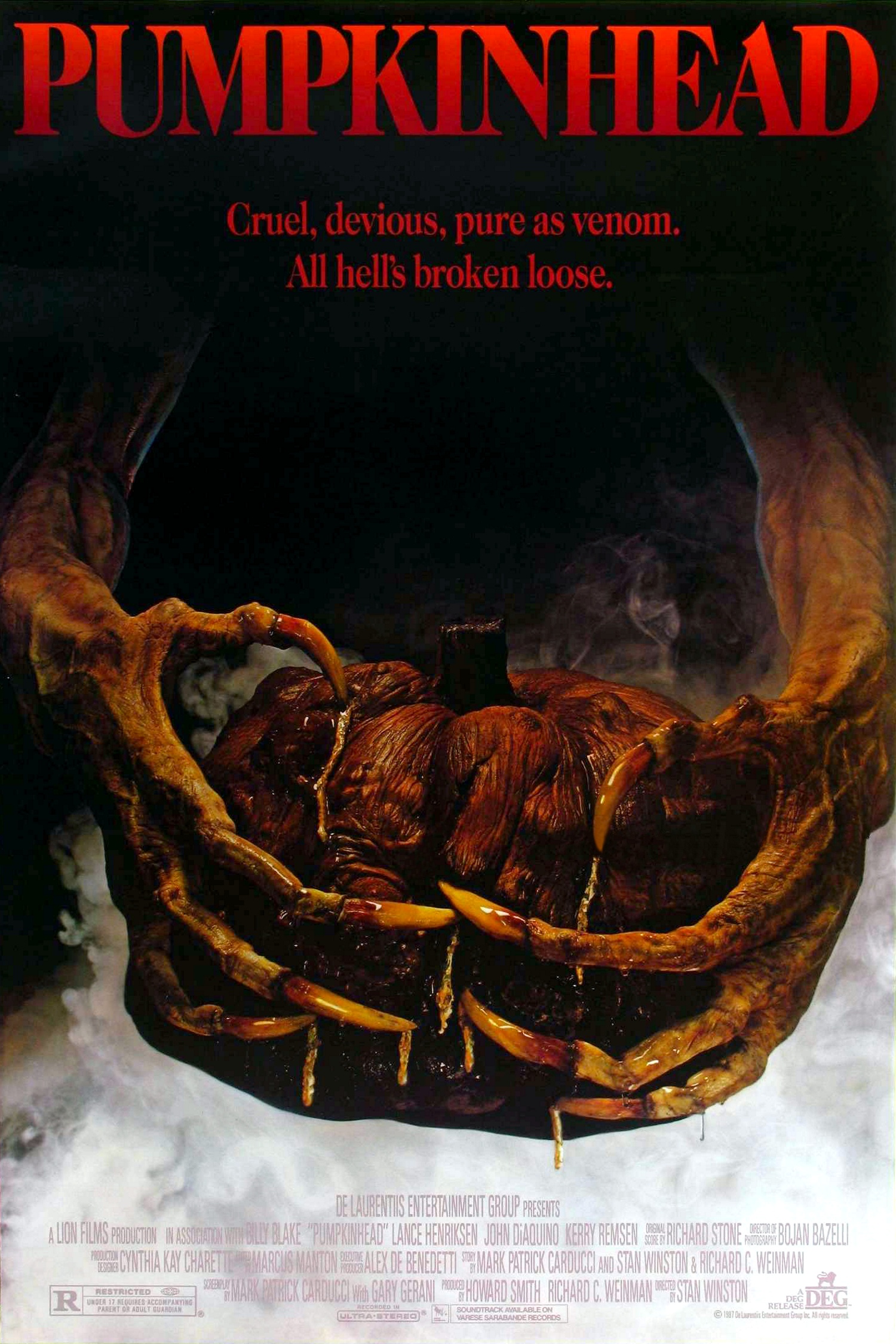
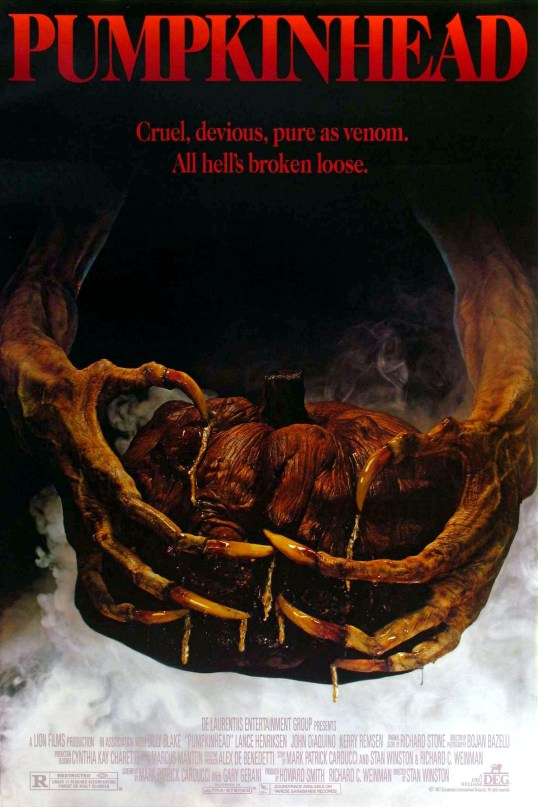
Oct. 3rd: ‘Pumpkinhead’ (dir. Stan Winston)
pumpkinhead-poster

‘Pumpkinhead’ is a creepy, cliche and cheesy as hell horror film about revenge, that manages to overcome all its faults with its brilliant creature design, a great central performance, and an emotional core that gives all the supernatural violence some resonance. The result isn’t a masterpiece – by any stretch – but it is a damn near perfect horror film for Halloween/October – especially with its eerie supernatural aesthetics.

The film stars Lance Henriksen as Ed Harley, a single father raising his son on a farm in the south. One day a group of teens (including a few blondes and a douchey “bad boy”) arrive in town. Their destination? A cabin in the woods…of course. On their way they encounter Harley at a local store he owns, which accidentally results in his son being killed by one of the teens in a dirt bike accident. The group heads for the cabin, fearing the repercussions, while Harley tracks down a creepy old lady who, according to local legend, can summon a demon-like creature to avenge the wrong doing done to a man.

From there we get a rather unoriginal creature feature – as the demon, called Pumpkinhead, hunts down the group of teens one by one. What kept this interesting, for me, was the structure of the events of the film and the development of Henriksen’s character. Henriksen is a great actor, and the bond that is built between him and his son, and the emotions he displays as he struggles with his son’s death and the revenge he seeks, manages to ground the film and gives it enough of an emotional relevancy to excuse the cheesiness of the supernatural horror elements – and some truly shitty dialogue.

On top of that are the great spooky horror aesthetics and atmosphere – moody lighting, fog…pumpkins – as well as the awesome design of the Pumpkinhead by special effects legend Stan Winston (‘Aliens’, ‘Terminator’) – who actually directed the film. It all adds up to an above average horror flick that I recommend everyone watch this October.
Trailer: Harbinger Down (Official)


harbinger-down-poster2

Last summer something caught my eye while scrolling up my Twitter feed. People I had been following were retweeting a Kickstarter campaign for an independent film. No, this wasn’t a Veronica Mars deal or Zach Braff begging the public for millions so he could make his own film. This was for a scifi-horror film that was going the whole practical effects route.

Harbinger Down is the brainchild of practical effects masters Alec Gillis and Tom Woodruff, Jr. whose own special effects studio Amalgamated Dynamics were instrumental in creating some of the practical effects for films such as the latest Godzilla and the underwhelming prequel for The Thing. It was their practical effects work for that prequel being replaced by CGI monsters at the very last second which convinced the two men to try and make a film using nothing but practical effects to show Hollywood bean counters and studio heads that there was still a place for the practical instead of going all-CG.

Their Kickstarter campaign to raise the funds to start Harbinger Down succeeded and in addition to the $387,000 or so raised and their own money and studio time the film began principal photography this past January. A rough trailer was shown around MArch, but now we have the first official trailer to Harbinger Down which looks like a love letter to Carpenter’s very own The Thing.