Film Review: Assault on Precinct 13 (dir by John Carpenter)


Legend has it that, when John Carpenter originally offered the role of Dr. Sam Loomis to Donald Pleasence, Pleasence was reluctant to accept it.  To Pleasence, Halloween sounded like it would just be another forgettable horror film.

However, when Donald mentioned to his daughter, actress Angela Pleasence, that he had been offered a role in a film by a young director named John Carpenter, Angela immediately told him to accept.  She assured him that it would turn out to be a great film.  When Donald asked her why she was so sure about this, Angela replied that she had seen Assault on Precinct 13 at the Cannes Film Festival.

1976’s Assault on Precinct 13 was John Carpenter’s second feature film.  (The first was Dark Star, which started out as a student film and, even after being extended to feature length, still ended up feeling very much like a student film.)  The film takes place in Los Angeles, at an isolated police precinct house that is scheduled to be abandonedd.  When the father (Martin Lawson) of a girl (Kim Richards) who was murdered earlier in the day seeks refuge at the precinct, a Che Guevara-influenced street gang launches a relentless late night attack on the building.  (Frank Doubleday, who later played Romero in Escape From New York, appears as a member of the gang.)  Lt. Ethan Bishop (Austin Stoker) is forced to work with criminal Napoleon Wilson (Darwin Joston) to defeat the gang.
Assault on Precinct 13 (1976, dir by John Carpenter. DP: Douglas Knapp)

John Carpenter later said that Assault of Precinct 13 was his attempt to make a Howard Hawks-style western and, despite taking place in the modern era, it is very much a western.  Ethan Bishop is the strong and moral lawman who refuses to allow the untamed land around him to change who he is and what he believes.  Napoleon Wilson is the outlaw who finds redemption.  In most westerns, the attackers would represent the last gasp of the lawless frontier fighting against encroaching civilization.  In the case of Assault on Precinct 13, the opposite is true.  The attackers represent the collapse of society and the people in the precinct find themselves fighting not only for their lives but also the ideals of modern civilization.  With their relentless drive to attack, the members of the street gang resemble the zombies from George Romero’s Night of the Living Dead.  They’re so nihilistic and destructive that even a hardened criminal like Napoleon Wilson knows that they have to be stopped.  The film’s ultimate message seems to be that, even if Bishop and Wilson and Leigh (Laurie Zimmer) survive the night, the assault on Precinct 13 will never truly end.  In a way, we’re all trapped in that abandoned precinct house.

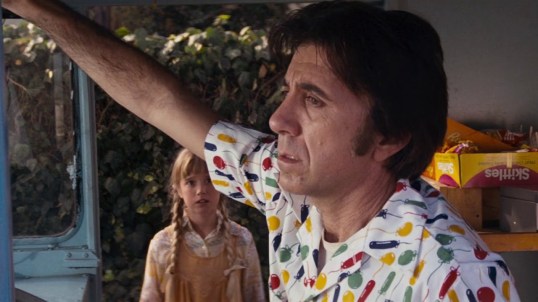
Wow, that sounds pretty grim!  And really, it is a grim film.  This, after all, is the film in which little Kim Richards is graphically shot in the chest while trying to buy ice cream.  (From the start, Carpenter understood the importance of shocking the audience.)  That said, there are unexpected moments of dark humor to be found in the film.  (Even Kim Richards’s indignation over being given the wrong flavor ice cream is rather humorous, up until she asks for a replacement and gets shot as a result.)  Both Bishop and Wilson make for compelling heroes.  As Angela Pleasence realized when she saw the movie at Cannes, John Carpenter was and is a natural-born storyteller.  Assault on Precinct 13 is a film that wastes no time in getting started and is relentless in both its suspense and its action.

Assault on Precinct 13 has been overshadowed by Carpenter’s subsequent successes but it’s still one of Carpenter’s best films.  Without Assault on Precinct 13, we would never have gotten Donald Pleasence as Dr. Sam Loomis.  That alone is reason enough to celebrate the film.
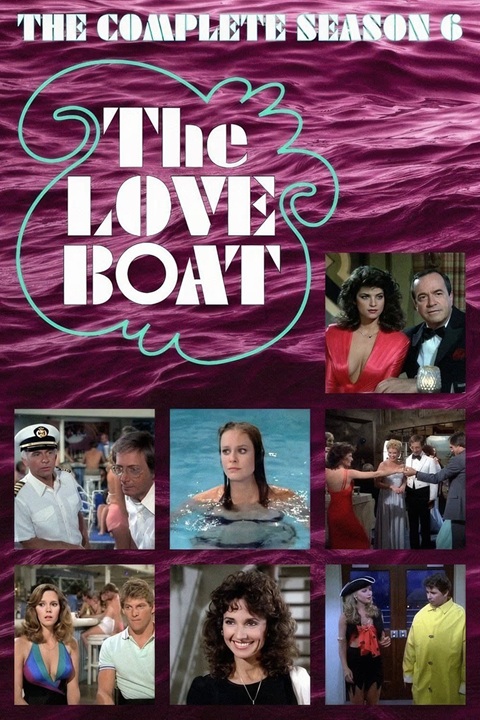
Retro Television Review: The Love Boat 6.5 “Hyde and Seek/Command Performance/Sketchy Love”


Welcome to Retro Television Reviews, a feature where we review some of our favorite and least favorite shows of the past!  On Wednesdays, I will be reviewing the original Love Boat, which aired on ABC from 1977 to 1986!  The series can be streamed on Paramount Plus!

This week’s cruise is brought to you by Bolivian Nose Candy.

Episode 6.5 “Hyde and Seek/Command Performance/Sketchy Love”

(Dir by Jerome Courtland, originally aired on October 30, 1982)

Gopher dates a 14 year-old!

WHAT!?

Of course, Gopher doesn’t realize that she’s fourteen.  I’m not really sure how Gopher doesn’t realize that because the girl is played by Kim Richards, who was 18 at the time but looked considerably younger.  It should also be noted that the girl is also pretending to be her own fictional older sister and she claims to be 18 but …. eh.  I have a hard time buying that Kim Richards could have convinced Gopher that she was two different people, just because that underbite was pretty hard to disguise.  Even if we give Gopher the benefit of the doubt, he’s still a guy in mid-thirties, dating a teenager while he’s supposed to be working.  I like Gopher but the Captain might have to find a new purser after this.  How to explain Gopher’s self-destructive behavior?  My theory is that he found Julia’s coke stash.

Fear not, though.  It all works out.  The truth comes out.  Kim Richards’s father (played by Dana Andrews) announces that he’s going to spank his daughter.  She’s fourteen, you’re not going to spank anyone, you old weirdo.

Meanwhile, a dude (Skip Stephenson) who looks like he’s been up a few nights on a cocaine binge falls in love with Morgan Brittany but …. uh oh!  He’s married!  Fortunately, his wife wants to divorce him, probably because of all the cocaine.  To me, the funniest thing about this story is that, as soon as he gets on the cruise, he starts spilling his guts to Isaac as if they’re old friends.  Dude, you don’t know Isaac.  It’s a big ship and Isaac’s the only bartender.  Isaac doesn’t have time to just stand there and listen to you whine.  But that’s the thing with cocaine.  It makes you a tad bit self-absorbed.  Trust me, I’ve seen Scarface.  I know about the yayo.

And finally, Dan Rowan plays a comedian who has been hired to perform on the ship.  His ex-wife (Marion Ross) and daughter (Eve Plumb) just happen to be on the boat as well.  Eve Plumb wants nothing to do with Dan Rowan, believing that he abandoned his family.  Dan Rowan uses his act to explain what really happened and to beg his daughter to forgive him.  I have to say that, if I was a passenger, I would be kind of ticked off.  You show up at the Acapulco Lounge, hoping to have a good laugh and suddenly the headliner is crying and delivering this really depressing monologue.  Thanks for ruining my cruise, jerk!  Seriously, how coked up do you have to be to sabotage your career like that?

This was not my favorite cruise but at least Julia’s hair looked better here than it did last week.  To be honest, the entire boat seemed to be coked up this week.  Hopefully, they’ll all go to rehab and next week will be a bit more pleasant.


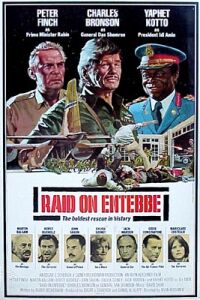
A Movie A Day #338: Raid on Entebbe (1977, directed by Irvin Kershner)


On June 27th, 1976, four terrorists hijacked an Air France flight and diverted it to Entebbe Airport in Uganda.  With the blessing of dictator Idi Amin and with the help of a deployment of Ugandan soldiers, the terrorists held all of the Israeli passengers hostage while allowing the non-Jewish passengers to leave.  The terrorists issued the usual set of demands.  The Israelis responded with Operation Thunderbolt, a daring July 4th raid on the airport that led to death of all the terrorists and the rescue of the hostages.  Three hostages were killed in the firefight and a fourth — Dora Bloch — was subsequently murdered in a Ugandan hospital by Idi Amin’s secret police.  Only one commando — Yonatan Netanyahu — was lost during the raid.  His younger brother, Benjamin, would later become Prime Minister of Israel.
Raid on Entebbe, a docudrama about the operation, was originally produced for NBC though it subsequently received an overseas theatrical release as well.  It’s an exciting tribute to the bravery of both the hostages and the commandos who rescued them.  Director Irvin Kershner directs in a documentary fashion and gets good performances from a cast full of familiar faces.  Charles Bronson, James Woods, Peter Finch, Martin Balsam, Stephen Macht, Horst Buchholz, Sylvia Sidney, Allan Arbus, Jack Warden, John Saxon, and Robert Loggia show up as politicians, commandos, terrorists, and hostages and all of them bring a sense of reality and humanity to their roles.

The film’s best performance comes from Yaphet Kotto, who plays Idi Amin as a strutting buffoon, quick to smile but always watching out for himself.  In the film, Amin often pays unannounced visits to the airport, where he lies and tells the hostages that he is doing his best to broker an agreement between the terrorists and Israel.  The hostages are forced to applaud Amin’s empty promises and Amin soaks it all up with a huge grin on his face.  Forest Whitaker may have won the Oscar for Last King of Scotland but, for me, Yaphet Kotto will always be the definitive Idi Amin.

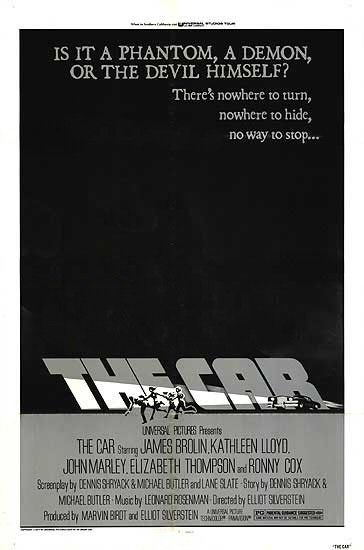
Horror Film Review: The Car (dir by Elliot Silverstein)


The_Car_movie_poster

“THE CAR IS IN THE GARAGE” 

— Captain Wade Parent (James Brolin) in The Car (1977)

Yes, that’s right!  The car is in the garage and it’s hunting for blood!

The Car is a pretty stupid movie that doesn’t really work but at least it’s enjoyably stupid.  From the minute I started watching this movie, I knew that the only way I could recommend it would be if James Brolin shouted, “The car is in the garage!” at some point.  When he did, I had to cheer a little.  I love being able to recommend a movie.

The Car takes place in the small desert town of Santa Ynez.  Nothing much ever seems to happen in Santa Ynez, which perhaps explains why the police force is so large.  (Why wouldn’t you want to be a police officer in a town with no crime?  It wouldn’t be a very demanding job.)  Sheriff Everett Peck (John Marley) keeps the peace and sends his time talking about how much he hates bullies.  Wade Parent (James Brolin) is his second-in-command and has a 70s pornstache.  Wade’s best friend is Deputy Luke Johnson (Ronny Cox), a recovering alcoholic with impressive sideburns.  And then there’s a few dozen other cops.  Seriously, this tiny town has a HUGE police force.

One day, however, the police finally get something to do.  A black Lincoln Continental has suddenly appeared, stalking the roads around the town.  It doesn’t have a licence plate and the windows are tinted a dark red so it’s impossible to see who — if anyone — is driving.  Stranger still, the car’s doors have no handles.  When the car does show up, it seems to appear out of nowhere and once it’s run someone over, it seems to vanish just as quickly.

When the car first appears, it runs down two cyclists.  A few hours later, it kills an obnoxious hippie hitchhiker (John Rubinstein).  The only witness was alcoholic wife beater Amos Clements (R.G. Armstrong).  When Amos goes to the police, the car tries to run him over as well but instead, it ends up killing Sheriff Peck.

Now, Wade is in charge and he has to do something about the car.  Unfortunately, Wade’s girlfriend, Lauren (Kathleen Lloyd), made the mistake of screaming insults at the car when the car attempted to run down the school marching band.  Now, the car is stalking her.  Meanwhile, Luke is convinced that the car is being driven by none other than devil.  Wade says that’s impossible.  Luke points out that the car refuses to drive through consecrated ground.

And eventually, the car does show up in the garage…

The Car is one of the stupider of the many Jaws ripoffs that I’ve seen.  You’ll be rooting for the car through the entire film, which is good since the car kills nearly everyone in Santa Ynez.  (If any of them were likable, The Car wouldn’t as much fun to watch.)  It’s dumb but the film does have an appropriately silly ending and James Brolin does get to yell, “The car is in the garage!”

So, there is that.