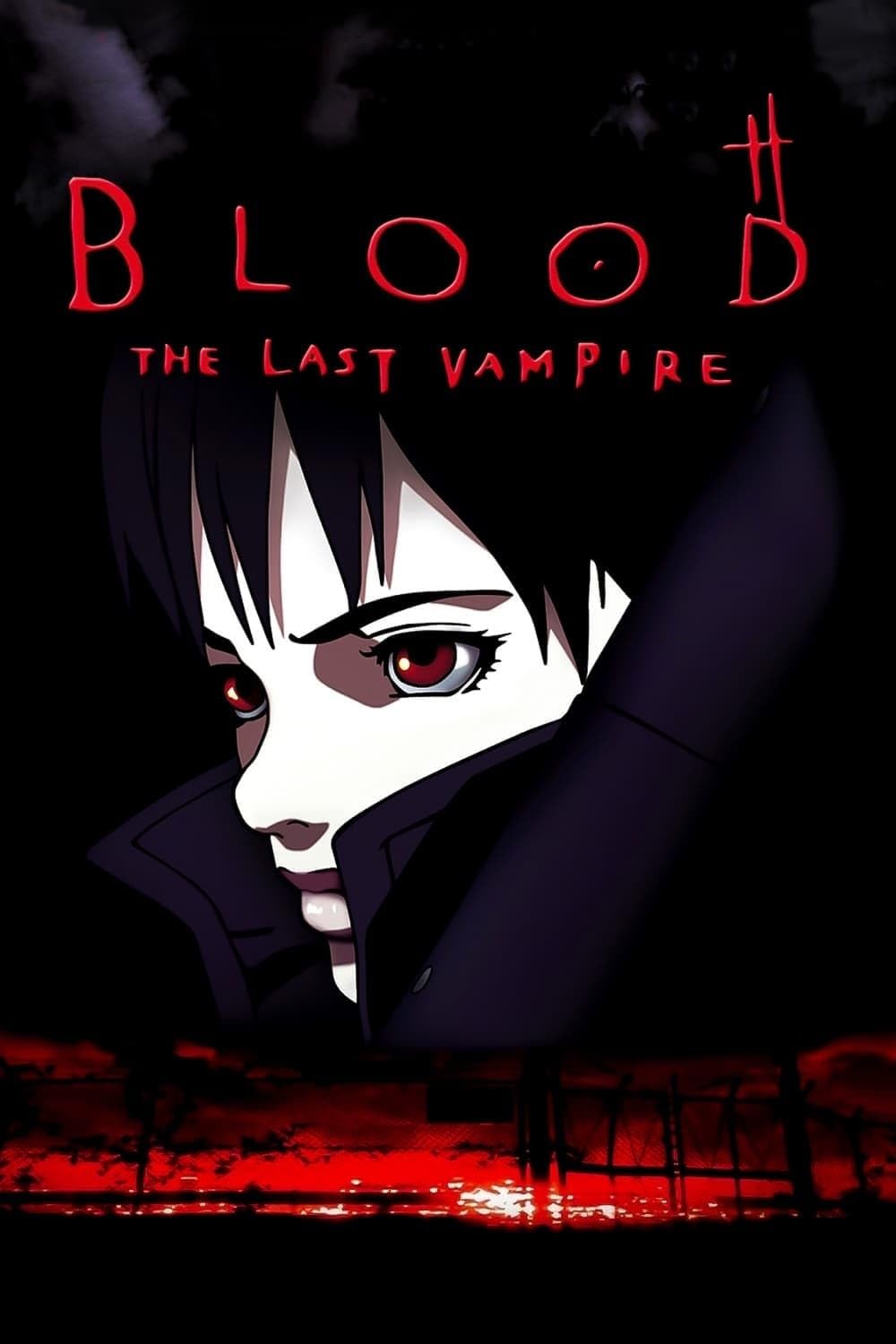
“I am a vampire, and that is the truth.” — Saya
In 2000, Blood: The Last Vampire made quite an impact as a visually stunning and atmospherically intense anime horror film. It expertly combines military tension with supernatural thrills in a compact, sharply executed story. Directed by Hiroyuki Kitakubo and produced by Production I.G, this film helped define the vampire-action subgenre by delivering a haunting tale that’s as much about loneliness and identity as it is about monster hunting.
The story unfolds in 1966 at the Yokota U.S. Air Base in Japan, a setting infused with Cold War anxiety and the looming shadow of the Vietnam War. You follow Saya, a seemingly ordinary schoolgirl with a dark secret: she’s been enlisted by a secretive agency to hunt down bloodthirsty chiropterans—demons disguised as humans. Saya isn’t your typical vampire; she’s the last of her kind, wielding a katana with deadly precision while carrying the heavy burden of her immortal existence. Her cold, detached demeanor makes her an intriguing character, caught between humanity and monsterhood.
One of the film’s standout features is its incredible art and animation. Production I.G used a mix of traditional hand-drawn animation and early CGI to create a look that’s both detailed and immersive. In fact, James Cameron was an early fan, admiring the film’s innovative blend of 2D and 3D animation techniques that pushed technological boundaries to craft a visually striking experience. The backgrounds—military bases, grim hallways, and moody night scenes—feel tangible, while the fluid movements of the characters add grit and weight to every action sequence. The colors are muted but striking, with shadows dominating the frame and bold splashes of red that echo classic horror imagery.
While watching Blood: The Last Vampire, one can also spot clear influences from Western vampire horror, especially the live-action film Blade, which came out a few years prior, and the TV series Buffy the Vampire Slayer. The character of Saya shares traits with Buffy— a young, powerful woman wrestling with her role as a vampire hunter—melding gothic sensibilities with modern action heroine tropes. Director Hiroyuki Kitakubo has acknowledged in interviews that such Western influences, along with classic vampire literature like Dracula, shaped the film’s tone and character design. This fusion creates a uniquely cross-cultural vampire narrative that appeals broadly.
When it comes to horror, Blood goes for a raw, physical kind of fear rather than romanticized gothic vibes. Its monsters are grotesque and disturbing, bristling with sharp teeth and distorted faces. The fight scenes are swift and brutal, with blood sprayed in a way that’s more artful than gratuitous. The film wastes no time with filler; each moment serves to ramp up tension or deepen the mystery.
Saya herself is surprisingly well developed for such a short film. Her isolation and internal conflict give her depth beyond standard vampire tropes. You can sense the loneliness beneath her impassive exterior, along with a kind of weariness about her role as predator. Though the film leaves plenty unsaid, it effectively uses these shadows in the story to hint at a broader tragedy driving Saya on.
However, the film does have its drawbacks. Clocking in under 50 minutes, its brevity feels like a hindrance. The story’s short runtime leaves many threads underexplored, especially the wider world-building and deeper character background that fans of such a rich universe might crave. Some may find the pace hurried, with the narrative skimming over potentially fascinating lore and emotional beats. Additionally, Blood: The Last Vampire was mostly voiced in English, a decision by Production I.G. aimed at making the film more accessible to Western audiences. However, the English voice acting can be hit or miss, which may become distracting for anime viewers who prefer mostly Japanese voice acting with English subtitles.
Despite these flaws, the film’s soundtrack remains atmospheric and effective, supporting tension without overwhelming the visuals. The mix of Japanese and English dialogue fits the multicultural military setting, even if some performances falter.
Importantly, Blood: The Last Vampire served as a critical gateway for Western audiences at a time when anime was predominantly known through late-night broadcasts of child-friendly series like Sailor Moon and Dragon Ball Z. As one of the few adult-themed, violent anime films to achieve mainstream success in the West, it opened the door for a wider acceptance of mature anime stories. This paved the way for major franchises such as Attack on Titan and Demon Slayer, which have become some of the biggest and most influential anime series worldwide over the last 25 years.
Over time, Blood: The Last Vampire has gained a devoted cult following and inspired sequels like Blood+ and Blood-C, as well as live-action adaptations. Yet few have matched the original’s moody atmosphere and stylistic innovation.
All in all, Blood: The Last Vampire is a memorable and gripping piece of horror anime. It skillfully blends postwar unease, body horror, and existential themes into a sleek, powerful package that leaves a lasting impression. Whether you’re a fan of vampire tales, Japanese gothic horror, or intense animated action, this film proves that you don’t need hours to make a horror classic. It’s short, sharp, and packs a serious punch. It may not have delivered on every narrative promise, but its innovative visuals and haunting tone secure it as a must-watch for genre enthusiasts.
 Stand Alone Complex lies much closer to the root of my music series, because some of the key issues it tackles have since arisen online in the real world. Everyone is well familiar with the use of V for Vendetta-styled Guy Fawkes masks in protests originating from the internet, but there is a decent chance you have also caught a glimpse of an odd blue smiley face among the rabble. The Laughing Man image originates from Stand Alone Complex, where it functions as a mask employed anonymously by individuals taking public action independently of each other. At first, an advocate for social justice uses it to disguise himself while committing a ‘terrorist’ act, but the image quickly overreaches his motives. Others commit unrelated political sabotage under the guise. Corporations employ it to discredit their competitors. Pranksters use it as a sort of meme, forming the shape with chairs on a rooftop and cutting it into a field as a crop circle, for instance. The image has no concrete meaning, and everyone who uses it essentially ‘stands alone’, but the public perceive the Laughing Man as a single individual.
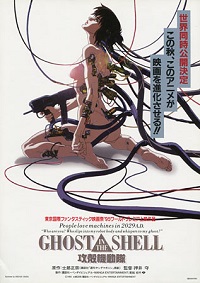 Ghost in the Shell has remained a uniquely relevant franchise in science fiction because it got so many ideas right. In 1989, at a time when internet was still a novelty of college libraries, the manga offered a world of total connectivity, where every human and device belonged to a global network. In 2002, Stand Alone Complex introduced the Laughing Man, and shortly afterwards the real world knew an equivalent. Whether this bodes well for the franchise’s dabblings into cyborg technology, only time can tell, but history has certainly made an inherently fascinating fictional world all the more compelling. In the Ghost in the Shell universe, science has fully bridged the gap between computers and neural systems, allowing electronic implants to directly convert wireless digital information into stimuli compatible with the senses. The average citizen possesses visual augmentations which allow them to directly browse the internet via voice command. More complex technology delves deeper, creating a sort of sixth sense whereby users can engage a network through thought command. Some individuals, especially accident victims with the means to afford it, might have their entire bodies replaced by neurally triggered machine components.
 Through the Shattered Lens