Love On The Shattered Lens: At First Sight (dir by Irwin Winkler)


1999’s At First Sight tells the story of Amy (Mira Sorvino) and her boyfriend, Virgil (Val Kilmer).

Virgil seems to be just about perfect.  He’s intelligent.  He’s sensitive.  He knows just what to say when Amy’s crying.  He’s a masseuse and who doesn’t want to come home to a nice massage?  He loves hockey.  He’s a great guy to go for a walk with and he’s someone who always has his own individual way of interpreting the world.  However, Virgil is blind.  He’s been blind since he was three years old.  When Amy comes across an article about a doctor named Charles Aaron (Bruce Davison), who has developed an operation that could restore Virgil’s sight, Amy pushes Virgil to get operation.  In fact, Amy pushes him maybe just a bit too much.  Virgil regains his sight but struggles to adjust to being able to see the world around him.

For instance, he has no idea how to read Amy’s facial expressions.  He struggles with his depth perception and, at one point, even walks into a glass door.  He’s seeing the world for the first time and a lot of the things that amaze him are things that Amy takes for granted.  Virgil getting back his sight totally changes the dynamic of his relationship with Amy and soon, despite their best efforts, the two of them find themselves drifting apart.  Amy is even tempted by her ex (Steven Weber).  Meanwhile, Dr. Aaron suggests that Virgil talk to a therapist who can help him adjust to his new life.  Seize every experience, Phil Webster (Nathan Lane) suggests.  Really?  That’s the great advice?  I could have come up with that!

However, Virgil has a secret that he has been keeping from Amy.  There were no guarantees when it came to the operation and now, Virgil’s sight is starting to grow dim.  He’s just gained the ability to see the world but now, he’s about to lose it again.  Will he make it to one final hockey game before he loses his eyesight?  Will he finally discover what “fluffy” thing he was looking at before he went blind at the age of three?  And will Amy ever realize that it was kind of wrong for her to push him into getting an experimental operation that he didn’t even want?

At First Sight has its flaws, as you may have guessed.  The plot is often predictable.  The message of “seizing the day” and “enjoying every moment” has been delivered by countless other films.  (The movie seems to think we won’t notice the message is a cliche as long as it’s delivered by Nathan Lane.)  As directed by Irwin Winkler (who was better-known as a producer than as a director), the film moves at a slow pace and the two-hour plus running time feels excessive.  But it almost doesn’t matter when you’ve got stars as attractive and charismatic as Val Kilmer and Mira Sorvino.  Whatever other flaws the film may have, it doesn’t lack chemistry between the two leads and I actually found myself very much caring about these characters and their relationship.  When it comes to romance, good chemistry can make up for a lot!

It was hard not to feel a bit sad while watching the film’s stars act opposite each other.  After the film was released, Mira Sorvino was blacklisted by Harvey Weinstein and her career has yet to really recover.  With his health struggles and his own reputation for being eccentric, Val Kilmer struggled to get good roles during the latter half of his career.  It was nice, though, to see them in At First Sight, looking young and happy and hopeful.  That’s one wonderful thing about the movies.  They save the moment.
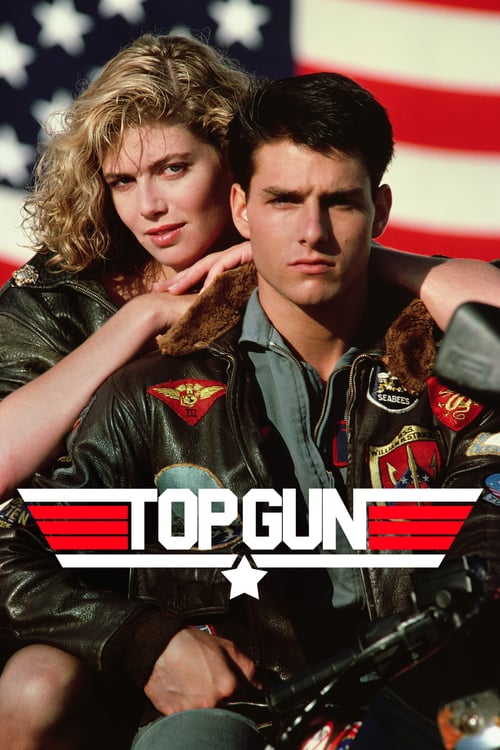
Film Review: Top Gun (dir by Tony Scott)


Oh, where to even begin with Top Gun?

First released in 1986, Top Gun is a film that pretty much epitomizes a certain style of filmmaking.  Before I wrote this review, I did a little research and I actually read some of the reviews that were published when Top Gun first came out.  Though it may be a considered a classic today, critics in 1986 didn’t care much for it.  The most common complaint was that the story was trite and predictable.  The film’s reliance on style over substance led to many critics complaining that the film was basically just a two-hour music video.  Some of the more left-wing critics complained that Top Gun was essentially just an expensive commercial for the military industrial complex.  Director Oliver Stone, who released the antiwar Platoon the same year as Top Gun, said in an interview with People magazine that the message of Top Gun was, “If I start a war, I’ll get a girlfriend.”

Oliver Stone was not necessarily wrong about that.  The film, as we all know, stars Tom Cruise as Pete “Maverick” Mitchell, a cocky young Navy flyer who attends the TOPGUN Academy, where he competes with Iceman (Val Kilmer) for the title of Top Gun and where he also spends a lot of time joking around with everyone’s favorite (and most obviously doomed) character, Goose (Anthony Edwards).  Maverick does get a girlfriend, Charlie (Kelly McGillis), but only after he’s had plenty of chances to show both how reckless and how skilled he can be while flying in a fighter plane.  Though the majority of the film is taken up with scenes of training and volleyball, the end of the film does give Maverick a chance to prove himself in combat when he and Iceman end up fighting a group of ill-defined enemies for ill-defined reasons.  It may not be an official war but it’s close enough.

That said, I think Oliver Stone was wrong about one key thing.  Maverick doesn’t get a girlfriend because he started a war.  He gets a girlfriend because he won a war.  Top Gun is all about winning.  Maverick and Iceman are two of the most absurdly competitive characters in film history and, as I watched the film last weekend, it was really hard not to laugh at just how much Cruise and Kilmer got into playing those two roles.  Iceman and Maverick can’t even greet each other without it becoming a competition over who gave the best “hello.”  By the time the two of them are facing each other in a totally savage beach volleyball match, it’s hard to look at either one of them without laughing.  And yet, regardless of how over-the-top it may be, you can’t help but get caught up in their rivalry.  Cruise and Kilmer are both at their most charismatic in Top Gun and watching the two of them when they were both young and fighting to steal each and every scene, it doesn’t matter that both of them would later become somewhat controversial for their off-screen personalities.  What matters, when you watch Top Gun, is that they’re both obviously stars.

“I’ve got the need for speed,” Tom Cruise and Anthony Edwards say as they walk away from their plane.  The same thing could be said about the entire movie.  Top Gun doesn’t waste any time getting to the good stuff.  We know that Maverick is cocky and has father issues because he’s played by Tom Cruise and Tom Cruise always plays cocky characters who have father issues.  We know that Iceman is arrogant because he’s played by Val Kilmer.  We know that Goose is goofy because his nickname is Goose and he’s married to Meg Ryan.  The film doesn’t waste much time on exploring why its characters are the way they are.  Instead, it just accepts them for being the paper-thin characters that they are.  The film understands that the the most important thing is to get them into their jets and sends them into the sky.  Does it matter that it’s sometimes confusing to keep track of who is chasing who?  Not at all.  The planes are sleek and loud.  The men flying them are sexy and dangerous.  The music never stops and the sun never goes down unless the film needs a soulful shot of Maverick deep in thought.  We’ve all got the need for speed.

In so many ways, Top Gun is a silly film but, to its credit, it also doesn’t make any apologies for being silly.  Instead, Top Gun embraces its hyperkinetic and flashy style.  That’s why critics lambasted it in 1986 and that’s why we all love it in 2020.  And if the pilots of Top Gun do start a war — well, it happens.  I mean, it’s Maverick and Iceman!  How can you hold it against them?  When you watch them fly those planes, you know that even if they start World War III, it’ll be worth it.  If the world’s going to end, Maverick’s the one we want to end it.


Embracing the Melodrama Part II #75: Witness (dir by Peter Weir)


Witness_movieLast night, I was lucky enough to watch Witness, a best picture nominee from 1985.

Taking place in Pennsylvania, Witness tells the story of what happens when an Amish widow named Rachel (Kelly McGillis) and her 8 year-old son Samuel (Lukas Haas) decide to take a trip to visit Rachel’s sister.  Traveling on an Amtrak train, Samuel is amazed by his first view of the world outside of the close-knit and insular Amish society.  However, Samuel’s excitement soon turns to horror when they arrive in Philadelphia and he witnesses a man being brutally murdered.

Detective John Book (Harrison Ford, who received his first and, to date, only Oscar nomination for this film) is assigned to the case and arranges for Rachel and Samuel to stay with his sister.  John soon discovers that the murder was committed by two crooked cops, McFee (Danny Glover, who is pure evil in this film) and Ferguson (Angus MacInnes).  John goes to his superior officer, Chief Schaefer (Josef Sommer) with his evidence.  Soon after, McFee attempts to kill and seriously wounds John.  John realizes that Schaefer must be corrupt as well.

Book manages to drive Rachel and Samuel back to their farm in Lancaster County but, after dropping them off, he passes out from blood loss.  Knowing that sending John to the hospital would reveal Rachel and Samuel’s location to Schaefer, Rachel’s father (Jan Rubes) reluctantly allows John to stay at the farm.

And so, while McFee, Ferguson, and Schaefer search for him, John temporarily pretends to be Amish.  He works in the fields.  He helps to build a barn.  He becomes something of a surrogate father to Samuel and he begins a forbidden flirtation with Rachel.

He also goes to town, where he watches as an idiotic local bullies the Amish, knowing that their religion forbids them from fighting back.  John responds by punching a bully, upsetting both the Amish and the a local store owner who yells that this will be terrible for the tourism.  In many ways, the scene is played for laughs and applause but there’s a very serious subtext here, as it would appear that the area’s main appeal to tourists is that you can humiliate the Amish without having to worry about any sort of retaliation.

While we, as viewers, definitely get some satisfaction from seeing John punch that jackass, it also allows Schaefer to discover where he and Rachel are hiding.  One morning, McFee, Ferguson, and Schaefer pull up outside the farm.  They get out of their car and, as the sun rises and with beautiful green fields on either side of them, the three men hold up their shotguns and start to walk down the road….

Witness may technically be a cop film but it’s actually so much more.  It’s a character study of a deeply cynical man who finds himself changed by simple and innocent surroundings.  It’s a love story, with Ford and McGillis illuminating the screen with their chemistry.  It’s a celebration of community, with the harshness of Philadelphia being contrasted with life among the Amish.  It’s a film full of beautiful images and it also features an excellent performance from Harrison Ford.

It’s a good film.  I’m glad that I witnessed Witness.