The TSL Horror Grindhouse: Dance of the Damned (dir by Katt Shea)


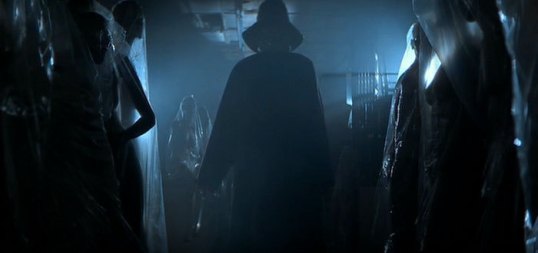
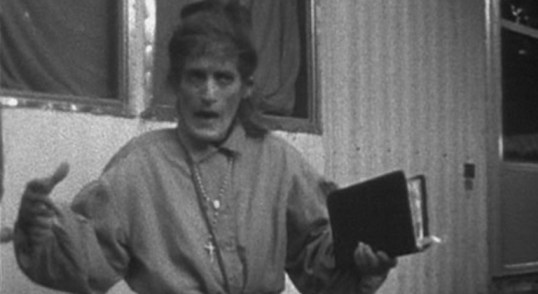
In 1989’s Dance of the Damned, Cyril O’Reilly plays a vampire with a sensitive side.

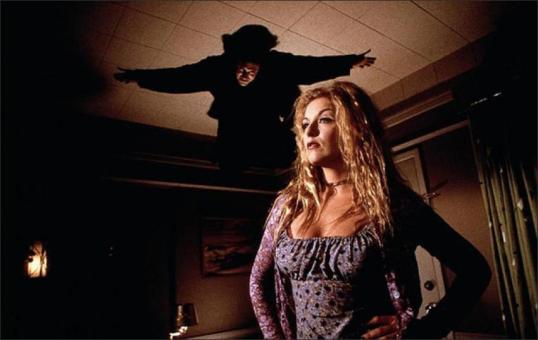
The Vampire is out on his nightly prowl.  He goes to a strip club where he finds himself drawn to a dancer named Jodi (Starr Andreef).  The Vampire is drawn to Jodi because Jodi is thinking of committing suicide.  It’s her son’s birthday and the boy’s father refuses to even let her see him.  The Vampire approached Jodi and says the wants to talk to her because he hasn’t talked to anyone in a long time.  He offers to pay Jodi one thousand dollars if she’ll come back to his house and have a conversation with him.

Because the Vampire doesn’t drive, they take a city bus back to his place.  While sitting on the bus, they are harassed by two wannabe punks.  The Vampire pierces one of their eyes with the stem of a rose.  Oddly, Jodi barely notices.

At the house, the Vampire reveals his fangs and explains that he rarely feasts but tonight is one of those nights when he does.  He says that he picked Jodi because he could sense her loneliness and could tell that she wanted to die.  He also explains that, contrary to the vampire mythology, Jodi will not turn into a vampire after he drinks her blood.  Instead, she’ll just die.  Jodi’s response is to shoot the Vampire several times.  The bullets fall off of his body.

Jodi and the Vampire end up talking.  In fact, Dance of the Damned often feels more like a one-act play than a traditional vampire film.  Both Jodi and the Vampire are lonely and they discuss what its like to feel like they have nothing in the world.  The Vampire cannot exist in the daylight and, as a stripper, Jodi’s life is centered around the night as well.  When Jodi learns that the Vampire has never been to the beach because he never felt like there was much point in going during the night, Jodi insists that they go immediately.  The Vampire discovers what sand feels like.  He struggles to walk on it which was kind of weird but whatever.  At least the movie was trying to do something different!

The main theme of the film is that both the Vampire and Jodi are outsiders.  The Vampire was born a vampire and has no idea what it’s like to be a mortal being that can safely walk around in the daylight.  Because he has scars from a childhood incident with the humans, even the Vampire’s own people have rejected him.  Jodi, meanwhile, has been rejected by conventional society because she’s a stripper and now, she can’t even see her own child.  They are two outsiders who are linked together by their feelings of being lost.  Over the course of the night, they fall in love but it’s obvious that only one will still be around the next night and it’s also fairly obvious which one it will be.

I liked Dance of the Damned, though I imagine that it might be too talky for a lot of fans of the horror genre.  It’s more of a dual character study than a traditional vampire film.  Just as she did with films like Poison Ivy and The Rage: Carrie 2, director Katt Shea uses the horror genre as a way to explore the pressure that society puts on women to act, look, and dress a certain way.  Shea’s direction is moody and atmospheric and she gets an excellent performance from Starr Andreef.  Dance of the Damned is not a film for everyone but for those who are looking for a little emotional honesty to go along with their horror, it’s an intriguing film.

Barbarian Queen (1985, directed by Hector Olivera)


The forces of the evil Lord Arrakur (Arman Chapman) raid a peaceful Barbarian village, disrupting the wedding of Queen Amethea (Lana Clarkson) and Prince Argan (Frank Zagarino).  Along with slaughtering almost the entire village, Arrakur also kidnaps Amethea’s sister, Taramis (Dawn Dunlap).  Amethea survives the attack and, with her handmaiden Estrild (future director Katt Shea) and the warrior Tiniara (Susana Traverson), sets out for Arrakur’s realm to rescue her sister and to take vengeance on him.

In Barbarian Queen, there’s much violence, much nudity, and much time spent in a dungeon with a pool of acid.  This may sound like pretty standard fantasy stuff and it is, except for the fact that almost all of the warriors are women and Arrakur and his forces are even nastier than the typical sword-and-sorcery villain.  Arrakur uses rape to terrorize his enemies and his subjects and, while that may be historically correct, it’s not easy to watch.  By the time Arrakur and Amethea are facing off in the gladiatorial arena, most viewers will be ready to see Arrakur defeated in the most extreme way possible.

Barbarian Queen was released by Roger Corman’s Concorde Picture and it was filmed in Argentina.  Today, it is best-remembered for the presence of the tragic Lana Clarkson in the role of Amethea.  Lana Clarkson starred in several Corman-produced fantasy films before she was murdered by Phil Spector in 2003.  At the time of her death, the media often dismissively described Clarkson as being a “former B movie starlet” but anyone who caught Clarkson’s movies on late night Cinemax knows that she was always the best thing about the films she was in and that she had a likable and sincere screen presence that made you root for her, whether she was fighting off an army with a sword and hiding in a tree with a bow-and-arrow.  Lana Clarkson’s performance in Barbarian Queen is always strong and sympathetic.  She endures even the movie’s most exploitive scenes without sacrificing her dignity and when she fights back, she refuses to surrender.  Her determination to have her vengeance and to free the people from a tyrant is the thing that makes Barbarian Queen worth watching.

RIP, Lana Clarkson.  She was so much more than just “a B movie starlet.”

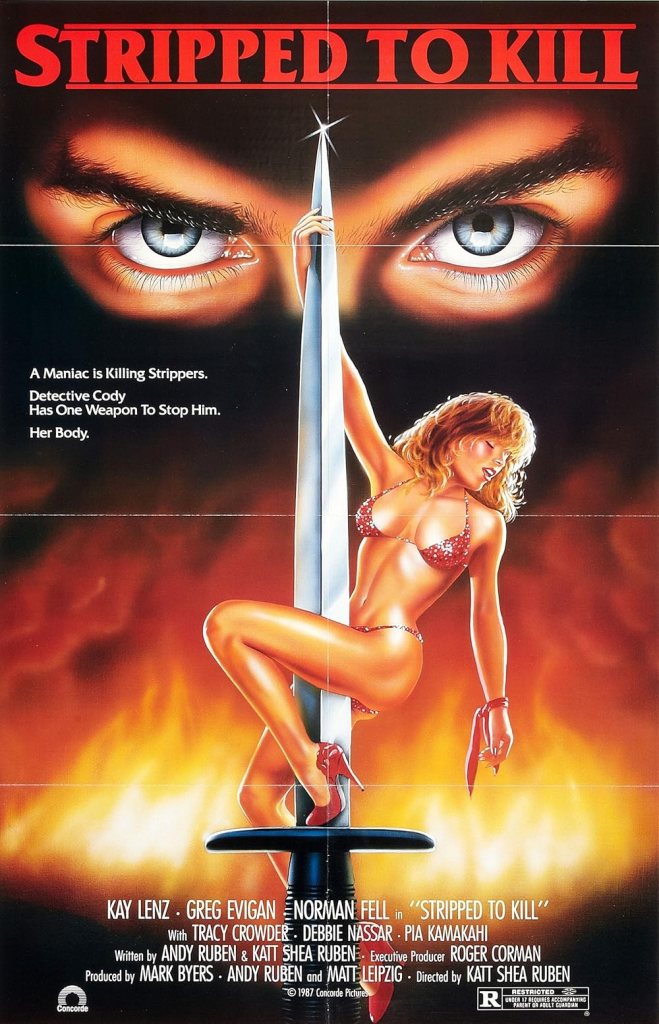
STRIPPED TO KILL – 35 years later!


If you were a teenage boy in the 80’s, and you spent time at video stores, there’s no doubt in my mind that you noticed the VHS box for STRIPPED TO KILL. I certainly did! The box art promised violence and sexy women, and I was all in. I’m guessing that I watched the film when I was around 15 or 16 years old, and I hadn’t seen it since then. A few weeks back, we were recording an episode of our THIS WEEK IN CHARLES BRONSON PODCAST when actress Kay Lenz came up in reference to her part in DEATH WISH 4: THE CRACKDOWN. One of my buddies also mentioned her part in STRIPPED TO KILL. With that seed planted, I decided to give it another viewing and find out what sort of difference an additional 35 years would make in the viewing experience. 

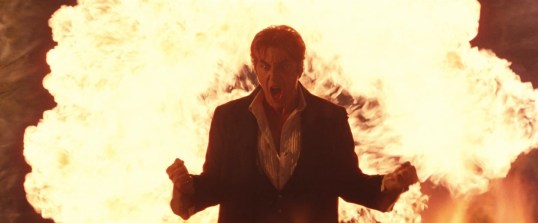
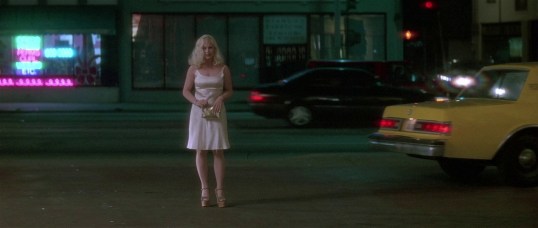
Not surprisingly, STRIPPED TO KILL opens with a beautiful young lady named Angel performing a striptease act to an extremely 80’s song called “Deny the Night.” I’ll give Larry Steicher his credit because he was singing the hell out of the song on the soundtrack. A little later, the stripper gets a phone call from someone she knows asking her to meet. When she shows up to meet this mystery person, they throw gasoline on her and burn her alive. Detective Cody Sheenan (Kay Lenz) and her partner Detective Heineman (Greg Evigan) are working undercover in the area and come across this assault and murder in the act, but the killer gets away. When the two cops find out that the victim was a stripper at the Rock Bottom Dance Club, they want the case. Through a series of events, including Cody winning an “Amateur Night” contest, she’s able to go undercover at the club where she gets to know the dancers. Detective Heineman hangs out as well in order to protect her, and I think, to get a look at her performances. Our two undercover cops immediately begin to learn the backgrounds of the ladies at the club, and they also investigate any suspicious characters they see hanging around. When another stripper is murdered, and with several suspects beginning to emerge, it’s a race against time to see if they can catch the killer before other strippers have to die! 

I will say right off the bat that STRIPPED TO KILL delivers on the box art. There are multiple strippers killed, and by my count, there are 12 different striptease performances of various quality and duration throughout the course of the 88 minute film. And the cast is downright impressive for a low-budget B-movie like this. Kay Lenz is a fine actress with an impressive resume of TV and films, including productions like Clint Eastwood’s BREEZY, WHITE LINE FEVER with Jan-Michael Vincent, THE GREAT SCOUT & CATHOUSE THURSDAY with Lee Marvin, and FAST-WALKING with James Woods. As referenced in an earlier paragraph, she co-starred with Charles Bronson in DEATH WISH 4: THE CRACKDOWN the same year that she filmed STRIPPED TO KILL. Two classics in the same year is something every actor should hope for, and she doesn’t hold back in her performance here! Greg Evigan was in a show I liked very much when I was a kid called B.J. AND THE BEAR. I also remember him in that show MY TWO DADS when I was a teenager as well. He’s not a great actor, but he’s fine here. And then there’s Norman Fell, Mr. Roper himself, as the manager of the strip club. I have a soft spot for Norman because he played Charles Bronson’s boss in the 1973 film THE STONE KILLER, a film that also features John Ritter in a small role. Norman probably needed the paycheck, but he’s definitely a welcome presence in the film. 

This is the directorial debut of actress Katt Shea. She co-wrote the script for STRIPPED TO KILL with her then husband Andy Ruben. She apparently got the idea for the film when she lost a bet with Andy and ended up actually going to a strip club. She was so impressed with some of the performances that she wanted to make a movie showing the ladies in that world. Katt Shea would later direct films like POISON IVY with Drew Barrymore and THE RAGE: CARRIE 2. And, of course, the biggest factor in getting the movie made, Katt Shea was able to convince the legendary Roger Corman to produce the film. STRIPPED TO KILL would turn into a financially successful film for Corman. It was particularly successful overseas and on the home video market. Nice investment, Mr. Corman!

Overall, STRIPPED TO KILL delivers exactly what it promises, and it does so in 1 hour and 28 minutes. That’s a pretty nice combination in my book. I think I felt the same way in 1989 as well!

8 Shots From 8 Horror Films: 1997–1999


4 Or More Shots From 4 Or More Films is just what it says it is, 4 shots from 4 of our favorite films. As opposed to the reviews and recaps that we usually post, 4 Shots From 4 Films lets the visuals do the talking!

This October, I’m going to be doing something a little bit different with my contribution to 4 (or more) Shots From 4 (or more) Films.  I’m going to be taking a little chronological tour of the history of horror cinema, moving from decade to decade.

Today, we take a look at 1997, 1998, and 1999!

8 Shots From 8 Horror Films: 1997 — 1999

I Know What You Did Last Summer (1997, dir by Jim Gillespie, DP: Denis Crossan)


The Devil’s Advocate (1997, dir by Taylor Hackford, DP: Andrzej Bartkowiak)


Lost Highway (1997, dir by David Lynch, DP: Peter Deming)


Vampires (1998, dir by John Carpenter, DP: Gary B. Kibbe)


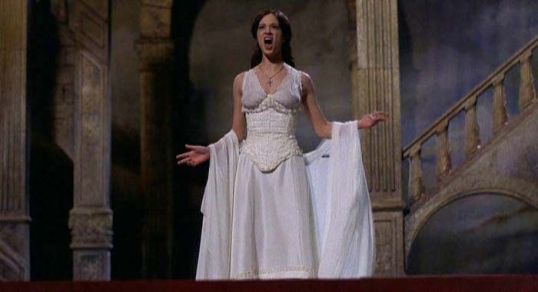
The Phantom of the Opera (1998, dir by Dario Argento, DP: Ronnie Taylor)


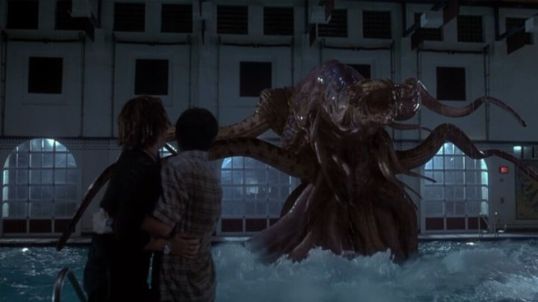
The Faculty (1998, dir by Robert Rodriguez, DP: Enrique Chediak)


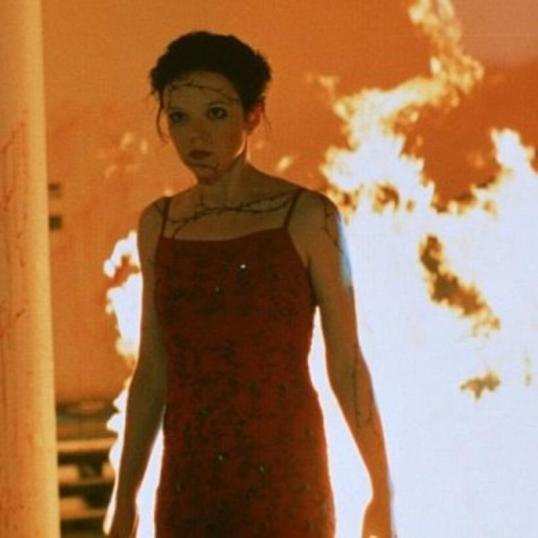
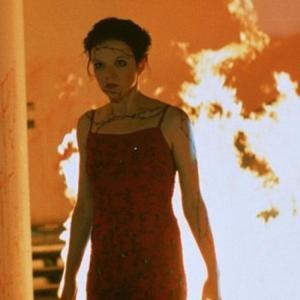
The Rage: Carrie 2 (1999, dir by Katt Shea, DP: Donald M. Morgan)


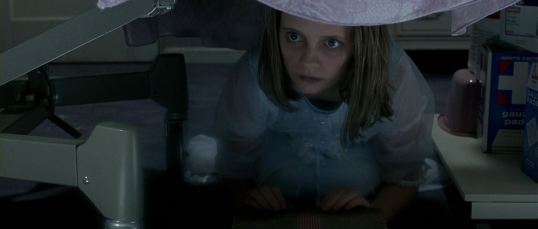
The Sixth Sense (1999, dir by M. Night Shyamalan, DP: Tak Fujimoto)

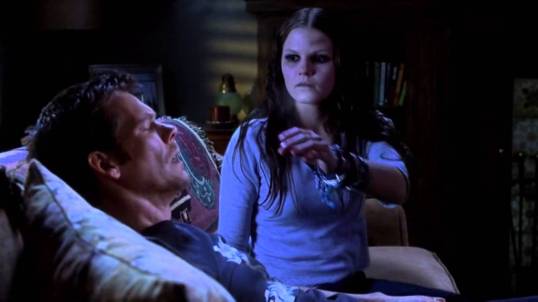
4 Shots From 4 Films: The Blair Witch Project, The Rage: Carrie 2, The Sixth Sense, Stir of Echoes


4 Shots From 4 Films is just what it says it is, 4 shots from 4 of our favorite films. As opposed to the reviews and recaps that we usually post, 4 Shots From 4 Films lets the visuals do the talking!

This October, we’re using 4 Shots From 4 Films to look at some of the best years that horror has to offer!

4 Shots From 4 1999 Horror Films:

The Blair Witch Project (1999, dir by Daniel Myrick and Eduardo Sanchez)

The Rage: Carrie 2 (1999, dir by Katt Shea)

The Sixth Sense (1999, dir by M. Night Shyamalan)

Stir of Echoes (1999, dir by David Koepp)

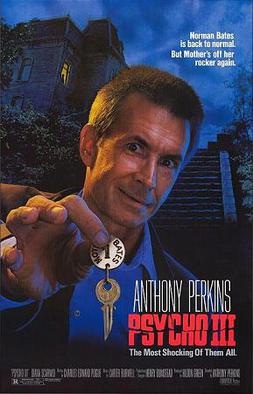
The TSL’s Horror Grindhouse: Psycho III (dir by Anthony Perkins)


Norman Bates is back!

Released in 1986 and directed by Anthony Perkins himself, Psycho III picks up a few months after Psycho II ended.  Norman (Anthony Perkins, of course) is still free.  He’s still got his motel.  He’s still talking to his dead mother.  Of course, at the end of Psycho II, Norman was told that the woman who Norman thought was his mother actually wasn’t his mother.  Instead, Emma Spool told Norman that she was his mother, which led to Norman promptly hitting her with a shovel and then keeping her preserved body hidden away in the motel.  Got all that?  Great, let’s move on….

In Psycho III, business suddenly starts booming at the Bates Motel!  All sorts of people come by to visit.

For instance, there’s the obnoxious tourists who show up at the motel so they can watch a football game and get drunk.  Future director Katt Shea plays one of the unfortunate tourists, who ends up suffering perhaps the most undignified death in the history of the Psycho franchise.  Shea later ends up being stored in the motel’s ice chest.  At one point, the local sheriff grabs a piece of ice and tosses it in his mouth without noticing that it’s covered in blood.

And then there’s Duane Duke (a young Jeff Fahey!), who is superhot but also super sleazy.  For reasons that are never quite clear, Norman hires Duke to be the assistant manager at the motel.  Duke turns out to be thoroughly untrustworthy but he’s Jeff Fahey so he remains strangely appealing even when he shouldn’t be.

Red (Juliette Cummins) shows up at the motel so that she can have sex with Duke and then get stabbed to death while taking off her top in a phone booth.  That, I guess, is Psycho III‘s equivalent of the first film’s shower scene.  Later, Duke comes across Norman mopping up all the blood in the phone booth but he doesn’t say anything about it.  Duke knows better than to ask why there’s blood in the phone booth.

Tracy Venable (Roberta Maxwell) is a journalist whose sole purpose in life is to prove that Norman murdered Emma Spool.  Tracy’s main function in this film is to explain just why exactly so many different women have claimed to be Norman’s mother.  It’s a rather complicated story and you’ll get a migraine if you think about it for too long.

And finally, there’s Maureen (Diana Scarwid), the former nun who has lost her faith and her sanity.  She shows up at the motel and stays in Marion Crane’s old room.  She takes a bath instead of a shower and slits her wrists.  When Norman storms into the room to kill her, the barely lucid Maureen mistakes him for the Virgin Mary and sees his knife as being a crucifix.  Maureen survives and Norman is hailed as a hero for rescuing her.  Later, Norman and Maureen fall in love.  You can guess how that goes.

When compared to the first sequel, Psycho III is much more of a standard slasher film and there’s certainly never any doubt over who is doing the killing.  However, Perkins again does a great job in the role of Norman, making him both sympathetic and creepy.  Fahey, Scarwid, Maxwell, and Hugh Gillin (as the hilariously clueless sheriff) all provide good support.  There’s really not a single character in this film who doesn’t have at least one odd or memorable quirk.  Duane Duke, for instance, is one of the most amazingly sleazy characters in the history of American cinema.  Just when you think that the character can’t get any worse, he proves you wrong.

As mentioned above, Perkins directed this film.  It was one of two movies that Perkins would direct before his death.  As a director, Perkins had a good visual sense, even if he did allow the narrative to meander a bit.  There’s nothing particularly subtle about Perkins’s direction and several of the scenes — like the sex scene between Duke and Red — are so over the top that they become rather fascinating to watch.  That said, there was really no longer any need to be subtle when it came to Norman Bates and his story.

With the exception of the weird Gus Van Sant remake with Vince Vaughn, Psycho III would be the last Psycho film to be released into theaters.  It would also be Perkins’s second-to-last time to play Norman.  (The last time would be in a 1990 made-for-TV sequel, Psycho IV: The Beginning.  Despite it’s title, Psycho IV pretty much ignored everything that happened in the previous two sequels.)  Perkins passed away in 1992, at the age of 60 but the character of Norman Bates would live on, both in his own performances and in the later work of Freddie Highmore in Bates Motel.

Embracing the Melodrama #41: Poison Ivy (dir by Katt Shea)


“I still think about her. I guess, still love her. She might have been even more alone than I was. I miss her.” — Syvlie Cooper (Sara Gilbert) reflects on her murderous BFF Ivy (Drew Barrymore)

1992’s Poison Ivy is narrated by alienated and confused Sylvie (Sara Gilbert), a teenager who describes herself as being  “the politically / environmentally-correct feminist poetry-reading type.”  Syvlie has issues.  Her father (Tom Skerritt) is a self-righteous television pundit while her mother (Cheryl Ladd) is stuck at home, confined to bed and slowly dying.  Ivy’s only friend is her dog, Fred.  Sylvie deals with her alienation by constantly lying, often claiming that her real father is actually a black man who had an affair with her mother.

When Sylvie sees a girl (Drew Barrymore) brazenly swinging on a rope with her skirt around her waist, she is immediately fascinated. After spending a while obsessing over the girl’s physical appearance, Sylvie tells us, “Maybe I’m a lesbian…no definitely not.  I really wish we could be friends.”  Her desire for friendship continues even after Sylvie witnesses the girl violently euthanize a dog that’s been hit by a car.

Later, at school, Sylvie finds herself sitting in detention for calling in a bomb threat to her father’s show.  When the girl joins her in detention, Sylvie strikes up a conversation with her.  It turns out that the girl knows who Sylvie’s father is and that she considers him to be “an asshole.”  However, that still doesn’t prevent the girl from accepting a ride home with Sylvie and her father.  When introducing the girl, Sylvie calls her “Ivy,” presumably after one of the girl’s tattoos.  What’s interesting — and probably often missed — is that the girl herself never introduces herself as Ivy.  It’s a name given to her by Sylvie.

Not wasting any time, Ivy is soon Sylvie’s best friend and is even living in Sylvie’s house.  At first, Ivy is exactly the best friend that Sylvie needs, encouraging her to come out of her shell, take chances, and even get a tattoo.  However, soon, Ivy is not just helping Sylvie do everything that she’s ever wanted to but she’s also acting on all of Sylvie’s subconscious desires as well.  Ivy first manages to bond with Sylvie’s mother and then proceeds to seduce her father.  Finally, even Fred finds himself preferring the company of Ivy to his original owner…

Is there anything more wonderful than female friendship?  I think not but then again, that’s really not relevant to Poison Ivy because this film has not interest in being a realistic look at the relationship between Sylvie and Ivy.  Instead, it’s a hyper-stylized take on the type of material that you would normally expect to find in a trashy novel and the movie is all the better for it.  Fortunately, the movie was directed by Katt Shea who brings a sensitivity to material that a male director would probably only view as an excuse for titillation.

I think the film is best interpreted as being Sylvie’s fantasy.  In fact, I would argue that the case could be made that the entire film takes place in Sylvie’s head.  It’s her fantasy of having the type of uninhibited friend who will encourage her to conquer all of her fears and who will accept her for all of her strange quirks.  However, that’s not just Sylvie’s fantasy.  That’s a universal fantasy that every teenage girl has had (and probably a few teenage boys as well).  Is there any wonder that the film ends with Sylvie admitting that she still misses Ivy?

992POI_Drew_Barrymore_001

Horror Film Review: The Rage: Carrie 2 (dir by Katt Shea)


220px-RageCarrie2

(I originally posted a version of this review over at HorrorCritic.Com.  I’m sharing it here because I think it makes a nice companion piece to both Ryan’s review of the original Carrie and Leonard’s review of the remake.)

Lately, the 1999 horror sequel The Rage: Carrie 2 has been showing up fairly frequently on Encore and I have spent many an insomnia-filled night watching a wild-eyed Rachel use her brain to kill every high school football player on the planet.  It seemed like every time I came across Carrie 2, the film was already halfway over.  For some reason, I always seemed to find the movie at the exact moment that Rachel was using a stack of CDs to decapitate some of the most obnoxious jocks to ever crawl out from underneath a cinematic rock.  However, once I managed to catch Carrie 2 from the start, I was pleasantly surprised to discover that it’s actually a pretty good film and that — surprise! surprise! — it has a lot more than just bloody ,mayhem on its mind.

In Carrie 2, Rachel (well-played by Emily Bergl) is the half-sister of the original Carrie White.  Like her sister, she can move things with her mind and, again much like Carrie, Rachel goes to a high school that is totally and completely dominated by jocks.

However, these are not just your typical high school football players.  No, this is the most dangerous collection of clean-cut young sociopaths to be gathered in one place since the beer garden scene from Cabaret.  With the exception of sensitive Jesse (played by Jason London, who is so handsome in this film that he looks like he belongs on the cover of a book), the entire football team is obsessed with seducing every virgin at the school.  When Emily’s friend Lisa (played by Mena Suvari) is deflowered and then rejected by moronic jock Eric (Zachary Ty Bryan — yes, the oldest Home Improvement kid), she ends up killing herself in a scene that is surprisingly effective because of both Suvari’s sensitive performance and the fact that she was named Lisa.

Seriously, folks, be nice to the Lisas in your life.

Mena Suvari In The Rage

Anyway, Rachel soon starts to investigate the circumstances behind Lisa’s suicide and this leads to the jocks hatching a ludicrously complex scheme to silence her. Much as in the first Carrie, it involves humiliating Rachel at the biggest party of the year and, just as in the first film, the end result is Rachel killing a lot of people.

I’m like a lot of filmgoers and horror fans in that I have gotten burned by so many bad sequels to classic movies that, as soon as I see a number in a title, warning flags go up. I tend to watch these films with the expectation that they’re going to both cheapen the original and not bring anything new to the table.  However, Carrie 2, while hardly a perfect film, is an exception to the rule.  No, it’s nowhere close to being as good as the original Carrie but, when taken on its own term, it’s an effective and entertaining movie.

Along with the strong performances from the entire cast (seriously, you will hate Zachary Ty Bryan’s character so much by the end of this movie), Carrie 2 is well-directed by veteran genre director Katt Shea.  Wisely, Shea does not attempt to recreate the original film (despite the similarities in plot) but instead, she brings a unique, feminist perspective to the story.  Under Shea’s direction, Emily Bergl makes Rachel into a strong, independent character. She may be victimized but — unlike Sissy Spacek in the original — she is never a victim.

There’s a lot of scenes that stick in my mind from Carrie 2.  The film’s final massacre is outrageous and over-the-top and it’s all the more effective because of it.  (It also features death by shattered lenses and I have to admit that this myopic reviewer always cringes whenever she sees that scene.)  However, to me, Carrie 2 is most disturbing when it explores the pathology behind the film’s doomed football team.  One need only watch the scene where the entire team gets their heads shaved, transforming them from being individuals into a mass of virtually indistinguishable teammates, to understand that Katt Shea was looking to accomplish more here than just making a run-of-the-mill horror sequel.

And, to a large extent, she succeeded.

936full-the-rage-carrie-2-screenshot