4 Or More Shots From 4 Or More Films is just what it says it is, 4 shots from 4 of our favorite films. As opposed to the reviews and recaps that we usually post, 4 Shots From 4 Films lets the visuals do the talking!
Today, we celebrate the birth and the legacy of the great Austrian director Fritz Lang. Starting his career during the silent era in Germany, Lang was both a proponent of expressionism and an early critic of the Nazis and Adolf Hitler. Despite this and the fact that Lang’s mother was Jewish, Josef Goebbels attempted to recruit Lang to run Germany’s largest film studio, UFA. Lang responded to Goebbels offer by moving to Paris and divorcing his wife, who was an ardent Nazi. Lang eventually found his way to Hollywood, where he worked for the next twenty years. With films like Metropolis, M, Fury, Hangmen Also Die, Scarlet Street, and The Testament of Dr. Mabuse, Lang proved himself to be a master of every genre and his influence is still felt to this day.
In honor of the man and his legacy, here are….
4 Shots From 4 Fritz Lang Films
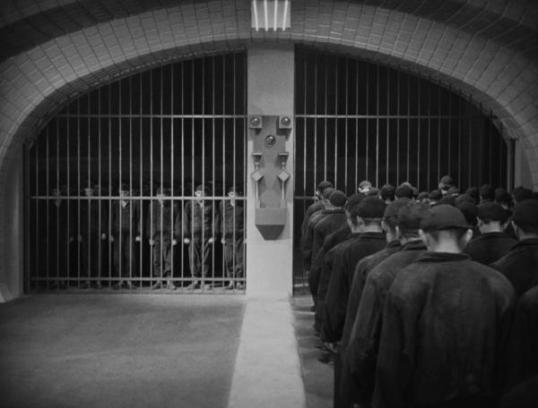
Metropolis (1927, dir by Fritz Lang, DP: Karl Freund and Gunther Rittau)
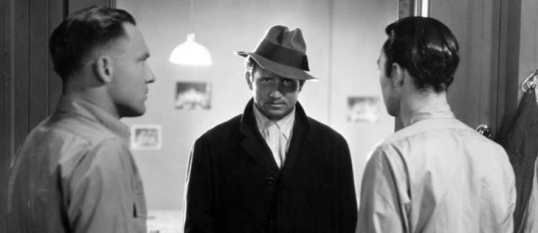
M (1931, dir by Fritz Lang, DP: Fritz Arno Wagner)
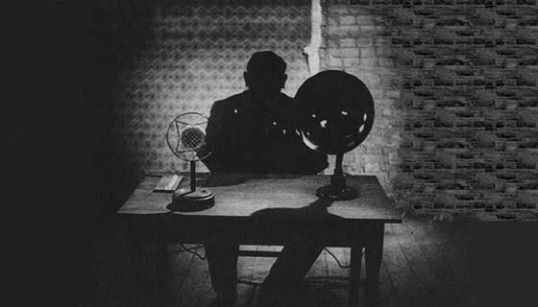
The Testament of Dr. Mabuse (1933, dir by Fritz Lang, DP: Karl Vash and Fritz Arno Wagner)
Fury (1936, dir by Fritz Lang, DP: Joseph Ruttenberg)
4 Shots From 4 Films is just what it says it is, 4 shots from 4 of our favorite films. As opposed to the reviews and recaps that we usually post, 4 Shots From 4 Films is all about letting the visuals do the talking.
Today’s director is Tod Browning, who started his career during the silent era, ended it in the sound era, and was responsible for some of the most important horror and suspense films of both eras!
4 Shots From 4 Tod Browning Films
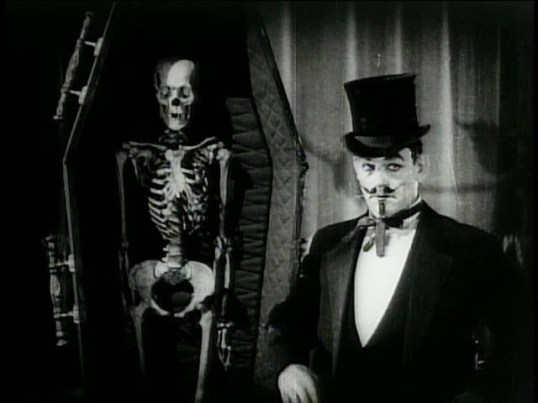
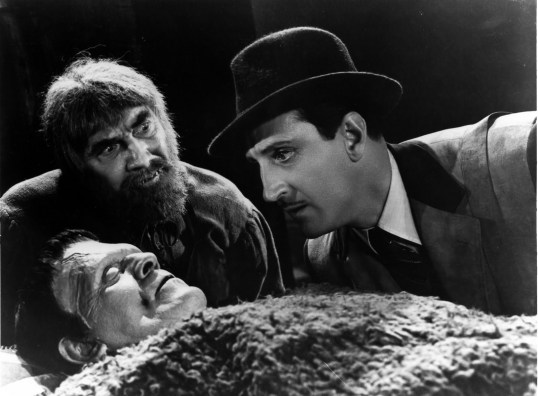
West of Zanzibar (1928, dir by Tod Browning, DP: Percy Hilburn)
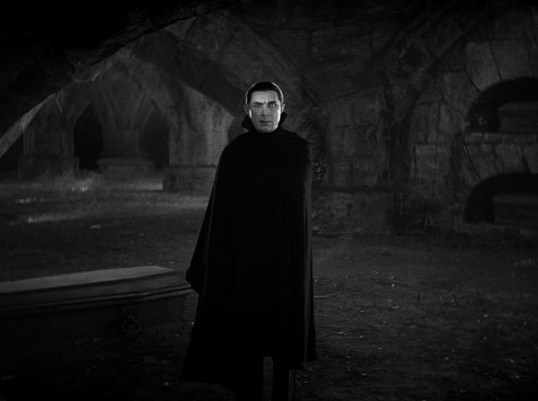
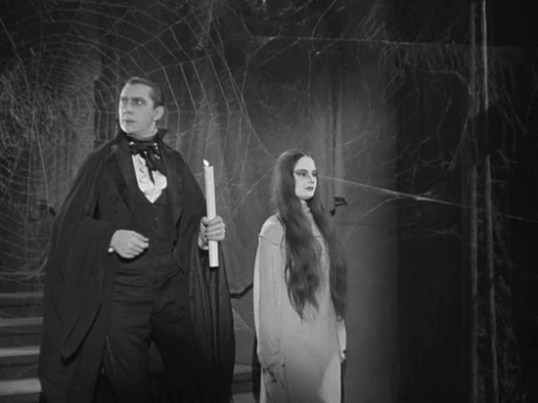
Dracula (1931, Dir by Tod Browning, DP: Karl Freund)
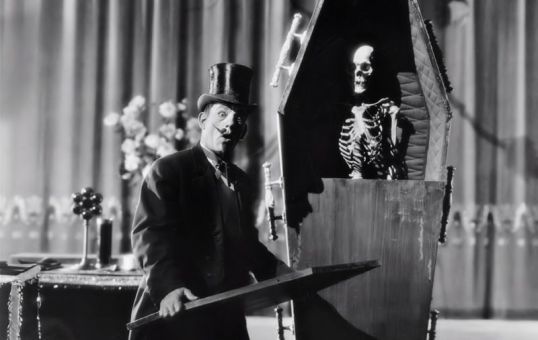
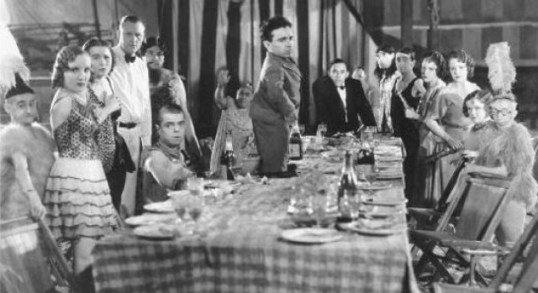
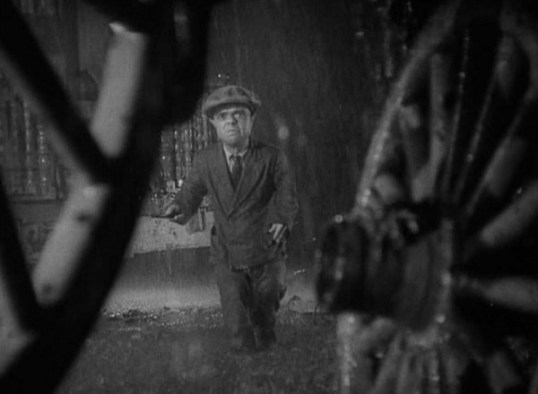
Freaks (1932, dir by Tod Browning, DP: Merritt Gerstad)
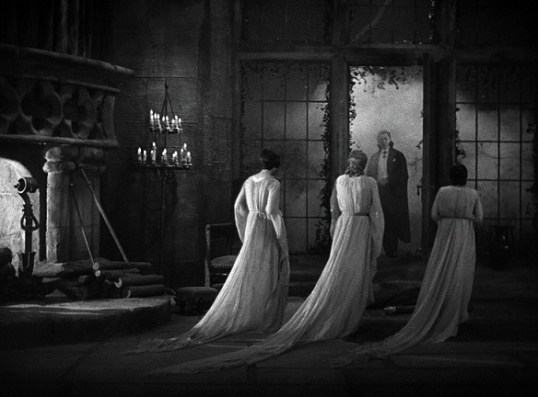
Mark of the Vampire (1935, Dir by Tod Browning, DP: James Wong Howe)
4 Or More Shots From 4 Or More Films is just what it says it is, 4 shots from 4 of our favorite films. As opposed to the reviews and recaps that we usually post, 4 Shots From 4 Films lets the visuals do the talking!
Today, we celebrate the birth and the legacy of the great Austrian director Fritz Lang. Starting his career during the silent era in Germany, Lang was both a proponent of expressionism and an early critic of the Nazis and Adolf Hitler. Despite this and the fact that Lang’s mother was Jewish, Josef Goebbels attempted to recruit Lang to run Germany’s largest film studio, UFA. Lang responded to Goebbels offer by moving to Paris and divorcing his wife, who was an ardent Nazi. Lang eventually found his way to Hollywood, where he worked for the next twenty years. With films like Metropolis, M, Fury, Hangmen Also Die, Scarlet Street, and The Testament of Dr. Mabuse, Lang proved himself to be a master of every genre and his influence is still felt to this day.
In honor of the man and his legacy, here are….
4 Shots From 4 Fritz Lang Films
Metropolis (1927, dir by Fritz Lang, DP: Karl Freund and Gunther Rittau)
M (1931, dir by Fritz Lang, DP: Fritz Arno Wagner)
The Testament of Dr. Mabuse (1933, dir by Fritz Lang, DP: Karl Vash and Fritz Arno Wagner)
Fury (1936, dir by Fritz Lang, DP: Joseph Ruttenberg)
4 Shots From 4 Films is just what it says it is, 4 shots from 4 of our favorite films. As opposed to the reviews and recaps that we usually post, 4 Shots From 4 Films is all about letting the visuals do the talking.
This October, I am going to be using our 4 Shots From 4 Films feature to pay tribute to some of my favorite horror directors, in alphabetical order! That’s right, we’re going from Argento to Zombie in one month!
Today’s director is Tod Browning, who started his career during the silent era, ended it in the sound era, and was responsible for some of the most important horror and suspense films of both eras!
4 Shots From 4 Tod Browning Films
West of Zanzibar (1928, dir by Tod Browning, DP: Percy Hilburn)
Dracula (1931, dir by Tod Browning. DP: Karl Freund)
Freaks (1932, dir by Tod Browning, DP: Merritt Gerstad)
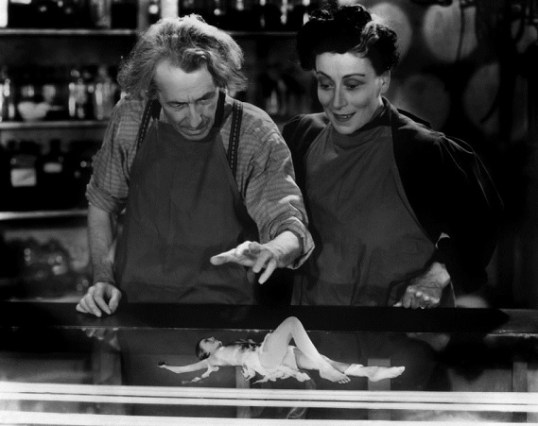
The Devil-Doll (1936, dir by Tod Browning, DP: Leonard Smith)
4 Or More Shots From 4 Or More Films is just what it says it is, 4 shots from 4 of our favorite films. As opposed to the reviews and recaps that we usually post, 4 Shots From 4 Films lets the visuals do the talking!
Today, we celebrate the birth and the legacy of the great Austrian director Fritz Lang. Starting his career during the silent era in Germany, Lang was both a proponent of expressionism and an early critic of the Nazis and Adolf Hitler. Despite this and the fact that Lang’s mother was Jewish, Josef Goebbels attempted to recruit Lang to run Germany’s largest film studio, UFA. Lang responded to Goebbels offer by moving to Paris and divorcing his wife, who was an ardent Nazi. Lang eventually found his way to Hollywood, where he worked for the next twenty years. With films like Metropolis, M, Fury, Hangmen Also Die, Scarlet Street, and The Testament of Dr. Mabuse, Lang proved himself to be a master of every genre and his influence is still felt to this day.
In honor of the man and his legacy, here are….
4 Shots From 4 Fritz Lang Films
Metropolis (1927, dir by Fritz Lang, DP: Karl Freund and Gunther Rittau)
M (1931, dir by Fritz Lang, DP: Fritz Arno Wagner)
The Testament of Dr. Mabuse (1933, dir by Fritz Lang, DP: Karl Vash and Fritz Arno Wagner)
Man Hunt (1941, dir by Fritz Lang, DP: Arthur C. Miller)
4 Or More Shots From 4 Or More Films is just what it says it is, 4 shots from 4 of our favorite films. As opposed to the reviews and recaps that we usually post, 4 Shots From 4 Films lets the visuals do the talking!
This October, I’m going to be doing something a little bit different with my contribution to 4 (or more) Shots From 4 (or more) Films. I’m going to be taking a little chronological tour of the history of horror cinema, moving from decade to decade.
Today, we take a look at the 1930s.
8 Shots From 8 Horror Films
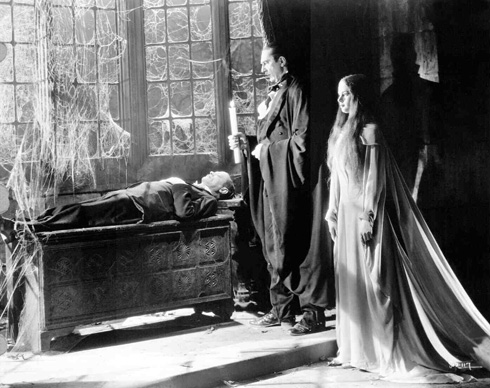
Dracula (1931, starring Bela Lugosi as the Count, Dir by Tod Browning, DP: Karl Freund)
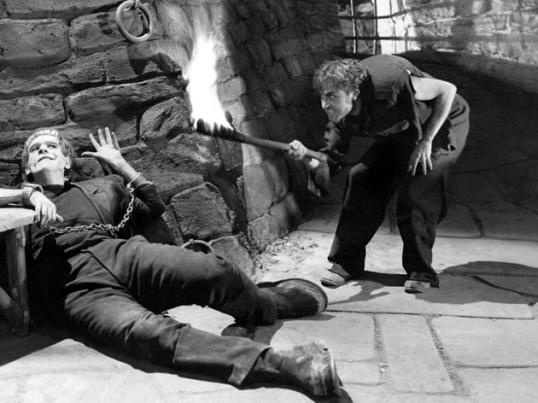
Frankenstein (1931, dir by James Whale, DP: Arthur Edeson)
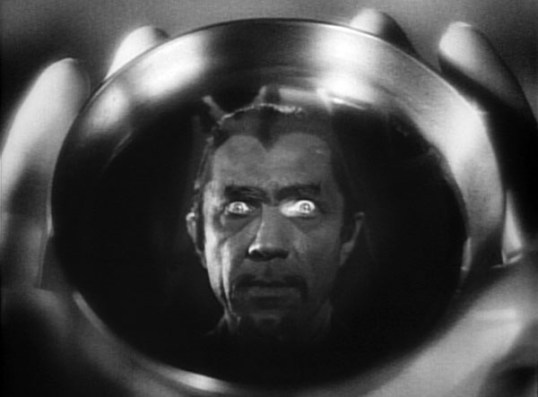
White Zombie (1932, directed by Vincent Halperin, DP: Arthur Martinelli)
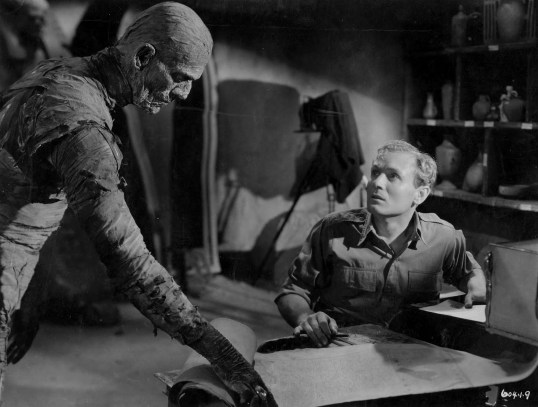
The Mummy (1932, directed by Karl Freund, DP: Charles Stumar)
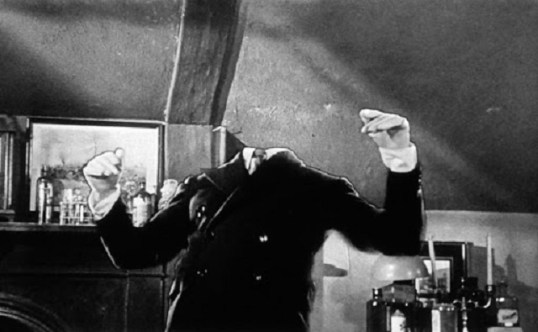
The Invisible Man (1933, dir by James Whale, DP: Arthur Edeson)
Bride of Frankenstein (1935, dir James Whale, DP: John J. Mescall)
Mark of the Vampire (1935, dir by Tod Browning, DP: James Wong Howe)
Son of Frankenstein (1939, directed by Rowland V. Lee, DP: George Robinson)
4 Shots From 4 Films is just what it says it is, 4 shots from 4 of our favorite films. As opposed to the reviews and recaps that we usually post, 4 Shots From 4 Films lets the visuals do the talking.
139 years ago on this date, Bela Lugosi was born in Hungary. Today, we honor his memory with….
4 Shots From 4 Bela Lugosi Films
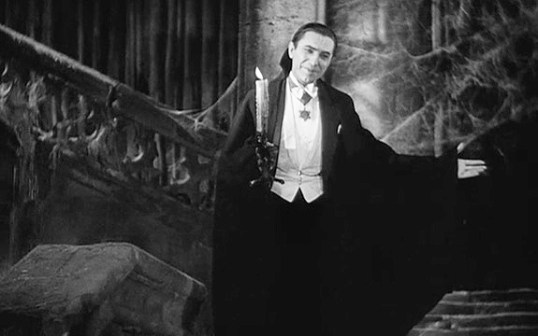
Dracula (1931, dir by Tod Browning, DP; Karl Freund)
White Zombie (1932, dir by Vincent Halperin, DP: Arthur Martinelli)
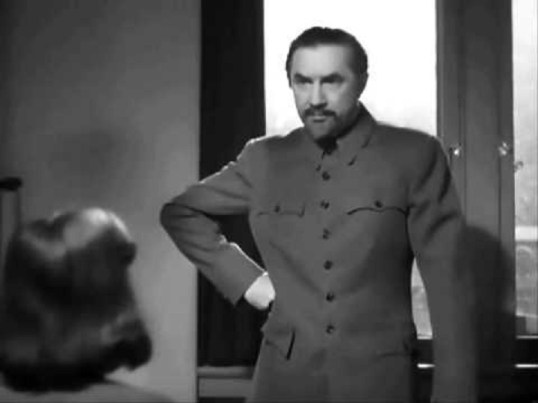
Ninotchka (1939, dir by Ernst Lubitsch, DP: William H. Daniels)
Bride of The Monster (1955, dir by Ed Wood, DP: Ted Allan and William H. Thompson)
4 Shots From 4 Films is just what it says it is, 4 shots from 4 of our favorite films. As opposed to the reviews and recaps that we usually post, 4 Shots From 4 Films lets the visuals do the talking!
Today, let us take just a few moments to pay tribute to one of the icons of Halloween. He was born into nobility but he never let that stop him from visiting the village at night and getting a taste of the common life. I’m talking, of course, about the original royal influencer, Count Dracula! Everyone knows Dracula. Everyone wants to either be with or even be Dracula. It’s no wonder that he’s been the subject of so many biopics.
In honor of the Count’s legacy, here are….
4 Shots From 4 Dracula Films
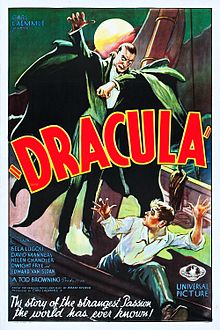
Dracula (1931, starring Bela Lugosi as the Count, Dir by Tod Browning, DP: Karl Freund)
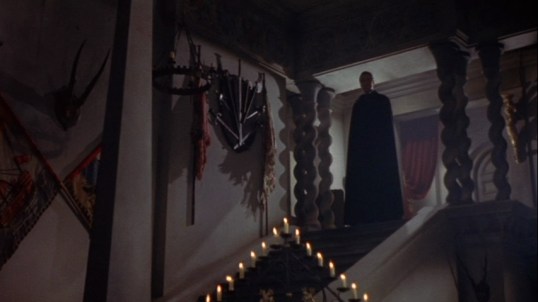
Horror of Dracula (1958, starring Christopher Lee as the Count, Dir by Terence Fisher, DP: Jack Asher)
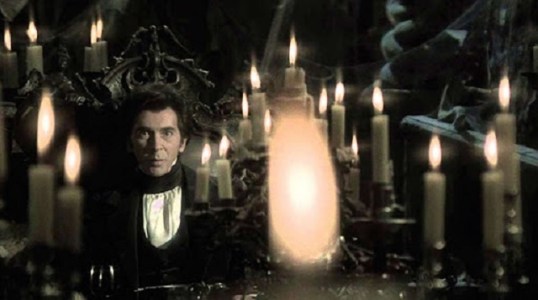
Dracula (1979, starring Frank Langella as the Count, Dir by John Badham, DP: Gilbert Taylor)
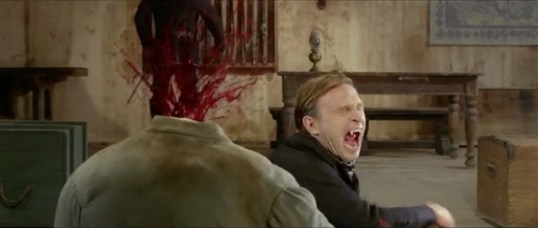
Dracula 3D (2012, starring Thomas Kretschman at the Count, dir by Dario Argento, DP: Luciano Tovoli)
It pains me to say it but, of all the classic Universal monster films, Dracula is probably my least favorite.
I hate to say that because I love vampires and I love the story of Dracula. I have read the book several times, I’ve seen several productions of the stage play, and I’ve seen a countless number of Dracula films. (Christopher Lee’s version is my favorite.) The 1931 version of Dracula — while hardly being the first vampire movie — was still a very important moment in the history of horror cinema. Every vampire film that has come out since owes a debt of gratitude to Dracula. Bela Lugosi’s performance set the standard against which almost all vampires are judged.
I always want to love Dracula but … no, the film just doesn’t work for me.
Of course, we all know the film’s story. Dracula (Bela Lugosi) comes to England from Transylvania. He turns Lucy (Frances Dade) into a vampire and attempts to do the same thing to Mina Seward (Helen Chandler). Mina’s fiancée, John Harker (David Manners) and father, Dr. Seward (Herbert Bunston), attempt to stop him with the help of Prof. Van Helsing (Edward van Sloan). Renfield (Dwight Frye) serves as Dracula’s servant and eats bugs. Dracula tells us that he does not drink … wine. He talks about the music of the night. His eyes get wide at the sight of blood and he hides his face when confronted with a cross.
Of course, though Dracula may have first appeared in Bram Stoker’s novel, the film is actually an adaptation of a stage play that was based on the novel. That’s the main problem with Dracula as a movie. It’s a very stagey film, one that never seems to quite break free of its theatrical origins. It’s a rather slow-moving film, one that is full of awkward scene transitions and moments of dead air. One need only compare it to F.W. Murnau’s Nosferatu or Carl Theodor Dreyer’s Vampyr to see just how visually bland Dracula really is.
Dracula‘s blandness is especially surprising when you consider that the direction is credited to Tod Browning. Browning directed some of the best horror films of the silent era and, after the release of Dracula, he went on to direct the brilliant Freaks. Dracula doesn’t feel like a Browning film but perhaps that’s because it actually wasn’t. Reportedly, Tod Browning was struggling with depression during the filming of Dracula and was rarely on set. Instead, most of the film’s direction was handled by cinematographer Karl Freund. Freund had never directed a film before (though he would later acquit himself quite well with The Mummy) and Dracula‘s flaws were largely a result of that inexperience.
Well, that may be true or it may not. Here’s what we can say for sure: Bela Lugosi’s work as Dracula holds up surprisingly well. When seen today, it can be difficult to fairly judge Lugosi’s performance. We’ve seen so many parodies and bad imitations that it’s difficult to imagine the impact that it may have had on audiences in 1931. Lugosi was recreating his stage performance and it’s a very theatrical performance but, at the same time, Dracula is a character that doesn’t demand or require subtlety. There’s a power to Lugosi’s performance. Maybe it’s the piercing stare or the unbridled blood lust that seems to be reflected in his eyes. Maybe it’s the accent. Maybe it’s the haughty and arrogant way that he carries himself. Whatever it is, it works.
No, Dracula does not hold up as well as you might hope. But Bela Lugosi’s performance remains a classic.
Did H.P. Lovecraft enjoy movies? I’d love to think that he did but in all probability, he didn’t. After all, Lovecraft frequently wrote, in both his fiction and his personal correspondence, that he found the modern world to be “decadent.” He was not a fan of technological development, viewing it as being the source of civilization’s decline.
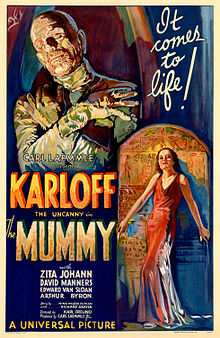
In all probability, Lovecraft did not enjoy the movies. When The Mummy was first released in 1932, it’s probable that Lovecraft did not rush out to a local Providence movie theater and buy a ticket.
And, really, that’s a shame. Of the many horror films released by Universal Pictures in the 1930s, The Mummy was perhaps the most Lovecraftian. The bare bones of the film’s plot could have easily been lifted from one of Lovecraft’s stories: a group of rational and educated men are confronted with an ancient evil that defies all reason. When the title character is brought back to life by a man foolishly reading from the fictional Scroll of Thoth, one is reminded of not only the Necronomicon but also of the dozens of other fictional-but-plausible texts that have appeared in the works of both Lovecraft and his successors. Just the sight of the Mummy coming back to life causes one man to have an immediate nervous breakdown, a fate shared by almost every Lovecraft protagonist who was unfortunate enough to learn about Cthulhu, Azathoth, and the truth concerning man’s insignificant place in the universe.
The story of The Mummy goes something like this: In ancient Egypt, a priest is caught trying to bring his dead lover back to life and, as punishment, he is mummified alive and locked away in a tomb. Centuries later, a group of explorers discover the tomb. The mummy comes back to life and, ten years later, he abducts the woman (played by the very beautiful Zita Johann) whom he believes to be the reincarnation of his former love.
I’ve watched The Mummy a few times and one thing that always surprises me is how little we actually see of the Mummy as a mummy. After he’s accidentally resurrected by Ralph Norton (Bramwell Fletcher), the Mummy steps out of his sarcophagus and stumbles out into the streets of Cairo, leaving a now insane Norton to giggle incoherently about how the mummy just stepped outside for a walk. That is pretty much the last time that we ever see the Mummy wrapped up in bandages. When we next see the Mummy, he’s going by the name Ardath Bey and he bears a distinct resemblance to Boris Karloff.
Karloff gives one of his best performance as the sinister and calculating Bey. Of all the horror films that were released by Universal in the 1930s, The Mummy is perhaps the only one that can still be considered to be, at the very least, disturbing. That’s largely due to the fact that, as played by Karloff, Bey is the epitome of pitiless and relentless evil. I’m always especially shaken by the scene in which Bey uses his magical powers to make a man miles away die of a heart attack. It’s not just the fact that Bey has the power to do something like this. It’s that Bey seems to get so much enjoyment out of it. There’s a sadistic gleam in Karloff’s eyes during these scenes and his expression of grim satisfaction is pure nightmare fuel.
Just compare Bey to the other Universal monsters: The Invisible Man was driven insane by an unforeseen side effect of his formula. Frankenstein’s Monster was destructive because he didn’t know any better. The Wolf Man spent five movies begging people to kill him and put him out of his misery. And while Dracula was certainly evil, he had as many limitations as he had power. He couldn’t go out in daylight. He was easily repelled by both crosses and garlic. He often didn’t do a very good job of hiding his coffin. Ardath Bey, on the other hand, was not only evil but apparently unstoppable as well.
The rest of the cast is pretty much overshadowed by Karloff but fans of the old Universal horror movies will enjoy picking out familiar faces. They’ll recognize David Manners from Dracula. Edward Van Sloan also shows up here, fresh from playing Van Helsing in Dracula and Dr. Waldman in Frankenstein. But ultimately, it is Karloff who dominates the film and that’s the way it should be. There’s a reason why Boris Karloff could get away with only his last name appearing in the credits. He was an icon of both cinema and horror and The Mummy reminds us why.
For a film that was first released 84 years ago, The Mummy holds up surprisingly well. There have been countless movies about homicidal mummies over the years but none have yet to match the original.







 Through the Shattered Lens