Late Night Retro Television Review: CHiPs 2.11 “Supercycle”


Welcome to Late Night Retro Television Reviews, a feature where we review some of our favorite and least favorite shows of the past!  On Mondays, I will be reviewing CHiPs, which ran on NBC from 1977 to 1983.  The entire show is currently streaming on Freevee!
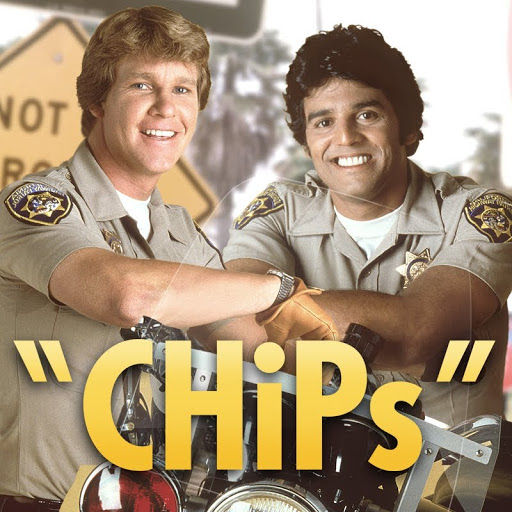
A daredevil motorcyclist known as the Phantom is making the street dangerous in Los Angeles!  Can Ponch and Baker catch him before it’s too late?

Episode 2.11 “Supercycle”

(Dir by Phil Bondelli, originally aired on December 2nd, 1978)

From what I’ve read, Larry Wilcox was apparently often unhappy on the set of CHiPs and, watching this week’s episode, I can see why.

This week’s episode follows only one storyline.  A motorcycle-riding daredevil known as the Phantom (George O’Hanlon, Jr.) is driving around Los Angeles and doing stunts.  It’s all a part of a promotion that’s being run by the unscrupulous Fred Gesslin (Jason Evers).  When Ponch and Baker chase the Phantom and end up losing him, footage ends up on the news and totally humiliates the Highway Patrol.  Getraer is even less amused than usual.

Luckily, Harlan has a supercycle in the garage.  Ponch and Baker decide to take the Supercycle out so that they can use it to capture the Phantom.  Ponch and Baker both get a chance to test the Supercycle on the test track.  Ponch is a natural.  Baker crashes.  So, of course, Ponch is the one who gets to ride the Supercycle….

AND THAT’S THE WAY IT ALWAYS IS ON THIS SHOW!

Seriously, if there’s anything cool to do, Ponch is going to be the one to do it.  If there’s an exciting story, it’s going to center around Ponch.  Despite the fact that Larry Wilcox looks a hundred times more comfortable on a motorcycle than Erik Estrada, Baker is always going to take a back seat to Ponch.  Seriously, that would bother anyone!  In this case, it means that Ponch is the one who gets to use the Supercycle.  Baker can just stand in the background and force himself to smile.  Poor Baker!

Now, Baker does get a small measure of revenge.  He’s the one who gets a date with Sheila Martin (Karen Carlson).  Sheila owns the advertising company that Fred is working with to promote the Phantom.  Since Sheila knew about the Phantom and didn’t immediately share that information with Ponch and Baker, it really seems like she should have gotten in as much trouble as Fred.  But Baker needs a date so Sheila’s off the hook.  Oddly enough, the Phantom is let off the hook too.  It turns out that he’s just an innocent guy from the country who was led astray by Fred.  Never mind the Phantom could have killed multiple people with his reckless driving.

No matter, though!  The stunts are spectacular in this episode and who doesn’t like the idea of owning a supercycle?  That’s really the only thing that matters as far as this episode is concerned.  Ponch may have gotten to ride it but, ultimately, the Supercycle has a place in everyone’s heart.
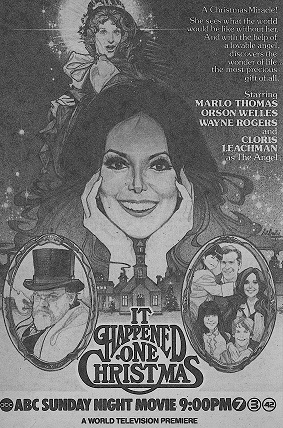
Holiday Film Review: It Happened One Christmas (dir by Donald Wyre)


The 1977 made-for-TV movie, It Happened One Christmas, opens in Heaven.  We hear the voice of Joseph (Charles Grodin), one of the top angels.  Joseph has noticed that, in the town of Bedford Falls, a lot of people seem to be praying and all of their prayers concern one person.  They are all worried about Mary Bailey Hatch (Marlo Thomas).

He requests that an angel be sent down to Earth to help Mary with her problems.  Unfortunately, the only angel available is Clara (Cloris Leachman) and Clara, despite her optimistic outlook and upbeat personality, is not considered to be a particularly smart angel.  She hasn’t even gotten her wings yet!  However, Joseph promises her that, should she convince Mary Hatch not to toss away her life on Christmas Eve, Clara will get her wings.

But first, Joseph shows Clara all of the important events in Mary’s life.  Clara watches as young Mary saves the life of her brother, Harry.  A few weeks later, Mary manages to keep Dr. Gower from accidentally poisoning a patient.  Though Mary dreams of leaving Bedford Falls and pursuing a career as a writer, she instead ends up taking over her late father’s old Building and Loan company.  With the help of her husband, George (Wayne Rogers), she helps hundreds of people move into affordable housing.  She is also one of the few people in town willing to stand up to Old Man Potter (Orson Welles)….

What was that?

Yeah, I know.  Just hold on.  I’m getting to that.

Anyway, everything is going great in Mary’s life until her irresponsible Uncle Willie (Barney Martin) accidentally loses a deposit on Christmas Eve.  Facing embezzlement charges and having yelled at her family, Mary considers jumping off a bridge.  Fortunately, Clara is there to show her what her life would be like if she had never been born….

Excuse me?  Did you say that this sounds familiar?

Yes, It Happened One Christmas is a remake of It’s A Wonderful Life.  The main difference is that the genders are swapped.  Jimmy Stewart’s role is played by Marlo Thomas.  Wayne Rogers plays the Donna Reed role.  This leads to a few changes in the story.  For instance, Mary still yells at ZuZu’s teacher but she doesn’t get sucker punched as a result.  Whereas the original Mr. Potter treated George Bailey with outright hostility, the remake’s Mr. Potter tends to use a tone of condescending concern when talking to Mary.  Since George Hatch doesn’t lose his hearing in one ear, he’s able to serve in World War II and he returns on crutches.  In the world where Mary was never born, George still never marries but, instead of working at the library, he becomes a boorish auto mechanic.  Violet is no longer an important character and Mary never tries to blame her visions of Pottersville on “bad liquor.”  These are cosmetic differences but, otherwise, it’s pretty much the exact same story.

To be honest, it probably sounds more interesting than it actually is.  It’s not that It Happened One Christmas is a poorly made or a badly acted film.  It’s fine, really!  But it’s not It’s A Wonderful Life.  Marlo Thomas plays her role with a lot of energy but she’s still no Jimmy Stewart.  Stewart, who was still dealing with his own World War II experiences, played up the haunting sadness behind George’s mild-mannered facade and that’s something that Thomas never accomplishes.  If Stewart’s George seems like he’s been beaten down by one lost dream after another, Marlo Thomas’s Mary just seems like she’s having a really bad night.  By that same token, Wayne Rogers is likable a the love of Mary’s life but he’s no Donna Reed.  Even the great Orson Welles can’t escape the shadow of Lionel Barrymore.  Barrymore’s Mr. Potter was a pure misanthrope who was at his happiest mocking the dead and approving men for the draft.  Oddly, Orson Welles brings an almost avuncular style to Mr. Potter.  One gets the feeling that Welles simply couldn’t resist winking at the audience and assuring them that he was still the bigger-than-life showman that they had grown up with.

So, you may be wondering ….. why remake It’s A Wonderful Life in the first place?  I was wondering about that so I did a little research and thanks to an obscure web site called Wikipedia (not many people have heard of it), I discovered that It Happened One Christmas was actually made before It’s A Wonderful Life started to regularly air during the holidays.  At the time it was made, it was aactually remake of a classic film that was no longer regularly watched.  Frank Capra angrily denounced It Happened One Christmas as being “plagarism” but, in 1977, it was enough of ratings success that it was re-aired in both 1978 and 1979.  But, by that time, It’s A Wonderful Life had started to regularly air during the holiday season and was being rediscovered by audiences young and old.  As a result, the okay remake was soon overshadowed by the vastly superior original.

And really, that’s the way it should be.  It Happened One Christmas isn’t a bad movie but it just no replacement for Capra’s Wonderful film.

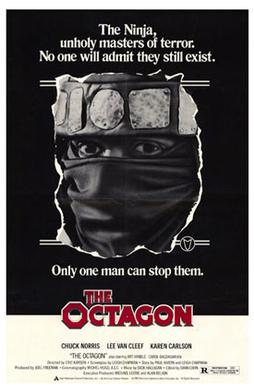
The Octagon (1980, directed by Eric Karson)


A ninja named Seikura (Tadashi Yamashita) is running a training camp where he shows mercenaries and terrorists how they can use martial arts to assassinate their enemies and disrupt the political system.  Someone has to stop him.

This looks like a job for CHUCK NORRIS!

In this one, Chuck plays Scott James, a retired karate champion who, though a massive series of apparently unrelated coincidences, is drawn into the fight against Seikura’s terrorists.  (Speaking of coincidences, Seikura just happens to be Scott’s half-brother.)  One of the fun things about The Octagon is that there’s no real rhyme-or-reason as to how Scott gets involved.  He just keeps running into people who want him to fight terrorists.  His former mentor (played by Lee Van Cleef) tries to recruit him.  Immediately after turning him down, Scott just happens to run into a woman (Karen Carlson) who is having car trouble and the woman tries to recruit him.  Scott’s old friend, A.J. (Art Hindle) tries to recruit him.  Even a dancer (Kim Lankford) who goes out on a date with Scott is more interested in talking about the terrorists than anything else.  Even when the terrorists decide to go after Scott, it’s mostly just because he keeps talking to their enemies.

Scott does eventually get involved.  He goes undercover, which means that he gives everyone a fake last name while asking them if they know where he can sign up for the terrorist training camp.  (But he doesn’t shave his mustache or anything else so he’s still obviously Chuck Norris.)  Eventually, Aura (Carol Bagdasarian) defects from the terrorists over to Scott’s side and the two of them launch an assault on the terrorist camp.  While this is all going on, Scott has doubts about whether or not he can really defeat his half-brother and we hear them in voice over.  It’s an interesting attempt to show what’s going on in an action hero’s head but, because Chuck was such an inexpressive actor early in his career, the contrast between his worries and his stone face creates a strange effect.

It doesn’t matter, though, that Chuck wasn’t an expressive actor or that the film’s plot is needlessly convoluted.  The fight scenes are frequent and they all rock and that’s what really matters.  Chuck throws a lot of punches and kicks in this film and, as opposed to some of his other early films, the director of The Octagon made sure that we could see every single one of them.  Whether he’s fighting in a small hotel room and fighting off a dozen enemies in the terrorist camp, Chuck’s exciting to watch.  Also exciting to watch is Carol Bagdasarian, who makes her role more than the typical action movie love interest.  At times, she seems like she might even be a deadlier opponent than Chuck himself!

Finally, Lee Van Cleef!  In this one, he drives a truck with a “Have You Hugged Your Gun Today?” bumper sticker.  No film featuring Lee Van Cleef can be that bad.  In fact, most, like The Octagon, are pretty damn entertaining.

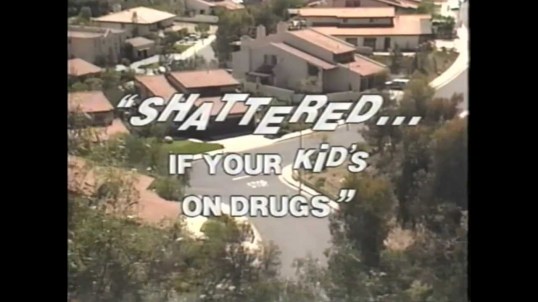
A Movie A Day #83: Shattered: If Your Kid’s On Drugs (1986, directed by Burr Smidt)


Shattered: If Your Kid’s On Drugs is a typical anti-drug video from the 1980s.  The story is familiar after school special material.  Kim (Megan Follows) and Rick (Rick Segall) are upper middle class kids who live in the suburbs.  Rick is a track star.  Kim is at the top of her class.  That all changes when they start hanging out with the local drug dealer (Dermot Mulroney), who gets Rick hooked on marijuana and Kim hooked on cocaine.  Kim gets an F on her report card.  Rick can no longer jump the hurdles.  Eventually, their parents stop drinking and taking valium long enough to force them into rehab.  The message is that tough love is the only solution.

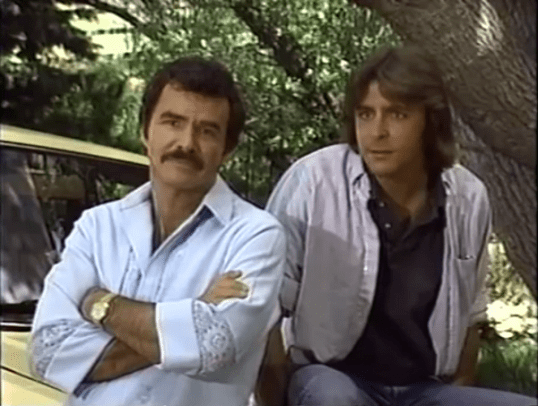
The only thing that makes Shattered: If Your Kid’s On Drugs noteworthy is the strange and unexpected presence of Burt Reynolds and Judd Nelson, playing themselves and commenting on the action.  The first scene in the video is Burt and Judd driving their pickup truck through the suburbs, talking about how nice it is.  “Lot of nice restaurants,” Burt says.  “Are you going to buy me lunch?” Judd asks.  “Lot of nice restaurants,” Burt replies.  “This town is the American Dream,” Judd says.  “Or the American nightmare,” Burt adds.  When Kim and Rick are getting high in Dermot Mulroney’s chartreuse microbus, Burt and Judd sit on a picket fence and shoot the crap.  Burt can’t understand why teens would use drugs and Judd reminds him that it has been a while since he was a teenager. Rumor has it that both Burt and Judd appeared in this video to fulfill court-ordered community service.

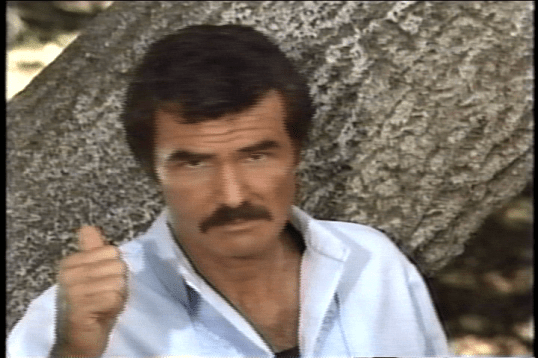
Everything works out in the end.  If you have any doubt, just look at Burt giving us a thumbs up before the final credits roll.

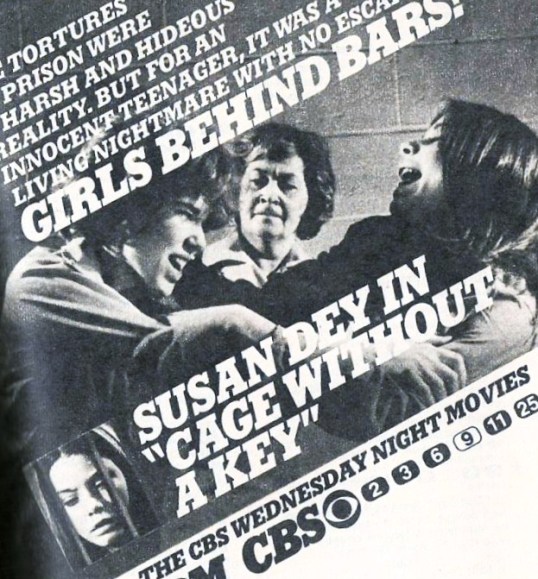
Back to School Part II #7: Cage Without A Key (dir by Buzz Kulik)


Cage-without-a-key_tv-guide-poster

For the fifth film in my Back To School series of reviews, I watched Cage Without A Key, a made-for-TV movie from 1975.

17 year-old Valerie Smith (Susan Dey) would appear to have everything.  She has a loving mother and a loyal best friend.  She just graduated from high school and has been accepted to a good college.  She’s looking forward to going down to San Francisco for the weekend before starting her summer job.  The future look great and, of course, that means that she’s about to make the biggest mistake of her life.

And she’s going to do it 70s style!

When her car breaks down on the way to San Francisco, she makes the mistake of accepting a ride from a long-haired guy in a Volkswagen microbus.  Buddy Goleta (Sam Bottoms, in full 70s weirdo mode) went to high school with Valerie and appears to have a crush on her.  Buddy also appears to be a little bit crazy himself as he tells everyone that he meets that Valerie is “my old lady.”  Finally, Buddy pulls over to a convenience store and kills everyone inside.  Since Valerie’s in the microbus, she gets arrested along with Buddy.  Since Buddy claims that he and Valerie are lovers, she’s convicted of being an accessory and is sentenced to a … REFORM SCHOOL!

(Cue dramatic music.)

The warden — Mrs. Little (Katharine Helmond) — insists that she’s not running a prison.  Instead, she’s running a very progressive school where the students all happen to be thieves and murderers.  The school even has pleasant euphemisms for all the standard prison film elements.  For instance, no one is put in solitary confinement.  Instead, they’re sent to meditation.

Anyway, while Valerie waits for her dedicated public defender (David Brandon) to prove her innocence and get her out of reform school, she finds herself being approached by the various gangs who run the school.  Valerie says she doesn’t want anything to do with any of that.  She just wants to fly under the radar until she’s set free.  But then she’s approached by a predatory lesbian and, as we all known from watching other prison films, nothing will make you join a gang faster than being approached by a predatory lesbian…

Okay, Cage Without A Key is not exactly Orange Is The New Black.  What it is, however, is a time capsule of the time it was made.  Everything from the slang to the clothes to the attitudes to the squishy, upper class liberalism of Valerie’s lawyer practically screams 1970s.

Add to that, classic film lovers will appreciate the fact that the evil gang leader is named Suzy Kurosawa!

Incidentally, Cage Without A Key was written by Joanna Lee, who readers of this site will probably best remember for playing one of the alien invaders in Plan 9 From Outer Space.

http://www.youtube.com/watch?v=8jU37bRN5t0

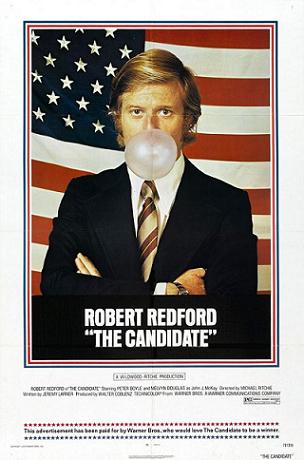
Shattered Politics #30: The Candidate (dir by Michael Ritchie)


Candidateposter

“What do we do now?” — Democratic senate candidate Bill McKay (Robert Redford) in The Candidate (1972)

When I reviewed Advise & Consent, I mentioned that if anyone could prevent billionaire Tom Steyer from winning the Democratic nomination to run in the 2016 California U.S. Senate election, it would be Betty White.  Well, earlier today, Tom Steyer announced that he would NOT be a candidate.  You can guess what that means.  Betty White has obviously already started to set up her campaign organization in California and, realizing that there was no way that he could possibly beat her, Tom Steyer obviously decided to step aside.

So, congratulations to Betty White!  (I would probably never vote for her but I don’t live in California so it doesn’t matter.)  As future U.S. Senator Betty White prepares for the next phase of her career, it would probably be a good idea for her to watch a few movies about what it takes to win political office in the United States.

For example: 1972’s The Candidate.

The Candidate would especially be a good pick for the nascent Betty White senate campaign because the film is actually about a senate election in California!  California’s  U.S. Sen. Crocker Jarmon (Don Porter) is a Republican who everyone assumes cannot be defeated for reelection.  Democratic strategist Marvin Lucas (a heavily bearded Peter Boyle) is tasked with finding a sacrificial candidate.

The one that Marvin comes up with is Bill McKay (Robert Redford, before his face got all leathery), a 34 year-old lawyer who also happens to be the estranged son of former Governor John J. McKay (Melvyn Douglas, whose wife Helen ran for one of California’s senate seats in 1950).  As opposed to his pragmatic and ruthless father, Bill is idealistic and the only reason that he agrees to run for the Senate is because Marvin promises him that he’ll be able to say whatever he wants.  Marvin assures Bill that Jarmon cannot be beaten but if Bill runs a credible campaign, he’ll be able to run for another office in the future.

However, Jarmon turns out to be a weaker candidate than everyone assumed.  As the charismatic Bill starts to close the gap between himself and Jarmon, he also starts to lose control of his campaign.  He soon finds himself moderating his positions and worrying more about alienating potential voters than stating his true opinions.  (In one of the film’s best scenes, Bill scornfully mutters his standard and generic campaign speech to himself, obviously disgusted with the vapid words that he has to utter in order to be elected.)  The film ends on a properly downbeat note, one that reminds you that the film was made in the 70s but also remains just as relevant and thought-provoking in 2015.

Written by a former political speech writer and directed, in a semi-documentary style, by Michael Ritchie, The Candidate is an excellent film that answer the question as to why all political campaigns and politicians seem to be the same.  The Candidate is full of small details that give the film an air of authenticity even when a familiar face like Robert Redford is on screen.

Whenever I watch The Candidate, I find myself wondering what happened to Bill McKay after the film’s iconic final scene.  Did he ever regain his idealism or did he continue on the path to just becoming another politician.  As much as we’d all like to think that the former is true, it’s actually probably the latter.

That just seems to be the way that things go.

Hopefully, Betty White will learn from Bill McKay’s example.

http://www.youtube.com/watch?v=thSY0g22j8Y