JACK FROST – should Frosty the Snowman be worried?


My wife and I have been watching a Christmas movie every night for the last week or so. We’ve already watched DIE HARD 1 and 2, LETHAL WEAPON, HOME ALONE 1 and 2, CHRISTMAS VACATION, YES VIRGINIA THERE IS A SANTA CLAUS, FOUR CHRISTMASES and a Hallmark movie called THE MOST WONDERFUL TIME OF THE YEAR with Fonzi. She’s been wanting me to watch JACK FROST with her for a while now. I’ve been somewhat hesitant because a movie about a talking snowman not named Frosty doesn’t seem that appealing to me. I was explaining this reluctance to a couple of my co-workers at the accounting office, and they both assured me that it’s a good movie. With this newfound confidence that I would enjoy the film, my wife and I settled in to watch JACK FROST a couple of nights ago…

JACK FROST is about a guy named Jack Frost who is having a difficult time with his work life / home life balance. He loves his wife Gabby (Kelly Preston) and his son Charlie (Joseph Cross) very much, but his musical group, The Jack Frost Band, is taking up a lot of his time. He’s one of those dads who says he’ll “for sure” be at his son’s hockey game but then misses it because the band’s recording session runs late. It’s always something like that with Jack Frost. Tragically, before Jack can get this stuff figured out, he dies in a car accident on Christmas Eve. Jump forward a year later where a depressed Charlie decides to build a snowman like he and his dad always did together for Christmas. Just go with me here… through the magic notes of Jack’s old harmonica as played by his son Charlie, Jack’s spirit is transferred to the snowman, and the two have another chance to bond like they always wanted to. Will Jack be the father he should have been now that he’s a magical snowman dad? How long will he be around this time? Will an abnormally warm Colorado winter melt him? Will he get to watch Charlie play one more hockey game? These are just a few questions to be answered over the course of the film’s 100-minute running time.

I have always been drawn to movies that focus on the relationships between fathers and their sons. For example, FIELD OF DREAMS and FREQUENCY are two of my very favorite films. The reason I love both films is that dads and their boys are able to reconnect and experience each other in a way that resolves pain or regret from the past. The movies may not be realistic in how that happens, but I think each of the films tap into a universal truth about the connections between kids and their parents. If you want to see me cry, just watch either of those movies with me. JACK FROST seems to have this noble intention of magically re-connecting a father and his son for a second chance, and I give it credit for that. Only the most cold-hearted cynic would blow off the scene where Jack’s wife and son get to see him in his human form just one last time. It was touching. I also enjoy some of the songs on the soundtrack. I was able to take my wife to see Stevie Nicks in concert here in Little Rock earlier this year. I enjoyed when her “Landslide” played as Charlie made a snowman for the first time after his dad passed away. I thought that was a strong scene. With that said though, for me, JACK FROST doesn’t come together in a way that packs much of an emotional punch even though it’s clearly going for the heart. Part of that could be the fact that Michael Keaton turns into a snowman, and statements like “snow-dad is better than no-dad” are made. When I think of the other films, sure there are supernatural elements at play, but they’re still set in the real world, even if that place is in Iowa! In the case of JACK FROST, neither the comedy nor the drama worked well enough for me to get emotionally invested. The filmmakers overestimated the comedic nature of a snowman in general, and they seemed to dwell on that one note way too long, and to the film’s detriment. I did think a scene where Charlie’s hockey coach, played by Henry Rollins, refuses to allow the word “snowman” to be spoken in his presence was funny, but that was the exception and not the norm. 

After watching JACK FROST, I do understand why Frosty has retained his place as the world’s favorite talking snowman even after this film’s 1998 release. I think the idea of a talking snowman works much better in Frosty’s context. As a matter of fact, I think I’ll go ahead and watch Frosty the Snowman again when I’m done here. But you never know, JACK FROST just may grow on me. Since my wife loves it, I know we’ll be watching it this same time next year! 
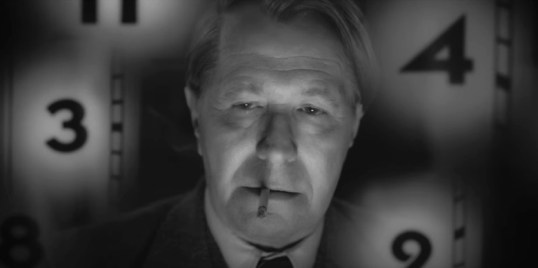
The Films of 2020: Mank (dir by David Fincher)


As I watched David Fincher’s latest film, Mank, my main feeling was one of wanting to like the film more than I actually did.

I mean, really, the film sounds like it was specifically made to appeal to me.  It’s a film about the Golden Age of Hollywood, which is an era that has always fascinated me as both a film lover and history nerd.  Even more specifically, it’s a film about the writing of Citizen Kane, which is one of my favorite movies.  (On one of our first dates, Jeff and I snuck into a showing of Citizen Kane at the Magnolia.  The crime was fun and finally getting to see the movie on the big screen was even better.)  It’s a film that features a host of historical figures, everyone from Louis B. Mayer to Irving Thalberg to Orson Welles to William Randolph Hearst to Marion Davies to the title character himself, the self-destructive screenwriter Herman J. Mankiewicz.

Those historical figures are played by a truly impressive collection of actors, almost all of whom give memorable performances.  Gary Oldman plays Mankiewicz, lurching about Hollywood in a drunken haze and calling out the system while, somewhat hypocritically, also attempting to profit from it.  Charles Dance is compellingly arrogant as William Randolph Hearst.  Tom Burke captures Orson Welles’s trademark voice and charisma, making an impression despite having surprisingly little screen time.  Ferdinand Kingsley plays Irving Thalberg and steals nearly every scene in which he appears.  Arliss Howard is a marvel as the manipulate Mayer while Amanda Seyfried gives the best performance of her career so far as Marion Davies.  The film portrays Davies as being intelligent, witty, and perhaps the only truly honest person in Hollywood.  If it can be argued that Citizen Kane robbed Davies of her dignity, it can also be argued that Mank makes a sincere attempt to give it back to her.  With the exception of a distracting cameo from Bill Nye (yes, the science guy), Mank is perfectly cast.

And yet, despite all of that, the film never really engaged me on either an emotional or an intellectual level.  The black-and-white cinematography is gorgeous but the film plods from one incident to another, skipping back and forth in time and trying to convince us that Herman J. Mankiewicz was a more fascinating figure than he comes across as being.  For the most part, Mankiewicz comes across as being a bit of a bore and the film makes the classic mistake of assuming that we’ll naturally like him just because he’s the main character.  Gary Oldman is as charismatic as ever but the film doesn’t give him much of character to play.  Mankiewicz stumbles from scene to scene, searching for a drink and always complaining about one thing or another.  A little bit of Herman J. Mankiewicz goes a long way and, once it becomes apparent that he’s going to spend the entire film perpetually annoyed, Mankiewicz becomes a rather uninteresting character.  Long before this film even reached the halfway mark, I was on the side of everyone who wanted Mankiewicz to stop talking and just finish writing the damn script.

If you’re one of the ten or so people who is still outraged over the failure of Upton Sinclair’s 1934 gubernatorial campaign, you’ll probably enjoy this film.  For those of you haven’t read Greg Mitchell’s The Campaign of the Century: Upton Sinclair’s Race for Governor of California and the Birth of Media Politics, Upton Sinclair was a writer and longtime socialist activist who won the 1934 Democratic nomination to run for governor of California.  Despite garnering a lot of national attention with his End Poverty In California (EPIC) platform, Sincliar was overwhelmingly defeated by Republican Frank Merriam.  Mank argues that Sinclair’s defeat was largely due to dirty tricks and negative campaigning, most of it masterminded by Mayer and Hearst.  Mankiewicz is a Sinclair supporter who is angered by the underhanded efforts of Mayer and Hearst.  The script for Citizen Kane is, at least partially, Mankiewicz’s revenge on Hearst and Mayer for working against Sinclair and it’s something that Mankiewicz feels so strongly about that he’s willing to demand that Orson Welles give him credit for his work on the screenplay.  It’s a legitimate theory, but the film’s exploration of it feels rather shallow and intellectually lazy.  Just as it did with the character of Mankiewicz, the film makes the mistake of assuming the audiences will automatically find the candidacy of Upton Sinclair to be as inspiring as the film does.  The film continually insists that we should care but, when it finally has a chance to show us why Upton Sinclair’s campaign was important, all it can provide is Bill Nye The Science Guy, standing on a platform and complaining about religious hypocrisy.  It’s the cinematic equivalent of a casual acquaintance demanding to know why his twitter feed didn’t convince you to vote for Bernie Sanders.

From a historical point of view, the film does itself no favors by creating a fictional friend of Mankiewicz’s, one who is so consumed with guilt over his part in defeating Upton Sinclair that he ends up committing suicide.  It feels rather cheap and predictable, an easy way to give Mankiewicz some sort of motivation beyond being infatuated with Marion Davies.  Historically, the truth of the matter is that Frank Merriam turned to the left as soon as he was elected and Upton Sinclair went on to win the Pulitzer Prize for writing a series of now-unreadable books about an international do-gooder named Lanny Budd.  Meanwhile, director Felix E. Feist (who was responsible for shooting many of the anti-Sinclair newsreels that MGM released into cinemas) went on to have a very long career and never indicated that he felt any guilty for playing a part in Sinclair’s defeat.

Like many of David Fincher’s film, Mank works best as an exercise in style.  The black-and-white cinematography is to die for.  Some of the shots — especially early in the film — are breathtaking.  Mankiewicz may spend the majority of the film railing against the excesses of Hollywood but, visually, Fincher can’t get enough of them.  Indeed, much as with The Social Network, Fincher seems to be spend the majority of the film at odds with the the film’s overwritten and rather pompous script.  (Of course, Mank was written by Fincher’s late father while The Social Network was written by Aaron Sorkin.  While there’s a lot to criticize about Jack Fincher’s script, one can still be thankful that he wrote the script instead of Sorkin.  One can only imagine how Marion Davies would have been portrayed if Aaron Sorkin had been involved.)  Mank is narratively deficient but visually stunning.  The film’s script rather snarkily dismisses Orson Welles as being a mere “showman” but, as film, Mank proves that sometimes a showman is exactly what’s needed.

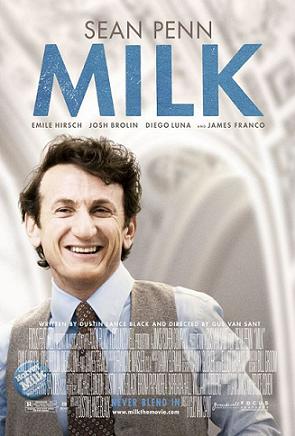
Shattered Politics #83: Milk (dir by Gus Van Sant)


Milkposter08

For the past three weeks, I have been in the process of reviewing, in chronological order, 94 films about politics and politicians.  It’s a little something that we call Shattered Politics.

And while I’ve had a lot of fun doing it, it does worry me a bit that I may have made the Shattered Lens into a far more cynical site to visit.  That’s largely because I don’t trust politicians or the government in general and, despite the fact that we started off with Abraham Lincoln and Mr. Smith Goes To Washington, the majority of the films that I’ve reviewed have reflected that fact.

So, in order to combat that cynicism, I’m going to recommend a film from 2008 that, despite being a biopic about a politician, is actually rather inspiring.  I am, of course, talking about the 2008 best picture nominee, Milk.

Milk tells the story of Harvey Milk who, in 1977, became the first openly gay man to be elected to a major public office.  Now, just consider that.  Up until 38 years ago, nobody who was openly gay had been elected to public office.  Nowadays, the idea of an out gay man or a lesbian running for public office is only shocking to a dwindling minority of homophobes.  Even down here Texas, which everyone up north always smugly assumes to be so intolerant, nobody is surprised when a gay or a lesbian not only runs for office but wins as well.  Sheriff Lupe Valdez has served as sheriff of Dallas Country for over ten years and, though she’s been controversial, none of that controversy has concerned her sexuality.  Meanwhile, Annise Parker has served three-terms as mayor of Houston, making Houston the biggest city in America to have an openly gay mayor.

However, before Lupe Valdez could be sheriff or Annise Parker could be mayor, Harvey Milk had to serve on the San Francisco Board of Supervisors.

Milk follows Harvey (Sean Penn, who won an Oscar for his performance) and his much younger boyfriend, Scott (James Franco) from the moment they first meet in New York to when they moved to San Francisco in 1970.  We see how Harvey first found fame as a neighborhood activist and how he challenged both the political and gay establishment of San Francisco in his campaigns for political office.  When he finally wins a seat on the Board of Supervisors, he does so at the cost of his relationship with Scott.  He enters into another relationship with the self-destructive Jack (Diego Luna), which ends tragically.

By winning office, Harvey becomes a spokesman for gays everywhere.  When a sinister state senator (Denis O’Hare) attempts to pass a bill that would forbid gays from teaching school, Harvey leads to opposition.  And, while Harvey’s career continues to rise, the career of another supervisor — Dan White (Josh Brolin) — plummets.

Elected at the same time as Harvey, Dan is an uptight former cop.  Though he and Harvey originally strike a somewhat awkward friendship (Harvey is the only supervisor to come to the christening of Dan’s child), Dan soon comes to resent Harvey.  (At one point, Harvey suggests that Dan might be closeted and Brolin’s tightly coiled performance certainly implies that Dan is repressing something.)  Eventually, Dan shoots and kills both the mayor (Victor Garber) and Harvey.

Though the film ends in violence and anger, it also ends with hope.  Though Harvey may be dead, the activists that he inspired are there to carry on.

Because the film was directed by a gay man, written by a gay man, and tells the story of a gay man, Milk is often dismissed, even by critics who liked it, as just being a gay film.  But, actually, it is a film that should inspire anyone who has ever felt like they’ve been pushed into the margins of our national culture.  By the film’s end, Harvey Milk has emerged as not just a gay hero but as a hero to anyone who has ever been told that their voice does not matter.  When Harvey says, repeatedly, “You’ve got to give them hope,” it’s hope for all of us.

Film Review: Lincoln (dir. by Steven Spielberg)


I am a history nerd.

If you’ve read my previous reviews here on the Shattered Lens, that’s not necessarily a major revelation.  Still, before I talk about Steven Spielberg’s latest film, the sure-to-be Oscar nominated Lincoln, you should know where I’m coming from as a reviewer.  Cinema may be my number one love but history, and especially political history, runs a close second.  To me, there is nothing more fascinating than learning how those in the past both viewed and dealt with the issues that we still face in the present.  Whereas some people take pride in being able to name every player that’s ever played for the Dallas Cowboys, I take pride in the fact that I can not only name every President and Vice President in order but I can also tell you exactly who they had to defeat in order to serve in those offices.

I love history and therefore, it was hard for me not to feel as if Lincoln was a film that was made specifically for me.  Covering the final four months of the life of the 16th president, this film tells the story of Lincoln’s struggle to pass the 13th Amendment and to bring an end to the U.S. Civil War.  The film also documents Lincoln’s troubled marriage to the unstable Mary and his son’s decision to enlist in the Union Army.  Even though Spielberg and screenwriter Tony Kushner don’t include any vampires*, there’s still a lot going on in Lincoln and it is to their credit that the film remains compelling despite the fact that everyone already knows how the story is going to end.

Daniel Day-Lewis is getting a lot of critical acclaim for his performance in the title role and, for once, I actually have to agree with the critics.  Abraham Lincoln is one of the most iconic figures in American history.  He is such an icon that, at times, it’s hard to believe that this larger-than-life figure, with his stove-pipe hat and his homely face, was an actual human being who lived and breathed and died like any other human being.  It’s easier to think of him in the same way that Jesus Christ used to be represented in films like Ben-Hur, as an inspiring character who is always standing just a little bit off-camera.  The brilliance of Day-Lewis’s performance is that he makes us believe that this legendary figure could actually exist with all the rest of history’s mortals.  For lack of a better term, Day-Lewis humanizes Lincoln.  His performance contains all the bits of the Lincoln legend: the fatalistic melancholy, the steely resolve, the quick humor, and occasional flashes of self-doubt.  The genius of the performance is the way that it takes all the legendary pieces and arranges them to create a portrait of a very believable man.

Though the film is dominated by Day-Lewis’s lead performance, the film’s supporting cast does a good job at bringing to life the people around Lincoln.  Whenever one film can manage to find roles for Hal Holbrook, David Strathairn, Jared Harris, James Spader, John Hawkes, and Jackie Earle Haley, you’ve got good reason to be optimistic about what you’re about to see.  Probably the film’s showiest supporting role goes to Tommy Lee Jones, who plays the firebrand abolitionist Thaddeus Stevens.  Admittedly, Tommy Lee Jones gives a standard Tommy Lee Jones performance here but, especially when paired with Day-Lewis’s more internal acting style, the end result is still fun to watch.  Also giving a good performance is Sally Field, who plays Lincoln’s mentally unstable wife.  Historians have rarely been kind (or fair) to Mary Lincoln but Field makes her into a difficult but sympathetic figure.  Finally, even though the role of Lincoln’s son is not a challenging one, I’m always happy whenever Joseph Gordon-Levitt shows up onscreen.

Ultimately, however, Lincoln is a Steven Spielberg film.  Spielberg is a very good director but he’s also a very safe one.  The same can be said of Lincoln as a film.  The film’s cinematography, art design, and costume design are all brilliantly done and award-worthy but it’s still hard not to occasionally wish that Spielberg would have enough faith in his audience that he wouldn’t feel the need to have John Williams provide constant musical cues to let us know what we are supposed to be feeling about what we’re experiencing.  If you’re looking for hints of moral ambiguity, an unflinching examination of the rivers of blood that flowed on the Civil War battlefield, or for an in-depth portrait of Lincoln’s personal demons (and most historians agree that he had a few), you might want to look elsewhere.  This is not Martin Scorsese’s Lincoln.  This is Steven Spielberg’s Lincoln.  This is a film that is meant to be inspiring (as opposed to thought-provoking) and, for the most part, it succeeds.

I have to admit that I went into Lincoln expecting to be disappointed.  Ever since the film first went into production in 2011, websites like Awards Daily have been hyping this film to death.  Before many of them had even seen the completed film, online critics were announcing that both the film and Daniel Day-Lewis were the clear front-runners for the Oscars in 2013.  As anyone who has read my previous reviews on this site knows, nothing turns me off more than the bandwagon mentality of the critical establishment.  Often times, when a film is embraced as vehemently and as early as Lincoln has been, I feel almost honor-bound to be a hundred times more critical of it than I would be of a film like Step Up Revolution.

However, Lincoln is a rarity.  It’s a film that, for the most part, actually lives up to all the hype.

—-

*I imagine that little joke will cause a lot of confusion to anyone who, ten years in the future, happens to stumble across this review.  To you, future reader who has forgotten all about Abraham Lincoln: Vampire Hunter, I can only apologize.