4 Shots From 4 1934 Films


4 Or More Shots From 4 Or More Films is just what it says it is, 4 shots from 4 of our favorite films. As opposed to the reviews and recaps that we usually post, 4 Shots From 4 Films lets the visuals do the talking!

Today, we pay tribute to a classic year in film.  It’s time for….

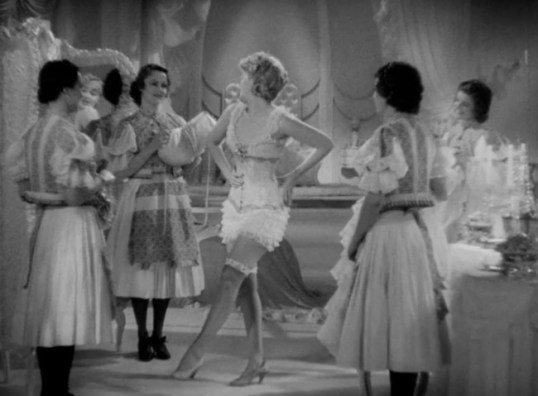
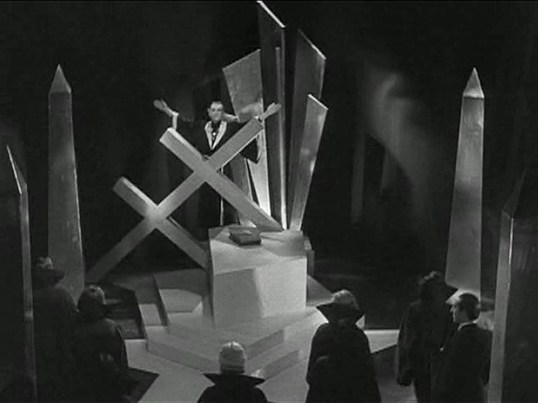
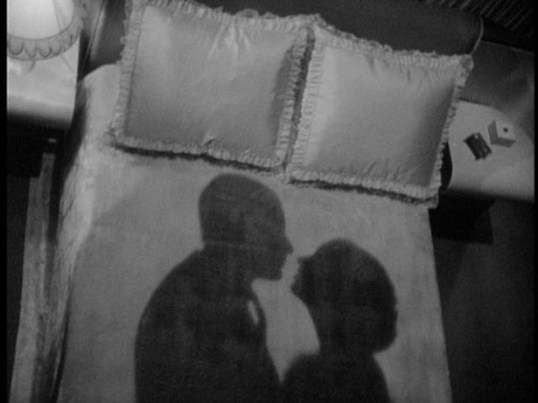
4 Shots From 4 1934 Films

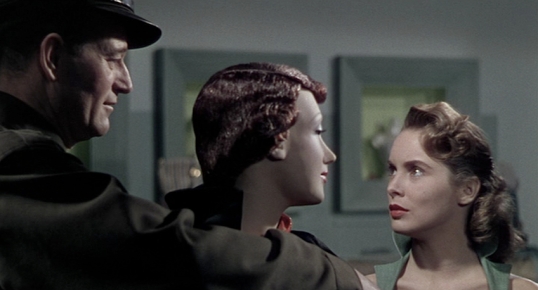
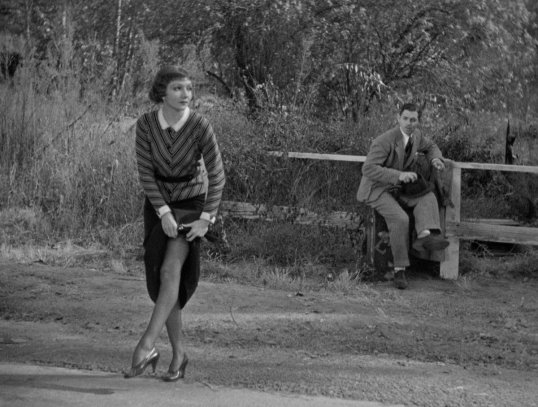
It Happened One Night (1934, dir by Frank Capra, DP: Joseph Walker)

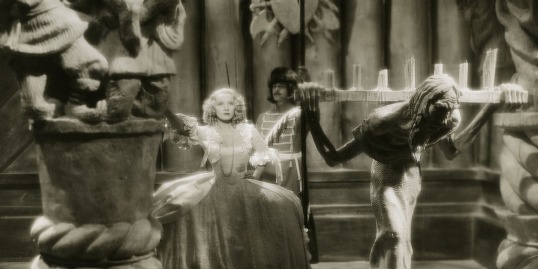
The Scarlet Empress (1934, dir by Josef von Sternberg, DP: Bert Glennon)

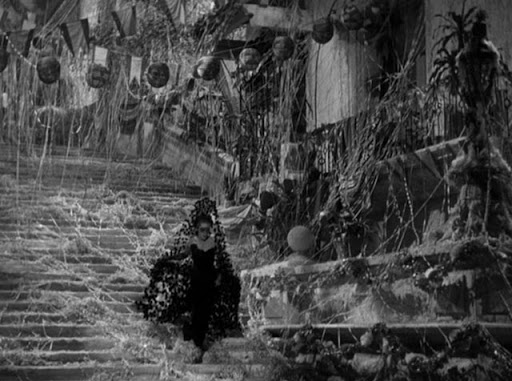
The Merry Widow (1934, dir by Ernst Lubitsch, DP: Oliver T. Marsh)

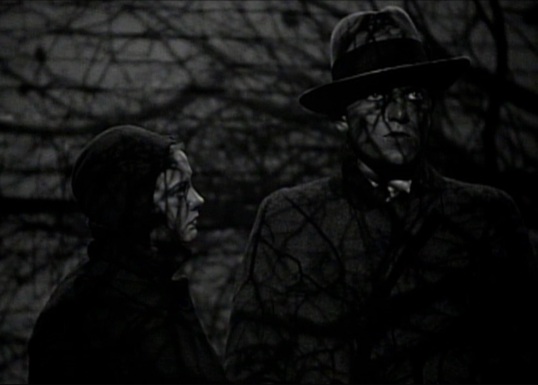
The Black Cat (1934, dir by Edgar G. Ulmer, DP: John J. Mescall)

4 Shots From 4 Films: Special Josef von Sternberg Edition


4 Or More Shots From 4 Or More Films is just what it says it is, 4 shots from 4 of our favorite films. As opposed to the reviews and recaps that we usually post, 4 Shots From 4 Films lets the visuals do the talking!

On this date, 131 years ago, the great cinematic stylist Josef von Sternberg was born in Vienna.  Von Sternberg would become one of the great directors of both the silent and the early sound era and is today best remembered for his many collaborations with Marlene Dietrich.  

It’s time for….

4 Shots From 4 Josef von Sternberg Films

Underworld (1927, dir by Josef von Sternberg, DP: Bert Glennon)

The Blue Angel (1930, dir by Josef von Sternberg, DP: Gunther Rittau)

Shanghai Express (1932, dir by Josef von Sternberg, DP: Lee Garmes and James Wong Howe)

The Scarlet Empress (1934, dir by Josef von Sternberg, DP: Bert Glennon)

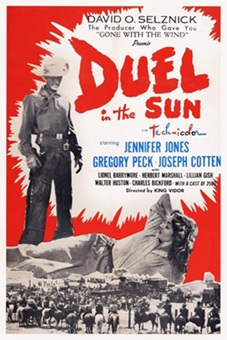
Duel In The Sun (1946, directed by King Vidor)


After her father is executed for killing her mother and her mother’s lover, “half-breed” Pearl Chavez (Jennifer Jones) is sent to live with her father’s second cousin, Laura Beth McCanles (Lillian Gish).  Laura is the wife of rancher, politician, and all-around racist Senator Jackson McCanles (Lionel Barrymore).  Worried that Pearl’s beauty and uninhibited manner will get her into trouble, Laura arranges for Pearl to meet with a minister known as The Sinkller (Walter Huston) who instructs Pearl on how to be a “good” girl.

Wanting to make Pearl bad and his, Lewton “Lewt” McCanles (Gregory Peck) becomes obsessed with Pearl and is soon forcing himself on her on a regular basis.  When the good McCanles brother, Jesse (Joseph Cotten), leaves the ranch despite being in love with Pearl, Pearl tries to find a good husband in the form of Sam Pierce (Charles Bickford).  Lewt responds by gunning Sam down and then goes on the run.  It all leads to an overwrought duel in the sun as the two doomed lovers take aim at each other.

Duel In The Sun is credited to veteran director King Vidor and there are a few shots of the western landscape that do feel typical of Vidor’s work.  However, Duel In The Sun’s true auteur was its producer, David O. Selznick.  Still looking to recapture his earlier success with Gone With The Wind and eager to make his future wife, Jennifer Jones, into an even bigger star than she was, Selznick obsessed over every detail of Duel In The Sun, pushing Vidor and a host of other directors (including Josef von Sternberg, William Dieterle, William Cameron Menzies, Otto Brower, and Sidney Franklin)  to make the film more steamy, more melodramatic, more violent, and more visually epic.  Reportedly, while Video was trying to shoot the film’s titular duel, he had to call cut several times when Selznick ran into the scene with a water bottle to spray more “sweat” onto Jones and Peck.  Today, the stiff Peck seems miscast as the black sheep of the family, the reserved Jones is even more miscast as a mestiza, and the plot is clearly too simplistic to carry the film’s epic ambitions.  A few impressive shots aside, Duel In The Sun is just boring,  In the 40s, though, the film’s relative openness about sex generated enough controversy to make Duel In The Sun into a box office hit.  It was one of the two top-grossing westerns of the 40s, beating out Red River, My Darling Clementine, Fort Apache, The Ox-Bow Incident, and several other films that were actually good.

Unlike Jones, Peck, and even usually reliable stalwart like Lionel Barrymore and Walter Huston, Joseph Cotten at least emerges from this film with his dignity intact.  Playing the good brother, Cotten gets to underplay while everyone else is overplaying and it turns out to be the right approach for him.  Surviving Duel In The Sun was no easy feat but Cotten pulled it off.

4 Shots From 4 Films: Special 1932 Edition


4 Shots From 4 Films is just what it says it is, 4 shots from 4 of our favorite films. As opposed to the reviews and recaps that we usually post, 4 Shots From 4 Films lets the visuals do the talking!

Today, we take a look at a classic cinematic year.  It’s time for….

4 Shots From 4 1932 Films

The Blood of a Poet (1932, dir by Jean Cocteau, DP: Georges Piranal)

Shanghai Express (1932, dir by Josef von Sternberg, DP: Lee Garmes and James Wong Howe)

Trouble In Paradise (1932, dir by Ernst Lubitsch, DP: Victor Milner)

Vampyr (1932, dir by Carl Theodor Dreyer, DP: Rudolph Mate)

Film Review: Children of Divorce (dir by Frank Lloyd and Josef von Sternberg)


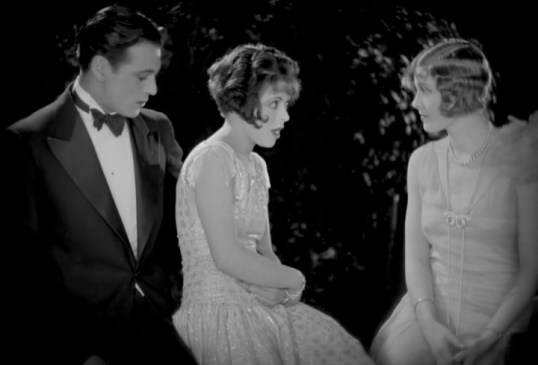
The 1927 silent melodrama, Children of Divorce, opens at a private Catholic boarding school in Paris.  It’s a place for rich and idle parents to dump off their children while they enjoy the City of Lights.  Jean Waddington is dropped off at the school and struggles to make friends until she meets the vivacious Kitty Flanders.  Jean and Kitty bond because they are both children of divorced parents.  (Kitty says that she has only one mother but that’s she’s had four different fathers.)  Jean meets Ted Larrabee, who is Kitty’s neighbor back in New York and who has also been dumped off at the school by his divorced parents.

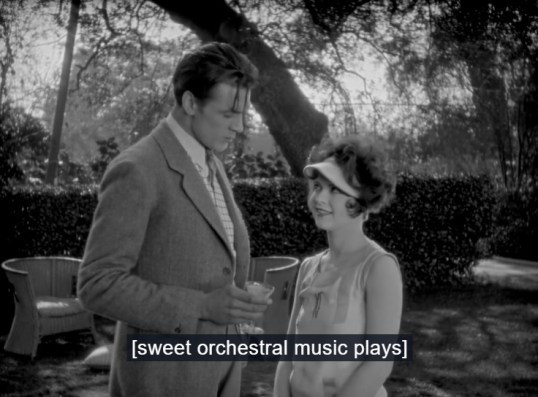
Flash forward a few years and Kitty (Clara Bow), Jean (Esther Ralston), and Ted (Gary Cooper) are all young adults.  Kitty is in love with Prince Vico (Einar Hansen) but the Prince’s father refuses to allow Vico to consider marrying her because Kitty’s mother (played by future gossip columnist and Queen of Hollywood, Hedda Hopper) is not rich.  Believing that the only way that she’ll ever be happy is if she marries a rich man, Kitty set her eyes on Ted.  Ted, however, wants to marry Jean but Jean says that she’ll only consider marrying Ted if he gets a real job and proves that he can do something more than just live off of his father’s money.

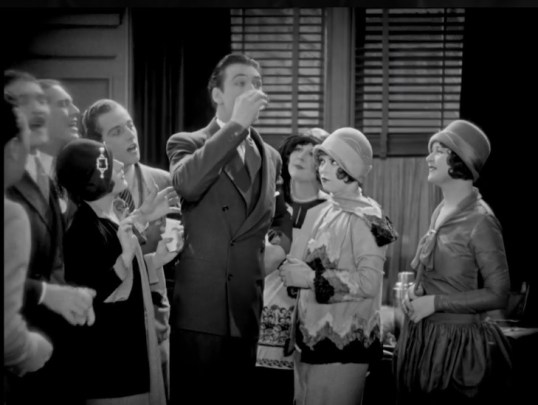
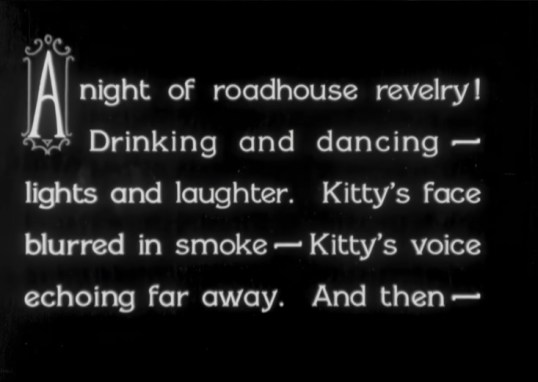
Ted starts his own architectural firm and proves that he’s capable of hard work.  However, when Kitty convinces Ted to celebrate his success by going out drinking with her….

Ted wakes up with a hangover.  He soon discovers that he’s also woken up with a wife!  While he was drunk, he married Kitty!  Ted is stunned.  Jean is heart-broken.  She begs Kitty to grant Ted a divorce so that she can marry him but Kitty reveals that she has no intention of ever getting divorced.  As she explains it, Kitty has been raised to marry a rich man, Ted is rich, and now, she’s married to him.  Why would Kitty want to give that up?  When Ted says that he’ll file for the divorce, Jean tells him that she can’t marry a man who would leave his wife and then she leaves for Europe….

Of course, that’s not the end of the story.  This wouldn’t be a silent melodrama if it ended that simply.  Instead, years later, Kitty does come to see the error of her actions and she also discovers that her true love remains Prince Vico.  But, by that point, it’s too late and, of course, Jean still refuses to marry a divorced man.  Kitty seeks redemption in the most extreme was possible….

Clocking in at a brisk 70 minutes, Children of Divorce is a wonderful showcase for Clara Bow, who was born 118 years ago on this date.  Gary Cooper is properly handsome and sincere as Ted and Esther Ralston is lovely if a bit boring as Jean but the film ultimately belongs to Clara Bow, who brings so much vitality and energy to her role that it doesn’t matter that Kitty tricks Ted into marrying her and destroys all of Jean’s romantic dreams.  Most viewers will instantly sympathize with Kitty and, to be honest, it’s kind of hard not to be on her side.  Kitty has fun.  Kitty refuses to let society stand in her way.  While Jean makes a list of demands about what she needs Ted to do before she can even consider marrying him, Kitty encourages Ted to loosen up and enjoy his success.  Kitty is the one who I think most viewers, at the very least, would want to be friends with.  While Jean tries to run away from her problems, Kitty is determined to live her best life.  Indeed, Kitty’s ultimate redemption is all the more effective because, once again, Kitty is the one who is making things happen while Ted and Jean just passively accept the conventions of society.

Clara Bow was one of the greatest of the silent film stars and Children of Divorce shows why.  As opposed to many of the other actresses of the day, Clara Bow was convincingly cast as women who were willing to do whatever needed to be done to find happiness.  Sadly, Clara Bow’s later years were not happy ones.  She deserved better than the world gave her.  Watching her in films like this one and It feel like looking out a window into the past, a time when it seemed like anything was possible.

4 Shots From 4 Films: Special Josef von Sternberg Edition


4 Or More Shots From 4 Or More Films is just what it says it is, 4 shots from 4 of our favorite films. As opposed to the reviews and recaps that we usually post, 4 Shots From 4 Films lets the visuals do the talking!

On this date, 128 years ago, the great cinematic stylist Josef von Sternberg was born in Vienna.  Von Sternberg would become one of the great directors of both the silent and the early sound era and is today best remembered for his many collaborations with Marlene Dietrich.  

It’s time for….

4 Shots From 4 Josef von Sternberg Films

Underworld (1927, dir by Josef von Sternberg, DP: Bert Glennon)


The Blue Angel (1930, dir by Josef von Sternberg, DP: Gunther Rittau)


Shanghai Express (1932, dir by Josef von Sternberg, DP: Lee Garmes and James Wong Howe)


The Scarlet Empress (1934, dir by Josef von Sternberg, DP: Bert Glennon)

4 Shots From 4 Films: Special Josef von Sternberg Edition


4 Shots From 4 Films is just what it says it is, 4 shots from 4 of our favorite films. As opposed to the reviews and recaps that we usually post, 4 Shots From 4 Films lets the visuals do the talking!

Today we celebrate the 126 anniversary of the birth of cinematic pioneer, Josef von Sternberg!  That means that it’s time for….

4 Shots From 4 Films

An American Tragedy (1931, dir by Josef von Sternberg)

The Scarlet Empress (1934, dir by Josef von Sternberg)

The Devil is A Woman (1935, dir by Josef von Sternberg)

Jet Pilot (1957, dir by Josef von Sternberg)

4 Shots From 4 Inaugural Oscar Winners: Wings, Sunrise, The Last Command, Seventh Heaven


4 Shots From 4 Films is just what it says it is, 4 shots from 4 of our favorite films. As opposed to the reviews and recaps that we usually post, 4 Shots From 4 Films lets the visuals do the talking.

Today is the 90th anniversary of the very first Academy Awards ceremony!

On May 16th, 1929, a private dinner was held at the Hollywood Roosevelt Hotel in Los Angeles, California.  The dinner was largely meant to celebrate the establishment of the Academy of Motion Picture Arts and Sciences.  The brainchild of Louis B. Mayer, the AMPAS was founded to help mediate labor disputes between the studios and the unions.  As almost an afterthought, it was decided that AMPAS would also give out annual awards to honor the best films of the year.

12 awards were handed out on May 16th, before an audience of 270 people.  The entire awards ceremony took 15 minutes.  That’s quite a contrast to what the Academy eventually became.

In honor of that 15-minute ceremony, here’s….

4 Shots From 4 Films Honored At The Very First Oscar Ceremony
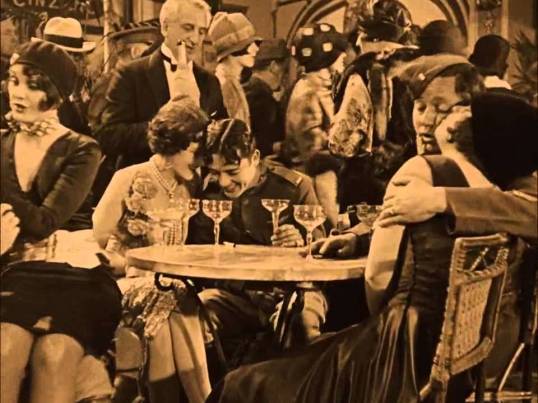
Wings (1927, dir by William Wellman) Won The Outstanding Production Awards
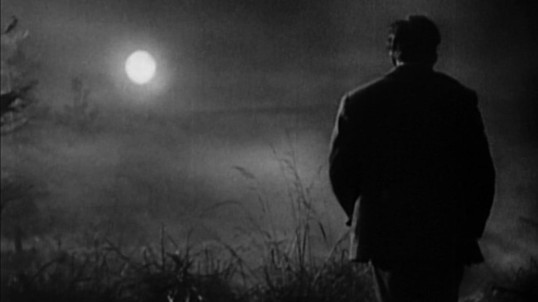
Sunrise (1927, dir by F.W. Murnau) Won Best Unique and Artistic Picture
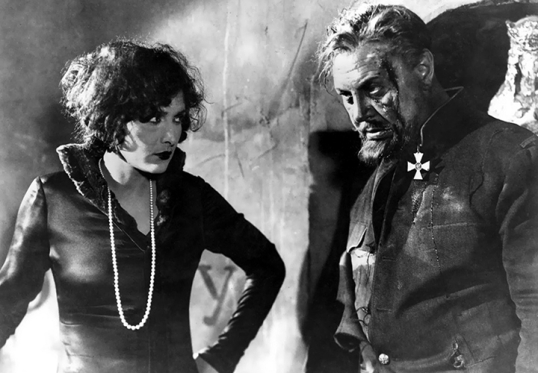
The Last Command (1928, dir by Josef von Sternberg) Won Best Actor — Emil Jannings

Seventh Heaven (1927, dir by Frank Borzage) Winner Best Actress — Janet Gaynor

Along with her performance in Seventh Heaven, Janet Gaynor was also honored for her work in Street Angel and Sunrise.  Emil Jannings was honored for his work in both The Last Command and The Way of all Flesh,

Here’s what else won at the inaugural Oscar ceremony:

Best Direction, Comedy Picture — Lewis Milestone for Two Arabian Knights

Best Direction, Drama Picture — Frank Borzage for Seventh Heaven

Best Original Story — Ben Hecht for Underworld

Best Adaptation — Benjamin Glazer for Seventh Heaven, based on the play by Austin Strong

Best Art Direction — William Cameron Menzies for The Dove and Tempest

Best Cinematography — Charles Rosher and Karl Struss for Sunrise

Best Engineering Effects — Roy Pomeroy for Wings

Best Title Writing — Joseph Farnham for Fair Co-Ed; Laugh, Clown, Laugh; and Telling the World.
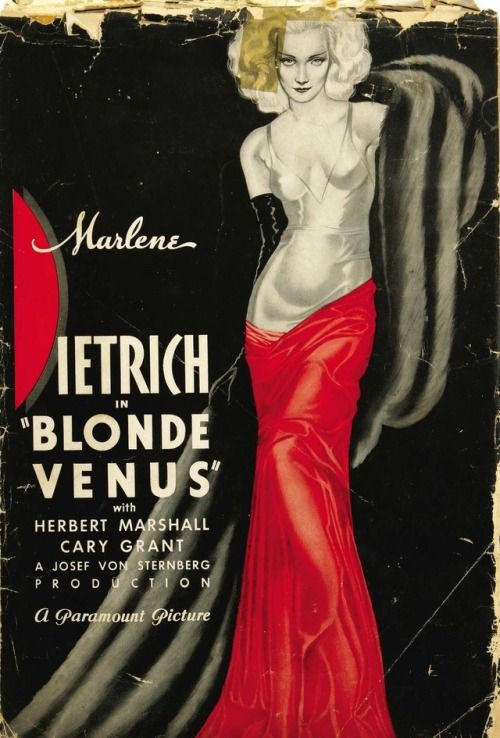
Pre Code Confidential #23: Marlene Dietrich in BLONDE VENUS (Paramount 1932)


gary loggins's avatarcracked rear viewer

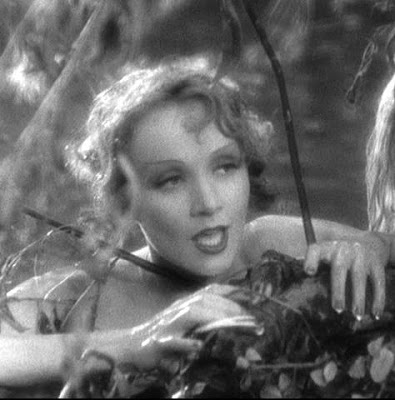
Director Josef von Sternberg and his marvelous muse Marlene Dietrich  teamed for their fifth film together with BLONDE VENUS, a deliciously decadent soap opera that’s a whole lot of fun for Pre-Code lovers. Sternberg indulges his Marlene fetish by exploring both sides of her personality, as both Madonna and whore, and Dietrich plays it to the hilt in a film that no censor would dare let pass just a scant two years later.

How’s this for an opening: a group of schoolboys hiking through the Black Forest stumble upon a bevy of naked stage chanteuses taking a swim! The girls scream and try to hide, and beautiful Helen (Marlene) tries to shoo them away. Ned Faraday refuses until Helen agrees to meet him later. Flash forward to a scene of Helen and Ned now married with a young son named Johnny. Ned, a chemist by trade, has been poisoned by…

View original post 693 more words

Lisa Reviews An Oscar Nominee: Shanghai Express (dir by Josef von Sternberg)


(With the Oscars scheduled to be awarded on March 4th, I have decided to review at least one Oscar-nominated film a day.  These films could be nominees or they could be winners.  They could be from this year’s Oscars or they could be a previous year’s nominee!  We’ll see how things play out.  Today, I take a look at the 1932 best picture nominee, Shanghai Express!)

Welcome to China, circa 1931.  The country is beautiful, mysterious, and dangerous.  Civil War has broken out and living in China means being caught between two equally brutal forces, the government and the Communists.  Captain Doc Harvey (Clive Brook) is scheduled to ride the so-called Shangai Express, the train that will take him from Beiping to Shanghai.  The Governor-General is ill and Doc Harvey is the only man in China who operate on him.

For Doc, it’s a matter of duty.  However, soon after boarding, he discovers that he is traveling with the infamous Shanghai Lily (Marlene Dietrich).  Though Doc has never heard of her, everyone assures him that Shanghai Lily is one of the greatest courtesans in China.   When Doc does finally meet her, he’s shocked to discover that Shanghai Lily is his former lover, Magdalen.  Did his decision to break up with her lead to Magdalen becoming a courtesan?

“It took more than one man to change my name to Shanghai Lily,” she replies.

However, Doc and Lily aren’t the only two people with their own personal drama taking place on the train.  The train is full of passengers, all of whom have their secrets.  Some of the secrets are minor.  One woman spends most of the trip trying to keep anyone from discovering that she’s smuggled her dog onto the train.  Other secrets are major.  It is suspected that one of the passengers might be working for the rebels.  And then there’s people like Sam Salt (Eugene Pallette), who is addicted to gambling and Eric (Gustav von Syffertitz), the opium dealer.  Looking over it all is a Christian missionary (Lawrence Grant) who considers both Lily and her companion, Hui Fey (Anna May Wong), to be fallen women.

It’s not an easy journey, no matter how nice and romantic the train may be.  If the express isn’t being stopped by government soldiers, it’s being hijacked by a warlord who not only wants to stop Doc from performing the operation but who also wants to take Lily back to his palace…

Shanghai Express is pre-code drama at its best.  Director Josef von Sternberg delivers an ornate mix of opulence and melodrama, never shying away from the story’s more flamboyant possibilities.  Marlene Dietrich, appearing in her fourth film for von Sternberg, gives a strong and unapologetic performance as Shanghai Lily.  Just as Lily never apologizes for who she is, the film both refuses to judge her and condemns anyone who would try.  The film’s sympathy is purely with Dietrich and Wong as they do what they must to survive in a world dominated by men who are either judgmental, brutish, or weak.  (Within just a few years, the Hays Code would make it impossible for a film like Shanghai Express to be made by an American studio.)  With one very important exception, the entire cast is strong, with Warner Oland and Eugene Pallette especially turning in strong support.  The only exception is Clive Brook, who comes across as being a bit too dull to have ever won the the heart of Shanghai Lily.

Shanghai Express is not the best von Sternberg/Dietrich collaboration.  That would be the brilliantly insane Scarlet Empress.  However, it’s still a wonderfully entertaining melodrama.  It was nominated for best picture but lost to another entertaining melodrama, Grand Hotel.

http://www.youtube.com/watch?v=F3Qljls-FkI