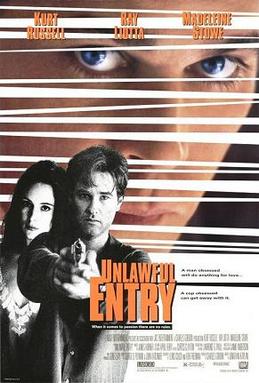
Who Watches The Watchmen: Unlawful Entry (1992, directed by Jonathan Kaplan)


The upscale and complacent life of Michael and Karen Carr (Kurt Russell and Madeleine Stowe) is interrupted one night when a burglar breaks into their home via their skylight.  The intruder briefly holds a knife to Karen’s throat before taking off.  Shaken by the encounter, the Carrs are very happy when a seemingly friendly cop, Officer Pete Davis (Ray Liotta). offers to help them cut through all the red tape and get a security system installed in their house.

At first glance, Pete seems like the perfect cop but actually, he’s a mentally unstable fascist who quickly becomes obsessed with Karen.  When Pete offers Michael his nightstick so that Michael can use it on the man who earlier broke into his house, Michael refuses.  That’s all that Pete needs to see to decide that Michael’s not a real man and that Karen would be better off with him.  Even after Michael orders Pete to stay away from his home, Pete continues to drop by so that he can spy on the couple.  When Michael complains, Pete frames him by planting cocaine at his house.  When Michael says that he’s innocent, no one believes him.  Why would they?  Pete’s a decorated cop who is keeping the streets safe.  Michael is just a homeowner.  While Michael sits in jail, the increasingly violent and unhinged Pete makes plans to make Karen his own.

“Who watches the watchmen?” as the old saying goes.  Unlawful Entry is an efficient and no-nonsense thriller that was ahead of its time as far as its portrayal of a policeman abusing his authority is concerned.  Jonathan Kaplan was trained in the Roger Corman school of filmmaking so he doesn’t waste any time getting to the story and he even finds a role for Dick Miller.  Ray Liotta, fresh off of his performance in Goodfellas, is perfectly cast as the manipulative and misogynistic Pete while Kurt Russell is once again the ideal everyman.  Madeleine Stowe, who was one of the best actresses of the 90s, does not get to do much beyond be menaced but she does it well.  Whatever happened to Madeleine Stowe?  Kurt Russell’s career is still going strong and Ray Liotta still appears regularly in gangster movies and Chantix commercials.  Isn’t it about time for a Madeleine Stowe comeback?

Drive-In Saturday Night 4: WHITE LINE FEVER (Columbia 1975) & HIGH-BALLIN’ (AIP 1978)


gary loggins's avatarcracked rear viewer

Breaker One-Nine, Breaker One-Nine, it’s time to put the hammer down with a pair of Trucksploitation flicks from the sensational 70’s! The CB/Trucker Craze came to be because of two things: the gas crisis of 1973 and the implementation of the new 55 MPH highway speed limit imposed by Big Brother your friendly Federal government. Long-haul truckers used Citizen’s Band radios to give each other updates on nearby fueling stations and speed traps set up by “Smokeys” (aka cops), and the rest of America followed suit.

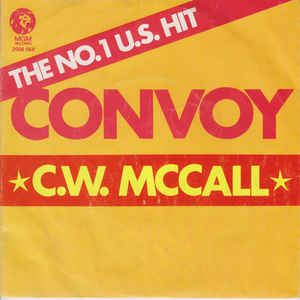
Country singer C.W. McCall had a massive #1 hit based on CB/trucker lingo with “Convoy”, and the trucker fad was in full swing. There had been trucker movies made before – THEY DRIVE BY NIGHT, THIEVES’ HIGHWAY, HELL DRIVERS, and THE WAGES OF FEAR come to mind – but Jonathan Kaplan’s 1975 WHITE LINE FEVER was the first to piggy-back on the new gearjammer…

View original post 793 more words

Music Video of the Day: Wild Night by John Mellencamp, featuring Me’shell Ndegeocello (1994, directed by Jonathan Kaplan)


Today’s music video of the day is for John Mellencamp’s cover of Van Morrison’s Wild Night.

Back in the day, the opening of this video was the most popular 40 seconds on MTV.  I have traveled in a lot of taxi cabs and I regularly use both Uber and Lyft.  I’ve been lucky enough to meet some very good drivers but none of them appeared in the 1992 Sports Illustrated Swimsuit Issue.  The driver, in this video, is played by Shana Zadrick, a model who was often compared to Cindy Crawford.

Back in 1994, if you enjoyed this video, you could go down to your friendly neighborhood Musicland (or Suncoast Motion Picture Company) and, for just $19.98, you could see even more of Shana in this commemorative video:

The other good thing about this video is that bassline, which was provided by Me’shell Ndegeocello.  Wild Night was released at the same time that Ndegeocello had her biggest solo hit, If That’s Your Boyfriend (He Wasn’t Last Night).

This video was directed by Jonathan Kaplan.  A former film school classmate of Martin Scorsese’s, Kaplan got his start directing films like Night Call Nurses and The Student Teachers for Roger Corman.  He eventually became a mainstream film and television director.  His most highly regarded film is probably 1988’s The Accused, for which Jodie Foster won her first Oscar.

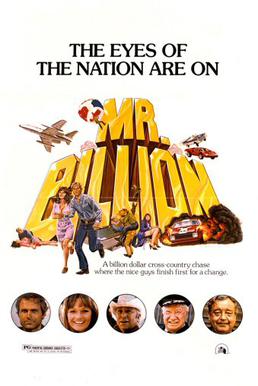
Lisa Reviews A Film That Was Not Nominated For Any Oscars: Mr. Billion (dir by Jonathan Kaplan)


The 1977 film Mr. Billion tells the story of Gudio Falcone (played by Terence Hill, whose real name is Mario Girotti).  Guido has got a pretty good life going in Italy.  Everyone in his village loves him.  He works as an auto mechanic.  When we first see him, he speeding around in a red sportscar.  When he returns to the garage, he smiles and says, in Italian, “Just like Steve McQueen.”  Guido may not be rich but he’s happy.

But that’s all about change!

Well, not the happy part.  Guido is pretty much always happy.  But he’s about to get rich.  It turns out that Guido is the last surviving relative of Antonio Falcone.  Years ago, Antonio immigrated to America and founded Falcon Motors.  The company eventually made Antonio one of the richest men in the world.  Unfortunately, the big Falcon Motors sign eventually fell off the company’s headquarters and it landed right on top of Antonio.

Everyone’s upset about Antonio’s death.  Well, everyone but the company’s vice president, John Cutler (Jackie Gleason).  John was naturally expecting that he would be named Antonio’s successor and that he would also inherit all of Antonio’s money.  Instead, Antonio’s will leaves everything to Guido!

Why?

Because, apparently, Guido never asked Antonio for anything more than a “pair of American cowboy boots.”

Cutler and his sleazy attorney (William Redfield) are soon on the next flight to Italy.  When they find Guido, they make sure to compliment him on his cowboy boots.  They explain to Guido that he has twenty days to go San Francisco and sign the proper papers.  If he’s any later than 20 days he’ll lose the money.  Of course, that shouldn’t be a problem since Guido can fly over anytime that he wants…

Except Guido refuses to fly!  No, he says that if he’s going to go to America, he’s going to arrive there the same way that Antonio did.  He is going to take a boat to New York City and then ride a train all the way to California.

Did you guess that the very next scene would be Guido standing on the dock of a cruise ship, staring at the Statue of Liberty?  And did you also also guess that, upon disembarking, he would immediately find himself besieged by reporters, one of whom declares him to now be the world’s most eligible bachelor?  If so, good work.

But here’s the big question.  Did you also predict that John Cutler would attempt to sabotage Guido’s trip to California and that the sabotage would involve hiring a private detective (Valerie Perrine)?  Even more importantly, did you predict that the detective would eventually end up falling in love with simple but honest Guido?

Because that’s totally what happens!

At the time that Mr. Billion was made, Terence Hill was a huge star in Europe but was barely known in the United States.  He was best known for appearing in a series of comedic Spaghetti Westerns with Bud Spencer, the majority of which featured Hill as a lazy but likable ne’er do well.  In Mr. Billion, Hill is cast as the exact opposite, as an earnest man-of-the-people who is so nice that it’s almost painful.  Add to that some major tone problems (the film cannot make up its mind if it wants to be a comedy, an action film, or a romance) and you have a pretty forgettable movie.

And that’s kind of a shame because Terence Hill showed some legitimate charm in the lead role.  The role may have been underwritten but all Hill had to do is flash that winning smile and it didn’t matter.  It’s unfortunate that Hill didn’t get a more appropriate vehicle for his American debut.

Lisa’s Homestate Reviews: Colorado and Over the Edge


From August of 1994 to July of 96, my family lived in Longmont, Colorado.  Whenever I think back to living in Colorado or the times that I’ve visited it since, there’s always two things that I remember.  First off, Colorado had the cleanest air that I’ve ever breathed and, for someone like me who grew up with severe asthma, that’s a big deal.  Secondly, Longmont had some great dance teachers.  I may have taken my first dance classes in Texas but I’ve always liked to think that Colorado is where I first truly fell in love with dancing.

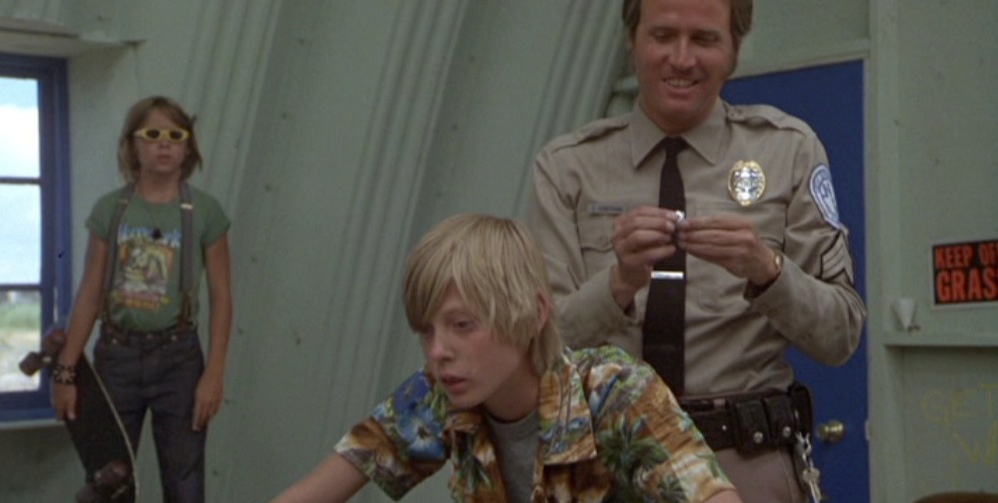
Fortuantely, my family and I lived in Longmont and not New Granada, the setting of the Colorado-shot 1979 film Over the Edge.  New Granada is a planned community, a collection of identical houses and sterile buildings that sit out in the middle of the desert.  The majority of town’s adult population views New Granada as less a home and more of a business opportunity.  When their children misbehave, they worry less about why and more about how that’s going to effect the effort to get a visiting businessman to invest in their town.  The streets of New Granada are patrolled by a fearsome cop with the very appropriate name of Doberman (Harry Northup).  Doberman may claim to be maintaining the peace but, as quickly becomes apparent, he’s just a bully with a uniform.

Is it any wonder then that the teenagers of New Granada are out-of-control?  Between living in a town where there is literally nothing to do other than skip school, smoke weed, and hang out at a dilapidated rec center and having to deal with parents who don’t really seem to want them around, the youth of New Granada are angry and Over the Edge suggests that they have every right to be.

When Mark (Vincent Spano) uses his BB gun to shoot a hole in Doberman’s windshield, Doberman reacts by blaming and harassing Carl (Michael Kramer) and his friend Richie (a very young Matt Dillon).  When Doberman demands that Richie tell him who shot the BB gun, Richie replies, “I only got one law.  Any kid who tells on another kid is a dead kid.”

Things escalate.  When a Texas businessman visits the town, the rec center is closed in an attempt to keep any of the kids from being seen.  Doberman arrests Claude (Tom Fergus) for possessing a gram of hash, which leads to Richie realizing that one of the kids has turned into a snitch.  Doberman’s obsession with finding out who shot the BB gun leads to the death of one of New Granada’s teens. Eventually, the adults of New Granada attend an emergency PTA meeting down at the high school, just to find themselves locked into the building by their children, the majority of whom proceed to riot and destroy the town outside.

Directed by Jonathan Kaplan and based on a true story, Over the Edge is one of the best youth-in-revolt films ever made.  Not only is it well-acted (with Matt Dillion in particular showing a lot of rebellious charisma as Richie) but it’s also unique in that it is totally on the side of the young people.  While Over the Edge does not necessarily endorse the violence that dominates the film’s finale, it also suggests that acting out was perhaps the only option left to the teenagers of New Granada.  That Over the Edge was made in the 70s is obvious as soon as you hear the soundtrack and see the clothes and hairstyles.  However, with its portrayal of both youthful alienation and out-of-control authority, it’s still very relevant today.

It’s a great film with an absolutely hear-breaking ending and it’s one that you should see if you haven’t yet.

The Face of Fascism In Over The Edge

The Face of Fascism In Over The Edge