The Films of 2020: Ma Rainey’s Black Bottom (dir by George C. Wolfe)


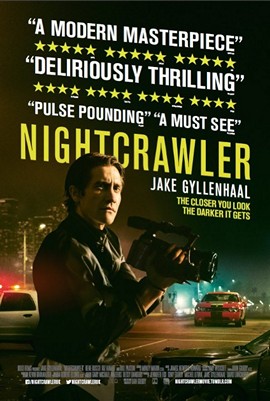
The year is 1927 and the place is Chicago.  6 men are in a claustrophobic recording studio, waiting for the arrival of blues singer Ma Rainey (Viola Davis).  While Ma’s agent, Irv (Jeremy Shamos) and studio owner Mel Sturdyvant (Johnny Coyne) wait upstairs, the members of Ma’s band gather in the rehearsal room.  They’ve been given a list of songs to rehearse.  As is quickly made clear, the band doesn’t have much say about which songs they’re going to perform and record.  In fact, Irv and Mel pretty much go out of their way to have as little contact with the black musicians as possible.

The band is made up of Cutler (Colman Domingo), Slow Drag (Michael Potts), Toledo (Glynn Turman), and a trumpet player named Levee (Chadwick Boseman).  Cutler may be their unofficial leader but Levee is the most outspoken.  Levee is sick of playing what he calls “jug band music.”  He’s written his own songs and he’s shown them to Sturdyvant.  He’s convinced that he’s going to start his own band and that he’s going to become a bigger star than Ma Rainey ever was.  The rest of the band views Levee with a mix of humor and distrust.

As for Ma, she arrives an hour late, accompanied by her girlfriend Dussie (Taylor Paige) and her nephew, Sylvester (Dusan Brown).  She doesn’t apologize for being late and, as soon as she arrives, she starts to make her voice heard.  She wants Sylvester to perform a spoken word intro on the record, despite the fact that Sylvester stutters.  When Irv and Sturdyvant fail to bring her a coke, she brings recording to a halt until she gets one.  She argues about which songs she wants to record and she reprimands Levee for trying to change the arrangement of one of her songs.  Ma’s difficult but, as she explains it, she has to be difficult.  Irv and Sturdyvant don’t care about her, they don’t care about what her music is actually about, and they certainly don’t care about paying her what she deserves.  Irv may claim to care about her but, as Ma tells Cutler, he’s only invited her to his home once and that was so she could sing for his white friends.  When they’re in the recording studio, Ma has all of the power and she’s not going to let anyone forget it.

Meanwhile, the members of the band continue to talk among themselves with the conversation always coming back to what it takes to survive in a society run by white people.  The three older men seem to have accepted that the world is what it is and that’s it’s never going to change but Levee believes that he has a future.  When the other members of the band poke fun at him for the obsequious way that he talks to Sturdyvant, Levee discusses the horrifying trauma of his past.  As the recording sessions continues, tempers start to flare until finally, the film climaxes in an act of sudden violence.

Ma Rainey’s Black Bottom is based on a play by August Wilson and, despite a few efforts to open up the story by including a few scenes on the streets of Chicago, it’s an undeniably stagey film.  You never forget that you’re essentially watching a film version of a theatrical experience.  Fortunately, the performances are so powerful and the dialogue is so sharp that it’s easy to forgive both the film’s staginess and the occasional lapses in pace.

In his final performance before his tragic passing, Chadwick Boseman transforms Levee into a character who manages to be frustrating, sympathetic, and occasionally frightening.  From his powerful monologue about what he and his family experienced during his youth to the film’s final anguished moments, Boseman holds your attention every second that he’s on screen.  Boseman captures not only Levee’s anger and his ambition but also Levee’s fragile confidence.  At the start of the film, he may be bitter about having to play Ma’s music but he’s also perhaps the most hopeful musician in that recording studio and there’s something undeniably tragic about watching him come to realize the truth of his situation.  He’s a character about whom many viewers will have mixed feelings but Boseman is never less than compelling.  Viola Davis, as well, gives a powerful performance as Ma Rainey, playing her as someone who knows that she can’t afford to show a single moment of weakness.  Ma knows that the white men who are in charge of the studio need her more than she needs them and she’s not going to let them forget it.  Of the rest of the cast, Glynn Turman is a stand-out as a piano player who knows and understands history in a way that his bandmates don’t.

Ma Rainey’s Black Bottom is currently streaming on Netflix.
 

Film Review: Nightcrawler (dir by Dan Gilroy)


Nightcrawler


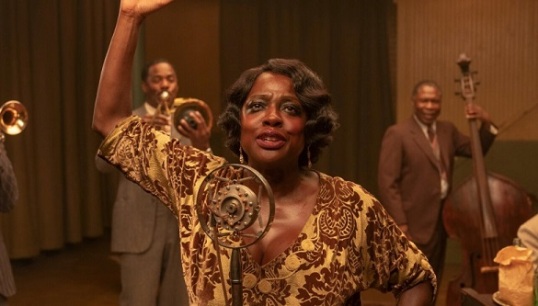
The new film Nightcrawler tells the story of a strange man named Lou Bloom (played, in the performance of his career, by Jake Gyllenhaal).  From the minute that we first see Lou, we can tell that there is something off about him.  He is a bit too quick to smile and his friendly manner is sharply contrasted with his sunken features.  He watches the world with shifty eyes that are surrounded by dark circles that make it appear as if he hasn’t slept for weeks.  (And it is interesting to note that, at no point during the film, do we actually see him sleep.  He’s always awake.)  When he speaks, it’s in an optimistic and ingratiating tone that can barely disguise the fact that everything he is saying is a cliché.  He speaks in the language of self-help books and inspirational speakers.  What’s interesting is that as empty as Lou’s constant patter may be, he always sounds as if he believes every single word of it.

Despite the fact that Lou is on screen during every minute of Nightcrawler, we learn very little about his background.  We don’t learn where he was born.  We don’t know how he eventually came to be the person that he is at the start of the film.  He has no family.  He has no friends.  He lives in a small apartment that is distinguished only by how anonymous it ultimately is.  The only thing we really know for sure about Lou is that he watches a lot of television.  In one of the few moments in the film where Lou actually lets down his guard, he tries to have a conversation with a reporter on a screen despite the fact that the reporter can not hear a word that he is saying.

Lou is first introduced stealing and selling scrap metal.  When he’s confronted by a security guard, Lou smiles and says a few friendly words before suddenly attacking the guard and throwing him to the ground.  Disturbingly, we never find out what exactly Lou did with that security guard but, when we next see Lou, he’s wearing the guard’s watch.

However, Lou has bigger plans than just being a common thief.  When he comes across a car accident, he sees a freelance video journalist (also known as a nightcrawler) filming the police.  When Lou finds out how much money he can make by simply filming human misery and then selling the footage to a local news station, Lou trades a stolen bicycle for a radio scanner and cheap camcorder.

After several nights of struggling to get some good footage and discovering that the police don’t like nightcrawlers, Lou manages to get some footage of a dying shooting victim.  He sells the footage to a local news station and meets Nina (an excellent Rene Russo), the station’s news director.  Nina is impressed with the footage and encourages Lou to find more.  She explains to him that she needs crime and disaster footage.  She needs footage that will both scare and intrigue her white middle-class audience — violence in the suburbs, families being threatened, and — most importantly — white people being victimized by minorities.  As she tells Lou,  “The perfect story is a screaming woman with her throat cut, running down a street in a good neighborhood.”

Soon, Lou is finding a lot of success as a nightcrawler, to the extent that he even gets an intern named Rick (Riz Ahmed) to serve as his assistant.  Rick is an interesting character and Riz Ahmed gives an excellent performance, one that is overshadowed by the more flamboyant performances of Gyllenhaal and Russo but which is just as important.  In many ways, RIck serves as the film’s conscience.  Alone among the film’s characters, Rick has a sense of morality but, unfortunately, he’s not observant enough to realize that he’s the only one.

Lou is a complete and total sociopath but Gyllenhaal gives such a compelling performance that you often forget until Lou gives you no choice but to remember.  As the film progresses, it becomes obvious that both Lou and Nina depend on bad news for their very existence and, in Lou’s case, he’s not above creating the news that he covers.

Marking the directorial debut of veteran screenwriter Dan Gilroy, Nightcrawler is a hyperkinetic portrait of society at its absolute worst.  As some reviewers have pointed out, Nightcrawler is often a bit heavy-handed when it comes to portraying the vacuousness of television news but then again, have you watched your local station recently?  Have you looked at any of the clickbait articles that are floating around the internet?  If Nightcrawler portrays television news as being shallow and hypocritical — well, why shouldn’t it?  The usual suspects will claim that Nightcrawler‘s portrayal of televised media is flawed but we all know the truth, don’t we?  Even if the film’s satire is heavy-handed, it still captures a larger and undeniable truth.

Not only is Nightcrawler a thought-provoking look at our paranoid society but it also features Jake Gyllenhaal’s best performance.  Gyllenhaal reportedly lost 20 pounds for the role and his commitment to the role pays off as he turns Lou into a truly fascinating monster,  making him the most compelling sociopath this side of Christian Bale’s Patrick Bateman.

Admittedly, the film does have a few flaws.  A scene in which Lou is seen cutting a van’s brake line almost inspired me to shout out, “Direct to video!” because it seriously felt as if it belonged in a lesser film.  (Every direct-to-video thriller features a scene of someone tampering with brakes.)  But, overall, Nightcralwer is one of the best films of the year so far.

Nightcrawlerfilm