Turn up the volume!
Enjoy!
Turn up the volume!
Enjoy!

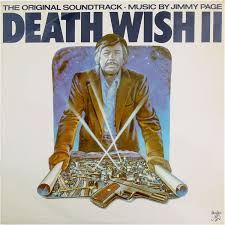
I’m a movie guy more than a music guy, but I still love Jimmy Page. His soundtrack for DEATH WISH II has been a part of my entire life. It’s such a strange, unique score, but it seems to work perfectly for the movie. I was only around 10 years old when I first saw an “edited for TV” version of the movie in ‘83 or ‘84. To be completely honest, the music kinda scared me. I laugh when I type that now, but it’s the truth! Parts of the soundtrack were rearranged again a few years later for DEATH WISH 3, the Charles Bronson movie I’ve watched more than any other.
Happy Birthday, Mr. Page!! Thanks so much for being Michael Winner’s neighbor and composing that soundtrack. This guy from Arkansas truly appreciates it!
I’ve attached a link to the soundtrack below for your listening pleasure!
Today, the Shattered Lens wishes a happy 81st birthday to the one and only Jimmy Page!
In honor of one of the world’s greatest guitarists, today’s song of the day is one of the few Led Zeppelin songs that I like. Page originally came up with the lyrics for the song while driving through Morocco but clearly, Kashmir was a better title.
Oh, let the sun beat down upon my face
And stars fill my dream
I’m a traveler of both time and space
To be where I have been
To sit with elders of the gentle race
This world has seldom seen
They talk of days for which they sit and wait
All will be revealed
Talk in song from tongues of lilting grace
Sounds caress my ear
And not a word I heard could I relate
The story was quite clear
Oh, baby, I been blind
Oh, yeah, mama, there ain’t no denyin’
Oh, ooh yes, I been blind
Mama, mama, ain’t no denyin’, no denyin’
All I see turns to brown
As the sun burns the ground
And my eyes fill with sand
As I scan this wasted land
Try to find, try to find the way I feel
Oh, pilot of the storm who leaves no trace
Like sorts inside a dream
Leave the path that led me to that place
Yellow desert stream
My shangri la beneath the summer moon
I will return again
As the dust that floats high in June
We’re moving through Kashmir
Oh, father of the four winds fill my sails
Cross the sea of years
With no provision but an open face
Along the straits of fear
Oh, when I want, when I’m on my way, yeah
And my feet wear my fickle way to stay
Ooh, yeah yeah, oh, yeah yeah,
But I’m down oh, yeah yeah, oh, yeah
Yeah, but I’m down, so down
Ooh, my baby, oh, my baby
Let me take you there
Come on, oh let me take you there
Let me take you there
Songwriters: James Patrick (Jimmy) Page / John Bonham / Robert Anthony Plant

I’m on Day 2 of my discussion of Charles Bronson’s DEATH WISH series in chronological order. This series has brought me countless hours of entertainment over the last 40 years, so enjoy and let me know your thoughts!
Charles Bronson returns as vigilante Paul Kersey in DEATH WISH II. In this installment, Kersey is trying to get his life back on track in Los Angeles with his daughter Carol, who’s still traumatized from the events of the first film, and with his new lady friend Geri Nichols (Jill Ireland). One day when he takes these two out for a fun day of shopping and ice cream, Kersey runs afoul of a group of young thugs who take his wallet. They use the wallet to find Kersey’s address, stand outside his house and make a plan like they’re diagramming a back yard football play, and then break in and rape his housekeeper. They set up shop to wait on Kersey to come home. When Kersey and his daughter finally arrive, the thugs knock out Kersey and kidnap his daughter. They take her back to their warehouse / hideout, where they rape her and she then falls to her death trying to escape. After this series of horrific events, Paul Kersey again turns vigilante to hunt down and kill every person responsible.
DEATH WISH II (1982) came along at a time in Charles Bronson’s career when he needed a box office hit. His prior three movies, DEATH HUNT, BORDERLINE & CABOBLANCO, had barely made a dent at the box office. Around the same time that Bronson needed a hit, the infamous Cannon Films, recently purchased by cousins Menahem Golan & Yoram Globus, was also looking to make a big splash in the American movie market. Cannon decided that a sequel to DEATH WISH was just what they needed, and with a big paycheck, they were able to convince Bronson to come along for the ride. Director Michael Winner was also hired to direct. The resulting film was a big success, earning back eight times its production budget at the box office alone. Its success also started a relationship between Bronson & Cannon Films that lasted for a total of eight films all the way to the end of the 1980’s.
Now that we’ve discussed how important DEATH WISH II was to extending Charles Bronson’s leading man career and providing Cannon Films a needed hit, let’s talk about the movie itself. I’m just going to say upfront that it’s my least favorite of the DEATH WISH series. Even though it presents itself as a serious film, it’s more of an exploitative retread of the 70’s classic than a realistic continuation of the Kersey character. And the first thirty minutes is hard to watch. Not content with just allowing Kersey to lose a beloved family member, Winner has crafted two graphic rape and murder sequences. These scenes are rough. While they do make sure we want to see Paul Kersey get his revenge, they leave a bad taste in our mouth that doesn’t go away as the creeps are being dispatched one by one. Vincent Gardenia returns as Frank Ochoa, the New York detective who investigated the original vigilante killings in DEATH WISH. Gardenia was so good in the original, but he’s not given much to do here. Jill Ireland doesn’t really add much either as his new lady friend.
This is a Charles Bronson film though, so there are definitely some things about DEATH WISH II that I really do like. First, I think Bronson looks like a total badass in his beanie that he wears when he’s hunting down the creeps on the mean streets of LA. It’s a classic 80’s Bronson look. Second, Kersey has some cool sayings as he dispatches the bad guys. The “Do you believe in Jesus” exchange is the best example. Third, it’s fun seeing a young Laurence Fishburne show up as one of the creeps, extending the franchise’s ability to cast future big stars as horrific rapists. Jeff Goldblum had that distinction in DEATH WISH. And finally, Led Zeppelin guitarist Jimmy Page composed the music for DEATH WISH II. It’s a memorable soundtrack that’s different than just about anything I’ve ever heard. It’s the most unique thing about the entire movie!
The bottom line is that I would watch Charles Bronson read a phone book, so I will always find something to enjoy about his films. Well, maybe every one but LOLA. DEATH WISH II isn’t as fun as most Bronson movies, even if it does have some good moments. I’m glad DEATH WISH 3 went a completely different direction with Kersey’s character.
BONUS: Robert “Bobby” Lyons had a part in DEATH WISH II. On our THIS WEEK IN CHARLES BRONSON PODCAST, my partner Eric Todd and I interviewed Bobby about his time on DEATH WISH II and a whole bunch of other topics. He has some interesting stories to tell about working with Charles Bronson, as well as clashing on the DEATH WISH II set with Michael Winner. Give it a listen if you get a chance!
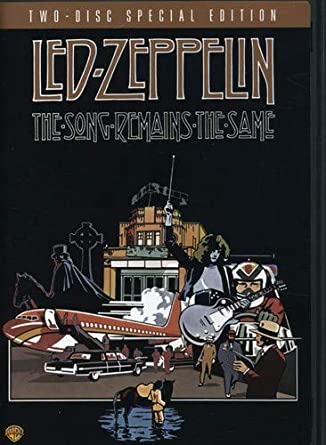
The Song Remains The Same is a concert film that features one of the world’s greatest bands giving one of their worst performances.
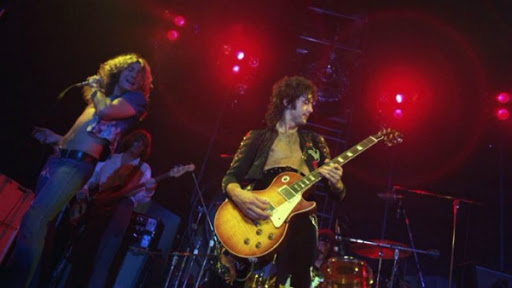
Shot over three nights in Madison Square Garden in 1973 (with additional footage later being filmed on a sound stage designed to look like Madison Square Garden), the film features Led Zeppelin sounding tired and bored. Robert Plant asks, “Does anyone remember laughter?” during Stairway to Heaven while the legendary Jimmy Page has a look on his face like he already knows that, at some point in the future, he’s going to end up playing back-up to Sean Combs on Saturday Night Live. Even John Bonham’s drum solo seems self-indulgent and uninspired. Meanwhile, John Paul Jones’s clothing changes from shot-to-shot, a reminder that Jones was the only member of the band not to wear the same thing during all three nights of shooting. The film looks bland and the soundtrack doesn’t capture the Zeppelin sound. Instead, it sounds muddy, to the extent that those not already familiar with Led Zeppelin will wonder what the big deal is.
The good news is that you can dislike The Song The Remains The Same and still be a Led Zeppelin fan. The band reportedly hated the film, feeling that it captured them at their worst. Robert Plant, who unsuccessfully tried to get the infamous “Does anyone remember laughter?” line removed from the film, called the film “bollocks” while John Paul Jones called it a “massive compromise.” In 1976, when the film was first released, Jimmy Page told New Musical Express, “The Song Remains The Same is not a great film, but there’s no point in making excuses. It’s just a reasonably honest statement of where we were at that particular time.”
The film also features fantasy sequences, in which the members of the band and their managers get a chance to show what’s going on in their minds and how they viewed themselves in 1973. The band’s managers appears as gangsters and start the film off by gunning everyone down. Robert Plant is a knight, in a sequence that inadvertently brings to mind the travels of Brave Sir Robin in Monty Python and the Holy Grail. Jimmy Page is a hermit who reads tarot cards. John Paul Jones is chased on horseback. The only member of the band whose image is helped by his fantasy sequence is John Bonham, who comes across as a likable, down-to-Earth bloke who likes retiring to his farm and driving fast cars. Knowing that Bonham would die just seven years later makes his fantasy sequence especially poignant to watch. His son, Jason Bonham, appears, drumming on a child-sized drum kit. Years later, of course, Bonham would play drums during several Led Zeppelin reunions.
For years, The Song Remains The Same was the only official video footage of Led Zeppelin performing and, flaws and all, that does give it some importance. The Song Remains The Same is also said to have been one of the major inspirations for This Is Spinal Tap so everything worked out in the end.
To quote John McClane, “How can the same shit happen to the same guy twice?”
It has been eight years since Paul Kersey (Charles Bronson) lost his wife and single-handedly cleaned up New York City. The first Death Wish ended with Paul in Chicago, preparing to gun down a new group of criminals. I guess Chicago didn’t take because, at the start of Death Wish II, Paul is in Los Angeles and he’s working as an architect again. He has a new girlfriend, a bleeding heart liberal reporter named Geri (Jill Ireland, Bronson’s real-life wife) who is against the death penalty and who has no idea that Paul used to be New York’s most notorious vigilante. Having finally been released from the mental institution, Carol (Robin Sherwood) is living with her father but is now mute.
Crime rates are soaring in Los Angeles and why not? The legal system is more concerned with the rights of the criminals than the victims and Paul has retired from patrolling the streets. But when a group of cartoonish thugs rape and kill his housekeeper and cause his daughter to fall out of a window while trying to escape them, Paul picks up his gun and sets out for revenge.
Death Wish II was not the first sequel to Death Wish. Brian Garfield, the author of the novel on which Death Wish was based, never intended for Paul to be seen as a hero and was disgusted by what he saw as being the film’s glorification of violence. As “penance,” he wrote a sequel called Death Sentence, in which Paul discovered that he had inspired an even more dangerous vigilante. When Menahem Golan and Yoram Globus bought the rights to produce a second Death Wish film, they decided not to use Garfield’s sequel and instead went with a story that was co-written by Golan.
It’s the same basic story as the first film. Again, Paul is a mild-mannered architect who is a liberal during the day and a gun-toting reactionary at night. Again, it’s a home invasion and a death in the family that sets Paul off. Again, Paul gets help from sympathetic citizens who don’t care that the police commissioner (Anthony Franciosa) wants him off the streets. Jeff Goldblum played a rapist with a switch blade in the first film. This time, it’s Laurence Fishburne who fills the role. (Fishburne also carries a radio, which he eventually learns cannot be used to block bullets.) Even Detective Ochoa (Vincent Gardenia) returns, coming down to Los Angeles to see if Paul has returned to his old ways.
The main difference between the first two Death Wish films is that Death Wish II is a Cannon film, which means that it is even less concerned with reality than the first film. In Death Wish II, the criminals are more flamboyant, the violence is more graphic, and Paul is even more of a relentless avenger than in the first film. In the first Death Wish, Paul threw up after fighting a mugger. In the second Death Wish, he sees that one of the men who raped his daughter is wearing a cross, leading to the following exchange:
“Do you believe in Jesus?”
“Yes, I do.”
“Well, you’re going to meet him.”
BLAM!

Death Wish II is the best known of the Death Wish sequels. It made the most money and, when I was a kid, it used to show on TV constantly. The commercials always featured the “You believe in Jesus?” exchange and, every morning after we saw those commercials, all the kids at school would walk up to each other and say, “You believe in Jesus? Well, you’re going to meet him.” It drove the teachers crazy.
Overall, Death Wish II is a lousy film. Michael Winner, who was always more concerned with getting people into the theaters than anything else, directs in a sledgehammer manner that makes his work on the first film look subtle. He obscenely lingers over every rape and murder, leaving no doubt that he is more interested in titillating the audience than getting them to share Paul’s outrage. The script is also weak, with Geri so poorly written that she actually gets more upset about Paul going out at night than she does when she learns that Paul’s daughter has died. When Paul sets out to track down the gang, his method is to merely wander around Los Angeles until he stumbles across them. It doesn’t take long for Paul to start taking them out but no one in the gang ever seems to be upset or worried that someone is obviously stalking and killing them.
There are a few good things about the film. Charles Bronson was always a better actor than he was given credit for and it’s always fun to watch Paul try to balance his normal daily routine with his violent night life. Whenever Geri demands to know if he’s been shooting people, Paul looks at her like he is personally offended that she could possibly think such a thing. Also, the criminals themselves are all so cartoonishly evil that there’s never any question that Paul is doing the world a favor by gunning them down. For many otherwise sensible viewers, a movie like Death Wish II may be bad but it is also cathartic. It offers up a simple solution to a complex issue. In real life, a city full of Paul Kerseys would lead to innocent people getting killed for no good reason. But in the world of Death Wish II, no one out after nightfall is innocent so there’s no need to worry about shooting the wrong person.
Finally, the film’s score was written by the legendary Jimmy Page. The studio wanted Isaac Hayes to do the score but Winner asked his neighbor, Page. Page took the film, retreated into his studio, and returned with a bluesy score that would turn out to be the best thing about the movie. The soundtrack was the only one of Page’s solo projects to be released on Led Zeppelin’s record label, Swan Song Records.
Tomorrow, Bronson returns with Death Wish 3!
To say that I’m a huge fan of Led Zeppelin would be an understatement. They’re the band that combines both my love for hard rock and, ultimately, an even bigger love for that most American of musical style, the blues.
Led Zeppelin have always been rooted in their blues foundation. They’ve been an integral part of the British rock invasion to the US that was steeped heavily in blues rock. With classic blues heavily influencing their sound, Led Zeppelin would take the US by storm starting in 1968 and would continue to do so until the band’s dissolution in 1980 soon after John Bonham’s untimely death.
It’s a song from their third album that, for me, epitomizes Led Zeppelin’s early days. These were the years when they reigned as the blues rock kings of the rock world. They would later experiment and try new sounds with their later albums as the band began to branch out into new, diversified musical styles. Yet, for me, the band will always be that blues rock band from London, England who were the first supergroup.
“Since I’ve Been Loving You” is straight up blues and Robert Plant sings it with such emotional intensity that anyone hearing the song for the first time could easily mistake him and the band as one of the classic American blues bands. The song also makes the latest “Song of the Day” not just because it’s one of my favorites but also because of Jimmy Page once again demonstrating why he’s one of the best rock guitarists.
It’s not often a song starts off with a guitar solo, but this one does and Page does so in a slow, blues tempo that would segue into Robert Plant’s vocals. The second guitar solo arrives after the song’s second verse and would have a more blues rock sound to it, but no less impressive.
Since I’ve Been Loving You
(guitar solo)
Working from seven to eleven every night,
It really makes life a drag, I don’t think that’s right.
I’ve really been the best, the best of fools, I did what I could. (Yeah)
‘Cause I love you, baby, How I love you, darling, How I love you, baby,
My beloved little girl, little girl.
But baby, Since I’ve Been Loving You (yeah). I’m about to lose my worried mind, oh, yeah.
Everybody trying to tell me that you didn’t mean me no good.
I’ve been trying, Lord, let me tell you, Let me tell you I really did the best I could.
I’ve been working from seven to eleven every night, I said It kinda makes my life a drag
Lord, that ain’t right…
Since I’ve Been Loving You, I’m about to lose my worried mind. (Watch out!)
(guitar solo)
Said I’ve been crying, yeah. Oh, my tears they fell like rain,
Don’t you hear them, Don’t you hear them falling?
Don’t you hear, Don’t you hear them falling?
Do you remember mama, when I knocked upon your door?
I said you had the nerve to tell me you didn’t want me no more, yeah
I open my front door, hear my back door slam,
You know, I must have one of them new fangled, new fangled back door man.
I’ve been working from seven, seven, seven, to eleven every night, It kinda makes my life a drag…
Baby, Since I’ve Been Loving You, I’m about to lose, I’m about to lose, lose my worried mind.
Just one more, just one more, oooh, yeah,
Since I’ve been loving you, I’m gonna lose my worried mind.
Great Guitar Solos Series
The latest in the Song of the Day for the greatest guitar solo series is the power rock ballad of power ballads. Straight from their untitled fourth album, Stairway to Heaven is a mixture of acoustic-folk music and anthemic hard rock. The fact that this power ballads of all power ballads have stood the test of time, ridicule and countless covers (both serious and comedic) says much about the power that Led Zeppelin had over rock music. Even 30 years since they broke up the band still influences musicians to this day.
Stairway to Heaven to me best exemplifies the gradual shift of the band from a down and dirty blues-based hard rock band to the proto-metal/progressive rock which would dominate the band’s sound from the mid-70’s until the band’s break-up after the untimely death of drummer John Bonham in 1980. The song puts to light Jimmy Page’s growing attraction for the esoteric as the song’s lyrics conjures up images of the fairy folk of the Welsh countryside. The acoustic guitar arpeggios which begins the song soothingly brings the listener in. Each section brings in more of the modern to the Renaissance-like intro. This build-up reaches a crescendo at the mid 5-minute mark when Jimmy Page begins a guitar solo which finally leads to a climactic hard rock finish to the song.
The song was the most requested and played track over the radio and became a staple of the band’s sets on their many tours during the 70’s. Like any piece of artistic work extremely popular with the masses the song reached such a popularity that a backlash just as extreme followed as the band broke up in 1980. The fact that this backlash didn’t diminish the song’s appeal to future generations of fans and to the legions before them shows just how important this song has become to rock music history.
While other epic power ballads have come and gone since Stairway to Heaven they will never supplant Led Zeppelin’s epic mystical anthem of fairy folk, magical lands with progressive hard rock. Led Zeppelin’s Stairway to Heaven was first and to many will always be First and The One.
Stairway to Heaven
There’s a lady whose sure all that glitters is gold
And she’s buying a stairway to heaven.
When she gets there, she knows if the stores are all closed
With a word she can get what she came for.
Ooh, ooh, and she’s buying a stairway to heaven.
There’s a sign on the wall but she wants to be sure
’Cause you know sometimes words have two meanings.
In a tree by the brook, there is a songbird who sings:
Sometimes all of our thoughts are misgiven.
Ooh, it makes me wonder,
Ooh, it makes me wonder.
Theres a feeling I get when I look to the west,
And my spirit is crying for leaving.
In my thoughts I have seen rings of smoke through the trees,
And the voices of those who standing looking.
Ooh, it makes me wonder,
Ooh, really makes me wonder.
And it’s whispered that soon if we all call the tune
Then the piper will lead us to reason.
And a new day will dawn for those who stand long
And the forests will echo with laughter.
If there’s a bustle in your hedgerow,
Don’t be alarmed now,
Its just a spring clean for the May queen.
Yes, there are two paths you can go by but in the long run
Theres still time to change the road you’re on.
And it makes me wonder.
Ooooooh…
Your head is humming and it won’t go,
In case you don’t know:
The pipers calling you to join him.
Dear lady, can you hear the wind blow,
And did you know:
Your stairway lies on the whispering wind.
(guitar solo)
And as we wind on down the road,
Our shadows taller than our soul,
There walks a lady we all know.
Who shines white light and wants to show…
How everything still turns to gold.
And if you listen very hard the tune will come to you at last.
When all are one and one is all, yeah, to be a rock and not to roll.
And she’s buying a stairway… to heaven.
Great Guitar Solos Series
I missed a couple of nights with a post leading up to Valentine’s Day. So, I shall make it up with a quickie, but definitely a classic choice for latest “Song of the Day”.
In what has to be one of the sexiest and raunchiest songs to explode from that little supergroup called Led Zeppelin in late 1969. Everything about this song oozes sex from Robert Plant’s performance to the silky riffs by Jimmy Page right up to the rhythmic pounding by Bonham on drums.
The song I speak of “Whole Lotta Love” and considered a favorite amongst fans of the group. Enough talk and just listen. I’m pretty sure there’s a sizable number of people who visit this site and go on the many social media outlets that owe their existence to their parents having this song on.
Whole Lotta Love
You need coolin’, baby, I’m not foolin’
I’m gonna send ya back to schoolin’
Way down inside, a-honey, you need it
I’m gonna give you my love
I’m gonna give you my love, oh
Wanna whole lotta love
You’ve been learnin’
And baby, I been learnin’
All them good times
Baby, baby, I’ve been a-yearnin’, ah
A-way, way down inside
A-honey, you need-a
I’m gonna give you my love, ah
Oh, whole lotta love
Wanna whole lotta love
I don’t want more
Ooh, just a little bit
Ah, ah, ah, ah
Ah, hah, hah
Ah, ah, ah, ah, ah, ah, ah, ah, ah, ah, ah
Ah, ah, ah, ah, ah, ah, ah, ah, ah, ah, ah, ah, ah
No, no, no, no, ah
Love, low-ow-ow-ow-ove
Oh, my, my, my
You’ve been coolin’
And baby, I’ve been droolin’
All the good times, baby, I’ve been misusin’
A-way, way down inside
I’m gonna give ya my love
I’m gonna give ya every inch of my love (Ah)
I’m gonna give you my love
Yeah, alright, let’s go
Wanna whole lotta love
(Way down inside) Way down inside
(Way down inside, woman, you) Woman
(Woman, you) You need it
(Need) Love
My, my, my, my
My, my, my, my, oh
Shake for me, girl
I wanna be your backdoor man
Hey, oh, hey, oh
Hey, oh, ooh
Oh, oh, oh, oh
Hoo-ma, ma, hey
Keep a-coolin’, baby
A-keep a-coolin’, baby
Ah, keep a-coolin’, baby, ah, ah-hah, oh-oh
Who would’ve thought that Ben Affleck, the same guy who was in one of the most ridiculous romantic scenes ever put on film (hint: animal crackers), would be turning out to be one of the brightest directors these last few years. He hasn’t missed yet with two directing gigs with Gone, Baby Gone and The Town. With Argo he makes it three solid hits in a row.
One thing that really struck me about the film Argo was Affleck’s use of licensed music to cue up particularly important scenes throughout the film. One such musical cue used one of my favorite rock and blues song ever. It’s Led Zeppelin’s cover of the Memphis Minnie and Kansas Joe McCoy song of the same name. Most young people seem to know this song from it’s constant use to score scenes and sequences about the Katrina disaster, especially scenes of a flooded New Orleans when the levees broke during the hurricane. It was nice to hear the song used in a scene not dealing with the aftermath of Katrina but to highlight the mental situation of the characters in Argo. I won’t say which scene exactly, but for those who have seen the film will know what I mean and the lyrics to the song should become even more weighty once they put two and two together.
I really love this song. From the use of harmonicas by John Paul Jones (and probably another sessions player) to Robert Plant’s emotional wailing right up to one of the best drum work by the great John Bonham. You can almost literally feel those drum sticks drop heavy on those drums. One would almost think Bonham was using tree trunks to play this song.
When the Levee Breaks
If it keeps on rainin’ levee’s goin’ to break
When The Levee Breaks I’ll have no place to stay.
Mean old levee taught me to weep and moan
Lord, mean old levee taught me to weep and moan
Got what it takes to make a mountain man leave his home
Oh well oh well oh well.
Don’t it make you feel bad
When you’re tryin’ to find your way home
You don’t know which way to go?
If you’re goin’ down South
They go no work to do
If you don’t know about Chicago.
Cryin’ won’t help you prayin’ won’t do you no good
Now cryin’ won’t help you prayin won’t do you no good
When the levee breaks mama you got to move.
All last night sat on the levee and moaned
Thinkin bout me baby and my happy home.
Going go n to Chicago
Go n to Chicago
Sorry but I can’t take you.
Going down going down now going down.