A lot of that is because I’ve never been stung by a wasp so I have no idea whether or not I’m allergic. Considering that I’m allergic to almost everything else, it just seems likely that I would be allergic to wasps as well.
Another reason why I dislike wasps is that, opposed to hard-working honey bees, wasps just look evil. They fly straight at you. They get tangled in your hair. They try to build their nests right next to your air conditioning unit. They’re the worst!
1957’s MonsterFromGreenHell is all about evil wasps. A group of scientists, working with the space program, come up with the brilliant idea of sending wasps into space. When the wasp rocket crashes back to Africa, it leads to giant wasps and paralyzed victims. Can the scientists who created the problem fix things? Or will nature have to take care of itself?
Watch and find out! This film is one of many “giant monster’ films to come out of the 50s but it’s perhaps more interesting as an examination of the fears of what would happen when mankind finally went into space. Today, we take space exploration for granted. In 1957, it was very exotic and, I imagine to some, very frightening.
One final note: Barbara Turner, the female lead in this film, is also the mother of actress Jennifer Jason Leigh.
Tom and Fred Denton (Preston Foster and Jim Davis) are two frontier lawmen who are frustrated with their jobs. They are both owed backpay. When they shoot an outlaw, they are expected to pay the $80 burial fee. Neither Tom nor Fred feels that they are appreciated by banks and the railroads that expect them to risk their lives on a daily basis.
When Tom and Fred are informed that their younger brother, Matt (Kim Spalding), has been convicted of murder and sentenced to hang in another town, they ride off to save him.
Even though Tom and Fred can both provide an alibi for Matt and it is obvious that Matt has been framed by a corrupt railroad agent, the town is still determined to hang him. Tom and Fred manage to rescue him from the gallows but, in the process, a deputy is killed. Now wanted by the authorities, the Denton brothers are forced to team up with the same outlaws that they used to hunt. Soon, the Dentons are robbing banks and trains and their old friend, Pete Coleman (Monte Blue), has been ordered to captured them, dead or alive.
One of the many low budget westerns to be produced by the Lippert Company, Three Desperate Men is a cut above the usual B-western. None of the Dentons want to be outlaws but they are forced into it by circumstances out of their control. The real villains of the film are the bankers and the railroad tycoons who hoard the land and the money and who try to cheat men like Tom and Fred out of their rightfully earned wages. The Denton brothers ultimately decide that their number one loyalty is to each other and that leads to the movie’s fatalistic conclusion, which is surprisingly violent for a 1951 western. Preston Foster, Jim Davis, and Monte Blue head a cast that is full of tough and authentic western veterans and the action scenes are imaginatively staged by director Sam Newfield. Three Desperate Men is a B-western that can be enjoyed even by those who don’t like westerns.
At the height of the Civil War, the small town of Border City, Missouri has declared itself to be neutral ground. Mayor Delilah Courtney (Nina Varela) announces that anyone who enters her town looking to recruit for either the Union or the Confederacy will be arrested and will face the possibility of being hung from the noose in the middle of Main Street.
That doesn’t stop Charles Quantrill (Brian Donlevy) from coming to town. Quantrill is a former Confederate officer who now terrorizes the Arkansas/Missouri border with his gang of thieves. Accompanying Quantrill is his wife, Kate (Audrey Totter), who once lived in Border City and who still enjoys singing a song at the saloon.
Another new arrival is Sally Maris (Joan Leslie), who comes down from Michigan to help her no-account account, Bitterroot Bill (Reed Hadley), run his saloon. Sally attempts to bring some order to the rowdy saloon, which makes an enemy out of Kate. When Bill is killed in a gunfight, Sally takes over the saloon and soon, she is being challenged first to a fight and then to an actual duel by Kate. With the disapproving Mayor Courtney watching all of the action from her office, it is obvious that one of the women is eventually going to be taken to the noose in the middle of the street but which one?
This is one of the best of the many B-westerns that Allan Dwan directed in the 1950s. Though much of the emphasis is on the usual western action — Quantrill wants to take over a mine, there’s a Confederate spy in town, and both Frank and Jesse James appear as supporting characters — the film is really about the rivalry and eventual partnership between a group of strong-willed woman who aren’t going to let anyone tell them how to live their lives. As tough as Kate is, Sally proves to be stronger than she looks and, in the end, they realize that they are stronger working together for a common goal than trying to tear each other down. Audrey Totter and Joan Leslie both give sexy and tough performances as Kate and Sally. They’re equally believable hanging out in a saloon, flirting with a cowboy, or drawing guns on each other in the middle of the street.
Along with taking a strong stand against vigilante justice, Woman They Almost Lynched features an exciting stage coach robbery, an intriguing story, and two very interesting lead characters. It’s a western that deserves to be better known.
At the start of 1980’s The Day Time Ended, the Williams Family has relocated to the desert!
(Why the desert? I have no idea. I’ve been told that the hot air of the desert would be ideal for my asthma but then I’d have to live in the desert and, from what I’ve seen in the movies, bad things always happen in the desert. If it’s not aliens, it’s zombie cowboys.)
Grandpa (Jim Davis), Grandma (Dorothy Malone), Richard (Christopher Mitchum, looking a lot like his father, Robert), Beth (Marcy Lafferty), and their young daughter, Jenny (Natasha Ryan) have moved into a very nice ranch house that appears to be sitting in the middle of nowhere. The house comes with a barn, a few horses, and …. ALIENS!
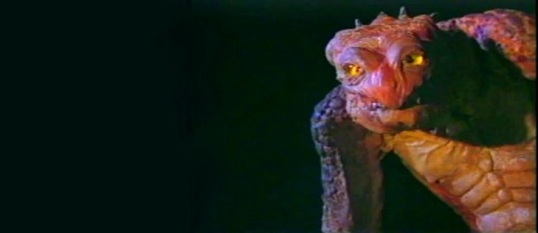
At first, Jenny is the only one to notice the strange blue light that keeps glowing behind the barn. But soon, the rest of the family is seeing UFOs and weird (but kind of cute) creatures are knocking on the front door and saying hi. Lizard men appear in the distance and beckon for the family to follow them. Soon, the house itself is being zapped through time and space….
This is going to be a short review but, then again, The Day Time Ended is a short movie. With a running time of only 75 minutes (not including the end credits), The Day Time Ended feels less like a movie and more like an extended episode of The Twilight Zone. That said, if it was an extended episode of The Twilight Zone, it would be considered to be one of the more enjoyable episodes of the series. While none of the characters are particularly complex or deeply written, the cast is believable as a family and everyone does a good enough job that the viewer won’t want to see anything bad happen to any of them. (I’m also happy to say that all of those horses are really pretty and — fear not! — for once, no harm befalls any of the animals.) The motives of the aliens are kept ambiguous throughout the film, leaving the viewers as confused and intrigued as the family and the final shot is somehow both silly and tremendously satisfying at the same time. The Day Time Ended is a B-movie but it’s an entertaining B-movie.
Directed by B-movie specialist, John “Bud” Cardos, this is one of those movies where the cheapness of the special effects add to the film’s charm. Initially, the UFOs are represented by lights darting through the sky. (Residents of Texas will immediately think of our beloved and yet unexplained Marfa Lights.) When the UFOs are finally seen in close-up, they are obviously plastic models but, in this age of excessive CGI, there’s something undeniably charming about the idea of going to the trouble to build plastic models. The claymation aliens are adorable! Seriously, there are some films that you just can’t help but kind of love and, for me, The Day Time Ended is one of those films.
In the 1840s, frontier scout Jim Stockton (Jim Davis) is hired to lead a wagon train down the Oregon Trail. Accompanying him and the settlers are a group of calvarymen, commanded by Lt. Kilkpatrick (Don Kelly). When the wagon train is attacked by a group of Native Americans who have been given rifles by Mexican soldiers, Stockton can’t figure out why, When he suggests that the settlers take an alternative route through California (which was then controlled by Mexico), Kilkpatrick explains that such a detour would be considered an act of war and that he and his men cannot be a part of it. What Stockton and Kilkpatrick don’t know (but soon find out) is that Mexico has already declared war on the United States. Complicating matters even further is that both men have fallen for a Mexican woman named Consuela (Nancy Hadley) and her loyalties are now in question.
A 68-mintue B-western, Frontier Uprising is mostly interesting because of the amount of stock footage that was used to try to make this low-budget film seem like an epic. For instance, when the rifle-bearing Natives attacked the settlers, I recognized a lot of footage from a lot of other movies. One particular shot, of a wounded Native falling off of his horse, was used in so many films of the period that I’ve lost track of how many times I’ve seen it. Much of the stock footage features Monument Valley prominently in the background, which suggests that Stockton was not doing a very good job of leading the settlers to Oregon.
Frontier Uprising is one of the 11 (!) films to be directed by Edward L. Cahn in 1961. Cahn is credited with directing 127 films over the course of 30 years. Some of them were good. Most, like Frontier Uprising, were competent but forgettable.
Hi there and welcome to October! This is our favorite time of the year here at the Shattered Lens because October is horror month. For the past three years, we have celebrated every October by reviewing and showing some of our favorite horror movies, shows, books, and music. That’s a tradition that I’m looking forward to helping to continue this year.
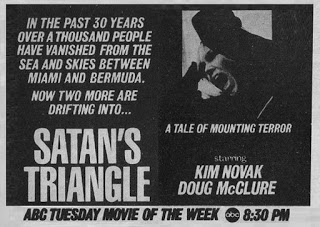
Let’s start things off with the 1975 film. Satan’s Triangle! Satan’s Triangle tells the story of what happens when a derelict boat is spotted floating in the middle of the ocean. An attempt to rescue the boat leads to mystery, tragedy, horror, and …. well, let’s just say that there’s a reason why this stretch of ocean belongs to Satan.
Featuring atmospheric direction from Sutton Roley and a great performance from none other than Kim Novak, Satan’s Triangle is one of the best made-for-TV horror films that I’ve ever seen and I think it’s the perfect way to start off this year’s horrorthon!
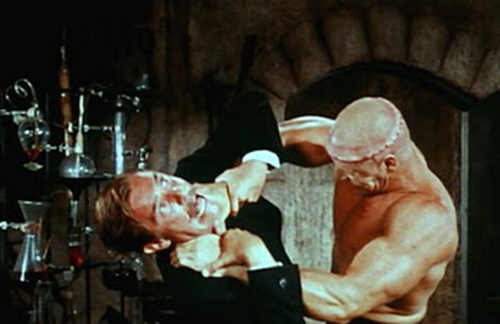
This 1966 western/horror hybrid is just about as stupid as you think it is but it’s also a lot of fun if you’re in the right mood. Notorious outlaw Jesse James (John Lupton) attempts to hold up a stagecoach but, in the process, his hulking partner Hank (Cal Bolder) is serious wounded. Some helpful peasants direct Jesse and Hank to the mysterious German doctor who happens to live in a nearby dark and scary house. That doctor is Maria Frankenstein (Narda Onyx) and she’s been conducting experiments to bring dead Mexicans back to life. Imagine her joy when the nearly dead Hank shows up at her laboratory. Anyway, Maria performs a brain transplant on Hank and once Hank comes back to life, she informs him that his new name is “Igor.” Yes, she does. That plot description pretty much tells you everything you need to know about the movie but I vaguely enjoyed vaguely paying attention to it. Maria’s German accent is hilariously overdone, the Frankenstein laboratory is full of pointless electrical things, and a character dies halfway through the film just to later show up again with no explanation. It’s that type of movie.
And it’s also the type of movie that you can watch below!
No, actually, they don’t. If anything, they cause crimes to happen.
First released in 1971 and directed by Al Adamson, Dracula vs. Frankenstein may not be a good film but it’s definitely an unforgettable film. Yes, it may be thoroughly inept but it’s also perhaps the strangest take on the Dracula/Frankenstein rivalry that you’ll ever see.
Plus, it’s one of the final films of Lon Chaney, Jr. Unfortunately, Lon doesn’t exactly look his best in Dracula vs Frankenstein...
Speaking of slumming celebrities, long before he played Dr. Jacoby and inspired America to shout, “Dig yourself out of the shit!,” Russ Tamblyn played a biker named Rico in this movie.
Also, like every other exploitation film made in 1971, Dracula vs. Frankenstein features hippies, leading to the age old question: who needs the supernatural when you’ve got LSD-crazed hippies running around?
Another age old question: Is Dracula vs. Frankenstein merely inept or is it a classic of bad filmmaking?
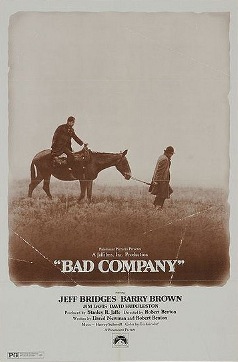
Missouri during the Civil War. All young men are being forcibly constricted into the Union army, leaving those who want to avoid service with only two options: they can either disguise themselves as a woman and hope that the soldiers are fooled or they can head out west. Drew Dixon (Barry Brown) opts for the latter solution but his plans hit a snag when he’s robbed and pistol-whipped by Jake Rumsey (Jeff Bridges). When Drew coincidentally meets Jake for a second time, he immediately attacks him. Jake is so impressed that he insists that Drew join his gang of thieves.
Jake’s gang, which include two brothers (one of whom is played by John Savage) and a ten year-old boy, is hardly the wild bunch. They spend most of their time robbing children and are, themselves, regularly robbed by other gangs, including the one run by Big Joe (David Huddleston). Their attempt to rob a stagecoach goes hilariously wrong. Less hilarious is what happens when they try to steal a pie from a window sill.
Bad Company was the directorial debut of Robert Benton and it has the same combination of comedy and fatalism that distinguished both his script for Bonnie and Clyde and several of the other revisionist westerns of the 1970s. While the interplay between Drew and Jake may remind some of Butch Cassidy and the Sundance Kid, the film’s sudden bursts of violence feel like pure Peckinpah. Fortunately, the combination of Robert Benton’s low-key direction and the excellent performances of Jeff Bridges and Barry Brown allows Bad Company to stand on its own. Brown and Bridges make for an excellent team, with Bridges giving a charismatic, devil-may-care performance and the late Barry Brown holding his own as the more grounded Drew. (Sadly, Brown, who appears to have had the talent to be a huge star, committed suicide six years after the release of Bad Company.) This unjustly forgotten western is one of the best films of the 1970s.
Judging from the films that the decade produced, the 1970s were truly a paranoid time. (Of course, 2015 is a paranoid time as well, which is probably why so many of the classic films of the 70s still feel incredibly relevant.) Some weekend, you should watch a marathon of 1970s films and I guarantee that, by the time Monday rolls around, you will be looking for lurkers in every shadow and automatically distrusting any and all authority figures. The 1970s were a good time to be paranoid.
And it’s really not surprising at all. The previous decade was a time of turmoil and upheavel, a time when some people feared protestors and some people feared the establishment but, ultimately, everyone was afraid of someone. When you think of the 1960s, you think about all the leaders who were violently assassinated — John F. Kennedy, Malcolm X, Martin Luther King, Robert F. Kennedy, and more. (And that’s just in America!) And then the 70s came along, with Watergate and the revelations about the CIA partnering up with the Mafia to try to kill Fidel Castro.
The 70s were a good time to be paranoid and the films of the 70s reflected that fact.
Take for instance, 1974’s The Parallax View. The Parallax View opens and ends with assassination. In both cases, the victims are U.S. politicians who are running for President and whose ambitions have caused concern for the shadowy and rarely seen leaders of the established order. In both cases, the official story is that the assassin was a lone gunman, a nut with a gun and absolutely no political or religious motivations. Of course, both accused assassins were apparently involved with the shadowy Parallax Corporation and, over the course of the film, anyone who knows anything about Parallax ends up dying. Reporter Joe Frady (Warren Beatty) goes undercover to investigate the group but, as he does so, he grows increasingly paranoid and unstable, until finally it’s easy to mistake him for any other paranoid madman, ranting in the street and, in many ways, indistinguishable from the accused assassins that he’s been investigating. In many ways, Joe becomes like a character in a H.P. Lovecraft short story who, upon laying eyes on Cthulhu, is driven mad as punishment.
It’s a good film, one that’s enhanced by Gordon Willis’s trademark shadowy cinematography and the convincing desperation of Warren Beatty’s performance. In the film’s best scene, Frady applies for a job with the Parallax Corporation. As a part of his job interview, he’s taken a dark room and he’s told to watch a short film. His reactions will help to determine what role he could possibly play at Parallax.
Needless to say, The Parallax View feels just as relevant today as it did when it was first released. We still live in paranoid times and hints of conspiracy are still everywhere to be seen. Perhaps the only thing that has changed is that, back in 1974, conspiracies could still take people be surprise.



 Missouri during the Civil War. All young men are being forcibly constricted into the Union army, leaving those who want to avoid service with only two options: they can either disguise themselves as a woman and hope that the soldiers are fooled or they can head out west. Drew Dixon (Barry Brown) opts for the latter solution but his plans hit a snag when he’s robbed and pistol-whipped by Jake Rumsey (Jeff Bridges). When Drew coincidentally meets Jake for a second time, he immediately attacks him. Jake is so impressed that he insists that Drew join his gang of thieves.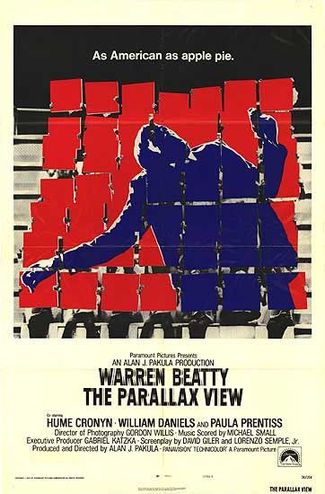
 Through the Shattered Lens