Review: By Dawn’s Early Light (dir. by Jack Sholder)


1990’s By Dawn’s Early Light is a film adaptation by HBO of William Prochnau’s novel Trinity’s Child. The film, when it first aired on HBO, seemed dated since the Soviet Union was ultimately going through its death throes as the military build-up initiated during the Reagan Administration crippled the USSR economically (they too tried to match the build-up in conventional and nuclear forces). Yet, despite the ending of the Cold War, recent events domestically and around the world has shown that the world never truly left behind the shadow of nuclear war.

The film is simplicity in the way the plot unfolds. A failed coup by dissident Soviet military commanders fails, but it’s after-effects of creating a “hot war” between the US and the USSR succeeds as both US President and Soviet Premiere make mistakes in their decisions. Decisions heavily influenced by their military commanders who see only black and white in how their respective nations should respond militarily. By Dawn’s Early Light shares some similarities to the classic 60’s Cold War films like Dr. Strangelove and Fail-Safe. Both films deal with the human frailties and flaws helping influence events that could lead to nuclear Armageddon for the whole planet. By Dawn’s Early Light concentrates on several storylines to highlight the stress and difficulties individuals must face to either follow their orders to their inevitable conclusion or allow their conscience to help make the moral decisions in trying to stop the madness spiraling out of control. Though some people’s decisions are left wanting, the film ends with a glimmer of hope that may just bring the world from the brink of annihilation.

The acting by the cast of Rebecca DeMornay, Powers Boothe, James Earl Jones, Darrin McGavin, Martin Landau and Rip Torn are well done. Rebecca DeMornay and Powers Boothe anchor one of the subplots as romantically involved B-52 crew pilots whose conflict comes from their own intimate closeness affecting command decisions and from the stress of families lost by the rest of the bomber crew. Darrin McGavin, Rip Torn and Martin Landau anchor the other subplot of competing Presidents. One a physically incapacitated US leader trying to avert escalating the conflict to the point of no return with another recently sworn in who fears of losing a nuclear war and thus wanting to strike back full and hard. In between these two leaders is the diabolical performance by Rip Torn as a warmongering Army colonel who sees only winning the war as the only objective. At times, the performances do become hampered by the simplicity of the script, but the cast power through to the end.

In the end, the film might look a bit dated in its production design (this was 1990 and many years before HBO became known for premiere television production) but the story itself is very current and relevant.  What might have been a nice Cold War relic fairy tale when it first aired in 1990 on HBO has taken on more of a cautionary tale as more nations begin to acquire nuclear weapons with some of these nations not just enemies of the US and the world in general, but also led by men whose hold on sanity seem tenuous at best. By Dawn’s Early Light is a great piece political “what if” that hopefully remains just that and not a prediction of reality to come.
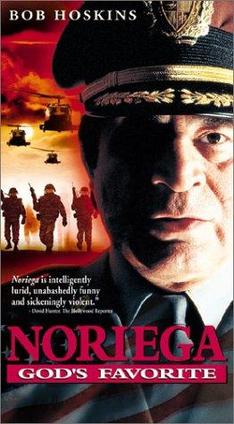
Film Review: Noriega God’s Favorite (dir by Roger Spottiswoode)


Everyone’s an expert on the Panama Canal nowadays.

Largely, that’s a result of President-elect Donald Trump openly musing about taking the canal back from Panama.  As soon as Trump uttered those words, every self-appointed pundit on every social media site in existence immediately jumped over to Wikipedia and skimmed over the articles on Panama, the Panama Canal, and Teddy Roosevelt.  Then, after Jimmy Carter died, those same people jumped onto Wikipedia and skimmed articles about Carter selling the canal to Panama for a dollar and the controversy that followed.  For weeks, it has been impossible to look at Twitter or Bluesky or even Mastodon without seeing someone giving their opinion on the canal, the 1989 American invasion of Panama, and the connection between the CIA and Manuel Noriega, the man who served as Panama’s military dictator for most of the 80s before being deposed and tossed into prison for being a drug smuggler.

Myself, I know better than to get my information from Wikipedia.  Instead, I get my information from movies.  For that reason, I attempted to educate myself on Panama and the canal by watching 2000’s Noriega: God’s Favorite.

Directed by Roger Spottiswoode, Noriega: God’s Favorite opens with a title card informing us of the story so far.  Manuel Noriega was born in the slums of Panama.  He grew up in poverty and was shunned because his mother was not married to his father.  Noriega spent his youth doing whatever he had to do in order to survive.  He was clever and ruthless but it wasn’t until he entered the Panamanian National Guard that he was able to really use those skills to his advantage.  Noriega became a CIA asset and worked his way through the ranks.  In 1983, with the support of American intelligence, Noriega became the de facto dictator of Panama, even though he never officially held any sort of title or executive position.

The film follows Manuel Noriega (Bob Hoskins) over the course of his final years as Panama’s dictator.  He’s portrayed as being a ruthless man who often pretends to be a buffoon in order to get his enemies to underestimate him.  He works with the CIA but still passes along intelligence to Fidel Castro (Michael Sorich), who is seen hitting on Noriega’s wife (Denise Blasor) during a visit to Cuba.  Noriega presents himself as a family man while having a number of mistresses.  He claims to an ally in the United States’s War on Drugs while attending cocaine-fueled parties.  He presents himself as being a pragmatist while actually being very superstitious.  A CIA agent (Edward Ellis) wins Noriega’s trust by manipulatively interpreting Bible verses for him.  When an army officer (played by Nestor Carbonell) tries to lead a coup against Noriega, he can only watch helplessly as Noriega personally executed all of his co-conspirators, going so far as to even chop off one man’s hands.  By the end of the scene, Noriega is drenched in blood but he’s undeniably happy.  Everyone knows that Noriega is an impulsive and dangerous dictator but the CIA allows him to stay in power until he starts to become an inconvenience.  Once Noriega’s notoriety starts to overshadow his usefulness, the U.S. promptly invades and Noriega’s power crumbles around him.

Bob Hoskins might seem like a strange choice to play a South American dictator but he does a good job in Noriega, playing the title character as being both a charismatic dictator and also an overgrown child who has never gotten over the struggles of his youth.  (Early on in the film, he is seen getting treatments to smooth his pockmarked skin, an indication that all the power in the world can’t cure lifelong insecurity.)  In the end, Noriega has much in common with the gangster that Hoskins played in The Long Good Friday.  Noriega is ruthless enough to become powerful but he ultimately falls victim to his own hubris.  When you’re in charge of something as valuable as the Panama Canal, the last thing you should do is anger the country that built it.

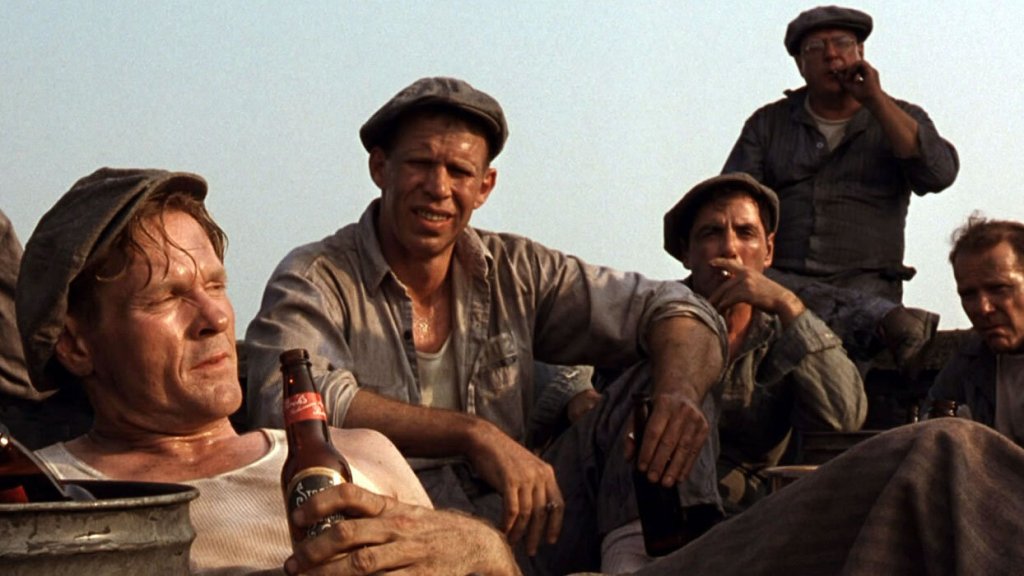
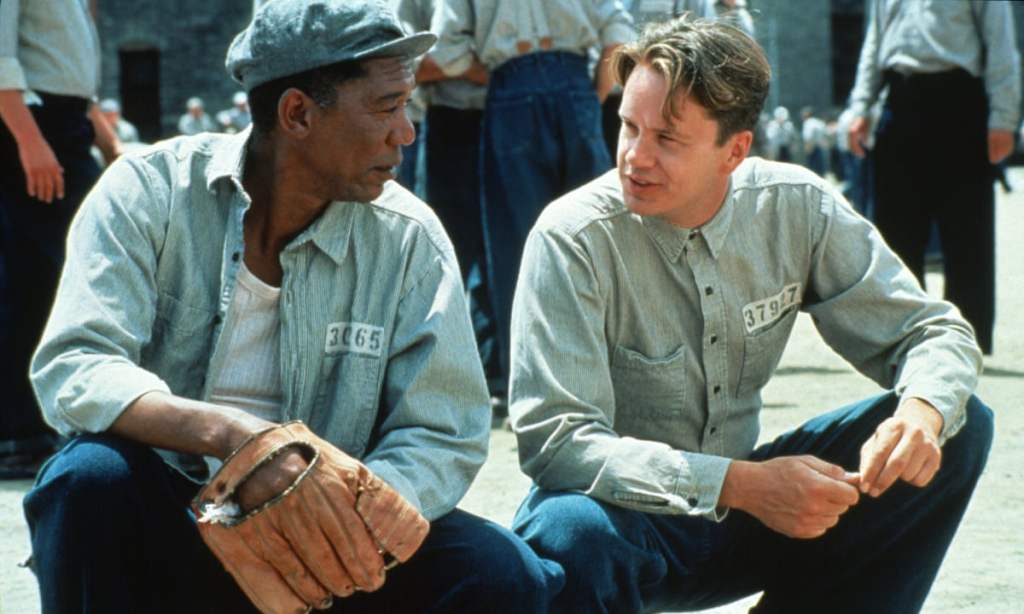
THE SHAWSHANK REDEMPTION (1994) – In honor of our son’s birthday, I review his favorite movie!


I sent our son a text the other day and asked him if he had an answer for the question “What’s your favorite movie?” I thought I knew the answer but it turns out I was only half right. I expected his answer to be THE HATEFUL EIGHT. Rather, the answer I received back was “The Hateful Eight or Shawshank Redemption!” Since I recently wrote about the time that he and I attended THE HATEFUL EIGHT roadshow in Dallas, I decided I would write about THE SHAWSHANK REDEMPTION this time around. It doesn’t hurt that it’s one of my favorite movies as well. It also doesn’t hurt that it’s the very top rated film on the Internet Movie Database.

Based on Stephen King’s “Rita Hayworth and Shawshank Redemption,” the story is well known… hot shot banker Andy Dufresne (Tim Robbins) is convicted of the murder of his wife and her lover, and gets sentenced to life at the Shawshank prison. Once on the inside, we meet a variety of characters that you expect in a prison movie. We meet Warden Norton (Bob Gunton), the hypocrite who speaks of the Bible while hiding a corrupt, evil spirit. We meet Captain Hadley (Clancy Brown), the brutal chief prison guard, who rules over the inmates with intimidation and a real willingness to inflict violence and pain on anyone who shows the least bit of independence. We meet Red (Morgan Freeman), the long-time inmate who has the ability and connections to get you anything you need. We meet other inmates like Heywood (William Sadler), the inmate who seems like a jerk when you first meet him but turns out to be a pretty good fella; Tommy (Gil Bellows), the young guy who comes into prison and may know something that proves Andy’s innocence; Brooks (James Whitmore), the old man who gets released after almost a lifetime in prison, and doesn’t know how to adjust to life on the outside; and Bogs (Mark Rolston), the sadistic prisoner who wants to force himself on Andy, and is willing to kill to get what he wants. Life isn’t easy at all in Shawshank, but Andy’s intelligence and ability to prove himself useful to Warden Norton and Captain Hadley allows him to finds ways to make life more bearable for him and his friends. After nineteen years in prison, even though he maintains his innocence, it appears that Andy is content to live out his remaining years in prison. Or is he??

I’ll never forget the first time I saw the movie THE SHAWSHANK REDEMPTION. I didn’t see it until a year or two after its initial release in 1994. I was one of those guys who figured a movie that praised by the critics was probably not something that I would like that much. Plus, at the time, the title of the movie just seemed kind of weird. But I kept hearing about how great it was, so I finally decided to give it a viewing. I agree with my son, I think THE SHAWSHANK REDEMPTION is one of the most emotionally uplifting movies ever made. Why is that you might ask? My answer would be because there’s something profoundly satisfying about people who persevere through the worst times imaginable and continue to find hope where most of us would be hopeless. Prison life is shown as horrific. One prisoner is literally beaten to death by Captain Hadley on his first night in prison for crying. Andy fights off the sadistic Bogs as much as he can, but he is unable to completely fight off his advances. But no matter what he goes through, Andy Dufresne is able keep moving forward, and he does not allow the prison life to completely crush his spirit. He keeps finding ways to persevere. Andy’s actions and endurance turn simple acts like listening to Mozart or having a beer into overwhelming emotional highs for us as the audience. The film also maintains a realistic sense of humor, which might seem difficult under the circumstances. This sense of humor is found in such mundane tasks as creating a prison library, providing tax prep services for the guards, or attending multiple parole hearings over the years. These comedic moments are earned by the way the movie takes it’s time letting us really get to the know the characters and then laugh with them as the individual moments occur. And the friendship between Andy and Red is something that deeply resonates with me. I think we all would like to have that kind of friendship. These kinds of friendships aren’t built overnight, and often they require a level of shared experience that is almost impossible to find. But they find it behind Shawshank’s prison walls, and it connects them for life. In my opinion, the friendship between these two characters leads to one of the most emotionally satisfying endings to any film, ever.

Director Frank Darabont was able to obtain some of career-defining performances from his cast. As good as Tim Robbins is as an actor, in my opinion, he has never been better than he was as Andy Dufresne. And I say this knowing full well he won an Oscar for MYSTIC RIVER. He maintains his dignity against all odds and only appears to break down a time or two. Morgan Freeman is great as always as Red, but his character is so important because we see him go from a hopeless skeptic, to a man who truly has hope thanks to his friendship with Andy. Freeman seems to handle this transition effortlessly. I’m going to give a shoutout to James Whitmore as well. With a career going all the way back to the 1940’s, his performance as Brooks Hatlen is one of the more touching and heartbreaking performances of the film. I haven’t seen all of his work, but I have never seen him better than he was in THE SHAWSHANK REDEMPTION. Each additional cast member, from Bob Gunton, Clancy Brown and Mark Rolston, to Willam Sadler and Gil Bellows all have powerful moments that add to the overall effect of the film.

Looking back now, it’s hard to believe that THE SHAWSHANK REDEMPTION did not win the Academy Award for best film. It lost to FORREST GUMP when the awards were handed out in 1995. It’s even harder to believe that the film did not win a single Academy Award even though it received seven nominations. But at the end of the day, that doesn’t really matter to me. I just know that it’s a great film, and it reaches emotional heights that very few movies, if any, have ever reached before. That’s a pretty damn good legacy.

#SundayShorts with THE HITCHER!


Since Sunday is a day of rest for a lot of people, I present #SundayShorts, a weekly mini review of a movie I’ve recently watched.

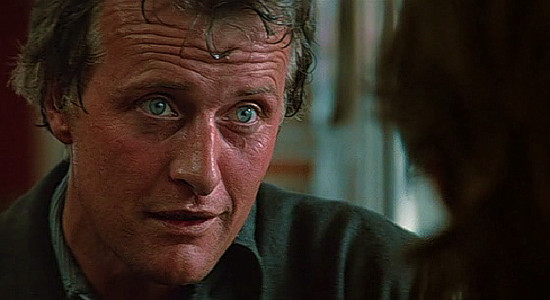
Jim Halsey (C. Thomas Howell) is driving a car across the country to San Diego. Tired and needing some help staying awake, he makes the major mistake of picking up a hitchhiker, the psychotic John Ryder (Rutger Hauer). Through a stroke of luck, he’s able to knock the “Hitcher” out of his car and keep going. Unfortunately, John Ryder isn’t content with being dumped by young Jim Halsey. Rather, he decides to stalk Jim and frame him for a cross-country murder spree.

I first saw THE HITCHER at a friend’s house when I was in the 4th grade. It scared the ever living crap out of me. I have never even pondered the possibility of picking up a hitchhiker because there’s always a chance that it could be a psycho like John Ryder. The genius of THE HITCHER is how it taps into the horror of everyday life. We pass by strangers every day. Who’s to know if there’s a John Ryder in our presence just waiting for us to invite them into our lives?! 

What can I say about Rutger Hauer as John Ryder?! He absolutely owns the film. There’s no wonder his roles in BLADE RUNNER and THE HITCHER would come to define his career. He was one of the great artists, and I’ve missed him ever since I learned of his death while I was sitting on the beach in Perdido Key, FL in 2019. C. Thomas Howell & Jennifer Jason Leigh are excellent as well. As a big-time Rutger Hauer fan, THE HITCHER is an intense film that I watch at least once a year. 

Five Fast Facts:

  1. C. Thomas Howell admitted that he was actually afraid of Rutger Hauer on and off the set because of Hauer’s general intensity.
  2. Writer, producer, and director Christopher Nolan (THE DARK KNIGHT, OPPENHEIMER) has listed THE HITCHER as one of his favorite movies.
  3. Entertainment Weekly ranked THE HITCHER as the nineteenth scariest movie of all time.
  4. Gene Davis, the psycho killer from Charles Bronson’s 10 TO MIDNIGHT plays Trooper Dodge in this movie. Based on my love of the Bronson Cannon classic, I love seeing Davis in any film. 
  5. President George W. Bush served on the board of the company that lent money to HBO to finance this movie. During the 2000 presidential election, Bush’s critics used his involvement in this film to discredit his stance on “family values” and his criticism of pervasive violence in Hollywood movies.

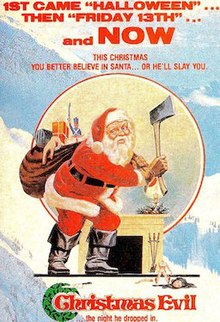
Holiday Film Review: Christmas Evil (dir by Lewis Jackson)


Poor Harry Stradling!

As played by Brandon Maggart in the 1980’s Christmas Evil, Harry is a poor guy who lives alone and spends his days thinking about Christmas.  When Harry was a child, he and his brother, Philip, had an argument about whether or not the Santa they saw in their living room was the real Santa or just their father dressed up as Santa.  Philip claimed that there was no Santa.  Harry insisted that there was.  Later, Harry snuck downstairs and caught his mother doing a lot more than just kissing Santa Claus.  It was enough of a trauma that, 33 years later, Harry is still obsessed with bringing Santa Claus to life.  While Philip (Jeffrey DeMunn) has started a family, Harry is an emotional stunted manchild.

Harry does a lot of creepy things in Christmas Evil, even before the film reaches it’s bizarre denouement.  He starts his day spying on the local children and making a list as to who has been nice and who has been sneaking an adult magazine into his bedroom.  There’s also the scene where he masturbates while secretly watching Philip and his wife.  That’s a bit …. yeah.  Eeek!  And yet, as creepy as Harry can be, it’s hard not to feel bad for him.  His love of Christmas and Santa is just so sincere and earnest.  He’s so obsessed with Christmas that he even has a managerial job at a local toy factory.  The toys are shoddy, his bosses are hypocrites, and his co-workers take advantage of him.  Harry has so many reasons to be miserable but he’s not.  His love for Christmas is the thing that keeps his life going and which gives him hope.

Eventually, Harry decides that maybe he could be the new Santa!  He puts on the beard.  He makes the costume.  He decorates his van with a picture of sleigh and, while he drives it, he gives orders to his imaginary reindeer.  He steals a bunch of toys and tosses them into a bag and, while its snows outside, he joyfully hands out the presents at a children’s hospital.  Later, when he gets dragged into a Christmas Party, he gives out even more toys.  He tells the kids to be good because if they’re bad …. ho ho ho!

Yay for Harry, right?  Well, the problem is that some people aren’t as happy to see Santa as the children are.  Some people make the mistake of mocking Harry, which leads to Harry using his toys to murder them.  Soon, the police are dragging in random Santas and forcing them take part in a lineup.  Meanwhile, Harry drives around town and continues his quest to become the new Santa!

And maybe …. just maybe, he does.  It all depends on how you interpret the ending.  The film’s director, Lewis Jackson, has officially said that most people are not correctly interpreting the ending but I don’t care.  Harry may be a murderer and a weirdo but, dammit, he’s just so earnest!  He deserves a happy ending!

Christmas Evil is often described as being a slasher film but it’s actually more of a character study.  Imagine Taxi Driver if Travis Bickle dressed up Santa.  Harry may be insane and dangerous but he still tries to do some good in the world and, in the end, he wins the hearts and support of the children.  Christmas Evil is an odd mix of mental squalor. gritty grindouse imagery, and holiday earnestness.  Christmas Evil was certainly not the only early 80s “slasher” film to focus more on the killer than his victims but, as opposed to Maniac and Don’t Go Into The House, it’s one of the few to generate some sympathy for its main character.  Everyone deserves a happy Christmas, even (or maybe that should be especially) Harry Stradling.

Film Review: Frances (dir by Graeme Clifford)


https://www.youtube.com/watch?v=eilqT7dLoBY

Frances Farmer is one of the more tragic figures to come out of Hollywood’s Golden Age.

A talented and beautiful actress, Frances Farmer came out to Hollywood in the 30s and quickly developed a reputation for being difficult.  She was politically outspoken at a time when stars were expected to either be apolitical or unquestioningly patriotic.  She criticized scripts.  She argued with directors and studio heads.  She had a well-publicized affair with communist playwright Clifford Odets and she also had numerous run-ins with the police.  Some say that she was alcoholic.  Some say that she was bipolar.  Some say that she had a mental collapse as the result of the pressure that her mother put on her to succeed.  Frances Farmer ended up in mental institution, where she was subjected to shock therapy.  After she was released, her film career was basically over, though she did end up hosting a local television program.  She died in 1970, reportedly alone and struggling to make ends meet.  In a posthumously published autobiography called Will There Ever Be A Morning?, she wrote that she was beaten, sexually abused, and eventually given a lobotomy while she was institutionalized.  Over the years, there’s been a lot of doubt about whether or not Farmer was actually lobotomized but there is no doubt that Farmer was a woman who was ultimately punished for being ahead of her time.  Frances Farmer refused to conform to the safe manufactured image that Hollywood prepared for her and, for that, she was nearly destroyed.

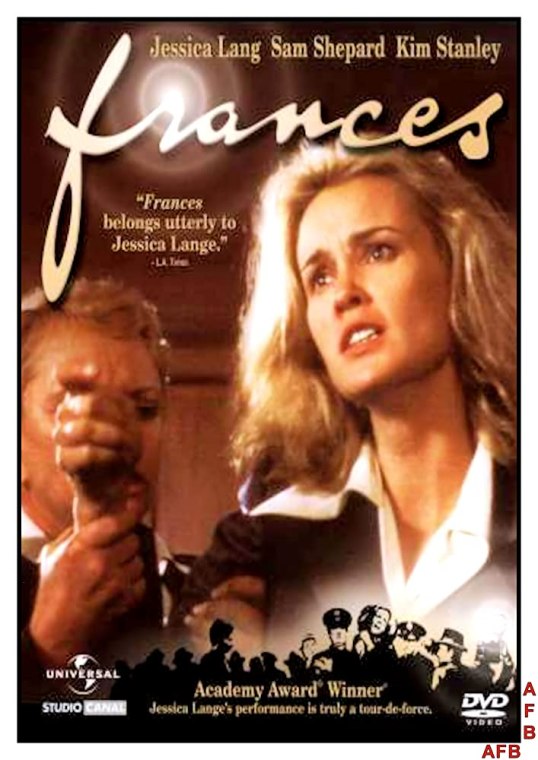
The 1983 film, Frances, is a biopic of Frances Farmer, starring Jessica Lange as Frances and Kim Stanley as her domineering mother.  It opens with Frances writing a school essay about why she’s an atheist and it ends with her smiling blankly at a television camera, her independent spirit broken by a lobotomy.  In between, we watch as Frances goes to Hollywood and has a self-destructive affair with Clifford Odets (played by Jeffrey DeMunn).  The infamous moment when Frances was dragged out of a courtroom while screaming at the judge is recreated and Frances’s time in the institution is depicted in Hellish detail.

We also learn about Frances’s relationship with a communist writer named Alvin York (Sam Shepard).  It seems like whenever Frances needs to be rescued or just needs someone to talk to, Alvin York pops up.  In fact, you could almost argue that York pops up too often.  Alvin York was a fictional character, one who was apparently created in order for audiences to have someone to relate to.  It’s unfortunate that the film felt that the audience would only be able to relate to Frances if it viewed her life through the eyes of a fictional character because York’s character is a bit of a distraction.  Sam Shepard does a good job of playing him and I certainly wasn’t shocked to learn that Sam Shepard and Jessica Lange were romantically involved during the filming of Frances (and for a long time afterwards) because Lange and Shepard do have a very real chemistry.  However, from a narrative point of view, Alvin York only works as a character if one accepts that he’s a figment of Frances’s imagination.  The film’s insistence that York is an actual person who just happens to show up at every important moment of Frances’s life just doesn’t work.

What does work is Jessica Lange’s performance.  Lange is amazing in the role of Frances, whether she’s playing Frances as a hopeful idealist, an out-of-control rebel, or, tragically, as a glass-eyed zombie who has been reduced to appearing on television and assuring audiences that her rebellious days are over.  Lange was nominated for Best Actress for Frances.  She lost to Meryl Streep for Sophie’s Choice.  I’ve seen Sophie’s Choice and Meryl was good but Jessica was better.

Frances was originally offered to David Lynch.  He turned the film down so he could work on Dune and instead, the film was directed by Graeme Clifford, who takes a far more straight-forward approach to the material than Lynch would have.  Still, Lynch’s interest in Frances Farmer would later lead to him working on stories that centered around a “woman in trouble.”  One of those stories became Twin Peaks.  Another would become Mulholland Drive.

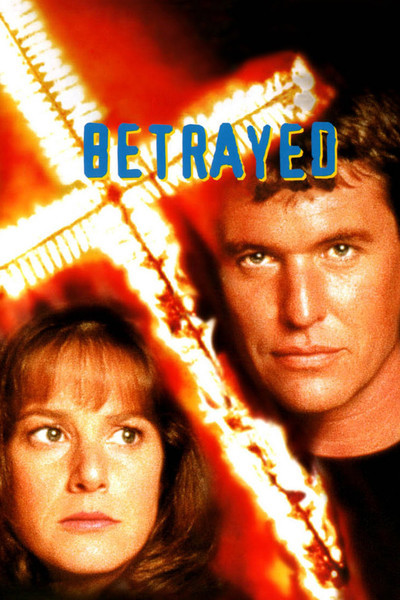
18 Days of Paranoia #11: Betrayed (dir by Costa-Gavras)


The 1988 film, Betrayed, starts out on a strong note but then quickly becomes annoying as Hell.

It opens with shots of a radio talk show host, an outspoken liberal named Sam Kraus (Richard Libertini).  Kraus berates his callers.  Kraus ridicules anyone who is to the left of Bernie Sanders.  When a man with a rural-accent calls in and attacks Karus for being Jewish, Kraus calls the man an idiot.  After he gets off the air, Kraus walks through a parking garage and stops in front of his car.  Another car pulls up beside Kraus and suddenly, a masked man with a gun opens fire on Kraus, killing him.  The gunman gets out of the car and spray paints, “ZOG” on Kraus’s car before then fleeing the garage.

(ZOG stands for Zionist Occupational Government.  It’s a term used by the type of anti-Semitic dipshits who thinks that the Protocols of Elder Zion are real.)

From this shockingly brutal opening, we cut to panoramic shots of beautiful farmland and crops being harvested in the American midwest, the heartland.  Gary Simmons (Tom Berenger) owns a farm.  He’s a Vietnam vet who nearly received the medal of honor.  He lives with his mother and he has two children.  (He’s divorced and his ex-wife died as the result of a mysterious hit-and-run in California.)  Almost everyone in his small hometown seems to worship Gary.  They’re certainly curious about his new girlfriend, Katie Phillips (Debra Winger).

And really, they probably should be.  Katie Phillips isn’t Katie Phillips at all.  She’s actually an FBI agent named Cathy Weaver and she’s been sent undercover to investigate whether or not Gary was involved in the murder of Kraus.  Cathy, who comes from a broken family and who we’re told has always been seeking some sort of deeper meaning in her life, is charmed by both Gary and his family.  In fact, she falls in love with Gary.  She tells her superior, Mike Carnes (John Heard), that there’s no way Gary is dangerous.  Mike doesn’t believe her but, of course, Mike has a personal stake in this because he and Cathy used to be romantically involved.

(That’s right, everyone.  Betrayed is so narratively lazy that it resorts to making Mike a scorned lover, even though the film’s plot would have worked just as well if he wasn’t.)

As I said, the first part of the movie works.  Debra Wingers gives a strong performance and Tom Berenger is a charming roughneck.  For the first half-hour or so, the film does a good job of showing why men like Gary and his friends are susceptible to conspiracy theories and why they feel that the entire world is stacked against them.  You can understand why Cathy is so troubled by her assignment because Gary’s friends are hardly master criminals.  For the most part, they’re farmers who feel like their entire way of life has been taken away from them.

Unfortunately, almost immediately after Mike refuses to allow her to end her investigation, Cathy returns to the farm and sleeps with Gary.  Not only is this a plot development a disservice to everything that has previously been established about Cathy as a character but it also marks the point where the movie entirely falls apart.  Immediately after sleeping with Cathy, Gary suddenly goes from being a complex but troubled character to being a cartoonish super villain.  And listen — we’ve all been there.  You meet a guy.  He’s handsome.  He says all the right things.  He seems like he’s sensitive.  He makes you feel safe.  You let down your defenses for one night and the next morning, he’s yelling at you for wearing a short skirt in public.  It happens.  Of course, in Gary’s case, it means that he’s not only criticizing the way that Cathy dresses but he’s also taking her on a hunt where the prey is terrified person of color who Gary and his friends have kidnapped.  It also means that Gary drags Cathy along on a bank robbery and then expects her to join him when he wants to assassinate a presidential candidate.  Even after all that, Cathy remains conflicted about what to do with Gary.  The problem is that it’s not like Gary’s a guy who needs sensitivity training or who spends too much time watching ESPN.  Gary is a guy who is carting around weapons and talking about how he wants to kill “mud people.”  That Cathy still has mixed emotions after all of that goes against everything that the film previously asked us to believe about her.  Gary becomes too cartoonish to be plausible and, as a result, he drags down Cathy’s character as well.

Unfortunately, as the film’s narrative falls apart, so do the majority of the performances.  While Debra Winger struggles to make her character’s motivations plausible, Tom Berenger is reduced to doing a lot of glaring.  (Poor John Heard spends most of the movie shouting and bugging his eyes.)  About the only actor who comes out Betrayed unscathed is John Mahoney, who plays Shorty.  Shorty is one of Gary’s friends.  He’s a friendly and personable guy who seems to sincerely care about everyone and who has a charmingly gentle smile.  He’s also a total racist and the contrast between Shorty’s amiable nature and his hateful thoughts provide the latter half of Betrayed with its only powerful moments.  Mahoney gets one big scene, where he talks to Cathy about how much he hates violence but, at the same time, he feels that the world has left him no other choice.  Mahoney does a great job with his small role.  It’s unfortunate that the rest of Betrayed couldn’t live up to his performance.

Other Entries In The 18 Days Of Paranoia:

  1. The Flight That Disappeared
  2. The Humanity Bureau
  3. The Private Files of J. Edgar Hoover
  4. The Falcon and the Snowman
  5. New World Order
  6. Scandal Sheet
  7. Cuban Rebel Girls
  8. The French Connection II
  9. Blunt: The Fourth Man 
  10. The Quiller Memorandum

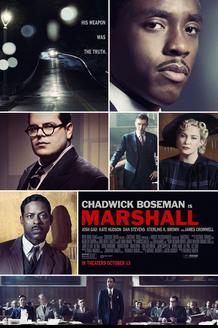
Playing Catch-Up With The Films of 2017: Marshall (dir by Reginald Hudlin)


So, here I am.  January is nearly over.  The Oscar nominations have already been announced.  2018 is well under way and yet, I still have 158 films on the DVR that I need to watch and a few 2017 releases that I still need to catch up on.  At this point, I’ve accepted that I’ll probably never truly be “caught up” when it comes to watching movies.  But, that’s okay.  I love movies too much to ever regret having an excuse to watch more.

On Wednesday night, I watched Marshall, which came out last October.  A film about the early life of civil rights activist and future Supreme Court justice Thurgood Marshall, Marshall seemed like a movie that would perfectly capitalize on the current political atmosphere.  The film starred Josh Gad and Chadwick Boseman and a lot of people — including me — assumed that the excitement over Boseman as Black Panther would also translate into excitement over a chance to see him in this film.  (For that matter, Josh Gad has also recently been proving himself to be a far better actor than I originally believed him to be.  Never again will I refer to Gad as being the poor man’s Jonah Hill.)  The film’s reviews were respectable.  Quite a few sites, including this one, listed Marshall as being a potential Oscar nominee.

And yet, when the movie was released, it fell flat at the box office.  On the week of its release, it finished in 11th place.  I guess there’s a lot of reasons for that.  Personally, I think it would have done better if the film had been released in November or December.  In a month that is traditionally dominated by horror movies and the last gasps of a few summer blockbusters, Marshall seemed somewhat out-of-place.  Perhaps Marshall would have stood a better chance if it had been given a limited release in December, with a big awards push for Chadwick Boseman.  Who knows?  As it is, it ended up losing money and it only received one Oscar nomination, for best original song.

Having now watched Marshall, I can say it’s a good movie, though perhaps never quite as good as you want it to be.  It takes place in 1940.  After making a name for himself defending blacks in the South, attorney Thurgood Marshall travels to Connecticut to defend a black chauffeur (Sterling K. Brown) who has been accused of raping a white woman (Kate Hudson).  It soon becomes obvious that Northern justice is just as corrupted by bigotry as Southern justice.  A racist judge (James Cromwell) rules that Marshall will not be allowed to even speak in court.  Marshall ends up advising the chauffeur’s attorney, an insurance lawyer named Sam Friedman (Josh Gad).  All of Sam’s friends expect him to just make a deal with the smug prosecutor (Dan Stevens) and move on.  However, Sam believe his client to be not guilty and, with Marshall’s help, is determined to win an acquittal.

Director Reginald Hudlin never seems to be quite what type of movie he’s trying to make.  Sometimes, the film feels like a reverent biopic.  Other time, it’s an old-fashioned courtroom drama, complete with different flashbacks depending on who is doing the testifying.  And then other times, Marshall is an extremely stylish film that almost turns Thurgood Marshall into a comic book super hero.  Fortunately, Chadwick Boseman is such a talented and charismatic actor that he holds all of the disparate elements of the film together.  Not only does Boseman bring intelligence and righteous anger to the role, he also brings a sense of fun.  As played by Boseman, Marshall isn’t just outsmarting a prejudiced system and putting racists in their place.  He’s also having a good time while he’s doing it.  Boseman is a lot of fun to watch and he gets good support from Josh Gad and Sterling K. Brown.

Marshall may not be a perfect film but Chadwick Boseman is always watchable.  The excitement over Black Panther has proven that Boseman is a star but Marshall shows that he’s a pretty good actor as well.

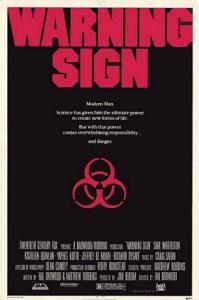
A Movie A Day #166: Warning Sign (1985, directed by Hal Barwood)


The world might end, again.

There is a laboratory in the middle of the desert.  While everyone thinks that the lab is developing pesticides, it is actually a secret government facility where the scientists have developed a chemical that will turn anyone exposed to it into a homicidal maniac.  While the scientists are celebrating the success of their project, Dr. Tom Schmidt (G.W. Bailey — yes, Captain Harris from the Police Academy movies) steps on a vial and releases the chemical.  The lab locks down and the army (led by Yaphet Kotto) arrives.  The government wants to let the scientists kill each other off but a pregnant security guard (Kathleen Quinlan) is also trapped in the lab and her husband, the county sheriff (Sam Waterston), is determined to get her out.

Warning Sign was blandly directed by Hal Barwood, a longtime associate of both George Lucas and Steven Spielberg.  (Barwood wrote the script for Spielberg’s The Sugarland Express and designed the title sequence for Lucas’s THX 1138.)  Barwood tried to take a very Spielbergian approach to Warning Sign, a mistake because successfully imitating Spielberg is easier said than done.  Replace the shark with germs and the ocean with a lab on lock down and Warning Sign is  like Jaws, without any of the suspense or humor.  Sam Waterston’s germaphobic sheriff feels like a knock off of Roy Scheider’s aquaphobic police chief while Jeffrey DeMunn, as an alcoholic scientist, stands in for both Richard Dreyfuss and Robert Shaw.    With the violence and the gore kept to a minimum, this is one of the most tasteful zombie films ever made.  Just compare it to George Romero’s The Crazies (or even the remake) to see how needlessly safe Warning Sign is.

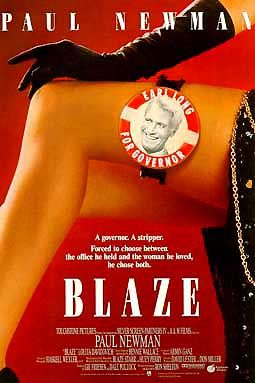
Shattered Politics #52: Blaze (dir by Ron Shelton)


Blaze_imp

Oh those crazy Southern politicians!

As I’ve mentioned in a few other reviews, filmmakers have always loved to make movies about the crazy demagogues that we have historically tended to elect down here in the South.  Sometimes, those movies are serious and thought-provoking, like All The King’s Men.  And sometimes, like in Hold That Co-Ed, a film will attempt to play up the inherent humor in rabble rousing.  And then you’ve got films like Ada and Hurry Sundown, which are so melodramatic that those of us down South just have to shake our heads in amazement that people up North actually believe this stuff.

The 1989 film Blaze (which is currently making the rounds on cable) is a part of this cinematic tradition of films about flamboyant Southern politicians.  It’s part comedy and part melodrama and, perhaps not surprisingly, it takes place in 1950s Louisiana.

(Why isn’t that surprising? Listen, my family used to live in Louisiana.  I still visit Louisiana on a fairly regularly basis.  Louisiana is crazy.  That’s one reason why I love it.)

Blaze is based on the true story of Gov. Earl K. Long (played here by Paul Newman).  The younger brother of former Governor Huey P. Long (who himself served as the basis for the character of Willie Stark in All The King’s Men), Earl served as governor for three non-consecutive terms.  He was a flamboyant populist, in the style of his older brother, the type who campaigned as one of the “common” people and who was either extremely corrupt or extremely progressive, depending on which historian you happen to be reading.

In Blaze, Earl is nearing the end of his third term.  Because the state’s constitution does not allow a governor to succeed himself, Earl is currently campaigning for lieutenant governor, with the plan being that one of Earl’s allies will be elected governor and will then resign so that Earl can succeed him.  While this is traditionally the sort of thing that voters in Louisiana would love, Earl is struggling because some voters are angry over his support for the civil rights movement.

Earl is also struggling because he’s just met Blaze Starr (Lolita Davidovich), a much younger stripper from West Virginia.  For Earl, it’s love at first sight and soon, Blaze feels the same way.  Soon, she and Earl are going across the state together.  However, after Earl’s opponents arrange for him to be sent to a mental asylum, Blaze is forced to consider that she might be too big of a political liability to remain with the man she loves.

If that all sounds incredibly romanticized — well, it is.  After I watched Blaze, I did a little bit research on Earl and Blaze.  To say the film is fictionalized would be an understatement.  (Though, interestingly enough, Earl actually was sent to a mental asylum while serving as governor.)  But is that really a surprise?  Would audiences rather watch a movie about a corrupt, old racist who regularly cheated on his wife or would they rather watch a romanticized love story with hissable villains and moments of crowd-pleasing comedy?

As for the film itself, it’s okay.  It moves a bit too slowly for its own good and it’s never quite as enthralling as you might hope it would be, but both Paul Newman and Lolita Davidovich are well-cast and have a likable chemistry.  I related to the film’s version of Blaze Starr, mostly because we’re both redheads with big boobs who have a natural distrust of authority figures.  If you’re into Southern politics and you’re not obsessed with historical accuracy, you might enjoy Blaze.

http://www.youtube.com/watch?v=dyK-cD5ffPo