Retro Television Review: 3 By Cheever 1.2 “O Youth And Beauty!” (dir by Jeff Bleckner)


Welcome to Retro Television Reviews, a feature where we review some of our favorite and least favorite shows of the past!  On Saturdays, I will be reviewing 3 By Cheever, which ran on PBS in 1979.  The entire show can be purchased on Prime and found on YouTube.
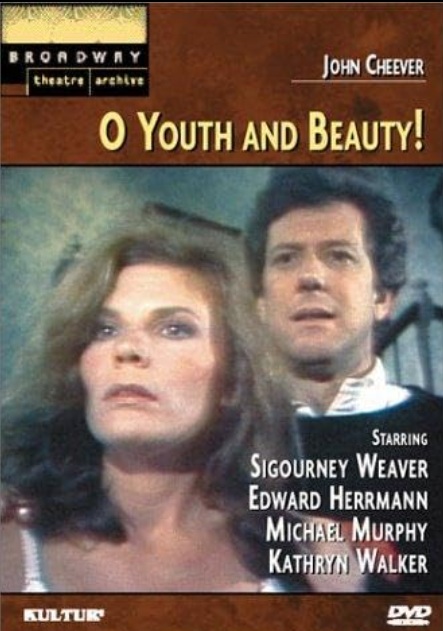
Episode 1.2 “O Youth and Beauty!”

(Dir by Jeff Bleckner, originally aired on October 31st, 1979)

Back in the day, Cash Bentley (Michael Murphy) was an athletic marvel.  He was a track star who could jump the hurdles with ease and who everyone in high school looked up to.  Now, however, he’s 40 years old and he feels lost.  He’s aging and a new generation of young people have come along.  They certainly have no idea who Cash Bentley used to be.

At drunken neighborhood parties, Cash insists on recreating his youth by having his hosts set up their furniture like an obstacle course.  Giving them a starter’s pistol that he insists be fired to signify the start of the race, Cash will run through the house, jumping over chairs and couches and tables while everyone cheers.  Unfortunately, Cash’s luck runs out and he ends up breaking his leg during one of his demonstrations.

Forced to get around on crutches, Cash feels isolated from the rest of the world.  He doesn’t get a promotion because his bosses say they need someone who can start traveling immediately.  When all of his neighbors get on the train that is heading into the city at the usual morning time, a hobbled Cash arrives late and is forced to wait alone for the next one.  His wife, Louise (Kathryn Walker), gets a job working at a boutique to help pay the bills.  She says that maybe she’ll make enough that they’ll be able to take a vacation.  At the neighborhood parties, no one wants to deal with Cash and his broken leg.  His athleticism was all he had left.  It was what he was known for.  It was the source of all his confidence.  Now that he doesn’t have that, he’s lost.

Eventually, his legs comes out of the cast and he insists that Louise set up all the furniture in the house so that he can run another obstacle race.  He gives Louise the starter’s pistol and insists that she fire it when it’s time for him to start.  The scene cuts to the outside of their suburban home.  The sound of one gunshot upsets the calm.  Later, Louise and her children are seen moving out of the house.  Cash is nowhere to be seen.

The episode ends ambiguously.  Those who are familiar with the original John Cheever short story know that Louise shot Cash and that no one was sure whether she meant to do it or not.  The movie cuts away before the gun is actually fired.  For all we know, Cash did the obstacle course and then just never returned home.

O Youth and Beauty is one of John Cheever’s most acclaimed short stories.  The screen adaptation features an excellent performance from Kathryn Walker but the scenes of Cash running the furniture obstacle course are probably something that worked better on the page and in the reader’s imagination than when actually presented on film.  Michael Murphy is almost too confident and handsome as Cash.  The role calls for a former jock slowly going to seed and desperately trying to hold onto his youth whereas Murphy looks like he’s still in peak athletic form.  Murphy does a good job portraying Cash’s depression and his alienation after he breaks his leg but, physically, he still seems miscast in the role.

Edward Herrmann and Sigourney Weaver, who were the center of last week’s episode, make a brief appearance in this one, hovering in the background of the neighborhood’s endless parties.

Next week, we finish up 3 By Cheever.
Retro Television Review: Welcome Back, Kotter 3.22 “What Goes Up”


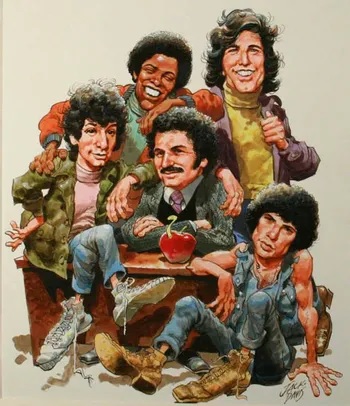
Welcome to Retro Television Reviews, a feature where we review some of our favorite and least favorite shows of the past!  On Saturdays, I will be reviewing Welcome Back Kotter, which ran on ABC  from 1975 to 1979.  The entire show is currently streaming on Tubi!

This week, Freddie gets hooked on pills!

Episode 3.22 “What Goes Up”

(Dir by Jeff Bleckner, originally aired on February 9th, 1978)

At the new, big, how-does-he-afford-that-on-a-teacher’s-salary apartment, Gabe tries to avoid taking out the trash by telling Julie a joke about his Uncle George.  Julia tells Gabe to shut up and take out the damn trash.

Meanwhile, at school, Freddie has a problem.  After injuring his knee while playing basketball, Freddie is given a prescription for pain killers.  But the pain killers leave him feeling groggy so he also starts taking pills to give him energy.  The other Sweathogs are concerned.  Freddie insists that he’s just taking vitamins.  Horshack insists that Freddie would never lie to him.  If Freddie says that the pills that he’s buying in the bathroom and carrying around in his shoe are harmless vitamins than Freddie is telling the truth!

Woodman, however, is concerned.  He tells Kotter that Freddie entered the cafeteria, took off his shoes, and said, “Ho ho ho, I’m the Jolly Black Giant.”  “Is he on the dope!?” Woodman demands to know.

Epstein and Barbarino decide that the best way to handle this problem is to act like they’re on drugs as well so that Freddie can see how dumb he looks.  Epstein tries to act spacey.  Vinnie walks around hunched over and repeating, “Give me drugs …. give me drugs …. give me drugs….”  Freddie doesn’t buy it for a second but then …. what’s going on with Horshack!?  Horshack explains that he took some of Freddie’s special vitamins and then he tries to jump out of the classroom window!

(What the Hell was in those pills?  I pretty much take the same thing for my ADHD and I have never been tempted to jump out a window.)

That’s all it takes for Freddie to realize that it’s time to stop taking the pills.  Gabe encourages him to flush them down the school’s toilet and Freddie agrees to do while the studio audience watches in reverent silence.

Back at the apartment, Gabe tells Julie a joke about his Uncle Luther.  Julie does not care.

It’s hard to know where to begin with this episode.  On the one hand, Lawrence Hilton-Jacobs was often underused by the show so it’s always nice when he gets a chance to show off the fact that he was one of the better actors on the show.  That said, the show’s portrayal of drug use was so cartoonish that it ultimately kind of made being a speed freak look kind of fun.  If nothing else, this show left me wondering how a bunch of teenagers in the late 70s could be so naive about drugs.

Of course, if Barbarino had been the one who nearly died, I imagine the audience would have been more upset.  If Epstein had gotten hooked due to Freddie’s lies, it could have led to some drama.  But Horshack?  Eh, who cares?  When the show first started, Ron Pallilo was often given an opportunity to show that there was some hidden depths underneath Horshack’s eccentricity.  But, by the time the third season rolled around, Horshack had become such a cartoonish character that it’s impossible to take anything involving him seriously.

To give credit where credit is due, John Travolta made me laugh with his delivery of “Give me drugs …. give me drugs….”  Travolta appeared to be having a lot of fun in this episode, perhaps because he knew he wouldn’t be on the show much longer.

Anyway, for someone who couldn’t go an hour without popping a pill, Freddie got over his addiction pretty quickly.  That’s good because next week, Vinnie is going to have to deal with the death of one of his teachers and Freddie’s going to have to be there for him.  As for Horshack, this episode ends with him being taken to the school nurse but I assume he’ll eventually make a full recovery as as well.  It takes more than pills to keep the Sweathogs down.

Favorite Son (1988, directed by Jeff Bleckner)


During a reception on the steps of U.S. Capitol, an assassin kills Contra leader Col. Martinez (Geno Silva) and seriously wounds Sen. Terry Fallon (Harry Hamlin), an up-and-coming politician from Texas.  An eager media catapults Fallon to national stardom and the beleagued President (James Whitmore), who is facing a tough reelection bid, is pressured to replace the current vice president (Mitchell Ryan) with Fallon.

The FBI only assigns two of their agents to investigate the assassination, a sure sign that someone wants the investigation to just go away.  Nick Mancuso (Robert Loggia) is a crusty, hard-drinking veteran agent whose career is nearly at an end.  David Ross (Lance Guest) is his young and idealistic partner.  When Mancuso and Ross discover that Martinez was injected with the HIV virus just two days before the assassination, it becomes obvious that there is a bigger conspiracy afoot.  It all links back to Sally Crain (Linda Kozlowski), who is Fallon’s legislative aide and also his lover.  (Fallon has a wife but she’s locked away in a hospital.)  Sally has an interest in bondage, as Ross soon finds out.

Favorite Son was originally aired as a 3-night, 4 and a half-hour miniseries.  It was later reedited and, with a running time of less than two hours, released theatrically overseas as Target: Favorite Son.  As a miniseries, Favorite Son is an exciting conspiracy-themed film that is full of scheming, plotting, interesting performances, and pungent dialogue.  Target: Favorite Son, on the other hand, is disjointed and, unless you know the original’s plot, almost impossible to follow.  If you’re going to watch Favorite Son, make sure you see the original miniseries.  My mom taped it off of NBC when it originally aired.  That was the only way that I was able to originally see the film the way that it meant to be seen.  The entire miniseries has also been uploaded, in three parts, to YouTube.

Hopefully, the original miniseries will get an official release someday because it’s pretty damn entertaining.  Harry Hamlin isn’t really dynamic enough for the role of Fallon but otherwise, the movie is perfectly cast.  Robert Loggia is so perfect for the role of Nick Mancuso that it almost seems as if the character was written for him.  (Loggia did later star in a one-season drama called Mancuso, FBI.)  Linda Kozlowski seems to be destined to be forever known as Crocodile Dundee’s wife but her performance as Sally shows that she was a better actress than she was given credit for.  The supporting cast also features good performances from Jason Alexander, Ronny Cox, Tony Goldwyn, John Mahoney, Kenneth McMillian, Richard Bradford, and Jon Cypher.

Favorite Son may be over 30 years old but it’s still relevant today.  In the third part, John Mahoney gives a speech about how American voters are often willfully ignorant when it comes to what’s going on behind the scenes in Washington and it’s a killer moment.  Melodramatic as Favorite Son may be, with its portrayal of political chicanery and an exploitative national media, it’s still got something to say that’s worth hearing.


Film Review: White Water Summer (dir by Jeff Bleckner)


wws-02

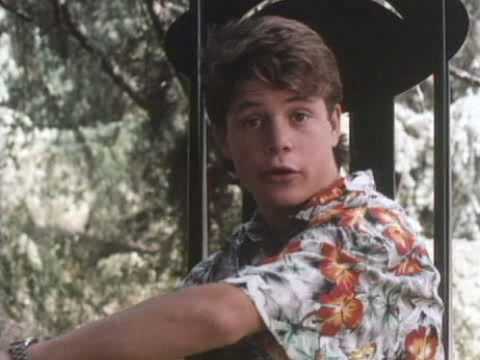
White Water Summer is a weird movie that was made in either 1985 or 1987 (more on that in a minute.)  It stars a youngish Kevin Bacon and a very young Sean Astin.  It starts out as a comedy and then it turns into a tribute to male bonding bullshit and then it’s a comedy again and then it’s a thriller and then it’s back to the male bonding as Kevin and Sean go camping together and then it’s a thriller and then Sean Astin has to cross a rickety bridge and the whole movie turns into Lord of the Rings.  And then Kevin Bacon starts singing and you’re like, “Oh my God, this is a musical too!”  And then suddenly, Kevin Bacon starts acting all crazy-like and it’s a thriller again.  But then Kevin breaks his leg and it’s up to Sean Astin to save his life, despite the fact that Kevin appeared to be attempting to kill all the campers just a few minutes earlier.  So, I guess that would count as more male bonding BS.

(One great thing about being a girl is that I’ve never had to prove myself by going camping.  Or, for that matter, killing a wild boar while armed only with a sharpened stick.  Seriously, I imagine that would be difficult and messy!  BLEH!)

Another reason why White Water Summer is a weird movie is because it’s on TV like every other week.  According to what I’ve read online, White Water Summer was not even released into theaters.  (Even stranger, I have yet to find a single interview where Kevin Bacon even acknowledges that this film exists and that’s saying something when you consider that Kevin has never been shy about mentioning how many bad films he’s appeared in.  Kevin regularly talks about Quicksilver, for fug’s sake!)  And yet somehow, this film that nobody appears to have wanted has achieved an odd sort of basic cable immortality.

And that immortality is why I’m taking the time to review this movie.  Because, seriously, White Water Summer seems to show up on TV even more than The Shawshank Redemption or reruns of Cops!  That’s a lot!

Anyway, as for the film itself, it’s basically a celebration of male bonding bullshit.  Alan (Sean Astin) is a sheltered kid from New York.  He’s into astronomy and plays chess.  To toughen him up, his parents arrange for Alan to go on a camping trip with Vic (Kevin Bacon), this ultra intense guide who talks in zen riddles and occasionally dangles people over the edge of a mountain.  Alan doesn’t want to go and, at first, he struggles to get along with the other three boys on the hike.

However, soon all of the boys have a common bond.  They all fear (and yet, because this is male bonding bullshit, strangely respect) Vic, who apparently is a bit of authoritarian.  Vic is determined to make them into men and his techniques including forcing them to cross a rickety bridge, forcing them to fish by hand, forcing them to carry a canoe across a hill, and finally abandoning them for a night in the middle of the wilderness.  At one point, when Alan ends up falling off a mountain and finds himself dangling in mid-air at the end of a rope.  Vic refuses to help him.  Instead, Alan must find his own way to get back on the mountain. Alan manages to do just that but seriously, what the Hell is Vic thinking?  At times, the movie suggests that Vic is a sociopath and then, at other times, it suggests that his methods are actually working.  After all, by the end of the summer, Alan is a lot more confident and he also knows how catch fish.

And really, that’s what makes this movie so strange.  It has no idea who Vic is supposed to be and, as a result, the film doesn’t know if it’s a comedy, a thriller, or a coming-of-age adventure movie.  Towards the end of the movie, Vic finally goes too far and gets smacked in the face with an oar.  This leads to Vic breaking his leg and suddenly, it’s up to Alan to save Vic’s life.  In order to do so, Alan has to call on a combination of his own intelligence and the survival skills that he learned from Vic.  So, that would seem to suggest that the movie is partially pro-Vic but, if that’s the case, why was Vic also portrayed as being somewhat psychotic?  Is this film pro-psychopath or is it just anti-Alan?  It’s hard to tell.

Making things even stranger is Alan’s narration.  In between scenes of camping, hiking, and attacking, we get these weird little vignettes of a slightly older Sean Astin speaking directly to the audience.  (According to the imdb, the camping scenes were filmed in 1985 while Astin’s narration was filmed in 1987.)  Narrator Alan is snarky and sarcastic, which would suggest that he doesn’t feel that he learned anything of value from the whole experience.  So does older Alan regret saving Vic’s life?  Does he still resent the fact that his parents forced him to go on the hike?  Or is he just trying to impress us with attitude?  Again, it’s hard to tell exactly what the film was trying to accomplish.

WWS

Watching White Water Summer, it’s obvious that, in 1985, there were difficulties that probably left the film incomplete.  Astin’s 1987 narration was obviously tacked on in a desperate attempt to try to save the movie.  To be perfectly honest, it’s fascinating to witness how haphazardly this film was put together.  One of the pleasures of White Water Summer is watching this oddly edited film and trying to figure out what exactly happened.

Anyway, I’ve never been into the whole camping or hiking thing and, after watching White Water Summer, I have no regrets.*  And yet, this is another one of those films that I do think that everyone should watch at least once, just because the movie itself is so weird.

Add to that, it’s on TV all the time!

—–

* Now Wild, that’s a great hiking film!