Retro Television Review: The Love Boat 5.12 “Take a Letter, Vicki/The Floating Bridge Game/The Joy of Celibacy”


Welcome to Retro Television Reviews, a feature where we review some of our favorite and least favorite shows of the past!  On Wednesdays, I will be reviewing the original Love Boat, which aired on ABC from 1977 to 1986!  The series can be streamed on Paramount Plus!
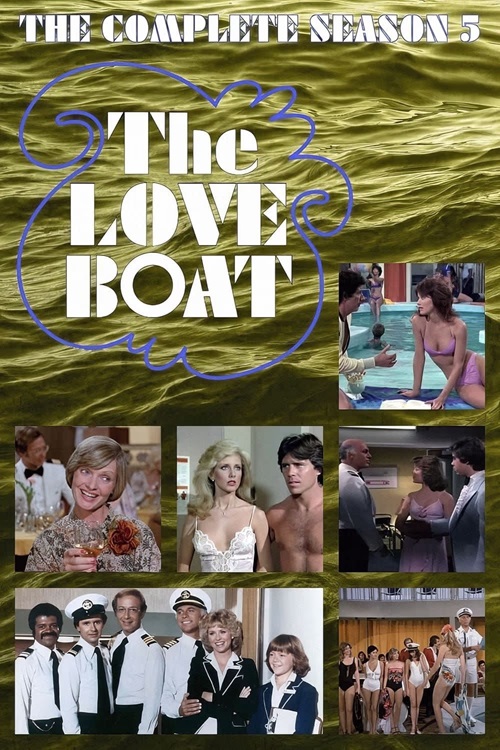
Set sail for adventure, your mind on a new romance….

Episode 5.12 “Take a Letter, Vicki/The Floating Bridge Game/The Joy of Celibacy”

(Dir by Richard Kinon, originally aired on December 12th, 1981)

Captain Stubing notices that Vicki seems to be depressed.  He asks his crew if they have any idea what’s wrong with her.

Actually, he could have just asked me.  Why is Vicki depressed?  Maybe it’s because she’s a teenage girl who spends all of her time on a boat surrounded by people who are all at least twenty to thirty years older than her?  Maybe it’s because she doesn’t have any friends her own age?   Maybe it’s because Julie’s now too coked up to be the surrogate mother figure that she was during the previous two seasons?  Seriously, there’s a lot reasons why Vicki might be depressed but they all have on solution.  Let Vicki go to school on the mainland and allow her to have some friends her own age!

The crew, however, thinks that the Captain should just hire Vicki to be his secretary.  Stubing agrees.  Vicki is happy to have a job and she immediately does the exact same thing that I would do under those circumstances.  She rearranges the captain’s entire office.  The Captain can’t find anything but personally, I think his office does look better once everything has been straightened up.  A messy office leads to a messy mind and, on a cruise ship, a messy mind can lead to a collision with an ice berg.

Vicki then issues a cheerful memo, telling all the members of the crew that they should give the Captain a daily run-down of their plans for the day.  Again, I think that makes total sense.  The crew, however, is outraged.  The Captain is worried that Vicki is taking her position too seriously but he doesn’t know how to fire her.  (When did Captain Stubing become a wimp?  This is a weird episode.)  The crew decides to give Vicki so much work that she’ll quite out of frustration but they discover that Vicki is determined to do a good job.  No one knows what to do….

LET HER HAVE FRIENDS HER OWN AGE AND A NORMAL LIFE!  THAT’S THE ONLY THING YOU HAVE TO DO!

Anyway, the overworked Vicki eventually falls asleep on the job.  The Captain uses that as an excuse to fire her.  Vicki smiles because she didn’t really enjoy the job in the first place.  Usually, the relationship between the Captain and Vicki is one of the better elements of The Love Boat but this episode left me feeling really bad for Vicki.  She’s really missing out on the best years of her life.

As for the other two stories, neither was very interesting.  A bridge club made up of four widows takes the cruise and are shocked when one of them (played by Nanette Fabray) decides she would rather spend time with a handsome dentist (Robert Alda) than play bridge.  My question here is why would you spend money to play bridge on a cruise while you could just play at home for free.  If you’re on a cruise, enjoy the scenery!  Don’t just play bridge.  Meanwhile, Barry Styles (Jim Trent) pretended to be a big believer in celibacy in order to get “ice queen” Linda Trent (Carlee Watkins) to fall for him.  Doc and Gopher made a bet on whether or not he would be successful.  DOC!  GOPHER!  You two know you’re better than that!

This week’s cruise was just sad.  The bridge club wasted a lot of money.  Linda was the center of a misogynistic bet.  Vicki is still going to be lonely and depressed next week.  What a sad trip on The Love Boat.

Retro Television Reviews: Blood Sport (dir by Jerrold Freedman)


Welcome to Retro Television Reviews, a feature where we review some of our favorite and least favorite shows of the past!  On Sundays, I will be reviewing the made-for-television movies that used to be a primetime mainstay.  Today’s film is 1973’s Blood Sport!  It  can be viewed on YouTube.

David Birdsong (played by Gary Busey, who was 29 at the time) is a high school senior with a potentially bright future ahead of him.  He’s the quarterback of his high school’s football team and it looks like he’s on the verge of leading his team to an undefeated season.  He’s getting recruited by all the big schools.  Scouts are coming to his games to watch him play.  He also has one of the highest GPAs at his school, though it’s suggested that might have more to do with his importance to the football team than his actual study skills.

“Don’t you have anything else you want to do with your life?” his high school principal (David Doyle) asks him and David’s reaction indicates that he’s never really given it much thought.  From the time he was born, David’s father, Dwayne (Ben Johnson), has been shaping his son to become a star athlete.  Dwayne is happiest when he’s watching David play, whether on the field or in the highlight reels that he keeps down in the basement.  When Dwayne sees that his son isn’t on the field, he’s the type of father who will get out of the stands and argue with the coach on the sidelines.  Dwayne continually tells David not to stay out too late.  The one time that David does, Dwayne slaps him hard enough to send his son to the floor.

Coach Marshall (Larry Hagman) is determined to get his undefeated season, no matter how hard he has to push his players.  The coach is the type who is convinced that his players respect him for his stern ways and his long-winded speeches but little does he realize that they all secretly despise him.  When one of his players drop dead of a heart attack during practice, Coach Marshall demands that the player stop being lazy and get up.  When he realizes that the player is never going to get up, Coach Marshall angrily asks, “Why did this have to happen now!?”  Later, at a pep rally, Coach Marshall announces that his team had a private meeting and agreed that they would win the final game in the player’s memory.  The team is disgusted but the rest of the town loves their coach.

David is never happier than when he’s on the field, playing football and being cheered by both the crowd and his team.  But, through it all, he sees reminders that the future in uncertain.  On the sidelines, David spots an injured player, watching the game with the knowledge that his dreams of getting a scholarship have ended.  When David visits a college, he’s reminded that being the best high school player doesn’t mean much in college and when he says that he’s a quarterback, he is told that his coach will ultimately decide who he is and David will accept the coach’s decision because David isn’t being offered a scholarship to think for himself.

When the film originally aired in 1973, it was called Birdsong but the title was changed to Blood Sport for both subsequent showings and for a European theatrical release.  Blood Sport is the more appropriate title because, even though the main character is named David Birdsong, the film is ultimately about all of the athletes who are expected to put their health at risk for the people on the sidelines.  It’s not just football that’s a blood sport, the film suggests.  It’s the entire culture that has sprung up around it, the one that cheers when players are at their best but which also looks away at the times when the players need the most help.

At 29 years of age, Gary Busey is a bit too old to be totally convincing as a high school senior but he still does a good job of capturing David’s gradual realization that he’s never really had any control over his own life.  Ben Johnson and especially Larry Hagman also give good performances as the two men who are living vicariously through David’s accomplishments.  Hagman is so believably obnoxious as the coach that you’ll want to cheer when someone finally finds the guts to stand up to him and tell him to just shut up for a minute.

The film ends on an ambiguous note, leaving many questions open about David’s future.  One hopes that he’s started to find the strength necessary to live his own life but it’s ultimately hard to say.  In the end, nothing is guaranteed, no matter how far you can throw a football.