Icarus File No. 14: Last Exit To Brooklyn (dir by Uli Edel)


Welcome to Brooklyn!

The year is 1952 and one neighborhood in Brooklyn is on the verge of exploding.

A thug named Vinnie (Peter Dobson) holds court at a local bar.  (His associates include the moronic Sal, who is played by a very young Stephen Baldwin.)  Some nights, Vinnie and his associates mug people for money.  Sometimes, they just attack people for fun.

A strike at the local factory has entered its sixth month, with management showing no sign of compromising and Boyce (Jerry Orbach), the head of the union, showing little concern for the men who are now struggling to feed their families.  The local shop steward, Harry Black (Stephen Lang), is a self-important braggart who never stops talking about how he’s the one leading the strike.  At home, Harry ignores his wife, with the exception of a violent quickie.  On the streets, Harry embezzles money from the union and uses it to try to impress the men that he would rather be spending his time with.  But even the men who Harry considers to be friends quickly turn on him when he is at his most pathetic.

Big Joe (Burt Young) is a proud union member who is shocked to discover that his teenage daughter (Ricki Lake) is 8-months pregnant.  Despite being out-of-work and not caring much for Tommy (John Costelloe), Joe puts together the wedding that appears to be the social event of a shabby season.  But even at the reception, violence lurks below the surface.

Georgette (Alexis Arquette) is a transgender prostitute who loves Vinnie, even after he and his idiot friends stab her in the leg while playing with a knife.  Beaten at home by her homophobic brother (Christopher Murney), Georgette sinks into drug addiction.

Tralala (Jennifer Jason Leigh) is an amoral prostitute, one who specializes in picking up military men and then arranging from them to be mugged by Vinnie and his gang.  Sick of being exploited by Vinnie, Tralala heads to Manhattan and meets Steve (Frank Military), an earnest soldier from Idaho.  For the first time, Tralala is treated decently by a man but Steve is set to ship out to Korea in a few days and, as he continually points out, there’s a chance that he might not return.  For all of the happiness she finds in Manhattan, Tralala is continually drawn back to her self-destructive life in Brooklyn.

First released in 1989 and directed by Uli Edel (who directed another film about desperation, Christiane F.), Last Exit To Brooklyn is based on a controversial novel by Hubert Selby, Jr.  In fact, it was so controversial that the novel was banned in several countries and, for a while, was listed as being obscene by the U.S. Post Office.  I read the novel in the college and it is indeed a dark and depressing piece of work, one that offers up very little hope for the future.  It’s also brilliantly written, one that sucks you into its hopeless world and holds your interest no matter how bleak the stories may be.  Due to its reputation, it took over 20 years for Last Exit to Brooklyn to be adapted into a film.

The film is actually a bit more positive than the book.  One character who appears to die in the book manages to survive in the film.  The wedding subplot was a minor moment in the book but, in the film, it’s made into a major event and provides some mild comedic relief.  That said, the film is definitely dark.  Almost every character is greedy and angry and those who aren’t are victimized by everyone else.  Unfortunately, the film lacks the power of Selby’s pungent prose.  As a writer, Selby held your attention even when you want to put the book away.  When it comes to the film, the lack of Selby’s voice makes it very easy to stop caring about the characters or their stories.  Even with the attempts to lighten up the story, the film is still so dark that it’s easy to stop caring.  The non-stop bleakness starts to feel like a bit of an affectation.

And that’s a shame because there are some brilliant moments and some brilliant performances to be found in Last Exit To Brooklyn.  An extended sequence where the police fight the striking workers is wonderfully directed, with the police becoming an invading army and the men on strike being transformed from just factory workers to rebels.  The scene where Boyce informs Harry that he’s not as important as he thinks is wonderfully acted by both Jerry Orbach and Stephen Lang.  As Tralala, Jennifer Jason Leigh gives a raw and powerful performance, whether she’s shyly accepting Steve’s kindness or drunkenly exposing herself to a bar full of lowlifes.  In many ways, Tralala is the most tragic of all the characters to be found in Last Exit to Brooklyn.  She’s tough.  She’s angry.  But, in the end, she’s ultimately the victim of men who are too stupid to understand anything other than aggression.  The neighborhood applauds her when she confidently walks past a line of cops and strikebreakers but the same people who cheered for her later try to destroy her.

The film ends on an ambiguous note, with a peace that feels very temporary.  The message seems to be that men are at their worst when they’re bored so perhaps it’s best to keep them busy, whether with a job or perhaps a wedding.  It’s a flawed film but it sticks with you.

Previous Icarus Files:

  1. Cloud Atlas
  2. Maximum Overdrive
  3. Glass
  4. Captive State
  5. Mother!
  6. The Man Who Killed Don Quixote
  7. Last Days
  8. Plan 9 From Outer Space
  9. The Last Movie
  10. 88
  11. The Bonfire of the Vanities
  12. Birdemic
  13. Birdemic 2: The Resurrection 

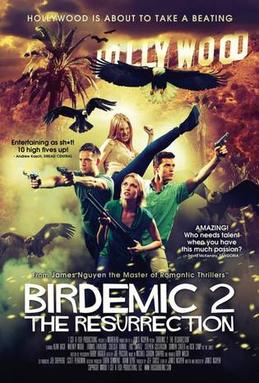
Icarus File No. 13: Birdemic 2: The Resurrection (dir by James Nguyen)


2013’s Birdemic 2 picks up four years after the end of the first film.  Society has recovered from the vicious bird attacks.  Humans and bird are once again living as friends.  Actually, no one seems to have learned a thing from the last movie because global warming is still out of control, blood rain is falling in California, and a woman is attacked by what she calls a “giant jumbo jellyfish.”  This can only mean that nature is getting ready to fight back once again.

Rod (Alan Bagh) was one of the few people to survive the previous Birdemic.  He is still rich and he is still dating Nathalie (Whitney Moore).  They adopted Tony (Colton Osborne), the little boy who they rescued during the first film.  At one point, Tony mentions that his sister Susan is now dead, having died as a result of eating the fish that Rod caught in the first film.  (Apparently, this was an ad lib from actor Colton Osborne and, since director James Nguyen doesn’t believe in multiple takes, it made it into the film.)  Rod invests in a movie being directed by Bill (Thomas Favaloro) and starring Bill’s new girlfriend, Gloria (Chelsea Turnbo).  In fact, Bill and Gloria pretty much act exactly the same way that Rod and Nathalie acted in the first film, which feels a bit redundant since Birdemic 2 already features Rod and Nathalie.

Anyway, there’s a lot of scenes in the film that are meant to act as a commentary on Hollywood, with craven studio people showing that they are not capable of understanding Bill’s artistic vision.  At one point, Bill talks about how he directed a movie called Replica.  He and Gloria also pay a visit to Tippi Hedren’s star on the Hollywood Walk of Fame because it wouldn’t be a James Nguyen film without a Tippi Hedren reference.

Unfortunately, a blood rain causes the resurrection of several birds and two cavemen from the La Brea tar pit and soon, filming on Bill’s movie is delayed by the cast and crew running for their lives.  It’s pretty much the same as the first movie, except that the birds are now bad CGI as opposed to clip art and, for some reason, there are also zombies involved.  Why are the zombies there?  Who knows?

Birdemic 2 was made to capitalize on the camp success of Birdemic and several scenes from the original film are recreated for the sequel, right down to several pointless walking scenes, another boardroom celebration scene and another scene in which the female lead strips down to her underwear and asking her boyfriend if he likes what he sees.  Damien Carter also makes another appearance, singing a different song and leading a new dance party.  (Nathalie is still the best dancer in the Birdemic films.)

Birdemic 2 is a bit more self-aware than the first film, which means that some of the attempted humor is presumably intentional.  Unfortunately, the charm of the first Birdemic was to be found in just how cluelessly earnest it was.  James Nguyen sincerely believed he was making a good film with the first one.  With the second one, he seems to be trying to re-capture something that he didn’t really realize that he had captured in the first place.  That said, even with all of the deliberate camp, there’s enough lectures about climate change to leave little doubt that, at heart, Nguyen was still taking this film far more seriously than anyone else on the planet.

He certainly takes his films more seriously than the people who appear in them.  Much as in the first film, Whitney Moore struggles to keep a straight face and it’s obvious that many of her co-stars were specifically hamming it up to see what they could get away with.  Alan Bagh, for his part, remains as unexpressive but strangely likable as ever.

Birdemic 2 tries but, in the end, there’s no beating the original!

Previous Icarus Files:

  1. Cloud Atlas
  2. Maximum Overdrive
  3. Glass
  4. Captive State
  5. Mother!
  6. The Man Who Killed Don Quixote
  7. Last Days
  8. Plan 9 From Outer Space
  9. The Last Movie
  10. 88
  11. The Bonfire of the Vanities
  12. Birdemic

Icarus File No. 12: Birdemic (dir by James Nguyen)


First released in 2010, Birdemic: Shock and Terror is a film that has a very specific reputation.

Chances are that, even if you haven’t watched the entire film, you’ve come across clips from Birdemic online.  It’s the film where the birds attack humanity because of global warming.  When the birds attack, they dive bomb the buildings below, exploding when they make contact.  Whenever a bird attacks, it sounds like an airplane.  Though the majority of the birds are described as being Eagles, they all sound like sea gulls.  The birds themselves are all the result of cartoonish CGI, which leads to several scenes of the birds hovering in the air while the actors vainly shoot at them or try to wave them away with a clothes hanger.

Birdemic is famous for its bad acting.  It’s famous for the conference room scene where a bunch of engineers and salespeople are told that they’ve all earned their stock options and they proceed to spend the next ten minutes or so applauding.  Birdemic is famous for the scene where Damien Carter performs “Hanging With My Family” while the film’s stars dance in such a way that indicates that they couldn’t hear the song while they were filming.  Birdemic is famous for director James Nguyen’s attempts to pay homage to Alfred Hitchcock, from the birds to the Vertigo-inspired scenes of people in San Francisco.  Tippi Hedren is listed in the end credits, even though she only appears on television at one point.

Whenever I watch Birdemic, I’m struck by just how boring it is.  Seriously, it takes forever to get to all of the stuff that the film is famous for.  The birds don’t start attacking until nearly an hour into the film.  Instead, the first part of the film is made up of awkward scenes of salesman Rod (Alan Bagh) dating aspiring model, Nathalie (Whitney Moore, giving the only adequate performance in the film).  (In a typical example of their sparkling dialogue, Nathalie informs Rod that she’s just been hired by Victoria’s Secret.  “I’m sure you’ll look great in their lingerie,” Rod replies.)  We watch as Rod meets Nathalie’s mother and takes her to the movies and goes out to eat with her and eventually, they perform their infamous dance to Hanging With My Family.  They also go to see An Inconvenient Truth, which really inspires Rod to think about what humanity is doing to the planet.  Rod announces that he’s getting a hybrid.

The main thing that distinguishes Birdemic from other bad movies is just how seriously it takes itself.  With all of its talk about the environment and how the birds are angry over what humans are doing to their planet, it becomes very obvious the Birdemic is a film with a message and James Nguyen sincerely believed that the solution to climate change was to get people to watch his movie.  Birdemic was a film made to make people think, in much the same way that An Inconvenient Truth inspired Rod to think about getting a hybrid someday.  Al Gore may have used a power point presentation to win an Oscar for himself.  James Nguyen used some bad CGI birds and he didn’t win anything, other than the hearts of viewers.

It’s true that Birdemic is a film that caused people to think.  Of course, few of those thoughts had to do with protecting the environment.  Birdemic may have been too ambitious for its own good but it has still established a place for itself in our culture.  Birdemic will never be forgotten.

Previous Icarus Files:

  1. Cloud Atlas
  2. Maximum Overdrive
  3. Glass
  4. Captive State
  5. Mother!
  6. The Man Who Killed Don Quixote
  7. Last Days
  8. Plan 9 From Outer Space
  9. The Last Movie
  10. 88
  11. The Bonfire of the Vanities

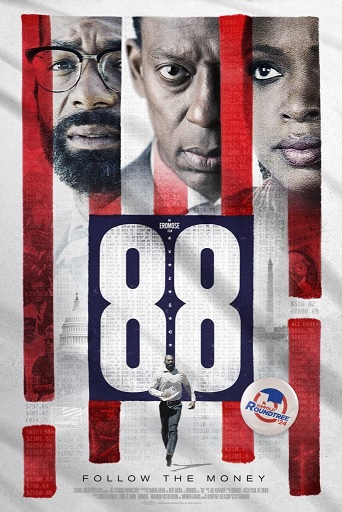
Icarus File No. 10: 88 (dir by Eromose)


Femi Jackson (Brandon Victor Dixon) is a recovering alcoholic with a pregnant wife and a past-due mortgage who totally and completely believes in a presidential candidate named Harold Roundtree (Orlando Jones).  A former baker-turned-politician, Roundtree is running for the 2024 Democratic presidential nomination on a platform of small government and personal responsibility.  That really doesn’t sound like a platform for success in a Democratic primary but whatever.  Let’s just go with it.

Femi has been hired as financial director for a SuperPAC that is raising money for the Roundtree campaign.  Femi notices that many of the donations are being submitted in numbers that add up to 88.  When he takes this news to his friend Ira Goldstein (Thomas Sadoski), Ira reveals that 88 is a code that Neo-Nazis use to identify each other.   Femi and Ira do more digging and they discover that, throughout his entire life, Roundtree has been receiving financial aide from various rich men, all of whom sent Roundtree’s sums of money that all add up to 88.  Femi questions why Neo-Nazis would do something that makes it so easy to identify them.  Ira replies that they’re marking their territory.

While Howard Roundtree records an interview with a left-wing commentator (William Fichtner), Femi tracks down and meets with an elderly and repentant Neo-Nazi (Jonathan Weir), who now needs an oxygen tank to breathe and who lives in an isolated house with his black wife.  Femi is later approached by a volunteer in the SuperPAC’s office, who informs him that the only way that White Supremacy can survive is by latching onto a black politician like Harold Roundtree.  Femi and Ira prepare to meet with Rountree, with Femi still convinced that he has no idea who is secretly funding his campaign.

While this is going on, Femi’s wife (Naturi Naughton) tries to help an ex-con achieve a bank loan despite the opposition of her sister (who also works for the bank) while Femi’s son, Ola (Jeremiah King), gets in trouble at school for showing his classmates a video of a school shooting.  It turns out that Femi’s brother-in-law is not only a cop but he’s also white and he agrees to drive Ola to school so that Ola can see that not all cops are bad.  Ola’s obvious fear as he walks out to the squad car indicates that the experiment, no matter how well-intentioned, is probably not going to work.

88 is certainly an ambitious film and the opening minutes, which features Femi’s wife explaining why Black Panther is not the empowering and progressive film that Femi believes it to be, suggest that the film has the potential to be interesting.  And throughout the film, there are little moments that do work, like the scene where Femi tells his son how to react if he’s ever pulled over by a cop.  Unfortunately, the majority of the film is a clumsily-acted and talky mix of melodrama and heavy-messaging, one that tries to duplicate the style of Spike Lee’s agitprop but instead ends up feeling more like a secular and politically progressive version of the God’s Not Dead films than anything else.  The film drags on for 2 full hours with Brandon Victor Dixon’s nerdy blandness failing to provide the narrative momentum to keep the action interesting.  As well, Orlando Jones is perhaps the least convincing presidential front runner that I’ve ever seen in a film, speaking a cadences that appear to be specifically patterned on Barack Obama but suggesting none of the charisma that would be necessary to captivate a nation.  Again, the film deserves some praise for having the ambition to actually be about something more than just selling toys and comic books but, in the end, it’s earnest dullness and heavy-handed messaging fails to hold one’s attention.

Previous Icarus Files:

  1. Cloud Atlas
  2. Maximum Overdrive
  3. Glass
  4. Captive State
  5. Mother!
  6. The Man Who Killed Don Quixote
  7. Last Days
  8. Plan 9 From Outer Space
  9. The Last Movie

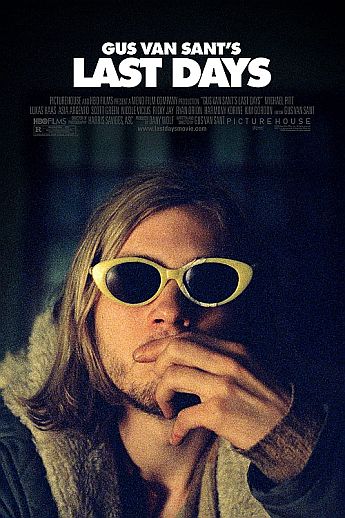
Icarus File No. 7: Last Days (dir by Gus Van Sant)


From 2002 to 2005, director Gus Van Sant offered audiences what he called his “Death Trilogy.”  2002’s Gerry followed two friends as they got lost in the desert and it featured what appeared to be a mercy killing.  2003’s Elephant was a mediation on the Columbine High School massacre and it featured several murders.  Finally, with 2005’s Last Days, Van Sant ended the trilogy with a film about a suicide.

Michael Pitt plays a world-famous musician who is suffering from depression.  Though the character is named Blake, no attempt is made to disguise the fact that he is meant to be Kurt Cobain.  When we first see Blake, he has just escaped from a rehab clinic and is walking through a forest.  There are no other human beings around and, perhaps not coincidentally, this is the only moment in the film in which Blake seems to be happy.  He even sings Home on the Range, shouting the lyrics like a little kid.

When he reaches his home, Blake’s demeanor changes.  He walks around the house with a rifle and pretends to shoot the four other people — Luke (Lukas Haas), Scott (Scott Patrick Green), Asia (Asia Argento), and Nicole (Nicole Vicius) — who are sleeping in his house.  Later, when those people wake up and attempt to speak to him, Blake is largely unresponsive.  When a detective comes to the door and asks if anyone has seen Blake, Blake hides.  When a record company exec calls to tell Blake that it’s time for him to tour again and that he’ll be letting down both his band and the label if he doesn’t, Blake hangs up on her.

Who are the people staying in Blake’s house?  Luke and Scott are both musicians but apparently neither one of them are in Blake’s band.  When Luke asks Blake to help him finish a song, Blake can only mutter a few vague words of encouragement.  Scott, meanwhile, appears to be more interested in Blake’s money.  Everyone in the film wants something from Blake but Blake wants to be alone.  In the one moment when Blake actually gets to work on his own music, his talent is obvious but so is his frustration.  With everyone demanding something from him, when will he ever have time to create?  With everyone telling him that it is now his job to be a rock star, how will he ever again feel the joy that came from performing just to perform?   

As one would expect from a Van Sant film, Last Days is often visually striking, especially in the early forest scenes.  In many ways, it feels like a combination of Gerry and Elephant.  Like those previous two films, it is fixated on death but stubbornly refuses to provide any answers to any larger, metaphysical  questions.  Like Elephant, it uses a jumbled timeline to tell its story and scenes are often repeated from a different perspective.  However, it eschews Elephant‘s use of an amateur cast and instead, Last Days follows Gerry’s lead of featuring familiar actors like Michael Pitt, Lukas Haas, and Asia Argento.  Unfortunately, though, Last Days doesn’t work as well as either one of the two previous entries in the Death Trilogy.

Last Days runs into the same problem that afflicts many films about pop cultural icons.  Kurt Cobain has become such a larger-than-life figure and his suicide is viewed as being such a momentous cultural moment that any attempt to portray it on film is going to feel inadequate.  No recreation can live up to the mythology.  The film itself feels as if it is somewhat intimidated by the task of doing justice to the near religious reverence that many have for Cobain.  As enigmatic as Gerry and Elephant were, one could still tell that Van Sant knew where he wanted to take those films.  He knew what he wanted to say and he had confidence that at least a few members of the audience would understand as well.  With Last Days, Van Sant himself seems to be a bit lost when it comes to whatever it may be that he’s trying to say about Cobain.  This leads to a rather embarrassing scene in which Blake’s ghost is seen literally climbing its way towards what I guess would be the immortality of being an icon.  One might wonder how Cobain himself would feel about such a sentimental coda to his suicide.

Last Days is a film that I respect, even if I don’t think it really works.  It does do a good job of capturing the ennui of depression and one cannot fault Van Sant for his ambition or his willingness to run the risk of alienating the audience by allowing the story to play out at its own slow and deliberate pace.  But ultimately, the film cannot compete with the mythology that has sprung up around its subject.

Previous Icarus Files:

  1. Cloud Atlas
  2. Maximum Overdrive
  3. Glass
  4. Captive State
  5. Mother!
  6. The Man Who Killed Don Quixote

Icarus File No. 5: mother! (dir by Darren Aronofsky)


You have to admire the courage of a filmmaker like Darren Aronofsky.  After receiving some overdue Oscar love for Black Swan, Aronofsky probably could have settled into the type of career that Tim Burton currently has: i.e., the self-styled quirky director who makes safe studio films.  Instead, Aronofsky has continued to chart his own course as an artist by following up Black Swan with two films that seemed specifically designed to challenge audiences and annoy the complacent.

With Noah, Aronofsky dared to suggest that God’s mistake with the Great Flood was to allow anyone to survive at all.  Then, he followed up Noah with 2017’s mother!, which was a film that practically dared confused and alienated audience members to stand up and walk out.  And walk out they did.  mother! was one of the few films to score an F on Cinemascore.  I mean, typically, a bad movie will at least get a C.  You have to really piss off the audience to get that F rating.  Watching mother!, it’s obvious that pissing off the audience was a part of the film’s design.

Paramount Picture advertised mother! as being a horror film and, to a certain extent, it is.  Jennifer Lawrence plays the Mother.  She lives in a beautiful house with a poet named Him (Javier Bardem).  Him spends a lot of time talking about how much he loves the Mother but it quickly becomes apparent that he’s rather self-absorbed.  People are constantly showing up at the house to speak to and eventually worship Him and he continually lets them, regardless of how difficult it makes things for the Mother.  The Mother is reduced to begging people not to make a mess but no one listens to her.  As the crows gets bigger, fights break out.  There are sounds of war and explosions rock the Mother’s meticulously cared-for home..  Him can only smile and shrug while his visitors trash the house.  The more the Mother complains, the more cruelly she’s treated by the crowds.

Among those who show up are the Man (Ed Harris) and the Woman (Michelle Pfeiffer).  They have two teenage sons who have developed a dangerous rivalry.  Him seems to be very concerned with them but the Mother just wants them all to leave.  Once they finally do leave, Him is inspired to write his greatest work which, of course, just leads to more people showing up.  It’s a dangerous cycle….

I could actually relate to what the Mother was going through.  I tend to be a little bit on the neat side, which is a polite way of saying that I’m obsessed with keeping the house clean and tidy.  Nothing annoys me more than when a stranger comes in and drags dirt or leaves or whatever across a freshly vacuumed carpet.  When Jennifer Lawrence was reduced to begging people to just make the most basic effort towards not messing up the house, I totally sympathized with her.  Jennifer Lawrence yells so much in this movie that she actually starts to lose her voice in a few scenes.  I could relate.

Of course, Jennifer Lawrence is not just playing a homeowner who doesn’t want her house to get trashed.  And Bardem isn’t just playing a poet.  As you probably already guessed, Bardem is God and Jennifer Lawrence is the Earth and Ed Harris and Michelle Pfieffer are a surprisingly old version of Adam and Eve.  The entire film is a biblical allegory and it all gets a bit heavy-handed.  Aronofsky has said that the film was a result of “anger and anguish” but it’s obvious that all of that anger and anguish prevented him from considering that mother! would have worked better as a 15-minute short film than a two-hour epic.  It doesn’t take long to figure out what’s going on and the film occasionally gets almost embarrassingly obvious in its attempt to push it metaphor.  Aronofsky, at times, seems to think that his film is more enigmatic than it actually is.

Still, despite the fact that the film goes on for way too long and is never quite as much of a mindscrew as Aronofsky seems to think that it is, you have to admire not only the courage of Aaronofsky but also the dedication of Jennifer Lawrence.  This film was not the first high profile Jennifer Lawrence film to not be a hit with audiences (Passengers wasn’t exactly beloved) but it is the one that’s most often cited whenever anyone writes an article about why Jennifer Lawrence’s star is a bit dimmer today than it was back in the days of The Hunger Games.  Undoubtedly, some people did go to the film expecting to see a “typical” Jennifer Lawrence film, just to suddenly be confronted with Javier Bardem ripping her heart out of her chest.  But, at the same time, you have to appreciate a star who is willing to take a chance and that’s what Lawrence did her, lending her star power to a project that was thoroughly out of the mainstream.  Both Aronofsky and Jennifer Lawrence took a chance with mother! and, even if the film is not quite the triumph that some viewers may want it to be, you still respect them for having done so.

Previous Icarus Files:

  1. Cloud Atlas
  2. Maximum Overdrive
  3. Glass
  4. Captive State