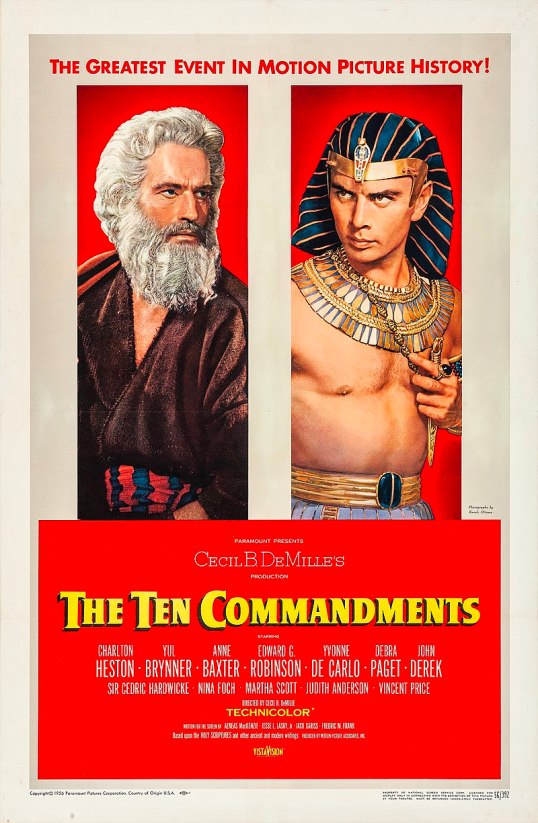
Film Review: The Ten Commandments (dir by Cecil B. DeMille)


Though you may not know it if you’ve only seen the film during one of its annual showings on television, the 1956 religious epic, The Ten Commandments, originally opened with director Cecil B. DeMille standing on a stage.  Speaking directly to the audience, DeMille explains that, though the film they’re about to see me take some dramatic license with the story of Moses, it still based on not just the Bible but also the accounts of Philo, Josephus and Eusebius.  He also tells us that The Ten Commandments is more than just an adaptation of the Book of Exodus.  Instead, it’s a film about every man’s desire to be free.

Demille concludes with: “The story will take 3 hours and 29 minutes to unfold.  There will be an intermission. Thank you for your attention.”

To be honest, it’s kind of a sweet moment.  Cecil B. DeMille is a name that is so associated with (occasionally overblown) epic filmmaking that it’s easy to forget that DeMille was one of the most important names in the artistic development of American cinema.  He was there from the beginning and, unlike a lot of other filmmakers, he was equally successful in both the silent and the sound era.  Say what you will about his films, DeMille was a showman and he handles the introduction like a pro.  At the same time, there’s a real sincerity to DeMille’s tone.  After you listen to him, you’d almost feel guilty if you didn’t sit through all 3 hours and 29 minutes of his film.

That sincerity extends throughout the entire film.  Yes, The Ten Commandments is a big, long epic and some members of its all-star cast are more convincing in their roles than others.  And yes, the film can seem a bit campy to modern viewers.  (In fact, it wouldn’t surprise me if it seemed a bit campy to viewers in 1956 as well.)  Yes, The Ten Commandments does feature Anne Baxter saying, “Oh Moses!  You sweet adorable fool!”  But it doesn’t matter.  Even the most ludicrous of dialogue just seem right.  The film is just so sincere that it’s difficult not to enjoy it.

In the Book of Exodus, Moses is described as having a speech impediment and even tries to use it as an excuse to get out of going to Egypt.  That’s actually one of the reasons why Moses brought Aaron with him to Egypt, so that Aaron could speak for him.  In the movie, Moses is played by Charlton Heston, who comes across as if he’s never felt a moment of insecurity over the course of his entire life.  But no matter.  Heston may not by the Moses of Exodus but he’s the perfect Moses for the DeMille version.  When Heston says that Egypt will be visited by plagues until his adopted brother Ramses (Yul Brynner) agrees to allow the Jews to leave Egypt, you believe every word.  (Aaron, incidentally, is played by the legendary John Carradine.  He doesn’t get too much other than respectfully stand a few feet behind Charlton Heston but still: John Carradine!)

And really, anyone who dismisses The Ten Commandments out-of-hand should go back and, at the very least, watch the scene where the Angel of Death descends upon Egypt.  The scene where Moses and his family shelter in place while the screams of distraught mothers echo throughout the city is chilling.  Ramses may spend most of the film as a petulant villain but you almost feel sorry for him when you see him mourning over his dead son.  When he sets off after Moses, it’s not just because he’s doing what villains do.  He’s seeking vengeance for the loss of his first born.  For that brief moment, Ramses goes form being a melodramatic bad guy to being someone with whom the viewer can empathize.  Brynner, with his burning intensity, gives a great performance as Ramses.

As I said before, this film has what, in 1956, would have been considered an all-star cast.  Watching the names as they show up during the opening credits — Cedrick Hardwicke!  Yvonne DeCarlo!  Woody Strode!  Debra Paget! — is like stepping into a TCM fever dream.  Some of the performers give better performance than others.  And yet, even the worst performer feels as if they just naturally belong in the world that DeMille has created.  John Derek may seem rather smarmy as Joshua but his callowness provides a good contrast to the upright sincerity of Heston’s performance as Moses.  Edward G. Robinson’s cries of, “Where is your God now!?” may have provided endless fodder for impersonators but just try to imagine the film without him.  Even Vincent Price is in this thing!  He doesn’t have his famous mustache but, as soon as you hear his voice and see that famous glare, you know that it’s him.

Of course, when you’re growing up and The Ten Commandments is on TV every year, you mostly just want to see the scene where Moses parts the Red Sea.  The Ten Commandments was nominated for seven Oscars but it only won one, for its special effects.  (The prize for Best Picture went to another epic, Around The World In 80 Days.)  Today, the film’s special effects may no longer amaze viewers but there’s still something rather charming about the Red Sea parting and then crashing in on the Egyptian army.  The scene where the Earth opens up and swallows those who worshiped the Golden Calf remains impressive, if just because all of the extras really look terrified that they might die.  And while the Pillar of Fire may look a bit cartoonish to modern eyes, that’s a huge part of the film’s appeal.

The Ten Commandments is a big, long, sometimes silly, sometimes effective, and always entertaining epic.  It’s a grand spectacle and one that I usually watch every year when it shows up on television.  I missed this year’s showing but, fortunately, I own it on DVD.  It’s a sincere epic and a difficult one not to like.
 

Pre Code Confidential #10: Cecil B. DeMille’s CLEOPATRA (Paramount 1934)


gary loggins's avatarcracked rear viewer

cbde1

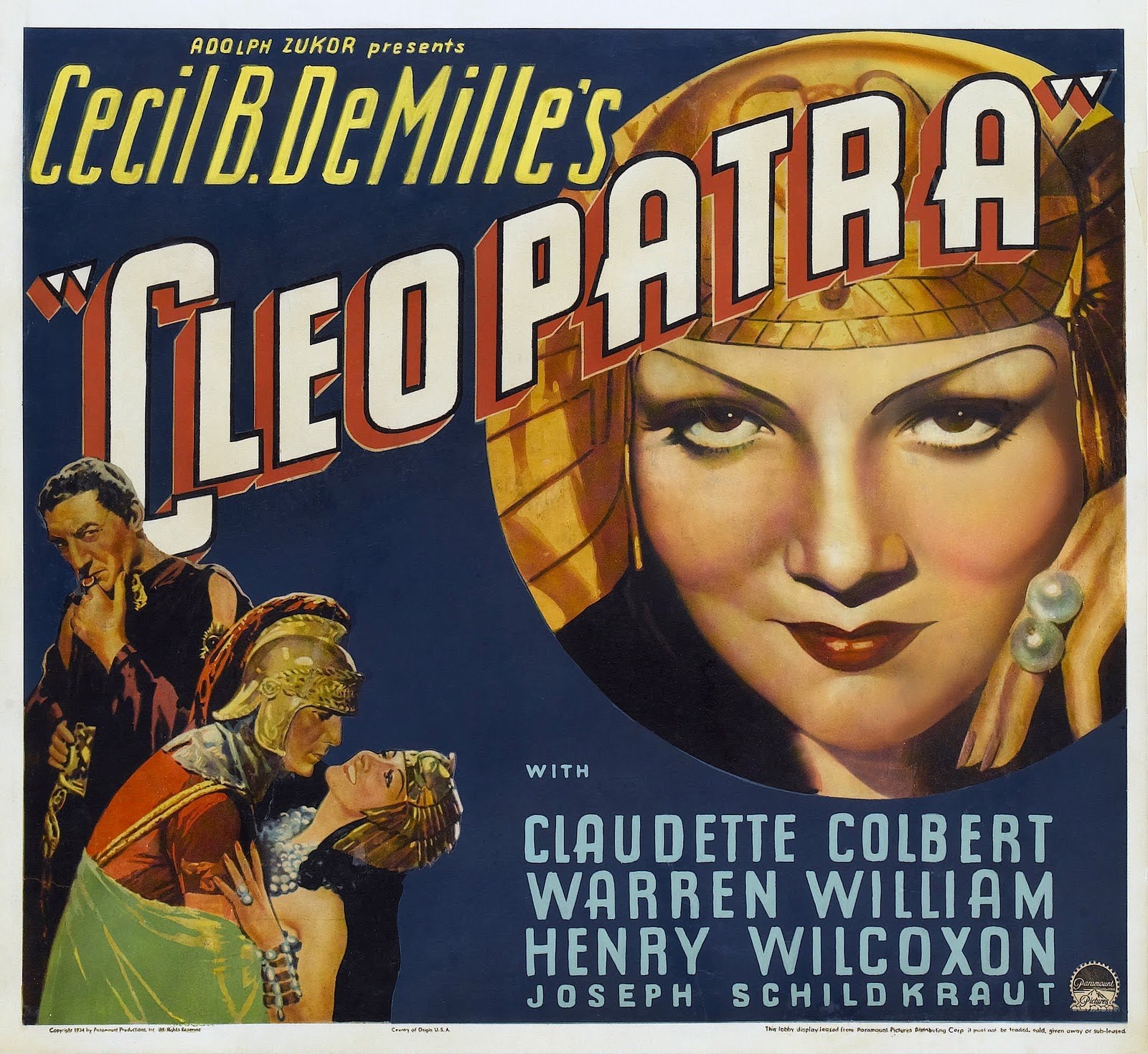
When I hear the words ‘Hollywood Epic’, the name Cecil B. DeMille immediately springs to mind. From his first film, 1914’s THE SQUAW MAN to his last, 1956’s THE TEN COMMANDMENTS, DeMille was synonymous with big, sprawling productions. The producer/director, who’s credited with almost singlehandedly inventing the language of film, made a smooth transition from silents to talkies, and his 1934 CLEOPATRA is a lavish Pre-Code spectacular featuring sex, violence, and a commanding performance by Claudette Colbert as the Queen of the Nile.

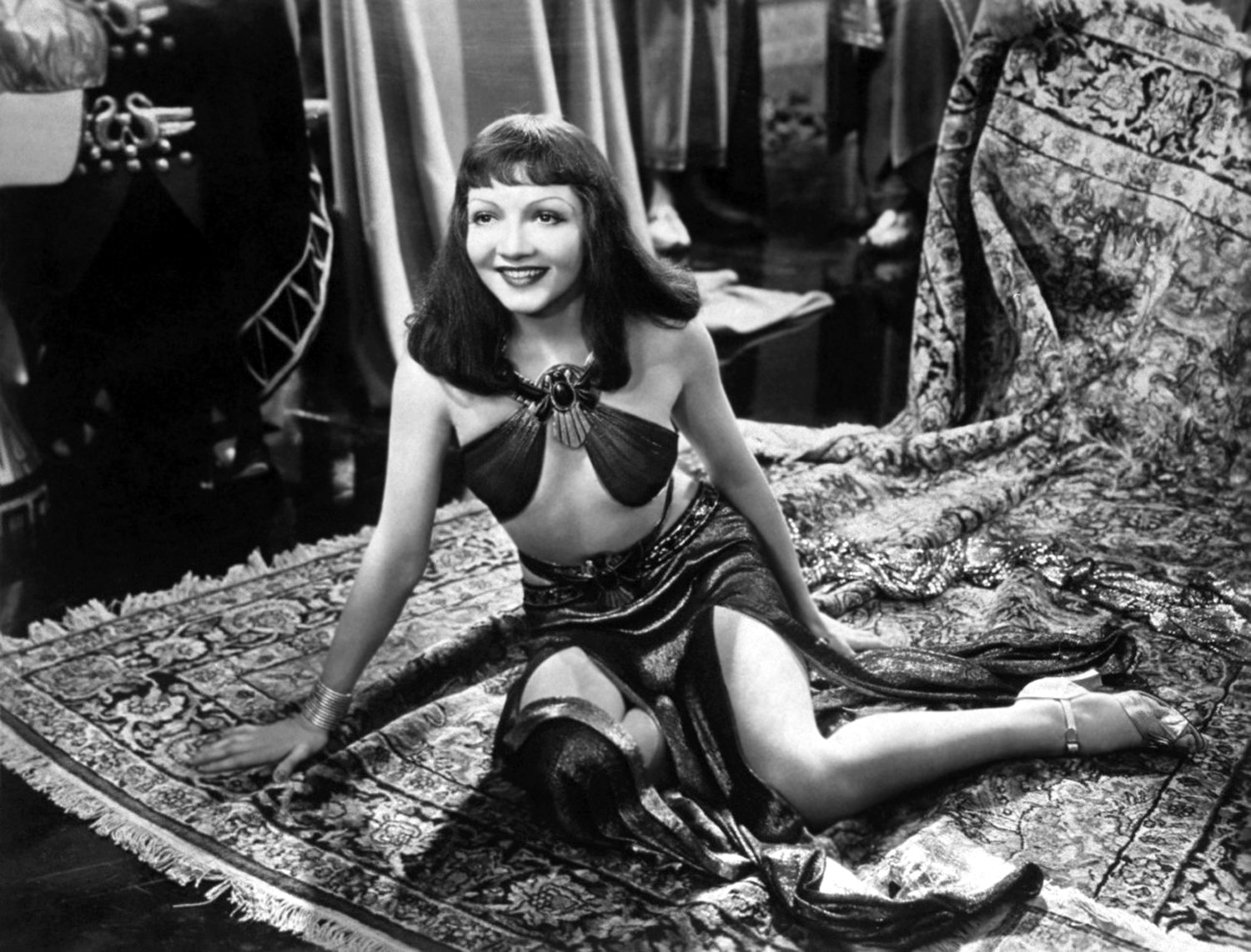
1934: Claudette Colbert in title role of Cecil B. DeMille's film Cleopatra.

While the film’s opulent sets (by Roland Anderson and Hans Dreier) and gorgeous B&W cinematography (by Victor Milner) are stunning, all eyes will be on the beautiful, half-naked Colbert. She gives a bravura performance as Cleopatra, the ambitious, scheming Egyptian queen. She’s sensuous and seductive, wrapping both Caesar and Marc Antony around her little finger, and devious in her political machinations. If I were compare her to Elizabeth Taylor in the 1963 Joseph…

View original post 392 more words

The Fabulous Forties #10: Dick Tracy’s Dilemma (dir by John Rawlins)


Dick_Tracy's_Dilemma

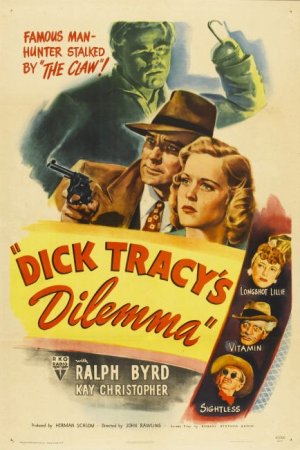
The 10th film in Mill Creek’s Fabulous Forties box set was 1947’s Dick Tracy’s Dilemma.  According to Wikipedia, this was the third Dick Tracy film to be produced by RKO Pictures.  In case you couldn’t guess from the title, Dick Tracy has a dilemma in this film.  I assume that, in the first two films, he had a problem and a quandary.

Clocking in at just an hour, Dick Tracy’s Dilemma takes place over the course of one long and very dark night.  Three men rob the Flawless Furs Warehouse and kill the night watchman.  The leader of the gang (played by Jack Lambert) is known as the Claw because, instead of a right hand, he has a prosthetic hook, which he can use to either beat or claw people to death.  (It all depends on his mood.)  The Claw also loves cats so he can’t be all bad.

Investigating the murder is Detective Dick Tracy (Ralph Byrd).  This was the first Dick Tracy film that I’ve ever actually watched so I can’t claim to be an expert on the character.  But judging from this film, Dick Tracy’s dilemma is that everyone around him is either extremely stupid or extremely evil.  For example, Dick’s partner, Patton (Lyle Latell), is useless.  When Dick’s number one informant, a fake blind beggar named Sightless (Jimmy Conlin), attempts to get some important information to Dick, he has the misfortune of running into Dick’s idiot friend, a Shakespearean actor named Vitamin (Ian Keith).  Vitamin mishears the information and he delivers his lines with so much over-the-top flourish that, by the time he tells Dick that Sightless wants to speak to him, the poor beggar has already been murdered by The Claw.

Seriously, people have been talking about how dark Batman v. Superman is but just check out Dick Tracy’s Dilemma.  The Claw is a sadistic killing machine and, in the end, it seems like it’s more dumb luck than good police work that leads to Dick Tracy tracking him down.  The film ends with smiles all around, despite the fact that it’s only been a few hours since poor Sightless was clawed to death.  If Vitamin wasn’t a drunk old actor, Sightless wouldn’t be dead.  For that matter, Dick Tracy is the one who pressured Sightless to act as an informant in the first place.

Seen today, Dick Tracy’s Dilemma seems more like an episode of an old cop show than an actual movie.  It’s easy to be dismissive of it but I don’t know.  If I had been alive in 1947 and saw this movie when it was originally released, I probably would have enjoyed it.  Ralph Byrd makes a convincing hero and there is a sense of genuine menace to Jack Lambert’s performance as The Claw.  That said, don’t even get me started on Vitamin.

What type of name is Vitamin anyway?

You can watch Dick Tracy’s Dilemma below!

http://www.youtube.com/watch?v=IYYraxwqkO4

Shattered Politics #1: Abraham Lincoln (dir by D.W. Griffith)


Unlike just about everyone else that I know, I am about as apolitical as you can get.

Oh, don’t get me wrong.  I always vote.  I believe in …. stuff.  Occasionally, I get angry about the state of the world. Why I’ll have you know that when I first registered to vote, I was really, really excited and I even sat down and researched every single person who was running for President.  (And, of course, I decided I would support John Edwards because he had good hair.  But then I changed my mind and ended up voting for Charles Jay, the candidate of the Personal Choice Party.)  But, for whatever reason, current events have never become the obsession for me that they are for some people.  You’ll never catch me posting a political meme or sagely agreeing with an activist on Facebook.  It’s just not for me.

(On the plus side, this has allowed me to have friends with many diverse viewpoints and generally lead a happy life.)

At the same time, I’m also fascinated by history and history is often the story of politics and politicians.  As a result, I’m far more interested in past affairs than I am in current affairs.  I can spend hours talking about the election of 1876 but I could hardly care less who is elected in 2016.  I know my political history well enough not to worry about the political present.

Perhaps that explains why, despite my indifference to politics, I tend to enjoy political movies.  And that leads us to my latest review series here at the Shattered Lens.  Over the next two weeks, I will be reviewing, in chronological order, 94 films about politics and politicians.  It’s a little something I call Shattered Politics.

(For some previous examples of what I mean by review series, check out Lisa’s Homestate Reviews, Lisa Goes Back To College, Netflix Noir, 44 Days of Paranoia, Embracing the MelodramaBack To School, and, of course, Lisa’s Marie’s Favorite Grindhouse and Exploitation Film Trailers!)

abraham-lincoln-movie-poster-1930-1020198617


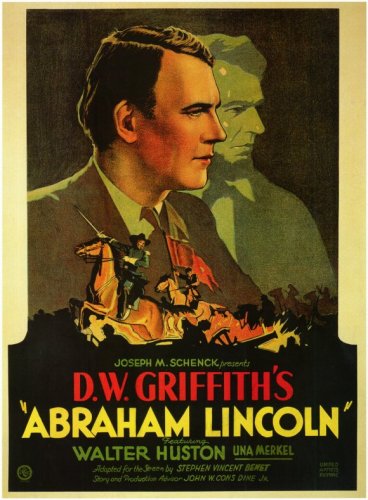
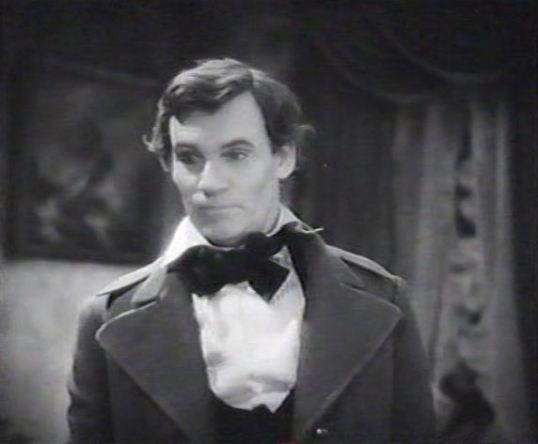
We start things off with a film from 1930.  One of only two sounds films to be directed by cinematic pioneer D.W. Griffith, Abraham Lincoln is — as you might guess from the title — a 90 minute biopic about the 16th President of the United States.  It tells the same basic story as Lincoln, just in a lot less time and with Walter Huston playing the title role.  The film opens in 1809 with his birth then speeds forward to detail his tragic love affair with Ann Rutledge (played by Una Merkel) and his subsequent marriage to Mary Todd (Kay Hammond).  We get a snippet of the Lincoln-Douglas debates and then, just as quickly, Abe is President, the country plunges into civil war, and an alcoholic actor named John Wilkes Booth (Ian Keith) is meeting with disreputable looking men in a shadowy bar and making shadowy plans.

Any honest review of this version of Lincoln’s life needs to deal with the obvious.  Abraham Lincoln was released 84 years ago, at a time when the film industry was still struggling to make the transition from silent to sound film.  In other words, the film is stiff, stagey, and full of actors who alternate between shouting their dialogue and delivering their lines through nervously clinched teeth.  This is essentially a silent film — complete with overdramatic title cards and heavy-handed symbolism — that just happens to feature some very awkwardly delivered dialogue.  Walter Huston is occasionally effective as Lincoln but, just as often, he’s not.

However, Abraham Lincoln is fascinating to watch from a historical point of view.  It helps if you know a little something about director D.W. Griffith.  Almost all of the narrative techniques that we now take for granted were originally introduced to cinema by D.W. Griffith and many of them were introduced in his controversial 1915 epic, The Birth of a Nation.  

Of course, Griffith’s legacy is problematic precisely because of The Birth of a Nation.  An epic look at the Civil War, Birth not only featured white actors in black face menacing Lillian Gish but also ended with the Ku Klux Klan heroically riding to the rescue.  That even viewers in 1915 were critical of the film’s racism and overly pro-Confederate sentiments should tell you something about just how extreme the film truly was.

(That said, one huge fan of the film was U.S. President and aspiring dictator Woodrow Wilson.)

By most accounts, Griffith was stunned by the negative reaction to The Birth of a Nation and several of his subsequent films (most famously, Intolerance) were meant to answer his critics.

That’s what makes the opening scenes of Abraham Lincoln all the more interesting.  The film opens in 1809 with a shot of a ship on the ocean.  We catch a glimpse of the Africans chained in the lower decks.  Two white slave traders are seen carrying a dead body to the side of the ship and tossing it overboard.

We cut to Virginia, where we see a group of slave owners complaining about how the North is harming them financially by trying to end the slave trade.  One of the men says that the only man who could have kept the north and south united is dead.  The camera pans up to a picture of George Washington.

Then, the scene cuts to Boston.  A group of northerners sit around a table and talk about how slavery is harming the north economically and therefore, it has to end.  One of the northerners says that the only man who could have kept north and south united is dead.  Again, the camera pans up to a picture of George Washington.

And, it’s a wonderfully effective sequence, one that not only reveals the economic reasons behind most wars but one which also reveals the cruelty, inhumanity, and pure evil of slavery.  (That said, when the film later shows us a glimpse of life in the Confederacy, Griffith does include a couple of slaves cheerfully dancing in the background.)

And, as awkward as the scenes involving dialogue are (the less said about the scenes between Walter Huston and Una Merkel, the better), Griffith does occasionally show the visual flair that was his trademark.  One excellent sequence involves soldier after soldier lining up, one after the other and each of them staring straight into the camera as they prepare to go to war.  When the film concentrates on scenes of men marching across the countryside, it actually works.

Then again, you may just want to see the film for the chance to hear one extra, when asked the identity of a man giving a fiery speech, awkwardly explain, “That’s the actor, John Wilkes Booth.  Not much of an actor but he’s got a way with the ladies!”

It’s really up to you.

Walter Huston as Abraham Lincoln

Walter Huston as Abraham Lincoln