In his final film role, Humphrey Bogart exposes the seamy side of boxing.
Bogart plays Eddie Willis, a washed-up former sportswriter who, because he desperately needs the money, accepts a job offer from crooked boxing promoter, Nick Benko (Rod Steiger). Eddie is working as a publicist for a South American boxer named Toro (Mike Lane). Toro is big, strong, and not very bright. He is not a great boxer but he does not realize that because the Mob has been fixing all of his fights. After a punch drunk former boxer dies in the ring while fighting Toro, Toro wants to quit and return home to Argentina. Eddie, who has grown sympathetic to Toro, convinces Toro to fight one last time, against the world champion, Buddy Brannen (Max Baer). Eddie tells Toro that he does not have a chance of winning but at least he will be able to return home with money for his parents. However, Benko has other plans for Toro’s money.
Bogart was visibly dying of cancer when he made this tough and uncompromising expose of the racket behind the fight game. This was his final performance but it is also one of his best. Even sick and more weary than usual, Bogart could still summon up righteous fury at the type of men that would exploit a fighter like Toro. His scenes with Rod Steiger are charged with intensity, with Bogart’s film star charisma colliding with Steiger’s stylized method acting. Both on-screen and 0ff, Humphrey Bogart was an actor who always stood up for the little guy. Though the film itself may be predictable and Toro is sometimes too saintly to be believed, The Harder They Fall is still a proper finale to an important and distinguished career.
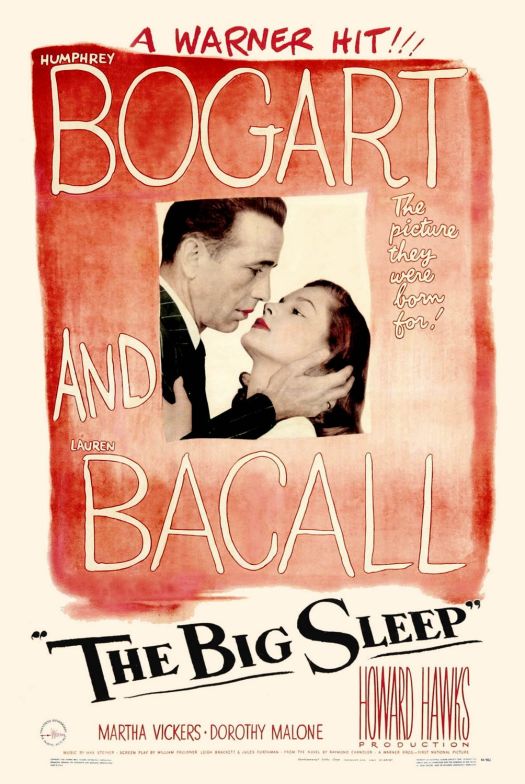
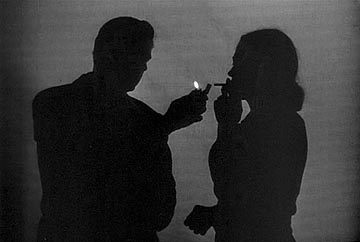
It’s been a long time since we last visited with Raymond Chandler’s fictional “knight-errant”, PI Philip Marlowe. Way too long, so let’s take a look at THE BIG SLEEP, starring Humphrey Bogart as the definitive screen Marlowe. This 1946 Howard Hawks film was a follow-up to 1944’s hit TO HAVE AND HAVE NOT, which introduced audiences (and Bogie) to luscious Lauren Bacall . The pair was dynamite together onscreen, and off as well, marrying a year later. Their May/December romance was one of Hollywood’s greatest love stories, lasting until Bogart’s death from cancer in 1957.
For me to try and explain the plot here would be futile, as it takes more twists and turns than a “Balinese belly dancer”. Marlowe is hired by elderly General Sternwood, whose sexy young daughter Carmen is being blackmailed. The General’s other daughter Vivien, a sexy divorcee, is also in trouble. This takes Our Man Marlowe…
Warner Brothers helped usher in the gangster movie era in the early 1930’s with Pre-Code hits like LITTLE CAESAR and THE PUBLIC ENEMY, and at the decade’s end they put the capper on the genre with THE ROARING TWENTIES, a rat-a-tat-tat rousing piece of filmmaking starring two of the studio’s top hoods, James Cagney and Humphrey Bogart , directed with the top down by eye-patch wearing macho man Raoul Walsh for maximum entertainment.
The film’s story was written by Mark Hellinger, a popular and colorful New York columnist in the Damon Runyon mold who based it on his encounters with some of the underworld figures he knew during that tumultuous era. Hellinger was later responsible for producing some of the toughest noirs of the late 40’s: THE KILLERS , BRUTE FORCE , THE TWO MRS. CARROLLS, and THE NAKED CITY. Jerry Wald, Richard Macauley, and Robert Rossen adapted Hellinger’s story for the screen, and the film…
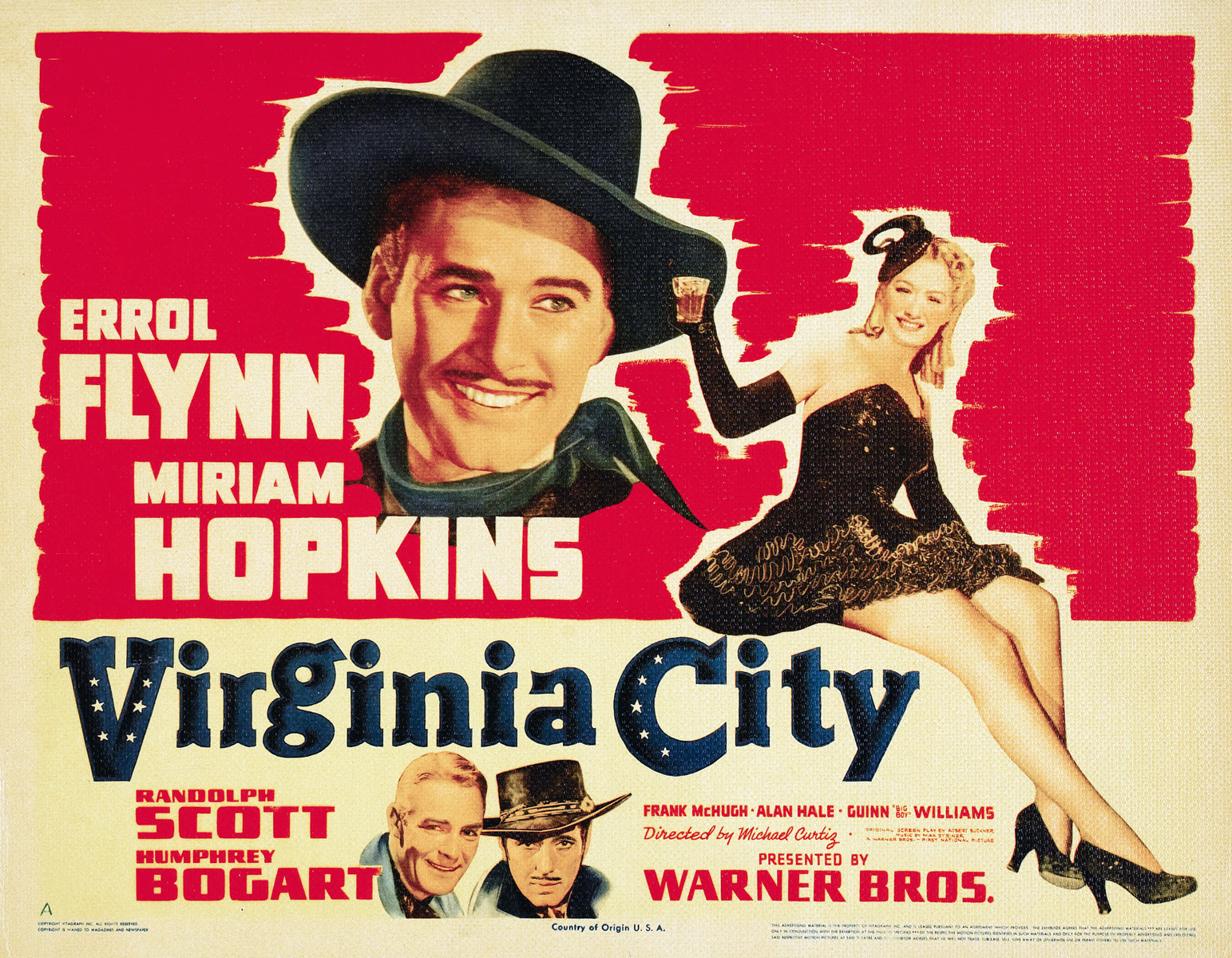
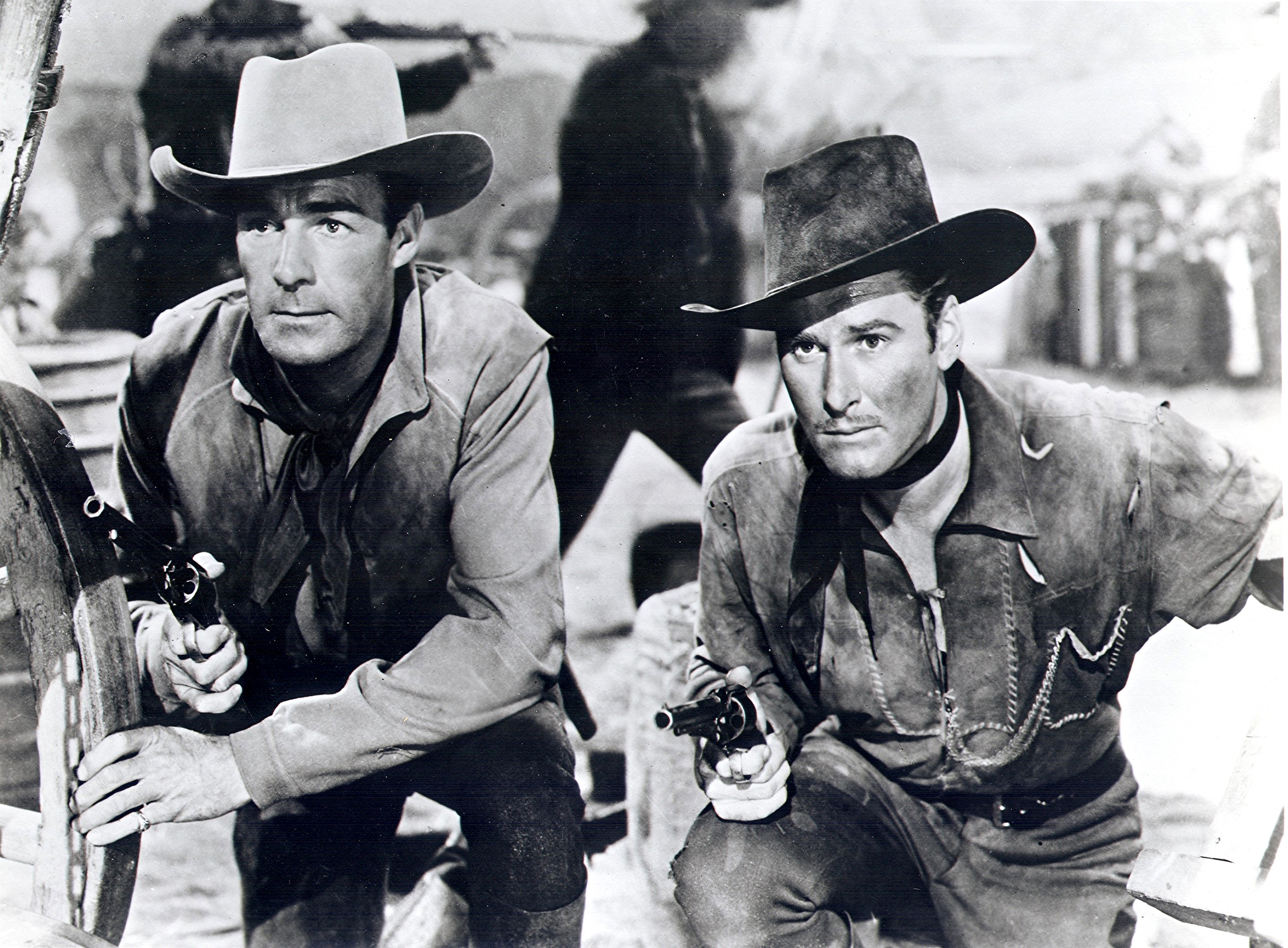
VIRGINIA CITY is a big, sprawling Western, filled with action, humor, and star quality. It’s the kind of movie they used to show around these parts every afternoon at 4 O’clock on DIALING FOR DOLLARS (George Allen was the local host), helping to spark my interest in classic films past, a flame which still burns bright today, two hours of pure entertainment, with square-jawed Errol Flynn going against square-jawed Randolph Scott backed by a Civil War setting and yet another sweepingly epic Max Steiner score.
We’re told “only the characters are fictional… The story is true” as we watch Union Captain Kerry Bradford (Flynn) and his two buddies Moose and Marblehead (Errol’s frequent co-stars/offscreen drinking compadres Alan Hale Sr and Guinn ‘Big Boy’ Williams) attempt to tunnel their way out of Libby Prison, aka ‘The Devil’s Warehouse’, when they’re caught by commanding Captain Vance Irby (Scott). He tells them Confederate troops…
To be honest, tonight’s episode of HBO’s Tales From The Crypt isn’t really a horror story. Instead, it’s a somewhat satiric homage to film noir. But I’m going to share it anyway. Halloween is about more than just ghouls and ghosts and goblins, right?
You, Murderer is an experiment that doesn’t quite work but is interesting all the same. This episode is basically one long POV shot. Whenever our protagonist sees his reflection, we see Humphrey Bogart staring back at us. Actual footage of Bogart was used in the show. Sometimes it work, sometimes it just looks strange. But it’s always interesting!
This episode originally aired on January 25th, 1995. Enjoy!
(For those following at home, Lisa is attempting to clean out her DVR by watching and reviewing 38 films by this Friday. Will she make it? Keep following the site to find out!)
I would love to see a remake of The Maltese Falcon with Bill Murray in the role of Sam Spade. Well, maybe not the Bill Murray of today because he’s getting a little bit too old to play a hard-boiled private detective who is as good with his fists as his brain. Instead, I’m thinking more of Lost In Translation era Bill Murray, when he was no longer young but could still probably beat up any sniveling punk who came at him with a gun.
Now, that may sound crazy to some but think about it. Bill Murray is one of the great deadpan snarkers and so is Sam Spade. Last night, when I watched the famous 1941 version of The Maltese Falcon (the story was filmed twice before, once with Bette Davis as the femme fatale), I was struck by how much of the film really was a comedy. It may have been a murder mystery that featured death and betrayal and a lot of people getting beaten up but, ultimately, The Maltese Falcon is really about Sam Spade reacting to all of the crazy and strange people around him. No matter how weird things get, Spade always responds with a smirk and a quip. It’s a role that, at times, seems to be tailor-made for an actor like Bill Murray.
Bill Murray wasn’t around in 1941 but fortunately, Humphrey Bogart was. Humphrey Bogart may have grown up wealthy and attended private schools but, on screen, nobody was tougher than Humphrey Bogart and nobody was better at delivering sarcastic, snark-filled dialogue. After spending years as a villainous supporting actor, Humphrey Bogart got his first starring role when he played Sam Spade in The Maltese Falcon. His performance, of course, would set the standard by which all future cinematic private eyes would be judged.
And, of course, Spade was tough and he was cynical and he has that wonderful moment at the end of the film where he explains that nobody’s going to make a “sap” out of him. But for me, Bogart’s best moments come when Spade is alone and thinking. It’s at those times that Spade suddenly becomes a human being. A slight smirk comes to his lips, almost as if he’s sharing a private joke with the audience. You can tell that he’s thinking to himself, “Can you believe how weird my life is?”
And it is indeed a weird life. The film opens with Spade’s partner, Miles Archer (Jerome Cowan), being murdered. The police believe that Archer was murdered by a man named Thursby and that Thursby was subsequently murdered by Spade. Spade, however, suspects that both Archer and Thursby were killed by his latest client, a woman who introduced herself as Ruth Wonderly (Mary Astor). Except, of course, that’s not her real name. Her real name is Brigid O’Shaughnessy and, as she admits to Spade, Thursby was her partner. She claims that Thursby must have murdered Archer but that she doesn’t know who could have possibly killed Thursby.
What’s particularly interesting about all this is that no one really seems to be that upset about Archer’s death. Spade’s main motivation for investigating the murder is to clear his name and there are several lines of dialogue that reveal how little regard he had for Miles. In fact, when Archer’s widow (Gladys George) suggests that Spade might be Archer’s killer, you can understand why she might think that. But then again, that’s the world of The Maltese Falcon. Only the tough survive. Getting sentimental or allowing yourself to care is the biggest mistake you can make.
The murders are connected to the hunt for a valuable statue of a bird. (This is the famous Maltese Falcon of the title.) As Spade tries to clear his name in the two murders, he also finds himself getting caught up with a strange group of treasure hunters. There’s the obsequious Joel Cairo (Peter Lorre). There’s the ruthless “fat man,” Kasper Gutman (Sidney Greenstreet). And then there’s Wilmer (Elisha Cook, Jr.), Gutman’s young henchman who spends the entire film trying to convince everyone that he’s tougher than he appears. Wilmer is a born patsy. Whenever Spade gets annoyed, he beats up Wilmer. And he usually smiles afterward.
Along with being the directorial debut of John Huston, The Maltese Falcon was also one of the first great film noirs. It’s one of the most influential films ever made and, even seen today, it’s a lot of fun. You really can’t go wrong with Bogart, Astor, Greenstreet, Lorre, and Cook all in the same movie. Bill Murray may never get a chance to play Sam Spade but that’s okay. Humphrey Bogart’s the only Sam Spade we really need.
The Maltese Falcon was nominated for best picture. However, it lost to How Green Was My Valley, a film that literally seems to take place in an entirely different universe from The Maltese Falcon.
It’s the 1940s and World War II is raging. The U.S. Navy is model of military discipline and efficiency. Well, except for the U.S.S. Caine, that is. The Caine is something of a disorganized mess, where no one takes his job seriously and sailors have names like Meatball (Lee Marvin) and Horrible (Claude Akins). The men love Lt. Commander DeVriess (Tom Tully), largely because he has given up on trying to enforce any sort of discipline. However, DeVriess has recently been relieved of his command. As he leaves, Meatball gives him a new watch, a gift from all the men. DeVriess admonishes them, snapping that the gift is violation of Naval regulations. He then puts the watch on his wrist and leaves the ship.
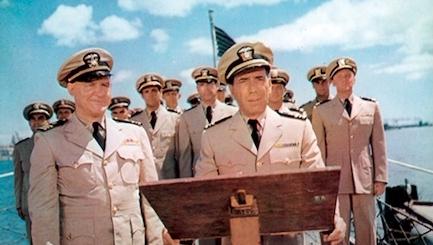
DeVriess’s replacement is Captain Francis Queeg and, at first, we have reason to be hopeful because Captain Queeg is being played by Humphrey Bogart. Surely, if anyone can get this ship into shape, it’ll be Humphrey Bogart! From the moment he arrives, Queeg announces that he’s going to enforce discipline on the Caine and if that means spending hours yelling at a man for not having his shirt tucked in, that’s exactly what Queeg is prepared to do. However, it also quickly becomes apparent that the awkward Queeg has no idea how to talk to people. He is also overly sensitive and quick to take offense. Whenever Queeg makes a mistake (and he does make a few), he’s quick to blame everyone else.
Realizing that the men are turning against him, Queeg even begs his officers for their help. He asks them if they have any suggestions. They all sit silently, their heads bowed as Queeg somewhat poignantly rambles on about how his wife and his dog both like him but the crew of the Caine does not.
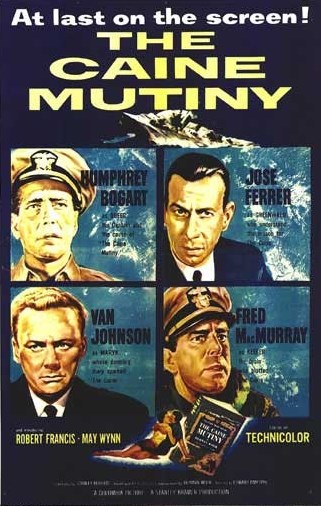
Queeg’s officers are a diverse bunch, none of whom are quite sure what to make of Queeg or the state of the Caine. Ensign Willie Keith (Robert Francis) is a wealthy graduate of Princeton University who, at first, likes Queeg but quickly comes to doubt his abilities. On the other hand, Lt. Steve Marsyk (Van Johnson) has doubts about Queeg from the start but, as a career Navy man, his natural instinct is to respect the chain of command above all else.
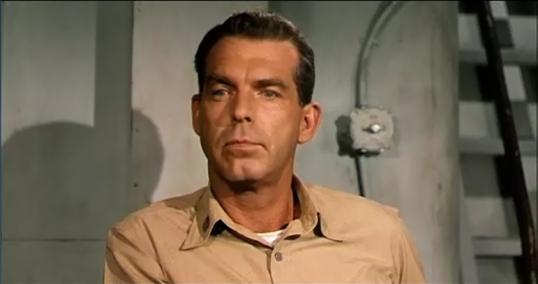
And then there’s Lt. Tom Keefer (Fred MacMurray). Keefer is a self-styled intellectual, a novelist who is always quick with a snarky comment and a cynical observation. (If The Caine Mutiny were remade as a B-horror film, Lt. Keefer’s name would probably be Lt. Sardonicus.) From the minute the viewers meet Lt. Keefer, our inclination is to like him. After all, he seems to be the only person in the film who has a sense of humor. If we had to pick someone to have dinner with, most of us would definitely pick the erudite Tom Keefer over the humorless and socially awkward Francis Queeg. As such, when Keefer starts to suggest that Queeg might be mentally unstable, our natural impulse is to agree with him.
It’s Tom Keefer who first suggests that it may be necessary to take the command away from Queeg. And yet, when it comes time to take action, it’s Keith and Marsyk who do so while Keefer stands to the side and quietly watches. And, once the Caine arrives back in the U.S., it Keith and Marsyk who are court martialed. Will they be found guilty of treason or will their lawyer, Lt. Barney Greenwald (Jose Ferrer), prove that Queeg was unfit for command?
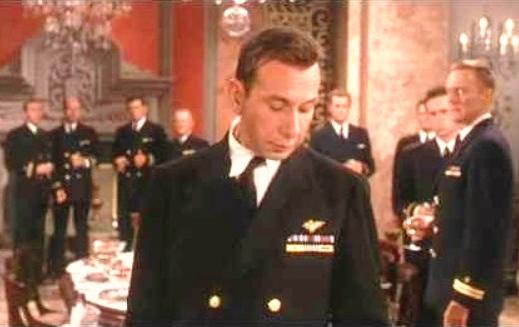
Made in 1954 and based on a novel by Herman Wouk, The Caine Mutiny is one of those big and glossy 1950s productions that holds up a lot better than you might expect. The film has its flaws. In the role of Keith, Robert Francis is a bit on the dull side and a subplot in which he courts May Wynn feels unneccessary and only serves to distract from the main story. But, for the most part, it’s an intelligent and well-directed film. Humphrey Bogart turns Queeg into a pathetic and lonely figure and you can’t help but feel sorry for him when he talks about how his dog loves him. Van Johnson also does well as Marsyk, effectively portraying a well-meaning character who is in over his head. Jose Ferrer gets a great drunk scene at the end of the film and, of course, you can’t go wrong with Lee Marvin as a smirking sailor, even if Marvin only appears for a handful of minutes.
But for me, my favorite character (and performance) was Fred MacMurray’s Tom Keefer. Technically, Keefer is not meant to be a likable character. He’s totally passive aggressive. He’s pretentious. He’s smug. At times, he’s rather cowardly. And yet, Tom Keefer remains the most memorable and interesting character in the entire film. He gets all of the good one-lines and MacMurray delivers them with just the right amount of barely concealed venom. (“If only the strawberries were poisoned…” he says as he considers dinner aboard the Caine.) It’s a great role and Fred MacMurray gives a great performance. And you know what? I don’t care how bad a character he may have been. I still want to read Tom Keefer’s book!
The Caine Mutiny was nominated for best picture of 1954. However, it lost to On The Waterfront.
(This review contains spoilers but seriously, you should know all of this already.)
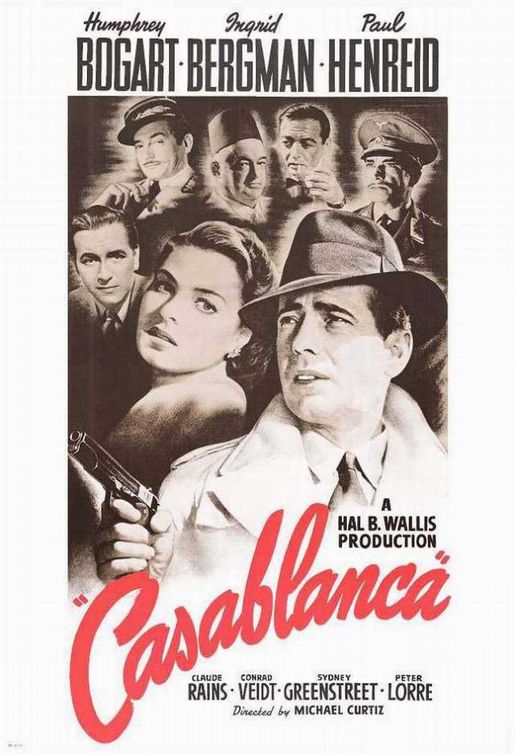
Is there anything left to be said about Casablanca?
Probably not.
As a film reviewer, I’m not supposed to admit that. I’m supposed to come up with some sort of new, out-of-nowhere, batshit crazy way to look at Casablanca. I’m supposed to argue that Rick was actually meant to be a survivor of abuse or that Victor Laszlo was some sort of precursor to President Obama or something. Or, if that doesn’t work, I’m supposed to intentionally troll everyone by writing something like, “10 reasons why Casablanca is overrated” or “I hate Casablanca and I don’t care who knows it!”
But I’m not going to do that.
The fact of the matter is that Casablancais as good a film as everyone says it is. It is a film that everyone should see. It is a film that quite rightfully was named best picture of 1943. It deserves to be celebrated. It deserves to be seen. In fact, stop reading this review right now and go watch it. Don’t let me waste another second of your time.
The thing with Casablanca is that it’s such an iconic film that everyone knows what happens, regardless of whether they’ve actually watched the entire film or not. They know that the film takes place in Casablanca during World War II. They know that Casablanca is full of refugees, spies, and people who are hiding from their past. They know that Casablanca is policed by the charmingly corrupt Capt. Louis Renault (Claude Rains). They know that Major Strasser (Conrad Veidt) is the Nazi in charge. (I nearly said that Strasser was the “evil Nazi in charge” but when you identify someone as a Nazi, is it really necessary to add that they’re evil?) They know that Rick (Humphrey Bogart) is the American expatriate who owns Rick’s Cafe Americain and that everyone comes to Rick’s. They know that Rick’s slogan is that he doesn’t stick his neck out for anyone but they also know that his cynicism hides the fact that he’s still in love with Ilsa (Ingrid Bergman). They know that when Ilsa shows up at Rick’s and needs him to help her husband, Victor Laszlo (Paul Henreid), escape from Occupied Europe, Rick is forced to decide whether or not to get involved in the resistance.
And, whether you’ve seen the film or not, you know that it all ends on a foggy airstrip. Ilsa wants to stay in Casablanca with Rick but Rick tells her that she has to get on the plane with Laszlo because, if she doesn’t, she’ll regret it. Ilsa goes with Laszlo, leaving Rick behind.
And it may have been the right thing to do but how many viewers would have done the same if they had been in Ilsa’s high heels? Throughout the entire movie, we hear about how wonderful Laszlo is but, whenever he actually shows up on screen, it’s always a little bit surprising to discover just how boring a character Victor Laszlo really is. Unlike the troubled and deceptively cynical Rick, there’s not much going on underneath the surface with Laszlo. Just as Rick overshadows Laszlo, Bogart’s performance overshadows Paul Henreid’s. Bogart and Bergman have all the chemistry and the charisma. Henreid, on the other hand, comes across as stiff and a little dull. But, as the film suggests, World War II was not a time for self-doubt and self-interest. World War II was a time when the world needed straight-forward, determined men like Victor Laszlo.
And, if the world needed Laszlo and Laszlo needed Ilsa, then that meant Ilsa had to get on that plane.
That said, I’ve always liked to think that Ilsa ended up leaving Laszlo in 1945 and immediately made her way back to Morocco. Rick and Ilsa belonged together.
But until Ilsa comes back, Rick has his friendship with Renault. “Louis,” he says, “I think this is the beginning of a beautiful friendship.” Did Bogart realize, when he delivered that line, that literally thousands of people would be repeating it decades later? Bogart’s performance is probably one of the most imitated performances of all time. Anyone who sees Casablanca thinks that they can talk about gin joints and hills of beans in Bogart’s trademark style. Of course, they can’t and it’s a testament to the power of Bogart’s performance that it remains effective even after being endlessly imitated.
On Valentine’s Day of 2014, I saw Casablanca at the Alamo Drafthouse in Austin. It was an amazing and romantic experience. See Casablanca on the big screen. It’ll make you love life and bring life to your love.
Needless to say, Casablanca is an intimidating film to review. So, I’ll just say this: Casablanca is even better than you think it is. If you haven’t seen it, go watch it. If you have seen it, go watch it again.
Just resist the temptation to say, “Play it again, Sam,” in your best Bogart-like voice.
Because, seriously, Rick never actually says that line.
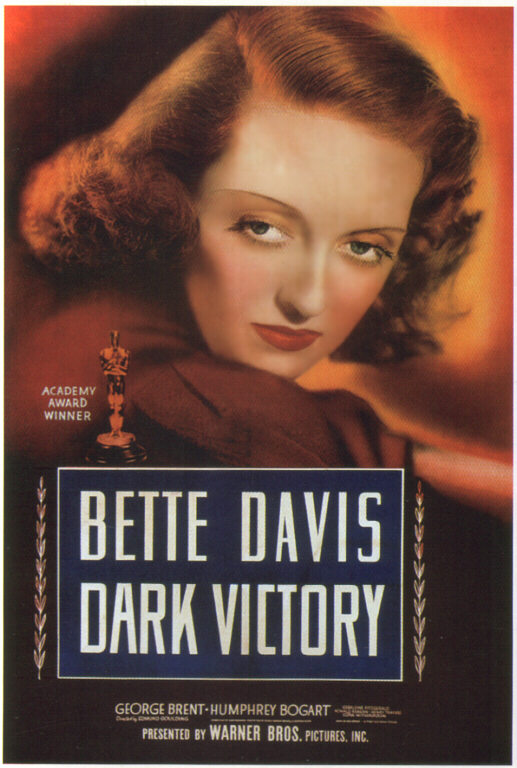
For our next melodrama, we take a look at the 1939 best picture nominee, Dark Victory.
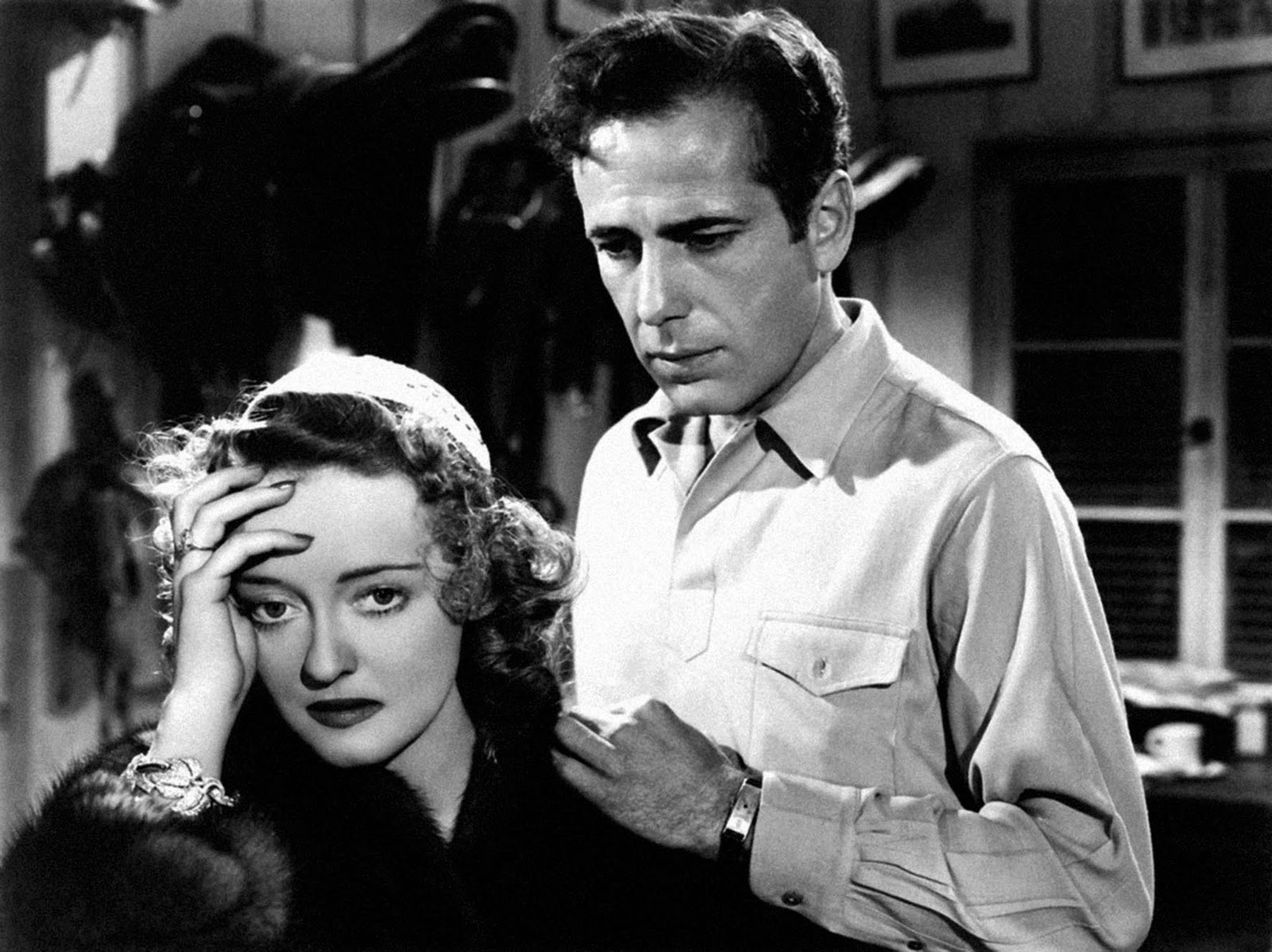
Well, with a name like Dark Victory, you can probably guess that the story told be this film isn’t going to be a cheerful one. Bette Davis plays Judith Taherne, a spoiled and self-centered socialite whose life revolves around hanging out with her constantly inebriated friends (one of whom is played by future President Ronald Reagan) and riding horses. When Judith starts to suffer from double vision and headaches, she initially ignores the problem but, as her condition worsens, she finally agrees to see a doctor.
Well, as you can probably guess, the news is not good. Dr. Parsons (Henry Travers, who is best known to us classic film lovers as Clarence Oddbody, the angel from It’s A Wonderful Life) refers her to Dr. Steele (George Brent), a brilliant neurosurgeon. At first, Steele is reluctant to treat Judith. He, after all, had been planning on giving up his New York medical practice so he can move to Vermont and spend his time doing research. Judith, for her part, resents having to see him and treats him rudely. However, when Dr. Steele discovers that Judith has a malignant brain tumor, he decides to put off moving to Vermont so that he can treat her (and, needless to say, fall in love with her as well).
After getting Judith to agree to surgery to remove the tumor, Steele discovers that the entire tumor cannot be removed and that Judith has only a few months to live. Though Judith won’t feel any pain, she will die shortly after experiencing total blindness. Hoping to make Judith’s last few days pleasant, Dr. Steele tells her that the surgery was a complete success and he also conspires with Judith’s loyal secretary, Ann (Geraldine Fitzgerald), to not allow Judith to find out about her terminal condition.
Steele also asks Judith to marry him and move to Vermont with him. Judith agrees but, when she discovers Steele and Ann’s deception, she breaks off the engagement and returns to her decadent and wild ways. Can her Irish stablehand (played by Humphrey Bogart) talk some sense into Judith before it’s too late?
If you want to nitpick, you certainly could do that with a film like Dark Victory. Yes, the film is predictable and yes, Humphrey Bogart is a bit miscast and yes, this film probably did set a precedent for movies about independent women being both punished and redeemed by terminal illness. Nitpick away but none of it really matters because Dark Victory works almost despite itself.
Whatever flaws the film may have, it also has Bette Davis delivering one of her best performances and making even the most overdramatic of events feel plausible and real. Bette Davis gives a performance that runs the gamut from A to Z and then keeps running until it discovers letters that you didn’t even know existed. (Okay, I didn’t come up with that description on my own. A reviewer named DJ Kent said it on the IMDB but it was such a perfect description for what Bette Davis does here that I simply had to repeat it.) Dark Victory is often described as being a “tear jerker” and, by the end of the film, I was in tears. If even as lively and strong a character as Judith Taherne can’t beat death, what hope do the rest of us have?
But, at the same time, the film is not just about the dark. There’s also a victory to be found in the darkness and that victory comes from the fact that even if Judith can’t beat death, she can at least face it under her own terms. By the end of the film, you’re sad because Judith is going to eventually die but you’re also happy because she lived.
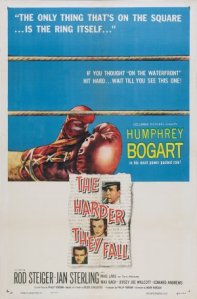 In his final film role, Humphrey Bogart exposes the seamy side of boxing.


 Through the Shattered Lens