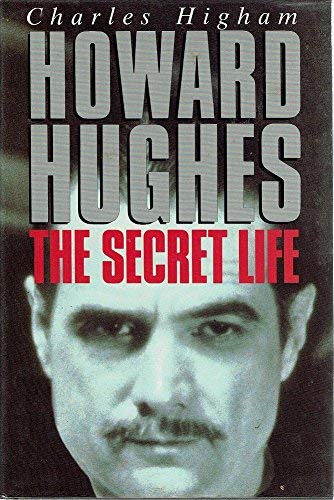
Wow, I thought as I read Howard Hughes: The Secret Life, was there anyone Howard Hughes didn’t have sex with?
Actually, I imagine there was. Charles Higham’s 1993 biography, which I found in a used bookstore in Pensacola, is full of all sorts of “scandalous” details about Howard Hughes’s life and the decadent Golden Age of Hollywood but it’s not always convincing. Hughes, who was the subject of Martin Scorsese’s TheAviator, was undoubtedly an eccentric and I have no doubt that he treated a lot people badly but the book itself tends put a lot of faith in gossip and rumors. As such, we get the established stories of Hughes bringing his control freak tendencies to Hollywood and having affairs with Katharine Hepburn and Ava Gardner mixed with stories about Hughes’s being involved with the Watergate break-in and also carrying on clandestine affairs with everyone from Errol Flynn to Tyrone Power, Jr. The book goes as far as to suggest Hughes died of AIDs, using an evidence the word of a doctor who didn’t examine Hughes but who did apparently read a list of symptoms that Hughes was rumored to have during his final days. That’s really the way that Higham approaches the majority of Hughes’s life. The established facts are mixed with rumor and speculation on the part of the author. It’s not always convincing but then again, since when does gossip have to be believable?
In short, the book is trashy but readable. It’s one of those books that one should probably read with a healthy sense of skepticism but, at the same time, one can appreciate the sheer number of personalities that Higham manages to weave into his narrative. Hughes goes from aviation to Hollywood to politics and he meets everyone who was anyone. It’s a history nerd’s dream.
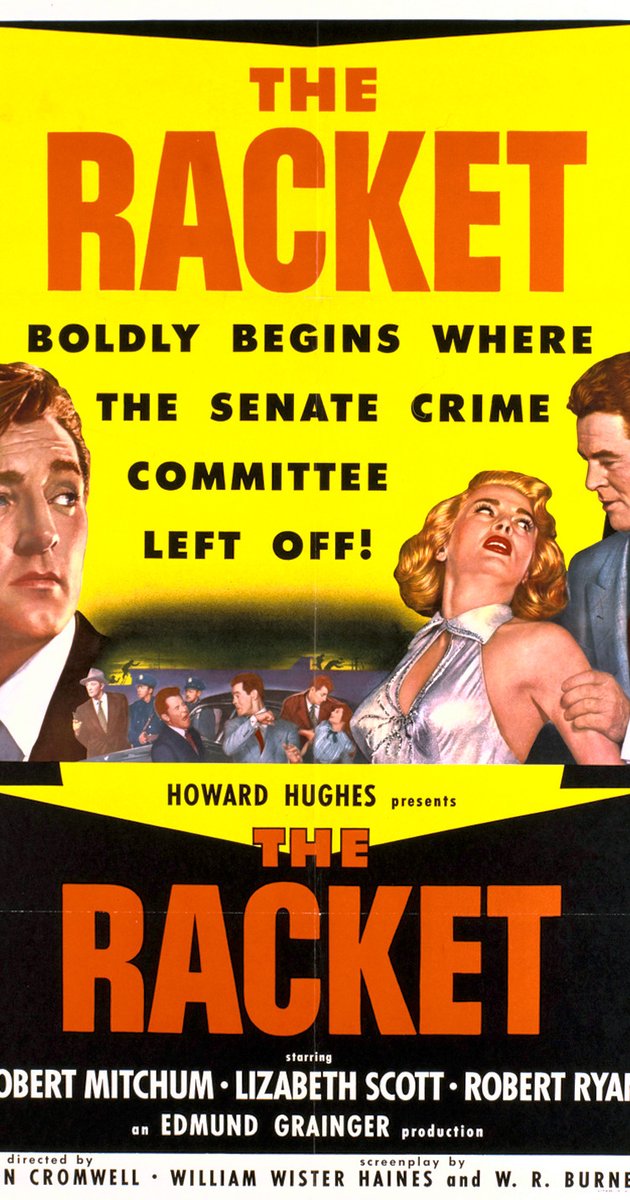
A solid film noir cast headed by Robert Mitchum , Robert Ryan , and Lizabeth Scott ; and a lineage that dates back to both a Broadway smash and an Oscar-nominated original can’t save THE RACKET from rising above minor status. Once again, tinkering behind the scenes by RKO honcho Howard Hughes, this time under pressure from Hollywood censorship czar Joseph I. Breen, scuttles a promising premise that coulda been a contender into an average movie.
City crime boss Nick Scanlon is an old-school hood whose violent ways don’t jibe with the modern-day syndicate. Capt. Thomas McQuigg, “an honest cop” who’s a no-nonsense guy, is determined to take him down. But the city’s rife with tainted politicians, making McQuigg’s job that much harder. Scanlon’s got a headstrong kid brother named Joe dating a “cheap canary” named Irene, and McQuigg plans on using him to get to Nick. Add a crooked DA, a…
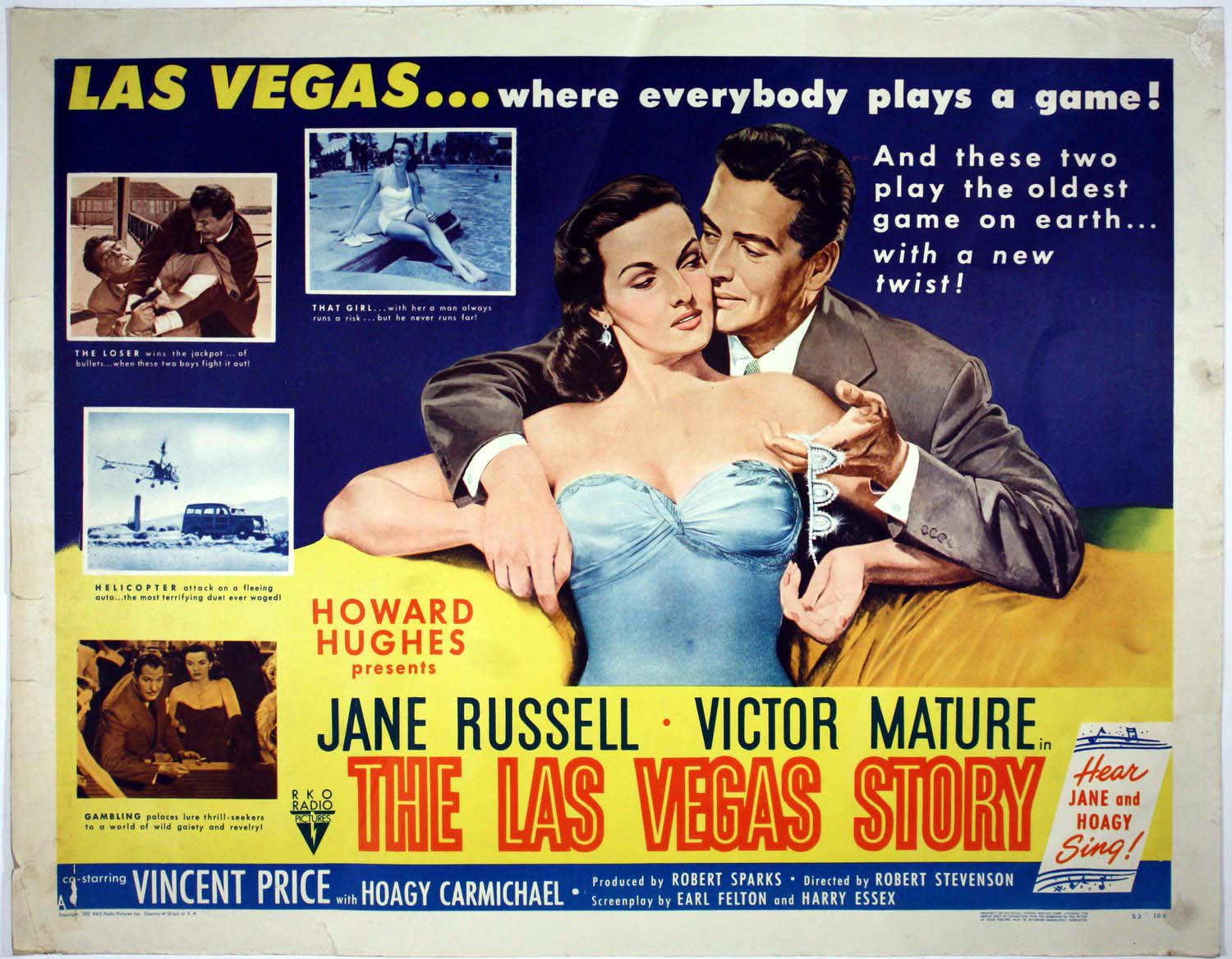
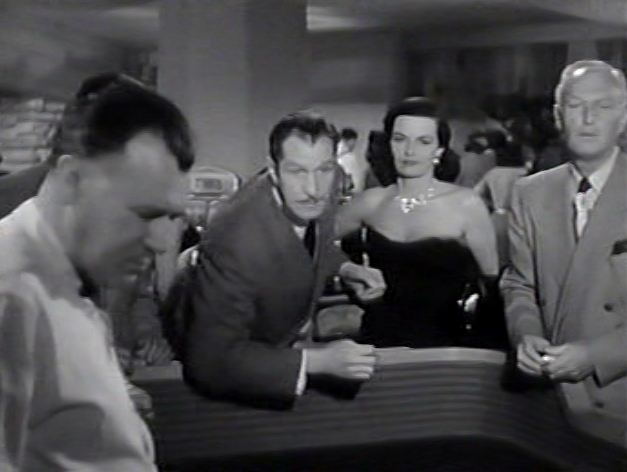
Jane Russell’s sexy as always, but THE LAS VEGAS STORY falls flatter than the proverbial pancake. This dull little crime drama boasts a good cast and some good moments, but on the whole doesn’t satisfy. One of the problems is Jane’s co-star Victor Mature, who tries but can’t match the cynicism frequent Russell co-star Robert Mitchum would’ve brought to the role of Jane’s jilted ex-lover, now a cop in the City of Sin. The most interesting thing about THE LAS VEGAS STORY is it’s screenplay credits, which we’ll get to later.
When ex-lounge singer Linda Rollins (Russell) returns to Vegas with husband Lloyd (a subdued but still sarcastic Vincent Price ), she visits her old stomping ground the Last Chance, where she’s greeted by piano player Happy (Hoagy Carmichael) and former boss Mike Fogarty (Will Wright), who’s been bought out by new owner Clayton (Robert J. Wilke). Police lieutenant Dave Andrews (Mature)…
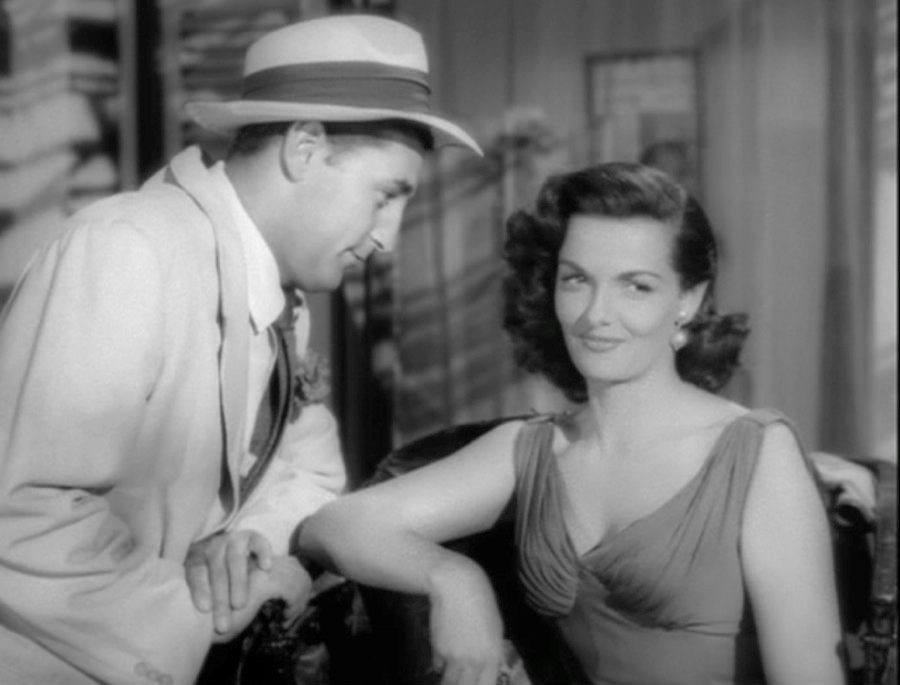
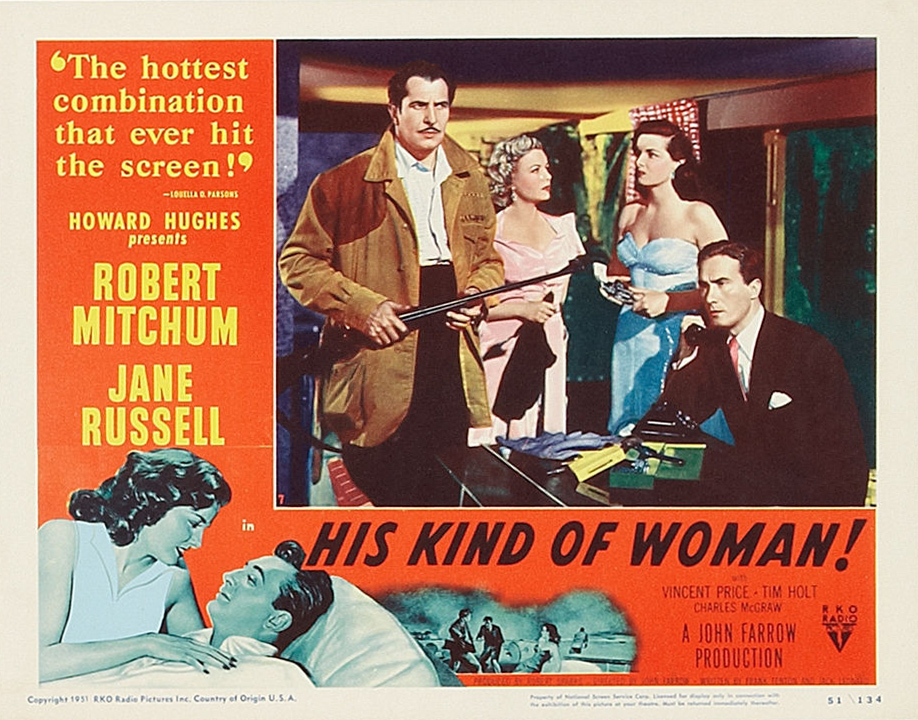
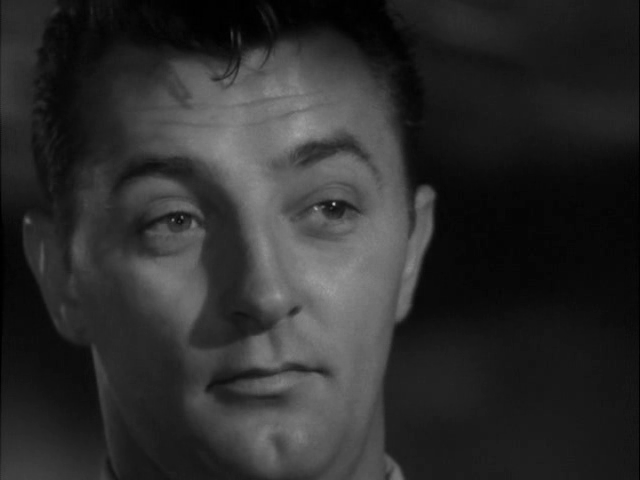
Even though 1951’s HIS KIND OF WOMAN lost money (mainly due to studio boss Howard Hughes’ meddling), Robert Mitchum and Jane Russell were reteamed the following year in MACAO. The film was actually sitting on the RKO shelf, having been completed in 1950. Once again, the autocratic Hughes wasn’t pleased with the original version, and fired credited director Josef von Sternberg, replacing him with Nicholas Ray. Mitchum himself even contributed to rewriting some scenes. The result is an entertaining noir that, while not quite as good as HIS KIND OF WOMAN, still manages to hold your interest.
On a boat from Hong Kong, drifter Nick Cochran (Mitchum) meets grifter Julie Benson (Russell), who lifts his wallet. The pair also meet Lawrence C. Trumble (William Bendix), a salesman specializing in “nylons, pearl buttons, coconut oil, and fertilizer”. The three are headed to Macao, “The Monte Carlo of the Orient” (actually the RKO backlot), for various reasons…
“People don’t go to the movies to see how miserable the world is; they go there to eat popcorn, be happy“- Wynton (Jim Backus) in HIS KIND OF WOMAN
Right you are, Mr. Howell, err Backus. There’s an abundance of fun to be had in HIS KIND OF WOMAN, the quintessential RKO/Robert Mitchum movie. Big Bob costars with sexy Jane Russell in a convoluted tale that’s part film noir, part Monty Python, with an outstanding all-star cast led by Vincent Price serving up big slices of ham as a self-obsessed movie star. And the backstory behind HIS KIND OF WOMAN is as entertaining as the picture itself!
But we’ll go behind the scenes later. First, let’s look at the movie’s plot. We meet down on his luck gambler Dan Milner (Mitchum) in a bar…. drinking milk! Dan just got done doing a 30 day stretch in a Palm Springs jail…
“The way of the future.” — Howard Hughes (Leonardo DiCaprio) in The Aviator (2004)
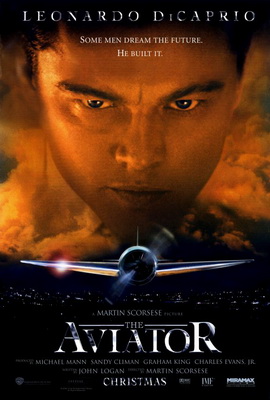
As I recently rewatched the 2004 best picture nominee, The Aviator, I realized that, in the film’s scheme of things, Ava Gardner was far more important than Katharine Hepburn. (Or, perhaps it would be more appropriate to say that Kate Beckinsale’s Ava Gardner was far more important than Cate Blanchett’s Katharine Hepburn.)
Over the course of the film, both Hepburn and Gardner are involved with billionaire-turned aviator-turned film director Howard Hughes (Leonardo DiCaprio). Throughout the film, Katherine is portrayed as being flighty, pretentious, and overdramatic. There’s a lot of dark humor to the scene where Katherine breaks up with Howard, largely because Katharine is incapable of not acting as if she’s making a film. Her every word is so carefully rehearsed that you have to agree when Howard says that she’s incapable of not giving a performance. Ava, on the other hand, is always direct. She has a sense of humor. She has no trouble telling Howard off. Whereas Katharine put on airs of being an incurable romantic, Ava tells Howard flat out that she doesn’t love him and is only using him to forward her career.
But, while Katharine Hepburn gets more screen time, it’s Ava Gardner who actually saves Howard’s business. Towards the end of the film, after Howard has had a nervous breakdown and has locked himself in a hotel room, it’s Ava who suddenly shows up, cleans him, and dresses him. She’s the one who gives Howard the strength to leave his room and to face down the corrupt senator (Alan Alda) who is investigating his business.
Of course, Howard Hughes is best known for once being the world’s richest recluse. In the 1960s, Howard locked himself away in a hotel room in Las Vegas and spent the next decade laying naked in bed and watching television. The Aviator doesn’t deal with this period of Howard’s life but it’s full of scenes where we catch glimpses of Howard’s future. Throughout the film, we watch as Howard obsessively washes his hands. We watch as he gives precise instructions on how even the simplest of tasks are to be accomplished. We watch as he grows increasingly paranoid about the germ-filled outside world. The film suggests that Howard’s obsessive compulsive disorder both served to make him a great engineer and a great filmmaker while, at the same time, ultimately destroying him.
The Aviator was the second film that DiCaprio made with Scorsese. And, as bad as DiCaprio may have been in Gangs of New York, he’s absolutely brilliant in The Aviator. As a character, Howard Hughes has so many quirks and tics that it would have been easy for DiCaprio to go overboard. Instead, he gives a surprisingly subtle performance. And, even more importantly as far as I’m concerned, he actually sounds authentically Texan when he speaks.
In many ways, much of The Aviator reminds me of Gangs of New York. Both films are gorgeously produced period epics that try to cover a lot of material. Both films are absolute cat nip for history nerds like me. But, whereas Gangs of New York leaves one feeling vaguely dissatisfied, The Aviator actually improves with subsequent viewings. Whereas the action in Gangs had no center, The Aviator revolves around Howard and the actor playing him.
While the Aviator starts off with Howard making movies and romancing Katharine Hepburn, it’s at its best when Howard appears before a committee chaired by Sen. Owen Brewster (Alan Alda) and passionately defends both himself as an engineer and a businessman and the right of innovators everywhere to freely pursue their passion. The film suggests that Brewster was bribed by Howard’s main business rival, Juan Trippe (Alec Baldwin, in unapologetic villain mode), and it’s hard not to applaud when Howard stands up for himself.
Speaking of which, it’s odd, so soon after reviewing Alan Alda in The Seduction of Joe Tynan, to see Alda playing a far less ethical politician in The Aviator. That said, Alda’s corrupt performance in The Aviator is a hundred times better than his cutesy work in Joe Tynan. If anything, Alda gives a performance here that will remind everyone of why they don’t care much for their congressman.
The Aviator was nominated for best picture but it lost to the far more low-key Million Dollar Baby. Scorsese would have to wait until the release of The Departedfor one of his films to finally win best picture.
 Wow, I thought as I read Howard Hughes: The Secret Life, was there anyone Howard Hughes didn’t have sex with?


 Through the Shattered Lens