Horror Film Review: I Like Bats (dir by Grzegorz Warchoł)


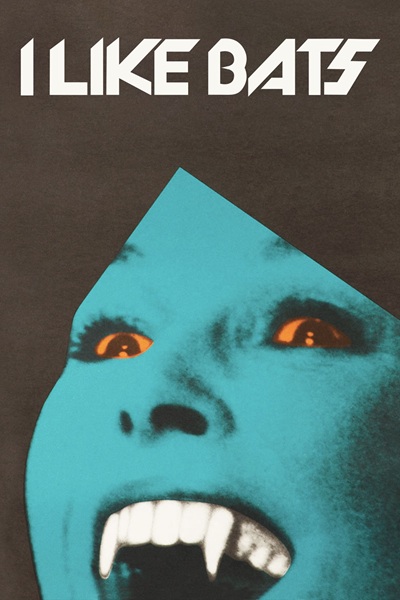
In this 1986 Polish film, Katarzyna Walter stars as Iza, a young woman who lives in a small village and who appears to be happy with her quiet life.  Despite the efforts of her aunt (Małgorzata Lorentowicz) to set her up with a local bureaucrat (Edwin Petrykat), Iza says that she is happy being single.  Even though there’s a “sex murderer” on the loose, Iza still prefers to walk alone at night.  She is happy taking care of her bats and making pottery.

Iza, however, has a secret life that not even her aunt knows about.  Sometimes, she puts on dark glasses and a brunette wig and she goes to a nearby town.  She presents herself as being as prostitute but, once she’s alone with a man, she grabs him, bites his neck, and drinks his blood.  Iza is a vampire!

Iza seems quite happy with being a vampire or, at least, she does until she meets Dr. Rudolf Jung (Marek Barbasiewicz), a psychiatrist who visits her aunt’s shop and buys a tea set.  Jung is handsome and single and Iza’s aunt thinks that he would be a perfect match for her.  For once, Iza agrees.  When Iza sees Dr. Jung being interviewed on television about an experimental asylum that he operates out of an ancient castle, Iza goes to the castle and asks to be admitted as a patient.  The bemused Jung replies that there are no vacancies.  Iza replies that she’s a vampire and she wants Dr. Jung to cure her.  Jung, assuming that Iza is merely delusional, take her on as a patient.

Iza proves to be a difficult patient.  For one things, she’s immune to hypnotism, which is apparently Dr. Jung’s main technique.  Secondly, she doesn’t really seem to want to stop being a vampire.  Instead, she just seem to be attracted to Dr. Jung.  Why she’s so attracted to Dr. Jung is another question all together.  Dr. Jung is a condescending jerk who doesn’t really seem to care about any of his patients.  Just as Iza drinks the blood of her victims, Dr. Jung seems to thrive off of the delusions of his patients.  The main thing that Jung and Iza have in common is a belief that they were both destined to be forever alone.  Dr. Jung explains that he never had room for a wife or a family because he was too busy going to school and making a name for himself.  Iza, meanwhile, has always assumed she’ll be alone because she’s a vampire.

(Interestingly, even though the film clearly establishes that Iza is a vampire, none of her victim come back as vampires and she has no problem going out during the day.)

I Like Bats is an intriguing vampire film, one that mixes a creepy atmosphere with a liberal dose of dark humor.  The story itself meanders a bit and is not always easy to follow.  The motivations of Iza and Jung are often rather unclear.  Like a lot of films that were made in Eastern Europe during the period of communist domination, the most interesting thing about the film is the contrast between the beauty of old Europe, with its castles and its green countryside, and the brutal ugliness of the dominant Marxist-Leninist culture.  Though I Like Bats is not explicitly political, there’s still a healthy dose of paranoia running through the film, the type of paranoia that goes along with living in or near an authoritarian state.

I Like Bats is not always easy to follow but the dark ending carried a punch and it’s a film that will stick with you.

4 Shots From Horror History: The 1900s


This October, I’m going to be doing something a little bit different with my contribution to 4 Shots From 4 Films.  I’m going to be taking a little chronological tour of the history of horror cinema, moving from decade to decade.

Today, we look at the 1900s.

4 Shots From 4 Films

Bluebeard (1901, dir by Georges Méliès)

Bluebeard (1901, dir by Georges Méliès)

The Monster (1903, dir by Georges Méliès)

The Monster (1903, dir by Georges Méliès)

Satan At Play (1907, dir by Segundo de Chomón)

Satan At Play (1907, dir by Segundo de Chomón)

The Sealed Room (1909, dir by D.W. Griffith)

The Sealed Room (1909, dir by D.W. Griffith)

Horror Film Review: The Godsend (dir by Gabrielle Beaumont)


In The Godsend, a married couple, Alan and Kate Marlowe (played by Malcolm Stoddard and Cyd Hayman), have a chance meeting with a pregnant stranger (Angela Pleasence).  While Alan suspects that there is something wrong with the mysterious woman, Kate insists on allowing her to come have dinner with them.  At their rural home, the Stranger spends most of her time glaring at Alan and, when she’s left alone, she cuts the phone line.  When the Stranger goes into labor, Alan and Kate deliver her daughter.  The next morning, the Stranger has disappeared and Alan and Kate end up taking the baby — now named Bonnie — into their household.

Alan and Kate already have four other children but that soon starts to change.  First, baby Matthew is found dead in his crib.  As Bonnie grows up, the other children die.  Little Davey drowns in a creek and Bonnie is found with scratches on her hands.  Davey’s brother Sam says that he is scared to be left alone with Bonnie.  Alan and Kate tell him that he’s being silly.  Later, Sam is found dead in the barn.

With their neighbors flat-out accusing Alan and Kate of murdering their children and Bonnie doing strange things like attempting to give her father the mumps, Kate starts to have a nervous breakdown.  Meanwhile, Alan comes to fear that Bonnie may be the one responsible for the death of the other children and that she may now be targeting that last remaining child, Lucy (Angela Deamer).

First released in 1980 and based on a novel by Bernard Taylor, The Godsend is a British horror film that moves at its own deliberate pace.  The action unfolds slowly, with an emphasis on atmosphere and ambiguity.  While it certainly seems that Bonnie is responsible for the death of the other children, the first half of the film leaves room for doubt.  The viewer is left to wonder whether it’s possible that Alan himself is just being paranoid.  As the film progresses, one becomes aware that Bonnie is not only evil but she also has far greater powers than even Alan realizes.  The film ends on a properly dark note.  There really is no future in England’s dreaming.

The Godsend was a bit too slow.  As is so often the case with British horror films from the early 80s, the film was so determined to prove that it was better than the old Hammer bodice rippers that it allowed itself to get a bit too self-serious and stately.  That said, The Godsend is also undeniably creepy.  Viewers have been conditioned to believe that, no matter what else happens in a film, the children will survive.  Even though the children might very well be traumatized for life, it’s still generally accepted that they will somehow manage to make it to the end of the film.  The Godsend breaks that unofficial rule and it actually gets a bit depressing to watch.  Alan and Kate are going through the worst experience that a parent can can suffer.  Alan blames Bonnie while Kate clings to her as being one of the few things that she still has left.  It’s a sad movie that captures a very primal fear.

For the most part, the cast does a good if not spectacular job with the material.  The best performance comes from Angela Pleasence in the role of The Stranger.  Angela Pleasence was the daughter of Donald Pleasence, an actor who will always be best-remembered for playing Dr. Sam Loomis in the original Halloween films.  Dr. Loomis would have identified Bonnie as being evil from the start.  Unfortunately, no one would have listened to him until it was too late.

Horror Film Review: Teenage Monster (dir by Jacques R. Marquette)


The 1958 film Teenage Monster opens in the late 1800s.  Gold prospector Jim Cannon (Jim McCullough) has got a nice little home with his wife, Ruth (Anne Gwynne) and their young son, Charlie.  One day, Jim and Charlie are out looking for gold when a meteor falls from the sky and crashes right in front of them.  Jim is killed, which I guess is an occupational hazard for anyone who works outside.

(Seriously, you never know when a meteor might crash on top of you.  There might be one about to slam into your home right this minute.  Read quickly.)

Charlie survives the meteor crash but he’s still bathed in radiation.  Ruth takes Charlie home and she keeps him locked up in a back room for his own safety.  Seven years pass and Charlie (Gilbert Perkins) is now a teenager.  Unfortunately, he’s a very old-looking teenager.  Standing nearly seven feet tall, he has long hair and a full beard and he can’t really speak beyond a few grunts.  Occasionally, Charlie manages to get out of the back room and Ruth has to look for him.  She understands that the 19th Century is no place for a radioactive mutant boy.

When Ruth discovers gold, she’s able to buy a house in town.  Unfortunately, living in town means that Charlie notices a young woman named Kathy North (Gloria Castillo).  Smitten with her, Charlie kills her jerk of a boyfriend and decides to bring her home.  Ruth pays Kathy to keep silent about Charlie but it turns out that Kathy has other plans.  Realizing that Charlie is in love with her and will do anything that she commands, she tells him to start killing people around town.

Teenage Monster may seem like an odd title for a western about a boy who gets mutated by a radioactive space rock.  Charlie is technically a teenager but he looks like he’s nearly 60.  The film uses the radiation as an excuse for Charlie’s rapid aging and his grown spurt.  Randomly blaming everything on radiation is one thing that B-movies of the 50s and the 60s definitely all had in common.  I suppose if space radiation could have brought the dead back to life in Night of the Living Dead, it could have also transformed Charlie into a teenage monster.  As far as B-movies were concerned, J. Robert Oppenheimer had a lot to answer for.  Of course, if this movie were made today, Charlie’s transformation would have somehow been due to climate change.

As for the film itself, it’s short and that’s definitely a good thing.  The idea of combining B-horror and the old west is an intriguing one but the movie doesn’t really do that much with it.  Yes, there are gunmen and deputies but they could have just as easily been modern-era outlaws and lawmen without really changing much about the film.  Director Jacques Marquette was a former cinematographer who went into directing so it’s a bit odd that the film has a flat, rather bland look to it.  On the plus side, Anne Gwynne gives a better performance than the material deserved.

Keep your kids away from radiation, everyone.  Other than cheap, clean energy and countless advances in medicine and science, nothing good ever seems to come from it.

Horror On The Lens: The Horror of Party Beach (dir by Del Tenney)


Everybody do the zombie stomp!

Featuring the music of the Del-Aires, a motorcycle gang led by a guy wearing a beret, teenagers who appear to be in their 30s, and monsters that simply have to be seen to be believed, 1964’s Horror of Party Beach is a true classic.  It’s a film as immortal as the cloudy New Jersey sky under which it was filmed.

I always feel bad for Tina (Marilyn Clarke).  Tina is a rebel, a force of chaos who has grown tired of being tied down by the rules of conventional society.  Perhaps symbolically, she becomes the first victim of the horror of Party Beach and all because she wanted to have some time to herself.  It’s a tragedy to which I can relate.

The other thing that I like about this movie is that, even though people are dying left-and-right, it never seems to occur to anyone to just not go to Party Beach.  The Del-Aires continue to perform, no matter who dark things may seem.  Indeed, I’d argue that the Del-Aires are the true heroes of this film.

For your viewing pleasure, here is The Horror of Party Beach!

Great Moments In Television History #38: The Twilight Zone Premiers On CBS


“There is a sixth dimension, beyond that which is known to man. It is a dimension as vast as space and as timeless as infinity. It is the middle ground between light and shadow, between science and superstition, and it lies between the pit of man’s fears and the summit of his knowledge. This is the dimension of imagination. It is an area which we call The Twilight Zone.”

66 years ago today, viewers heard those words for the first time when The Twilight Zone premiered on CBS.  Those words were delivered by the show’s creator and the writer of its first episode, Rod Serling.  (In future episodes, “the sixth dimension” would be relabeled “the fifth dimension.”)

The first episode of The Twilight Zone starred Earl Holliman as a man who finds himself walking down a dirt road with no memory of how he got there.  He sees signs of civilization — a police station, a diner, and a movie theater — but no people.  The isolation and the loneliness threaten to drive him mad but, at the end of the episode, it’s revealed to have all been a simulation performed by the military to test whether the man, as astronaut, will be able to mentally handle being alone in space.

The barrier of loneliness: The palpable, desperate need of the human animal to be with his fellow man. Up there, up there in the vastness of space, in the void that is sky, up there is an enemy known as isolation. It sits there in the stars waiting, waiting with the patience of eons, forever waiting… in The Twilight Zone.

With no supernatural or extraterrestrial elements, this episode was not typical of what The Twilight Zone would eventually become.  But, on October 2nd, 1959, it was enough to launch the show and make television history.  It was truly a great moment in television history.

Previous Moments In Television History:

  1. Planet of the Apes The TV Series
  2. Lonely Water
  3. Ghostwatch Traumatizes The UK
  4. Frasier Meets The Candidate
  5. The Autons Terrify The UK
  6. Freedom’s Last Stand
  7. Bing Crosby and David Bowie Share A Duet
  8. Apaches Traumatizes the UK
  9. Doctor Who Begins Its 100th Serial
  10. First Night 2013 With Jamie Kennedy
  11. Elvis Sings With Sinatra
  12. NBC Airs Their First Football Game
  13. The A-Team Premieres
  14. The Birth of Dr. Johnny Fever
  15. The Second NFL Pro Bowl Is Broadcast
  16. Maude Flanders Gets Hit By A T-Shirt Cannon
  17. Charles Rocket Nearly Ends SNL
  18. Frank Sinatra Wins An Oscar
  19. CHiPs Skates With The Stars
  20. Eisenhower In Color
  21. The Origin of Spider-Man
  22. Steve Martin’s Saturday Night Live Holiday Wish List
  23. Barnabas Collins Is Freed From His Coffin
  24. Siskel and Ebert Recommend Horror Films
  25. Vincent Price Meets The Muppets
  26. Siskel and Ebert Discuss Horror
  27. The Final Scene of Dark Shadows
  28. The WKRP Turkey Drop
  29. Barney Pops On National TV
  30. The Greatest American Hero Premieres
  31. Rodney Dangerfield On The Tonight Show
  32. The Doors Are Open
  33. The Thighmaster Commercial Premieres
  34. The Hosts of Real People Say “Get High On Yourself”
  35. The 33rd NFL Championship Game Is Broadcast In Color
  36. The Sopranos Premieres on HBO
  37. Eisenhower Hosts The First Televised Press Conference

Godzilla Film Review: Godzilla: Tokyo S.O.S. (dir by Masaaki Tezuka)


A direct sequel to Godzilla Against Mechagodzilla, 2002’s Godzilla: Tokyo S.O.S. begins with the Shobijin, those two little annoying girls who hang out with Mothra, appearing to a Japanese scientist and his family and explaining to them that Godzilla won’t stop attacking Japan until the government does away with their Mechagodzilla, Kiryu.  Kiryu was constructed using the bones of the original Godzilla and, as a result, the current Godzilla is drawn to him.

Instead, the Shobijin suggest that the Kiryu should be tossed in the ocean.  In return, the latest incarnation of Mothra will serve as Japan’s champion whenever Godzilla attacks.

So, to make clear, Japan can either be protected by a badass cyborg that was created out of the skeletal remains of the original Godzilla or it can be protected by a giant moth that has to spend time in a cocoon before it can even become an effective monster.  And, along with the whole cocoon thing, Mothra also comes with two annoying little sidekicks who are constantly popping up and going on and on about how stupid humanity is.

Now, I don’t know about you but, if I was in charge, I would probably just stick with the cyborg.  If nothing else, the cyborg looks like a badass and it can destroy just as much property as Godzilla.  The cyborg exists to say, “Hey, Godzilla — you’re not the only pointlessly destructive monster on this planet!”  Add to that, the cyborg can be piloted and controlled by humans.  The cyborg doesn’t talk back.  The cyborg doesn’t tell humanity that everything is their fault.  The cyborg can be shut down whenever there’s not a monster attack going on.  In other words, get lost, Mothra!

In Tokyo S.O.S., The government of Japan agrees with me, which of course leads to a huge fight between Godzilla, Kiryu, and eventually Mothra.  Mothra does that thing where she wraps Godzilla up in string and also where she appears to sacrifice her life.  The problem is that, after you see enough of these films, you know that Mothra is always going to sacrifice her life and she’s always going to be reborn.

So, the story isn’t that spectacular.  It’s pretty much just Godzilla Against Mechagodzilla all over again.  But here’s the important thing: the fights are really cool.  Yes, the fights are a bit familiar and there’s nothing about them that will really take you by surprise but, if you just want to watch Godzilla destroy stuff, this film delivers plenty of that.

Tokyo S.O.S. is unique amongst the Godzilla films of its era in that it was a direct sequel as opposed to be a reboot.  In fact, it was only the direct sequel of the so-called Millennium Era.  The next Godzilla film, Godzilla: Final Wars, would be a reboot and a spectacular one at that.  We’ll take a look at it next week.

Previous Godzilla Reviews:

  1. Godzilla, King of the Monsters (1958)
  2. Godzilla Raids Again (1958)
  3. King Kong vs Godzilla (1962)
  4. Mothra vs. Godzilla (1964)
  5. Ghidorah: The Three-Headed Monster (1964)
  6. Invasion of the Astro-Monster (1965)
  7. Godzilla vs. The Sea Monster (1966)
  8. Son of Godzilla (1967)
  9. Destroy All Monsters (1968)
  10. All Monsters Attack (1969)
  11. Godzilla vs Hedorah (1971)
  12. Godzilla vs Gigan (1972)
  13. Godzilla vs Megalon (1973)
  14. Godzilla vs Mechagodzilla (1974)
  15. The Terror of Mechagodzilla (1975)
  16. Cozilla (1977)
  17. Godzilla 1985 (1985)
  18. Godzilla vs. Biollante (1989)
  19. Godzilla vs King Ghidorah (1992)
  20. Godzilla vs. Mothra (1992)
  21. Godzilla vs Mechagodzilla 2 (1994)
  22. Godzilla vs SpaceGodzilla (1994)
  23. Godzilla vs. Destoroyah (1995)
  24. Godzilla (1998)
  25. Godzilla 2000 (1999)
  26. Godzilla vs Megaguirus (2000)
  27. Godzilla, Mothra, and King Ghidorah: Giant Monsters All-Out Attack (2001)
  28. Godzilla Against Mechagodzilla (2002)
  29. Godzilla (2014)
  30. Godzilla: Planet of the Monsters (2017)
  31. Godzilla, King of the Monsters (2019)
  32. Godzilla vs Kong (2021)
  33. Godzilla Minus One (2023)

Horror Insomnia File #73: Don’t Kill It (dir by Mike Mendez)


What’s an Insomnia File? You know how some times you just can’t get any sleep and, at about three in the morning, you’ll find yourself watching whatever you can find on cable or streaming? This feature is all about those insomnia-inspired discoveries!

Last night, if you were having trouble getting to sleep, you could have gone to either YouTube or Tubi and watched the 2016 horror film, Don’t Kill It!

Don’t Kill It! takes place in a small Mississippi town.  After a hunter shoots his suddenly viscous dog and then murders his wife and children, the hunter is gunned down by another man.  That man then proceeds to kill his own family.  FBI agent Evelyn Pierce (Kristina Klebe) thinks that it was a case of domestic terrorism.  Demon hunter Jebediah Woodley (Dolph Lundgren) disagrees.  Woodley explains that there’s a demon on the loose.  The demon jumps from host to host.  Killing one host means becoming possessed yourself.  As Woodley explains it, the only way to avoid becoming possessed is not to kill it but then you run the risk of being killed yourself.

At first, everyone is skeptical of Woodley’s claims.  But as Evelyn investigates the case (and we watch a lot of slow motion flashbacks that appear to have been included to pad out the running time), she comes to realize that Woodley is correct.  There is a demon and it is possessing people.  But how can it be stopped?

Don’t Kill It may be a low-budget film but it gets the most out of that budget, making good use of the country atmosphere of its setting and getting generally good performances from the cast.  (The possession scenes are simple but still very well-done and creepy.)  The main appeal here is Dolph Lundgren, playing his role with just the right amount of self-awareness to let the viewer know that Lundgren knows exactly what type of film he’s appearing in and that he’s going to do his best to keep things entertaining.  It’s a film that’s perfect for late night horror season viewing.

Admittedly, I watched the film with a group of friends, some of whom dropped out during the opening massacre.  I could understand their feelings but I think the important thing to consider is, for all the bad things that happened, a hero still showed up to put things right.  Indeed, one could argue that the film’s theme of murder leading to more murder is actually a plea for peace.  “Don’t kill it!” Woodley says and it’s a message for everyone watching.

Previous Insomnia Files:

  1. Story of Mankind
  2. Stag
  3. Love Is A Gun
  4. Nina Takes A Lover
  5. Black Ice
  6. Frogs For Snakes
  7. Fair Game
  8. From The Hip
  9. Born Killers
  10. Eye For An Eye
  11. Summer Catch
  12. Beyond the Law
  13. Spring Broke
  14. Promise
  15. George Wallace
  16. Kill The Messenger
  17. The Suburbans
  18. Only The Strong
  19. Great Expectations
  20. Casual Sex?
  21. Truth
  22. Insomina
  23. Death Do Us Part
  24. A Star is Born
  25. The Winning Season
  26. Rabbit Run
  27. Remember My Name
  28. The Arrangement
  29. Day of the Animals
  30. Still of The Night
  31. Arsenal
  32. Smooth Talk
  33. The Comedian
  34. The Minus Man
  35. Donnie Brasco
  36. Punchline
  37. Evita
  38. Six: The Mark Unleashed
  39. Disclosure
  40. The Spanish Prisoner
  41. Elektra
  42. Revenge
  43. Legend
  44. Cat Run
  45. The Pyramid
  46. Enter the Ninja
  47. Downhill
  48. Malice
  49. Mystery Date
  50. Zola
  51. Ira & Abby
  52. The Next Karate Kid
  53. A Nightmare on Drug Street
  54. Jud
  55. FTA
  56. Exterminators of the Year 3000
  57. Boris Karloff: The Man Behind The Monster
  58. The Haunting of Helen Walker
  59. True Spirit
  60. Project Kill
  61. Replica
  62. Rollergator
  63. Hillbillys In A Haunted House
  64. Once Upon A Midnight Scary
  65. Girl Lost
  66. Ghosts Can’t Do It
  67. Heist
  68. Mind, Body & Soul
  69. Candy
  70. Shortcut to Happiness
  71. Dallas Cowboy Cheerleaders
  72. Dallas Cowboy Cheerleaders II

Music Video of the Day: Cars by Gary Numan and Fear Factory (1999, directed by John S. Bartley)


In 1999, Fear Factory and Gary Numan teamed up to give a new spin to an 80s classic.  This video plays more to the horror element of Numan’s song, which is something that I think is often overlooked.

John S. Bartley, the credited director, worked primarily as a cinematographer.  Among the television series that he worked on: The X-Files, Bates Motel, iZombie, and Vikings.  He also worked on the 2002 spider horror film, Eight-Legged Freaks.

Enjoy!