Music Video of the Day: Are You Ready For Freddy? by the Fat Boys (1988, directed by Harvey Keith)


I always assumed that this song was specifically written for one of the Nightmare on Elm Street movies but actually, the Fat Boys were just fans of the movies and they decided to put a song about them on one of their albums.  The song was included in The Freddy Krueger Special, which aired on CBS in 1988.

This video, which features several of Freddy’s victims and Robert Englund himself, was written by Wes Craven and directed by Harvey Keith.  Keith directed a few films, including 1988’s Mondo New York and 1990’s Jezebel’s Kiss.

Enjoy!

Late Night Retro Television Review: Freddy’s Nightmares 1.12 “The End of the World”


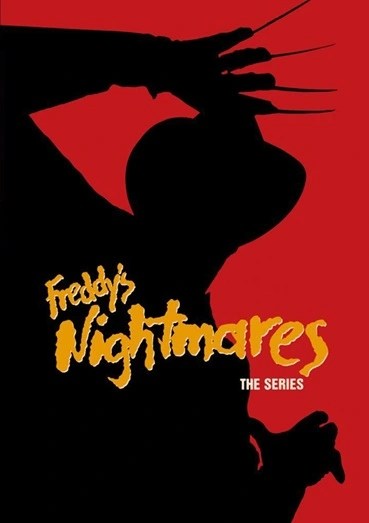
Welcome to Late Night Retro Television Reviews, a feature where we review some of our favorite and least favorite shows of the past! On Fridays, I will be reviewing Freddy’s Nightmares, a horror anthology show which ran in syndication from 1988 to 1990. The entire series can be found on Plex!

This week, dreaming saves the world.

Episode 1.12 “The End of the World”

(Dir by Jonathan R. Betuel, originally aired on January 15th, 1989)

Weird episode.

The first half of the episode featured Mary Kohnert as Amy Collins, a young woman who starts to have dreams about the past and discovers that she can change reality depending on what she does in her dream.  Most of the dreams center around the accidental death of her mother.  Amy sets about to save her mother’s life but she discovers that changing the past will always lead to unforeseen consequences.

Unfortunately, her psychiatrist (George Lazenby) rats her out to the CIA and Amy is soon being forced to work for the U.S. military.  When she senses that a soldier is planning on launching a nuclear attack and plunging the world into war, Amy is forced to do a mind-meld of sorts with him.  She watches as the army manages to break into his bunker and gun him down right before he launches the nukes.

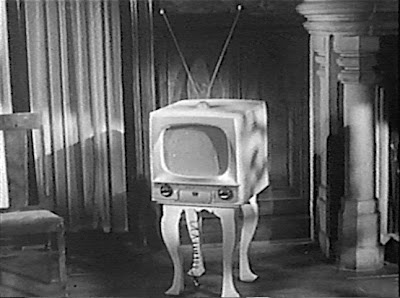
I can’t complain about a show trying something different and I actually found it interesting how the two stories were totally different in style and tone.  The second story featured a dream about a nuclear war that was pretty disturbing.  On TV, Gumby and his horse melted from the atomic heat.  That said, this episode suffered from the same flaw as many of the episode of Freddy’s Nightmares, in that it really didn’t have the budget necessary to achieve what it was hoping to accomplish.

Still, who can forget the image of Freddy Krueger riding a nuclear missile in the style of Slim Pickens at the end of Dr. Strangelove?

Along with having an interesting premise, this one also had some interesting guest stars.  Along with George Lazenby and Gumby, Walter Gotell, Andrew Prine, and Albert Hall all made appearances.  I guess when Freddy Krueger invites you, you don’t say no.

Horror On Television: Final Curtain (dir by Edward D. Wood, Jr.)


1957’s Final Curtain is a short, 22-minute film in which a mysterious man (Duke Moore) wanders around a creepy and seemingly abandoned theater.  While Dudley Manlove (who played Eros the Alien in Plan Nine From Outer Space) provides narration, the man sees many strange things in the theater.  What is real and what is merely a hallucination?  Watch to find out!

Final Curtain was envisioned, by director Edward D. Wood, as being the pilot for a horror anthology series.  Though none of the networks were interested in buying Wood’s proposed series, Wood considered Final Curtain to be his finest film and it certainly is a bit more atmospheric than the typical Wood film.  The role of the mysterious man was written for Bela Lugosi but, after Lugosi passed away, Duke Moore was cast in the role instead.

From 1957, here is Final Curtain.

The TSL Horror Grindhouse: The Sadist (dir by James Landis)


1963’s The Sadist opens with three teachers driving to a baseball game.

Ed (Richard Alden), Doris (Helen Hovey), and Carl (Don Russell) are planning on just having a nice night out but their plans change when they have car trouble out in the middle of nowhere.  They pull into a gas station/junkyard that happens to be sitting off the side of the road.  The teachers look for the owner of the gas station or at least someone who works there.  Instead, what they find is Charlie Tibbs (Arch Hall, Jr,) and bis girlfriend, Judy Bradshaw (Marilyn Manning).

Charlie is carrying a gun and he demands that the teachers repair their car and then give it to him so that he and Judy can continue their journey across the country.  Charlie has been switching cars frequently, largely because the cops are looking for him.  That’s because Charlie has been killing people all up and down the highway.  The intellectual teachers find themselves being held hostage by Charlie and Judy, two teenagers who may not be as smart as them but who have the killer instinct that the teachers lack.

It’s interesting to watch The Sadist after watching Eegah!  Arch Hall, Jr. and Marilyn Manning played boyfriend and girlfriend in that one as well but neither Hall nor Manning were particularly credible in their roles.  Hall seems uncomfortable with the whole teen idol angle of his role while Manning seemed a bit too mature for the role of a teenager.  In The Sadist, however, they’re both not only believable but they’re terrifying as well.

Charlie and Judy are almost feral in their ferocity, with both taking a disturbing glee in taunting the teachers.  Charlie kills without blinking and Judy enjoys every minute of it.  It’s easy to imagine Charlie and Judy at a drive-in showing of Eegah!, laughing at the sight of the caveman getting gunned down by the police and never considering that violence in real life is different from killing in the movies.  The teachers discover that it’s impossible to negotiate with Charlie and that Charlie’s promise not to try to kill them if they fix the car is ultimately an empty one.  And yet the teachers, dedicated to education and trying to reach even the most difficult of students, struggle to fight back.  They’re held back by their conscience, something that Charlie does not possess.  It’s intelligence vs instinct and this film suggests that often, intelligence does not win.

It’s a pretty intense and dark film, one that makes great use of that junkyard setting and which is notable for being the first film to feature the cinematography of Vilmos Zsigmond.  For those who appreciate B-movies, it’s memorable for showing that, when he wasn’t being pushed to be a squeaky-clean hero who sang sappy ballads in films directed by his father, Arch Hall, Jr. actually was capable of giving a very good performance.

The Sadist was based on the true-life crimes of Charlie Starkweather and Caryl Ann Fugate.  Interestingly enough, their crimes also inspired Terence Malick’s  Badlands.

Doctor Who — Robot (1974-1975, directed by Christopher Barry)


Robot, the first serial of Doctor Who‘s 12th season, introduced us to a new Doctor.  The Third Doctor has regenerated and in his place is a slightly younger and more eccentric man.  Robot was the first regeneration story to introduce the idea of the Doctor being disorientated after regenerating.  The Fourth Doctor (Tom Baker) wakes up without the Third Doctor’s pressing concern for Earth or the goings-on at UNIT.  At first, at least, he has the wanderlust of the First Doctor without the Third Doctor’s sense of duty.  He wants to get in his TARDIS and explore the universe.

The only thing that stops him from leaving are his companion, Sarah jane Smith (Elisabeth Sladen), and the Brigadier (Nicholas Courtney).  When they tell him that there have been some technology thefts and that they need his help to investigate, the Doctor agrees to stick around and help out.  Of course, before he investigates, he changes his costume.  Out are the Edwardian clothes that the Third Doctor favored.  In are wide-brimmed hats, trenchcoats, and scarves.  Very, very long scarves.

(His scarf in Robot is nowhere near as long as it would eventually get.)

When he was cast as the Doctor, Tom Baker was a character actor who has found some success (even receiving a Golden Globe nomination for his performance as Rasputin in Nicholas and Alexandra) but not enough to give up his part-time job as a construction worker.  When he wrote to the BBC asking for a job, the letter was forwarded to Doctor Who producer Barry Letts.  Letts, who was struggling to find someone to replace the popular Jon Pertwee, hired Baker for the role after watching Baker play a villain in The Golden Voyage of Sinbad.  (There’s a movie I might have to review before the month is over.)  Tom Baker would go on to have the longest run of any actor as the Doctor and, for years, he was consistently voted the most popular of the actors who have played the Doctor.  That’s not bad for someone who, before receiving the role, was tauntingly called “Sir Laurence” by his co-workers at the construction site.

Tom Baker was also the first Doctor that many Americans experienced.  When I was a kid and my local PBS station first started showing Doctor Who, they started with the Tom Baker years.  For many American, Tom Baker was the one who introduced them to things like the TARDIS, Daleks, and Cybermen.  Tom Baker’s Doctor, with the scarf and the sneaky smile and the eccentric humor, became an iconic figure the world over.

Considering how important Tom Baker would be to the show, it’s interesting that his first serial is nothing special.  The thefts are the work of a group of humans who want to construct a robot out of “living metal” so that they can steal Britain’s nuclear command codes and hold the world hostage.  An attempt to shoot the robot with a disintegrator gun causes the robot grows to supersize.  It develops a crush on Sarah Jane, and is destroyed by an early computer virus.  The giant robot special effects rival the dinosaurs from Invasion of the Dinosaurs for ineptitude.  The episode ends with asking Sarah Jane and UNIT’s Dr. Harry Sullivan (Ian Marter) to accompany him on a trip in the TARDIS.

The only thing that really stands out about this episode is Tom Baker’s performance as the Doctor.  I hesitate to say that anyone was ever destined to play a role but Baker is so confident from the start and seems like such a natural while interacting with veteran cast members like Nicholas Courtney, Elisabeth Sladen, and John Levene that it’s hard to believe that anyone other than Tom Baker was ever considered for the role of The Fourth Doctor.  From the start, Tom Baker just seems like be belongs there.

Robot may not have been classic Doctor Who but Tom Baker was the classic Doctor.

The Saga of the Viking Women and Their Voyage to the Waters of the Great Sea Serpent (1958, directed by Roger Corman)


The Saga of the Viking Women and Their Voyage to the Waters of the Great Sea Serpent.  That’s the title of this one and it’s far too long for a 67-minute drive-in feature.  Maybe Roger Corman thought he could fool people into thinking the movie was better than it was by giving it a pompous sounding title.

A group of Viking men leave on a voyage and never come back.  After waiting nearly a year, the remaining Viking women vote to set sail and look for them.  Leading them is Desir (Abby Dalton) and she even welcomes the bad-tempted Enger (Susan Cabot) onto their boat.  The last remaining male Viking, Ottar (Jonathan Haze), also joins the quest.

The Viking women (and Ottar) have barely set sail when a “giant” sea serpent rises out of the water and strands them on an island.  The Viking women discover that their men are being held prisoner on the island.  Even if they can rescue their men from King Stark (Richard Devon), the sea serpent still waits for them to try to return.

The Saga of the Viking Women and yadda yadda yadda is a remarkably cheap-looking epic.  A major film about the Vikings was scheduled to be released by United Artists and Corman, determined to get his movie into theaters first, shot the film in ten days and for $65,000.  Irving Block and Jack Rabin, two special effects experts, promised Corman an amazing sea serpent and instead delivered what appeared to be a water-proof puppet.  The Sea Serpent only appears in two scenes and Corman doesn’t allow us a very good view of it.  It looks like something you could have picked up at Toys ‘R Us back in the day.

There’s nothing convincing about the movie, from the costumes to the combat to the serpent.  This was one of Roger Corman’s early misfires though, released on a double bill with the Astounding She-Monster, it still made money.  People love Vikings.


October True Crime: Manson: Summer of Blood (dir by Brad Osborne)


Charles Manson was a bore.

That was one of the first thoughts I had while watching 2024’s Manson: Summer of Blood.  The film opens with Charles Manson (Wes Gillum) sitting in a prison cell, with his long scraggly hair and his gray beard.  (Actor Wes Gillum doesn’t really look like Manson but he does possess a certain resemblance to Josh Brolin.)  Manson is being interviewed about his crimes by an almost unnaturally calm man named Jacob Cohen (Joseph Boehm).

Manson goes through the usual facts of his early life.  He talks about not knowing who his father was.  He talks about spending the majority of his life in prison.  Even before he became famous as the leader of the Family, Manson was a career criminal.  Manson talks about trying to pursue a musical career in Los Angeles.  He kisses Dennis Wilson’s feet.  He gets angry when he feels that record producer Terry Melcher (Chad Bozarth) cheated him out of a record deal.  He talks about picking up hitchhikers and making them a part of the Family.  And, as he speaks, he uses all of the familiar phrases.  He talks about how the members of the Family are “your children.”  Blah blah blah blah.

For all the attention that Charles Manson was given over the course of his life, he was essentially a third-rate intellect who picked up a few key phrases in the 50s and 60s and repeated them ad nauseum.  Manson’s words and justifications meant nothing but, because he said them so often and they were slightly more poetic than the usual career criminal blathering, there were people got into their heads that Manson was some sort of rebel philosopher.  The truth of the matter was that the only people dumber than Manson were the ones who decided to live with him at Spahn Ranch.

Unfortunately, dumb people can still hurt people.  That was certainly the case with Charles Manson.  The film depicts the murders of Gary Hinman, Sharon Tate, Jay Sebring, Abigail Folger, Voytek Frykowski, and, to a lesser extent, Leno and Rosemary LaBianca.  It’s difficult to watch and that’s the way it should be.  I remember, when Once Upon A Time In Hollywood came out, there were a lot of people who objected to Rick Dalton setting “Sadie” on fire in his pool.  If those people knew even the slightest details of what Sadie — real name: Susan Atkins — actually did and said to Sharon Tate and her unborn child, they would understand why she got exactly what she deserved in Tarantino’s reimagining of that terrible night.

As for Manson: Summer of Blood, my initial reaction while I was watching it was that it was another movie that exploited a real life tragedy.  I found myself wondering why we should care what Charles Manson had to say about himself and his crimes.  But that was before the final ten minutes of the film.  The final ten minutes of the film features a wonderful twist, one that truly gave that old bore Manson the ending that he deserved.  I’m still not sure that we needed another film about Charles Manson and his crimes but I do know it would be nice if most serial killer films ended the same way was Manson: Summer of Blood.

Horror Song of the Day: Ed Wood by Howard Shore


Today would have been the 101st birthday of the pioneering indie director, Edward D. Wood, Jr!

Today’s song of the day is the theme from Tim Burton’s 1994 biopic of the director.  In my opinion, this remains Burton’s first film.  Burton also directed the musical video below while the great Toni Basil choreographed.  And, best of all, the dancer is named Lisa Marie!

4 Shots From 4 Horror Films: 1940s Part 2


This October, I’m going to be doing something a little bit different with my contribution to 4 Shots From 4 Films.  I’m going to be taking a little chronological tour of the history of horror cinema, moving from decade to decade.

Today, we continue our look at the 1940s.

4 Shots From 4 Horror Films

House of Frankenstein (1944, dir by Erle C. Kenton)

House of Frankenstein (1944, dir by Erle C. Kenton)

The Uninvited (1944, dir by Lewis Allen)

The Uninvited (1944, dir by Lewis Allen)

House of Dracula (1945, dir by Erle C. Kenton)

House of Dracula (1945, dir by Erle C. Kenton)

The Picture of Dorian Gray (1945, dir by Albert Lewin)

The Picture of Dorian Gray (1945, dir by Albert Lewin)