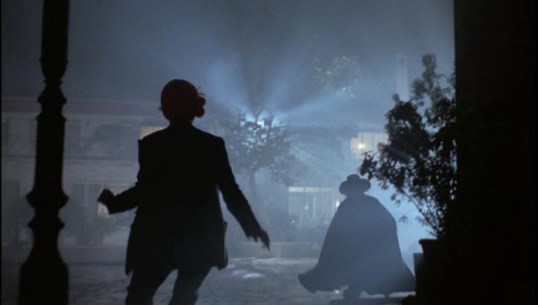
Anguish (1987, directed by Bigas Luna)


John Pressman (Michael Lerner) is a mentally unbalanced, middle-aged, diabetic mama’s boy who is losing his eyesight.  When his mother (Zelda Rubinstein) orders John to go out and collect healthy eyes, it leads to John going on a rampage that eventually brings him to a movie theater.  After he barricades everyone inside, he starts to pick off the patrons one-by-one, removing their eyes with a scalpel.

Meanwhile, in another theater, an audience watches John’s rampage on the big screen.  Is the story of John Pressman just a movie?  Maybe.  But in the audience, people start to react strangely.  A woman breaks down in tears.  When John Pressman starts to kill people in his movie, a man in the audience starts to kill people in the real theater.  When the mother in the movie-within-a-movie sends her son out to get eyes, is she after the eyes of the people in her movie or the people watching in the audience?  Has the madman in the audience been possessed by the movie or is he just another spree killer, an ever-present threat in both the movies and the real world?  And how will his rampage be stopped?

Anguish is a clever, multi-layered Spanish horror film.  Watching the film, it’s important to remember that it was produced in the middle of a worldwide moral panic about whether or not people could experience violent movies without becoming violent themselves.  At first, it seems like the film is saying that horror movies are a bad influence but then there’s a twist ending that turns the entire premise on its head.  As the movie peels away layer after layer of plot, you’ll find yourself wondering what’s real and what’s just a movie.

An unheralded horror classic, Anguish is two good movies in one.  Obviously, the film about John Pressman and his crazy mother is considerably more cheesy than the one about the madman in the “real” world but both films are full of atmosphere, suspense, and a some surprisingly grisly violence.  The movie-within-a-movie also features Michael Lerner and Zelda Rubinstein, two actors who just seem like they were destined to play a henpecked son and his crazy mother.  Lerner is one of the best character actors around and Anguish gives him a rare leading role.  Lerner makes the most of it, carefully cutting out eyeballs while his mother’s voice echoes in his head.

Anguish is a good head trip of a film.  It’s long been rumored that Anguish contains subliminal images and sounds that are designed to make the people watching feel nervous.  I don’t know if that’s true, though the film does open with the following classic warning:

During the film you are about to see, you will be subject to subliminal messages and mild hypnosis.

This will cause you no physical harm or lasting effect, but if for any reason you lose control or feel that your mind is leaving your body — leave the auditorium immediately.

Luckily, Anguish is available on DVD and Blu-ray so you can watch it in the safety of your own home.
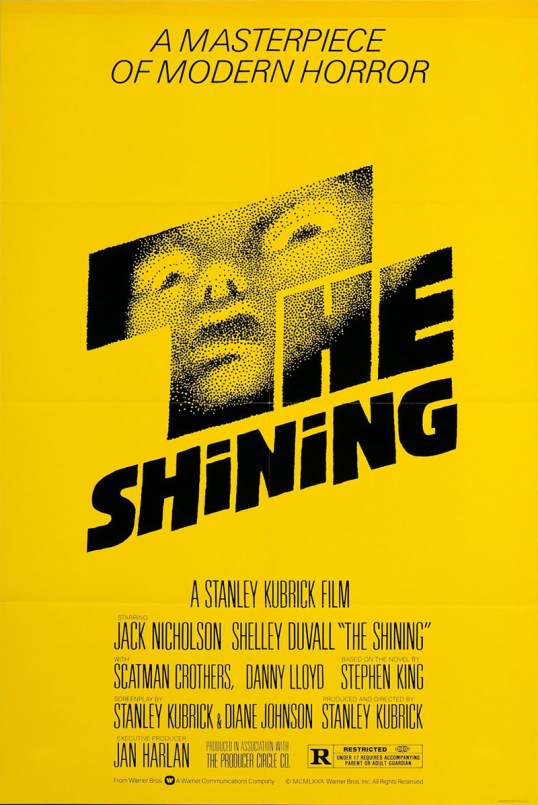
Horror Scenes That I Love: The Drive to the Overlook from Stanley Kubrick’s The Shining


As I’ve stated many times on this site, Stanley Kubrick’s The Shining is one of my favorite horror films and it’s also one of the few horror films that can still scare me even after I’ve seen it hundreds of time.  Those two little “Come and play with us” girls still freak me out and I still think about the blood pouring out of that elevator at least once a month.

That said, one of my favorite scenes from The Shining comes early on in the film.  It’s the scene where Jack Torrance (Jack Nicholson, of course) is driving his family to the Overlook Hotel for the first time.  He’s already visited for his job interview but this is the first time that his family is going to see their new home.  And, as you can tell in this scene, he already appears to be kind of sick of them.

Seriously, when someone is driving and has that expression on his face, don’t ask him about the Donner Party.

What I love about this scene is Nicholson’s obvious exasperation.  You can just tell that he’s thinking, “I’m going to be stuck in a hotel with these two for months.”  I especially love the way that he delivers the line about Danny learning about cannibalism from the television.  (Of course, I think one reason why Jack is upset is because Wendy’s the one who brought up the Donner Party, in the first place.  If you don’t want your child to know about cannibalism, don’t randomly start talking about a famous example of it.  That’s parenting 101, I’d think.)

Seriously, if I was a passenger in that car, that is exactly when I would say, “Pull over and let me out.  This is not going to end well.”

Horror Book Review: The Exorcist by William Peter Blatty


Which is better, the movie or the book?

That’s a question that’s often asked and I think the knee jerk reaction is always to say that the book was better but that’s certainly not always true.  There are a few notable cases where the film has been dramatically better than the book.  Just check out The Godfather, if you don’t believe me.  Occasionally, you’ll run into something like the recent two-part adaptation of Stephen King’s It.  The first film was dramatically better than the novel while the second film was significantly worse.

And then occasionally, you’ll have a case where the book and the movie are equally good, albeit for different reasons.  That’s the case with William Peter Blatty’s 1971 novel, The Exorcist.

The book and the movie both tell the same story.  Perhaps because Blatty served as both the writer and the producer of the film version, the movie sticks closely to the basic plot of his novel.  Regan McNeil, the daughter of an atheist actress named Chris McNeil, is possessed by a demon called Pazuzu.  It falls to Father Merrin and Father Karras to perform an exorcism.  Unfortunately, Merrin is old and in bad healthy while Karras fears that his faith might not be strong enough to defeat the demon.

Though the plot does remain the same, there are, of course a few differences between the film and the book.  As befits a novel written by a screenwriter, the book gets a bit more gossipy when detailing the production of Chris’s film.  The book also spends a good deal more time on Inspector Kinderman’s investigation into the deaths of characters like film director Burke Dennings.  In the film, Kinderman only appears in a few scenes.  In the book, he’s as important a character as Karras and it’s rather obvious that he was Blatty’s favorite character to write.  (It’s not a surprise that Kinderman was subsequently the main character in Legion, which was filmed as The Exorcist III and which starred George C. Scott as Kinderman.)  The book also spends a good deal more time on Karras’s crisis of faith.  In the film, Karras was portrayed as being initially hesitant to accept that Regan was possessed.  In the book, Karras researches the history of exorcisms and considers almost every other alternative before committing himself to performing the exorcism.  When the book was first published, those scenes were included to make the reader themselves question whether or not Regan was actually possessed.  Modern readers, however, already know that answer to that.

Myself, I appreciated the extra time that the novel spent with Kinderman and Karras.  As written by Blatty, they’re both engaging characters and Karras’s crisis of faith is actually handled with a good deal more skill in the book than in the movie.  If the movie is a nonstop roller coaster of terror, the book is a bit more thoughtful.  Whereas the movie shocks you into accepting its premise, the book actually tries to convince you that demons are real and that they’re responsible for the evil in the world.  (The books opens with a series of quotes from real-life dictators and mobsters.)  The movie aims for your gut while the book’s horrors are often more cerebral but they both get under your skin and inspire you to make sure that every door is locked and every window is closed.  Not that any of that would protect you, of course.  Both the movie and the novel understand that the scariest thing about what happens to Regan is that it’s out-of-her-control and could, in theory, happen to any of us.  Demons are going to do whatever they can.  Both the book and the film are fantastically effective and worthy of being known as horror classics.

This October, definitely be sure to watch The Exorcist and The Exorcist III.  Hell, maybe even watch The Exorcist II.  It’s not that bad!  (Okay, well, actually, it is.  But still, it’s kind of …. fun, in its way.)  But also take the time to read the books.  Doing one without doing the other is only getting half the story.

The Evil Schemes of Dr. Death


Who was Dr. Death?  His original name was Rance Mandarin and he used to be a professor at Yale University until he was driven mad by his hatred of technology.  Through the occult, Mandarin hoped to turn back time and reduce civilization back to a simpler, more primitive state.  Standing in his way were the members of the Secret Twelve, one of whom was apparently the President of the United States.

In 1935, Dr. Death appeared in three issues of his own pulp magazine, with cover art from Rudolph Zirm.  The magazine didn’t last long but it did find an audience years later when, in the 60s, Corinth Books reprinted the Dr. Death stories in paperback form.  These paperbacks all had covers by Robert Bonfils, who brought a different visual spin to the character than Zirm had.

Below are the 6 covers of Dr. Death!

by Rudolph Zirm

by Rudolph Zirm

by Rudolph Zirm

by Robert Bonfils

by Robert Bonfils

by Robert Bonfils

Finally, Dr. Death was driven mad by technology in the 1930s.  Can you imagine what would have happened to his brain if he had lived during our time?

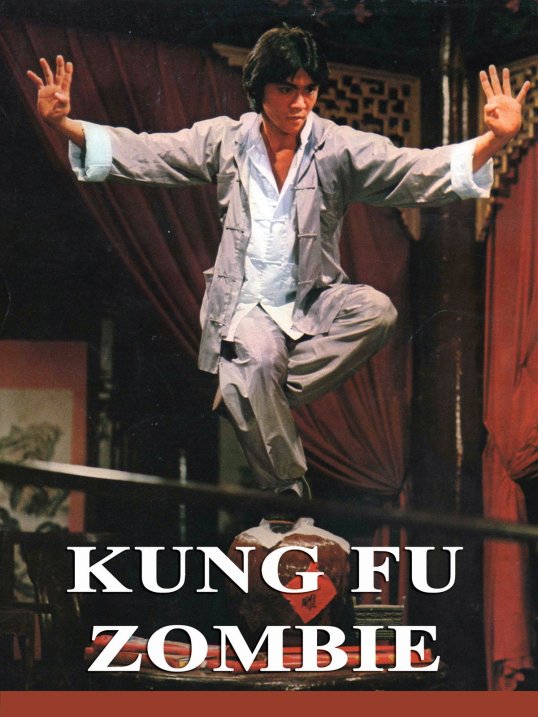
International Horror Film Review: Kung Fu Zombie (dir by Hwa I Hung)


Kung Fu Zombie, a 1981 film that was produced in Hong Kong, tells the story of….

Well, it’s a little bit difficult to explain just what exactly it tells the story of.  I’ve watched it a total of three times over the past two months and I’m still not totally sure what’s going on in the movie.  Some of that is because, like many martial arts films, it was heavily cut and haphazardly dubbed when it made it’s way over to New York’s 42nd Street theaters.  Most of it, however, is because Kung Fu Zombie is a mess.  It’s a big, glorious, wonderfully entertaining mess.

Pang (Billy Chong) is a martial artist who is respected in town but who can’t get any respect from his father.  Even after Pang foils a bank robbery and and sends the bandit, Lu Dai (Cheng Ka Ying) to prison, Pang’s father, Fong (Chang Tao), continues to say that Pang is not good enough to inherit the estate.  As if to prove his point, Fong randomly attacks Pang whenever he gets a chance.  Pang usually fights his father until Fong has a heart attack and falls over.  Pang is never sure whether or not Fong is actually dead because apparently, Fong like to pretend to be dead so that he can attack Pang while the latter is celebrating his father’s death.

Anyway, Lu Dai comes back to town and recruits the local wizard, Wu Lang (Chan Lau), to create a bunch of zombies that he can then use to kill Pang.  Wu Lang creates the zombies but they don’t do much good.  When Lu Dai summons Pangs to the local graveyard and then attacks him, Lu Dai ends up falling in a coffin and landing on a bed of spikes.  Lu Dai’s body may be dead but his spirit is still following around Wu Lang, demanding a new body.

When Pang kills yet another criminal — a serial killer named Kwan Weig Long (Kwon Young Moon) — Wu Lang tries to put Lu Dai’s spirit into Long’s body.  However, Long is so evil and Wu Lang is such an incompetent sorcerer that, instead of allowing Lu Dai to take over Long’s body, Lang’s spell instead causes Long to come back to life as a vampire.  Soon, Long is roaming through the village, drinking everyone’s blood.  Whenever Long appears, the James Bond theme song plays on the soundtrack, which is odd but enjoyable.

Meanwhile, Lu Dai still needs a body.  Fortunately, Fong has died for real.  With so many different dead people walking around, can Pang bring peace and safety to the village?

Kung Fu Zombie is thoroughly berserk movie, one that mixes well-choreographed fights with moments of bizarre comedy and even stranger horror.  Now, admittedly, the film itself isn’t exactly scary.  I mean, the vampire looks fearsome but every time he appears, the Bond music starts up and it pretty much becomes impossible to take him seriously.  But, at the same time, how can you not appreciate a movie that not only steals the Bond theme but then uses it as the calling card of a serial killer-turned-vampire?  It’s just so weird that there’s no way you can’t love it.  Really, that’s pretty much the perfect description of Kung Fu Zombie.  It’s messy but the action is nonstop and the plot is wonderfully weird.  One gets the feeling that the director and his actors just made up the story as they were going along.  It’s impossible not to love it.

Kung Fu Zombie is a gloriously chaotic film and it’s currently on Prime.  Watch it and keep a eye out for the dead.

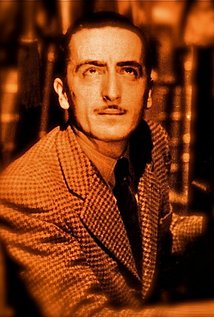
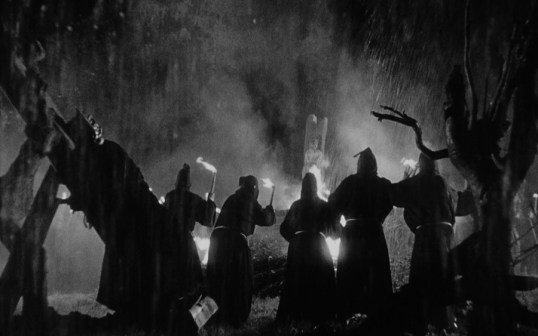
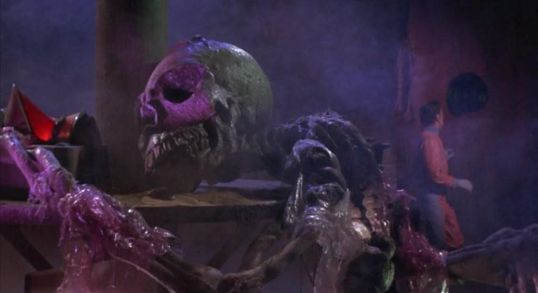
4 Shots From 4 Mario Bava Films: Black Sunday, Planet of the Vampires, Baron Blood, Lisa and the Devil


4 Shots From 4 Films is just what it says it is, 4 shots from 4 of our favorite films. As opposed to the reviews and recaps that we usually post, 4 Shots From 4 Films lets the visuals do the talking!

This October, we’re going to be using 4 Shots From 4 Films as a way to honor some of our favorite horror directors!  Today, we honor the one and only Mario Bava!

4 Shots From 4 Films

Black Sunday (1960, dir by Mario Bava)

Planet of the Vampires (1965, dir by Mario Bava)

Baron Blood (1972, dir by Mario Bava)

Lisa and the Devil (1973, dir by Mario Bava)

Horror Film Review: Blumhouse’s Fantasy Island (dir by Jeff Wadlow)


Welcome to Fantasy Island, where your fantasies come true….

Well, some of them do.  Some of them don’t.  Some of them play out ironically and some of them play out literally.  How does the island work?  Who knows?  It seems to be kind of random.  Mr. Rourke (Michael Pena) is your host and he’s got a tragic backstory of his own.  Is he a friend or an enemy?  Is he an angel or is he a devil?  Who knows?  Who cares?  The film doesn’t.

My point here is that Blumhouse’s Fantasy Island does not make much sense.  It’s about a group of people who go to Fantasy Island and each get their own individual fantasy from Mr. Rourke.  Apparently, all you have to do to get a fantasy is fill out a one-page questionnaire and have a conversation with Mr. Rourke.  It sounds like it should be fun but sometimes, people die!

Gwen Olsen (Maggie Q) visits the island so that the love of her life will propose to her and then they can get married and have a child.  Gwen’s lover, Nick (Evan Evagora), died in a fire years ago but suddenly, he’s alive and he’s proposing!  But is a fantasy family the same as a real family?

Melanie Cole (Lucy Hale) wants revenge on a girl who tormented her in junior high but is torturing Sloane (Portia Doubleday) really worth giving up her humanity and working with the fearsome Dr. Torture (Ian Roberts)?  Seriously, the dude’s name is really Dr. Torture.

Patrick Sullivan (Austin Stowell) is a policeman who wants to serve in the army, like his father did.  Patrick’s fantasy leads to him being forced to wander around in the jungle until he gets taken prisoner by a bunch of soldiers, one of whom is his father (Mike Vogel)!  Considering his father is dead, Patrick is initially shocked but then a few minutes later, Patrick’s like, “Cool, whatever”

J.D. (Ryan Hansen) and Brax (Jimmy O. Yang) are brothers who want to “have it all!”  That’s their fantasy.  For them, having it all means a big mansion, sexy models, and a nonstop pool party.  But what if having it all also means getting hunted by a drug cartel led by Devil Face (Kim Coates) and …. wait a minute.  That doesn’t make any sense at all.  If their fantasy was, “I want to be a super rich like Scarface or Escobar,” maybe it would then make sense for a drug cartel to show up but how does “having it all” lead to Kim Coates running around with a machine gun?

Anyway, needless to say, everyone’s fantasy goes differently than how they were expecting.  Eventually, all the fantasies connect because everyone has a Final Destination-style connection.  For some reason, this leads to everyone ending up in an underground cavern, where they’re chased by random killers.  I’m not sure why, to be honest.

Usually, I love incoherent movies but Fantasy Island was just annoying.  The main problem is that the fantasies were all just ripped off from other, better movies.  For instance, Melanie’s fantasy was basically just a sequel to Saw.  J.D. and Brax were in a cheap, Hulu action comedy.  Patrick and Gwen’s fantasies felt as if they were lifted from one of those religious films where someone prays and gets a chance to visit with their dead loved ones.

Now, at this point, I should say that Fantasy Island is based on an old TV show where, every week, different guest stars would visit the island and they would have a fantasy and, I assume, learn a lesson.  I’ve only seen a few episodes of the show but my impression is that the island was always portrayed as being a benevolent force.  People didn’t come to the island and say, “I want this experience” and then end up getting shot in the head.  I imagine that explained why the Island was able to remain open and popular.  In the movie, though, the Island leads to several deaths and you have to wonder why that wouldn’t hurt business.  I mean, if I survived a trip to the movie’s Fantasy Island, I’d probably call my senators and demand that the island by nuked into oblivion.  Both of my senators are Republicans so you know they’d be willing to do it, too.

Anyway, my fantasy was for Blumhouse’s Fantasy Island to be shorter than it was because the movie’s about 30 minutes too long and not really interesting enough to hold your attention during the slow spots.  Unfortunately, my fantasy did not come true.

Horror on the Lens: Satan’s Triangle (dir by Sutton Roley)


Hi there and welcome to October!  This is our favorite time of the year here at the Shattered Lens because October is horror month.  For the past three years, we have celebrated every October by reviewing and showing some of our favorite horror movies, shows, books, and music.  That’s a tradition that I’m looking forward to helping to continue this year.

Let’s start things off with the 1975 film. Satan’s Triangle!  Satan’s Triangle tells the story of what happens when a derelict boat is spotted floating in the middle of the ocean.  An attempt to rescue the boat leads to mystery, tragedy, horror, and …. well, let’s just say that there’s a reason why this stretch of ocean belongs to Satan.

Featuring atmospheric direction from Sutton Roley and a great performance from none other than Kim Novak, Satan’s Triangle is one of the best made-for-TV horror films that I’ve ever seen and I think it’s the perfect way to start off this year’s horrorthon!

Enjoy!

Music Video of the Day: Mad World, covered by Pentatonix (2020, dir by ????)


Welcome to October!

Since this is the first post of our annual Horrorthon, it only seems appropriate that today’s music video of the day should be for one of the most haunting songs ever written.  Originally recorded by Tears For Fears and then covered by Gary Jules for Donnie Darko, Mad World is a beautiful song and, if you ask me, an appropriate song for October.  After all, it’s a mad world out there.

I do have to admit that I usually absolutely hate anything a cappella.  Seriously, I usually find a cappella music to be one of the most painfully boring types of music around, second perhaps only to gospel and folk music.  However, I do like Pentatonix because they’re not as a self-important as most a cappella groups (as far as I know, they’ve never done a 10-minute version of I’ll Fly Away) and they’re from my home state of Texas.  (Y’know, home of the chainsaw massacre….)

Enjoy!