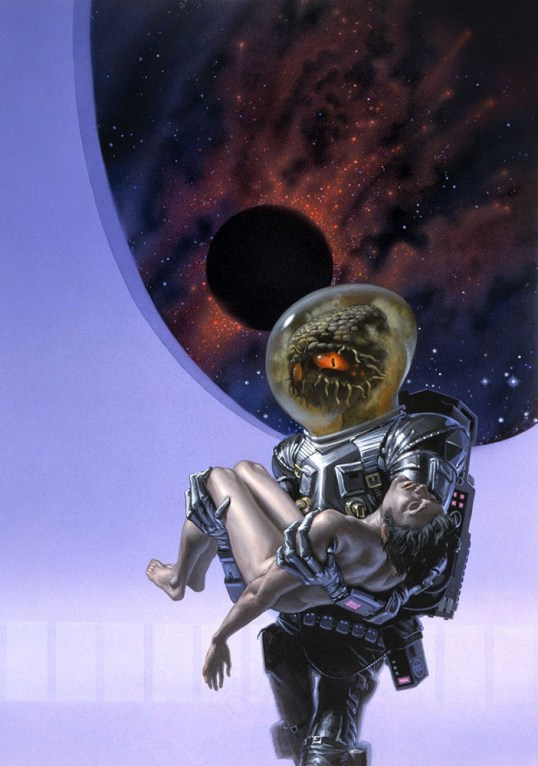
by Michael Whelan
Galactic horror.
by Michael Whelan
Galactic horror.
Is it Mad Max or is it Judas Priest?
This video was directed by Wayne Isham, who was another one of directors who did videos for almost everyone. You weren’t a real rock star unless both Wayne Isham and Nigel Dick directed a video for you.
This song appeared on Judas Priest’s 1986 album, Turbo. The album was full of songs designed to annoy Tipper Gore.
Enjoy!
On tonight’s episode of Ghost Story, Angie Dickinson plays a widow who is haunted by the ghost of her late husband’s Doberman. Agck! I’m scared enough of real Dobermans without having to deal with one that is undead!
This episode originally aired on December 15th, 1972.
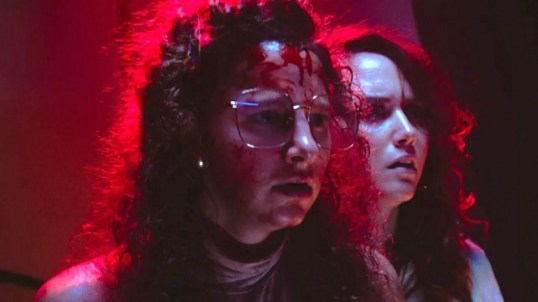
Taking place in 1980s Chicago, Revealer tells the story of two seemingly different women.
Angie (Caito Aase) is a stripper who spend most of her day in an incredibly sleazy peep show booth. The men that she dances for are a collection of grotesque pervs. (Keep an eye out and you’ll notice a sign warning that “wet dollar bills” will not be accepted. Ewww!) Angie is under no illusions about where she’s working or who is paying to watch her but she needs the money. She’s putting up with a lot of crap in order to giver her nephew the type of stable life that she’s never had and, understandably, she doesn’t have much patience for anyone who would judge her for it.
Sally (Shaina Schrooten) is someone who spends almost all of her time judging. For weeks, she has been leading protests in front of Angie’s place of employment. As soon as Angie shows up for an extra shift, she is confronted by Sally. Sally claims that Angie is “a harlot” who is leading people down the path of sin and damnation. Angie says that Sally is just jealous because she’s never truly live her life.
Together …. they solve crimes!
No, actually, they don’t. Instead, they find themselves forced to deal with some theological issues when a horned demon unleashes an army of snakes on the world. Angie is trapped in her peep show booth, with no way to get out. Sally, fleeing from the demons, ends up outside the same booth. Sally is convinced that the apocalypse has begun. Angie just wants to get back to her nephew. Despite their differing views and their initially antagonistic relationship, Angie and Sally are going to have to work together in order to survive. Along the way, hidden truths are revealed. Angie and Sally learn that they’re not so different and they even start to become friends. But does that matter, considering that the world apparently ended in 1987?
I had a mixed reaction to Revealer. On the one hand, there’s something wonderfully subversive about setting a film about the end of the world in the distant past. If nothing else, it keeps the viewer off-balance. (I was reminded a bit of how 2001’s Donnie Darko predicted that the world would end in 1988.) As well, the two leads both did a good job with their characters, adding depth and nuance to two roles that could have easily become clichés. In the role of Sally, Shaina Schrooten gave an especially good performance. I wasn’t particularly shocked when Sally revealed her big secret but Schrooten’s performance still made the scene effective.
On the negative side, the snakes were frightening but the demon who controlled them obviously fell prey to the film’s low budget and looked a bit less impressive. As well, the script itself was often overwritten. Sally and Angie’s constant debate over religion felt more than a little heavy-handed. (I mean, it’s easy to win an argument when the screenwriter is on your side.) Even more importantly, they tended to disrupt the flow of the film. Too many scenes stopped dead in their tracks so that Sally could quote the Bible and Angie could get upset about it. Since neither had anything to say about their beliefs that hadn’t already been said in a hundred other movies, their arguments were occasionally a bit dull, despite the best efforts of Caito Aase and Shaina Schrooten.
Revealer was uneven, though the ending was certainly effective and both of the lead actresses did a good job bringing their characters to life. Watching the film, I wondered if maybe the world did end in 1987 and the rest of us just haven’t noticed yet.
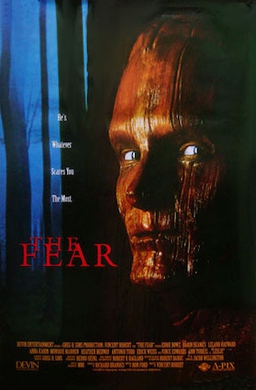 Psychology student Richard (Eddie Bowz) wants to conduct a study. After getting permission from the head of his department, Dr. Arnold (Wes Craven!), Richard gathers together a group of students and takes them to his family’s cottage. He introduces the group to “Morty,” a life-sized wooden dummy who Richard has had ever since he was a child. Morty, Richard explains, was carved by a Native American shaman and was then stolen by Richard’s grandfather. Each member of the group is told to confess their greatest fear to “Morty.” Even Richard takes part, confessing that he was scared of Morty when he was growing up.
File this one under “it seemed like a good idea at the time,” because the weekend quickly heads south. Richard’s uncle (Vince Edwards) shows up unannounced with his new girlfriend, Tanya (Anna Karin). Members of the group start to disappear and one of them is assaulted at a Christmas carnival, leading the group to suspect that one of them might be the rapist who has been attacking women on campus. Morty starts to show up in an unexpected rooms in cottage and it appears that everyone’s fears are starting to come true!
The Fear is one of those films that used to show up on late Cinemax but I mostly remember it because it was one of those movies that always seemed to be on display at our local Blockbuster. The VHS cover featured Morty giving someone the side-eye and looking dangerous. Morty is the best thing about the movie. Just looking at him is unsettling. Why would Richard be stupid enough to tell people to confess their fears to Morty?
Morty is creepy but the movie doesn’t seem to know what to do with him. Sometimes, Morty is evil and can move on his own and even seems to be capable of possessing someone. Other times, the movie seems to suggests that everything that’s happening is just in Richard’s head and Morty is just a wooden dummy. The story becomes impossible to follow as every member of the group is revealed to have a secret and Richard is finally forced to admit that there is something that he’s even more scared of than Morty. (If, as the film suggests, Morty is mostly after Richard, why does Morty first waste so much time on the other members of the group?) The Fear is not without ambition. It takes the therapy scenes seriously and Eddie Bowz does seem like he’s trying to give a believable performance as Richard. It seems like the people involved wanted to make a good movie. But once everyone’s fears start to come true and the movie moves into a ridiculous subplot about Richard and his stepsister, the movie is too disjointed to work. It doesn’t help that most of the fears are too mundane to really translate into an imaginative death scene. By the end of it all, not even Morty’s that scary anymore.
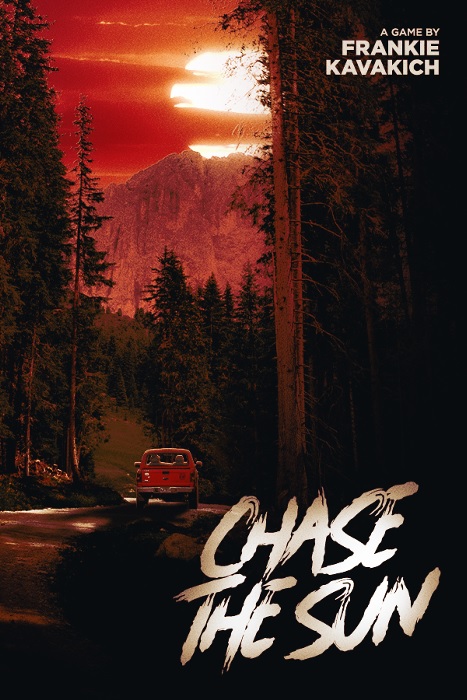
Something has gone wrong with the world. For six days straight, the sun has not set and there are reports of a storm circling the globe and flooding everywhere that it hits. Europe and Asia are gone. You are driving down a road in Pennsylvania. You’ve been driving for three days and, during the entire time, the sun has been right ahead of you.
Your choices are simple. Do you keep chasing the sun? Do you listen to the radio? Do you think about your family and the situation that you fled when it became obvious that something had gone wrong with the world? Do you stop for gas or do you ignore the warning light? Simple the choices may be but they will determine how you spend your last few days on Earth.
Chase The Sun is one of the many recent games to deal with the end of the world. One thing that almost all of these games have in common is a fatalistic view of the end. In almost all of them, the end is inevitable and it’s just a question of whether you can go out on your own terms or not. Chase the Sun is no different but what sets this game apart from so many other games is that your choices actually do make a difference. This is not one of those games where all of your choices all circle back until each game reaches the same conclusion. Instead, there are multiple endings, depending on what you choose to focus on. You have the chance to find some happiness before the world ends but it’s going to require making some smart decisions. Make the wrong decision and your ending will be far less pleasant.
The game’s descriptions are vivid and, most importantly, it’s not a game that wastes any time. It’s a game that can be played and finished within 15 minutes but, because it has so many possible endings and branching storylines, it’s also a game that reward replaying.
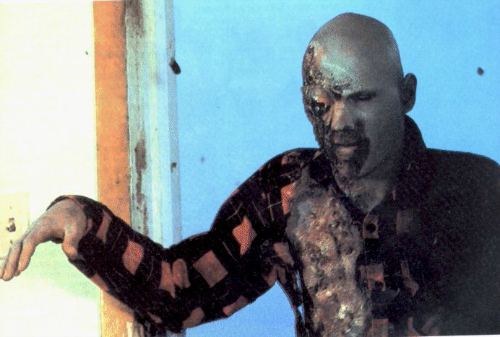
The original Dawn of the Dead, which was released in 1978 and directed by George Romero, is not only one of the most influential horror films of all time. (Even more so than Night of the Living Dead, Dawn was responsible for inspiring the Italian zombie boom.) It’s also a rather dark satire of humanity and commercialism. With the world ending, both humans and zombies head to the mall. Briefly, the humans manage to form their own peaceful society but, inevitably, they end up screwing it all up. The Dead may be slow and not particularly intelligent but, as poor old Steve discovered in that elevator, they’re absolutely determined to get what they want.
Dawn of the Dead ends with an apocalytpic combination of bikers, zombies, and one helicopter that has next to no fuel. Our two remaining survivors head off in search of some place safe but we all know that helicopter isn’t going to stay in the sky for long. In its way, the ending of Dawn of the Dead is even more bleak than the end of Night of the Living Dead. The characters in Night of the Living Dead were dealing with a menace no one understood and their inability to work together was largely the result of shock and panic. In Dawn of the Dead, everyone knows that the Dead are returning to life and everyone knows how to stop them but people still cannot set aside their differences long enough to do so. Even with the world ending, Peter gets some joy out of shooting one of the (living) bikers. His smirk suggests that one doesn’t need to be a zombie in order to sacrifice their humanity.
With the end of this film, Romero’s message is clear. Society gets what it deserves.
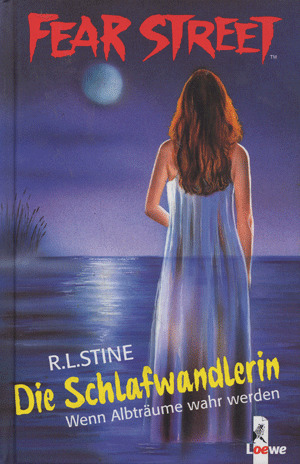
With the last R.L. Stine book that I read, I was really upset when a cat was killed in the service of the plot. In fact, I was so turned off that I pretty much just skimmed the book after the death of Mr. Jinx.
So, when I started reading 1991’s The Sleepwalker, I was understandably concerned with a black cat named Hazel made an appearance and started hissing at the main character. “Oh no,” I said, “not again!” Fortunately, Hazel not only survived the entire book but turned out to be a total badass! Hazel is exactly the type of cat that you want on your side. Not only will Hazel hiss at anyone who tries to go through your stuff but Hazel is also willing to use her claws if anyone gets out of line. Go, Hazel, go!
As for the rest of the story, Mayra is a teenager who is totally in love with Walker, who is this weird kid who is into magic. Unfortunately, Marya has a creepy ex-boyfriend named Link, who is also totally into magic. (Link, I should mention, has a sister named Stephanie who is — get this — totally into magic!) With Walker on vacation and Link acting all whiny, Marya gets a job working as a homecare assistant to old Mrs. Cottler. Mayra’s mom once worked for Mrs. Cottler and apparently, it’s good to keep these jobs in the family.
Mayra, however, soon comes to suspect that Mrs. Cottler is a witch! Afterall, Mrs. Cottler has a lot of strange occult-themed books and she also owns a black cat. (Yay, Hazel!) After one of Mrs. Cottler’s neighbors complains about her peach tree encroaching on his property, he suffers a broken hip. Soon, Mayra is having dreams about walking into the middle of a lake and, when she wakes up, she discovers that she has been sleepwalking! Could it be because Mrs. Cottler put a spell on her and is now trying to destroy her for some weird reason?
(Actually, considering that Mayra has dated two guys who are both into magic tricks and also how quickly Mayra jumps to the conclusion that Mrs. Cottler must be a witch, I think it’s far more probable that Mayra herself is using her interest in the paranormal as a way to deal with past trauma. I mean, it’s kind of remarkable that it never seems to occur to her that there might be a non-magic answer to all of her problems. I get the feeling that her belief in magic is her way of avoiding having to confront anything. That’s just my theory. For the record, I don’t believe in magic but I do enjoy reading about it.)
Anyway, even by Stine standards, this is a silly story. No one turns out to be who we originally believed them to be and it all links up to a mysterious death that occurred years before. This is one of those things where almost every issue in the book could have been resolved by people just not being stupid. But, and this is the most important thing …. HAZEL SURVIVES!
YAY HAZEL!
Are you familiar with the Astor Palace Riots?
In 1849, an English actor was selected to play MacBeth at New York’s Astor Place Opera House. Capt. Isiah Rynders, a politician who had built up a following by denouncing the rich as being wannabe Englishmen, claimed that an American actor should have been given the role and he led a protest outside the theater. When the play started, his followers pelted the stage with eggs and insults and the show had to be stopped. When another attempt was made to perform MacBeth a few days later, Rynders and his people returned. This time, the protest led to one of New York City’s biggest riots. At least 23 people died and over 130 were injured. The crowd attempted to hang the actor who played MacBeth but, fortunately, he was able to catch a train to Boston and then sailed back to England. This, of course, was not the only time that Shakespeare would be linked to violence in America. Abraham Lincoln would be assassinated by one of the country’s most popular Shakespearean actors, with some contemporaries alleging that John Wilkes Booth was inspired by Julius Caesar.
How about the 1857 police riots, which occurred when two different groups claimed the right to police New York City and spent so much time fighting amongst themselves that criminals were often allowed to go free in the confusion?
How about Kitty Ging, who was murdered by a man who claimed that another man had hypnotized him and ordered him to commit the crime?
Or the Lady Gophers, an all-female gang who developed a reputation for being tougher and more deadly than any of their male counterparts?
Or Carter Harrison, the most corrupt mayor in the history of Chicago? Everyone knew that Harrison was crooked but, when he was assassinated, the entire city mourned.
Speaking of Chicago, Chicago’s first official riot was in 1855, when the city ordered that saloons close on Sunday. It was called the Lager Beer Riot and it nearly destroyed the city.
Did you know about the attempt to abduct a school bus full of children and hold them for ransom? Did you know about Boston Corbett, the man who was celebrated for killing John Wilkes Booth but who then turned out to be a crazed religious fanatic who mysteriously vanished after performing a self-castration and then firing his pistols while standing in the gallery of the Kansas Legislature? Speaking of disappearances, whatever happened to Judge Crater?
Everyone knows about the Hatfield-McCoy feud but what about Texas’s far bloodier Horrell-Higgins Feud?
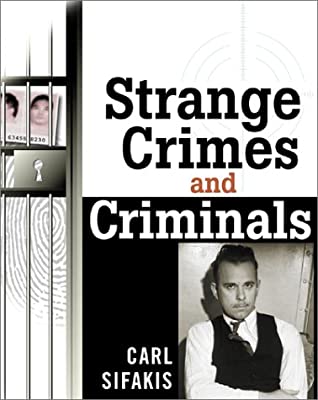
All of these crimes and many more are discussed in Strange Crimes and Criminals, which is an encyclopedia of the odd, the bizarre, and the illegal. Some of the entries are humorous. Some of them are disturbing. Some of them document man’s inhumanity to man. Some of them celebrate the spirit of people who refuse to let something like the law get in their way. It makes for interesting reading and, for the aspiring writer, it’s a treasure trove of inspiration.
It’s a strange world, isn’t it?
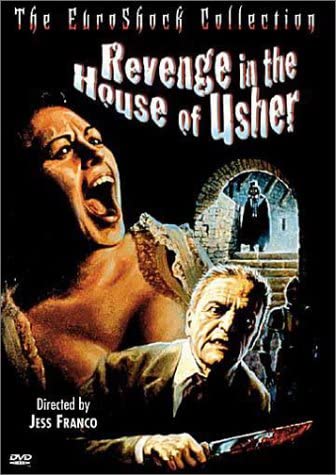
In the 1982 Spanish horror film, Revenge in the House of Usher, Antonio Mayans plays Dr. Alan Harker. Harker receives an invitation to visit the estate of his former mentor, Prof. Eric Usher (Howard Vernon). Usher is elderly and in poor health. He’s attended to by several mysterious servants, including his physician, Dr. Seward (Daniel White). While trying to figure out what has led to Prof. Usher’s current state, Harker discovers that….
Well, here’s where it gets confusing, as things tend to do whenever one tries to discuss the later films of director Jess Franco. There are actually three different versions of Revenge In the House of Usher and each one of them tells a totally different story. In the first version, Usher is revealed to have been a decadent, Giles de Rais-style serial killer who has murdered hundreds of women through the years and who is now being haunted by their vengeful ghosts. Apparently, that version didn’t go over well when it made its debut at the 1983 Festival Internacional de Madrid de Cine Imaginario y de Ciencia-ficción. The audience booed and laughed and Franco couldn’t convince any distributors to purchase the film from him.
So, Franco filmed thee more scenes that established that Usher wasn’t just a serial killer but that he was also a vampire! (This explains why two characters in this Edgar Allan Poe adaptation were suddenly given names from Dracula.) This reception of this version was not considered to be much of an improvement on the reception of the version where Vernon was just a serial killer.
With the backing of Eurocine, Franco then put together a third version of the film. This time, he turned it into another Dr. Orlof film, though Howard Vernon’s character was still referred to as being Prof. Usher. In this version, Harker discovers that Usher and his elderly servant Morpho (Olivier Mathot) have spent years abducting women from the village and using their blood to keep Usher’s daughter alive. This leads to a solid 15 minutes of flashbacks to Usher’s past activities, all of which are taken directly from The Awful Dr. Orlof. Just as in the other two version of the film, Usher is haunted by the ghosts of his victims. As his mental state deteriorates, so does his castle.
As far as I know, the third version of the film is the only one that currently exists. The first version is now considered to be lost. For his part, Franco claimed that the first version was a misunderstood masterpiece but he was still willing to turn it into another Orlof film so that he could at least make some money off of it. Franco may have been an often frustrated artist but he was also a pragmatist.
Considering its production history, it’s not surprising that Revenge in the House of the Usher is a bit of a disjointed film. It’s only 91 minutes long (and 15 of those minutes is taken up with black-and-white footage from The Awful Dr. Orlof) but this film still feels like it has several false endings. There were so many times that I thought the film had to be over, just for it to keep going. Watching the film, one can sense that Franco is willing to try almost anything to finally wrap the film’s somewhat incoherent story up. That said, Howard Vernon brings the right amount of haughty decadence to the role of the decaying Usher and Franco’s decision to film in an actual castle (and to largely utilize natural light) does give the film perhaps a bit more atmosphere than one would expect. This is a lesser Franco film but it does do a good job of capturing the bizarre logic of dreams. The film is, at times, so incoherent that it’s actually rather fascinating.
Following this film, Vernon would play Dr. Orloff one final time, in Franco’s surprisingly entertaining Faceless.
 Through the Shattered Lens