Horror Film Review: The Pit and the Pendulum (dir by Roger Corman)


The second of Roger Corman’s Edgar Allan Poe adaptations, 1961’s The Pit and The Pendulum opens in much the same way as The Fall of the House of Usher.  A young Englishman (played by John Kerr) rides a horse across a colorful but desolate landscape.  A castle sits in the distance.

Of course, as opposed to  the 19th Century British setting of The Fall of the House of Usher, The Pit and the Pendulum takes place in 16th Century Spain, at a time when the country was still scarred by the horrors of the Inquisition.  And Francis Barnard is not traveling to the castle to see his fiancée but instead, he’s searching for information about the disappearance of his sister, Elizabeth (played by the one and only, Barbara Steele).  At the castle, Francis meets Elizabeth’s husband, Nicholas (Vincent Price) and Nicholas’s sister, Catherine (Luana Anders).  Nicholas explains that Elizabeth died under mysterious circumstances, while suffering from a rare blood disorder that seemed to quickly sap away her will to live.  Nicholas’s best friend, Dr. Leon (Anthony Carbone), explains that Elizabeth died of fright after she locked herself in one of the iron maidens in the castle’s torture chamber….

Oh yes, the castle has a torture chamber.  Nicholas’s father was a leader of the Inquisition and he used the castle as a place to conduct his business.  Nicholas’s father was a madman who suspected that his wife was cheating on him.  One day, while young Nicholas was exploring the torture chamber, he witnessed his father murder both his wife and his brother.  Nicholas watched as his mother was entombed alive and ever since, he’s been terrified of the idea of premature burial.  In fact, his fear that he may have buried alive Elizabeth while she was still alive is driving him mad.  The sudden arrival of the suspicious Francis doesn’t help matters….

The Pit and the Pendulum opens with splashes of color spreading across the screen, a sign that Corman was once again in a pop art state of mind when he directed this film.  The Pit and The Pendulum takes everything that worked (and didn’t work) about The Fall of the House of Usher and it turns it all up by a notch or two.  The castle is even more gothic.  Vincent Price’s Nicholas is even more mentally fragile than his Roderick Usher, though Nicholas is also a quite a bit more sympathetic.  If Roderick was a control freak who used his family’s curse as an excuse to embrace his own authoritarian tendencies, Nicholas is just a frail man suffering from PTSD.  He’s definitely more of a victim than a victimizer … or, at least, he is at first.  Much like Mark Damon is The Fall of the House of the Usher, John Kerr is a bit of a stiff in the role of Francis but it doesn’t matter.  Vincent Price is the main attraction here and Corman’s direction shows that he understood that.

And then there’s the Pendulum.  It takes a while for the Pendulum and its swinging blade to make an appearance but when it does, it lives up to the hype.  The Pendulum swings and Corman goes all out, zooming into Price’s crazed eyes while the Pendulum comes closer and closer to its latest victim.  The images are tinted red and green and the Pendulum itself seems to swing in a slow motion, the cinematic equivalent of a nightmare come to life.

The Pit and the Pendulum is a wonderful work of gothic pop art.  Featuring Vincent Price at his most wonderfully unhinged, this is a film we should all watch this Halloween.
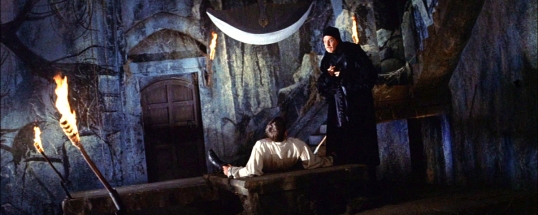
Pit and the Pendulum (1961, dir by Roger Corman, DP: Floyd Crosby)


Horror On the Lens: Creation of the Humanoids (dir by Wesley E. Barry)


The Creation of the Humanoids (1962, dir by Wesley Barry)

What makes us human?  What does it mean to have free will?  What is love?  What is freedom?  The questions and more are asked in the low-budget (and rather odd) science fiction epic The Creation of the Humanoids, which you can view below!

Now, I should warn that Creation of the Humanoids is an extremely talky film.  And the plot is occasionally difficult to follow. There’s a lot of ennui to be found in this particular film, both from the humans and those who have been built to serve them  However, I find it impossible not to love this one because it’s just such a strange movie.  I love it for the colorful set design, the contrast between the resentful robots and the paranoid humans, and the fact that the film — despite being made for next to nothing — actually has more ambition than anything ever made by several of the more successful directors working today. And, while it may not really be a horror film in the way that some of our other October films are, it still feels appropriate for the Halloween season. It just has the perfect holiday atmosphere.

First released in 1962, Creation of the Humanoids was reportedly one of Andy Warhol’s favorite films.  Keep an eye out for Plan 9 From Outer Space‘s Dudley Manlove.

Music Video of the Day: The Show Must Go On by Three Dog Night (1975, directed by ????)


Three Dog Night was a band that was prominent in the days before music videos but fortunately, they left us with a wealth of live performances that were captured for television.  I don’t know what show this was filmed for, just that it’s from 1975.  For our purposes, the MVP of this video is the keyboardist who goes out of his way to bring some Halloween flavor to the proceedings.

Originally written and performed by Leo Sayer, this cover of The Show Must Go On was Three Dog Night’s final Top 10 hit in the United States.  The best part of the song, the intro, was severely shortened for the song’s radio edit but it still became a hit.

Enjoy!

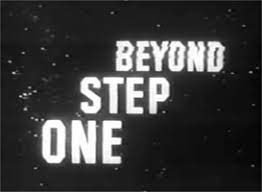
Horror On TV: One Step Beyond 1.3 “Emergency Only” (dir by John Newland)


Tonight’s episode of One Step Beyond features Jocelyn Brando (sister of Marlon) as a purported psychic who warns a skeptical man that he will soon be traveling by train, that he will meet a woman with an usual, snake-design ring, and that she will end up chasing him with a knife.

The man laughs her off.  Why, he never travels by train!  Sure, he has a trip coming up but he’s already paid for his plane tickets.  This just proves what the man has always suspected, that psychic’s are all phony!  But then he gets a message that his flight has been cancelled and he’s going to have to travel to his destination by …. TRAIN!

CAN YOU PROVE IT DIDN’T HAPPEN!?

This episode originally aired on February 3rd, 1959.

The TSL Horror Grindhouse: Boogeyman II (dir by Ulli Lommel)


Filmed in 1982 but not released until 1984, Boogeyman II is — as the name implies — the sequel to 1980’s The Boogeyman.

What’s that, you say?  You don’t remember anything about The Boogeyman and you don’t want to take the time to read my review of it?  Well, don’t worry.  It’s not necessary to have seen the original Boogeyman to follow the sequel, largely because the sequel is full of flashbacks to the first film.  Boogeyman II is only 79 minutes long and 30 minutes of that running time is taken up with footage from the first Boogeyman.  Indeed, if you want to see the good parts of Boogeyman without having to deal with any of the filler, I would recommend just watching the first 30 minutes of Boogeyman II.

There is a plot to Boogeyman II, kind of.  Having survived the massacre of her family at the farm, the now-divorced Lacey (played by Suzanna Love, the then-wife of director Ulli Lommel) goes out to California to visit her friends, actress Bonnie (Shannah Hall) and her husband, director Mickey (Lommel).  How is it that Lacey, who was portrayed as being a simple and not particularly worldly farm wife in the first film, happens to be friends with a wealthy actress and director?  It’s never really explained.

Bonnie and Mickey ask Lacey whether or not the people who killed her family were ever caught.  Lacey replies that they can’t be caught because they’re spirits.  Over dinner, Lacey tells Bonnie and Mickey the story of the shattered mirror and the killer whose spirit was trapped in the broken glass.  Bonnie and Mickey listen sympathetically, though they both think that Lacey’s crazy.  (Perhaps they noticed that Lacey’s flashbacks include scenes in which she wasn’t even present.  Or maybe they’re wondering why Lacey would take the time to apparently describe a lengthy, bondage-themed nightmare that she had during the first film.  Or maybe they’re just amazed by the presence of John Carradine in the flashbacks.)  Bonnie and Mickey also think that Lacey’s story would make a great movie!

For some reason, Lacey is still carrying around a piece of the haunted mirror.  This is the mirror that contains the spirit that possessed her during the first film and which killed the majority of her family.  I would throw that piece of the mirror away but I guess Lacey’s more sentimental than I am.  A creepy butler named Joseph (Sholto von Douglas, a rather stiff actor who still had a fascinatingly menacing screen presence) steals the piece of the mirror and soon, Hollywood phonies are dying.

Boogeyman II was directed by the late Ulli Lommel, a German director who got his start as an associate of Rainer Werner Fassbinder’s and who eventually came to America, where he hung out with Andy Warhol, directed some documentaries about the American punk scene, and married heiress Suzanna Love.  Love bankrolled Lommel’s early films, including The Boogeyman.  With Lommel, it was always a challenge to figure out how seriously he took any of his films.  In interviews, he would joke about being an exploitation filmmaker while, at the same time, claiming that his films were designed to expose the hypocrisy of American society.  Boogeyman II is full of phony Hollywood types and there’s a scene where Mickey comments that, in America, “exploitation is a genre.”  It’s probably not a coincidence that it’s the servant, Joseph, who uses the mirror to take out the film’s wealthy victims.  The opening credits of Boogeyman II appear to literally be written in magic marker.  Is Lommel mocking expensive Hollywood productions or could Lommel only afford a box of magic markers?  I suppose both could be true.

The best parts of Boogeyman II are the flashback to the first film, which was a genuinely atmospheric horror film with some serious pacing issues.  The rest of Boogeyman II is dull, though you do have to appreciate the sense of ennui that Lommel brings to the proceedings.  Was the ennui intentional?  That’s the mystery of Ulli Lommel.

As for Lommel, he and Love eventually divorced and Lommel ended his career making trashy true crime films that went direct-to-video.  As usual, Lommel claimed that his crime films were meant to be a serious critique of everything that was wrong with America.  Lommel’s true crime films have none of the atmosphere or occasional flashes of wit that distinguished Lommel’s earlier films.  Was Lommel an incompetent director or was he a subversive artist?  Again, both could be true.  Lommel died in 2017, bringing to close an enigmatic career.

The Strange Case Of The End Of Civilization As We Know It (1977, directed by Joseph McGrath)


It should have been so much funnier.

After someone is obviously meant to be Henry Kissinger (played by Ron Moody) is assassinated when he loses his diary and extends the wrong greeting to a welcoming party in the Middle East, someone claiming to be a direct descendant of the infamous Prof. Moriarty sends a letter to the U.S. President (Joss Ackland) taking responsibility and claiming that it’s the first step in a plan to control the world.

Who better to stop the descendant of Moriarty than the descendant of Moriarty’s greatest enemy?  Arthur Sherlock Holmes (John Cleese) operates out of Baker Street with Dr. Watson (Arthur Lowe), who is bionic, and their housekeeper, Miss Hudson (Connie Booth).  Holmes solution to bringing out Moriarty is to host a gathering of the world’s greatest detectives and to dare Moriarty to try to take them out with one fell swoop.  Soon, everyone from Sam Spade to Columbo to McCloud is showing up at Baker Street.

This is a joke-a-minute comedy.  The jokes that work are funny but, unfortunately, there aren’t many of them.  Some bits, like Joss Ackland’s impersonation of Gerald Ford, start off well and then go on for too long.  Other bits, like the famous TV detectives showing up at Baker Street, have potential but fail due to poor execution.  Unfortunately, much of the humor is just not that clever to begin with, which is not something that anyone would expect from a script co-written by John Cleese.  As an actor, John Cleese is funny but underused, playing Sherlock Holmes as being an even denser version of Basil Fawlty.  Arthur Lowe’s comedic befuddlement is consistently amusing but I wish the script has done more with the idea of him being bionic.  Connie Booth is both funny and sexy and the best reason to watch this misfire.

Scenes That I Love: Lou Ferrigno Battles A Bear in Luigi Cozzi’s Hercules


Today’s scene that I love comes from Luigi Cozzi’s 1983 epic, Hercules!

In this scene, Hercules (Lou Ferrigno, making up for his lack of range with nonstop and likable sincerity) shows us the proper way to deal with a rampaging bear.  There have been a lot of film versions of Hercules, some good and some bad.  But none were quite as cheerfully weird as the Hercules that was given to us by Lou Ferrigno and Luigi Cozzi.

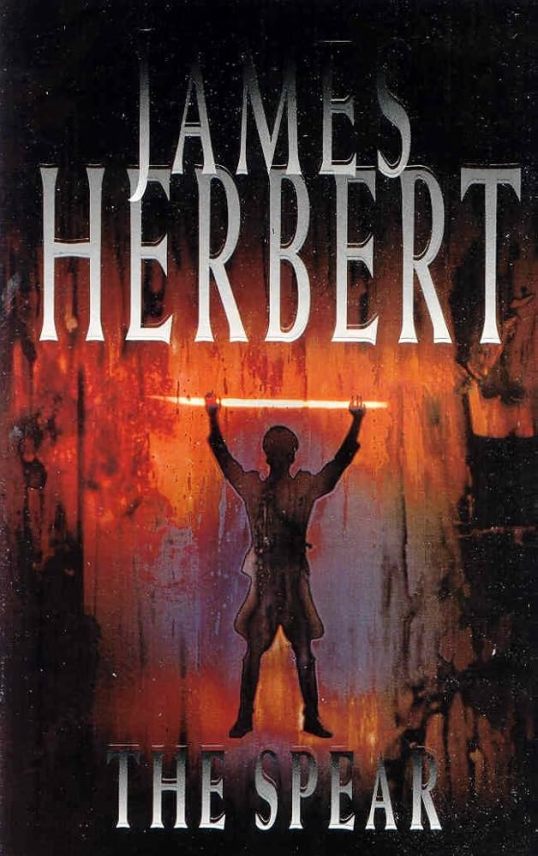
Horror Novel Review: The Spear by James Herbert


In the 1978 novel The Spear, Harry Steadman is an ex-Mossad agent who is now a private investigator.  Steadman is hired to investigate the disappearance of another Mossad agent and soon finds himself caught up in an international conspiracy of wealthy and high-rnking Neo-Nazis who are hoping to use the Spear of Longinus to resurrect the feared head of the SS Heinrich Himmler!

The Spear is a fast-moving mix of horror and action.  Imagine James Bond if Bond found himself battling ancient demons and you have an idea of what The Spear is like.  As often happened to James Bond, Harry Steadman is lucky to be dealing with a bunch of villains who just can’t stop themselves from stopping the action to lay out all of their plans.  That said, the book does a good job of creating an atmosphere of paranoia and unease as Steadman finds himself going up against an occult conspiracy that involves some of the most powerful people in the world.  Like all good paranoia thrillers, The Spear creates a world where literally no one can be trusted.  The action is frequently over-the-top and the horror is memorably gruesome.  A scene involving a crucifixion is particularly nightmarish.  Harry Steadman is a compelling hero, one who doesn’t love violence but who understands what’s at stake.  The Spear does not shy away from discussing the evil of the Nazis and, in today’s world where anti-Semitism is on the rise and where people are openly making excuses for Hitler and arguing that the Allies were somehow not the good guys in World War II, Herbert’s novel feels very relevant to the world today.

The Nazis search for ancient artifacts and Himmler’s belief that their power could be wielded for Germany also inspired Raiders of the Lost Ark and Indiana Jones and The Last Crusade.  A former chicken farmer and a committed Pagan, Himmler was reportedly a strong believer in the power of the occult and there is some speculation that, along with the Lost Ark of the Covenant, Noah’s boat, and the Holy Grail, the Spear of Longinus was one of the artifacts that Himmler instructed his agent to search for.  For all the time that they spent searching, the Nazis apparently never found any of the artifacts that they believed would deliver them to victory.  By the end of World War II, even Himmler was secretly negotiating with the Allies.  At the war’s end, Himmler committed suicide while in custody of the Allies.

Of course, the real Holy Lance was discovered in Antioch during the Crusades and currently sits in the Manoogian Museum in Vagharshapat, Armenia.


October True Crime: An Officer and a Murderer (dir by Norma Bailey)


Gary Cole is an interesting actor.

He’s handsome in a distinguished way, even if he’s played some roles that have required him to play down his looks.  (Think about his perm in The Brady Bunch Movie or the glasses that he wore in Office Space.)  He’s not exactly movie star handsome but he’s definitely good-looking enough to be the star of his own detective series.  He’s got the authoritative voice of someone who you instinctively trust.  You look at Gary Cole and you see someone who knows what’s going on and who you would probably trust in a crisis.

At the same time, with just about every character that Cole has played, there’s always been a sign of something lurking behind the friendly smile and perfect haircut.  At the very least, there’s usually a hint of a threat concealed behind his polite manner.  Gary Cole is the ideal actor to play a character who has secrets to hide, whether he’s playing Mike Brady as someone who cheerfully offers up nonsensical advice or telling one of his employees that he’s going to need to come in over the weekend.  It’s hard to trust a character played by Gary Cole.  Cole has appeared in a wide variety of films and shows.  As anyone who has seen Veep can tell you, Gary Cole can be a very funny actor.  But where Gary Cole really shines is when he plays the bad guy who no one suspects is a bad guy.

In 2012’a An Officer and A Murderer, Gary Cole plays a very bad guy indeed, Russell Williams.  Williams is a colonel in the Canadian Air Force.  He’s such a highly respected figure that he was given the job of flying with the Queen of England when she last visited Ontario.  Williams has a big house in the suburbs.  He has a beautiful wife (played by Nahanni Johnstone).  His neighbors love him and they all say hi whenever he’s out for his morning run.  Williams had just been appointed the new commander of the local Canadian Air Force base.  He’s a respected and beloved figure who raises money for charity, mentors younger pilots, and seems like the ideal gentleman.

But at night, Russell Williams sneaks out of his house and breaks into the homes and apartments of single women.  He starts out as an underwear thief, obsessively cataloging all of the bras and the panties that he steals from each house.  Unknown to his wife, he has two suitcases filled with stolen underwear.  Occasionally, he even wears them himself.  The two detectives (played by Laura Harris and Rossif Sutherland) who investigate the break-ins theorize that the perpetrator is going to start to escalate his activities and Williams soon does just that. Williams assaults a young mother, blindfolding her and then filming her while he poses with her.  He breaks into another house and removes his clothes while he stares at the homeowner showering just a few feet away.  Eventually, two women are murdered.  The detectives suspect Russ but can they get him to slip up and give them the evidence that they need to arrest him?

An Officer and A Murderer is based on a true story, which makes it all the more disturbing to watch as Williams breaks into his neighbor’s homes and even tries to frame an innocent man for his crimes.  Watching this movie, I found myself wondering about all of the neighbors that I’ve had over the years.  Part of living in neighborhood is trusting the people around you but how well do we know the people who are living just a few houses or a few apartment away from us?  An Officer and a Murderer tells a sordid story and occasionally, it lingers over the details of Williams’s crimes to such an extent that you worry that Williams’s real-life victims are being exploited all over again.  That’s always an issue with films about real-life crimes.  That said, Gary Cole gave a genuinely frightening performance as Russell Williams and, if nothing else, the film reminded me to make sure that all of my doors and windows are locked tonight.