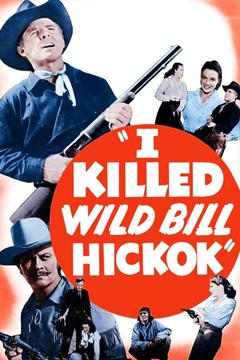
This low-budget western programmer tries to draw viewers in by using the name of an icon of the old west but it doesn’t take place in Deadwood, there’s no poker game, no dead man’s hand, and Wild Bill (Tom Brown) is presented as being a corrupt sheriff who works for evil businessman Jim Bailey (Denver Pyle). Denver Pyle, we all know him best as Uncle Jesse on theDukesofHazzard. He’s a bad guy here, the film’s Boss Hogg.
Our hero and the man who kills Wild Bill Hickok is a horse trader Johnny Rebel, who tells his story in flashback and who is often called “Mr. Rebel.” Johnny Rebel is played by Johnny Carpenter, no relation to the director. This Johnny Carpenter was a stunt man who took control of his career and wrote and played lead in a series of forgettable B-westerns, like this one. Carpenter probably could have been quite the hero in the Poverty Row days, when fast-paced westerns were being released on a weekly basis and directors and actors knew exactly what a matinee audience wanted. By the time IKilledWildBillHickok came out, westerns had started to grow up.
There’s the usual amount of stock footage. Director Richard Talmadge was himself a former stunt man so he does get a few good stunts into the last 15 minutes of the movie. Before the final gun battle, this movie about Wild Bill Hickok is nowhere near wild enough.
Painter Bob Randolph is famous for painting a beautiful woman who is known as “the Randolph Girl.” Everyone wants to meet the model but they can’t because there is no one model. Instead, there are a dozen models, each with a perfect feature that Bob uses in his paintings. In need of money, Bob and his business partner, Chuck Donavon (Eddie Bracken) search for a woman who can be the real-life Randolph Girl. Chuck thinks that he’s found her when he spots school teacher Ruth Wilson (Virginia Mayo) but Ruth has no interest in being a model. She wants to be known for how she thinks and not how she looks. Hoping to change her mind, Randolph pretends to be Czech immigrant and enrolls in Ruth’s citizenship class.
When a photograph of Ruth in a swimsuit is published without her prior knowledge, the school board decides that Ruth is not a good role model and they fire her. With the support of Bob and Chuck, Ruth sues for reinstatement. Bob ends up posing in the courtroom in his own swimsuit, the better to prove that there’s nothing wrong with appearing in public in a swimsuit.
The role of Ruth was originally offered to Lauren Bacall, who turned it down because she didn’t think she could play a pin-up. Not to knock Bacall but Virginia Mayo does seem like a better choice for the role of Ruth and she does a good job of bringing the role to life. She proves to be a good match for Ronald Reagan, whose amiable nature allows him to get away with taking her class under a false pretext and speaking in a mangled approximation of a foreign accent. The comedy is light and it fits well with Reagan’s affable screen presence. The film is pleasant but ultimately lightweight and forgettable. I can understand why, by this point in his career, Reagan was getting frustrated with the quality of scripts he was being sent. The Girl From Jones Beach would be forgotten today if it didn’t star the future president of the United States.
A decade before the start of the American Revolution, the British have managed to force the French out of the Great Lakes region. Fort Detroit has been established to oversee the area and provide protection from the Odawa tribe. Chief Pontiac (Lon Chaney, Jr.) believes that the Odawa and the White Man can live in peace but his beliefs are challenged when the British bring in a brutal German mercenary, Col. von Weber (Berry Kroeger), to patrol the land. After Col. von Weber and his soldiers massacre a village, Pontiac and the Odawa prepare for war.
Lt. Kent McIntire (Lex Barker, who was best known for playing the role of Tarzan in several movies) is a Colonial officer and a scout who is convinced that he can broker a peace between the Odawa and the British. Odawa respects and trusts McIntire but when von Weber tries to wipe the Odawa out by sending them small pox-infected blankets, Pontiac realizes that there can be no peace and he launches an attack on Fort Detroit.
Though hardly a great film, Battles of Chief Pontiac deserves some credit for its sympathetic portrayal of the Odawa People. From the start, the film makes clear that everything that the Pontiac does, he does out of self-defense. Even the most enthusiastic of his warriors, Hawkbill (Larry Chance), is not fighting because he wants to fight but he’s fighting because it is evident that von Weber is not going to leave the Odawa any other choice. Though the small pox-ridden blankets were actually given to a different tribe, just the fact that Battles of Chief Pontiac acknowledges that it happened sets it apart from many other B-movies of the period. Though not a Native American himself, Lon Chaney, Jr. gives a surprisingly dignified performance as Pontiac and he doesn’t allow the character to become a caricature. Again, that alone is enough to set Battles of Chief Pontiac apart from a lot of the other films of the period.
Battles of Chief Pontiac still cheats by laying the blame on the Hessians, the German mercenaries who, historically, were not even present in North America until they were hired by the British during the American Revolution, which happened ten years after Pontiac’s siege of Fort Detroit. Berry Kroeger plays Von Weber as if he was a high-ranking Gestapo officer who somehow found himself in the 18th Century. By making Von Weber the villain, the film lets the British off the hook. The only mistakes that the British officers make in Battles of Chief Pontiac is that they trust a German and fail to listen to the advice of the all-American Lex Barker.
Battles of Chief Pontiac has a narrator who sounds like he would have been better suited for an educational filmstrip about hygiene and its epic ambitions are thwarted by its low-budget. There’s a not very interesting love story between McIntire and a white woman (Helen Westcott) who is being held prisoner by the Odawa. The movie’s intentions go a long way towards making up for the flaws but they can’t do all the work. At least, Barker, Chaney, and Kroeger manage to keep thing interesting.
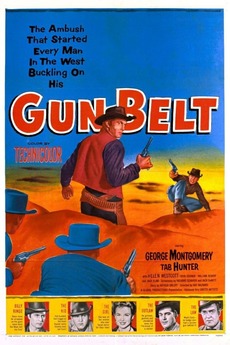
Outlaw Matt Ringo (John Dehner) escapes from prison and reunites with his old gang. Riding out to Tombstone, Matt tracks down his son, Chip (Tab Hunter). Chip is now living with his uncle, Billy Ringo (George Montgomery). Billy was once a member of Matt’s gang but he’s gone straight, he’s given up his guns, and he now has a ranch of his own. Billy tries to keep the naive Chip from idolizing his father but Chip is bored with life on the ranch. Matt not only works to turn Chip against his uncle but he also frames Billy for a bank robbery. With the town convinced that Billy has returned to his outlaw ways, Billy has no choice but to reach out to the most honest lawman in town, Wyatt Earp (James Millican).
The most interesting thing about this western is the way that it blends real people, like Wyatt and his brother Virgil (Bruce Cowling), with characters who were obviously fictionalized versions of the participants in the gunfight at the OK Corral. The Ringos are obviously based on Johnny Ringo who, as anyone who has seen Tombstone has seen you, never went straight in real life. Meanwhile, the head of the gang is named Ike Clinton. Did someone misspell Ike Clanton’s name while writing the script or was the name really changed for some unknown reason? Ike Clanton wasn’t around to sue over the way he was portrayed in the movie.
Beyond the mix of a little truth with a lot of fiction, Gun Belt is a traditional western with bad outlaws and upstanding lawmen and a naive cowpoke who has to decide whether he wants to follow the path of good or evil. George Montgomery has the right presence to be a believable as both a retired outlaw and rancher and James Millican brings quiet authority to the film’s version of Wyatt Earp. Western fans will be happy to see Jack Elam in the role of one of the gang members. The only really false note is provided by Tab Hunter, who comes across as very young and very callow and not believable at all as someone who could work on a ranch or successfully pursue a career as a professional lawbreaker.
Seven years after it was released, Gun Belt was remade as Five Guns To Tombstone.
The 1952 film, Loan Shark, opens with a familiar film noir situation.
A man walks down a dark city street. Judging from the way that the man keeps looking over his shoulder, he’s obviously nervous about something. Suddenly, we hear two sets of footsteps approaching him and it quickly becomes apparent that the man has good reason to be so nervous. The man is being pursued by two gangsters. (We know that they’re gangsters because of the suits and the fedoras.) The gangsters toss the man in an alley and proceed to beat the Hell out of him.
The local tire factory has a problem. Though its employees are highly valued, they’re not highly paid. In order to make ends meet, many of them have resorted to gambling. Plant foreman Charlie Thompson (Russell Johnson) always seems to have the latest tip on a sure thing. Interestingly enough, the tips never seem to pan out and, as a result, the workers are forced to go to the local loan shark, Lou Donelli (Paul Stewart). Lou always loans them the money but he charges exorbitant interest and, when the workers can’t pay back the loans, he sends his thugs to beat them up. The factory’s management knows that they have to do something to take this loan shark out of commission.
Now, what would you do if you were a part of management? Would you go to the police and maybe see if they could arrange to put a trained undercover cop in your factory? Or would you hire an ex-con and tell him to just take care of it on his own?
The ex-con in question is Joe Gargen (George Raft). He’s just been released from prison, though the film is quick to point out that Joe didn’t really do anything that bad. He just hit a guy who was being obnoxious. The guy fell back and hit his head and, as a result, Joe was charged with assault with a deadly weapon. (As Joe explains it, he’s a former boxer and, as a result, his fists are legally considered to be deadly weapons.) When Joe is first offered the clandestine job at the tire factory, he turns it down. As he explains it, he’s not looking to get in any more trouble with anyone. But then when the loan sharks kill his brother-in-law, Joe reconsiders.
Soon, Joe is working at the tire plant. (If you’ve ever wanted to see, in meticulous detail, how a tire is made, this is the film to watch.) After Charlie gives him a bad tip on a horse, Joe finds himself in debt to Donelli. However, when Joe manages to beat up the thugs that Donelli sends to collect, Joe finds himself with another job offer. Soon, Joe is working for the loan sharks! Because he can’t reveal that he’s undercover, everyone — from the administrative assistant (Dorothy Hunt) who he once took dancing to his own sister (Helen Westcott) — is disgusted by Joe’s actions. Joe finds himself a pariah but he’s still determined to discover the identity of Donelli’s boss.
With it’s combination of the mob and exploited blue collar workers (not to mention it’s use of an ex-boxer as its protagonist), Loan Shark lightly treads on the ground that would later be covered, in a far more exacting manner, by On The Waterfront. Unfortunately, Loan Shark suffers a bit from the miscasting of George Raft in the lead role. Raft was a charismatic actor but, when he made Loan Shark, he was 51 and looked about 9 years older. When Raft shares what is meant to be a romantic dance with Dorothy Hart, he looks more like a proud father dancing with his daughter at a wedding reception than anything else. Loan Shark is one of those films that calls out for a younger actor, a William Holden or maybe a John Garfield. That said, Raft was a genuine tough guy and, despite his advanced age, he still looked like he could go a few rounds.
That said, Loan Shark is a tough and shadow-filled film, one that features some genuinely exciting fight scenes. Miscast or not, when George Raft throws a punch, you believe it.
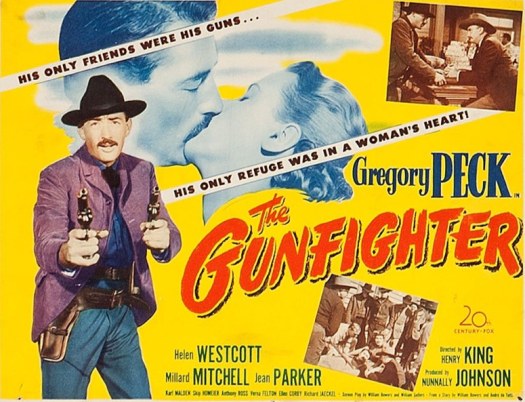
By the late 1940’s, the Western was beginning to grow up. Films like Robert Wise’s BLOOD ON THE MOON (1948), Mark Robson’s ROUGHSHOD (1949), and William Wellman’s YELLOW SKY (9149) incorporated darker, more adult themes than the run-of-the-mill shoot ’em up. Henry King’s THE GUNFIGHTER tackles the still-relevant issues of celebrity culture and the price of fame, personified by Gregory Peck as Jimmy Ringo, a notorious fast gun whose reputation brings him the adulation of the masses but little peace.
Jimmy Ringo is weary of being challenged everywhere he goes by young punks eager to make a name for themselves. When one such punk (played by a young Richard Jaeckel) draws on him at in a saloon, he quickly learns how Jimmy earned his fast-draw rep. Problem is the punk has three brothers who “ain’t gonna care who drew first”. Ringo once again hits the trail, heading for the town…
 Not that Wild Bill Hickok!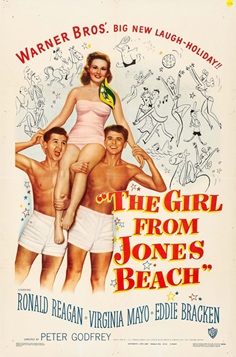


 Through the Shattered Lens