Retro Television Review: St. Elsewhere 2.16 “After Dark”


Welcome to Retro Television Reviews, a feature where we review some of our favorite and least favorite shows of the past! On Fridays, I will be reviewing St. Elsewhere, a medical show which ran on NBC from 1982 to 1988.  The show can be found on Hulu and, for purchase, on Prime!
This week, it’s time to name the Doctor of the Year!

Episode 2.16 “After Dark”

(Dir by Eric Laneuville, originally aired on February 29th, 1984)

It’s time for the annual end-of-the-year dinner, during which the Women’s Auxiliary will announce their pick for Doctor of the Year.  Last year, to Dr. Craig’s shock, Westphall won the award.  This year, Dr. Craig is sure that he’s going to win.  Even though Craig says that he doesn’t care about awards, he still has his wife, Ellen (Bonnie Bartlett), write out a speech for him.

The dinner is just as boring as usual.  The majority of the doctors who show up mention that their spouse couldn’t make it because they suddenly came down with the flu.  When it is time to announce the Doctor of the Year, Dr. Craig prepares to accept the award.  However, the award is given — for the second year in a row — to Dr. Westphall!

Seriously?  I mean, what the Heck?  Nothing against Dr. Westphall but what exactly has he done to deserve the award this year?  Dr. Auschlander has continued to see patients while battling cancer.  Dr. Craig performed a heart transplant!  Meanwhile, Dr. Westphall has dealt with the administrative stuff and been kind of grumpy.  I’m totally on Dr. Craig’s side here.  There’s no way Westphall deserved that award for two years running.

Westphall, himself, had to leave the awards dinner early because of an emergency at the hospital.  (More on that below.)  Dr. Craig accepts the award in Westphall’s place and — surprise! — gives a sincere speech about how much he appreciates Dr. Westphall’s leadership.  Good for Dr. Craig!  That said, there’s no way Dr. Westphall deserved the award this year.

Meanwhile, Kathy Martin, who we last saw being raped by Peter White in the morgue, is missing.  Peter wanders through the hospital in a narcotic-induced haze, carrying his ski mask in his pocket.  He nearly attacks Shirley.  He does attack Wendy Armstrong and this time, he doesn’t even put on his ski mask.  Fortunately, Fiscus hears Wendy’s screams and knocks Peter out with a fire extinguisher.  Peter is taken away by the police while Westphall heads to Peter’s home to tell Peter’s wife that her husband is the Ski Mask Rapist.

Victor is thinking of getting divorced.  Bobby, on the other hand, decides to ask Joan to marry him.  And Dr. Morrison continues to get too involved with his patients.  When Joseph (Dan Hedaya), a construction worker dealing with random bouts of blindness, is told that he’ll have to quite job, Morrison calls out a fellow doctor being callous.  Good for Morrison!

The episode, a well-acted one that deftly mixed drama and comedy, ended with some unanswered questions.  Peter’s been arrested.  Is he gone for good?  And where is Kathy Martin?  And seriously, how did Dr. Westphall win that award!?
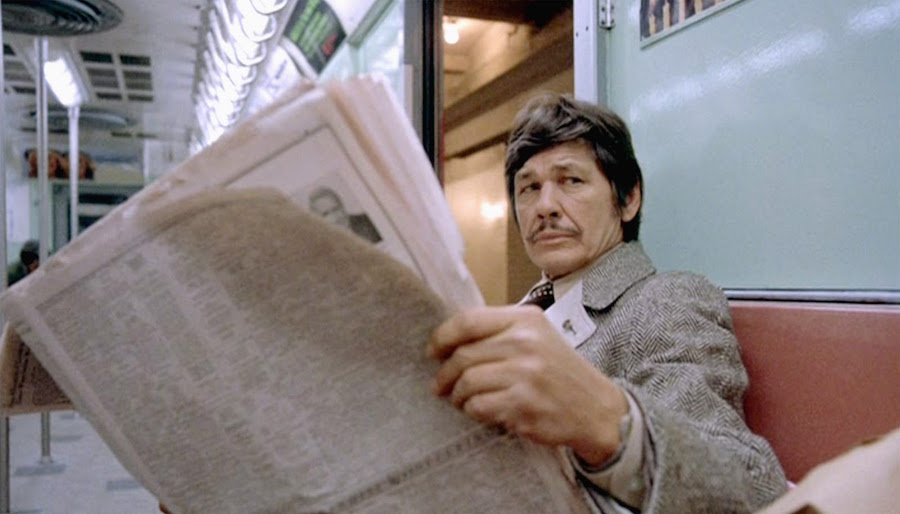
DEATH WISH – It’s a wonderful life…at least it has been for me!


Over the next 5 days, I will discuss Charles Bronson’s DEATH WISH series in chronological order. This series has brought me countless hours of entertainment over the last 40 years, so enjoy and let me know your thoughts!

“Don’t ever make a death wish, because a death wish always comes true!” – I’ve always thought this was kind of a corny saying on the original DEATH WISH trailer, but as one of the world’s biggest Charles Bronson fans, I still hold the original DEATH WISH (1974) in extremely high regard. This is the 70’s revenge classic that made Bronson a box office superstar in his home country, while simultaneously influencing the way vengeance was depicted on screen for decades to come. DEATH WISH is one of the most underrated and influential films from a decade that was full of great films.  

If you’re reading this review, I’d be about 99% positive that you know the basic story of the film. Charles Bronson plays Paul Kersey, a conscientious objector whose wife is killed and whose daughter is raped by a group of criminal thugs in New York City. When the police are incapable of providing justice, Kersey turns into a sidewalk vigilante and stalks the streets and subways of New York, luring thugs to mug him so he can shoot them with his 32-caliber Colt Police Positive pistol. Vincent Gardenia plays detective Frank Ochoa, who’s put in charge of finding the vigilante and putting an end to his one-man mission of justice.  

It’s been 50 years since DEATH WISH was released into theaters and it’s hard to fathom just how controversial the film was in its time, especially since I wasn’t even 1 year old when it was released. The graphic rape scene that kicks off the events of the film, combined with the vigilante subject matter, turned off so many big stars, including Jack Lemmon, Henry Fonda and George C. Scott. This opened up the door for Charles Bronson who didn’t have any such misgivings. They just didn’t understand what a nerve the film would touch with the filmgoing public, who were tired of their cities being overrun by violent criminals. The movie became an audience participation movie unlike any others of the time with cheering in the seats every time Kersey offed another criminal. The controversial film became one of the top box office hits of the year and the biggest of Bronson’s career. 

DEATH WISH was the fourth of six films directed by Michael Winner and starring Charles Bronson. In typical Winner fashion, the film has some strange touches, but the director is extremely effective in building the motivation for vigilante justice that was required for the film to thrive. He handles the action sequences well, and his cast is outstanding. Bronson & Gardenia are perfect in the lead roles, and the lovely Hope Lange has the brief, infamous role as Kersey’s brutalized wife. Stuart Margolin is especially memorable as the Arizona businessman who gives Kersey his gun. There are also a number of actors in small roles who were not well known when the movie was made who would go on to successful film careers. The biggest is Jeff Goldblum who has the most memorable role of the three muggers who attack Kersey’s wife and daughter at the beginning of the film. It’s a brief, but no holds barred performance for sure. Oscar winning actress Olympia Dukakis has a small role as a cop who expresses her frustration about the amount of leg work expected of her by Detective Ochoa. And finally, Christopher Guest has one scene as a young cop who finds the wounded vigilante and recovers his gun.  

On a personal note, this film holds a special place in my heart as the first Charles Bronson film I ever saw. It was probably in 1984 or ‘85, and I stayed up with my dad to watch the late movie on our local TV station. The movie happened to be DEATH WISH. As bad things were happening to Kersey’s family at the beginning of the film, my dad told me not to worry, that “Charles would get them.” That intrigued me and let me know that Bronson had a reputation that preceded him. From that point forward, I wanted to rent a Charles Bronson film every time we went to the video store. And the rest, as they say, is history!

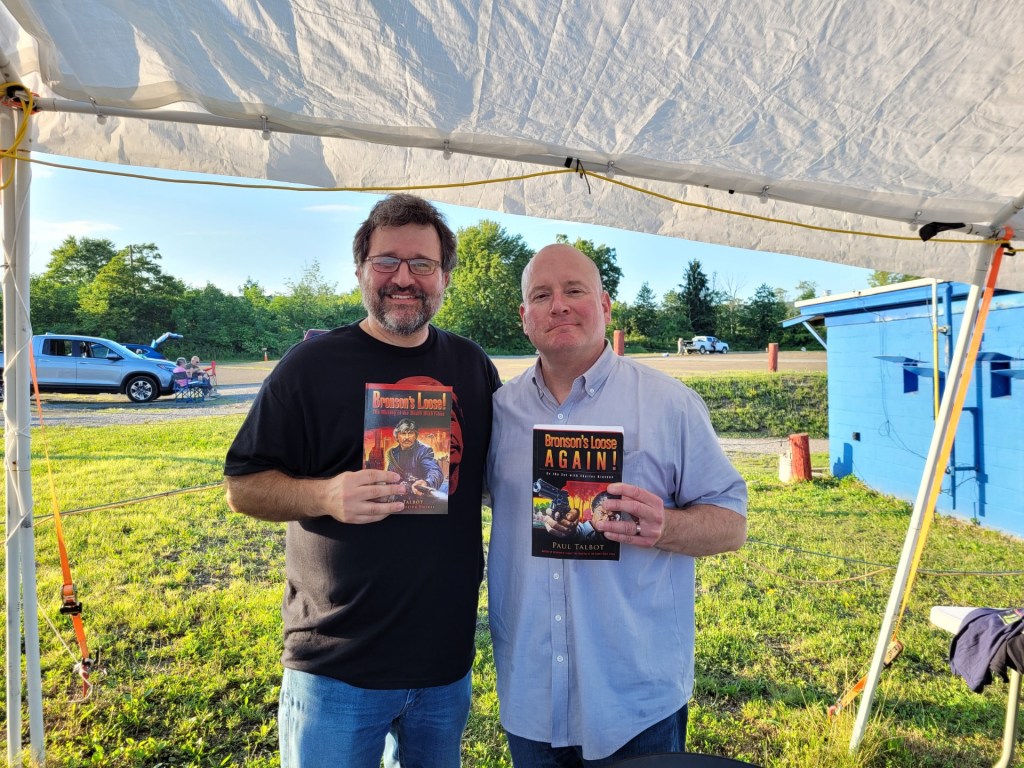
BONUS: The definitive book about the DEATH WISH film series was written by my friend, author and film historian Paul Talbot. The name of the book is BRONSON’S LOOSE: THE MAKING OF THE DEATH WISH FILMS. If you have any interest in Charles Bronson, the DEATH WISH series or Cannon Films, I can’t recommend Paul’s books more highly.

Shattered Politics #62: Bulworth (dir by Warren Beatty)


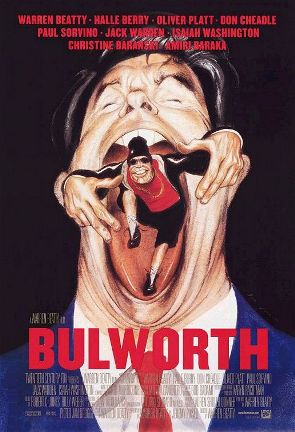
BulworthSo, if you’ve ever wondered what happened to Robert Redford’s Bill McKay after he was elected to the U.S. Senate at the end of The Candidate, I imagine that he probably ended up becoming something like the protagonist of 1998’s Bulworth, U.S. Sen. Jay Bulworth.

As played by Warren Beatty, Bulworth is a veteran senator.  A former liberal firebrand, he may still decorate his office with pictures of him meeting Bobby Kennedy and Martin Luther King but Bulworth sold out a long time ago.  Now, he just says whatever has to say in order to get elected, including pretending to have a happy marriage. He has become a part of everything that’s wrong with Washington.

Sick of both politics and life in general, Bulworth decides that he’d rather be dead.  But, in order to make sure that his daughter collects on his $10,000,000 life insurance policy, Bulworth cannot commit suicide.  Instead, he arranges for a contract to be taken out on his life.  In two days, Bulworth will be assassinated.

Returning to California for his campaign, Bulworth gets drunk and suddenly starts to say what he actually believes.  He attacks the Washington establishment.  He attacks the voters.  He attacks the insurance companies and comes out for single payer health insurance.  With his desperate press secretary (Oliver Platt) chasing behind him, Bulworth spends the night dancing at a club where he discovers marijuana and meets a girl named Nina (Halle Berry).

(Platt, meanwhile, discovers that he really, really likes cocaine.)

Soon, Nina and Bulworth are hiding out in the ghetto, where Bulworth meets both Nina’s brother (Isiah Washington) and local drug dealer, L.D. (Don Cheadle), and gets a lesson about how economics actually work in the ghetto.  Soon, Bulworth is appearing on CNN where he raps his new political platform and suggests that the solutions for all of America’s problems would be for everyone to just keep having sex until eventually everyone is the same color.

Of course, what Bulworth doesn’t know is that Nina also happens to be the assassin who has been contracted to kill him…

I have mixed feelings about Bulworth.  On the one hand, the film starts out strong.  You don’t have to agree with the film’s politics in order to appreciate the film’s passion,  Bulworth is an angry film and one that’s willing to say some potentially unpopular things.  It’s a film about politics that doesn’t resort to the easy solutions that were proposed by some of the other films that I’ve reviewed for Shattered Politics.  Warren Beatty does a pretty good job of portraying Bulworth’s initial mental breakdown and Oliver Platt is a manic wonder as he consumes more and more cocaine.

But, once Warren Beatty starts rapping, the film starts to fall apart and becomes a bit too cartoonish for its own good.  You get the feeling that Warren Beatty, at this point, is just trying to live out the liberal fantasy of being the only wealthy white man in America to understand what it’s like to be poor and black in America.

Bulworth starts out well but ultimately, it begins better than it ends.

http://www.youtube.com/watch?v=-0SgQKpWGD4

Shattered Politics #11: The Phenix City Story (dir by Phil Karlson)


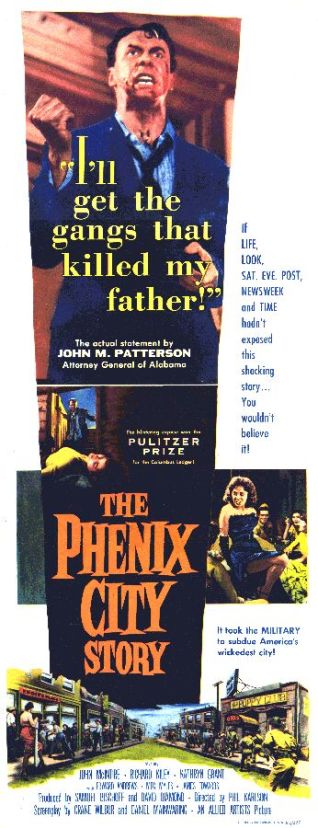
PhenixCityPoster

If A Man Called Peter was the epitome of a stereotypical 1950s film, The Phenix City Story is the exact opposite.  Like A Man Called Peter, The Phenix City Story was released in 1955.  And like A Man Called Peter, The Phenix City Story is based on a true story.  However, beyond that, A Man Called Peter and The Phenix City Story might as well have been taking place on different planets.

And, in many ways, they were.  The Phenix City Story not only takes place in Phenix City, Alabama but it was filmed there as well and featured a few actual citizens in the cast.  Not only was The Phenix City Story telling a true story but the story was being told by some of the same people who actually lived through it.  That makes The Phenix City Story brutally realistic, with brutal being the key word.

And, just in case we have any doubt about the film’s authenticity, it actually opens with a 15 minute documentary in which Clete Roberts (who was an actual news reporter) interviews several citizens of the town.  All of them, speaking in thick Alabama accents and nervously eyeing the camera, assure us that what we are about to see is true.  Quite a few of them also tells us that they still live in fear of losing their lives as a result of everything that happened.

What’s amazing is that, once the actual film does get started, it manages to live up to all of that build up.  The Phenix City Story is a shocking film that remains powerful even 60 years after it was initially released.

As the film opens, we’re informed that Phenix City, Alabama is home to some of the most dangerous and violent criminals in the state.  From his club, crime boss Rhett Tanner (Edward Andrews) runs a shadowy organization that not only controls Phenix City but the entire state of Alabama as well.  The police ignore his crimes.  The majority of the town’s citizens are too scared to stand up to him.  When a returning veteran of the Korean War, John Patterson (Richard Kiley), tries to stand up to Tanner, the result is even more violence.  A young black girl is kidnapped and murdered, her body tossed on John’s front lawn as a warning.  John’s best friend is killed but Tanner uses his influence to have the death ruled accidental.

Finally, John and a group of other reformers convince John’s father — Albert Patterson (John McIntire) — to run for Attorney General.  Albert runs on a reform platform and exposes both the corruption of Phenix City and how Tanner’s power extends through the rest of the state as well.  When Albert wins the Democratic primary, he’s gunned down in the street and it’s up to John to avenge his death…

To say that The Phenix City Story is intense would be an understatement.  As directed by Phil Karlson, there’s not a single frame of The Phenix City Story that’s not full of menace and danger.  The stark black-and-white cinematography is full of shadows and the camera moves almost frantically from scene to scene, occasionally catching glimpses of dark figures committing acts of violence and cars speeding away from who knows what outage.  It’s a dark film but, ultimately, it’s also a hopeful one.  It suggests that evil will triumph when good men do nothing but that sometimes you can depend on good men — like Albert and John Patterson — to actually step up.

The Phenix City Story shows up on TCM occasionally and you should keep an eye out for it.  It’s one of the best B-movies ever made.