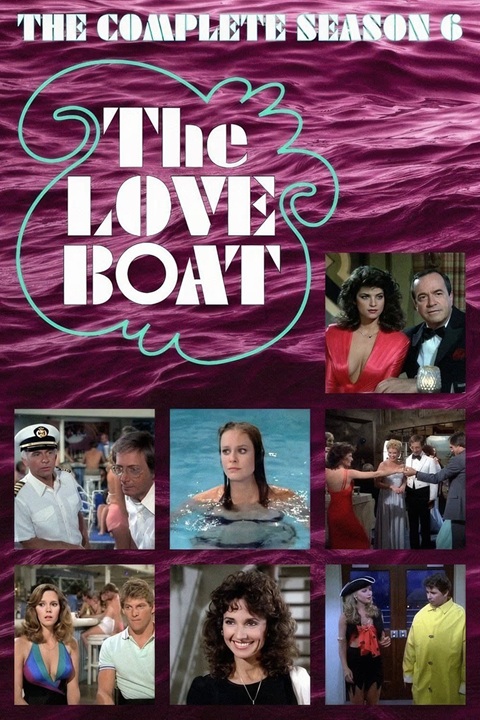
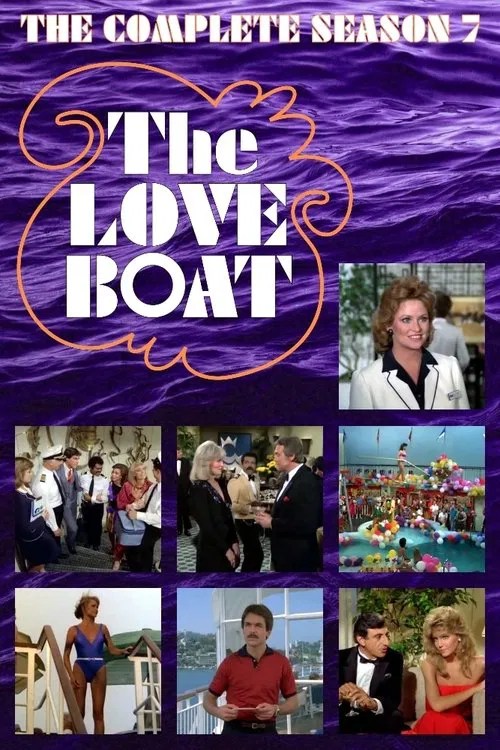
Retro Television Review: The Love Boat 6.25 “The Dog Show: Putting on the Dog/Going to the Dogs/Women’s Best Friend/Whose Dog Is It Anyway?”


Welcome to Retro Television Reviews, a feature where we review some of our favorite and least favorite shows of the past!  On Wednesdays, I will be reviewing the original Love Boat, which aired on ABC from 1977 to 1986!  The series can be streamed on Paramount Plus!
Come abroad, we’re expecting you….

Uhmm, maybe not this week, Love Boat.

Episode 6.25 “The Dog Show: Putting on the Dog/Going to the Dogs/Women’s Best Friend/Whose Dog Is It Anyway?”

(Dir by Bob Sweeney, originally aired on March 26th, 1983)

This week’s episode stressed me out.

The cruise line is co-sponsoring a dog show that is going to be held in Mexico.  The dog that wins will not only receive $10,000 but will also become the new “face” of Honeycutt Dogfood.  All the contestants bring their dogs onboard the ship and take the cruise to Mexico.

Seriously, imagine the scene.  Hundreds of dogs on cruise ship, floating in the pool and running through the passageways — YIKES!  I will admit that the majority of the dogs were cute.  There was a white Samoyed dog named Tundra who was just adorable and who could do all sorts of tricks.  But still, I spent the whole episode wondering what would happen if a dog accidentally jumped (or fell — oh my God!) overboard.  What if one of the dogs had fleas and now, everyone on the boat had them too?  Who was cleaning up after the dogs?  And what about a passenger — like me, for instance — who wasn’t really a dog person and who bought a ticket without the knowledge that the ship itself would be home to hundreds of canines?

The storylines also made me anxious, just because none of them made much sense.  (It was obvious that the main concern for this episode was getting as much cute dog footage as possible.)  So, we had Isaac and Gopher buying Tundra from $8 but not realizing that she was a brilliant dog who could do hundreds of tricks.  Isaac and Gopher sold the dog to the Captain and Vicki, just to then realize that Tundra was a sure winner in the dog show.  Isaac and Gopher tried to convince the Captain to sell the dog back but it turned out the Captain already knew Tundra was a winner.  Of course, as employees of the cruise line, neither Gopher nor Isaac nor Vicky should have been allowed to enter a dog in the show in the first place.

And then we had Isaac’s aunt Tanya (Isabel Sanford) running around with a Chihuahua while her husband (Mel Stewart) got jealous.  And we had Pamela (Catherine Bach) realizing that Gary (Dirk Benedict) was the new owner of a dog that she had lost two years before.  And then there was boozy Mrs. Honeycutt (Jo Anne Worley) boarding the ship and searching for her husband, not realizing that he wouldn’t be arriving until the ship reached Mexico.  For his part, Mr. Honeycutt (Gordon Jump) spent most of this episode in Las Vegas with his secretary.

Finally, Harold Pack (Ray Buktencia), who worked in Honeycutt’s mailroom, boarded the boat with some forms from Mr. Honeycutt and was immediately mistaken for his boss.  Pretending to be Mr. Honeycutt, Harold romanced a dog owner named Wendy (Heather Thomas).  Imagine Wendy’s surprise when she learned Mrs. Honeycutt was on the boat and looking for her husband….

Oh God, I’m getting stressed just writing about all this.

Things worked out in the end.  Mr. Honeycutt, having returned from Vegas, announced that there was a tie and all the dogs were winners!  Harold protected Honeycutt’s secret and got promoted to Vice President.  Pamela and Gary decided to own the dog together.  Vicki got Tundra!  Yay!  I was happy about that.  Tundra was adorable!

This episode was exhausting.  Too many dogs, too many half-baked stories, too much overacting on the part of Isabel Sanford, it was just too much.

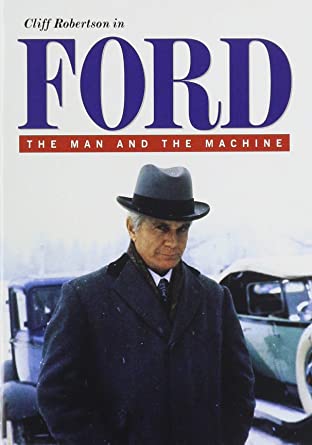
Miniseries Review: Ford: The Man and The Machine (dir by Allan Eastman)


Henry Ford changed the world, for both the better and the worst.

Starting from his own small workshop in Dearborn, Michigan, Henry Ford designed the first mass-produced automobile.  He transformed cars from being a luxury item to being something that nearly every family owned.  He created the concept of the assembly line.  He argued that workers needed to be paid a livable wage and he also advocated for an 8-hour workday.  At a time when every facet of American life was heavily segregated, he encouraged his factories an auto dealerships to hire black employees.  He was a pacifist, who took part in a widely-ridiculed but apparently sincere effort to try to convince the leaders of the world to just stop fighting.

Unfortunately, Henry Ford was also something of an unhinged lunatic, a man whose skill at engineering and his empathy for his underpaid workers did not necessarily translate into a sophisticated understanding of anything else.  When the workers in his factories tried to unionize, Ford employed violent strike breakers and he felt that most of the population were like a children and therefore incapable of governing themselves.  He understood how to make car but he also fell for all sorts of quack science and was a believer in reincarnation.

Worst of all, he was a rabid anti-Semite, who blamed almost all of the world’s problems on “Jewish bankers” and who played a huge role in popularizing a scurrilous work called The Protocols of Elder Zion in America.  Claiming to lay out the details of a Jewish plot to secretly control the world, The Protocols were a ludicrous document but many people believed them because they were promoted by Henry Ford, who was as big a celebrity in the early 20th Century as all of the social media influencers are today.  All these years later, The Protocols are still cited by anti-Semites.  A series of anti-Semitic editorials (which Ford later claimed to have signed off on but not actually written) were published in Germany under the title The International Jew, the World’s Foremost Problem.  Hitler wrote of his admiration for Ford in Mein Kampf.  Ford, it should be noted, did keep his distance from Hitler, though whether that was due to a personal distaste or the threat of an economic boycott is not known.  (Jewish leaders had already organized one successful boycott of Ford in the 20s, which led to Ford closing down his newspaper and offering up an apology.)  At the Nuremberg Trials, many of the Nazis said that they had first been introduced to anti-Semitism through the writings of Henry Ford.  Reportedly, when Ford saw newsreel footage of the concentration camps, he was so overcome with emotion that he collapsed from a stroke.

(Two years ago, when Nick Cannon regurgitated the usual anti-Semitic conspiracy theories on a podcast, he was pretty much saying the exact same thing that Henry Ford said at the start of the 20th Century.  Later, under threat of economic boycott, both Ford and Cannon would off up half-hearted apologies for their statements.  Ford continued to make cars.  Cannon continues to host a handful of television shows.  How does that work?)

First broadcast over two nights in 1987, Ford: The Man and the Machine was a Canadian miniseries about the long and controversial life of Henry Ford.  Cliff Robertson played Henry Ford.  Hope Lange played his wife while Heather Thomas played his mistress.  R.H. Thomson played Ford’s son, the sensitive Edsel.  Michael Ironside played Harry Bennett, a sinister figure who was hired to break up union activity and who eventually became Ford’s right-hand man.  If I remember correctly, I believe Canadian law actually required that Michael Ironside appear in almost every Canadian film and television show made in the 80s and the 90s.  His glowering presence and menacing line delivery practically shouted out, “Don’t mess with Canada,” and he does bring a note of genuine danger to his performance here.

Ford: The Man and the Machine opens in the late 20s, with an aging Henry Ford already starting to lose control of his mental faculties.  A series of flashbacks then show how Ford built his first engine, his first car, and eventually his first factory.  We watch as Ford goes from being an enthusiastic, self-taught engineer to being one of the most powerful men in the world.  Along the way, Ford grows arrogant.  The same stubbornness that led to his early success also leads to his later problems.  For all of his ability, Ford’s ego and his refusal to reconsider his conclusions leaves him vulnerable to both flattery and manipulation, whether it’s coming from the White House of Woodrow Wilson, from his own executives, or from the authoritarians who rose to power in Europe following the first World War.  As portrayed in the movie, he’s a loving father who also flies into a rage when Edsel designs a car on his own.  He loves his wife but he keeps a mistress.  He loves his family but he’ll always prefer to spend time working on his cars than spending time with them.  Henry Ford changes the world but his own hubris makes it impossible for him to change with it.

The miniseries is built around Cliff Robertson’s performance as Ford and Robertson does an excellent job in the role, convincingly playing Ford as he goes from being an enthusiastic dreamer to a paranoid millionaire to a doddering old man, a Bidenesque figuredhead who is only nominally in charge of his own company.  Neither the film nor Robertson shy away from showing us Henry Ford’s flaws.  Instead, both the production and the actor offer up a portrait of a complex man who transformed the way that people lived but who couldn’t escape from his own prejudices and resentments.  Ford: The Man and The Machine is a history lesson but it’s a valuable one.  If you’re a student of history, you’ll find much to think about in this miniseires.

For the record, I do drive a Ford and it’s a good car.  However, I tell myself that it’s named after Gerald Ford.

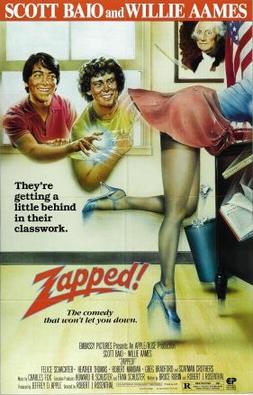
Zapped! (1982, directed by Robert J. Rosenthal)


In this painfully dumb high school comedy, Scott Baio is Barney, a teen scientist who experiments on lab mice and grows specially modified orchids for his high school’s principal, Walter Coolidge (Robert Mandan, who played a lot of high school principals back in the day).  When there’s an accident in the lab, Barney develops telekinetic powers.  Barney then falls in love with the class president, Bernadette (Felice Schachter), while his best friend Peyton (Willie Aames) pursues the beautiful but vain Jane (Heather Thomas).  Barney uses his powers to make a ventriloquist act as if it’s possessed and to help Peyton rig a casino-themed frat party.  Meanwhile, Scatman Crothers plays the school’s baseball coach and has a long scene where he gets high and imagines that he’s riding a bicycle with Albert Einstein.  That’s actually kind of cool.

Zapped! is a movie where Scott Baio magically gains the power to move things with his mind and yet the most implausible part of the movie is the idea of Willie Aames being the most popular student at the high school.  Heather Thomas is believable as a cheerleader and Felice Schachter is perfectly cast as the brainy class president.  Even Scott Baio is not terrible as Barney.  But then Willie Aames shows up and we find out that he’s supposed to be a chick magnet and it becomes impossible for those watching to continue to suspend their disbelief.

Not much really happens in Zapped!  Even after he gets his powers, Barney is frustratingly passive character who just does whatever Peyton tells him to do.  Barney uses his powers to help Peyton show up Jane’s college boyfriend and he uses his powers to help Peyton win games at the school carnival and then Barney uses his powers to help out Peyton when Jane’s boyfriend tries to beat him up.  Maybe Barney needs to get new friends.  The only time Barney uses his powers for himself is when he’s playing baseball and he makes the ball stop in mid-air so that he can hit it.  Somehow, no one watching the game seems to find it strange that the baseball stops in mid-air.  The movie ends with a take on Carrie.  Barney uses his powers to blow off everyone’s clothes at prom.  It’s all to help Peyton, of course.

Zapped! supposedly has a cult following, probably composed of people who were 13 when they first saw it and who only remember the sweater scene with Heather Thomas and the final prom scene.  (Or they’re remembering the famous poster, which is a lot more fun than anything that actually happens in the movie.)  Other than that, this is one of the most boring films ever made.  Perhaps the only interesting thing about the movie is that Heather Thomas sued the production when they failed to acknowledge that a body double was used for Jane’s nude scenes.

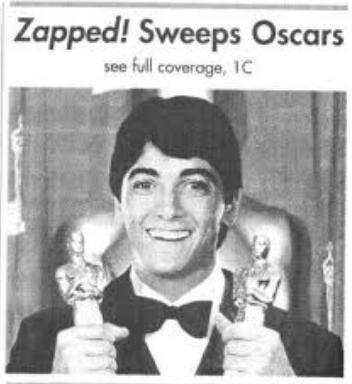
On a positive note, Zapped! did give us this classic Onion headline:


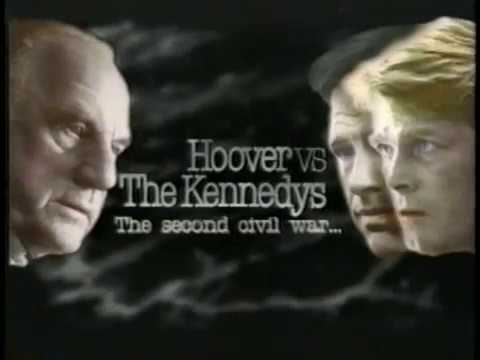
Hoover vs. The Kennedys: The Second Civil War (1987, directed by Michael O’Herlihy)


The year is 1961 and the young and dynamic John F. Kennedy (Robert Pine) has been elected president.  While the rest of the nation waits to see how Kennedy will lead, FBI director J. Edgar Hoover (Jack Warden) is convinced that he will continue to do what he’s always done.  As he explains it to his aide and only friend, Clyde Tolson, Hoover is a longtime friend of President Kennedy’s father, Joseph (Barry Morse).  Hoover knows how the Kennedys made their money and he also knows that the Kennedys probably stole the election.

Hoover quickly discovers that John F. Kennedy isn’t going to be like the other presidents under which he has served.  Kennedy appoints his self-righteous brother, Robert (Nicholas Campbell), as attorney general and Robert immediately sets out to make Hoover’s life unbearable.  When Hoover brings the brothers evidence that civil rights leader Martin Luther King (Leland Gantt) is not only associating with known radicals but that he also cheats on his wife, John and Bobby just laugh at him.  While John pursues an affair with Marilyn Monroe (Heather Thomas) and Bobby tries to reign in the FBI’s excesses, Hoover continues to collect information for his files and schemes to outlast both Kennedys.

Hoover vs. The Kennedys was a made-for-TV movie, one of the many films that have been made about the conflicts between the Kennedys and J. Edgar Hoover.  Since a good deal of the film is made up of Hoover and the Kennedy Brothers snapping at each other on the phone and then telling their closest aides about how much they dislike each other, it seems hyperbolic to call their relationship the “second civil war.”  Though the film does go as far as to suggest that Hoover didn’t make much of an effort to investigate the background of Lee Harvey Oswald, it doesn’t go any further when it comes to the theories surrounding John Kennedy’s assassination.  As well, the film is one of the rare ones to not speculate that Hoover and Clyde Tolson were more than just friends.  Instead, Hoover vs. The Kennedys concentrates more on all of the scandalous stories surrounding the Kennedy brothers.  The mob connections.  The womanizing.  The arrogance.  It’s all recreated here.  Perhaps because this was a Canadian production, Hoover vs The Kennedys doesn’t portray anyone positively.

The acting is a mixed bag.  Nicholas Campbell is believably abrasive as Bobby while Robert Pine was several years too old to be a convincing JFK.  Heather Thomas is an adequate Marilyn Monroe while Leland Gantt comes across as too emotional to be a believable Martin Luther King.  (In Gantt’s defense, the movie does not seem to know what to do with the character of King, treating the civil rights icon like a prop to be trotted out whenever some Hoover/Kennedy conflict is needed.)  The film’s best performance comes from Jack Warden, who plays Hoover as being a puritanical hypocrite who knows that, no matter who tries to push him out, he’s not going anywhere unless he wants to.  Hoover outlasted several presidents and Warden portrays him as being the ultimate political survivor.

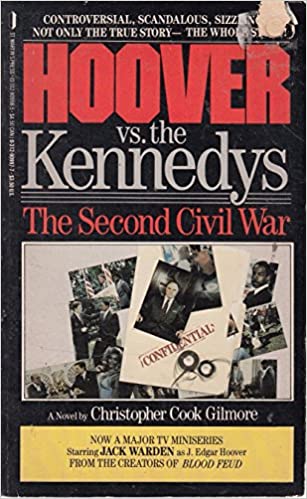
As far as Kennedy films are concerned, Hoover vs. The Kennedys is okay but it doesn’t offer up anything new.  Some of the most important roles are miscast and the movie never goes into much depth, beyond repeating all of the usual rumors.  Jack Warden’s a good J. Edgar Hoover, though.  The movie is not easy to find but it has been uploaded on to YouTube.  And, if you can’t find the movie, you can always order the novelization off of Amazon.


From The Cinemax Vault: Hidden Obsession (1993, directed by John Stewart)


Hidden Obsession comes to us from the glorious days of late night 90s Cinemax. 

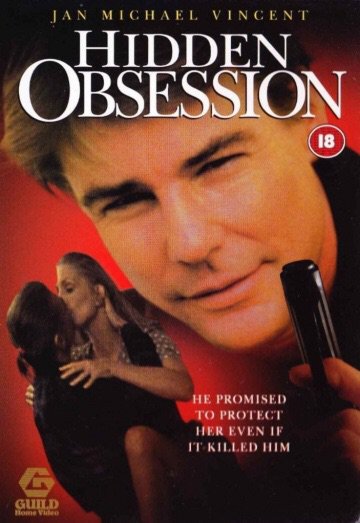
Ellen Carlyle (Heather Thomas) is a TV anchorwoman who is looking forward to taking some time off.  The only problem is that everyone — from a crazed homeless man to an escaped convict that she helped put behind bars — wants to kill her.  She assumes that she’ll be safe if she just spends her vacation in a remote cabin in the mountains.  Fortunately, she’s got Deputy Ben Scanlon to look after her and keep her company in bed.  Unfortunately, Deputy Scanlon is played by Jan-Michael Vincent and Jan-Michael Vincent in a 90s direct-to-video flick is always bad news.  Ellen’s cameraman (Nick Celozzi) discovers that Scanlon is not really who he says he is but will he be able to warn Ellen in time?

By the standards of late night Cinemax, Hidden Obsession is tame.  Ellen Carlye is a role that Shannon Tweed could have worked wonders with but instead, television actress Heather Thomas gives a flat, listless, and usually clothed performance in the starring role.  Fortunately, this movie was made just before Jan-Michael Vincent started his final decline so, even though it is obvious that he had seen better days by the time he got around to playing Ben Scanlon, Vincent is still capable of giving a halfway decent performance.  Vincent throws himself into playing the psycho and he shows that, if not for the liquor and the drugs, he could have had a long and decent career as a B-movie villain.  Imagine if Vincent had been sober enough for Quentin Tarantino to give him the opportunities that he gave to Robert Forster and Michael Parks.  Unfortunately, it was not to be.

“Love hurts!” Ellen says.  It would be easy to say that this film hurts too but it’s really not memorable enough to be so bad that it’s good.  Like Witchtrap and Deadly Compansion, this film’s main appeal is to nostalgia.  These are the type of films that not only used to show up on late night Cinemax but which also lined the walls of your local Blockbuster.  These are movies of a bygone era.  Watch while you still can.