Raymond Chandler’s detective classic, The Big Sleep, has twice been adapted for film.
The first version came out in 1946, just seven years after the book’s publication. That version starred Humphrey Bogart as detective Philip Marlowe and Lauren Bacall as Vivian, the daughter of a man who has hired Marlowe to discover who is trying to blackmail him. Directed by Howard Hawks and co-written by William Faulkner, this version of TheBigSleep is considered to be a classic noir, one that was cited as being a major influence on director Akira Kurosawa.
The 1978 version was directed by Michael Winner, takes place in London in the 1970s, and features Robert Mitchum as Marlowe. Despite a strong ensemble cast and an excellent lead performance from Mitchum, this version of TheBig Sleep still features one of the worst performances ever put on film.
Sarah Miles plays the role of Charlotte Sternwood Regan, the eldest daughter of General Sternwood (James Stewart). Miles is playing the role that Lauren Bacall played in the first film and, despite the fact that they both earlier co-starred to a certain amount of acclaim in Ryan’sDaughter, Miles and Mitchum do not have a hint of chemistry in this film. Actually, Miles doesn’t have chemistry with anyone in this film. She seems detached from the action and her frequent half-smiles come across as being not mysterious but instead somewhat flakey, as if she doesn’t quite understand that she’s in a noir. Sarah Miles is not a bad actress (as anyone who has seen Hope and Glory can tell you) but her performance here is incredibly dull. That said, she is not the one who gives the worst performance in the film.
Instead, that honor goes to Candy Clark, playing General Sternwood’s youngest daughter, Camilla. Camilla is meant to be mentally unstable and potentially dangerous. Clark plays the role like a giggly teenager, constantly fidgeting and literally hissing in more than a few scenes, as if she’s been possessed by a cat. Clark overacts to such an extent that you’ll be more likely to laugh at than be disturbed by her antics. It doesn’t help that she shares nearly all of her scenes with Robert Mitchum, a man who was a master when it came to underacting. If you’re going to give a bad performance, you don’t want to do it opposite someone who will make you look even worse by comparison.
The mystery of who is blackmailing General Sternwood is twisty and full of disreputable people. At times, the film feels like a a parade of character actors. Edward Fox, Joan Collins, Richard Boone, Oliver Reed, Harry Andrews, Richard Todd, and John Mills all show up throughout the film and, as a viewer, I was happy to see most of them. They all brought their own sense of style to the film, especially the menacing Oliver Reed. That said, director Michael Winner was never known for being a particularly subtle director and the film gets so mired in its own sordidness that it becomes be a bit of a slog to sit through. As a filmmaker, Winner was a shameless. That sometimes worked to a film’s advantage, as with the original DeathWish. That film needed a director who would dive into its Hellish portrayal of New York City without a moment’s hesitation and that’s what it got with Michael Winner. With Winner’s adaptation of The Big Sleep, however, the film gets so caught up in trying to shock and titillate that it’s hard not to miss the wit that made the first adaptation so special.
That said, TheBigSleep does feature the truly special opportunity to see Robert Mitchum and James Stewart acting opposite each other. Both give good and heartfelt performances, with Mitchum plays Marlowe as a cynic with a heart and Stewart capturing the pain of knowing that your children don’t deserve all that you do for them. Stewart and Mitchum bring a lot of emotion and sincerity to their scenes and, for at least a few minutes, The Big Sleep becomes about something more than just bloody murders and revealing photographs. It becomes about two aging men trying to find their place in a changing world. TheBigSleep was one of Stewart’s final feature films and he shows that, even late into his career, he was always one of the best.
First released in 1976 and based on a book that had come out ten years previously, The Passover Plot is a film that asks, “What if Jesus was a political revolutionary who faked his own death?”
Even when the film was first released, that wasn’t a particularly novel or new theory. Ever since the Crucifixion, there have been conspiracy theorists who have claimed that the entire thing was staged. Indeed, the early days of the Church were defined by conflicts between different sects debating the true nature of Jesus, with those who believed that he was the son of God and that he had risen from the dead eventually winning out over sects who claimed that Jesus was not divine or that he had actually escaped from the Romans and was instead hiding out in Egypt or even on the island that would eventually become known as Britain. (The fact that so many Gnostics and other heretics were executed by the Church and their texts suppressed only served to lend them credibility with future theorists.) Still, every few decades, some new book or film will claim that Jesus faked his death or married Mary Magdalene and gullible people will act as if this is somehow a new argument. It’s been over 20 years since all of that Da Vinci Code nonsense convinced bored suburbanites across America that they could be experts on both boxed wine and historical conspiracy theories. We’re about due for a new version of the old story.
As for The Passover Plot, it features Zalman King as Yeshua of Nazareth, an angry young man who dreams of the day when Judea will be free of the Romans. Having a knowledge of the prophecies of a messiah and also knowing that he is descended from King David, Yeshua specifically patterns his life after the prophecies and presents himself as being not just another revolutionary but instead as being sent by God. However, he is also aware that it will be necessary for him to “die” and “rise from the dead,” so he goes out of his way to force the hand of Pontius Pilate (Donald Pleasence). Having seen plenty of crucifixions when younger, Yeshua arranges for the local revolutionaries to drug him so that he’ll appear to be dead. When he later wakes up, everyone will believe that he has returned from the dead. The film ends with several title cards, all arguing that the Gospels were written long after Yeshua’s death (“Mark lived in Italy!” one title card proclaims with almost comical indignation) and were subsequently rewritten by “unknown” hands.
The Passover Plot is a weird combination of biblical epic and conspiracy thriller. Scenes of Yeshua preaching feel as if they could have come from any traditional Biblical epic but they are awkwardly placed with scenes of Yeshua having secret, melodramatic meetings with various conspirators. It would make for an interesting contrast if not for the fact that the film itself is so slowly paced and boring. Zalman King, who is best-known for his subsequent career as a softcore filmmaker, spends a lot of time yelling and smoldering intensely but he still doesn’t have the charisma or screen presence necessary to be convincing in the role. In the scene were he’s meant to be passionate, he shrieks with such abandon that he makes Ted Neeley’s performance in Jesus Christ Superstar feel restrained. This film asks us to believe that people would not only abandon their previous lives to follow Yeshua but that they would also take part in an elaborate conspiracy that could have gone wrong at any time. For that to be believable, Yeshua needs to be played by someone who doesn’t come across like the drama student that everyone dreads having to do a scene with. Far more impressive is Donald Pleasence, whose portrayal of a ruthless and unfeeling Pilate is a marked contrast to some of the more sympathetic interpretations of the character that tend turn up in the movies.
On the plus side, the film does look good. It was shot on location in Israel and there is a certain authenticity to the film’s recreation of the ancient world. Along with Pleasence, character actors like Scott Wilson (as Judas!) and Dan Hedaya get a chance to shine. But otherwise, The Passover Plot is too slowly paced and kooky for its own good. Conspiracy theorists never seem to understand that the more elaborate a conspiracy theory becomes, the less convincing it is to anyone who isn’t already a true believer. In the end, how one feels about the film’s conclusions will probably be connected to how one already views Jesus and the Church. The Passover Plot is not a film that’s going to convince anyone who wasn’t already convinced.
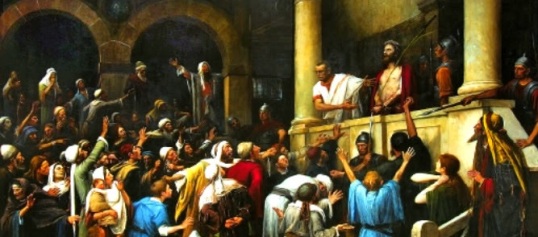
The simple answer to that is that Barabbas was the prisoner who, according to the Gospels, Pontius Pilate released during Passover. As the story goes, Pilate gave the people the choice. He could either release Barabbas or Jesus. For what crime was Barabbas being held? The Gospel of Matthew merely says that Barabbas was a “notorious prisoner.” Mark and Luke both write that he was involved in a recent riot and that he was a murderer. The Gospel of John refers to him as being a bandit, which may have been another term for revolutionary. Regardless of what crime he had committed, the people overwhelmingly called for Barabbas to be released and for Jesus to be crucified. What happened to Barabbas after he was set free is not recorded but has been the subject of a good deal of speculation over the centuries.
(Of course, there are some scholars who believe that the Barabbas story was simply an invention of later writers, designed to shift the responsibility for the crucifixion away from the Romans. There’s also some who say that Jesus and Barabbas were actually the same person and that the inclusion of the Barabbas story was meant to indicate that Jesus was actually a revolutionary who was working to free Judea from Roman role. I imagine Dan Brown will eventually base a novel on this theory, so look forward to hearing your grandma debating the historicity of Barabbas at some point in the future.)
Back to the original question, who was Barabbas?
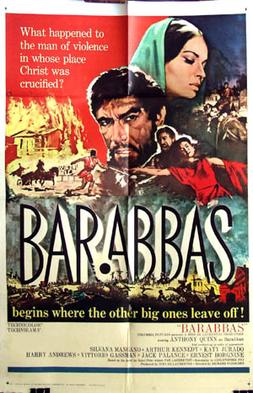
According to the 1961 film of the same name, Barabbas was Anthony Quinn.
Based on a novel by the Nobel Prize-winning Swedish author, Pär Lagerkvist, Barabbas opens with Pilate (Anthony Kennedy) making his infamous offer. Barabbas or Jesus? Perhaps the only person more shocked than Pilate by the people’s decision is Barabbas himself. A brutish and violent man, Barabbas is looking forward to returning to his old life but, as he leaves the prison, he finds himself fascinated by the sight of Jesus stoically carrying the cross, heading to the fate that Barabbas was spared. Later, Barabbas witnesses the Crucifixion and is shaken when, upon Jesus’s death, the sky turns black.
(Director Richard Fleischer shot the Crucifixion during an actual solar eclipse, so that the sky actually did turn black during filming. It’s a stunning scene.)
For the rest of his life, Barabbas is haunted by both his narrow escape from death and his subsequent notoriety. When Barabbas tries to reunite with his former lover, Rachel (Silvana Mangano), he discovers that not only does she now want nothing to do with him but that she has also become a follower of Jesus. (Later, in a surprisingly graphic scene, Rachel is stoned to death.) Barabbas becomes convinced that he cannot die and he becomes increasingly reckless in his behavior. Over the next few decades, he finds himself sold into slavery and forced to spend 20 years working in the harsh sulfur mines of Sicily. He befriends a Christian named Sahak (Vittorio Gassman) and, with him, is trained to be a gladiator by the sadistic Torvald (Jack Palance). Eventually, Barabbas finds himself rejected by both the Romans and the Christians while Rome burns all around him.
Barabbas is a film that really took me by surprise. I’ve seen a lot of Biblical and Roman films from the 50s and 60s and I was expecting that Barabbas would be another sumptuously produced but slow-paced epic, one that would inevitably feature stiff dialogue and overly reverential performances. I mean, don’t me wrong. I happen to love spectacle and therefore, I enjoy watching most of those old historical and religious epics. But still, for modern audiences, these films can often seem rather … well, hokey.
But Barabbas was totally different from what I was expecting. As wonderfully played by Anthony Quinn, Barabbas wanders through most of the film in a state of haunted confusion. Even at the end of the film, after he’s met St. Peter (Harry Andrews), Barabbas doesn’t seem to fully understand what he believes or how he’s become one of the most notorious men in Rome. Quinn plays Barabbas almost like a wild animal, one that has been cornered and trapped by his own infamy. The more Barabbas struggles against his fate, the more trapped he becomes. Barabbas may be a brute but, the film suggests, even a brute can find some sort of redemption. Quinn gets good support from the entire supporting cast. Jack Palance is perfectly evil as Torvald while Vittorio Gassman, Silvana Mangano, and Ernest Borgnine bring some needed nuance to characters who, in lesser hands, could have just been cardboard believers.
Barabbas is a surprisingly dark film. When Rachel is stoned, the camera doesn’t flinch from showing just how cruel an execution that was. Nor does the camera flinch from the violent brutality of the gladiatorial games. When Barabbas is sold into slavery, the sulfur mines of Sicily are depicted in Hellish detail and practically the only thing that saves Barabbas from spending the rest of his life being smothered under a cloud of sulfur is a giggly Roman woman who decides to buy Barabbas so that he can serve as a good luck charm. The scenes of Barabbas’s skill of a gladiator are contrasted with the bloodthirsty crowd demanding and cheering death. Even when Barabbas joins the Christians in the Roman catacombs, he discovers that they want nothing to do with him, suggesting that they believe in forgiveness for everyone but him. The spectacle of Rome is displayed but so is the terror of what lies underneath the city’s ornate surface. If Barabbas is occasionally a ruthless or unsentimental character, one need only look at the world he lives in to understand why.
With the exception of a few slow scenes at the start of the film, director Richard Fleischer does a good job of keeping the action moving. It’s a long film but it never becomes a boring one. In the end, thanks to Quinn’s performance and the film’s unflinching portrayal of life in ancient Rome, Barabbas is a biblical epic for people who usually don’t like biblical epics.
I can’t get my hands on a copy of The Danish Girl through Netflix until March. As a result, I decided to finally do something I promised on this site last August. That being, among other things, that I would review the film I Want What I Want. I came across this film on a list of Queer Cinema I found on Letterboxd. Well, it’s sort of a transgender movie. Kind of. Not exactly. More like a feminist film from the early 1970s that happens to have a trans woman at the center of it. If that sent shivers down your spine, then you are probably transgender like myself.
Before we actually get to this film we need to look at the full DVD title for it: “I don’t want to live the rest of my life as a man…I want what I want…to be a woman.”
First off, she always was a woman. Trans women are women. End of story. Any mythical idea of transition is only to make ourselves feel more comfortable with who we are. That means we don’t have to do anything whatsoever and we are women. The same goes for trans men. A point lost on people even today so I guess I can let it slide in 1972 even though I don’t want to.
Secondly, was it necessary for Geoff Brown, who wrote the book, and the filmmakers to choose the same words for their title as what a child would say when their parents ask why they need a Wii U in addition to the PS4 and Xbox One they already own? The answer of course being no. They wanted to sell tickets. The same reason Doris Wishman entitled her 1977 mondo movie Let Me Die A Woman. Well, at least the DVD cover is very honest about what you are going to see, right?
See! The cover clearly shows us that a genetic male played by Harry Andrews will play the trans woman prior to transition as shown by the man standing in front of the mirror. Then Anne Heywood will take over to play the main role after the transition as shown by the woman in the mirror.
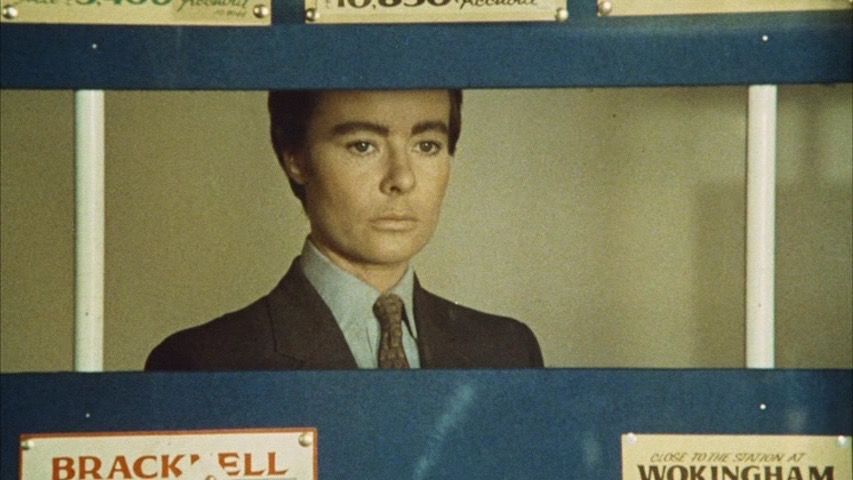
The movie begins and we see Roy played by Anne Heywood. Yes, I know the deadname thing and all, but at this point in the film she hasn’t chosen a female name. She’s looking out at the women passing by, some who are talking amongst themselves, and others are talking with men. She doesn’t look happy. For trans women who aren’t happy with their bodies and/or presentation, we call this everyday of the week. At least I do.
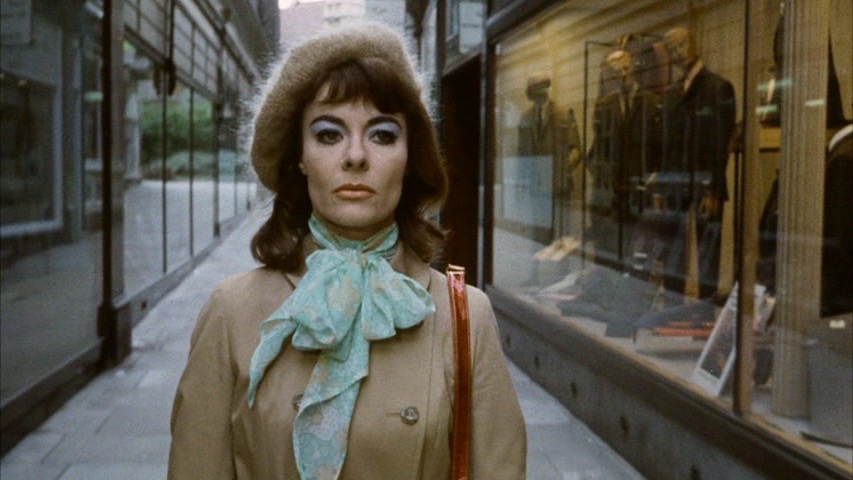
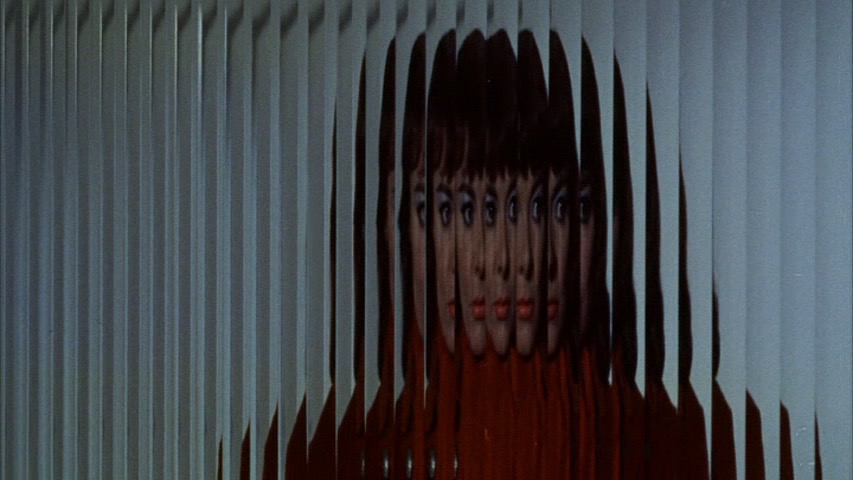
Now Roy leaves her office. She walks down the street looking at some women and female clothes in a window before passing right through a visual metaphor.
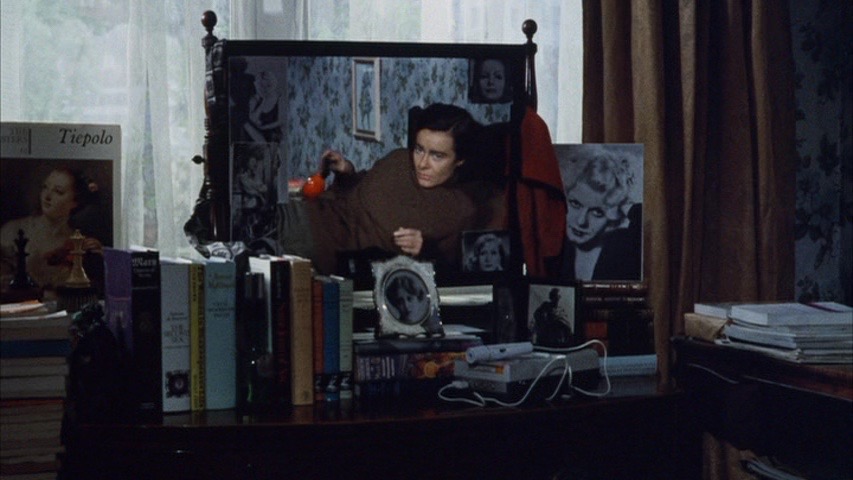
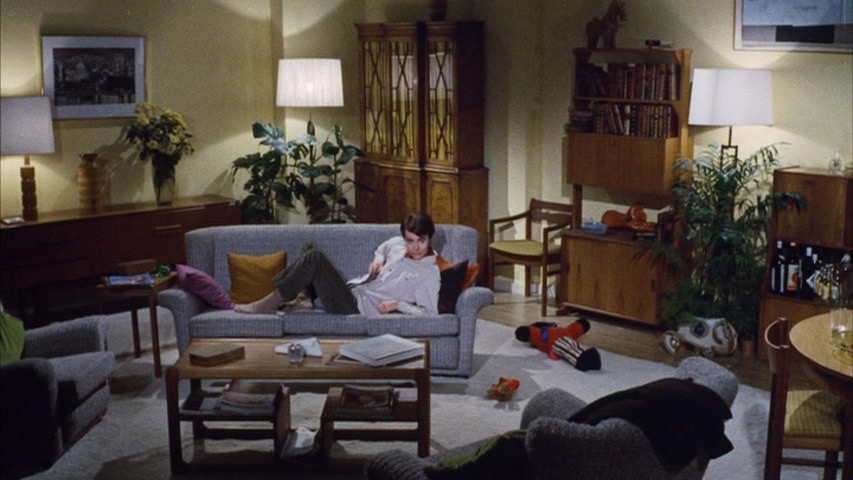
We go home with Roy and once again are greeted with a visual metaphor.
I look over at my mirror and all I see in it is my reflection, a stack of unreviewed DVDs in the closet, a couple of prom dresses, and an Ao Dai. Hey! I took a course on the history of Vietnam in college and those Vietnamese dresses are gorgeous. Don’t you judge me! No seriously, I do own one of those. The prom dresses are another story. But now it’s time for Roy to go downstairs so we can meet her sister Shirley played by Virginia Stride.
This is as good a time as any to bring up two things to do with the voices in this movie:
1. The audio on the DVD isn’t perfect. It has some issues that combined with British accents can cause you to miss a word here or there if you aren’t say, British yourself. I grew up watching Are You Being Served? with some of those accents, and even I had trouble with these otherwise very easy to process accents.
2. You are probably wondering what Anne Heywood sounds like. If you’re close to my age (32), or grew up in the 1980s, then I have a good way for you to picture how she sounds. It’s like the movie Just One Of The Guys (1985). Trying a little bit to deepen the voice, but largely just altering the presentation towards something stereotypically masculine.
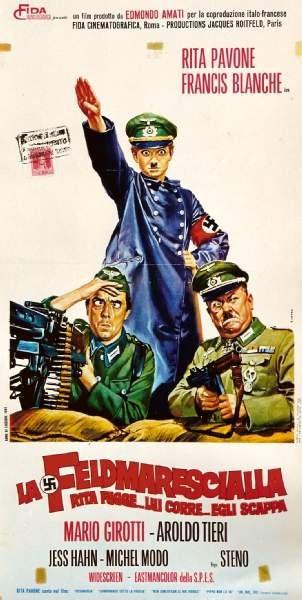
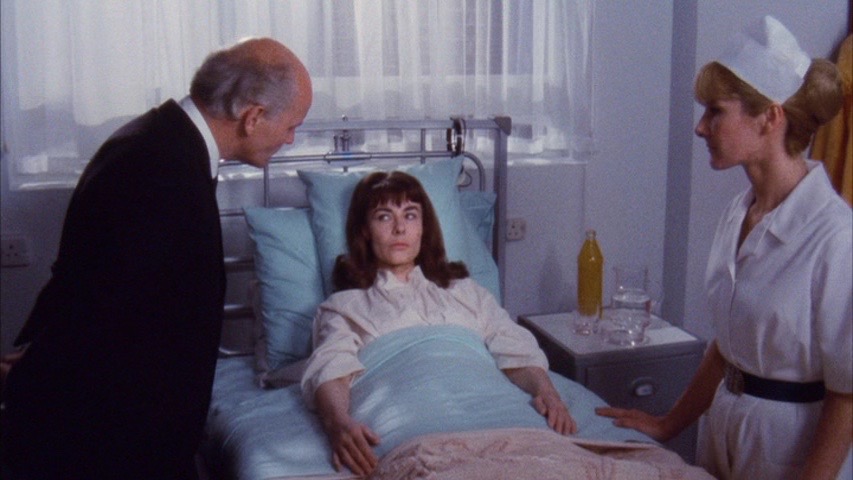
Now we meet dad played by Harry Andrews. He’s not so happy with Roy. Hey, it could be worse dad. Roy could grow a mustache and then your “son” would look a little like Rita Pavone in Rita The Field Marshall (1967).
Honestly, that’s what I expected when I found out this movie had Anne Heywood playing a trans woman and saw a picture of her on the back cover.
I get the next scene. It makes sense. Roy is babysitting for her sister and looks at her clothes as well as her wig. That all makes sense to me. What doesn’t make sense is why this was the final shot they chose to go with when Roy’s sister comes home.
Roy, you’re trying to seduce me. Aren’t you? Even Elizabeth Shue was more presentable at the end of Adventures In Babysitting (1987).
Regardless, now we get a scene of Roy at work. It doesn’t really matter what she does. All you need to know in that department is that she has money of her own.
If we weren’t sure the Dad was an asshole, then we get a scene of Roy and him at the grocery store. Basically, the entire scene is Dad telling Roy to leave the upcoming dinner party early so he can go out with a woman.
Then the film reminds us it’s arty, but without water falling from the sky like in Laurence Anyways (2012).
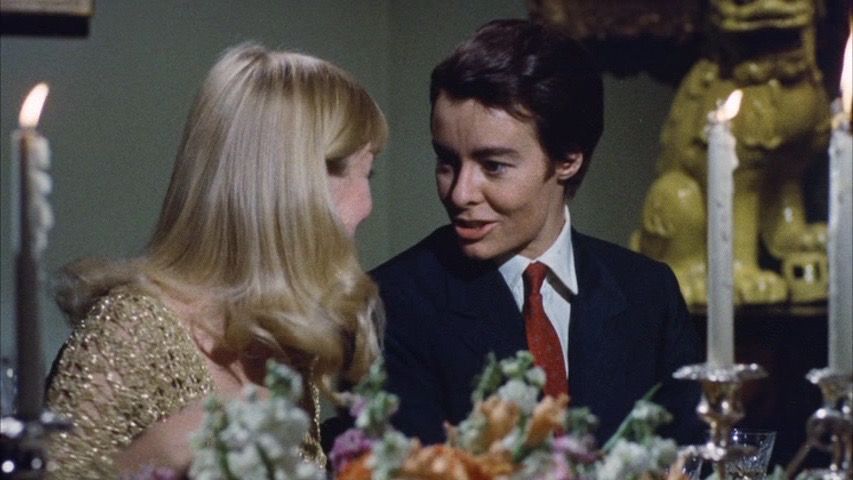
Next Roy is having a conversation with this woman about fashion. The woman is obviously interested and likes him. She will even state this explicitly in the next scene. So why does the father look upset? I mean assuming I buy into all the BS out there about men, which I don’t, wouldn’t this guy love that his “son” is being so devious and taking advantage of women’s supposed only interest to potentially get laid? One of the other guys at the table even points out that Roy is doing very well “for someone who hasn’t been keeping up with the mark.” I guess it’s just supposed to tell us he is already suspicious. Came across as a little weird to me.
After another shot from the top of the table, it’s time to separate the men from the women for the after dinner part. The women seem to like it because it means they “can tear them to pieces” afterwards. Now we cut to Dad who apparently is in the middle of a lecture. He says “there’s change for a reason, then there’s change just for the sake of change.” I totally agree with the man. I don’t buy the universal app excuse from Twitter for the new iPad app. I also don’t appreciate the YouTube app looking like a Speak ‘N Spell.
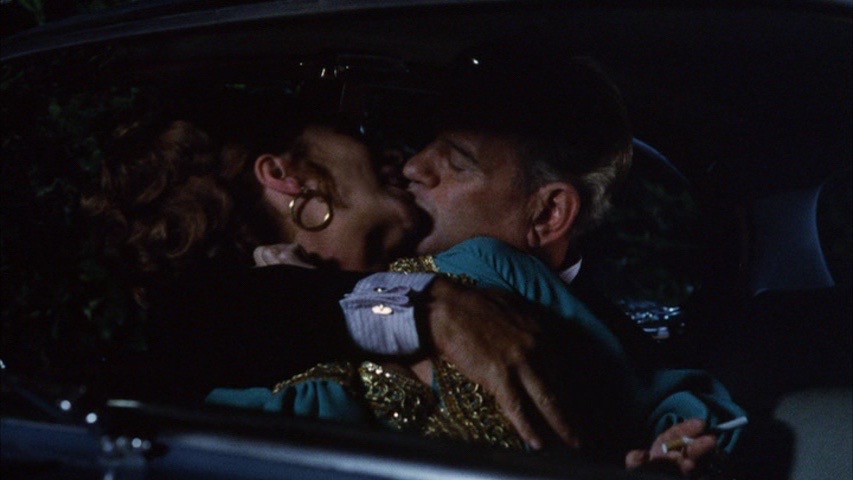
Anyways, we now see the Dad try and make a move on a woman in a car. I’m sorry, but once you’ve seen Ruthless People (1986), then it’s a little hard to look at this…
and not think of Bill Pullman throwing up.
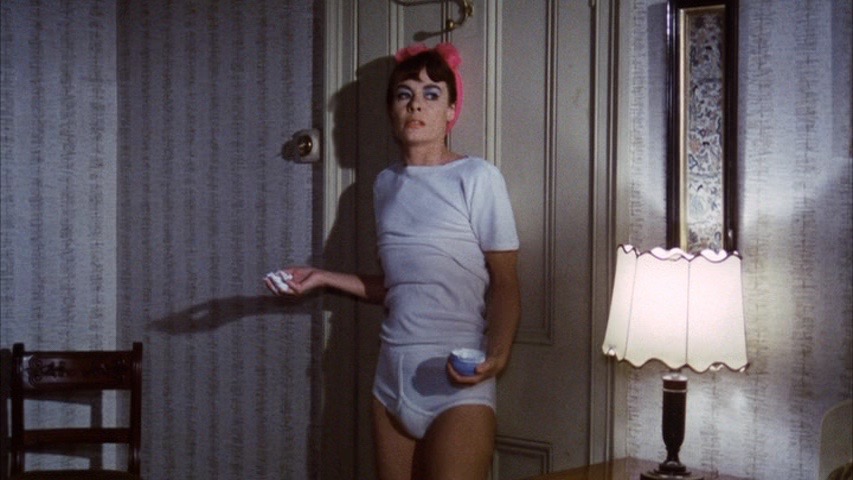
Now shit gets real cause Dad comes home with her, and after trying to feel her up, discovers the reality about Roy.
The review of this movie on the inside of the DVD by Dennis Dermody is right! The 1970’s really wasn’t the greatest era for women’s fashion. Also, she has heavy blue eyeshadow on. Maybe it’s just me, but after binge watching 7 seasons of Sabrina, The Teenage Witch last year where they seemed to wear nothing but blue eyeshadow, I’m a little sick of it. Also, I would take this otherwise cringe worthy scene more seriously if it didn’t end with Roy leaving with enough money to be completely independent and start presenting as a woman in the blink of an eye. In reality, things like this end with far more deadly outcomes such as the suicide of Leelah Alcorn in December of 2014.
I do like that throughout all of this anger and beating, Roy stands up for herself. She even gives the right answer about how long it’s been going on. She says, “All my life”. Technically that’s not true for all trans women, but some do figure it out quite early like Jazz Jennings. He threatens her with cures. Then he asks her if she’s a homosexual. That means he’s actually asking if she’s straight. Her response is “no”. That would mean she’s a lesbian, but the movie is wishy washy about her sexuality. However, I believe she is meant to be straight.
We now find out that Roy’s mother is dead. She says it’s his fault and he throws her. Then he says that the Germans used to send people like her to the gas chambers. She responds that they used to decorate “people like you”. There’s another line here, but then…yeah…here’s the line after that one:
“God made man in his own image, and he blew it.”
That’s when you start to realize this is less of a transgender film and more a feminist one. Unfortunately, a nasty feminist one considering the ending. Some of you probably reasoned out what that is, but I will get to it eventually for everyone else.
Roy flees for good. Makeover!
I actually appreciate this scene. So many movies spend all the time in the world making it seem like heels are the hardest thing in the world, but almost never mention makeup or anything else.
This movie even has her have difficultly putting on a bra. Makes sense. She is doing it from the back, which takes some practice and no one was around to teach her the trick of doing it in the front, then simply turning the bra around. Of course this movie absolutely couldn’t do that because Anne Heywood may have put up with binding for the film, but she isn’t going to have chest reconstruction surgery. Although, they do use a male stand-in later for a brief shot, but that doesn’t count because the movie will also show her with a woman’s figure for one scene even though there’s no mention of hormones.
There’s another limitation too caused by hiring a genetic girl for the role. Unless we are going to put fake hair on her legs and arms, then we really can’t show her shave them without breaking the illusion.
Let me just tell you now that they don’t show a fake penis unlike more recent films and TV Shows have. Thank God! Anyone who has or has had one only needs to see that fake penis twice and the illusion is broken. Unless the film uses multiple fake penises, which I haven’t seen done, then the movie has a penis that will look identical every single time it’s shown. The penis don’t work that way.
Finally she’s ready! Meet Wendy Ross.
That Girl! Unfortunately, this film will tell her she’s not what every girl should be till the unfortunate ending.
She goes around town and seems to pass just fine. She’s a little nervous about her voice, but that doesn’t appear to be a problem. Even a police officer calls her “Miss”. Then those damn visual metaphors attack again.
Hmm…I had no idea that the UK had a large giant female population in the 1970s. Think this is going to lead to anything? Well, you’re out of luck. All that happens is a couple of guys who were clearly just about 10 years early to appear in Fulci’s The New York Ripper (1982) and Gorris’ A Question of Silence (1982) scare her, causing her to run into the “Ladies Room”. Nothing happens in there. No bathroom usage. She just washes her hands and says something that is incomprehensible to a woman in there. I think she is saying “driving a truck”, but that makes no sense and it is just a guess.
After a few more lines to remind us men are pigs and all that, we get this shot to make sure you don’t forget feminism.
Can’t leave out the novel that is credited with starting the second wave of feminism which had people like Gloria Steinem referring to trans women as…don’t want to spoil the ending.
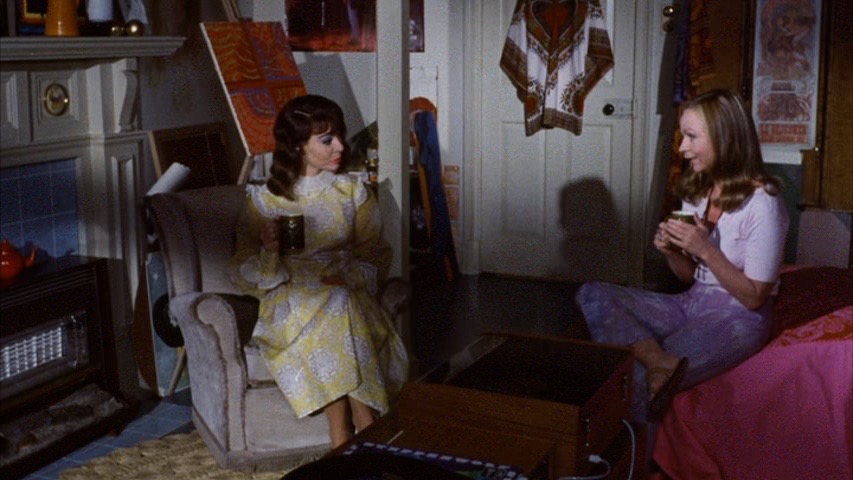
Wendy gets herself a room adjoining with another girl in the house of a woman named Margaret (Jill Bennett). Margaret is married to man named Philip (Philip Bond) and works as a teacher. She is friendly with a man named Frank (Michael Coles) as well. I’m still confused about his character in relation to Margaret. I get the impression she is or wants to have an affair with him…maybe…this movie can be a little tough. What I’m not confused about is this shot.
It’s not uncommon for a trans woman or a trans man to start dressing in the “appropriate” clothing, but go over the top at the start. That’s my story of the prom dresses. However, this will be a running thing throughout the film to differeniate Wendy from other women. Note that by comparison, she looks like a 1950s housewife/hausfrau next to this clearly modern day 1970s woman. It’s the girl she’s living next to.
Think maybe the hausfrau comment is too much. Don’t worry, cause in one of the scenes almost immediately after this Margaret says the word herself to describe herself while serving drinks at a party. She also says that Wendy is “all a front” to Frank. I don’t think she actually knows, but the line is dropped in there anyways the second Wendy pays attention to Frank. Oh, and then she says, “The only thing that sets Wendy apart from us is she has a private income.”
I know all this can be chalked up to general cattiness if you will over a guy they are both interested in, but it all kind of weaves together into something that doesn’t go down all that well. Then we get this scene.
Basically the scene is there to remind us that Margaret is very much a feminist. She talks down about women who are pretty and dumb as happy to be considered inferior, but that if you show any independence or a mind of your own that you’ll be determined as unfeminine. Okay, so she’s a little angry. So of course they have Wendy respond that she likes bras and wouldn’t mind depending. In other words, they make sure you know how much Wendy stands in contrast to Margaret. Margaret responds to what Wendy says by telling her that she’s a “strange girl”. Don’t worry, we’re getting to the wonderful ending, but first another assault by a visual metaphor.
Wendy goes to get a job. What kind of a job you might ask? A beautician. Why? We know she has plenty of experience in other areas since we saw her in a business position earlier. Yes, I’m aware that in Boy Meets Girl (2014) she does fashion. Yes, I’m aware that in Orange Is The New Black they have Laverne Cox doing the other girls’ hair. However, this follows immediately after she’s called strange and all but unacceptable by Margaret. She doesn’t get the job. Then the film goofs.
That is a woman’s figure. A genetic male’s body doesn’t get into that shape without hormones, which this film has given us no indication to tell us she’s on. In fact, later she is told by a doctor that her thinking she is growing breasts is imaginary. That is also when they use a male stand-in to emphasize that fact, which also has a straight up and down figure.
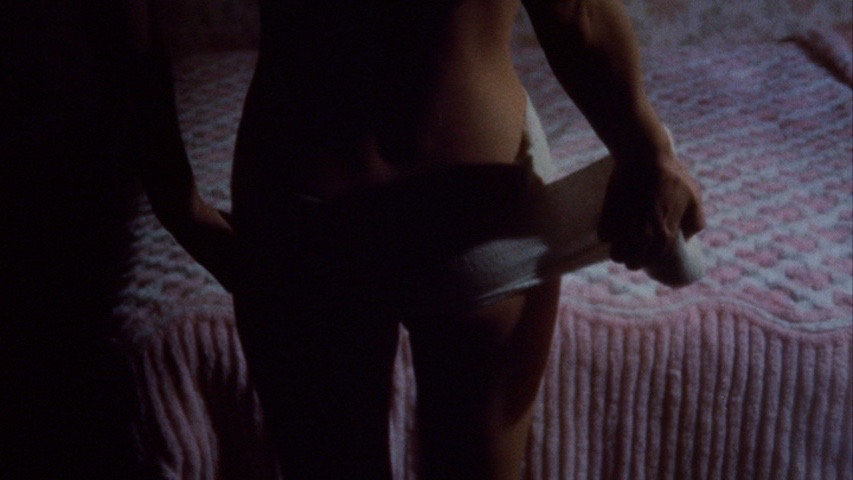
By the way, she’s tucking in this scene. I use a gaff personally. It’s basically a strong pair of panties that pulls down, flattens, and also in the process, pops your testicles back into your body. Some use surgical tape to hold the penis between the legs. An example of that on film is in the Danish movie A Soap (2006). This is the first time I’ve seen tucking done this way by what appears to be her wrapping everything in a gauze of some sort. Whatever works for you. The penis is the primary issue, not the testicles. They really do just pop away. Heck, Sumo wrestlers do that before a match to protect them.
Time to visit Sis! I love that when Wendy’s sister calls her Roy, she responds by saying that she’ll call her Sam then. Oh, and Sis does mess up once after being told that and immediately is met with the name Sam. Notice again, the strong difference in clothes. Her sister even digs into her about how she looks. Sis even suggests a cure to which Wendy says, “I am cured.” Doesn’t dig into me, but the correct response would be to say I was never sick. Gone too long without a visual metaphor?
The sister brings up that women’s clothes are similar to men’s clothes nowadays. Wendy says that she doesn’t care. Wendy says, “If women’s clothes were made out of old sacking. I’d want to wear them.” Again, that feminist stuff slipping in here by making her seem superficial and not a real woman for wanting to wear stereotypically feminine clothes. And again in contrast to a cisgender woman in modern 1970s clothes who even has a baby to prove she’s a genetic girl.
Now we get Frank acting like a jerk. It’s relatively light-hearted actually, but of course Wendy is deathly afraid of anyone finding out. Then it gets dark literally and figuratively.
Tossing down a lamp she seems furious that she is attracted to a man. She says nasty things about herself such as being fake, a bitch, and insane.
That scene ends quickly and she tries to borrow money from her sister to go see a doctor. She asks her sister to not tell the baby about her. She says to just let the baby believe what she sees. She gives a nice speech here about not committing any crimes or doing anything wrong. Of course she shouldn’t have to say that or specifically mention she isn’t having any kind of sexual relations. She does say that though.
Now we meet the doctor. We are very near the end of the film.
You could probably do a whole post picking apart only this part of the film if you wanted to. I don’t.
The doctor is not all bad by any means. However, he basically does do two things:
1. Makes it clear that nothing will make her a real woman. By that I mean someone who will 100% pass as a genetic girl even under the scrutiny of a man.
2. That it will take a long time and a lot of work before she will be granted the chance to have bottom surgery. This is an area that is a difficult thing. This can be blatant gatekeeping. Other people deciding your life against your will. However, this is not something I believe should be tossed aside completely either. It is important for the person involved to be given a chance to basically vet themselves. For example, a lot of trans women don’t have bottom surgery. They just decide it’s not important to them. Same goes for trans men. Watch the movie Mr. Angel (2013) about the male porn star Buck Angel. If you come away with nothing else, it’s that Buck loves his vagina. Also, you are asking surgeons to permanently alter your body in a rather significant way. We aren’t talking about a boob job here. We’re talking about something that if done in haste could put you in a David Reimer situation. He was a boy that lost his penis in a botched circumcision, had his parents told to raise him as a girl, figured it out, transitioned back, there’s a book, he went on Oprah, and then killed himself. I think some of this is okay, but it often can be taken way too far and push people to take drastic actions. In this case, she is told that it’s going to take a full year of being analyzed.
She leaves and goes to pack. She has a line here that says: “Is the point of no return the only point.” I read this as meaning she is considering that she doesn’t have to have surgery to be a real woman. However, she then follows that with lines about how she could wake up one morning and find she’s a middle aged man. The gist is that the surgery is that important to her, but she seems to have given up even if that means being a woman only in her own head. She also mentions about not buying more clothes because it means living beyond her means and her sex. Again the feminist thing there.
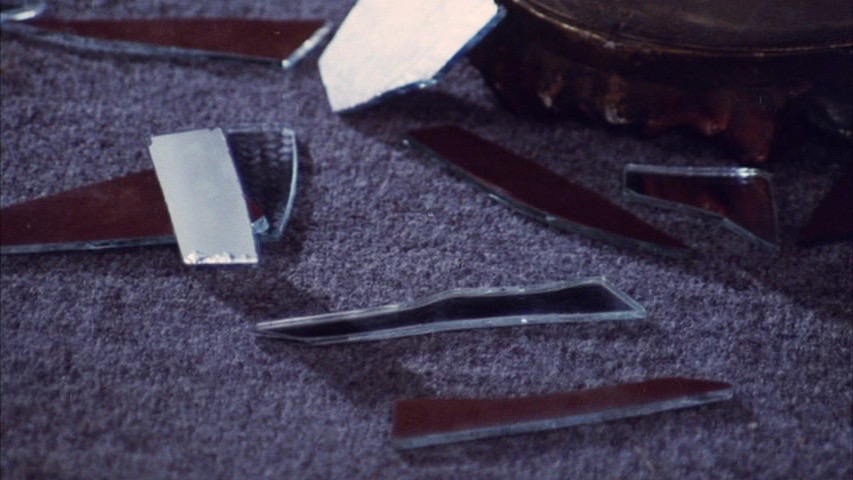
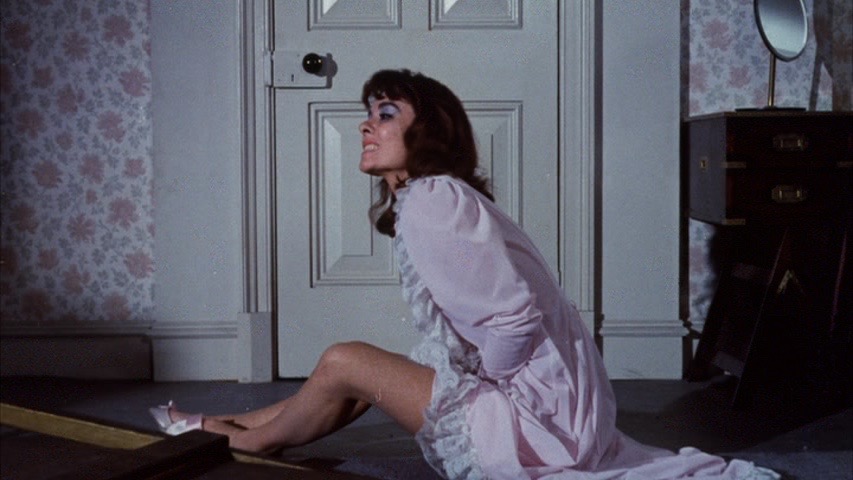
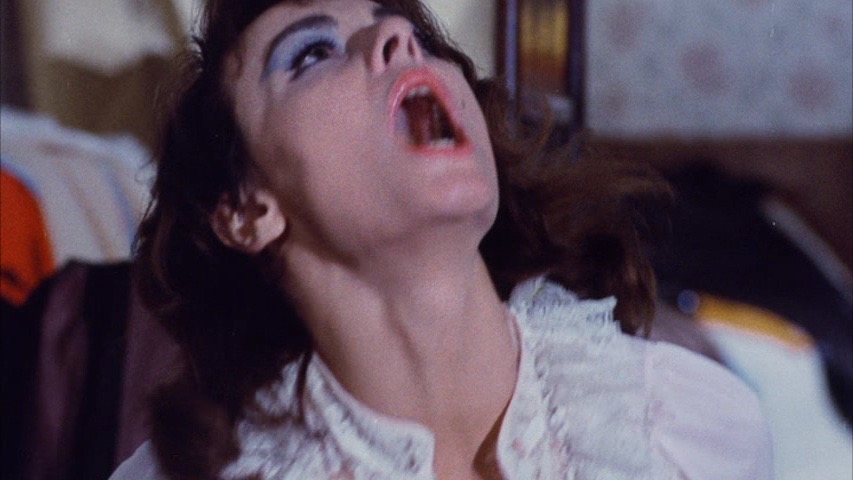
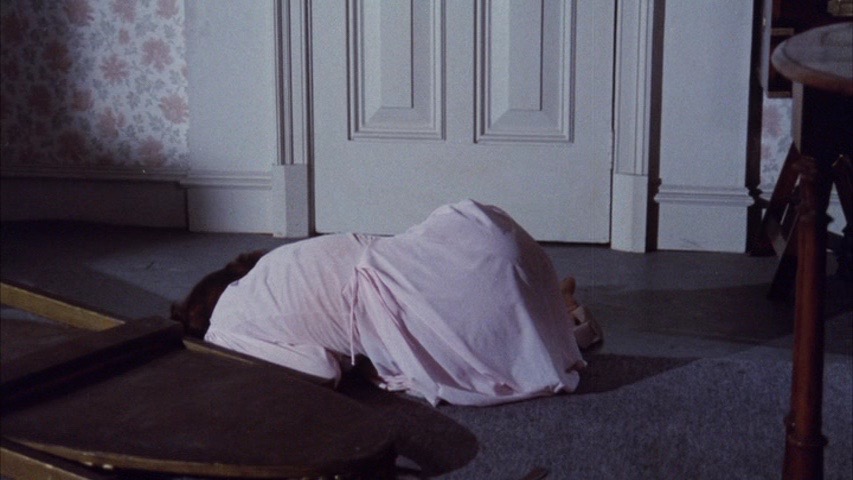
Now Frank enters the room. This part alone is tough to sit through. What’s weird is that they really haven’t established a relationship on his end. We get Wendy’s side, but he’s barely been in the movie. He tries to kiss her to strongly tell her how much he loves her and to not leave. She is into it at first, then becomes repulsed by herself. She doesn’t believe anyone can really love her. They don’t really make it clear at first, but Frank glances down slightly, then gets violent. He kicks her where it hurts. She goes down and takes a mirror with her which breaks. Here’s the ending…sort of.
She appears to cut off her genitals with a shard of glass. I mentioned Gloria Steinem before. She and other feminists of her time referred to trans women as people who mutilate themselves. That’s not all she said either. I don’t care to go into that any further. It’s a huge mess even to this day.
However, I did say “sort of” for a reason. The movie is still going.
That’s right! She’s alive! Didn’t bleed out or anything. Suddenly she’s just in a hospital bed where she acts like that was a dream or maybe wasn’t. She says, “She was confused for a moment”. She says, “It was about a year ago she woke up in a bed like this.” Regardless, the doctor tells her the operation was a success and that he’ll check in again with her later. He calls her “Miss Ross”.
We now cut to a regular room and find that she has a proper passport now. She’s not in a hospital. Then she says, “I must always remember. How lucky I am to be a girl.” And cut to the end of Working Girl (1988)…
as the camera zooms out from the window till it stops and the credits roll. Yes, I know that’s also the ending of King Vidor’s The Crowd (1928).
So if I am reading this right. She tried to cut off her genitals, but failed and survived. She had bottom surgery, which made her a real woman in the eyes of the British government. Then she ends the film by saying how lucky she is to be a girl? What? You mean as opposed to the men who she said earlier were made in God’s image which he screwed up? This was supposed to be a transgender movie, right? It certainly has a lot of the elements, but there really is this constant anti-man thing going on here. It’s more like the story of a woman who is trapped in a man’s world. She tries to become a woman be merely adorning herself with the appearance of a woman. She is berated for not essentially being a modern woman/feminist. The person who ultimately drives her to a suicidal action is a man. Then she wakes up with female genitalia, accepted as a woman, and says to herself that she must remember she is lucky not to finally be living as the gender she is, not to be accepted as woman, or anything that makes sense. She says she must remember she is lucky not to be a man.
And to drive all this home about her being lucky not to be a man.
She says the line after she picks up and looks at the picture of, to the best of my knowledge, her dead mother. The mother she said her father drove to death.
What I do love about all this is that the movie with the ending like this is quite similar to A Clockwork Orange that came out one year prior to this film. The two books are separated by 4 years. Alex has an apparent disease and is given a superficial cure that opens him up to hatred by society and in the end is driven to a suicidal action that truly cures him. In his case it returned him to his previous state. However, the book actually has an additional 21st chapter where Alex decides to give up his violent ways. In I Want What I Want, a woman with an apparent disease gives herself a superficial cure that opens her up to hatred by society and in the end is driven to a suicidal action that truly cures her. Yeah, I wouldn’t be surprised if there was a little borrowing going on here.
I’d be really remiss if I didn’t mention that according to the review of the film inside the DVD box it says that the director was quoted as saying: “I am known to be difficult, British, homosexual and expensive and whilst I can, with modified rapture, admit to the first three charges, the last is deeply wounding.” Also according to that review, the author of the book Geoff Brown wrote only one other book which was about a schizophrenic. Both things could have played a role in how this film turned out.
You can say a lot of things about this movie, the DVD itself, the box, the reviews, my own review, etc. What you can’t say though is that Anne Heywood didn’t give it her all here. She did. I may not like what I saw in the film, but she did a good job with very difficult material.
I don’t recommend the film. I just can’t. But if you think you can handle it, then just like Let Me Die A Woman, it’s a historical curiosity.
(Depending on how much you know about world history, the review below may contain spoilers.)
It was nearly four years ago that I decided that my goal in life was to watch and review every single film — no matter how obscure or potentially disappointing — that had ever been nominated for best picture. Of course, that’s not my only goal. If anything, I may have too many, often contradictory goals in my life. But seeing all of the best picture nominees was definitely one of them and, all these years later, it’s a goal that I’m still trying to achieve. With the help of TCM and their nonstop schedule of movies made long before I was born, it’s also a goal on which I am slowly but surely making progress.
Last night, as I scrolled through the guide, I noticed that TCM would be showing Nicholas and Alexandra, a three and a half hour film from 1971. Now normally, I would be hesitant about watching a film that long, if just because I have ADHD and I doubt I’d be able to concentrate on it. In a theater, watching the action unfold on a big screen, it wouldn’t be a big deal. However, it’s totally different when you’re talking watching a movie on TV in a house that is full of potential distractions. Add to that, Wednesday night is when I usually watch shows like Survivor, Hell’s Kitchen, and South Park.
But, here’s the thing. The title Nicholas and Alexandra sounded familiar to me and not just because I’m an obsessive history nerd. I did some checking and I discovered that, regardless of how obscure the film may be today, Nicholas and Alexandra was nominated for best picture. It lost to The French Connection but it was nominated.
So, of course, I had to watch it.
And you know what?
It’s not a terrible movie. It’s certainly not great. It has multiple flaws and it’s hard to imagine this film being nominated alongside films like The French Connection, Last Picture Show, and A Clockwork Orange. Watching the movie, I got the feeling it was probably nominated because it was a big, expensive epic and not because it was one of the best of the year. But, if you stick with the film (which, if we’re going to be honest here, is much easier said than done), it’s not quite as disappointing as you might expect it to be.
Nicholas and Alexandra tells the story of the last monarch of Russia, Tsar Nicholas II (Michael Jayston). Struggling to escape the shadow of his father and incapable of understanding what life is like for those not born into royalty, Nicholas is portrayed as being well-meaning but autocratic and blind to the fact that the days of royalty are rapidly coming to an end. His wife, Alexandra (Janet Susman) is also unpopular with both the Russian citizenry and the royal court on account of being German.
Alexandra spends most her time doting on her youngest son, Alexei, who suffers from hemophilia. When a flamboyant Serbian monk named Rasputin (Tom Baker) claims that he has the power to heal Alexei, Alexandra immediately brings him into the court. Soon, rumors are flying across Russia about Rasputin’s relationship with Alexandra.
Meanwhile, men with names like Lenin (Michael Bryant), Trotsky (Brian Cox), and Stalin (James Hazeldine) are plotting to lead a “worker’s revolution…”
If you know anything about history, it’s not really a spoiler to reveal what happens in the second half of Nicholas and Alexandra. (And if you’re not into history, you probably would not have any interest in watching the movie in the first place.) Archduke Franz Ferdinand is assassinated, plunging the entire world into war. Russia declares war on Germany and the German-born Alexandra becomes even more unpopular than before. The rest of the royal court, jealous over the mad monk’s influence, plots against Rasputin. The Tsar is forced from the throne and Nicholas and his family spend their last days as captives of the people they once ruled. Now a powerless prisoner, Nicholas finally starts to understand the world beyond his palace walls. However, in the end, Nicholas, Alexandra, their children, and their loyal servants are taken into a small room and violently executed. End of movie.
So, there are a lot of things wrong with Nicholas and Alexandra. Not the least of the film’s problem is an unwieldy length and generally slow pace. (The film was directed by Franklin J. Schaffner, who also directed the still-fun original Planet of the Apes. Little of the flair he brought to Planet of the Apes is present here.) This is one of those films that is full of incident with various characters popping up and discussing the intricacies of international politics with little concern as to whether or not any of this is the least bit cinematic or even compelling on a narrative level. The film has a huge cast but very few memorable characters.
Even worse is that neither Nicholas nor Alexandra never come across as being all that interesting. The film makes the case that Nicholas’s downfall was largely a result of him being unlucky enough to rule at a time when people across Europe and Asia were rejecting the old ways for the new ways of revolution and industrialization. Nicholas is continually portrayed as being well-meaning but isolated and that has the potential to be interesting but, at times, the film feels almost as emotionally detached as its characters.
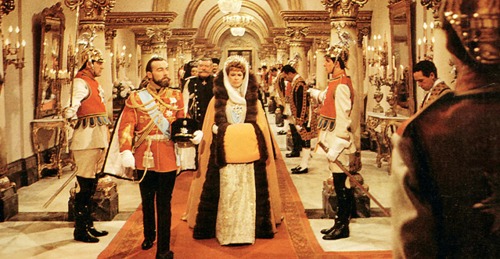
That said, Nicholas and Alexandra does work as a spectacle, as a showcase for beautiful clothing and ornate scenery. As a character study, Nicholas and Alexandra largely fails but, as a fashion show, it’s actually a lot of fun. Early on in the film, there’s a lengthy sequence in which Nicholas and Alexandra walk down the red-carpeted hallways of their palace. It’s shot through Nicholas’s eyes and we see a collection of guards and noblemen and women standing to the side and bowing their heads as the Tsar and his wife walk past. It’s a good scene and one that perfectly shows not only the life that Nicholas is used to but also why Nicholas doesn’t want to change that life.
Perhaps not surprisingly, the first two hours of Nicholas and Alexandra work best when they focus on the flamboyant character of Rasputin. Baker does a really go job as Rasputin, delivering all of his lines with a ferocious intensity while staring with obviously unhinged eyes. When he’s with Alexandra, Rasputin is calculating and coldly conniving, providing just enough comfort to keep her under his control. When he’s with Nicholas or any of the other male members of the court, he reveals himself to be an arrogant libertine, making profane jokes and bragging about his conquests. It’s a really good performance but, as with so many other good performances in this film, it occasionally gets lost in the film’s dense production.
The best moments of Nicholas and Alexandra come towards the end, with the humbled Nicholas finally revealing his humanity and the Tsar’s family struggling to maintain their dignity even as their inevitable fate approaches. At this point, the performers came to life. The film suddenly had an emotional resonance. It finally became about something! For those final 20 or so minutes, Nicholas and Alexandra suddenly seemed worthy of being awarded.
In fact, based on those final 20 minutes, I would even be willing to see a sequel called Nicholas and Alexandra and Rasputin Makes Three.
As for Nicholas and Alexandra, it’s not a great film but if you’re into history or you’re an Oscar completist like me, the film has its occasional charms. You just have to be willing to look for them.
Tonight was the season finale of Game of Thrones season 4. It was another great piece of storytelling that managed to juggle several subplots and giving each one their own time to shine.
The latest “Guilty Pleasure” is the 1980 epically mind-numbing fantasy film Hawk the Slayer starring the great Jack Palance in the the villainous role of Voltan the evil elder brother to the film’s title character, Hawk the Slayer. This film is in the other side of the quality spectrum of tonight’s Game of Thrones season finale.
Hawk the Slayer was part of the 80’s flood of sword and sorcery films that included such titles as Conan the Barbarian, Beastmaster and Ladyhawke. To say that this film was bad would be an understatement. Yet, I’m quite drawn to it whenever I see it on TV. In fact, it was on syndication that I first saw this when I was just a wee lad. I might have been around 9 or 10 when I came across it halfway through.
Maybe it was the fact that I was just discovering Advanced Dungeons & Dragons, but this film spoke to me. It had that timeless story of brother against brother. The evil tyrant with legions of evil ne’er do wells against a small band of class-specific heroes and rogues. I mean this had it all. We had the hero of the film who I would probably place in the swordsman class. Then we had Ranulf with his repeating crossbow that would be the band’s rogue. Of course, there’s Gort the giant with his mighty hammer and Baldin the dwarf skilled in the art of the whip. But the one character that really shouted RPG for me throughout this film was Crow the Elf who could fire his bow as fast as any machine gun I’ve ever seen.
I think it’s very awfulness is why I keep returning to it whenever I see it on TV. The acting is atrocious with special effects that even in 1980 would be seen as laughable. The characters themselves were so one-note that one wonders if the person who wrote the screenplay was actually a trained monkey. Yet, the film was fun for all those reasons. It’s one of those titles that one would express as being so bad it’s good. Even now, with childhood several decades past, I still enjoy watching Hawk the Slayer and always wonder when they plan to get the sequel set-up and made.
Oh, the synth-heavy disco-fantasy-western soundtrack was also something to behold.
















 Through the Shattered Lens