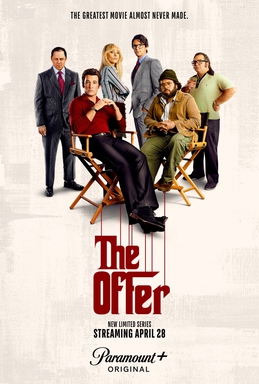
Miniseries Review: The Offer (dir by Dexter Fletcher, Adam Arkin, Colin Bucksey, and Gwyneth Horder-Payton)


Almost despite myself, I enjoyed The Offer.

That may come as a surprise to some.  The Offer is a 10-hour miniseries about the making of The Godfather and how Hollywood politics aren’t really that much different from Mafia politics.  As anyone who has regularly read this site over the past few years should know, I absolutely love The Godfather.  It’s my favorite movie.  It’s a movie about which I’ve done a lot of personal research.  There’s very little about the making of The Godfather that I don’t know.  If we’re going to be honest, I’m probably a little bit of a snob about it.

So, like many people, I was a bit skeptical when I first heard about The Offer.  It didn’t seem like something that was particularly necessary and it was hard for me to imagine how the miniseries would ever be able to convincingly cast anyone as Marlon Brando or Al Pacino or, for that matter, Francis Ford Coppola.  My skepticism only increased when I learned that the story was going to be told from the perspective of the film’s producer, Al Ruddy.  Everyone agrees that Ruddy was an important part of The Godfather team but he’s never been quite as compelling a figure as the brilliant but often self-destructive Brando or the neurotic but playful Pacino.  When people talk about what makes The Godfather such a brilliant film, they talk about the quotable dialogue.  They talk about the masterful performances.  They talk about Coppola’s skill as a storyteller.  They talk about the way that Gordon Willis lit the scenes so that the characters often seemed to be on the verge of being swallowed by their shadows.  They even talk about how Robert Evans insisted that the film could only be directed by an Italian and how Evans defied Paramount when the studio originally demanded that Coppola cut the film down to two hours.  When Al Ruddy is praised, it’s usually for staying out of the way.

I knew that I would have to watch The Offer eventually but I avoided it while it was actually airing and I made sure not to read anyone else’s opinion to it.  Despite my own obvious biases, I did want to try to maintain as open a mind as I possibly could.  That said, I wasn’t expecting much when I finally watched The Offer this weekend.

But, as I said at the start of this review, I enjoyed it.

Don’t get me wrong.  It’s a bit of a silly show.  If The Offer was a sitcom, it would be called Everybody Loves Ruddy because the main theme of the show seems to be that Al Ruddy (played by a miscast Miles Teller) was literally the most important man in the entire history of Hollywood.  There’s not a problem that Ruddy can’t solve, whether it’s convincing CBS to air a tasteless sitcom called Hogan’s Heroes or convincing Paramount to take a huge risk on a mercurial director named Coppola and an unknown actor named Pacino.  When gangster Joe Colombo (Giovanni Ribisi) tries to interfere with production, Ruddy befriends him and is soon a popular guy with the crew.  When Al Pacino (Anthony Ippolito) signs a contract with MGM, Ruddy puts the pressure on Paramount to find a way to get Pacino out of it.  When Coppola (Dan Fogler) has a fight with Gordon Willis (T.J. Thyne), Ruddy convinces them to make up.  When Robert Evans (Matthew Goode) goes on a coke binge, Ruddy snaps him out of it.  When …. well, you get the idea.  There’s nothing Al Ruddy can’t do!  When Evans mentioned that Henry Kissinger was coming to the Godfather premiere, I half expected Al Ruddy to negotiate a ceasefire in Vietnam.

From the start, The Offer is full of visual cues and dialogue that pay homage to not only The Godfather but the other films of the period.  The first line of the miniseries is Joe Colombo telling someone to, “Leave the cannoli.”  At first, I groaned but, slowly but surely, the show won me over.  By the end of the first episode, it was obvious that The Offer was not necessarily meant to be taken literally.  The Offer doesn’t tell the story of what Hollywood was really like in the late 60s and early 70s.  Instead, it tells the story of how people like me, who were born a few decades too late, imagine it was.  It’s less about the decade itself and more about how that decade continues to fascinate us and spark our imagination.  In our imagination, Robert Evans is snorting coke in his office, Ali MacGraw is lounging by the pool, Frank Sinatra is making angry phone calls to Joe Colombo, Al Pacino is so nervous that he can’t look anyone in the eye, and Marlon Brando is wandering around his mansion in a kimono and talking about how he can’t get anyone to see his latest, politically-charged film.  In our fantasies, it only makes sense that Evans and his assistant Peter Bart (Josh Zuckerman) would spend all of their time dropping titles of well-regarded, still-remembered films because why would anyone fantasize about them discussing a film that was forgotten?  And, of course, no one is going to fantasize about people discussing some actor who was briefly big in 1972 and then spent the rest of their career on television.  Instead, in the fantasy, it’s all about Robert Redford, Jack Nicholson, Liz Taylor, and Marlon Brando.  It also makes sense that only classic 70s music would be heard in the background of every scene because, seriously, who ever fantasizes about a bad song playing at a party?

Once it is accepted that it is all meant to be a fantasy, it becomes much easier to appreciate The Offer for what it is, a gossipy, Hollywood story with a Mafia subplot and an overabundance period detail.  Once the viewer accepts The Offer is a fantasy, the viewer is freed up to appreciate the 70s-chic wardrobe.  Once the viewer gets past the fact that the cast is playing characters based on actual people, it becomes much easier to appreciate the performances of character actors like Colin Hanks (who plays an uptight executive) and Burn Gorman (who plays the notoriously eccentric businessman, Charles Bluhdorn).  Patrick Gallo is slyly funny as Mario Puzo while Dan Fogler does a credible enough job as Coppola, even if he never quite captures Coppola’s larger-than-life persona.  Even Lou Ferrigno gets a nice bit, playing a mob enforcer turned unwilling actor.  At the center of it all is the absolutely brilliant Matthew Goode, giving a charismatic performance as the brilliant but sometimes unstable Robert Evans.

As a history, The Offer won’t win any points for accuracy.  But, as a fantasy, it’s undeniably entertaining.  It’s not so much the story of how The Godfather was made but the story of how we wish it was made.
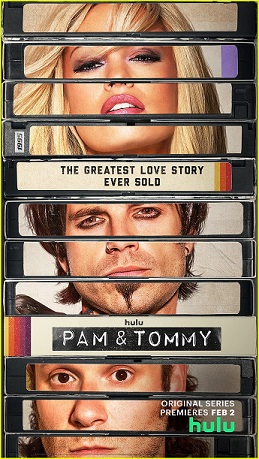
TV Review 1.8 Pam & Tommy “Seattle” (dir by Gwyneth Horder-Payton)


Pam & Tommy comes to an end, not with a hard bang but instead with a flaccid whimper.

The final episode of Pam & Tommy opened with Seth Rogen’s Rand Gauthier wandering around with a pained expression on his face.  Apparently, this was the one thing that Rand was good at.  Rand has been beating up people who owe Butchie money but it’s starting to trouble him.  Rand believes in karma and thinks that being a glorified mob enforcer will turn karma against him.  Or maybe being a glorified mob enforcer is karma’s way of punishing Rand for stealing a sex tape and trying to sell it online in the first place.  It’s hard to say.  All I know is that there was way too much Rand and way too much karma talk for me.  The show may be based on what Rand claims actually happened to him but the idea of Rand, with his mom jeans and his mullet, becoming a feared debt collector is simply a bit too much.  Perhaps because he was just as sick of listening to Rand whine as the rest of us, Butchie offered to let Rand off the hook if Rand would simply pay him $10,000.  Rand, of course, doesn’t have $10,000, despite being responsible for coming up with the most profitable and lucrative use of the internet ever.  Loser!

Meanwhile, Tommy attempts to make a musical comeback by imitating the 90s Seattle sound while an actual resident of Seattle, Seth Warshovsky (Fred Hechinger), offers to buy the rights to Pam and Tommy’s sex tape.  On the one hand, selling the rights to Warshovsky will allow Warshovsky to sue anyone who is distributing and making money off of bootlegged copies.  On the other hand, it will also lead people to assume that Pam and Tommy were behind the video’s initial release.  Pam wants to do it.  Tommy refuses.  Their marriage starts to crumble.  The episode insinuates that the tape caused Pam to miss out on opportunities to appear in both L.A. Confidential and Austin Powers which …. yeah.  I’m honestly going to say that, as far as Pam not becoming a movie star and losing roles to Kim Basinger and Elizabeth Hurley, there may have been factors in play other than the sex tape and hypocritical American puritanism.  One can sympathize with what Pam went through while also still being honest about the fact that she was never a particularly good actress.  If anything, her talent and persona were perfect for television.

After 8 hours, the finale of Pam & Tommy didn’t add up too much.  We start to see that Pam is getting sick of Tommy’s immaturity and that Tommy can’t control his temper, even around Pam.  But it’s not until the end title cards that we’re informed that Pam and Tommy divorced after Tommy was arrested and did jail time for spousal abuse.  (We’re also told that both Pam and Tommy consider each other but the love of their lives, which is kind of a bold statement to make when neither Pam nor Tommy had anything to do with the production of Pam & Tommy.)  Seth Warshovsky pays Rand a total of $10,000 for the original copy of the sex tape and then goes on to make several million dollars off of it.  Rand considers using the money to settle his debt with Butchie but instead he gives the money to his ex-wife because that’s what karma would want him to do.  (One has to wonder if anyone involved with Pam & Tommy ever watched a little show called My Name Is Earl.)  Those helpful title cards inform us that Rand moved to North California and now works as a marijuana grower and that he still struggles to get people to believe that he’s the man who actually stole the tape.  It doesn’t mention whether he did anything about his hair.

The main problem with Pam & Tommy is that the story itself just wasn’t interesting enough to demand 8 hours of screen time.  The second biggest problem, and this is a problem with a lot of streaming miniseries, is that the show itself never really settled on a consistent tone.  Was it a drama or was it a live action cartoon?  The show couldn’t seem to make up its mind.  Themes were raised and then abandoned, as if the show itself was desperately trying to justify its existence.  Lily James gave a good performance as Pam.  Sebastin Stan has a few good moments as Tommy Lee.  Seth Rogen, Taylor Schilling, Andrew “Dice” Clay, and Nick Offerman all gave their characters one-note interpretations that didn’t add up too much.  Considering the talent involved, it’s all a bit of a shame.

Oh well.  It’s over now.

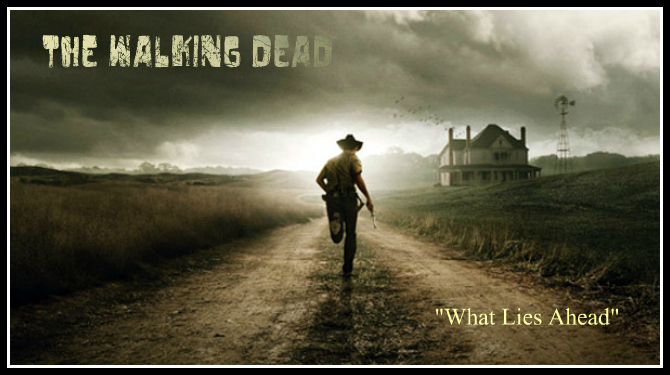
Review: The Walking Dead S2E1 “What Lies Ahead”


“It’s all about slim chances now.” – Rick Grimes

The first season of AMC’s The Walking Dead was a runaway hit for the network. Despite the inaugural season being a a truncated 6-episode long one the series gained a huge following that included long-time fans of the Robert Kirkman long-running zombie comic book series, but also new ones. The Walking Dead would have it’s showrunner and tv series creator Frank Darabont to thank for bringing it to a wider audience which is why this second season premiere brings with it a sense of bittersweet to the proceedings. This past summer saw Darabont fired from the very show he had helped create due to creative and financial differences with the show’s parent network in AMC.

Does this mean the show will suffer as it moves forward without it’s leader at the helm? If the premiere episode of season two is any clue then the show has hit the ground running and doesn’t seem to be in a hurry to stop to mourn the firing of it’s leader.

“What Lies Ahead” begins with the survivors soon after their narrow escape from the destruction of the CDC in Atlanta. The group’s number is now one less and any chances of a cure to what has caused the zombie apocalypse and a hopeful future seems slim at best and a hopeless exercise in futility at it’s worst. Rick (Andrew Lincoln) continues to be the group’s de facto leader which seems to wear on him now that he doesn’t just have his wife and son to think about but others as well. The episode does show that Rick’s acceptance of leadership in the group might be more out of necessity and less about him wanting to lead. No one, from his partner Shane (Jon Bernthal) to the wise, old Dale (Jeffrey DeMunn) seem to want the job and everyone seems willing to blame Rick for every instance of danger the group finds itself in.

Just like the pilot episode of the first season this new season doesn’t skimp on the tension. Frank Darabont wrote this first episode and his handling of the group’s first encounter with a moving “herd” of zombies show’s that he hasn’t lost the ability to create tension and just build it past the point of unbearable. This entire sequence with the group hiding beneath abandoned cars on the interstate with countless zombies walking past just inches away has to be one of the signature scenes of this season and more than a match for Rick’s solitary walk through the empty hospital in the pilot episode.

The bulk of the episode doesn’t come down too much from the tension and dread built up during this “herd” scene. It continues to keep the tension level at a fever pitch as the group must now search for one of their own who has gone missing during the “herd” march. The tension doesn’t just come from the situation Rick and the group find themselves in, but from the cracks and fractures that has begun to appear within the collective group. It’s these fractures which becomes the impetus for some character building that the first season rarely seem to have time for.

We still see repercussions from decisions made in the last season continue to make itself known. Whether it’s Shane wallowing in self-pity for losing what he thought was a ready-made family he had created for himself once Rick reappeared right up to Andrea’s bitterness towards Dale for having saved her from her choice to commit suicide in the last episode of the first season. It’s through the interaction between some of the factions being created through these particular characters that we begin to see the stress of this new world beginning to wear on them. Not to mention how they all seem to blame Rick for the situation they find themselves in. Which made it a suprising turn of events when was left to Lori to defend her husband and put everyone in their place. Her little speech near the end of the episode went a long way in establishing her character as one who sought redemption not in self-pity but in supporting the one person she understand to be the most qualified to see them through alive.

The episode wasn’t all positive. What hampered the first season was still quite evident in this season two premiere. While most of the writing was much improved from the first season there was still some parts in the episode when the dialogue seemed forced and not something which came about organically. It’s a testament to the performances by the whole cast that most people watching the show wouldn’t notice it much. Some stand out performances has to be the husband and wife team of Andrew Lincoln and Sarah Wayne Callies. Then there’s Norman Reedus as Daryl who continues to grow as a character beyond the typical redneck many thought him to be during the first season. With Reedus’s portrayal of Daryl one could see that he might not agree with some of Rick’s moral choices and decisions but he respects the man for actually making a decision instead of being wishy-washy. Daryl knows and understand, just as Lori does, that Rick is their best chance at surviving.

“What Lies Ahead” is a great start to a new season of The Walking Dead. While the firing of Darabont as showrunner from the show (replaced by a more than qualified Glen Mazzara) does hang like a dark cloud over the premiere that still shouldn’t detract from this episode’s quality. It’s an episode that really doesn’t dwell on allowing the rest of the world to catch it’s breath from start to finish while at the same time still allowing for characters to grow. This episode even ends in a cliffhanger that should be quite familiar for fans of the comic book, but should be quite a shock to the system for those who haven’t read a page of Kirkman’s comic.

Rick said in the beginning of the episode, after seeing the destruction of the CDC and getting the news that there’s really no more way to turn back the clock on this apocalypse, that it was all about “slim chances” now and from what this episode showed even slim might be too hopeful a word. These are people living on borrowed time and one can say that they’re already the walking dead. Time to see if Rick’s word’s will be rewarded with safety and salvation or just new levels of hell they must navigate through.

Notes

  • Chandler Riggs as Carl looks to be getting more and more comfortable in the role. His line delivery don’t seem as flat as they were in the first season.
  • Steven Yeun didn’t get as much time on the screen, but his gleeful reaction at being handed one of the bladed weapons was priceless. Like a kid in a candy store.
  • I noticed that while Frank Darabont wrote this episode the name shown during the beginning of the film was the name Ardeth Bay. For genre geek fans that name should sound familiar. It was a nice touch and better than just using the usual Alan Smithee.
  • We see more clues as to zombie behavior in this episode as Daryl once again proves that the stink of the dead bodies will hide living humans from zombies as he drapes corpses over himself and T-Dog during the “herd” march.
  • Love the line reading by Norman Reedus as his Daryl looks up at the large crucifix in the abandoned chapel and says “Hey J.C….taking requests”.
  • Gore content in this episode still continues the series trademark of being quite high for a network tv series. I’m still surprised at how much the show has gotten away with. Tonight’s signature gore scene has to be the impromptu zombie autopsy and trying to find out if their missing group member is in its stomach.
  • This episode deviated very much from the comic book, but when it mattered most it used one of the early shockers in the comic book series to end the episode on a huge note.