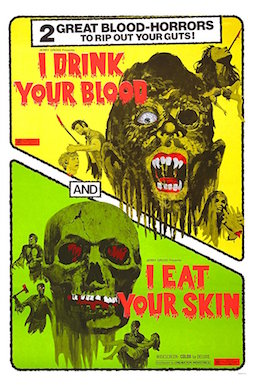
The TSL Horror Grindhouse: I Drink Your Blood (dir by David E. Durston)


Put yourself in the shoes of the townspeople in 1971’s I Drink Your Blood.

Here you are.  You’re minding your own business.  Life isn’t great because of the economic downtown.  Your town is nearly deserted and is basically full of empty buildings.  In fact, it seems like there are currently more construction workers around then townspeople.  The workers are working on the dam.  Maybe a dam will help the area.  Maybe it won’t.

The sexist construction workers are kind of a pain but then, things get even worse when a bunch of hippies show up.  Led by the mysterious Horace Bones (played by dancer Bhaskar Roy Chowdhury), these are not your typical (if annoying) peace-and-love hippies.  These hippies have more in common with the Manson Family than they do with the commune folks from Easy Rider.  They are a remarkably diverse group of hippies.  Some of them are young.  Some of them are older.  Some of them really enjoy attacking other people.  Some of them are just along for the ride.  For his part, Horace is really into Satanism and human sacrifice and he encourages his followers to feel the same way.  Has anyone nice ever been named Horace Bones?

When the cultists assault a local girl named Sylvia (Arlene Farber), they are confronted in the abandoned building in which they are squatting by Sylvia’s grandfather, Doc Banner (Richard Bowler).  They proceed to beat up the kindly doctor and they force him to take LSD.  Sylvia’s younger brother, Pete (Riley Mills), get revenge by injecting the blood of a rabid dog into several pies and then selling them to Horace and his hippies.  Almost all of the hippies eat the pies and soon, they are foaming at the mouth and rampaging through the countryside, infected by and spreading rabies.  One of the hippie women ends up having sex with all of the construction workers, which leads to the rabies spreading even more.  Soon, it’s hippies vs hardhats as the fights happening across the real world are repeated in small town America.  Of course, there’s no police around to break up the fights and, thanks to the rabies, everyone is fighting to the death.  Heads are ripped off.  Electric knives are used to carve more than just food.  People are set on fire.  Blood is definitely drank.

Only one hippie didn’t eat the pies.  Andy (Tyde Kierney) was never a big fan of Horace’s Manson-like tendencies and he pretty much draws the line at human sacrifice.  Andy flees from Horace’s world and finds himself with Sylvia, Pete, and Mildred (Elizabeth Marner-Brooks), the owner of the local bakery.  The four of them struggle to survive in a world that has literally gone mad.

I Drink Your Blood was, not surprisingly, controversial when it was first released.  It was one of the few films to be given an X-rating for its violence as opposed to its sexual content.  It is definitely violent, though it’s really nowhere near as graphic as some of the R-rated horror films that have come out over the past few years.

I Drink Your Blood is a classic grindhouse film, one that takes a fairly ridiculous premise and works wonders with it.  The crazed hippies fighting the far more blue collar construction workers stand in for the fanatical soldiers in America’s cultural wars, with innocents like Sylvia, Pete, and Mildred caught in the middle with Andy.  Director David Durston mixes horror and satire with a deft hand, suggesting that the rabies is ultimately just allowing people to show their true selves.  I Drink Your Blood is an underground classic and thematically, it’s portrayal of a rabid world is just as relevant today as when it was first released.

The TSL Horror Grindhouse: Blood Thirst (dir by Newt Arnold)


Filmed in 1965 but not released until 1971, Blood Thirst takes place in Manila.  Young women, many of whom work at or near the Bario Club, are turning up dead with all of their blood drained from their body.  Inspector Miguel Ramos (Vic Diaz) thinks that the crimes are the work of one homicidal maniac but there are whispers that the women are falling victim to a cult of devil worshippers.  Hoping to solve the case before a full-fledged panic breaks out, Ramos summons a friend of his from New York, Detective Adam Rourke (Robert Winston).

Detective Rourke, who is perhaps a bit too quick to smirk, thinks that it’s going to be easy to solve this case but it turns out the opposite is true.  He goes undercover as a visiting writer and starts to hang out at the Bario Club.  He gets to know the people who work there and he introduces himself to the club’s owner, Calderone (Vic Silayan).  Calderone is immediately suspicious of Rourke, something that he ascribes to his natural concern for his employees.  However, the club’s most popular dancer — the beautiful blonde Serena (Yvonne Nielsen) — informs Rourke that Calderone murdered his previous wife.

Both Detective Rourke and Miguel’s sister, Sylvia (Katherine Henryk), suspect that the killer is Calderone.  However, the viewers have a bit more information than Rourke and Sylvia.  We know that the killer is a horrifyingly disfigured monster who always seem to emerge from the shadows.  What is the monster and why is it obsessed with draining the blood of young, beautiful women?  That’s the mystery that Rourke will eventually have to solve.

Just from the plot description, Blood Thirst might not sound that impressive and I have to admit that I went into the film with low expectations.  But I was actually surprised to discover that the film was far more effective than I was expecting.  Visually, the stark black-and-white cinematography creates an appropriately ominous atmosphere and the scenes in the club feel like they could have been lifted from the best examples of film noir.  Characters literally emerge and occasionally disappear into the darkness, with shadows often obscuring half an actor’s face as if to remind us that any one of the characters could be the murderer (and, by that same token, any of them could actually be innocent).  When Serena performs in the club, her blonde hair and pale skin almost seem to glow in the darkness.  The monster itself is effectively frightening as it makes it way through the film, moving like a crazed animal that has found itself outside of its natural habitat.

Of course, it’s hardly a flawless film.  Rourke is a remarkably unlikable character, one who smirks his way through the entire film.  The scenes where he flirts with Sylvia are cringeworthy and redeemed only by Sylvia’s habit of both slapping him and kicking him out of her car.  There are a few moments of humor that don’t quite work.  The film is at its best when it focuses on atmosphere and shadows as opposed to the characters.  Blood Thirst works as a filmed dream, a vision of dark and disturbing things.

6 Trailers For The End Of The Third Week Of Horrorthon


With the third week of Horrorthon coming to a close and the final week about to start, I have to really ask myself, “Where does the time go!?”

Well, as I consider that, why not check out this special Horrorthon edition of Lisa Marie’s Favorite Grindhouse and Exploitation Film trailers!

  1. Ruby (1977)

In this film from 1977, the great Piper Laurie plays Ruby, a former gun moll who owns her own haunted drive-in theater!

2. Drive-In Massacre (1976)

Ruby was not the only 70s horror film to be sent at a drive-in.  There was also 1976’s Drive-In Massacre!

3. The Texas Chainsaw Massacre (1974)

And what were they all watching at the drive-in?  Depending on the year, they could have very well have been watching the original Texas Chainsaw Massacre!

4. The Legend of Boggy Creek (1972)

Another drive-in of the 70s was this documentary about the search for the Fouke Monster.

5. The Town That Dreaded Sundown (1976)

The Legend of Boggy Creek was such a hit that director Charles B. Pierce was able to follow up with The Town That Dreaded Sundown.

6. The Evictors (1979)

The Town That Dreaded Sundown was a bit enough hit that Charles B. Pierce was able to follow it up with The Evictors.

Such is the power of the drive-in!

The TSL Horror Grindhouse: Lord Shango (dir by Ray Marsh)


The 1975 film, Lord Shango, takes place in a small, rural town in the Deep South, where the population appears to be firmly divided between those who worship at an evangelical Christian church and those who follow the Yoruba religion.

(To answer the obvious question, I have no idea how faithful this film is to the realities of the Yoruba religion.)

Jenny (Marlene Clark), who is a waitress at a local restaurant, is a member of the evangelical church, largely because her boyfriend is a member and he thinks that her attending the church will help her to get pregnant.  Her daughter, Billie (Avis McCarther), is in love with Femi (Bill Overton), who is a follower of the Yoruba religion.  One Sunday morning, while all the church people sings hymns, a series of baptisms are held in a nearby river.  When it is time for Billie to baptized, Femi rushes into the water and objects.  After he shoves her out of the river, the men of the church grab Femi and announce that the evil must be taken out of him through what appears to be a forced baptism.  They force him under the water but, with Femi struggling, the end up holding him down for too long and Femi drowns.

Traumatized, Billie sinks into depression and Jenny grows disillusioned with the church, especially when the men who held Femi down refuse to take any responsibility for their actions.  She also learns that her boyfriend, Memphis (Wally Taylor), had sex with Billie after Billie mistook him for being the spirit of Femi.  When she finds Memphis praying in the church, she proceeds to yell and curse at him while he pathetically apologizes.

The next morning, Jenny wakes up to discover that Billie has run away, leaving behind a note that simply reads, “I can no longer live in your house.”  When the men of the church again prove to be insensitive and ineffectual when it comes to finding out where Billie has gone (and instead are more concerned about why Jenny and Memphis has not been coming to the prayer meetings), Jenny turns to Femi’s friend, Jabo (Lawrence Cook).  Under Jabo’s guidance, Jenny offers up a series of sacrifices to the local Yoruba priest (Maurice Woods) and asks for her daughter to return home.

The sacrifices appear to work.  Billie returns home and reveals that she’s pregnant with a baby that she believes to be Femi’s and which Jenny believes to be Memphis’s.  Jenny, now firmly under the control of Jabo, continues to make sacrifices and bad things continue to befall the men that she holds responsible for Femi’s death….

A frequently surreal film, Lord Shango is an interesting, if not always easy-to-decipher, portrayal of the battle of two different belief systems.  While the evangelical Christianity that Jenny first followed could only promise an eventual reward, Jabo’s tribal religion offers her immediate reward and revenge.  (Significantly, even though Billie was in love with Femi and wants to have his child, she has no interest in following his religion.)  The film is often edited to provide a direct contrast between the staged cermonies of evangelical Christianity and the sensuality of the Yoruba religion.  The film is full of Southern gothic atmosphere and is well-acted, particularly by Lawrence Cook and Marlene Clark.  That said, the film is also frequently very difficult to follow.  At times, one gets the feeling that the film is being surreal simply to be surreal and it’s hard to find a coherent message in the film’s collection of odd scenes and strange dialogue.

Lord Shango is a frequently intriguing film, as long as you’re willing to accept a little incoherence.

The TSL Horror Grindhouse: Indecent Desires (dir by Doris Wishman)


An odd film, 1968’s Indecent Desires.

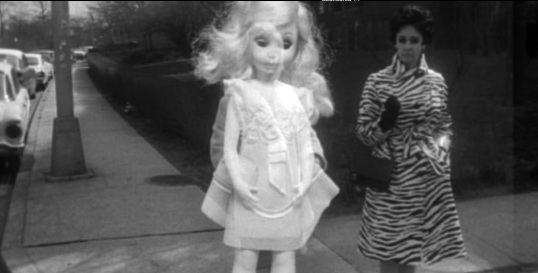
Directed by Doris Wishman, Indecent Desires tells the story of two people and a doll.  Zeb (Michael Alaimo) is a pervy loser who is obsessed with Ann (Sharon Kent), the young secretary that he often sees while she’s on the way too work.  Ann is a painfully normal (some might say boring) person, with an office job, a super dull boyfriend named Tom (Trom Little), and a wild best friend named Babs (Jackie Richards).  Babs is the type who comes into the office and announces that she met a superfab guy the previous night, a guy named Monty who is “so continental.”  Ann is the type who replies that she doesn’t trust anyone named Monty nor anyone who is continental.

(Like what the heck does that even mean?)

One day, pervy Zeb discovers a doll in a trash can and he takes it home with him.  The doll bears a superficial resemblance to Ann, in that they’re both blonde.  Whenever Zeb caresses the doll, Ann feels it.  Whenever Zeb gets upset and slaps the doll, Ann feels it.  When Zeb undresses the doll, Ann undresses.  When Zeb discovers that Ann has a boyfriend, Ann feels Zeb’s anger.

YIKES!

It’s kept ambiguous as to whether or not Zeb knows that Ann can feel what he’s doing with the doll.  There’s an odd scene where Zeb sees Ann on the street and she briefly turns into a giant version of the doll.  It’s totally possible that Zeb is using the doll as his way to pretend to possess someone who he knows that he’ll never have the courage to actually approach.  That adds a haunting ambiguity to the film’s final scene, as we’re left to wonder whether Zeb truly understands the consequences of his actions.

It’s tempting — perhaps a bit too tempting — to find a subversive subtext to the film’s exploitive story.  Zeb may be obsessed with Ann but she barely notices him in the film.  She doesn’t know that he exists but it’s not because she’s self-absorbed.  She just has a life of her own with a career of her own and a boyfriend of her own and Zeb is not a part of her life.  For Zeb, though, obsessing on Ann is his entire life and he is outraged that she doesn’t even know him.  Fueled by misogyny and a sense of entitlement, Zeb uses the doll to exert his control over Ann and to finally keep her from being with anyone but him.  Zeb can’t talk to a real woman but he can totally have a relationship with a plastic doll that has no opinions and, even more importantly, never changes or develops in any way.  Of course, it’s debatable whether this subtext was deliberate or accidental.  Sometimes, the rushed nature of the exploitation film basis led to some of the most subversive statements of all.

This film was directed Doris Wishman, who was the busiest female director of the sound era and, as a woman who made sexploitation films, a true groundbreaker.  Clocking in at barely 75 minutes, Indecent Desires is definitely a Wishman film, from the stark black-and-white cinematography to the often skewed camera angles.  There’s very little dialogue and what there is was obviously dubbed.  There’s no ambient noise to be heard, giving the film a surreal and dream-like feel even before Zeb grabs the doll.

Indecent Desires is effective, low-budget paranoia fuel.  It’s a film that will leave you to wonder who has been watching you and how many “dolls” they’ve collected.

The TSL Horror Grindhouse: Scarecrows (dir by William Wesley)


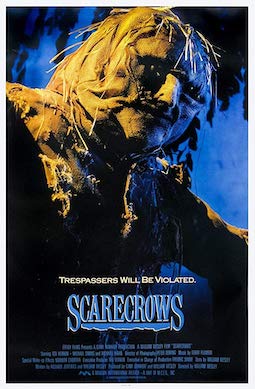
The 1988 film Scarecrows is one that has a very simple but also very effective premise.

Scarecrows are scary as Hell.

And you know what?  There’s a lot to be said for the premise.  Seriously, I have no problem with clowns but scarecrows definitely make me nervous.  It’s the way that they’re just left out there in the middle of a field, tied to a post and seemingly staring at the world through black eyes.  I know that some people try to make scarecrows less creepy by giving them smiles but, to me, a smiling scarecrow is even creepier than a scarecrow with no expression at all.  At night, whenever you see the shadow of a scarecrow in the distance, it’s always easy to imagine it climbing off of its post and walking towards your house, its dark eyes focusing on your bedroom window the whole way.  If you’re not scared of scarecrows, you’re not paying attention.

(Of course, perhaps the scariest thing about scarecrows is that crows don’t seem to be particularly scared of them.  I mean, if the crows have figured out that they’re not human, what’s the point of having them unless you’re going to use them to summon evil spirits?)

Scarecrows opens with a daring heist.  Five paramilitary mercenaries, people who are paid to fight and kill for a living, steal three million dollars from Camp Pendleton and then force pilot Al (David James Campbell) and his teenager daughter, Kellie (Victoria Christian), to fly them to Mexico.  However, in the middle of the flight, one of the merceneries grabs the money and a parachute and jumps from the plane.  Two other mercenaries jump after him while the remaining two force Al to land the airplane.  The plane ends up landing outside of a small farm, one that appears to be deserted except for all the scarecrows….

Now, seriously, think about this.  The majority of the characters in this film are mercenaries.  They’ve been trained in every form of combat.  They’ve got weapons and they know how to use them.  They are used to fighting and, in fact, they even look forward to it.  Not only are they mercenaries but they’ve also just successfully robbed a MARINE base.  You don’t mess with the Marines unless you’re very stupid or very confident or maybe both.  Adam Driver was a Marine.  Do you want Adam Driver mad at you?  My point is that these characters are not your run-of-the-mill horror movie victims.

And yet, one-by-one, they’re taken out by the scarecrows.  We get a bit of backstory about the scarecrows when the mercenaries stumble across a farmhouse and discover that it was owned by three Satanists who transferred their souls into the scarecrows.  But really, that’s not important.  What is important is that the scarecrows will emerge from the darkness and kill anyone who lets their guard down.  The scarecrows even talk to each other!  TALKING SCARECROWS!  AGCK!

Anyway, Scarecrows is an effective, quickly-paced, and atmospheric horror film, one that I really enjoyed when I watched it last October.  The scarecrows make for efficient and frightening monsters.  This is the film that proves that scarecrows are scarier than clowns.

Seriously, don’t mess with the scarecrow.

The TSL Horror Grindhouse: Crypt of Dark Secrets (dir by Jack Weis)


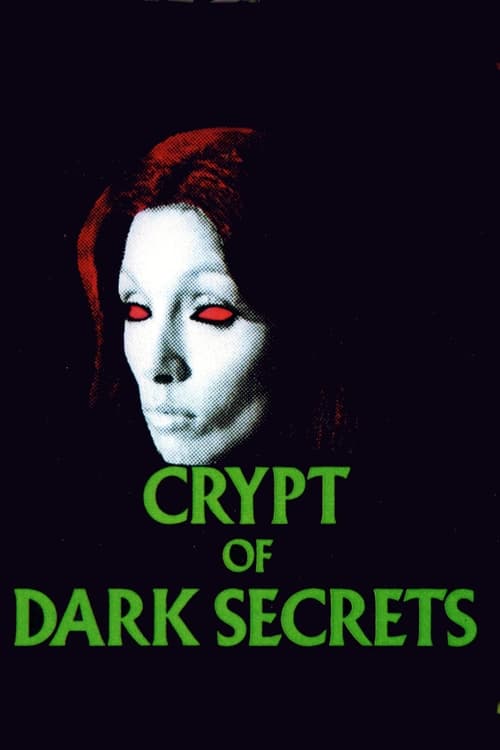
1976’s Crypt of Dark Secrets is yet another low-budget horror film that takes place in the bayous of Louisiana.

Seriously, what is it about the bayous that seems to attract the darker side of everyone’s imagination?  I’ve been to the Louisiana bayous and …. well, actually they are pretty creepy.  I guess if you were going to make a horror movie, the Louisiana bayou would be a good place to film.  It’s not like you have to spend a lot of money trying to create atmosphere or anything like that.  That bayous have got their own built in, free atmosphere.  You just have to start filming.

Anyway, Crypt of Dark Secrets does not feature a crypt but it does feature an island that’s sitting in the middle of the Louisiana swamp.  There are many legends about the island, with the locals saying that it’s protected by voodoo and “the ghosts of Aztec priests.”  There is always a fog on the island, regardless of how hot or otherwise sunny the day may be.  And there’s always a cool breeze in the middle of the fog.

There’s also a black snake that is often seen swimming in the water around the island.  Whenever the snake slithers onto the land, it turns into Damballa (Maureen Ridley), a swamp witch who is apparently at least a century old.  She protects the island and she has the power to not only conjure quicksand but to also raise the dead.  She also knows where a pirate’s treasure has been buried on the island but she’s certainly not going to let anyone find it.

Damballa has fallen for the island’s latest resident, a Vietnam vet named Ted Watkins (Ronald Tanet), who just wants the world to leave him alone.  He lives in a small house on the island and he refuses to keep his money in the bank, despite the fact that his military pension has made him a very wealthy man.  When three local losers, Max (Harry Uher), Earl (Butch Benit), and Louise (Barbara Hagerty), overhear that Ted keeps all of his money in a breadbox, they decide to pay him a visit and take that money for themselves.  Ted ends up dead and Max and Earl are shocked to discover that money is now covered with blood and basically useless to them.

Damballa does a naked dance over Ted’s body, which brings Ted back to life.  Despite Ted telling Damballa that he isn’t interested in vengeance and that he decided to leave hate and violence behind when he got out of Vietnam, Damballa teams up with the local voodoo priestess to get revenge on the three thieves.  As Damballa explains it, evil has to be punished.

Ted’s status as Vietnam vet adds an interesting subtext to Crypt of Dark Secrets.  During the same year that Taxi Driver was solidifying the image of the crazed Vietnam vet in the minds of many American filmgoers, Crypt of Dark Secrets featured a vet who just wants to be left alone to his own devices and who has no desire for further violence.  Indeed, for a film that centers around vengeance, Ted is remarkably forgiving.

As for the film itself, it’s fairly slow but, having been shot on location in Louisiana, it’s got a lot of authentic swamp atmosphere and its portrayal of voodoo is an interesting one.  (Voodoo, the film suggests, is the way that unwritten laws are enforced in the swamp.)  The performance are a mixed bag, with Ronald Tanet giving a convincing performance as Ted while Maureen Ridley delivers her lines in a strangely formal fashion that doesn’t feel right for her swamp witch character.  The actors playing the thieves are all convincing, as are the actors playing the inevitably portly Southern cops.

Crypt of Dark Secrets is flawed but it gets by on atmosphere.

The TSL Horror Grindhouse: Garden of the Dead (dir by John Hayes)


The 1972 film, Garden of the Dead, takes place in a prison camp that sits out in the middle of what appears to the bayous.  The prisoners spend their days working on the chain gang, breaking rocks and cleaning highways.  The tough-as-nails guards spend their days watching the prisoners and carrying around their rifles.  This is the type of prison camp where the prisoners are all talkative and boastful and the guards all wear sunglasses and every day is just like the next.

A group of prisoners are trying to brighten things up on the chain gang by using some experimental formaldehyde to get high.  I’m sure that won’t lead to any complications!  When the prisoners later try to escape from the prison camp, they’re quickly captured by the guards who proceed to violate all sorts of laws by gunning the prisoners down and then ordering the other prisoners to bury the dead bodies in the prison camp’s garden.

That night, the dead prisoners come back to life as zombies.  Does this happen because they were getting high off of the formaldehyde or is it because the chemicals themselves were leaked into the garden?  The film doesn’t make it particularly clear but it doesn’t matter.  What’s important is that they’re now zombies.  You really don’t need a whole lot of explanations when it comes to zombies.  The dead prisoners are still obsessed with getting high and they start to kill everyone in the camp as a part of their effort to get their precious formaldehyde.

I’ll just admit right now that I absolutely love Garden of the Dead.  Some of that is because Garden of the Dead is a very short movie, clocking in at barely an hour’s running time.  It was a film that was obviously designed to be the second half of a double feature but no matter!  That short running time means that there’s no need for extra padding and the action move quickly.  The film ends before the viewer gets bored with the somewhat repetitive zombie action.  Seriously, we need to normalize 50 minute films.

Another thing that I love about Garden of the Dead is that it is full of foggy bayou atmosphere.  The film itself was obviously shot on a very low budget and on very cheap film but the grainy images actually contribute to the film’s nightmarish feeling.  The film captures the feeling of being isolated in the middle of nowhere.  One reason why the zombies in this film are frightening is because there’s literally nowhere safe to hide from them.  Even if you can get out of the prison camp, you’ll still have to brave the wilderness that surrounds it.

Finally, I liked that the zombies in Garden of the Dead were smarter than the average zombies.  Instead of just stumbling around and trying to eat every living thing that they met, these zombies worked together to get what they wanted.  I especially liked the spazzy zombie who was always running around the prison camp and jumping and yelling at everyone.  These are zombies who clearly enjoy being zombies and it makes Garden of the Dead all the more effective.

Garden of the Dead is a grindhouse gem!

<– October Hacks: Meatcleaver Massacre (dir by Ed Wood)

The Phillies Win Game One Of The NLCS  –>

The TSL Horror Grindhouse: The Psychotronic Man (dir by Jack M. Sell)


If you can figure out what’s going on in 1979’s The Psychotronic Man, you’re definitely doing better than most people who have sat through this film.

Filmed on location in Chicago (at a time when the original Mayor Richard Daley was supposedly encouraging filmmaker to shoot anywhere but Chicago because he didn’t want anyone to film anything that could make his city look bad), The Psychotronic Man tells the story of an alcoholic barber named Rocky (Peter Spelson).  One day, after work, Rocky decides to drive the long way home, which apparently means driving through every inch of rural Illinois.  Seriously, you really do have to wonder just where exactly Rocky lives.  Rocky decides to pull over so that he can get some sleep.  Suddenly, his car is floating in the air.  Was Rocky just having a dream or were aliens trying to abduct him?  Rocky’s concerned and so is his wife and so is his mistress.

Rocky goes to a doctor but the doctor has nothing useful to tell him, beyond prescribing his some aspirin for his headaches.  Rocky tries to investigate on his own but this just leads to him getting a shotgun pulled on him by a suspicious farmer.  This is when Rocky discovers that he can kill people with his mind.

How has Rocky developed the power to kill people with his mind?  Your guess is as good as mine, though the film does feature an professor at the University of Chicago who suggests that Rocky’s power is one that we all have, buried deep in our subconscious.  Perhaps Rocky’s meeting with the aliens caused this powers to be unlocked.  I mean, it’s as good an explanation as any, though you have to wonder why aliens would suddenly want to give an unappealing barber the ability to kill people with his mind.  That seems pretty irresponsible on the part of the aliens.

Well, no matter!  Rocky’s in a lot of trouble now and he’s got not only the police but also a government agent after him.  (The government would like to learn how Rocky developed his “psychotronic powers.”)  This leads to several scenes of Rocky and the police walking around Chicago, looking for each other.  I would say that probably about 75% of this film is just filler.  The plot gets repetitive in record time, as does the bell-dominated soundtrack.  Every few minutes, a bell rings as if we need to be reminded that Rocky is one step closer to meeting his psychotronic destiny.

Personally, I enjoyed seeing the location footage of Chicago and the surrounding countryside.  It was obvious that the film was shot without bothering to get permits so the majority of the people in the background were probably just people trying to either shop or get to work.  That said, The Psychotronic Man plays out a torturously slow pace and Rocky is not at all an appealing main character.  Even before he turns into a psycho mind killer, he’s a drunk who slips from a flask while driving and who is cheating on his wife.  As far as I’m concerned, Rocky deserved whatever he got!

Finally, this film has lived on due to the fact that it introduced the word Psychotronic to the world.  Michael J. Weldon later borrowed the term for The Psychotronic Encyclopedia of Film, The Psychotronic Video Guide, and Psychotronic Video magazine.  Psychotronic is usually a term used to describe low-budget B-movies, the majority of which are better than The Psychotronic Man.

The TSL Horror Grindhouse: Abby (dir by William Girdler)


Some films are a hundred times more entertaining than they have any right to be and that’s certainly the case with 1974’s Abby.

A blaxploitation take on The Exorcist and Rosemary’s Baby, Abby opens with Bishop Garrett Williams (William Marshall, star of Blacula) taking a peaceful stroll with his students at seminary.  Garrett talks about how he will miss them all when he is off on archeological dig in Nigeria.  One of his students asks him some questions about Eshu, one of the spirits of the Yoruba religion.  Bishop Williams explains that Eshu is a trickster and a force of chaos and carnal excess.  Yes, the Bishop explains, he does believe that demons are real.

And indeed, no sooner has the Bishop gone to Nigeria and opened up a small puzzle box adorned with the symbols of Eshu than a demon claiming to be Eshu travels from Africa to Louisville, Kentucky.  Louisville is the new home of the Bishop’s son, Reverend Emmett Williams (Terry Carter).  Reverend Williams is a good and god-fearing man and his new wife, Abby (Carol Speed), is a devout Christian who sings in the choir, speaks out against drugs, and never curses.  That changes, however, once the demon claiming to be Eshu gets inside of her.  Soon, Abby is speaking in a very deep voice, laughing at inappropriate moments, demanding constant sex, and plunging a knife into her arm.  When the now possessed Abby disappears into the sordid nightlife of Louisville, Reverend Williams and his brother-in-law, Det. Cass Potter (Austin Stoker), try to find her.  Eventually, Bishop Williams joins them in their search, knowing that even if they find Abby, it will fall to him to perform the exorcism to save her life and soul.

Abby has so much in common with The Exorcist that Warner Bros. actually ended up suing the film’s producers and distributor for plagiarism.  That lawsuit is one reason why it’s not particularly easy to see Abby today.  Indeed, I had to resort to watching a washed-out upload on YouTube.  Of course, Abby was hardly the first or the last film to rip off The Exorcist.  Almost every horror released in the wake of William Friedkin’s classic shocker owes something to The Exorcist.  Abby, however, was one of the more finanically successful rip-offs of the film, or at least it was until the lawsuit led to it being removed from theaters.  It’s unfortunate that Abby is so difficult to see because it’s actually one of the more entertaining Exorcist rip-offs out there.

A lot of that is due to the confrontation between the dignified and stately William Marshall and the far more hyperactive Carol Speed.  Carol Speed gives a performance of amazing energy, whether she’s happily cackling after a woman drops dead of a heart attack or if she’s kicking her husband in the groin.  Carol Speed holds nothing back and basically tears through every scene like a force of uncontrollable nature.  She provides the perfect counterbalance to Marshall’s more measured performance as the Bishop.  Marshall delivers his lines with such authority and conviction that the viewer has no doubt he could probably scare the devil out of everyone.  Carol Speed, meanwhile, is so good at playing wild that the viewer wonders how, even if they can get Eshu out of here, Abby will ever be able to go back to being a demure preacher’s wife.  Setting Marshall and Speed loose in the seedy nightclubs of Loiusville leads to an occasionally horrific, occasionally silly, but always entertaining between good and evil.

Abby is an entertaining horror film.  It’s just unfortunate that we will probably never get to see a good print of it.  But then again, maybe that’s for the best.  The graininess of the version that I saw actually added to the experience of watching the film.  It made me feel like I was in some small theater in the middle of nowhere, watching a print of the film that had taken a long and difficult journey just so it could be seen and appreciated.