4 Shots From 4 Films is just what it says it is, 4 shots from 4 of our favorite films. As opposed to the reviews and recaps that we usually post, 4 Shots From 4 Films is all about letting the visuals do the talking.
I love giallo!
4 Shots From 4 Giallo Films
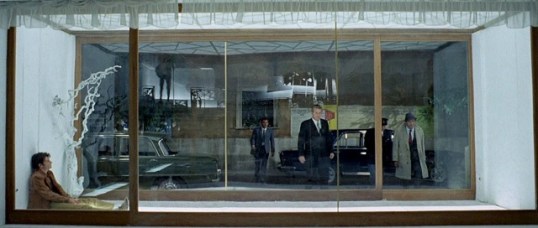
The Bird With The Crystal Plumage (1970, dir by Dario Argento)
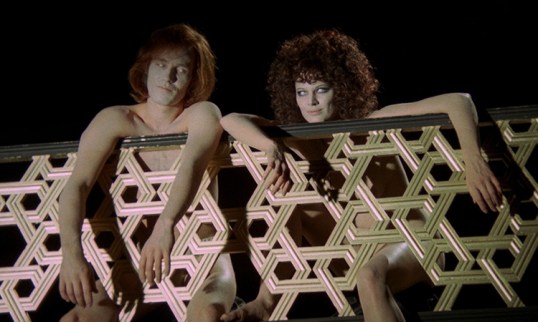
Hatchet For The Honeymoon (1970, dir by Mario Bava)
A Lizard In A Woman’s Skin (1971, dir by Lucio Fulci)
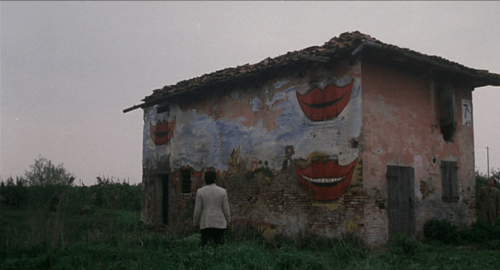
The House With Laughing Windows (1976, directed by Pupi Avati)
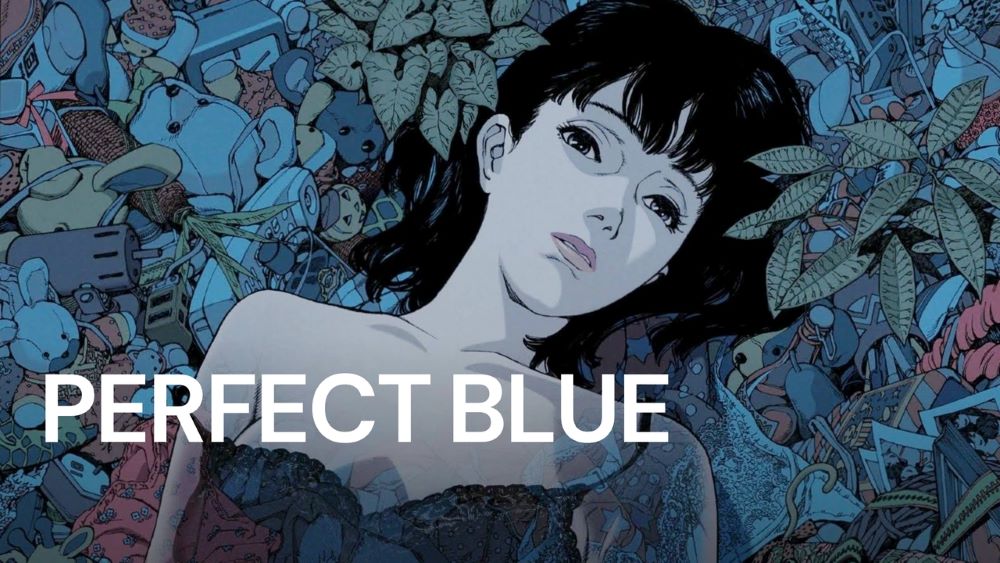
Satoshi Kon’s 1998 psychological thriller Perfect Blue remains a striking and influential work nearly three decades after its release. Despite being an animated film, it evokes the unsettling style and tension found in the classic Italian giallo thrillers of the 1970s and ’80s—films by directors like Dario Argento and Mario Bava—and melds them admirably with elements of 1970s Eurotrash exploitation and arthouse psychological thriller reminiscent of Brian De Palma. Kon’s debut feature is a haunting exploration of fractured identity, blending show-business satire, Hitchcockian suspense, and surreal nightmare imagery into a profoundly relevant story in today’s age of parasocial fandom and digital voyeurism.
The film centers on Mima Kirigoe, a member of the bubblegum J-Pop group “CHAM!” who decides to leave the idol world to pursue a career in serious acting. This choice, rooted in her desire for personal growth and artistic expression, sets off devastating consequences. For her managers and many fans, Mima’s break from the manufactured idol persona is viewed as betrayal—a dissolution of a carefully crafted image designed for maximum market appeal. The pristine, innocent figure worshipped by fans begins to crumble, replaced by the complicated reality of adulthood and the harsh glare of fame.
To fully grasp the horror underpinning Perfect Blue, it’s important to understand the nature of Japanese idol culture. These idols are not merely singers or performers—they are highly managed brands. Every lyric, outfit, choreographed move, and public appearance is tightly controlled to project purity and accessibility. This system bears close resemblance to the meticulously produced Western pop acts of the late 1990s and early 2000s like Britney Spears and the Backstreet Boys. Both rely on constructing polished, artificial personas that maximize commercial appeal, often at the expense of genuine selfhood. When an idol deviates from this script, it frequently provokes obsession, confusion, and even violent reactions from a subset of fans unable to reconcile the constructed image with evolving reality.
Mima’s transition from ingénue pop star to serious actress thrusts her into an intense psychological crucible. Her first major acting role requires her to perform a deeply disturbing rape scene, one that blurs lines between professional obligation and personal violation. Kon lingers on Mima’s shocked expression—a powerful mask of confusion and repressed trauma. This sequence sets the tone for the film: a world where performance, identity, and exploitation intertwine irrevocably, creating a landscape where self and roles imposed by society become indistinguishable.
As Mima’s public persona shifts, darker forces emerge. An eerie fan website titled “Mima’s Room” chronicles her life with disturbing accuracy but is clearly authored by an unknown party. Even more threatening is an obsessed fan fixated on the idol version of Mima, stalking her and insisting that the “real” Mima no longer exists. This duality—between reality and imitation, self and construct—becomes the film’s thematic centerpiece. The narrative loops and fractures, cutting between dreams, televised drama, and supposed reality until neither Mima nor the viewer can be sure what is authentic. This masterful ambiguity immerses us in the protagonist’s psychological collapse.
The horror in Perfect Blue operates on two deeply intertwined levels. First, it is a psychological portrait of a young woman’s unraveling, echoing themes explored in Roman Polanski’s Repulsion and Darren Aronofsky’s Black Swan—films focused on fragile female psyches under immense pressure. While Aronofsky has publicly denied that Black Swan was directly inspired by Perfect Blue, the similarities in theme and specific visual motifs suggest otherwise. Both films explore the disintegration of identity in a young woman caught between innocence and adult roles, with dreamlike, unsettling sequences blurring reality and hallucination. The parallels in their portrayal of psychological breakdown, stalking, and the pressure of performance are striking, though Aronofsky’s work is set in the world of ballet rather than pop music and acting.
Second, Perfect Blue channels the lush, stylized dread characteristic of giallo cinema. Kon borrows Argento’s fascination with voyeuristic camera angles, saturated color palettes, and the interplay of beauty and violence. Like Argento’s heroines trapped in a hall of mirrors, Mima finds herself caught in a labyrinth where surreal horror becomes tangible and murder might be just another staged act in a disturbing performance.
Yet unlike Suspiria’s occult grotesques, Kon’s horror resides not in supernatural forces but within the mind and media itself. Animation becomes a revelatory choice—rather than softening violence, it frees Kon from physical constraints, allowing reality to fracture visually with startling fluidity. Identities shift from frame to frame, reflections move independently of their sources, and timelines collapse and fragment like psychic glitches. The medium’s flexibility intensifies the film’s psychological disorientation, blurring fact and fantasy in ways live-action cinema would struggle to capture so viscerally.
Kon’s prescient understanding of media obsession resonates more strongly than ever today. Long before social media reshaped how identity is constructed and perceived, Perfect Blue envisioned the internet as a distorting mirror that erases the line between self and performance. The “Mima’s Room” website serves both as diary and prison—a disturbing precursor to the carefully curated digital personas that dominate social media platforms now. As Mima reads falsified diary entries that resemble her life more “truthfully” than her own memory, she grows alienated from reality. The omnipresent gaze of fans, stalkers, and producers merges into an oppressive force she cannot escape.
This taps into a modern phenomenon: parasocial relationships. These one-sided emotional bonds fans develop with celebrities or fictional characters foster a dangerous illusion of intimacy and knowledge, often masking boundaries between admiration and entitlement. In Perfect Blue, the deranged fan believes he “knows” Mima in a way that justifies controlling her, even committing violence to preserve the image he idolizes. This mirrors the darker side of parasocial dynamics today, where fans demand absolute authenticity or control over public figures’ identities, sometimes leading to harassment or stalking. Kon’s film foreshadows how internet culture can exacerbate these fragile boundaries, blurring realities and fueling destructive obsession.
The film’s editing amplifies this psychological suffocation. Kon intercuts scenes from Mima’s TV drama—ironically titled Double Bind—with moments from her “real” life until one blurs imperceptibly into the other. Viewers are drawn deeper into uncertainty: are we witnessing actual events, staged fiction, or yet another deceptive layer? This deliberate manipulation creates unease without relying on cheap jump scares or graphic violence. The horror is existential—losing trust not only in others but in one’s own mind.
This theme has become exponentially more relevant with the rise of social media influencers and online streaming personalities. Today, countless individuals cultivate personal brands that blend their private lives with public personas online, often with blurred or deliberately ambiguous boundaries. The intense fan interaction, constant scrutiny, and expectation of accessibility echo the pressures Mima faces. As social media blurs the line between “real” self and online performance, the risks of losing grip on one’s identity—as Mima does—feel more immediate and widespread than ever.
It is extraordinary that Perfect Blue was Kon’s first feature film. His command of cinematic language is masterful—harnessing animation as a means to probe psychological depths rather than as mere escapism. His subsequent works—Millennium Actress, Tokyo Godfathers, Paprika—build on themes of identity, memory, and the fluid borders of reality, but Perfect Blue remains his rawest and most unsettling contribution. His untimely death from pancreatic cancer in 2010 at just 46 left the film community mourning a visionary whose full promise was tragically unfulfilled.
One of Perfect Blue’s greatest achievements is rejecting outsider stereotypes about anime. It is neither childish fantasy nor gratuitous erotica, though it fearlessly explores sexual anxiety, trauma, and performance under intense scrutiny. Kon’s film proves that animation can tackle mature themes—mental illness, societal pressure, gender identity—with subtlety and emotional gravitas usually reserved for live-action cinema. It challenges the misinformed Western association of adult anime with “hentai,” affirming animation’s capacity as a serious art form.
Kon’s film also critiques fandom’s darker impulses, asking difficult questions about ownership and identity. How much of a celebrity’s life belongs to the public? How much of one’s self must be sacrificed under the weight of expectation? In today’s hyperconnected online world, Kon’s portrayal of obsessive fans demanding idealized idols is uncannily relevant and urgent.
Ultimately, Perfect Blue transcends genre and era. It is not merely a psychological thriller or celebrity critique but a mirror held to an increasingly performative world. Long before social media dissolved the lines between private and public selves, Kon foresaw how image can consume reality. The result is a masterful fusion of paranoia, empathy, and stunning visual style—a giallo-inspired fever dream painted in blood-red and neon blue. For animation, it remains a landmark in artistic maturity; for cinema as a whole, it stands as one of the most chilling and insightful portraits of fame’s corrosive gaze and the dark side of parasocial obsession.
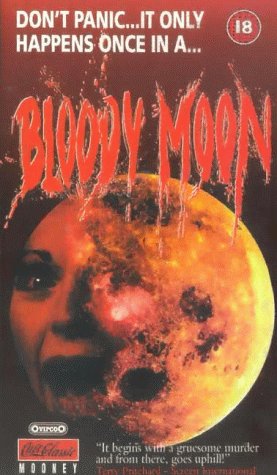
A 1981 West German/Spanish co-production, Bloody Moon open with a disfigured man named Miguel (Alexander Waechter) putting on a Mickey Mouse mask and sneaking into a party being held on the campus of a private school that is known as (deep breath) Europe’s International Youth-Club Boarding School of Languages. It’s a school that is meant for the young, the rich, and the unburdened. In short, it’s not a place for Miguel at all.
With his face safely hidden behind the smiling image of Disney’s favorite mouse, Miguel meets a young woman who is dancing by herself. She mistakes him for her boyfriend and heads into a nearby bungalow with him. They start to make love but — uh oh! — the mask falls off! The woman screams at the sight of Miguel’s scarred face. Miguel grabs a pair of scissors and stabs her to death while Mickey Mouse’s smiling face smiles on the floor. (One can only imagine how Disney reacted to this film.)
A few years later, Miguel is being released from a mental hospital. He’s released into the custody of his sister, Manuela (Nadja Gerganoff). Miguel’s doctor (played by the film’s director, Jesus “Jess” Franco) says that Miguel should be fine as long as he’s not around anything that reminds him of the incident. Manuela says that she’ll look after him and then promptly takes him back to the school where he committed the murder. What part of not reminding him did she fail to understand?
Manuela does actually have an excuse for bringing Miguel to the school with her, though. She and her aunt, Countess Maria (Maria Rubio), own the school. Countess Maria is an angry, wheelchair-bound woman who is convinced that Manuela wants to kill her so that she can take over the school and it does seem that Manuela does have some hostility towards her aunt. Of course, another reason for bringing Miguel back to the school to live with her is that he and Manuela have an incestuous relationship …. or, at least, they did. Now that Manuela refuses to sleep him, Miguel is reduced to lurking around campus and staring at all the students while they sunbathe topless at the pool. While Manuela stands naked in her room and stares at the moon (the bloody moon?), Miguel is hunched down in the shrubbery and peeping through windows.
Among the students is Angela (Olivia Pascal). Angela is upset because she discovered a dead body but no one’s willing to believe her because she also enjoys reading mystery novels. Angela knows that someone is committing murders on campus but is it Miguel or it is Professor Alvaro (Christoph Moosbrugger) or could it even be the enigmatic Bueno (Otto Retzer), a bald guy who seems to randomly pop up around campus? Can Angela convince her remarkably stupid classmates that there’s a murderer on campus before it’s too late?
Bloody Moon was one of the many films directed by the Spanish auteur and former Orson Welles collaborator, Jesus Franco. In a career that lasted over 60 years, Franco directed at least 173 feature films. (It’s felt that he actually directed quite a bit more, usually under a pseudonym. Franco, himself, claimed that he didn’t really remember how many films he had directed.) As a director, Franco is remembered for his low budgets, his unapologetic embrace of the sordid, his rather casual attitude towards maintaining continuity from one scene to another, and for occasionally framing an interesting shot or two. By his own admission, Bloody Moon was not a personal project for Franco. It’s something that he did for the money, as a director-for-hire. However, Bloody Moon is unmistakably a Franco film. The budget is low. The subject matter is often so sordid that it borders on parody. As far as continuity goes, Angela goes from wearing a nightshirt when she discovers a dead body inside her bungalow to wearing a colorful sweater when she runs outside in a panic. (I guess she could have stopped to change clothes with a dead body on the bed and a killer lurking somewhere in the bungalow but I doubt it. When there’s a dead body on your bed, modesty should be the least of your concerns.) And yet, as silly as it all is, there are moments when Bloody Moon does achieve a certain dream-like intensity. The mix of badly dubbed performers, sudden jump cuts, bloody violence, and the total lack of narrative logic makes Bloody Moon feel a bit like a filmed nightmare. It works despite itself.
Bloody Moon is one of the films that was, for a while, banned in the UK due to its violence and bloodshed. And indeed, there is a lot of blood and the violence is a bit more graphic than what one might expect to find in the American slasher films that Bloody Moon was obviously meant to capitalize upon. This film is notable for just how cruel the killer is. Not even Michael Myers or Jason Voorhees resorted to using a giant radial saw. That said, this is one of those films that has a reputation for being bloodier than it actually is. The majority of the film is taken up with scenes of people wandering around campus, either searching for their friends or stalking a potential victim. Personally, I felt the nonstop searching scenes added to the film’s dreamlike feel but I imagine those who only watch films like this for the kills will find it all to be a bit slow.
Bloody Moon was clearly made to capitalize on the success of American slasher films like Halloween and Friday the 13th. That said, Bloody Moon has more in common with the Italian giallo genre, right down to the whodunit nature of the plot, the ludicrously sleazy motives of the killer, and the total lack of intentional comic relief. Like so many giallo films, Bloody Moon takes place in a world where everyone’s either a victim or a killer and no one’s particularly likable. It’s not one of Franco’s personal films but there’s still enough of his signature style to appeal to his fans. As with most of Franco’s film, it will be best appreciated by those who like a little ennui mixed with their horror.
In this 1972 Italian film, Edwidge Fenech plays Jane Harrison. Jane is haunted by both the murder of her mother and a more recent car accident, one that caused her to miscarry. Jane has nightmares, featuring violent murders and lots of spilt blood. Whenever Jane leaves her apartment, a mysterious man with piercing blue and perfect hair (played, of course, by the owner of the best head of hair in Italian cinema, Ivan Rassimov) follows her and threatens her. Is the man real or is he just a figment of her imagination? Her sister, Barbara (Susan Scott) insists that Jane see a psychiatrist. Meanwhile, Jane’s boyfriend, Richard (the ruggedly handsome George Hilton) insists that the two of them can work through it.
However, Jane’s new neighbor, Mary (Marina Malfatti) has a suggestion that involves neither therapy nor love. Mary suggests that Jane attend a black mass. Jane agrees and …. wait, what? A black mass? Out of all the solutions that have been suggested, Jane decides to go with Satanism? That seems like a bit of an extreme solution but then again, it was the 70s and it was Italy and maybe things were just different back then. I’m just saying that I, personally, would not join a cult but obviously, some people do. Maybe that’s how the Silent Hill cult got started. Someone tried to be helpful by saying, “Let’s go to a black mass,” everyone said, “Sure!” Who knows?
Anyway, Jane attends a few rituals, all of which will seem familiar to anyone who has seen Rosemary’s Baby. She drinks the blood of a dog. She takes part in an orgy. Or does she? The scenes are shot in such a fashion that we’re left to wonder whether they’re real or if they’re just taking place inside of Jane’s mind. With her paranoia growing, Jane herself isn’t sure what’s really happening either. All she knows is that it seems as if the members of the cult are everywhere and that the mysterious man still appears to be following her. When people start dying in various gruesome ways, who is responsible? Jane or the cult or someone else entirely?
All The Colors of the Dark is a favorite of mine, a stylish giallo with an insane plot, lots of sex and death, and killer performances from giallo regulars like Fenech, Hilton, and Rassimov. The solution to this film’s mystery is actually pretty clever and — in a rarity for the giallo genre — it actually hold together when you think about it after the movie ends. Visually, director Sergio Martino does a great job of creating an atmosphere of unease and suspicion and Jane’s dreams and visions are wonderfully executed. My favorite moment is when Jane suddenly realizes that everyone around her is a member of the cult. Are they really or is Jane just hallucinating? Watch the movie to find out!
In October, it’s always nice to make some time for a good giallo, especially ones that feature George Hilton looking handsome and Ivan Rassimov looking dangerously intriguing. All the Colors of the Dark is definitely one of the better ones.
Luna, a blonde wearing a miniskirt, walks down a city street. She goes to a high-rise apartment building and is buzzed in. She doesn’t live in the building but someone who is expecting her does. She gets on an elevator, one that is full of people. One person in the elevator obviously notices when she enters. Eventually, everyone gets off the elevator, except for Luna and that one person. As the elevator approaches the top floor, Luna is suddenly stabbed to death. The murderer flees. When the elevator reaches the top floor, three residents discover Luna’s dead body….
And none of them seem to care!
Professor Isaacs (George Riguad) stares at the body, unconcerned. Miss Moss (Maria Tedeschi) makes a few judgmental comments about the victim. Mizar (Carla Brait) does, at least, scream when she finds the dead body but, ultimately, she’s more worried about how she’s going to get downstairs so that she can get to her job as a stripper/performance artist in a sleazy club.
Yes, we’ve entered giallo territory! The Italian giallo films are known for their brutal murders, stylish visuals, convoluted plots, and their black-gloved killers. However, what I always find to be most disturbing about them is that it’s rare that anyone really cares about all of the murders or the victims. Instead, giallo films are often full of bystanders who, at the most, get mildly annoyed at the idea of their day being interrupted by someone else’s murder. The typical giallo takes place in a heartless world, one where even the most grotesque scenes are often viewed with a disturbing nonchalance. That’s certainly the case with the opening of the 1972 Italian film, The Case of the Bloody Iris.
The rest of the film centers on Jennifer Langsbury (Edwige Fenech) and Marilyn (Paola Quattrini), two models who have recently been hired to star in a series of print ads for the building. They also live in the building, which would seem convenient if not for the fact that there’s also a killer on the loose who is only targeting young, single women. Even without the murders occurrin around her, Jennifer is struggling a bit getting adjusted to the world. Before becoming a model, she was a member of hippie sex cult and the cult’s leader, Adam (Ben Carra), has a bad habit of randomly showing up and demanding that she return to him. However, Jennifer is far more interested in Andrea Anitnori (giallo mainstay George Hilton), the handsome architect who built the building and who has an obsessive phobia about blood, which is going to be a bit of a problem because a lot of blood is about to be spilt.
Got all that?
The Case of the Bloody Iris is a typical, if entertaining, giallo, which means there’s a lot of sex, a lot of blood, a lot of bizarre suspects, and a few incredibly incompetent police detectives. It’s also pretty damn enjoyable, even if it doesn’t exactly break a lot of new ground as far as the genre is concerned. While director Giuliano Carnimeo never matches the visual heights of an Argento, a Bava, a Martino, or even a Lenzi, he still does a good job keeping the action moving and he shows just enough of a flair for capturing stylistic violence to make his film worthy of the genre. While the mystery itself doesn’t always make a lot of sense (which is actually to be expected when it comes to the giallo genra), The Case of the Bloody Iris features Edwige Fenech and George Hilton, two mainstays of the genre, at their best and (even though dubbed) most charismatic. It’s an enjoyable little thriller, one that’s worth the 90 minutes that it takes to watch it.
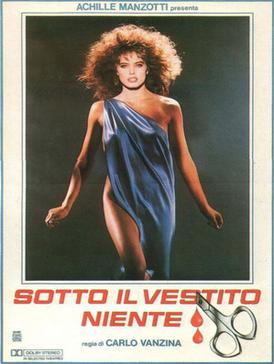
The 1985 Italian film, Nothing Underneath, is a giallo that’s achieved some notoriety based on the fact that it’s not a very easy film to find.
Seriously, I’ve spent years looking for this film. I had read enough good things about it to make me believe that it was a film that I, as an unapologetic fan of Italian horror, simply had to see. Unfortunately, as far as I can tell, it’s never gotten a proper DVD or Blu-ray release in the United States. It’s not so much that the film is controversial or even particularly graphic. Apparently, the main problem is that the film takes place in the world of high fashion and that means that there are several scenes that take place at fashion shows and most of those scenes feature songs that were very popular in 1985. Nothing Underneath has never gotten a proper video release because of all the music. It’s kind of unfortunate, really. There are so many good movies that are currently in limbo because of disputes over the rights to the music on the film’s soundtrack.
Anyway, the good news is that last night, I was able to find Nothing Underneath on YouTube! So, I finally got to watch it.
The bad news is that I watched it in Italian with no subtitles.
Now, that’s not quite as big of an issue as you might think. The thing with Italian horror films is that the story is often less important than how it’s told. The best Italian horror films are all about style and suspense and less about keeping track of who did what to whom. That’s certainly appears to be the case with Nothing Underneath. Film is a visual medium, after all.
The film is about a brother and a sister. Bob (Tom Schanley) is a park ranger who works at Yellowstone and is very happy with his simple and honest life. Jessica (Nicole Peering) is a fashion model who currently lives in Milan and who spends all of her days modeling lingerie and fighting off sleazy coke addicts. Bob and Jessica have such an extremely strong bond that, occasionally, Bob has visions of Jessica’s life in Milan. Whenever Jessica is in danger, Bob knows it. When Bob has a vision of someone stalking Jessica while carrying scissors and wearing black gloves, he rushes back to his ranger station and calls Italy to warn her. Unfortunately, he’s too late. By the time he convinces the surly desk clerk as Jessica’s apartment building to give Jessica the message, Jessica has disappeared.
Bob flies to Milan, determined to find his sister. He teams up with Commissioner Danesi (Donald Pleasence) to investigate Jessica’s disappearance. As soon as I saw Donald Pleasence, I automatically assumed that he would eventually turn out to be involved in Jessica’s disappearance but no. Pleasence actually plays a good guy in the film, one who appears to harbor no dark secrets. That was kind of a nice change of pace and, even though he was dubbed into Italian, I could tell that Pleasence gave a likable and sympathetic performance in this film.
It turns out that the black-gloved killer is murdering models all over Milan. Can Bob discover the killer’s identity? Will he be able to protect Barbara (Renee Simonsen), the killer’s latest target? And will he discover all of the sordid details about Jessica’s life in Milan?
Despite the language barrier, I enjoyed Nothing Underneath. It’s an old school giallo, right down to the whodunit mystery and the point-of-view shots of the black-gloved killer. Visually, the film is impressive. The opening sequence neatly contrasted the simplicity of Yellowstone with the decadence of Milan and the scenes of the killer stalking their latest victim were nicely done and very suspenseful. It was a bit hard to judge the actors (as usual, some of the dubbing was very poorly done) but Donald Pleasence was a delight as always and Tom Schanley come across as being very sincere and likable as the park ranger.
I’m glad to have seen Nothing Underneath. I hope it gets a decent video release at some point in the future.
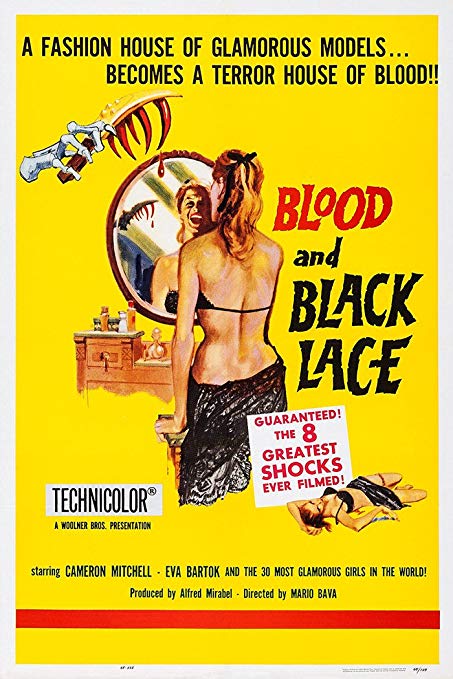
Welcome to the weirdly wonderful world of giallo, pioneered by the late Italian maestroMario Bava . Though Bava’s THE GIRL WHO KNEW TOO MUCH (released stateside as EVIL EYE) is considered by connoisseurs the first, it was BLOOD AND BLACK LACE that defined the genre, with its comingling of crime drama, murder mystery, and horror elements coalescing into something truly unique. I hadn’t seen this film in decades before a recent rewatch, and was again dazzled by Bava’s technique. The film has proved to be highly influential in the decades-later slasher genre, yet has its roots set firmly in the past.
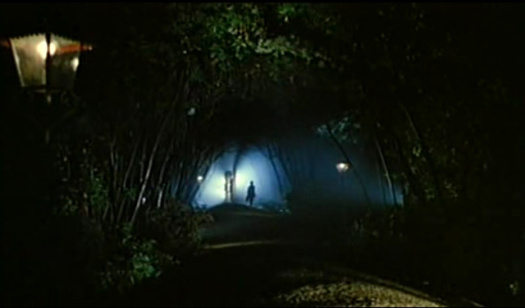
The opening sequence is a stunner, as we see the beautiful model Isabelle walking through a woodsy pathway on a dark and stormy night, stalked and then brutally murdered by a faceless, trenchcoated killer. From there, we’re introduced to the remaining cast, members of the haute couture fashion…
Listen, I’ve watched a lot of Italian horror films. I know how violent they can be. I know how gory they can be. I know how sordid they can be. I know how disturbing they can be. It’s not like I sat down and watched Torso with virgin eyes. But with all that in mind, Sergio Martino’s 1973 giallo still totally freaks me out!
Why does it freak me out?
Well, it’s going to be hard to really explain it without spoiling the movie’s biggest twist. It occurs about halfway through the film and it totally took me by surprise when it happened. Suddenly, Torso went from being just another film about a seemingly unstoppable murderer to becoming a tension-filled game of cat and mouse. So, I’m going to discuss the movie but I’m going to give a spoiler alert before I talk about the twist and, if you’ve never seen Torso before, you should stop reading and you should discover what happens for yourself.
Torso takes place in Perugia, Italy. During the day, it’s a beautiful city that’s surrounded by a beautiful countryside. The nearby University of Perguia seemse to be exclusively populated by beautiful students, including American exchange student Jane (Suzy Kendall) and her best friend, the wealthy Daniela (Tina Aumont), and beautiful instructors, like the rather opinionated Art History teacher, Franz (John Richardson).
But at night, Perugia changes. The countryside around the university becomes considerably less beautiful. A masked killer stalks through the fog-covered woods, carrying with him a knife and an endless supply of red scarves. He kills anyone that he comes across in the wilderness, including one of Jane and Daniela’s friends!
With everyone panicking about the serial killer in their midst, the ineffectual police investigate the usual sordid collection of suspects but with little success. Daniela, meanwhile, thinks that she may have seen the killer and, for her own safety, she, Jane, and their friends all go to her family’s villa for the holiday weekend.
And then….
(SPOILER ALERT)
(SPOILER ALERT)
(SPOILER ALERT)
Jane breaks her ankle and is given a sedative by the local doctor. This knocks Jane out for the night and when she finally wakes up, she discovers that all of her friends have been murdered and the killer is still in the villa! Fortunately, he doesn’t realize that Jane’s in the villa as well. Unfortunately, he’s also locked all the doors and the windows, so that he can have the privacy necessary to dispose of the bodies. For the rest of the film, Jane has to try to get someone to notice that she’s trapped in the villa without drawing the attention of the killer. Needless to say, this proves even more difficult than it sounds.
Torso is often dismissed as being a lesser giallo, particularly when it’s compared to some of Sergio Martino’s later contributions to the gnre. While Torso might not feature as complex a plot as some of Martino’s other films (and you’ll probably guess the killer’s identity long before the film reveals it), it does feature a second act that is so nerve-wracking and suspenseful that I barely breathed while watching it. Visually, Martino does an excellent job of contrasting the beauty of the outside world with the horrors inside the villa and both Suzy Kendall and Tina Aumont give good and sympathetic performances in the lead roles.
Torso totally gave me nightmares but I’d watch it again.
It certainly is! Today is the 55th anniversary of Dr. No and therefore, it’s the day when we celebrate all things Bond!
Now, it may seem strange to start a review of a classic giallo like 1972’s Who Saw Her Die? by talking about the James Bond franchise but the two do have something in common.
George Lazenby.
George Lazenby was the Australian model who was selected to replace Sean Connery in the role of 007. It was Lazenby’s first big break and it also nearly destroyed his career. Lazenby played the role only once, in On Her Majesty’s Secret Service. Though many modern critics have come to recognize that film as one of the best installments in the franchise, contemporary critics were far less impressed. After the disappointing reception of OHMSS, it was announced that Lazenby would be leaving the role and, in Diamonds Are Forever, Connery returned to the role.
What happened? Why did George Lazenby exit one of the biggest film franchises in the world? In my research, I’ve come across several different theories. Some say that Lazenby voluntarily quit because he either wasn’t happy with the direction of the franchise or he didn’t get want to get typecast. Others say that Lazenby was fired from the role because he was difficult to work with and was viewed as being a diva. Others have said that Lazenby was viewed as being too stiff of an actor to continue in the role of James Bond.
Obviously, I can’t say whether Lazaneby was difficult to work with or not. Nor can I even begin to speculate on what he thought of the franchise’s direction. But, as far as this idea that Lazenby wasn’t a good actor goes … well, all I can say is have you even seen Who Saw Her Die?
As you can probably tell from the trailer, Who Saw Her Die? might as well take place on a totally different planet from the Bond films. Who Saw Her Die? is an atmospheric and, at times, nightmarish giallo. A murderer of children — complete with black gloves and a black veil, because this is a giallo film, after all — is stalking Venice. When the daughter of architect Franco Serpieri (George Lazenby) is murdered, Franco and his ex-wife (Anita Strinberg) search for the murderer and discover a connection to a previous murder that occurred, years before, at a French ski resort.
It’s a dark and disturbing film, perhaps the most emotionally intense giallo film that I’ve ever seen. A year before Nicolas Roeg did the same thing with Don’t Look Now, director Aldo Lado captures Venice as a city of both great beauty and great decay. Every scene features the ominous shadow of death hanging over it and, after the murder of Roberta Serpieri (Nicolette Elmi), the viewer is painfully aware that everyone that we see is a potential child murderer. Is it the artist? Is it the priest? Or is it some random passerby? This film keeps you guessing.
And holding the entire film together is George Lazenby. At the time, I’m sure that some said it was a step down to go from playing James Bond to appearing in a low-budget Italian thriller but Lazenby gives such an emotional and empathetic performance that it should silence anyone who has ever said that Lazenby was a stiff actor. It’s not just that Franco wants justice for his daughter. It’s also that he’s haunted by his own guilt. Franco abandoned his daughter, leaving her on the streets of Venice, so that he could get laid. If he had been with there, the killer never would have targeted her. As played by Lazenby, Franco is motivated not just by rage but also by a need to redeem himself. He is equally matched by Anita Strindberg, who perfectly captures the raw pain and rage of a mother who has lost her child. Perhaps the film’s strongest moment features Franco and his ex-wife making love after their daughter’s funeral. The scenes of their love-making are intercut with scenes of them crying in bed afterwards, a technique that, a year later, Nicolas Roeg would also use for Don’t Look Now‘s famous sex scene. Together, Stindberg and Lazenby make Who Saw Her Die? into the rare whodunit where you care as much about the future of the characters as you do the solution to the mystery.
Who Saw Her Die? is an excellent and powerful giallo and proof that George Lazenby was more than just someone who once played James Bond.
As we get closer to the Fall film season, we’re getting more hype on upcoming films that’s not part of the summer or holiday blockbuster hype train. One such film that has been getting some buzz is Luca Guadagnino’s remake of Suspiria.
Our very own Lisa Marie is very leery of this remake since she holds the original by giallo maestro Dario Argento in such high regard. While I’m always open to any film whether original, sequel or remake, I do hold remakes with a certain degree of cautious optimism. I’m more than willing to give any remake, especially horror remakes, a chance to stand on it’s own merits. For the most part horror remakes tend to be cash grabs and not up to the standard set by the original.
Here’s to hoping that Guadagnino’s remake of Suspiria is one that bucks the trend of disappointing horror remakes. A clip released by Amazon Studios does seem to up the intrigue factor for the film. At least, for this film fan.






 Through the Shattered Lens