Retro Television Review: Fantasy Island 7.20 “Don Juan’s Last Affair/Final Adieu”


Welcome to Retro Television Reviews, a feature where we review some of our favorite and least favorite shows of the past!  On Tuesdays, I will be reviewing the original Fantasy Island, which ran on ABC from 1977 to 1984.  The show is once again on Tubi!
This week, a tramp and a wimp seek romantic advice.

Episode 7.20 “Don Juan’s Last Affair/Final Adieu”

(Dir by Philip Leacock, originally aired on April 14th, 1984)

Fashion marketer Whitney Clark (Phyllis Davis) is having an affair with her boss, Daniel Garman (David Hedison).  Whitney’s fantasy is to end the affair.  Myself, I have to wonder why she would have to come to Fantasy Island to end the affair.  Why can’t she just save the money and end the affair in New York or wherever it is that they’re from?  Better yet, why can’t she end the affair in New York and then come to Fantasy Island and actually have an enjoyable fantasy?

Daniel is on the Island, putting together a fashion show that he hopes will convince Roarke to commission a line of Fantasy Island fashions.  Whitney wants to end the affair but then she meets Daniel’s wife, Elizabeth (Marion Ross).  Elizabeth is in a wheelchair and, as she explains it, Daniel only stays with her out of guilt and a sense of responsibility.  When she offered Daniel a divorce, he turned it down.  Whitney comes to realize that Daniel loves both her and Elizabeth but that Daniel’s heart will always belong to Elizabeth.  “If you love me, let me go,” she tells Daniel.  She leaves Fantasy Island alone but looking forward to the future.  “I’ve come to admire your courage,” Lawrence tells her.  I’m not sure what courage he’s referring to.  She couldn’t even break up with her married lover without Mr. Roarke’s help.

Meanwhile, nerdy Alan Curtis (Michael Spound) is in love with his best friend, Pat Grayson (Geena Davis, in an early role).  Mr. Roarke arranges for Alan to go into the past to Madrid so that the legendary Don Juan (Fernando Rey) can give him advice but, due to a mix-up in the space-time continuum, Don Juan ends up in the present and on Fantasy Land.  Pat falls for Don Juan!  While Roarke fences with Don Juan, Alan finally tells Pat that he loves her.  At first, Pat is like, “But Don Juan….” but then Don Juan mentions that he’s had 14,000 lovers and Pat decides to give Alan a try.

*sigh*  The seventh season of Fantasy Island has been really depressing to review.  The first few seasons were fun but the seventh season has just been a drag.  This episode featured a lively performance from Geena Davis but that was pretty much it.  Everyone else seemed bored and unlikable.  Whitney and Alan were both wimps.

This was my final trip to the Island for 2025.  Retro Television Reviews will be going on break for the Holidays so that I can focus on both the Awards Season and Christmas movies!  Fantasy Island will return on January 6th, 2026.  There’s only two shows left and then something new will be appearing in this time slot.

Film Review: Quick Change (dir by Bill Murray and Howard Franklin)


“Leave the Bronx …. it is time to leave the Bronx….”

Escape from New York….

“Someday, a real rain will come and watch all this scum off of the streets….”

“Kill, Berkowitz!” the Dog with John Turturro’s voice commands, “Kill!  KILL!”

And then there’s 1990’s Quick Change:

Of the many films that have been made about people desperately trying to get the Hell out of New York City, Quick Change is one of the funniest.  The appropriately-named Grimm (Bill Murray) works in the city planning office and has had all that he can take of New York’s crime and rudeness.  His solution is to dress up like a clown and rob a bank.  His girlfriend Phyllis (Geena Davis) and best friend Loomis (Randy Quaid) are already inside the bank, disguised as customers.  When Grimm, who claims to be a “crying on the inside” type of clown, takes everyone in the bank hostage and forces them into the vault, Phyllis and Loomis grab as much of the money as they can.  Talking on the phone to police chief Rotzinger (Jason Robards), Grimm makes a series of pointless demands.  Each demand that is met leads to Grimm releasing a group of hostages.  By removing his clown makeup, Grimm is able to join Phyllis and Loomis when they are “released.”  Rotzinger, who has even managed to procure a monster truck, thinks that the robber is still in the bank while Grimm, Phyllis, and Logan head for the airport.

Of course, things don’t go as planned.  What starts out as a energetic and good-natured Dog Day Afternoon parody quickly becomes an increasingly surreal journey through New York.  The streets are in terrible condition.  The signs that would have provided directions to the airport have been taken down by a road construction crew.  (They explain that they’re only taking down the signs today and it will be a few days before they get around to putting them back up.)  One of the few polite people they meet turns out to be a thief who steals four dollars from Grimm’s wallet but fails to notice that he’s got a million dollars taped around his waist.  Stanley Tucci shows up as a mobster.  Tony Shalhoub plays a well-meaning taxi driver who speaks his own indecipherable language.  Grimm keeps running into rude cops who, despite being on the hunt for the bank robbers, are frequently too busy being rude to notice what’s happening in front of them.

Best of all, Grimm, Phyllis, and the increasingly addled Loomis board a bus being driven by the film’s greatest character.  Played by Philip Bosco, the bus driver is a wonderful comedic creation.  “That’s not exact change,” the driver says when Loomis attempts to pay him with a hundred dollar bill.  “Behind the white line,” he says before starting the bus.  When Loomis, who has a habit of running into things and appears to be suffering from a concussion, tries to sit down, the bus driver informs him that he’s not allowed to sit until he receives exact change.  The driver has a schedule to keep and, to his credit, he largely manages to do so.  Bosco plays him with such deadpan determination that it’s hard not to admire his dedication to following every single regulation to his job.  As opposed to Grimm, the driver has learned to deal with living in New York by obsessively making every scheduled stop.

Quick Change struggles sometimes to balance its moments of humor and drama.  Scenes of Loomis running like a cartoon character are mixed with scenes of Phyllis worrying that Grimm might actually be a hardened criminal and struggling with whether or not to tell him that she’s pregnant.  This was Bill Murray’s first and only film as a director and sometimes, he does struggle to maintain a consistent tone.  But, in the end, what’s important is that it’s a funny film.  Bill Murray is one of those actors who can make you laugh just by existing and, as a director, he’s smart enough to give Jason Robards enough room to make Rotzinger into something more than just a standard comedic foil.

Quick Change is a comedic nightmare, one that made me laugh even as it also made me glad that I don’t have to drive in New York.  I get lost just driving around the suburbs of Dallas.  There’s no way I’d ever be able to find my way out of New York.

THE LONG KISS GOODNIGHT (1996) – the $4 Million script!


Shane Black wrote a couple of my favorite action movies during my teenage years, LETHAL WEAPON and THE LAST BOY SCOUT. His scripts are characterized by strong violence balanced out by a healthy amount of comedic banter. That lethal (pun intended) combination made Shane Black a star in his own right, with his work being very much in demand. In 1994 he sold his script for THE LONG KISS GOODNIGHT for the unheard price of $4 Million. After hitting this payday, Black would go dark for the next decade and not release another screenplay until 2005’s KISS KISS BANG BANG, which was also his directorial debut. 

THE LONG KISS GOODNIGHT opens with Samantha Caine playing Mrs. Claus in her small town’s Christmas parade. She has a nice boyfriend, an 8 year old daughter, and she’s a member of the PTA. This is pretty good for a lady that doesn’t remember a damn thing about her life prior to 8 years ago. After celebrating her friends at a Christmas party, she’s driving a soused old man (Alan North) home when she hits a deer and flies right through the window and lands on a snowbank. This wakes up some of her memories and she starts having a few quick flashbacks and some odd dreams from her past, including the name Charly Baltimore. She also learns that she can easily break a buck deer’s neck and handle knives like a champ! Around this same time, low-rent private detective Mitch Hennessy (Samuel L. Jackson) who has been paid a retainer by Ms. Caine to be on the lookout for any clues related to her past, gets lucky and finds a letter from Caine to a supposed former lover. He heads her way to give her the update. When a local news program shows the beautiful Ms. Caine in the parade, some enemies from her past see the story and head to town to try to kill her. Surviving the attempt on her life, and now with Hennessy by her side, Samantha leaves to find out who she really is and unravel the secrets of her past. Is she a chef? Is she a school teacher? Is she a badass hit woman named Charly Baltimore? The fun is in finding out! 

Geena Davis is so good in her role as Samantha Caine / Charly Baltimore. She’s simultaneously beautiful, funny, sexy, cute as a button, and badass. She was married to the director, Renny Harlin, when the film was made and they both went all out to create a strong, female action hero. I think they succeeded admirably. Samuel L. Jackson is just so good in this type of role. He’s sarcastic and funny, a little sleazy, and very much a reluctant hero who does the right thing when he has to. In 2019, Jackson would go so far as to tell late night host Jimmy Fallon that Mitch Hennessy is his personal favorite role. The remainder of the cast is fine, with Brian Cox particularly standing out. His declarative statement about the ultimate results of a small lapdog continually licking his asshole really hit home for me and is reason enough alone to watch this film.  

Ultimately, even though I personally went to see it during its theatrical run, THE LONG KISS GOODNIGHT underwhelmed at the box office in 1996. It grossed around $90 million worldwide on a budget of around $65 million. But that’s fine to me, I enjoyed it in 1996, and I enjoyed it again when I watched it today! 

Live Tweet Alert: Join #FridayNightFlix for Earth Girls Are Easy!


As some of our regular readers undoubtedly know, I am involved in a few weekly live tweets on twitter and I hope to continue to be until the site finally becomes unusable.  (It’s going to happen eventually so enjoy it while you can!)  I host #FridayNightFlix every Friday, I co-host #ScarySocial on Saturday, and I am one of the five hosts of #MondayActionMovie!  Every week, we get together.  We watch a movie.  We tweet our way through it.

Tonight, at 10 pm et, #FridayNightFlix has got 1988’s Earth Girls Are Easy, starring Geena Davis and Jeff Goldblum!

If you want to join us this Friday, just hop onto twitter, start the movie at 10 pm et, and use the #FridayNightFlix hashtag!  It’s a friendly group and welcoming of newcomers so don’t be shy.

Earth Girls Are Easy is available on Prime and Tubi!  See you there!

Music Video of the Day: Jeff Goldblum by Mattiel (2021, dir by ????)


Who else could inspire such loyalty?

Actually, though, the song itself isn’t about Jeff Goldblum.  It’s about about someone who is a “little like a younger Jeff Goldblum.”  The video, however, is all about Jeff Goldblum and Geena Davis.

Enjoy!

The Films of 2020: Ava (dir by Tate Taylor)


Ava tells story of Ava Faulkner (Jessica Chastain), who has a troubled past, a turbulent present, and an uncertain future.

As we learn via a series of still frames during the film’s opening credits, Ava was the valedictorian of her high school class but her bright future was derailed by her own alcoholism.  She killed two of her friends while driving drunk and, presumably to avoid prison, she instead went into the army.  In the army, she was noted for being an efficient killer while, at the same time, being a bit unstable.  She has issues with authority.  Well, don’t we all?  When she got out of the army, she was recruited by Duke (John Malkovich), who taught her how to be an international assassin!

Unfortunately, since Ava screwed up her last mission and has gotten into the habit of talking to her targets before she kills them, Simon (Colin Farrell) wants her dead.  Simon also used to be a student of Duke’s but now he is Duke’s boss or something.  It’s all a bit vague and, to be honest, I found myself spending way too much time trying to figure out the corporate structure of whatever group it was that everyone was supposedly working for.  Apparently, Duke works for Simon but Simon still has to get Duke’s permission before trying to kill Ava or, failing that, try to kill Duke so that Duke won’t complain about it.  Duke spends a lot of time fishing and Simon spends a lot of time with his adorable family.  I liked Simon’s house.

Anyway, Ava has returned to Boston, where she’s trying to reconnect with her family.  It turns out that teenage Ava discovered that her father was cheating on her mom and that’s what set Ava on her downward spiral.  Mom (Geena Davis) is now a hypercritical semi-recluse.  Meanwhile, Ava’s sister, Judy (Jess Wexler), is a singer in a band and she’s engaged to Michael (Common, who, for some reason, keeps getting cast in all of these extremely wimpy roles), who just happens to be Ava’s ex-boyfriend.  And Michael is a gambling addict who owes a ton of money to Toni (Joan Chen).  It’s hinted that Toni and Ava also have a past but then again, everyone in the film has a past with Ava.  It’s get a little bit difficult to keep track of it all.

Ava gets off to a bad start by making us sit through one of Ava’s jobs.  She kills an accountant but first she asks him a lot questions about why anyone would want him dead because apparently, she’s an ethical assassin.  The scene goes on forever and it features Jessica Chastain trying to speak with an Arkansas accent.  Things picked up a bit during the opening credits, which was largely made up of still frames from Ava’s past.  However, once the credits ended and the film’s actual story got started, things quickly went back downhill.

The main problem with Ava is one of sensibility.  Both Jessica Chastain and director Tate Taylor have totally the wrong sensibility for a film like this.  Ava is essentially a work of pulp fiction but Chastain takes herself far too seriously to actually bring a sense of fun to the title role.  Meanwhile, Tate Taylor directs as if he’s never had a single subversive thought in his life.  (In Taylor’s defense, he was a last minute replacement for the film’s original director, Matthew Newton.)  Ava is a film that cries out for a star like Gina Carano and a director like John Stockwell, people who have no hesitation about totally digging in and embracing the silliness of it all.  Instead, we get Chastain and Taylor trying to give us a semi-realistic look at a woman battling her addictions and trying make peace with her past.  Malkovich, Farrell, and Chen all seem to get the fact that Ava should be a fun B-movie, unfortunately, Taylor and Chastain apparently didn’t get the memo.  (Of course, Chastain produced the film so maybe it was her co-stars who didn’t get the memo.  Who knows?)

Ava commits the sin of taking itself too seriously.  Check out John Stockwell’s In The Blood or Phillip Noyce’s Salt instead.

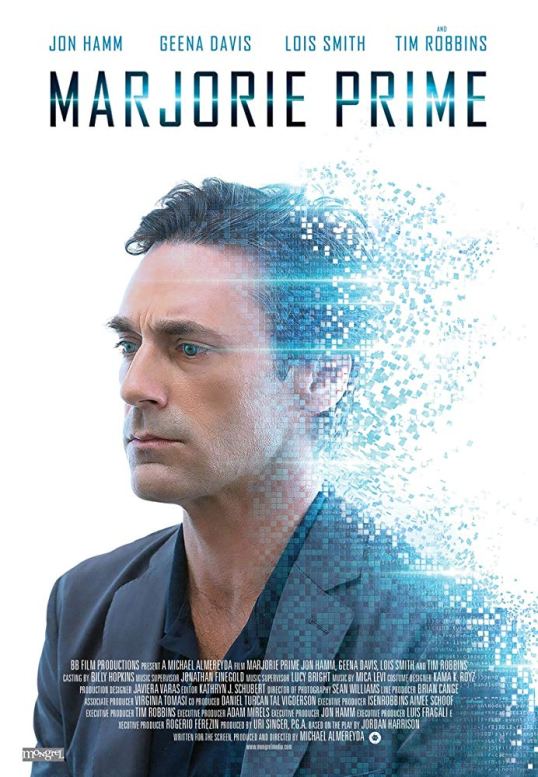
Ghosts of Sundance Past #5: Marjorie Prime (dir by Michael Almereyda)


http://www.youtube.com/watch?v=NCFwtFlS5z0

In the year 2050, a woman (Lois Smith) sits in the living room of her beautiful house.  Through the windows, we can see that she has a view of an even more beautiful beach.  In fact, the beach is nearly too pristine.  So is the house.  Somehow, everything about the location feels both inviting and fake at the same time.  We find ourselves wondering what could possibly be lurking underneath the surface.

The woman is 85 years old.  Her name is Marjorie.  She’s talking to a very handsome and charming man named Walter (Jon Hamm).  As they talk, it becomes obvious that Walter and Marjorie are married.  Walter mentions that he proposed to her after they saw the movie My Best Friend’s Wedding.  Marjorie doesn’t remember ever seeing a movie by that name and when Walter explains the plot to her, Marjorie simply smiles and nods along.  Afterwards, she says that she wishes they had gotten married after seeing Casablanca.  She wants a better memory than the one they have.

We can’t help but notice that Walter appears to be quite a bit younger than Marjorie, despite Marjorie saying that Walter was considerably older than her when they first got married.  This is because the Walter to whom she is speaking is not the real Walter.  The real Walter died years ago.  Walter Prime is a hologram, a computer program designed to give Marjorie someone to speak to.  Marjorie is in the early stages of Alzheimer’s.  When she first got Walter Prime, she specifically decided that she wanted to spend her days with the young Walter, as opposed to the old man that he became.  Sometimes, she knows that Walter is just a program and other times, she thinks that he’s real.

Living with Marjorie is her daughter, Tess (Geena Davis) and Tess’s husband, Jon (Tim Robbins).  Tess finds the hologram of her father to be somewhat creepy and she wonders why her mother treats the hologram better than she treats her own daughter.  Jon, on the other hand, feels that the hologram is just what Marjorie needs.

Time passes.  Marjorie grows closer to the hologram while Tess grows angrier and angrier over her mother’s condition.  When Tess discovers that Marjorie has been reading a bible, she has a meltdown because her mother has apparently forgotten that she was always a militant atheist.  Jon tries to keep everyone calm.  Is Jon trying to the inevitable better for everyone or is he just trying to distract himself from the pain that’s all around him?

The hologram and Jon have a meeting.  The hologram says that, even though Jon and Tess have programmed him to act, think, and talk just like the original Walter, there are still things that he hasn’t been properly programmed for.  While filling Walter Prime in on some more of Marjorie and Walter’s past, Jon reveals the family tragedy that has haunted the family for years….

Marjorie Prime is not a particularly happy movie.  It takes place over the course of several decades and we follow Marjorie, Jon, Tess, and Walter through a great deal of changes.  The only thing the remains consistent is that everyone is eventually left with only half-remembered fragments of their past.  Some of those fragments are happy and others are full of regret.  Everyone ages except for the holograms but, as becomes apparent in one particularly heart-breaking scene, a hologram is only as good as the person programming it.  A hologram can be programmed to superficially act like someone but it can never actually be that person.  As much as Jon, Tess, and Marjorie attempt to recreate the past, it can’t be done because the past can never truly be relived.

Marjorie Prime is science fiction without CGI.  It’s a film that’s designed to make you think and it succeeds.  It would also probably be unbearably depressing if not for the skills of the cast.  Lois Smith is heart-breaking and sympathetic as Marjorie while Jon Hamm does a good job of showing why Walter Prime would be so attractive in theory and so frustrating in reality.  (Walter Prime can be programmed to act like he cares but he can’t truly do it.)  Geena Davis gives an intelligent and thoughtful performance as Tess, capturing both her anger and regret and the film even makes good use of Tim Robbins’s tendency towards to smarminess.

Marjorie Prime, which was acclaimed when it premiered at Sundance in 2017, is currently streaming on Amazon Prime.

Film Review: Cutthroat Island (dir by Renny Harlin)


Today is Talk Like A Pirate Day which, let’s just be honest, is an extremely stupid holiday that mainly exists to remind us that “doubloon” is a deeply silly word.

Doubloons were a currency that were popular in Europe and South America back in the 18th century and pirates were always looking for doubloons.  If you listen to enough pirate talk, you’ll quickly discover that there’s a lot different ways to say the word doubloon.  Some people put the emphasis on the fist syllable while others emphasize the second.  Some people say Due-bloon while others say Duh-bloon.  Either way, it’s impossible to listen to pirates talk about doubloons without thinking that they sound very, very silly.  The secret behind the success of The Pirates of the Caribbean franchise is an understanding that it’s impossible to take pirates seriously.

Unfortunately, I chose not to watch The Pirates of the Caribbean for Talk Like A Pirate Day.  Instead, I watched 1995’s Cutthroat Island.

Cutthroat Island is a story of pirates, a lost treasure, and one big sea battle that literally seems to go on and on.  There is occasional talk of doubloons, though not enough for my liking.  Instead, most of the film deals with the efforts of Morgan (Geena Davis) to find a hidden treasure before her uncle, Dawg (Frank Langella), discovers it.  Morgan has one-third of a map.  It was originally tattooed on her father’s head.  After he died, she scalped him and took over his boat.  She also purchased a swashbuckling slave named Shaw (Matthew Modine) because Shaw is capable of reading Latin, the language in which the map is written.  Needless to say, Shaw and Mogan fall in love while Dawg teams up with corrupt colonial officials to not only track down the treasure but to also capture his niece.

The film starts out as a romance with a dash of comedy before eventually transforming into a standard action movie.  That means that boats get blown up and there’s a lot of scenes of people fencing.  There’s also a lot of slow motion footage of bodies plunging into the ocean.  The climatic battle goes on forever and it actually features Morgan hissing, “Bad dawg!” at her uncle.

(Amazingly, “Bad Dawg” isn’t the worst of the dialogue to be heard in Cutthroat Island.  Morgan has a habit of saying stuff like, “I will maroon you on a rock the size of this table, instead of splattering your brains across my bulkhead” and “Since you lie so easily and since you are so shallow, I shall lie you in a shallow grave.”)

Throughout the film, there are hints of what Cutthroat Island could have been, if it hadn’t been such a by-the-numbers action flick.  The fact that it was Morgan who was continually rescuing Shaw was a nice change-of-pace from the usual damsel-in-distress clichés that one finds in most pirate movies.  When Morgan effortlessly breaks the neck of a soldier and sets free her crew, it’s a great moment, comparable to Angelina Jolie taking out Liev Schreiber in Salt or Milla Jovovich kicking zombie ass in a Resident Evil film.  Unfortunately, director Renny Harlin (who was married to star Geena Davis, at the time) is usually too concerned with getting to the next action set piece to truly take advantage of the film’s subversive potential.

Frank Langella is smart enough to bellow his way through his villainous role while Matthew Modine appears to be so amused by the film’s terrible dialogue that it’s impossible not to like him.  Geena Davis is convincing when she’s breaking necks and swinging swords but she delivers her dialogue like someone who has already figured out that the movie was a bad idea and resigned herself to the fact that her film career will never recover.  She doesn’t appear to be having any fun, which kind of defeats the purpose of being a pirate.

Cutthroat Island was a huge and notorious box office flop and it’s still considered to be one of the biggest financial disasters in film history.  Apparently, Hollywood was so traumatized that it would be another 8 years before there was another major pirate production.  That production, of course, was Pirates of the Caribbean, a film that captured the fun that was so lacking in Cutthroat Island.

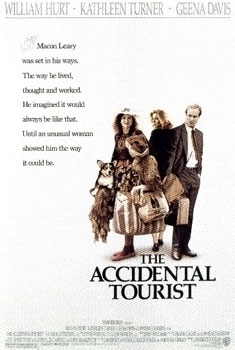
Lisa Reviews An Oscar Nominee: The Accidental Tourist (dir by Lawrence Kasdan)


the_accidental_tourist

I have to admit that I was tempted to be a little bit snarky in my review of the 1988 Best Picture nominee, The Accidental Tourist.  I was going to say that The Accidental Tourist was a perfect example of a genre of film that has always been oddly popular with the Academy, the emotionally stunted man in New England learns to love again genre.

But, then I realized that I was wrong.  The Accidental Tourist does not take place in New England.  It takes place in Baltimore which may be located up north but which is technically considered to be part of the mid-Atlantic.  But, even with that in mind, it was impossible for me to watch The Accidental Tourist without thinking of other New England-set Oscar nominees, such as Mystic River and Manchester By The Sea.

As for the film itself, it’s about a man whose depressing life would be unbearable to watch if not for the fact that everyone around him is so extremely eccentric.  Macon Leary (William Hurt) is a travel writer.  He’s writes books giving people advice on how best to behave while seeing the world.  Throughout the film, we hear snippets of his prose.  Macon warns people about overpacking.  He warns them about arriving late at the airport.  He warns them about not properly planning out their trip.  He suggests that travelers bring a book to read but not too many books.  And don’t bring magazines because they get wrinkled too easily.  Now, to be honest, I liked most of Macon’s advice but then again, I’m OCD and I spend most of my time trying to make sure that everything I own is properly organized and can be equally divided.

A year ago, during a fast food robbery, Macon’s son was shot and killed.  Withdrawing from the world, Macon barely reacts when his wife, Sarah (Kathleen Turner), leaves him.  After breaking his leg while trying to convince his dog to climb down the stairs into the laundry room, Macon ends up moving in with his three siblings: autocratic Porter (David Ogden Stiers), slightly less autocratic Charles (Ed Begley, Jr.) and sweet but neurotic Rose (Amy Wright).

And so it goes.  Even when his agent, Julian (Bill Pullman), starts to date Rose, Macon can’t bring himself to open up emotionally.  Fortunately, Macon meets Muriel (Geena Davis), a quirky dog trainer.  Though it takes a while, Muriel starts to pull Macon out of his shell.  Soon, Macon is spending his nights over at her apartment and bonding with her sickly son.

(Why does every single mother in these type of movies have a sickly son?  Just for once, couldn’t a single mother be portrayed as having a child who is well-adjusted, popular, and healthy?)

But, just when everything seems to be perfect, Macon’s phone rings.  It’s Sarah and she wants to give their marriage another chance…

Just judging from the tone of this review, you’re probably thinking that I disliked The Accidental Tourist.  Actually, nothing could be further from the truth.  While the film’s mix of grim reality and relentlessly quirky supporting character can be a bit overwhelming at first, the film works if you stick with it.  That’s the thing — you have to stick with it.  When William Hurt first stares at the camera with his dead eyes and starts to drone about the importance of not spending too much money while in Paris, it’s tempting to just give up.  But, as the film progresses, it improves and so does Hurt’s performance.  By the time he finally worked up the strength to hold Muriel’s son’s hand while walking the boy home from school, I had tears in my mismatched eyes.

The Accidental Tourist is low-key but rather sweet film.  While the film centers around the performances of Hurt and Geena Davis (who won an Oscar for her work here), my favorite performances came from Bill Pullman and Amy Wright.  I honestly would happily watch a film that was just about their characters.

The Accidental Tourist was nominated for Best Picture but lost to Rain Man.