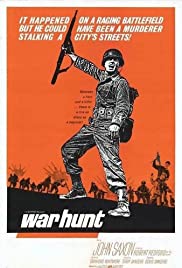
 In the last days of the Korean War, Pvt. Roy Loomis (Robert Redford) is assigned to an infantry unit that’s serving on the front lines. Loomis is an idealist who believes in always doing the right thing and who believes that he’s truly fighting for the American way of life in Korea. The company’s commander (Charles Aidman) is more cynical. As he explains it, the job of the soldiers is not to win the war. Their job is to stall the advance of the enemy long enough to let the politicians and the diplomats get what they want out of a peace settlement. The soldiers are merely there to be sacrificed.
Loomis soon finds himself in conflict with Pvt. Endore (John Saxon). Endore spends his night sneaking around behind enemy lines, killing soldiers, and gathering intelligence. No one goes with Endore on these missions and Endore makes it clear that he doesn’t want to have anything to do with the other solders in the unit. Because Endore usually returns with valuable intelligence, he’s allowed to do what he wants but it becomes clear that gathering intelligence is not what motivates Endore. Endore loves war and killing. In the United States, he would probably be on death row. In Korea, at the height of the war, he’s a valuable asset.
Charlie (Tommy Matsuda) is an orphan boy who has been adopted as the company’s mascot. Both Loomis and Endore have a bond with Charlie. Loomis wants Charlie to go to an orphanage after the war so that he can hopefully be adopted and maybe brought over the United States. Endore, however, plans to stay in Korea even after the war ends and he wants to keep Charlie with him. He wants to turn Charlie into as efficient a killing machine as he is.
This low-budget but effective anti-war film may be best known for featuring Robert Redford in his first starring role but the film is stolen by John Saxon, who is frighteningly intense as Endore. Endore is so in love with war that he continues to fight it even after the Armistice is declared. Saxon plays him like a cool and calculating predator, a natural born killer. He’s an introvert who rarely speaks to the other members of the company. Even though he helps them by killing the enemy before the enemy can kill them, it’s clear that Endore doesn’t really care about the other members of the unit. He just cares about killing. He’s close to Charlie because Charlie is too young to realize just how dangerous Endore actually is.
Along with Saxon and Redford, War Hunt also features early performances from Tom Skerritt, Sydney Pollack, and Francis Ford Coppola. (Coppola, who goes uncredited, plays an ambulance driver.) Pollack and Redford met while they were both acting in this film and Pollack would go on to direct Redford in several more films. One of those films, The Electric Horseman, would reunite Redford and Saxon. Again, they would play adversaries.
Last night, when I heard John Saxon had died, I tried to pick his best performance. I know that most people know him from his horror work and his role in Enter the Dragon. Those are all good performances but, for me, Saxon was at his absolute best in War Hunt.

 Through the Shattered Lens