Late Night Retro Television Review: CHiPs 3.6 “Counterfeit”


Welcome to Late Night Retro Television Reviews, a feature where we review some of our favorite and least favorite shows of the past!  On Mondays, I will be reviewing CHiPs, which ran on NBC from 1977 to 1983.  The entire show is currently streaming on Prime!
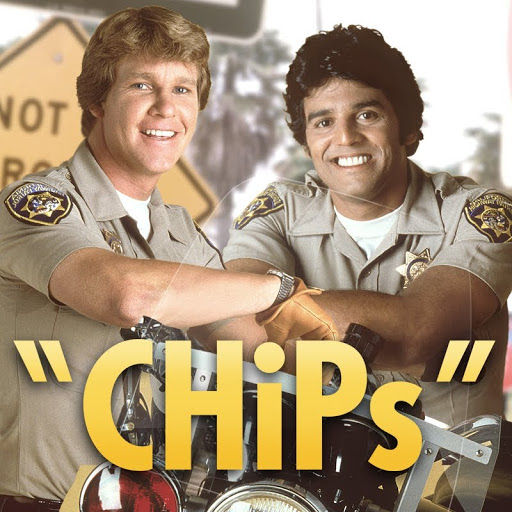
Tonight’s episode is weird.

Episode 3.6 “Counterfeit”

(Dir by John Florea, originally aired on October 20th, 1979)

Ponch is shocked to discover that he’s carrying several counterfeit twenties.  He turns the money into the Treasure Department, hoping that it will mean receiving an monetary award.  Instead, he’s told that his reward is helping the government crack down  on the bad guys.  Ha!  Take that, Ponch!

That said, you better believe that Ponch is there to help arrest the counterfeiters, who turn out to be a bunch of phony preachers working out of a church.  I know that sounds like the sort of thing that could be interesting.  But, for the most part, these guys are still just generic CHiPs bad guys, even if one of them is played by veteran screen tough guy Ralph Meeker.

Meanwhile, Ponch goes on a date with a woman and is upset when it appears that she’s shallow and doesn’t want to talk about anything that is the least bit intellectual.  That’s our, Ponch!  He’s never shallow!  Fortunately, it turns out that his date isn’t shallow either.  She was just pretending to be shallow to test whether or not Ponch was shallow.  And now, it’s time to dance!  Wait, what?  That doesn’t make any sense.  Ponch — when are you going to settle down?  Disco isn’t going to last forever.

While that’s going on, architect James O’Hara (played by veteran dwarf actor Billy Barty) becomes frustrated with people assuming that he can’t drive because of his size.  He gets tired of all the dumb jokes and the condescending remarks.  As a result, he keeps getting into minor accident whenever he drives on the highway.  This was a strange storyline, largely because O’Hara’s scenes made up over half the episode despite the fact that he had never appeared on the show before and he barely interacted with the members of the Highway Patrol.  A part of me wonders if maybe this episode was meant to be a backdoor pilot for a series about James O’Hara.  The other weird thing about this episode is that O’Hara’s frustration over people making fun of his height was often played for laughs.  The whole thing just felt well-intentioned but oddly tone deaf.

If you’re keeping track, this episode had two Ponch storylines and a storyline about a guy we had never seen before.  Sorry, Baker!  If we had any doubts about who was the favored partner as far as this show goes, this episode erased them.

This whole episode just felt weird.  On the plus side, there was a lot of nice California scenery and there were quite a few accidents, which is the main reason why most people would have been watching the show in the first place.  But this episode really is an example of how a show can get bogged down with a character that we’ve never seen before and that we’ll probably never see again.  The episode just never comes together.

Horror Film Review: The Astral Factor (dir by John Florea)


Filmed in 1978 but not released until 1984, The Astral Factor tells the story of Roger Sands (Frank Ashmore).

Known as the Celebrity Killer, Roger is a serial killer who murdered women who reminded him of his famous mother.  It may seem like Roger is destined to spend the rest of his life in prison but what the legal system didn’t consider is that Roger has the ability to not only move things with his mind but to also turn himself invisible.  How did Roger get those powers?  Who knows?  At one point, Roger’s psychiatrist mentions that Roger was a student of the paranormal.  Later, it’s revealed that he had several books about the supernatural in his bedroom.  Apparently, Roger figured out how to do it himself.

Anyway, Roger is now invisible and soon, he has escaped from prison.  He is determined to kill the five women who testified against him at his trial, both because they remind him of his mother and also because he blames them for sending him to prison.  Roger strangles his victims, which in this case means that the actresses playing them have to pretend like they’re struggling with someone who can’t be seen.  In fact, Roger spends almost the entire film in a state of invisibility.

How do you catch a killer who can’t be seen?  It’s a fair question but police Lt. Charles Barnett (Robert Foxworth) might have the answer.  Barnett’s solution involves grabbing a gun and keep firing it until you hit something.  That’s a straight-forward solution but The Astral Factor is a pretty straight forward film.  The film begins with Roger turning invisible and, to its credit, it doesn’t spend too much time trying to justify or explain Roger’s magical powers.  The film understands that all the audience really needs to know is that Roger can’t be seen and that it’s up to Lt. Burnett to find a way to stop his killing spree.

The Astral Factor is a low-budget film, one that is full of formerly prominent performers who obviously showed up to get a quick paycheck.  Sue Lyon, Marianne Hill, Leslie Parrish, and Elke Sommer all play potential victims and all of them look like they would rather be doing anything other than appearing in The Astral Factor.  Robert Foxworth, to his credit, does his best to give a convincing performance as a level-headed cop who is forced to accept the reality of the paranormal.  Not only is he having to investigate a series of murders but he’s having to do it on his birthday.  Stefanie Powers plays his girlfriend, Candy.  Candy often refers to herself in the third person whenever she’s having a conversation with her boyfriend.  I tend to do the same thing so at least there was a character in this movie to whom I could relate.  Knowing the rules of the genre, I spent the entire movie expecting Candy to be put in danger and I was actually impressed when my expectations were subverted and that didn’t happen.

With the exception of a few atmospheric scenes and an entertainingly garish and tacky dance number, the film itself has the rather flat look of a made-for-TV movie, though the occasional hint of nudity indicates that it was meant to be a theatrical release.  As I mentioned at the start of this review, The Astral Factor was originally filmed in 1978 but it sat on the shelf until 1984.  That’s when a slightly shortened version was released under the title The Invisible Strangler.  Today, the film is available in countless Mill Creek Box Sets, under its original title and with its original run time restored.