On the Old Internet, I was Destined for Greatness


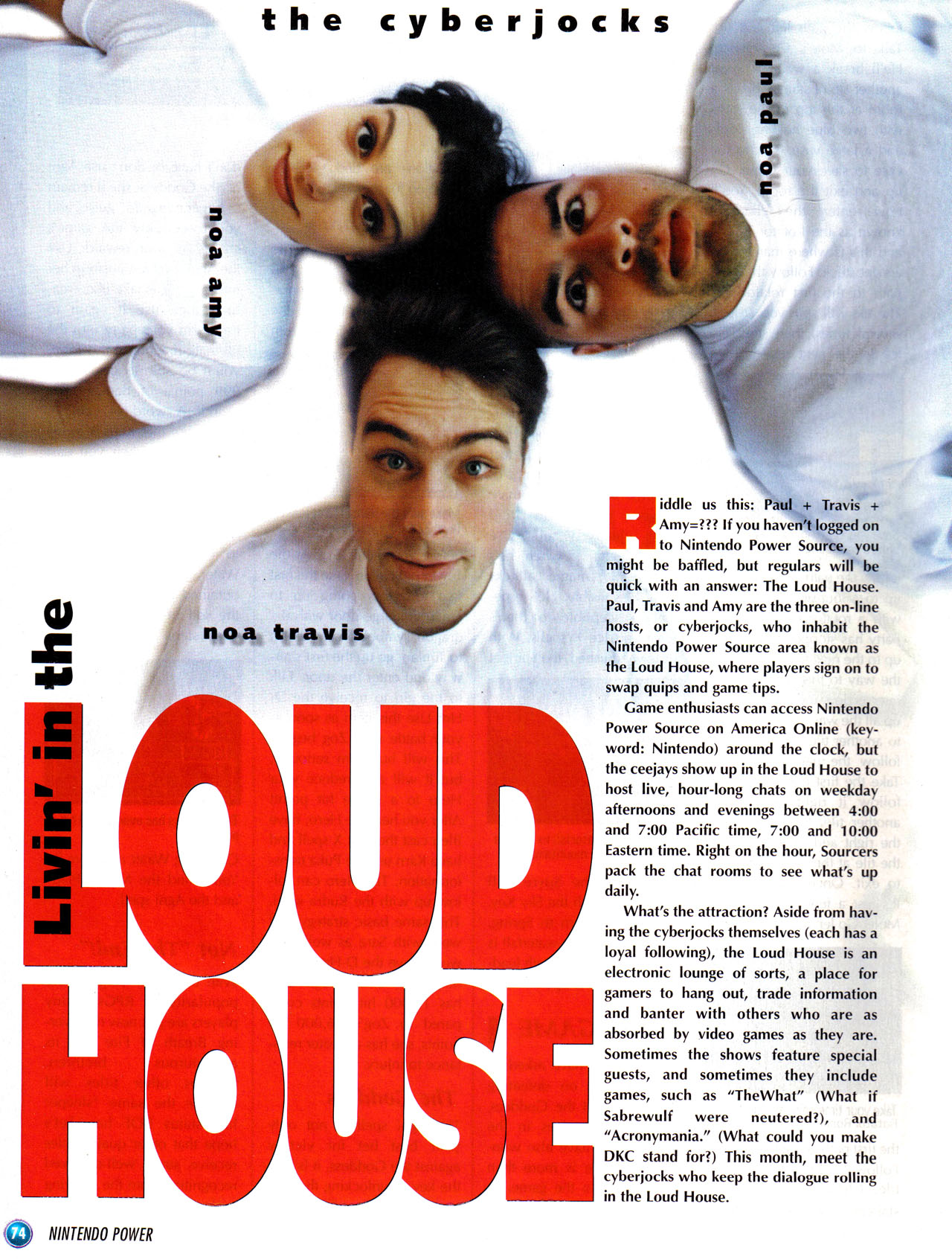
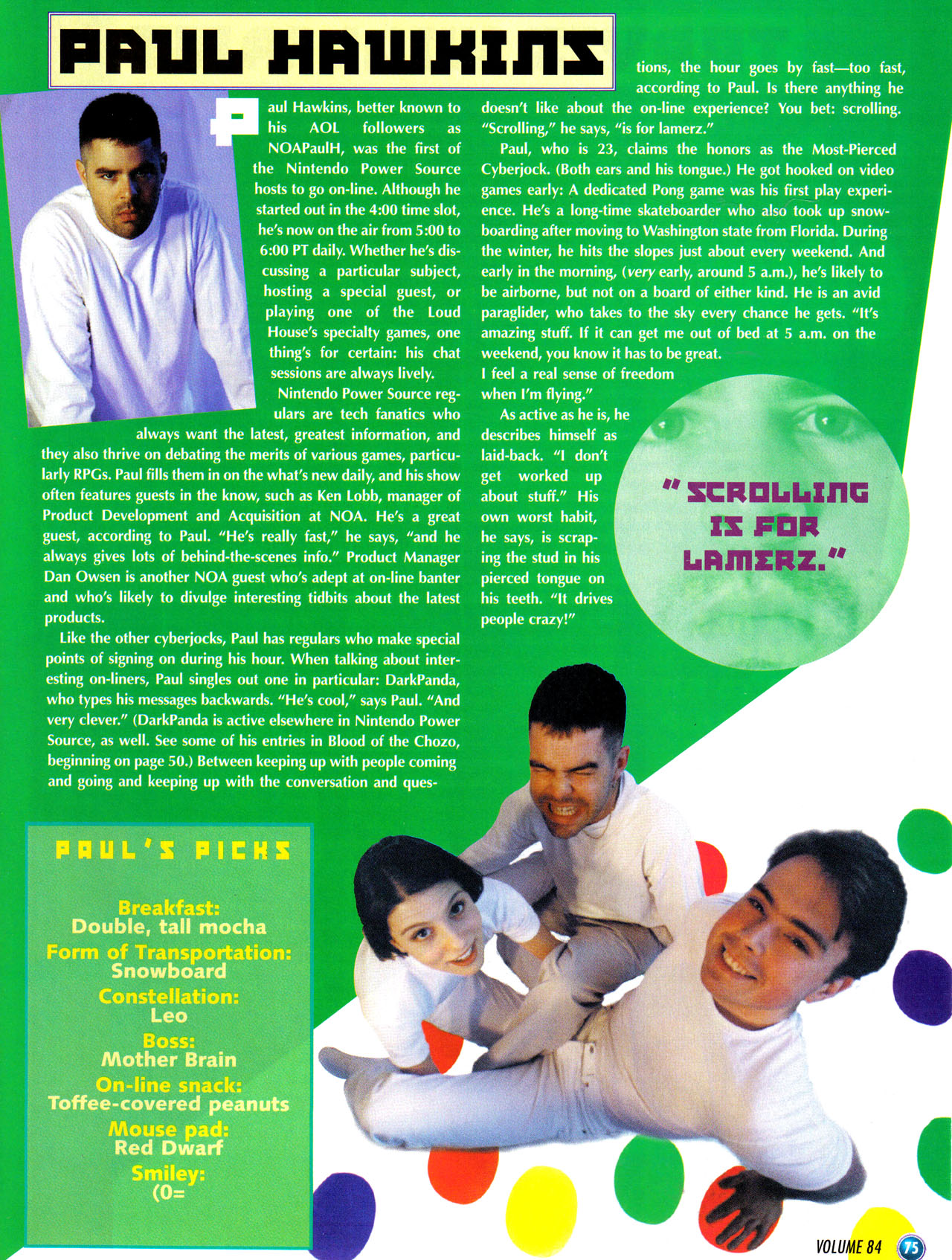
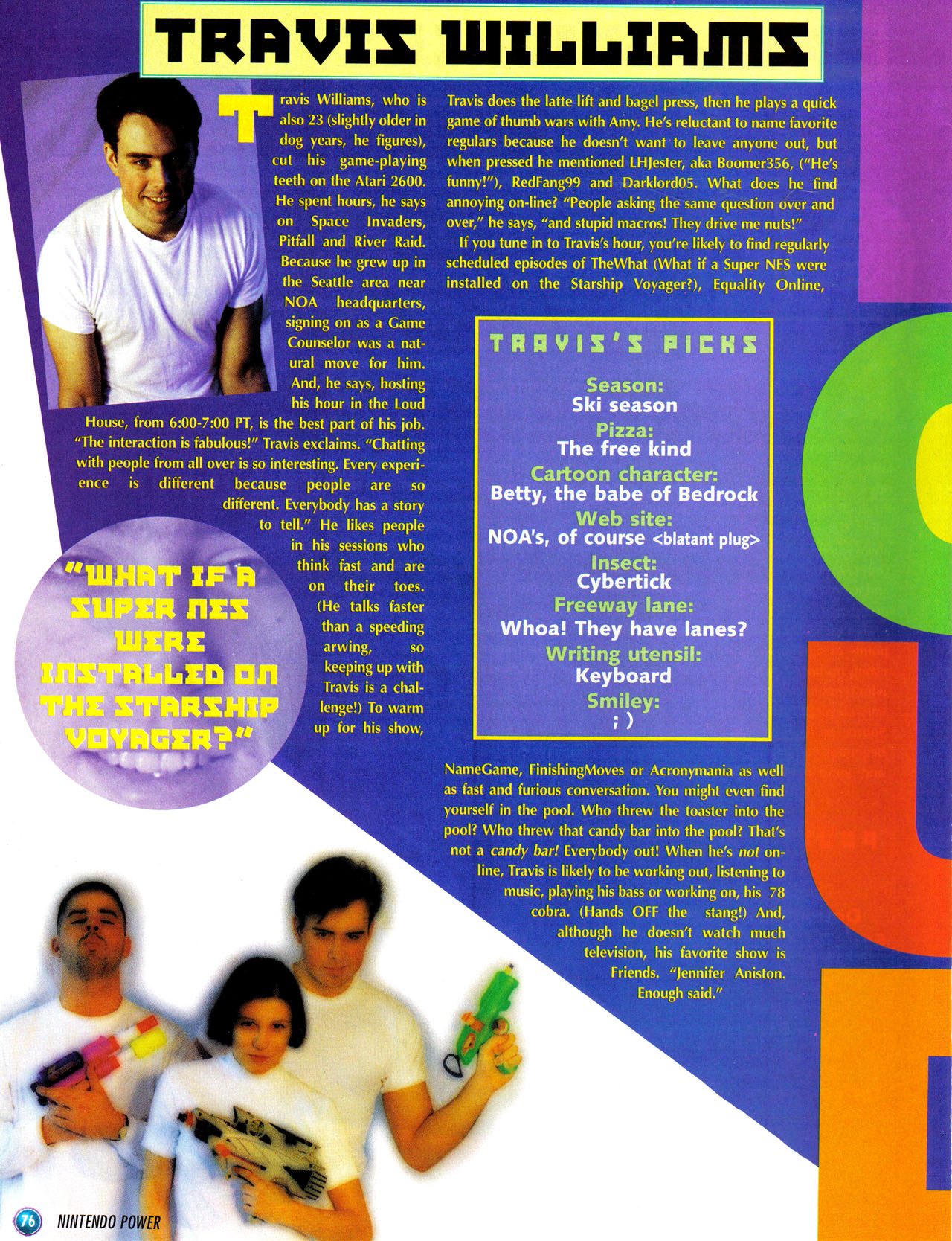
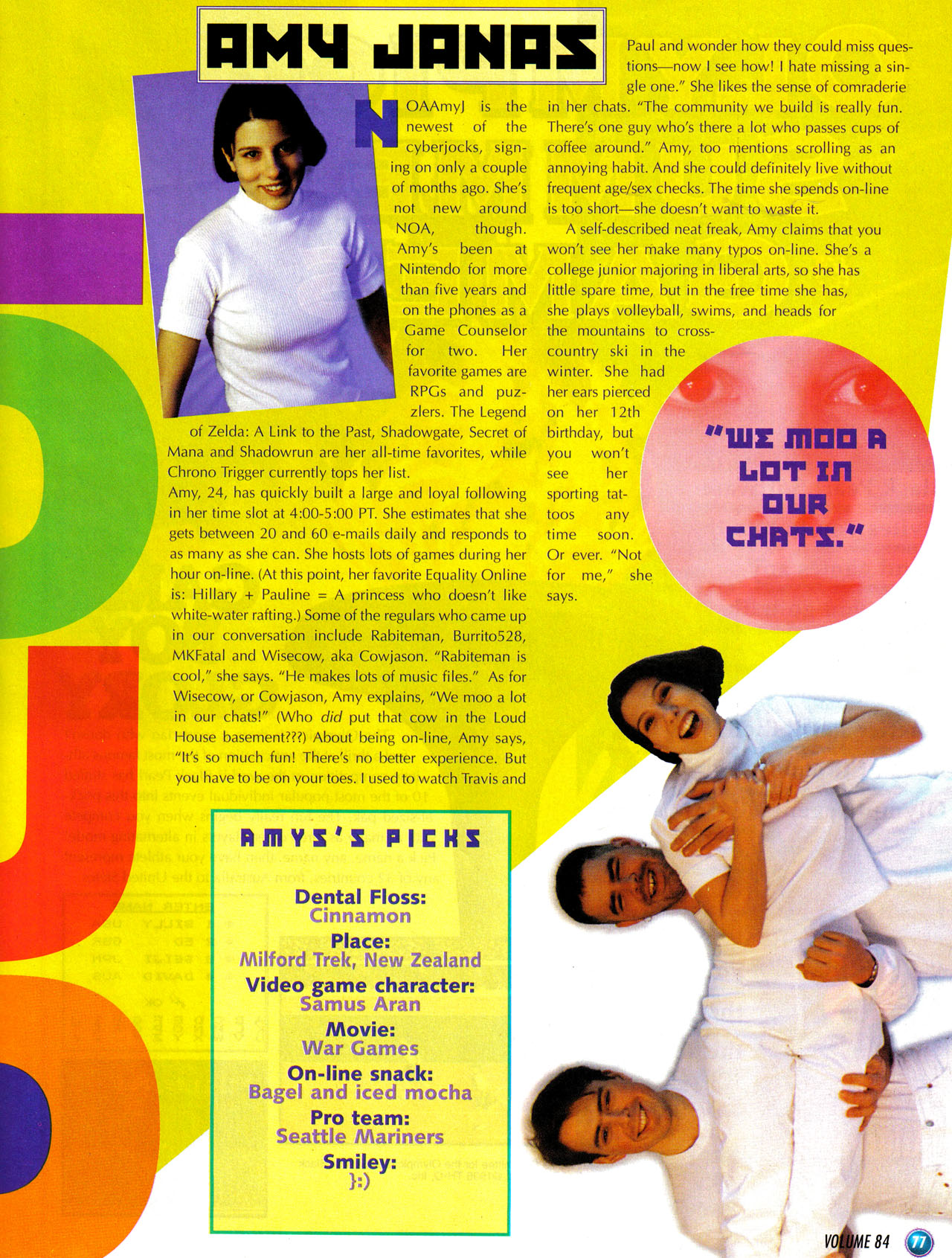
My childhood heroes all had the first name “NOA”. They were the living, breathing avatars of Nintendo of America. And Nintendo was perfection, for all practical purposes. But like demigods, they were simultaneously divine and human. NOAPaul was a tough guy. A real street thug, with a tongue ring and everything. NOATravis, he was your boyband jock. Oh, the envy. And NOAAmy… did you know that she played Secret of Mana and Chrono Trigger? I did. Imagine it: a girl who played RPGs.

One day, I was going to be a Nintendo Power Cyberjock too. It was my highest aspiration. Forget astronauts and fire fighters. If Paul and Travis could become Nintendo of America, so could I. And maybe I would make Amy my wife, though she was a withering old spinster of 24.

At 11 years old, I was dedicated to my future career. To become a professional avatar of Nintendo, you had to really know your facts. I was already on the right track, because I owned all 84 issues of Nintendo Power magazine. The knowledge was at my fingertips, but it was vast… so I decided to cheat.

I booted up my Gateway 2000 386/25–it was mine in practice, since my mother finished college–and I headed straight to WordPerfect. If I could quickly search a game name and know exactly which issue and page to check for information… A month later, I possessed a complete index of the entire Nintendo Power catalog. And you thought you were a lame kid.

But there I was, equipped for battle. Ask me about a game. I dare you. I had it down to a science. I could look up a relevant article and spit out an answer within a minute, and Nintendo of America would never know that I cheated. They would think I was just that good. I sent in my job application right then and there, along with a crayola masterpiece of Samus Aran battling Ridley.

I didn’t get the job, but that was probably for the best, since we did not actually subscribe to dial-up internet for another six months and “Cyberjocks” worked online. A minor technicality. Still, I kept Nintendo Power Issue 84 close at hand.

The fame. The glory. The honor.


*Section removed due to copyright issues. They were compressed scans of an out of print magazine spread welcoming you to the Nintendo Loud House with some amazingly dorky-looking staff members striking a pose.*

<(‘-‘<) ^( ‘-‘ )^ (>’-‘)> ^( ‘-‘ )^ <(‘-‘<) ^( ‘-‘ )^ (>’-‘)>

My first actual experience on http://www.nintendo.com, some time in 1996, was overwhelming. I had waited so long for this. Line by line, the pixels of that jpeg unfurled in slow motion. “Nintendo Power Source”. “Welcome to http://www.nintendo.com”. I was there. And it was wonderful.

Nintendo.com was a disorganized sea of information that you could spend all day exploring (especially on a 14.4k modem). There was a frame up top filled with totally nondescript or misleading images that would link you to different parts of the site, and each of those sections had its own upper frame of links. They could take you anywhere. The internet had no rules yet, you see. For instance, there was a really buried subsection called the “N-List” that linked all kinds of random fan sites totally unmoderated by Nintendo, mostly hosted on Geocities. As a consequence, through Nintendo.com you discovered such wonders as this flattering photo of the founder of popular present-day gaming website RPGamer:

(Sorry.)

Ultimately though, I went to the Loud House. That was where the NOA gods resided. To get there, I had to travel underground, down an elevator shaft that consisted of scrolling really far in a narrow frame to the left. If I thought the main site enormous, the Loud House was madness. They had a proto-forum–everyone still called them bulletin board systems then, though it was not an authentic BBS–where topics appeared in a single endless list set to a fire-engine red background with the texture of an aluminum tool box. Damn was it beautiful.

I knew there had to be at least a few dozen RPG fans out there besides myself and NOAAmy, but I never predicted this. The realization that I could be a part of a secret society of hundreds of Square(soft) aficionados must have waylaid my dreams of working for Nintendo for a time, because I don’t remember doing anything but theorycrafting Final Fantasy III (sic) for the next few months. I would spend every school bus ride studying my official players guide, looking for minute typographical errors that could be exploded into radical theories to share with my peers. I actually killed 4,000 dinosaurs in that forest near the Veldt in the false hope of resurrecting General Leo.

<(‘-‘<) ^( ‘-‘ )^ (>’-‘)> ^( ‘-‘ )^ <(‘-‘<) ^( ‘-‘ )^ (>’-‘)>

Eventually the forums changed, and so did I. They became more manageable and subdivided into “boards”. Me, I became 12, and that meant responsibility. I couldn’t just be another anonymous Joe researching Final Fantasy VI anymore, aging in obscurity as fame and fortune passed me by. I needed to get back to my dreams, and that required becoming involved in the social community. So I did what anyone would have done back then to turn the page: I changed my name.

That was a principle of the Old Internet that runs totally counter to modern social media culture and may have culminated with 4chan and the birth of Anonymous–the hactivist organization that never actually existed yet frequented headline news throughout 2008. You were really empowered to dictate how a community perceived you. You could completely ‘reset’ your identity at the click of a button, experimenting with different personas until you found one that jived with the community. Nintendo Power even encouraged this behavior in Issue 72:

So died BobaFett207, and a new entity dove into the RPGs board with a mission to earn the unrivaled respect and adoration of its citizens. (His mom also lifted the half hour limit on web browsing, so he actually had time to read replies and stuff.)

<(‘-‘<) ^( ‘-‘ )^ (>’-‘)> ^( ‘-‘ )^ <(‘-‘<) ^( ‘-‘ )^ (>’-‘)>

What I found was appalling. My plans were immediately surmounted by a more pressing issue. The release of Final Fantasy VII was rapidly approaching, and people were actually discussing the Playstation.

The Playstation. The Sony Playstation, in what would one day be my Nintendo kingdom. These were the filthy traitors who planned to endorse Squaresoft’s debauchery, and they had to be destroyed. I charged head-first, furious and uncaring of the consequences. “JERK!” “IDIOT!” “HOW COULD U!” I let the hatred flow through me, channeling it into dozens of single-sentence replies, until a thread title appeared that gave me pause. It said “ATTN: SHADOW 4000”. That was me! Registered only one day, and my new identity was already known to the community! The post, no doubt, would praise me for my heroic defense of truth and the Nintendo 64.

It did. This was where, in retrospect, things got weird. I wasn’t banned by a forum moderator, or even told to shut up. No, I was invited to join the NES Knights–a legion of warriors who, like me, vowed to fight against the evils of the Sony Playstation. I was promptly recruited and informed that we were at war with the Freedom Knights, who had organized to defend forum-goers’ rights to enjoy non-Nintendo products.

I earned my first stripes when the PSX Invaders came to town. They were a band of ruffians that would show up every few weeks and ravage the RPGs board by posting hundreds of threads titled “N64 SUX”, “PSX 4 LIFE”, etc. Certain that I could stop the incessant barrage of spam posts, I set a clever trap. “ATTN: PSX INVADERS” the thread title ran, and when they clicked it… BAM! “***FIRE LANCE X***” As I am sure you expected, this worked phenomenally. Two invaders stopped spamming and engaged me with their own barrage of attacks. I parried them as best I could, while fellow forum-goers engaged them similarly in other threads. The battle was long and bloody, but we were victorious.

<(‘-‘<) ^( ‘-‘ )^ (>’-‘)> ^( ‘-‘ )^ <(‘-‘<) ^( ‘-‘ )^ (>’-‘)>

I had found my true calling. Every evening, after school, I would log on to the Loud House RPGs board and train with my allies or engage rival groups. I even started my own, which amassed over 100 members. This was clearly my best route to becoming an official Nintendo-employed Cyberjock… while that dream lasted. It all came crashing down on Thanksgiving Day 1997. Nintendo deleted the Loud House.

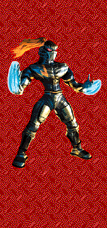
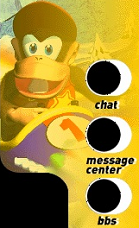
And in its place, they created NSider. NSider was ugly, stupid, and it featured Diddy Kong instead of Fulgore.

>

Worst of all, by far, they renamed my precious board “Other RPGs”. Other! Lesser! Inconsequential! And why? The only reasonable explanation was to emphasize the Zelda board. Practically in tears, I called my RPGs brothers to arms. The Zelda board must pay. That war would last for weeks, because the Zelda board was well organized under the Zelda Alliance. (This same game had been going on there all along, despite there being almost no overlap in users.)

<(‘-‘<) ^( ‘-‘ )^ (>’-‘)> ^( ‘-‘ )^ <(‘-‘<) ^( ‘-‘ )^ (>’-‘)>

As it turned out, the game was not just an RPGs board thing or a Nintendo.com thing, but a common trend throughout the internet. As we transitioned away from NSider to Geocities and forum hosts like VantageNet and InsideTheWeb, we encountered more of the same everywhere. It was as if thousands of kids were dumped into an empty field and told: “Play. No one is watching.” You will never find a Wayback Machine record of the bizarre, seemingly pandemic consequences, but if you were socially engaged in the 90s internet before high school, you probably belonged to some sort of guild.

I tended to see a change in people when they got to be 13 or 14, and the game for them might transition into an interactive story. These were shared universe worlds in which participants would write a collaborative fiction story through their individual characters’ perspectives. It wasn’t RP, but rather a real (poorly written and highly derivative) novel, and it could go on for years. The one that began on the Loud House RPGs board amassed thousands of pages (which were archived). Alternatively, the game would evolve into cyberbullying. Account security was non-existent and cracking tools were a dime a dozen on Yahoo!. A lot of sites also used forms to password protect their content, and the redirect link was usually embedded right in the HTML code. As a high school freshman, you were too “mature” to pretend you were a wizard anymore, so you pretended you were a 1337 hacker instead. It was not uncommon to see a Geocities site vanish over night, replaced by “Conquered by” so-and-so. My first email address got hijacked. It was actually kind of stressful.

But that was the 90s internet as I remember it. …Am I supposed to inject some sort of closing point or moral here?

A Glorious Fantasy: The Magitek Revolution


Once again I return to this ongoing series, in which I attempt to play through every game in the Final Fantasy franchise that I can get my hands on, from FF1 through Lightning Returns, and a variety of the spinoffs and other titles not included in the ‘main series’. This list continues to undergo revision, and I seriously considered removing Final Fantasy 9 from it for personal reasons. In addition, no MMO titles will be played. Sorry, folks?

I think all of this is extremely important knowledge, and that the human race will be improved by my research. Let’s move on!

FF6-logo

This is a bittersweet entry for me. Final Fantasy 6 has always been my favourite Final Fantasy. It is the first one that I played to completion, and I still think of it as the absolute pinnacle of the JRPG form. There are things about later games that I like, individually, better than certain aspects of Final Fantasy VI. But unless I really undergo a transformation moving forward in the series (or if Lightning Returns is somehow the greatest game ever released… and I doubt it) … this is the high point. This is the pinnacle. For me, this is the definitive FF experience, and the game I would recommend throughout this entire odyssey without hesitation to anyone, anywhere, anytime.

Version Played: GBA Remake

Version Notes: Having played the original SNES version 90282834 times (all numbers approximate) and the GBA version 0 times, this was kind of fun for me. The primary feature of the GBA version is a new, upgraded translation over the Ted Woolsey original. Obvious upgrades include the names of characters no longer being in all caps for whatever reason, and the expansion of several characters. I never thought that the original translation of FFVI was particularly egregious, but I will freely admit to liking the GBA translation better. The GBA version also fixes a number of rather infamous bugs from the original game, including the Evade bug. I would highly recommend this version to both new players and returning ones alike.

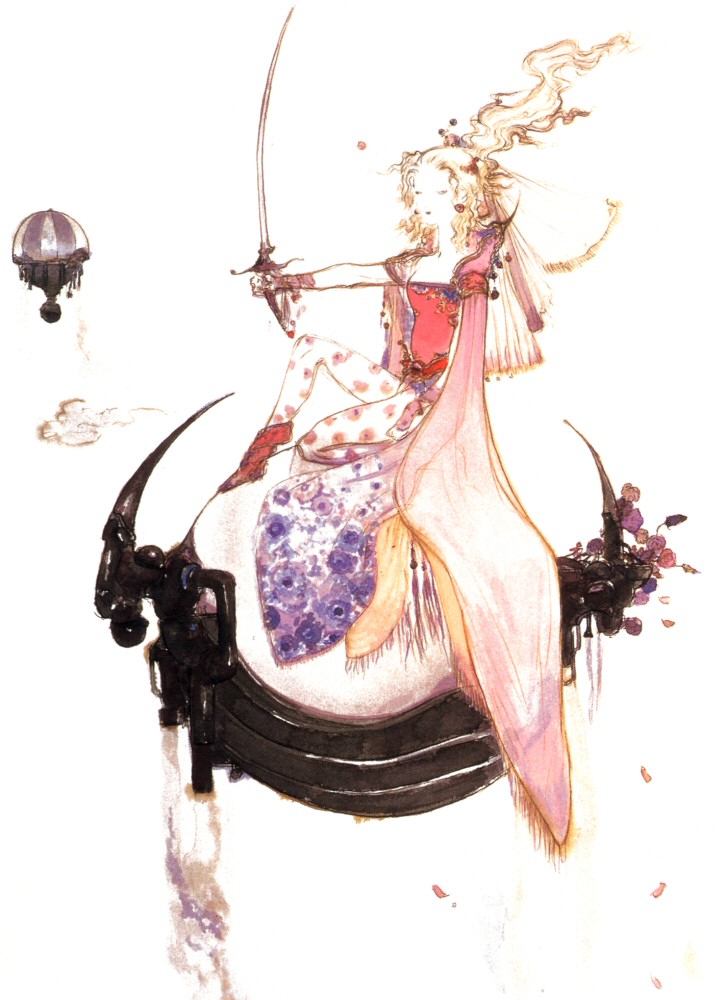
So… where to begin, really, with Final Fantasy VI? At the risk of exposing my knowledge of future games, I can certainly say that FFVI’s style paved the way for the characters and combat systems of Final Fantasy VII and Final Fantasy VIII. It also represents the only real departure (let’s not count FFI and FFIII where you have only ‘generic’ characters) in the entire Final Fantasy series from the idea of a single protagonist, with supporting characters around her. In this case, while Terra Branford is an obvious protagonist type, and does start the story as its central character, she remains such only until the first major split in the party, when Terra leads a group trying to escort the rebel leader Banon to safety on the Lete River… meanwhile, Locke Cole attempts to delay the impending invasion of the Gestahlian Empire from overrunning the peaceful realm of Figaro… and Sabin Figaro is lost on the Lete, and must make form new alliances to get back home.

Let the idea of that sink in, just a little. It’s a truly novel concept, and one that is not really used in any other RPG-style game that I can recall to mind. The ensemble cast of FFVI is not held together by the glue of Terra Branford, nor by any other single character. Certainly, the game has a few characters much more ‘major’ than others (Terra, Celes, and Locke receive a large amount of development over their fellow cast members), particularly if you don’t indulge in some of the sidequests that the game offers once you reach its second half.

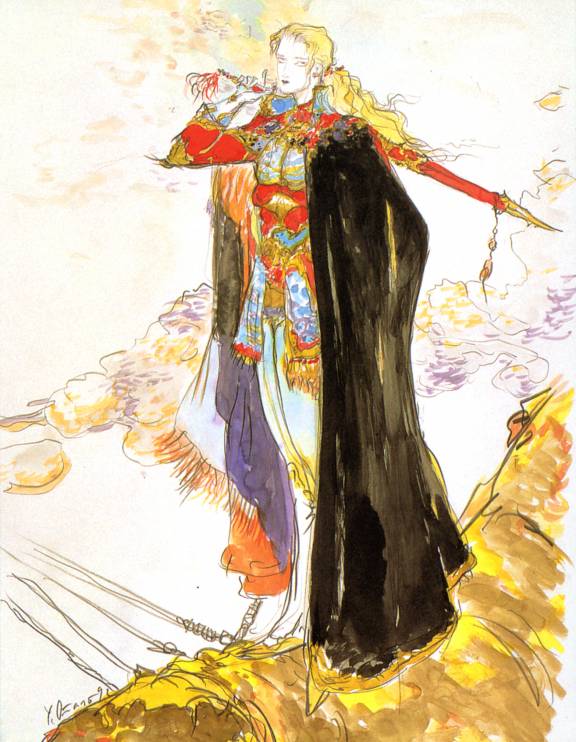
If any single character provides focus to the narrative, then, it has to be the bad guy. Actually, in this case, as is often the case, there are a couple of them. The villains provide us with a single thread to follow through the complex characterizations and variety of locales that the party will explore. Ultimately, this game is about stopping the mighty Kefka from literally grinding the people of the world into dust, until nothing at all remains. While this has basically been the goal of every antagonist we’ve faced thus far (spoiler alert: probably most of the upcoming ones have the same plan in mind), Kefka begins to realize his goals in a visceral way which is, again, unusual for this game series.

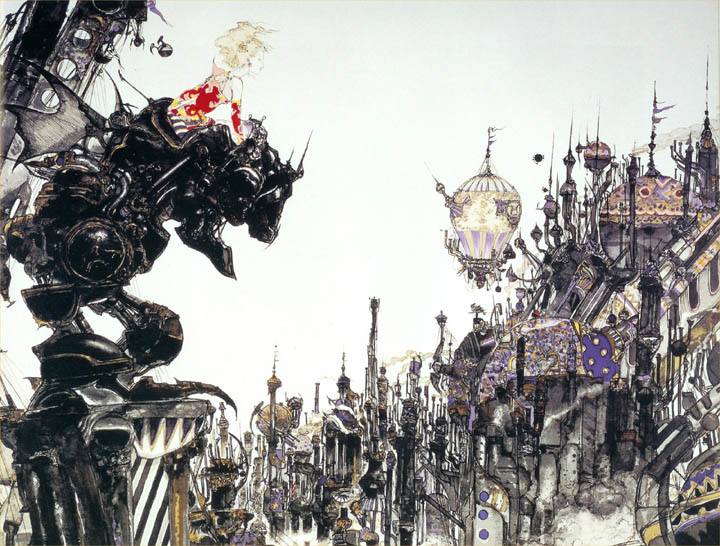
Final Fantasy VI is also the first game to depart in a major way from several of the core story themes that we’ve seen before in every other installment. Gone are the crystals (Earth, Wind, Air, and Fire). Gone are prophecies of any kind – the people of Final Fantasy VI’s world are more worried about repeating the mistakes of the past through a cataclysmic conflict called the War of the Magi, which destroyed the world and erased magic, but also gave rise to the steam engine, and modern technology. It’s this technology, and this complete departure from the series’ roots that gives this game it’s unique flavour, and also very much sets the stage for the succeeding games.

Here, too, is another innovation, which in some ways builds on the stylings of Final Fantasy IV, but not entirely – each character here possesses a unique skill, such as ‘Steal’ for Locke, or ‘Morph’ for Terra (Cecil, for example, had ‘Darkness’, and Kain ‘Jump’). However, beyond that unique skill and their individual equipment lists, the characters have many interchangeable features. Their ability gain at level up is determined entirely by the Esper system, which also teaches characters magic. It is possible (albeit, pointlessly difficult and unrewarding) to turn even the most magically inept character like Edgar into a spellcasting powerhouse with the Ultima ability by the game’s end. While this was previously a function of jobs, the character ‘jobs’ in FFVI are immutable, though you have many characters to choose from by the end, unlike in Final Fantasy IV.

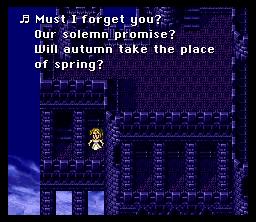
Final_Fantasy_VI_OperaNone of this is why the game is so effective, however, or why its memory has lingered with me far beyond any other game in the series. The truth is, all of that has to be attributed by incredible moments, like the Opera House sequence, which elevate this game from a story perspective far beyond any previous offering. Its combat system may not be quite as fun to play with as FFV’s deep and immersive job system… but the characters will draw you in in a way that perhaps no other game in the series will.

After so many years, there’s not too much more to add here. Just know that if you have never experienced Final Fantasy VI, you are missing one of the great games of all time. That would be a shame.

Artist Profile: Yoshitaka Amano


YoshitakaAmano01

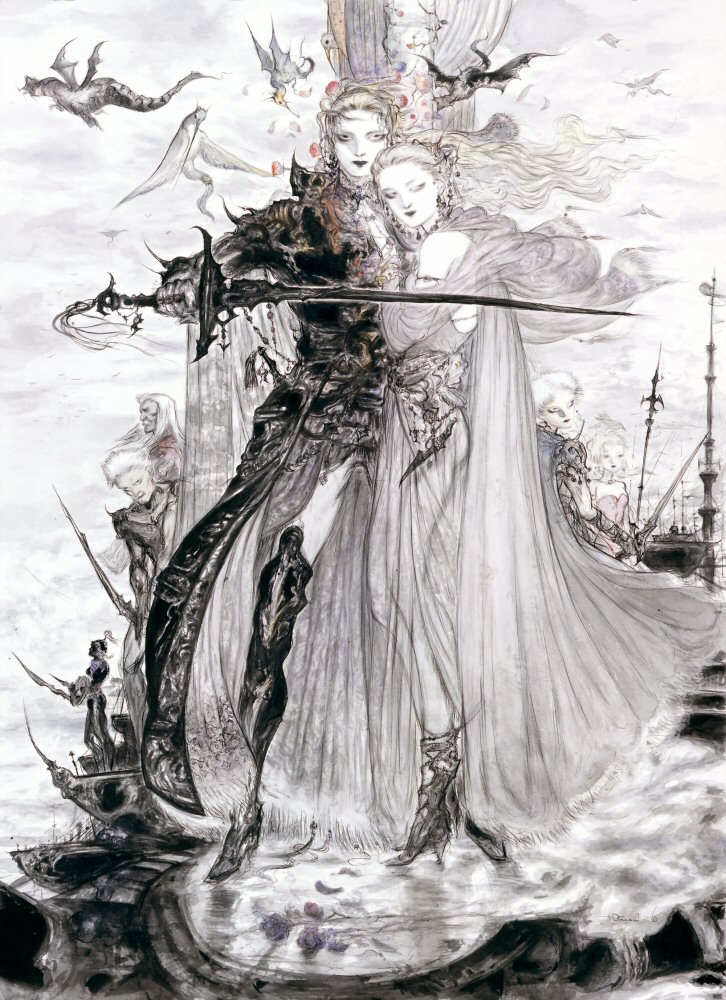
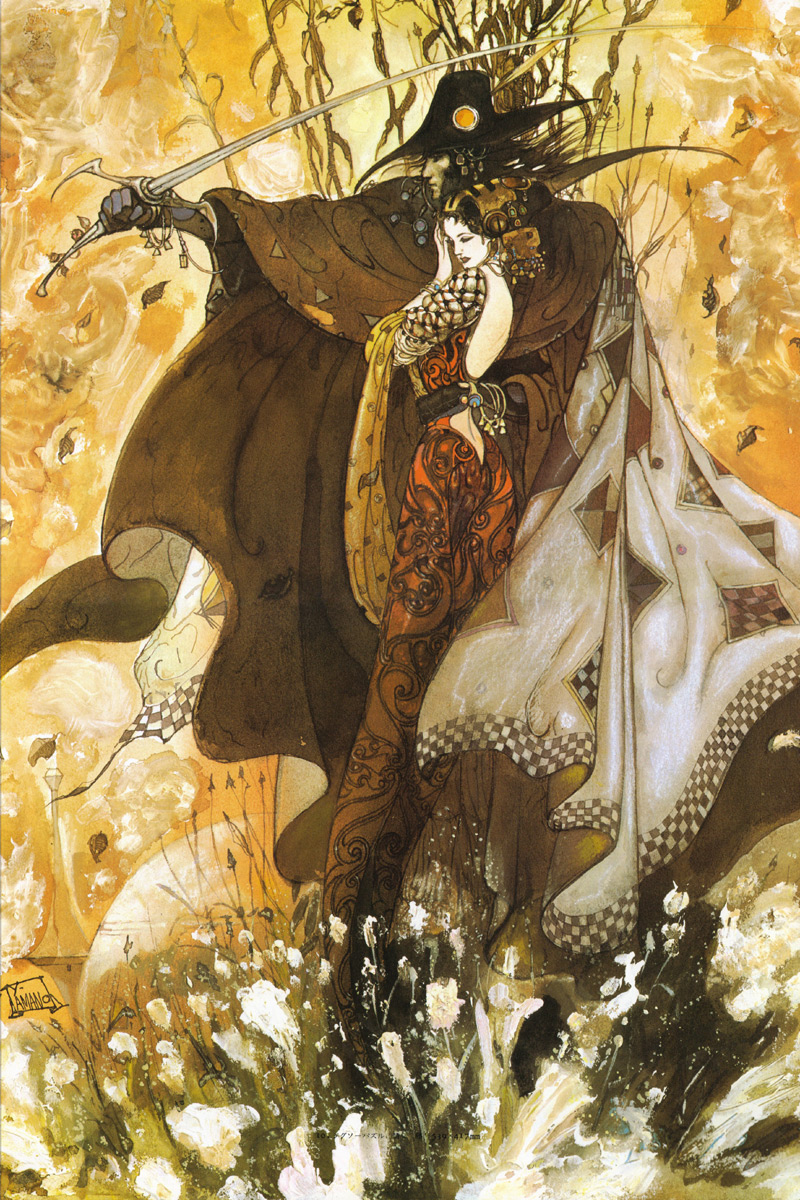
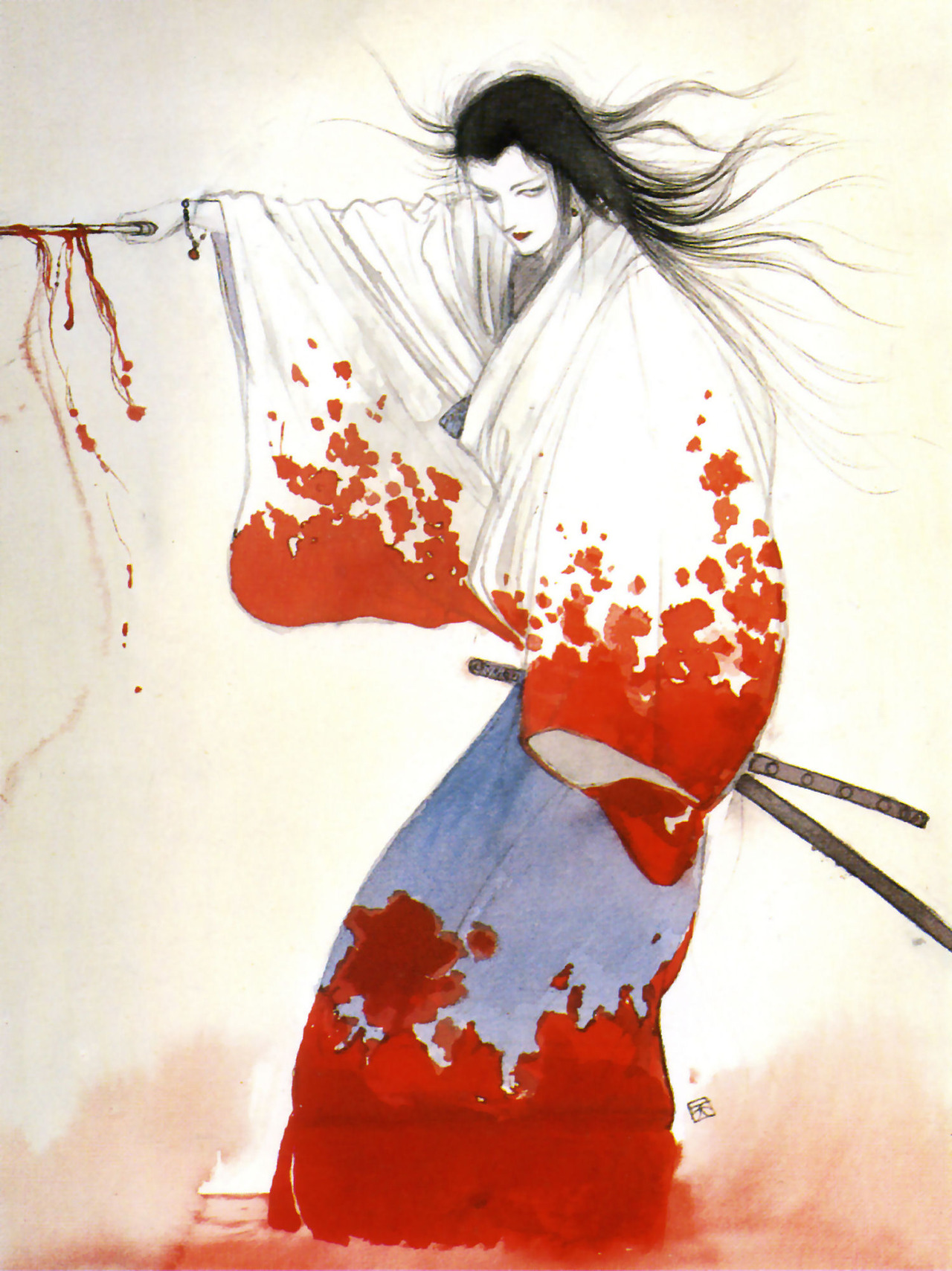
Yoshitaka Amano, born 1952 in Shizuka, Japan, is one of Japan’s most-renowned artists and illustrators. He also began his career as a character designer for early anime shows like Speed Racer, Gatchaman and Tekkaman. He would continue to build on his portfolio of unique character designs for anime, video game franchises and Japanese pop culture art.

Amano-san has pointed out Western artists such as comic book artist Neal Adams as an inspiration in his own style which when combined with his knowledge and appreciation of the classic Japanese hard woodblock printing known as Ukiyo-e would lead to one of the most unique character styles in mainstream pop-culture.

Yet, Amano-san will forever be known for and continues to be popular for his work in helping design the characters for the the video game rpg franchise known the world over as Final Fantasy.

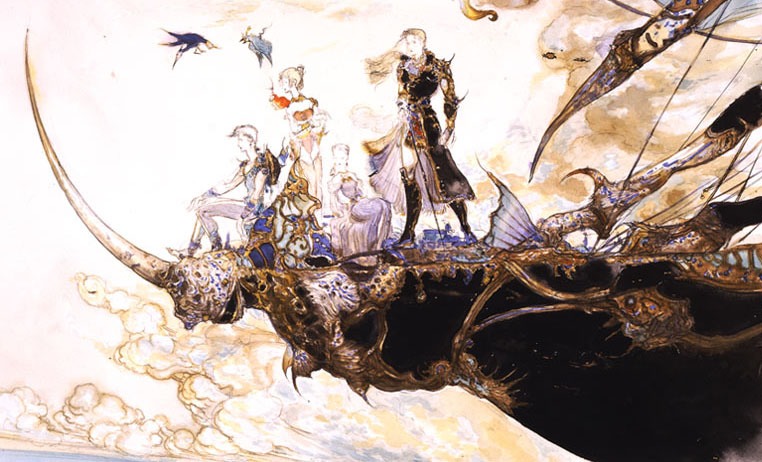
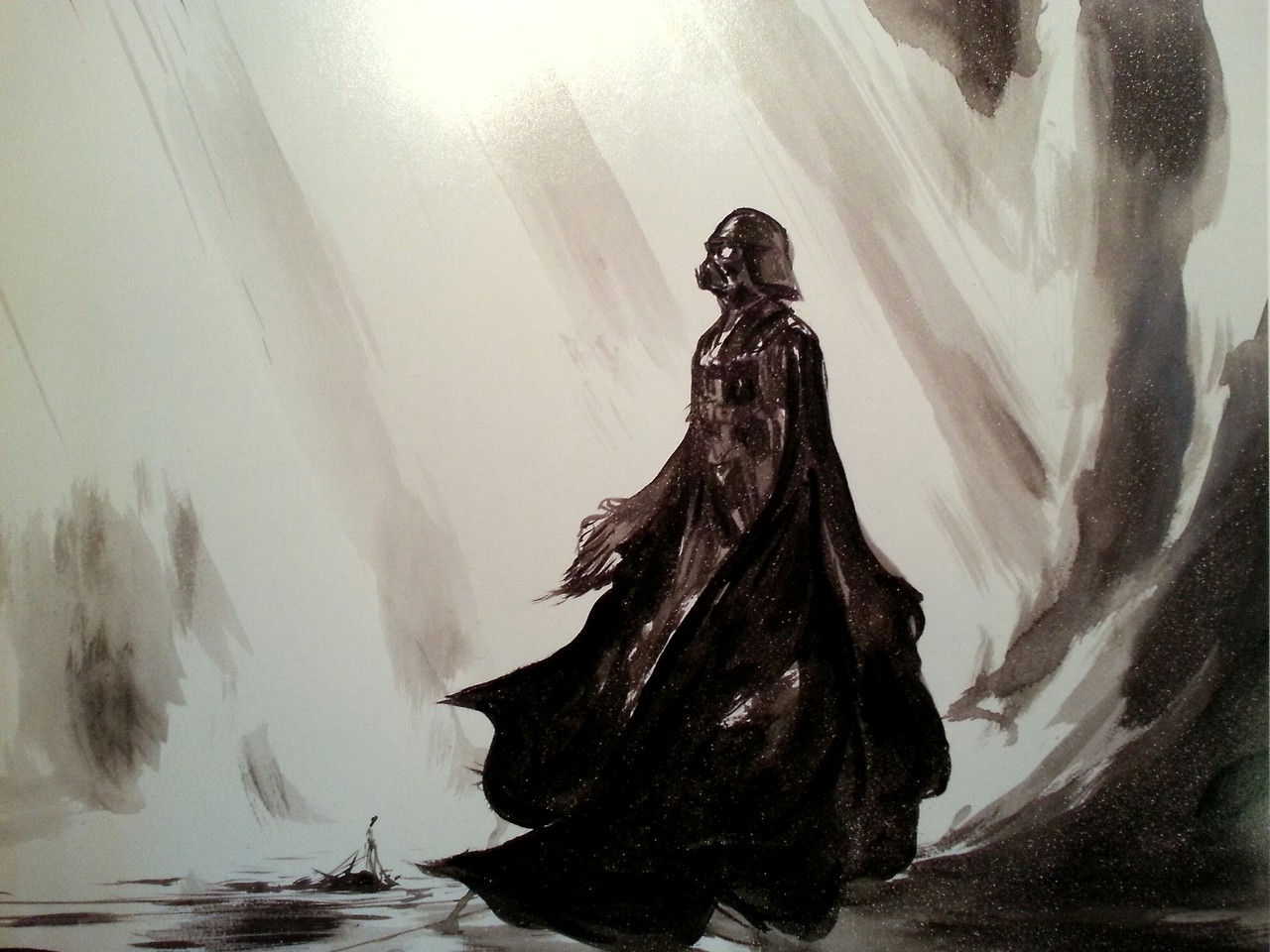
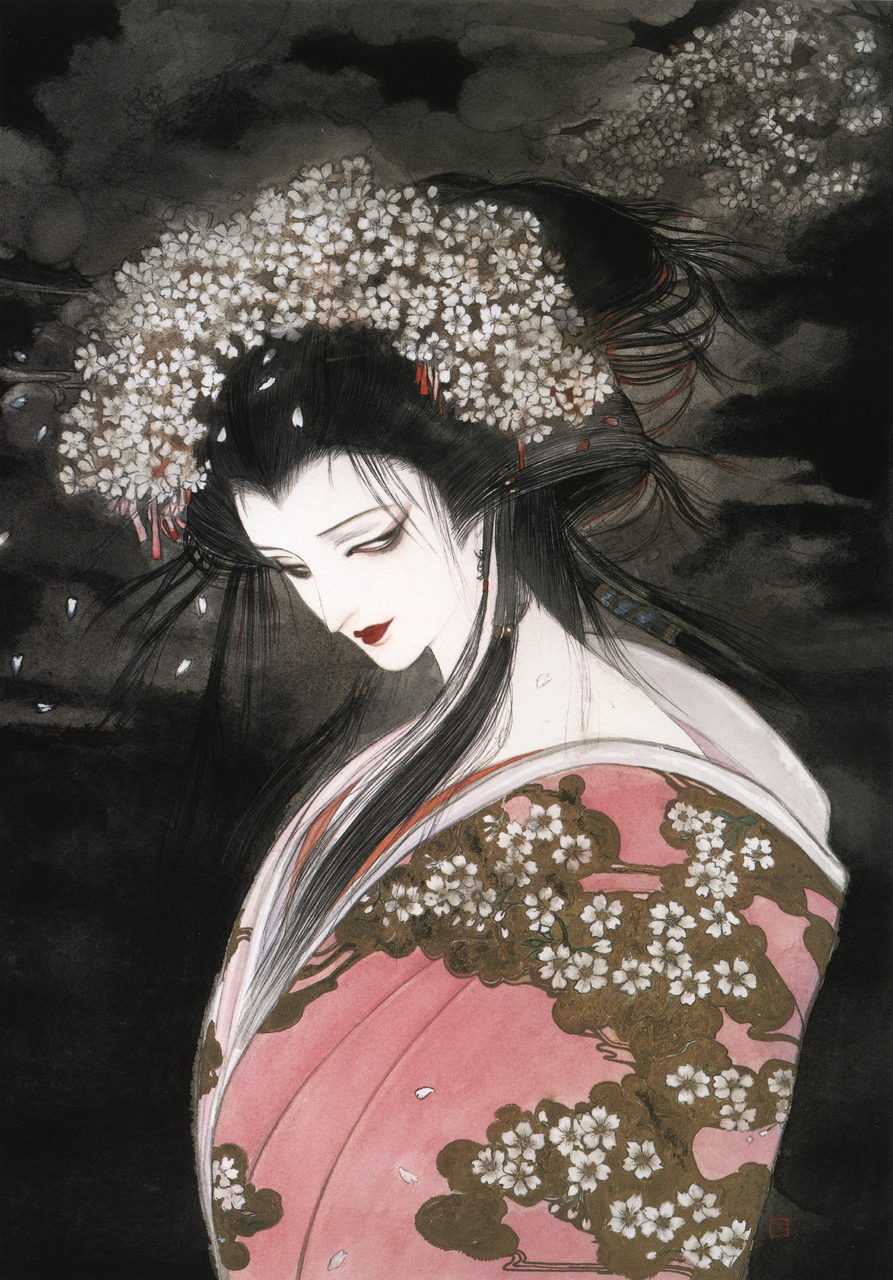
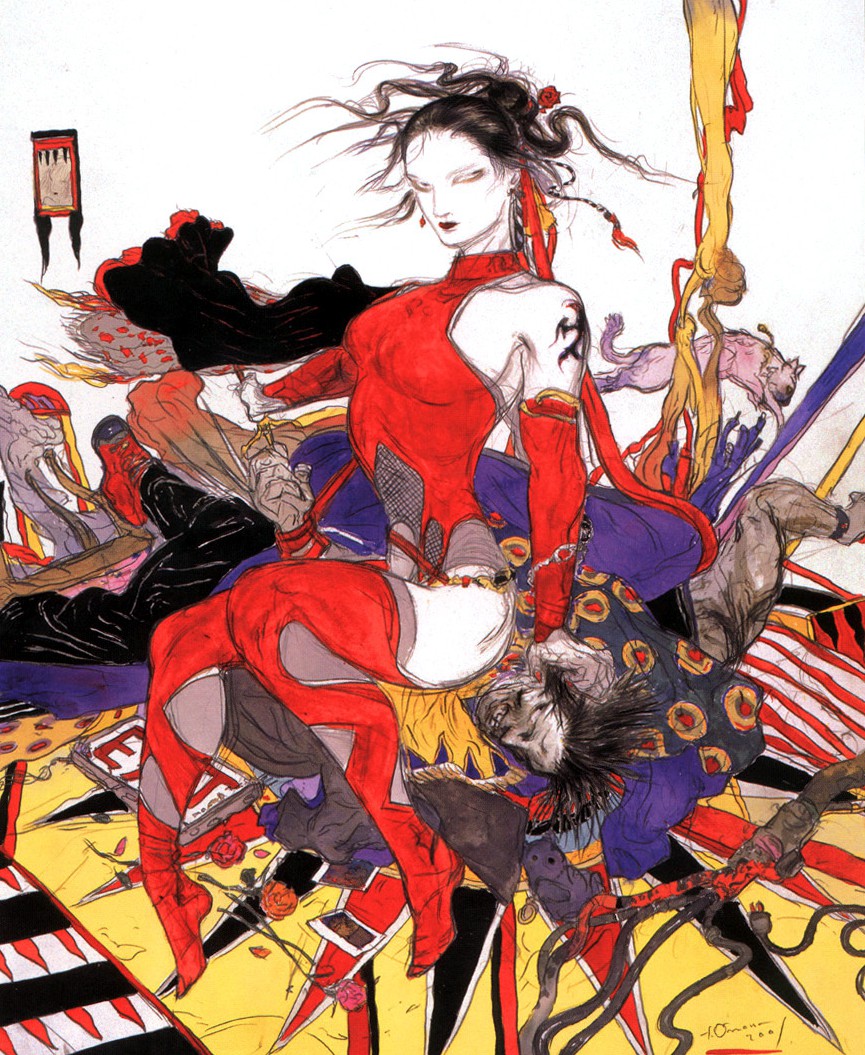
YoshitakaAmano02YoshitakaAmano03YoshitakaAmano04YoshitakaAmano05YoshitakaAmano06YoshitakaAmano07YoshitakaAmano08YoshitakaAmano09YoshitakaAmano10YoshitakaAmano11YoshitakaAmano12

VGM Entry 68: Final Fantasy VI


VGM Entry 68: Final Fantasy VI
(Thanks to Tish at FFShrine for the banner)

Square released quite a number of games for the Super Nintendo, but everyone looked forward above all else to their annual blockbuster, appearing in the latter half of the year, from 1993 until 1995. Secret of Mana was the first of these. Final Fantasy VI was the second.

There is only one logical place to begin a discussion of the music of Final Fantasy VI.

And that would be at the beginning. Final Fantasy VI did not begin like other games. Sure, it was by no means the first to fade out on the title screen and play through an introduction to the plot, but this was different in a lot of respects. It provided barely any background to the story. Ok, there was a devastating war 1000 years ago in which the destructive art of “magic” was lost, and an emerging industrial revolution is beginning to recover remnants of that past. That’s all you directly get. The rest plays out more like a movie. You get hints and clues to what’s going on–a new face here, a key term there–but you’re left curious rather than informed. The intro to this game doesn’t set the plot; it sets the mood. (The revised English translation tragically lost sight of this, such that the original SNES “Final Fantasy III” is really the only port of the game worth playing.)

Nobuo Uematsu’s music went hand in hand with this approach. There is no opening anthem–no catchy piece to hum along to. The sinister organ, the harp-like transition, the windy sound effects, and ultimately the opening credit music all flow from one point to the next, breaking only for the sake of the cinematic experience, not because a particular track is over or the next scene has new “bgm”. Final Fantasy VI had perhaps the first really cinematic introduction for a video game.

http://www.youtube.com/watch?v=wtqXb2FDK0Q

It might be argued that Nobuo Uematsu revolutionized the use of music in video games from the very opening sequence, but nothing made this more apparent than the events at the Jidoor Opera House, where an odd twist in the plot leads the cast of heroes to become involved in a backstage operation during a musical performance. Not only does the opera take place in the backdrop as you work your way through the mission, but as part of the plot device the heroine Celes takes on the lead female roll in the show. Events transition back and forth between action behind the scenes and the live show, and part of the outcome is determined by your ability, as a player, to regurgitate Celes’ lines from the script.

The video I’ve linked here includes the first two songs in a four-part performance. What makes this sequence so important for the history of gaming music is that Nobuo Uematsu’s amazing score plays a direct role in the plot and gameplay. While the simulated pseudo-vocals might sound silly in hindsight, this was also a real first in gaming music in its day. Square’s sound team might not have possessed the technology to incorporate real words, but nothing prevented them from displaying them as part of the script. As an odd consequence, one of the first video games to make extensive use of lyrics had no vocals.

http://www.youtube.com/watch?v=JbXVNKtmWnc

Uematsu’s third major accomplishment, the indisputable quality of his score aside, was to completely derail the limits of acceptable song length. Granted Commodore 64 artists had been busting out 6-8 minute epics back in the mid-80s, the standard by and large still remained firmly below the 3 minute mark. If we take the opera as a single piece (it’s divided into four tracks), Final Fantasy VI had three songs that pushed 20 minutes.

“Dancing Mad” probably remains today the longest final battle music ever written, with the original ost version clocking in at 17 minutes and 39 seconds. This might seem excessive if you haven’t played the game, but within its context nothing less could have possibly sufficed. Kefka was pretty much the greatest video game villain of all time (Luca Blight from Suikoden II might surpass him), and Final Fantasy VI might have had the most apocalyptic plot in the series. Sure, series fans had saved the world from imminent destruction five times before and plenty more since, but Zeromus, Exdeath, they were just icons of evil. In Final Fantasy VI, Square’s obsession with mass destruction finally found a human face. Kefka’s psychopathy was something you could buy into. He was entirely capable of emotion even as he slipped progressively further into insanity. He just attached no moral value to life. Where enemies before and since sought to destroy the world for destruction’s sake, Kefka was in it for the experience of the ultimate tragedy. For once it actually made sense for a final boss to let the heroes creep up on him; the whole agenda would have been pointless if no one was there to experience it with him.

Both visually and musically, the final battle of Final Fantasy VI was beautiful. Nothing else–certainly no 1-2 minute fight theme–would have been appropriate in the context of the story.

Song of the Day: Terra’s Theme from Final Fantasy VI (Uematsu Nobuo)


For the latest entry to the “song of the day” feature I go back to my younger years. I’m talking about when I was still barely into my 20’s. My choice for the new song of the day is Japanese composer Uematsu Nobuo’s main title theme for the Squaresoft (before they became Square-Enix) fantasy role-playing game Final Fantasy VI.

The song is “Terra’s Theme” (in the original Japanese it was called “Tina’s Theme”) and starts off the game. The version above is the piano solo version which Square-Enix produced as part of the special “Final Fantasy Piano Collections” cd releases which took all the video game music for each game in the Final Fantasy series game and remade them into piano solo pieces. Uematsu’s original composition for Final Fantasy VI (also for most of the game’s in the series he composed the music for) were very heavily-influenced by classical music traditions and one can really hear it in this main theme.

While the piano solo version is quite a haunting melody which gives some clues to the character of Terra Branford. The two versions below are the original video game music which is really a well-done MIDI file to allow it to be encoded into the game cartridge when it was first released for the SNES system. The other one is a live recording of Uematsu himself conducting an orchestra. While all three have become one of my favorite pieces of music of all kinds (not just video game music) it is the piano solo which solidified “Terra’s Theme” as one of the best songs I’ve ever heard.

Terra’s Theme (Live Orchestral)

Terra’s Theme (Original Video Game Music)

Review: Suikoden V


Konami’s Suikoden series has been a fixture in the Playstation console systems since the PS1. While not as graphically beautiful as Square-Enix’s Final Fantasy series of role-playing games, Konami’s own Suikoden rpgs more than held its own in complexity of character development and storylines. These two factors have become something the Final Fantasy rpgs have really lacked since Final Fantasy VII. I would even say the Final Fantasy series hit its high-point in Final Fantasy VI and has been downhill since. Not so with the Suikoden series. From the beginning the series has beautifully combined characters and storylines to create a game that still uses the basic stats and experience mechanics of most Japanese RPGs but with a unique brand of npc recruiting and a wholly realized complex world which grows and reveals itself with each successive game in the series.

In 2006, Konami released Suikoden V in North America and there were some trepidations on how well the game would turn out. The previous game in the series, Suikoden IV, was abit underwhelming in its execution. A rarity in the Suikoden series in that the game was just ok; with some fans calling it awful. But even Suikoden IV still played better and its story less cliche than most rpgs coming out of Japan. Suikoden fans needn’t have worried about this latest entry in the series. Suikoden V doesn’t bring anything new or innovating in terms of graphics to the genre (but then these games never has in the past) but what it did was bring back the series to the high-standard of character development and storyline the series was very well-known and critically-acclaimed for.

Set six years before the events which played out in Suikoden I, Suikoden V takes places in the Queendom of Falena whose current Queen has in her possession the Sun Rune. The Sun Rune is one of the 27 True Runes which makes the backbone of what makes the critical events of the Suikoden Universe so unique to the role-playing genre. Queen Arshtat rules Falena with the Sun Rune but events prior to the beginning of the game (told in flashback) has set into motion a dangerous game of political machinations and powergrabbing between two powerful groups in the Houses of Barows and Godwins with the Sun Rune in the middle of it all.

The player is given control of Queen Arshtat’s only son to figure out just what sort of secret plans either Houses has in store for the Royals. Accompanying the player are Arshtat’s sister Sialeeds, his bodyguard and lifelong friend Lyon, and Georg (a familiar face for those who have played the previous games in the series). As the game’s story unfolds the complexity of the power struggle between Barows and Godwins and those of the Falenan Royal Family becomes more than a struggle for the realm of Falena but for its ultimate survival as something powerful and beyond human comprehension has slowly influenced those in close proximity. There’s moments of extreme sadness and ultimate sacrifices and love. Machiavellian plots and counterplots from both the protagonists and antagonists keep the player guessing as to how the story will play out. There’s also betrayals and genocidal actions which gives this entry to the series the dark edge the previous fourth Suikoden lacked.

Unlike most JRPG’s (Japanese RPGs), Suikoden V doesn’t have an end-of-the-world storyline but one which stays regional, but makes the plot no less epic and actually gives the game more freedom in how the story unfolds. The game’s story has to rank up there with Suikoden II‘s as one of the best rpg storylines ever and only lags behind the second game due to that game’s having a brilliant and memorable villain in one Luca Blight. The main characters and most of the 108 Stars of Destiny characters were well-written with their own distinct personalities and motivations for joining the fight. The dialogue during the game is mostly done through text with each character show in anime-style profiles. The cutscenes on the other hand uses voice acting which for a rpg was done pretty well with voice actors who actually gave each character voiced a distinct personality. It would’ve been nice if Konami had included the Japanese voice-acting in addition to the English translation. It’s a minor gripe, but nothing that takes away from making Suikoden V such a great game.

The gameplay mechanics returns back to the 6-party formation from the first three games in the series. There’s still the usual co-operative attacks when certain combinations of characters are put in the battle party. The co-op attacks could involve just two characters all the way up to six characters combining to create devastating non-runic attacks. There’s also co-op attacks between characters using runes. These combined runic attacks are some of the most damaging attacks in the game and allows the player a reason to actually bring a balanced party of 6 characters that’s made up of fighter strong in physical attacks and those adept in runes. The newest change in the battle mechanics occur in the war battles. Gone is the turn-based system that’s worked well in the first four games. Suikoden V‘s war battles now takes place in real-time which makes for much more hectic battles. The player must constantly know where each of his units are and how they’re stacked up against the opposing forces.

Suikoden V is a great game and also brings the Suikoden series back to great form after an interesting but lackluster attempt at innovation with Suikoden IV. This fifth entry did everything right in what made the series great. It had a great and compelling storyline with complex and distinct characters. Suikoden V misses surpassing the great Suikoden II in greatness just due to that game having certain classic and memorable characters. This is an unfair comparison but something that still puts the second game ahead of V, but just barely. That shows just how great this game really is. Already announced by Suikoden’s creators that V will be the last Suikoden game for this current generation of Playstation console system. While the title hasn’t made a return to consoles that’s not handheld if this was the last game in the series then it was a proper send-off.