Lisa Reviews An Oscar Winner: The Life of Emile Zola (dir by William Dieterle)


The Life of Emile Zola, the winner of the 1936 Oscar for Best Picture of the Year, opens with two French artists living in a drafty apartment.

Emile Zola (Paul Muni) is destined to become one of France’s most popular and important writers.  Paul Cezanne (Vladimir Sokoloff) will eventually become one of the most important artists of the post-impressionist movement.  But for now, they’re just two struggling artists who have sworn that they will never sell out their principles.  They are poor but they’re happy.  That changes for Zola after he meets a prostitute named Nana (Erin O’Brien-Moore) and he uses her life story as the inspiration for a novel.  The book is controversial and its frank content scandalizes France.  The public censor comes close to banning it.  But it also becomes a best seller.  It’s the book everyone secretly owns but claims to have never read.

Zola writes several more books, all about the conditions of the working class in France.  Eventually, he becomes what he claimed he would never be, a wealthy man living in a mansion and having little contact with the poor and oppressed.  Cezanne sees Zola one last time, calling him out for having sold his talent for money.  Cezanne explains that, on general principle, he can no longer be Zola’s friend.

Meanwhile, a quiet and rather meek family man named Captain Alfred Dreyfus (Joseph Schildkraut) has been arrested and accused of being a spy for Germany.  There’s little evidence that Dreyfus is a spy.  Indeed, most of the evidence seems to point to a Major Walsin-Esterhazy (Robert Barrat).  But, because Dreyfus is considered to be an outsider, he is convicted in a show trial and exiled to Devil’s Island.

(In real life, it’s generally agreed that Dreyfus was a victim of anti-Semitism.  As the only Jewish member of the army’s General Staff, Dreyfus was viewed with suspicion by his colleagues even before anyone knew that there was a German spy.  The Life of Emile Zola doesn’t specifically state that Dreyfus was a victim of anti-Semitism, with the exception of a brief moment when one of his accusers looks at his personnel file and says, “He’s not one of us,” while pointing at the word “Jew.”  Otherwise, the fact that Dreyfuss was Jewish is never mentioned in the film.  It’s as if the film is going out of its way to avoid offending the very people that the movie is criticizing.)

After speaking to Dreyfus’s wife (played by Gale Sondergaard, who would later become the victim of a show trial herself when she was blacklisted as a suspected communist), Zola decides to take up Dreyfus’s case.  He publishes an open letter — J’Accuse — in which he states that Dreyfus was not given a fair trial and that Dreyfus is innocent of the charges against him.  Zola finds himself in court, accused of libel.  Zola uses his trial to give Dreyfus the hearing that he never received.  While the army boos his every utterance, the people of France rally to his side.

The Life of Emile Zola is an early example of the type of prestige production that today is often referred to as being an “Oscar picture.”  It tells a true story.  As a film that condemns the treatment of Alfred Dreyfus but avoids stating the obvious reason why Dreyfus was targeted in the first place, it’s political without being radical.  And it features a performance from the most acclaimed actor of the era, Paul Muni.  Muni gives a powerful performance as Zola, holding the viewer’s attention even during the lengthy trial scenes that take up most the second half of the film.  That said, the true star of the film is Joseph Schildkraut, who plays Dreyfus as being a kind and trusting soul who finds himself caught up in a Kafkaesque nightmare.  At one point, Dreyfus is given a gun and told that there’s one way that he can avoid being put on trial for treason.  Schildkraut played the scene so well that I wanted to cheer when he refused to surrender.

The Life of Emile Zola is a big and, at times, self-consciously important production.  It was clearly designed to win a bunch of Oscars and it certainly managed to do that.  Compared to some of the other films nominated that year — The Awful Truth, Dead End, A Star is Born, Lost Horizon, Stage Door, In Old Chicago — The Life of Emile Zola can seem a bit stodgy.  However,  the performances of Muni and Schildkraut continue to make the film worth watching.

The TSL Grindhouse: Jailbait (dir by Jared Cohn)


First released in 2014, Jailbait tells the story of Anna Nix (Sara Malakul Lane).

Anna is a teenager who loves to play the cello, largely because it allow her a mentally escape from her abusive homelife.  When her stepfather sexually assaults her, Anna pushes him back and he ends up hitting his head on a wall and promptly dying.  After her own mother testifies that Anna is lying about the abuse she suffered at the hands of her stepfather, Anna is sent to a juvenile prison.

Warden Frank Baragan (Steve Hanks) has a quick smile and a dorky sense of humor and he might seem earnest and supportive when he tries to encourage Anna to play her cello at the prison talent show but he quickly reveals himself to be as much of a perv as Anna’s stepfather.  Warden Frank is willing to help Anna but only if she does things for him.  (You can guess what things.)  And, even when Anna complies, Frank makes it clear that there’s no way he’s going to support her efforts to get parole.

There’s a lot to deal with in this prison.  Anna’s cellmate, the well-meaning Genie (Jennifer Robyn Jacobs), may love her but Genie can only provide so much support.  Meanwhile, gang leader Kody (Erin O’Brien) provides Anna with protection but only as long as Anna follows orders.  (Kody even forces Anna to get a tattoo identifying her as being a part of the gang.)  As soon as Anna tries to get away from Kody, she finds herself targeted.  Anna soon starts smoking and then injecting drugs, becoming an addict who is continually sent to the dark, dirty, and vermin-infested isolation cells, where no clothing is allowed.  (Yuck!  If I was ever on one of those Scared Straight shows, all of that would be enough to keep me out of prison.)  Will Anna be able to survive long enough to not only impress the other prisoners with her cello skills but also to expose the corrupt warden?

Released by The Asylum, Jailbait hits all of the usual women-in-prison movie beats.  It’s definitely a sordid film, one of those movies where everyone somehow still looks good despite living in a filthy prison and only getting to take a shower once or twice a week.  (Occasionally, someone will get a smudge of dirt on their face but considering the amount of time that many of the characters spend locked away naked in a filthy cell, everyone still looks remarkably clean and healthy.)  That said, Jailbait was still better than I was expecting, largely due to the performance of Sara Malakul Lane, who didn’t let the fact that she was starring in an exploitation film keep her from giving a fully committed performance.  She gets strong support from Jennifer Robyn Jacobs, Erin O’Brien, and especially Steve Hanks.  (Oh, how you will hate the Warden!)  Director Jared Cohn is a veteran when it comes to directing on a low budget and he keeps the action moving quickly.

Don’t get me wrong, of course.  The film has its flaws.  I’ve read a few comments online from some people who felt that the cello scenes were not convincing.  I’ve never played the cello so, to be honest, I really wouldn’t know.  But, with all that in mind, this film is far better than I would expect any film called Jailbait to be.

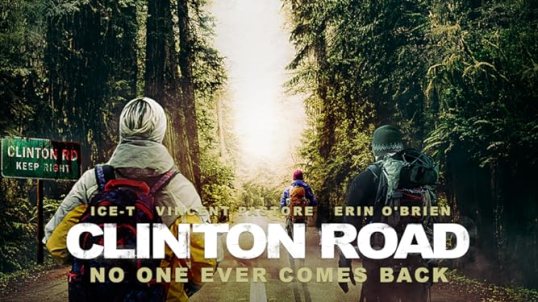
The Eric Roberts Horror Collection: Clinton Road (dir by Richard Grieco and Steve Stanulis)


2019’s Clinton Road features what might be my favorite Eric Roberts cameo appearance.

Roberts appears standing outside a club in New Jersey.  He’s speaking to the woman who is working the door and trying to convince her that he should be allowed into the club, even though she doesn’t think that he’s on the list.  He explains that he’s Eric Roberts.  The woman replies that he’s not the Eric Roberts that she knows but then, suddenly, she realizes that he is Eric Roberts the movie star!  She apologizes profusely.  Eric says its okay and gives her a fist bump.  Everyone waiting to get into the club applauds.

Seriously, that is the extent of Eric Roberts’s role in Clinton Road.  It comes out of nowhere and it has nothing to do with the actual plot of the film.  Why is Eric Roberts waiting outside of some club in New Jersey?  Who knows?  He’s just there and he’s a cool dude and everyone loves him.  As with so many of his cameos, one gets the feeling that Roberts just happened to see some people shooting a movie and he decided to be a part of it.

Eric Roberts is not the only well-known actor to make a brief appearance in Clinton Road.  The film itself was directed by actor Richard Grieco and it’s obvious that he asked some of his well-known friends to help out.  The manager of the club is played Ice-T and he shows up long enough to tell the urban legend of the vanishing hitchhiker.  The owner of the club is Vincent Pastore, who played Pussy on The Sopranos.  Private investigator-turned-character actor Bo Dietl shows up, playing the mayor of the town and barking orders at people.  Everyone gets a chance to be, at least briefly, the center of attention but none of them play characters who actually have anything to do with the film’s main story.

That story is about Michael (played by former American Idol contestant, Ace Young), a fireman whose wife disappeared while walking down Clinton Road, a haunted rural road in New Jersey.  (For the record, Clinton Road is real and, as this film states, it’s the center of many urban legends.)  Michael is ready to move on and marry his new girlfriend, Kayla (Lauren LaVera).  However, Michael’s former sister-in-law, Isabella (Katie Morrison), convinces Michael to go out to Clinton Road with her and make one last effort to contact his wife’s spirit.  Accompanying them is a medium named Begory (James DeBello), Begory’s girlfriend, Gianna (Erin O’Brien), and Michael’s brother, Tyler (former Big Brother houseguest Cody Calafiore).  Tyler is loudly skeptical of Begory’s claims to be able to speak to the dead but it soon becomes clear that the group is not alone on Clinton Road.

To my surprise, I ended up liking Clinton Road.  It’s a very low-budget film and the plot doesn’t always make sense but it was obviously made by people who both loved New Jersey and who loved the legends that have sprung up around Clinton Road.  The atmosphere was ominous, the imagery was often surreal, and, when they did appear, the spirits were effectively creepy.  The fact that the characters all had an attitude that was more appropriate to The Sopranos than to a standard lost-in-the-woods horror film only served to make the film all the more entertaining.  If you’re going to set your horror film in New Jersey, you might as well go all out and make the most New Jersey horror film imaginable.

I enjoyed this film.  I just hope Eric Roberts didn’t make the mistake of turning down Clinton Road on his way home.

Previous Eric Roberts Films That We Have Reviewed:

  1. Star 80 (1983)
  2. Blood Red (1989)
  3. The Ambulance (1990)
  4. The Lost Capone (1990)
  5. Love, Cheat, & Steal (1993)
  6. Love Is A Gun (1994)
  7. Sensation (1994)
  8. Dark Angel (1996)
  9. Doctor Who (1996)
  10. Most Wanted (1997)
  11. Mr. Brightside (2004)
  12. Six: The Mark Unleased (2004)
  13. Hey You (2006)
  14. In The Blink of an Eye (2009)
  15. Enemies Among Us (2010)
  16. The Expendables (2010) 
  17. Sharktopus (2010)
  18. Deadline (2012)
  19. Miss Atomic Bomb (2012)
  20. Lovelace (2013)
  21. Self-Storage (2013)
  22. This Is Our Time (2013)
  23. Inherent Vice (2014)
  24. Road to the Open (2014)
  25. Rumors of War (2014)
  26. Amityville Death House (2015)
  27. A Fatal Obsession (2015)
  28. Stalked By My Doctor (2015)
  29. Joker’s Poltergeist (2016)
  30. Prayer Never Fails (2016)
  31. Stalked By My Doctor: The Return (2016)
  32. The Wrong Roommate (2016)
  33. Dark Image (2017)
  34. Stalked By My Doctor: Patient’s Revenge (2018)
  35. Monster Island (2019)
  36. Seven Deadly Sins (2019)
  37. Stalked By My Doctor: A Sleepwalker’s Nightmare (2019)
  38. The Wrong Mommy (2019)
  39. Exodus of a Prodigal Son (2020)
  40. Free Lunch Express (2020)
  41. Her Deadly Groom (2020)
  42. Top Gunner (2020)
  43. Deadly Nightshade (2021)
  44. Just What The Doctor Ordered (2021)
  45. Killer Advice (2021)
  46. The Poltergeist Diaries (2021)
  47. A Town Called Parable (2021)
  48. My Dinner With Eric (2022)

Lisa Cleans Out Her DVR: Fight Valley (dir by Rob Hawk)


I wish I knew how to fight.  Don’t get me wrong.  I’m a pacifist.  I’m not the type who would ever actually go out looking for a fight but we live in a dangerous world and I’d like to know how to fight for much the same reason that I like to carry a pink, Hello Kitty derringer in my garter.  Self-defense is important.

Again, don’t get me wrong.  I know how to pull hair.  In fact, back in the day, I was told that I was a very good hair puller.  And I keep my nails healthy and strong so I probably could scratch someone’s eyes out if I had to.  But, with all that in mind, I’d still probably be totally lost if I ever got into a real fight.  I have no idea how to throw a punch for instance.  I recently tried to show off my technique to a friend of mine who spent two years serving in the IDF.  She started laughing as soon as I made a fist.  Apparently, you’re not supposed to tuck in your thumb.  I had no idea.

I found myself thinking about this last night.  I’m in the process of cleaning out my DVR and, before going to bed, I decided to watch the 2016 film Fight Valley.  I recorded Fight Valley off of TMC on March 10th.  I’m not sure why I recorded it.  Maybe I liked the title. Who knows?

Anyway, Fight Valley is a film about fighting.  In many ways, it’s a how-to video for girls who want to learn how to kick ass.  Watching Fight Valley, I learned that the most important thing about fighting is to stand around and glare at the person who you want to fight.  Judging from the film, it’s also important to say stuff like, “This is our hood,” and “You need to take your skinny ass home, white girl.”  Apparently, when walking past someone who you want to fight, it’s very important to make sure that you bump into their shoulder.  Basically, it goes: Glare, Talk, Shoulder Bump.


Fight Valley takes place in Camden, New Jersey, where it appears your only two options are either joining the Mafia or getting involved with the underground fighting circuit.  Tori Colo (Chelsea Durkalec) is this kickass fighter who needs to make some money.  She asks her rich older sister, Windsor (Susie Celek), for the money but Windsor is all like, “Why don’t you get a real job and stop bumping into people’s shoulders?”  One night, a skeezy guy tells Tori that she can make some extra cash by going to Fight Valley.  The next morning, Tori’s dead body is discovered in the woods!

Well, needless to say, Windsor feels guilty.  So, she does what any rich girl who doesn’t know how to fight would do.  She starts wandering around Camden and randomly asking people, “Hey, can you give me a ride to Fight Valley?”  Well, that doesn’t work.  She gets told to go home.  Tori’s squad tells her that she either needs to learn how to fight or give up.  Fortunately, the harsh and enigmatic Jabs (Miesha Tate) is willing to teach her how to fight.  Even more luckily, it only takes four weeks to learn.

(Don’t worry, there’s a twist!  Jabs has her own reason for teaching Windsor how to fight.  I won’t spoil it here, largely because it’s kind of stupid.)

The good thing about Fight Valley is that a good deal of the cast is made up of actual fighters.  Along with Miesha Tate, the cast includes Holly Holm and Cris Cyborg.  While I have to admit that I don’t know much about ultimate fighting, I do know that if any of these three gave me the fight glare, I would immediately go hide under a table.  Whenever they’re punching, kicking, and putting each other into chokeholds, they are totally believable and there are hints of what the film could have been.  Unfortunately, the fight scenes themselves are somewhat haphazardly shot and confusingly edited.  As a general rule, when you’ve got actual athletes doing their thing, you don’t need a lot of jump cuts and flashbacks.

The big problem was the acting.  For a film where the main attraction was obviously meant to be the fight scenes, Fight Valley was a surprisingly talk movie.  Most of the film’s cast had an authenticity to them that disappeared as soon as they opened their mouths and started to recite the script’s overwritten dialogue in the most stilted style possible.  It just doesn’t work.

The same can be said of Fight Valley in general.  As much as I’d love to know how to throw a punch, Fight Valley left me feeling like maybe I should just stick to hair pulling.