When I hear the words ‘Hollywood Epic’, the name Cecil B. DeMille immediately springs to mind. From his first film, 1914’s THE SQUAW MAN to his last, 1956’s THE TEN COMMANDMENTS, DeMille was synonymous with big, sprawling productions. The producer/director, who’s credited with almost singlehandedly inventing the language of film, made a smooth transition from silents to talkies, and his 1934 CLEOPATRA is a lavish Pre-Code spectacular featuring sex, violence, and a commanding performance by Claudette Colbert as the Queen of the Nile.
While the film’s opulent sets (by Roland Anderson and Hans Dreier) and gorgeous B&W cinematography (by Victor Milner) are stunning, all eyes will be on the beautiful, half-naked Colbert. She gives a bravura performance as Cleopatra, the ambitious, scheming Egyptian queen. She’s sensuous and seductive, wrapping both Caesar and Marc Antony around her little finger, and devious in her political machinations. If I were compare her to Elizabeth Taylor in the 1963 Joseph…
Earlier today, the Producer’s Guild of America announced its ten nominees for best picture of 2013. Here they are:
12 Years A Slave
American Hustle
Blue Jasmine
Captain Phillips
Dallas Buyers Club
Gravity
Her
Nebraska
Saving Mr. Banks
The Wolf of Wall Street
There are two big shocks here: 1) Inside Llewyn Davis was not nominated and 2) Blue Jasmine was. As critically acclaimed as Blue Jasmine was, it’s mostly been viewed as a vehicle for Cate Blanchett to pick up her second Oscar.
Some people are also surprised that The Butler didn’t pick up a nomination. I’m not.
The PGA also nominated five films for Best Animated Feature:
The Croods,
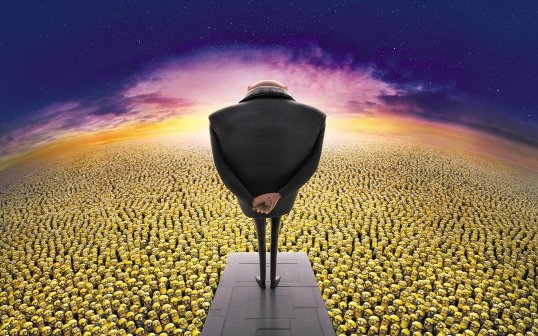
Despicable Me 2,
Epic,
Frozen,
Monsters University
Last year, the PGA correctly predicted 4 of the 5 eventual nominees for the Oscar for Best Animated Film. It wouldn’t surprise me to see that happen again, with The Wind Rises replacing Epic.
Oscar season continues! The Academy today released it’s list of the films that are eligible for Best Animated Feature. Here are the 19 films that are in the running.
Per Academy Rules, no less than two and no more than 5 of these films will ultimately be nominated.
Cloudy with a Chance of Meatballs 2 The Croods Despicable Me 2 Epic Ernest and Celestine The Fake Free Birds Frozen Khumba The Legend of Sarila A Letter to Momo Monsters University O Apóstolo Planes Puella Magi Madoka Magica the Movie — Rebellion Rio: 2096 A Story of Love and Fury The Smurfs 2 Turbo The Wind Rises
Decade of last.fm scrobbling countdown:
20. Equilibrium (1,323 plays)
Top track (104 plays): Prolog Auf Erden, from Sagas (2008)
At the end of 2008, I made the peculiar decision to rank Sagas only 6th on my albums of the year list. I knew at the time that it would long outlive the albums that trumped it–The Tallest Man on Earth’s Shallow Grave, Boris’s Smile, Waylander’s Honour Amongst Chaos to name a few–but I suppose I was prioritizing some sort of artsy aesthetic over direct appeal. That was silly. Sagas is the most badass, epic 80 minutes of sound you will ever hear, and it deserves all the glory. Since I don’t know German, I can’t really judge how the lyrics hold up against comparable masterpieces like Blind Guardian’s Nightfall in Middle-Earth and Turisas’s The Varangian Way, but musically it pretty much perfects every epic/symphonic trend in the world of folk metal. What you hear on the opening track, “Prolog Auf Erden”, is a pretty accurate summary of the full album; it’s an explosive, relentless drive through one of the most imaginative worlds metal has ever conjured.
I can’t say I am terribly experienced in Equilibrium’s broader discography. Turis Fratyr (2005) did not grab me quite so immediately, and at the time I was too caught up in enjoying Sagas to really engage it. Rekreatur (2010) had its merits, but I could never fully get over the change in vocalists from Helge Stang to Robert Dahn. Never a band to rush out the new releases, their fourth studio album is not expected until some time in 2014.
Decade of last.fm scrobbling countdown:
26. Summoning (1,154 plays)
Top track (86 plays): Menegroth, from Oath Bound (2006)
Featured track: Ashen Cold, from Let Mortal Heroes Sing Your Fame (2001)
Blind Guardian’s Nightfall in Middle-Earth might be the most inspired musical retelling of any of J.R.R. Tolkien’s works to date, but no band has crafted an atmospheric sound to capture that world quite so convincingly as Summoning. With a sound that would just as soon excite fans of video game music or “new age” artists like David Arkenstone as their orginal black metal fan base, Summoning have forged a truly unique musical path. While their first studio album, Lugburz (1995), was relatively standard for the synth-laden black metal of its day, they nearly finalized the sound that made them famous on Minas Morgul, released later that same year. Since then, the only perceptible change has been a slow decline in the use of tremolo guitar; the quality of the songwriting and the imaginative world it invokes has remained pretty consistently superb.
For me at least, Summoning and Tolkien’s fantasy world have become nearly inseparable. The echoing, tribal drums paint vast landscapes cast dark by distorted vocals and guitar. The synth speckles the scene in a light that, never breaching the world of full orchestration, retains a fantasy aspect through its unnatural sound. The lyrics enliven the music with the spirit of an epic tale–whether it be the dramatic narrated loop on on “South Away”–“By the crowns of the seven kings and the rods of the five wizards!”–the water god Ulmo’s bold proclamations on “Farewell”–Who can tell you the age of the moon? But I can! Who can call the fish from the depths of the sea? Yes, I can! Who can change the shapes of the hills and the headlands? I can!–or the spirit of perseverance on the track here featured–“Though his body is not tall and his courage seems small, his fame will take long to fade.”
Tolkien’s greatest achievement was to craft a fantasy world so vast that imaginative minds ever since have managed to forge a place within it. Summoning have done so with a level of excellence nearly unrivaled, and they continue to today. There might have been a seven year gap between Oath Bound (2006) and Old Mornings Dawn (2013), but their new release is in every way on par with the rest. It’s a bit of a wonder that they’re only ranked 26th on my decade-spanning last.fm charts. I suspect that, another ten years from now, they’ll be much nearer the top, because their music takes me to a place that is eternal.
Awhile back site editor pantsukudasai56 wrote that the term “epic” has been overused and lost all its meaning. Everything and everyone has been called epic when most do not truly deserved the label. He did say that if there was anything which truly deserved the label of being “epic” then it would be one of the longest running manga and anime series: Oda Eiichiro’s One Piece.
It’s from One Piece that the latest “AMV of the Day” comes from. To be even more specific it’s from one of the most epic story arcs in the series that the latest chosen AMV originates from: the Marineford Arc (aka Paramount War Arc). It’s a story arc that lasts as long as most anime series (30+ episodes) yet is just a fraction of the current total number of episodes already shown. No other piece of entertainment has had such a long-running success which it continues to this day.
Not much else to say other than watch why this series deserve the title of “epic”.
Anime: One Piece
Song: “Diamond Eyes (Boom-Lay Boom-Lay Boom)” by Shinedown
To say that Mass Effect 3 has been ruling my free time for the last two weeks would be an understatement. During breaks in-between playing the game I’ve been checking out YouTube and I came across a new AMV which somewhat ties in to Mass Effect 3through the piece of music used to launch the game. The latest “AMV of the Day” once again takes us back to the epic anime series One Piece.
This anime music video acts less like your typical music video and more like a trailer to help convince the non-believers why One Piece is an anime series that should be watched by everyone. Creator Schandlover does a great job of using the ban Two Steps From Hell and their song, “Protectors of the Earth”, and creating a trailer that truly shows why Eiichiro Oda’s long-running manga and anime really deserves to be called epic. This is the same song used by BioWare as they also try to point out the epic epicness of Mass Effect 3.
Anime: One Piece
Song: “Protectors of the Earth” by Two Steps From Hell
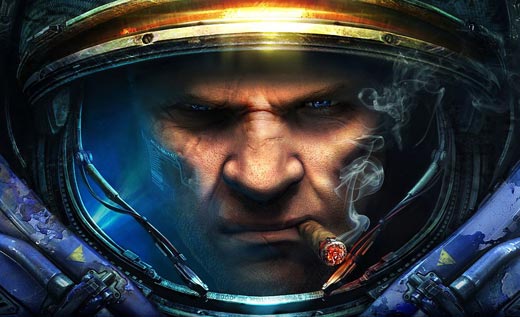
This is worth watching even if you don’t play the game. I want to post up a replay I watched about a week ago of an absolutely epic Starcraft 2 match, Toss against Zerg. This might be the most ridiculous SC2 match played to date.
The game pits MasterAsia, one of the top 5 zerg players on the US server, against protoss player TTOne, a pro from Brood War. If I remember correctly this is a 1v1 Quick Match, not a planned encounter. The match lasts a little over an hour and can be downloaded as a replay here:
The four youtube videos that follow condense the game down to about half an hour, with commentary provided by HDstarcraft. You can probably skip the third video without missing much, but definitely watch the final few minutes. The word epic was invented for events such as these.
“Everything is backwards now, like out there is the true world, and in here is the dream.” — Jake Sully
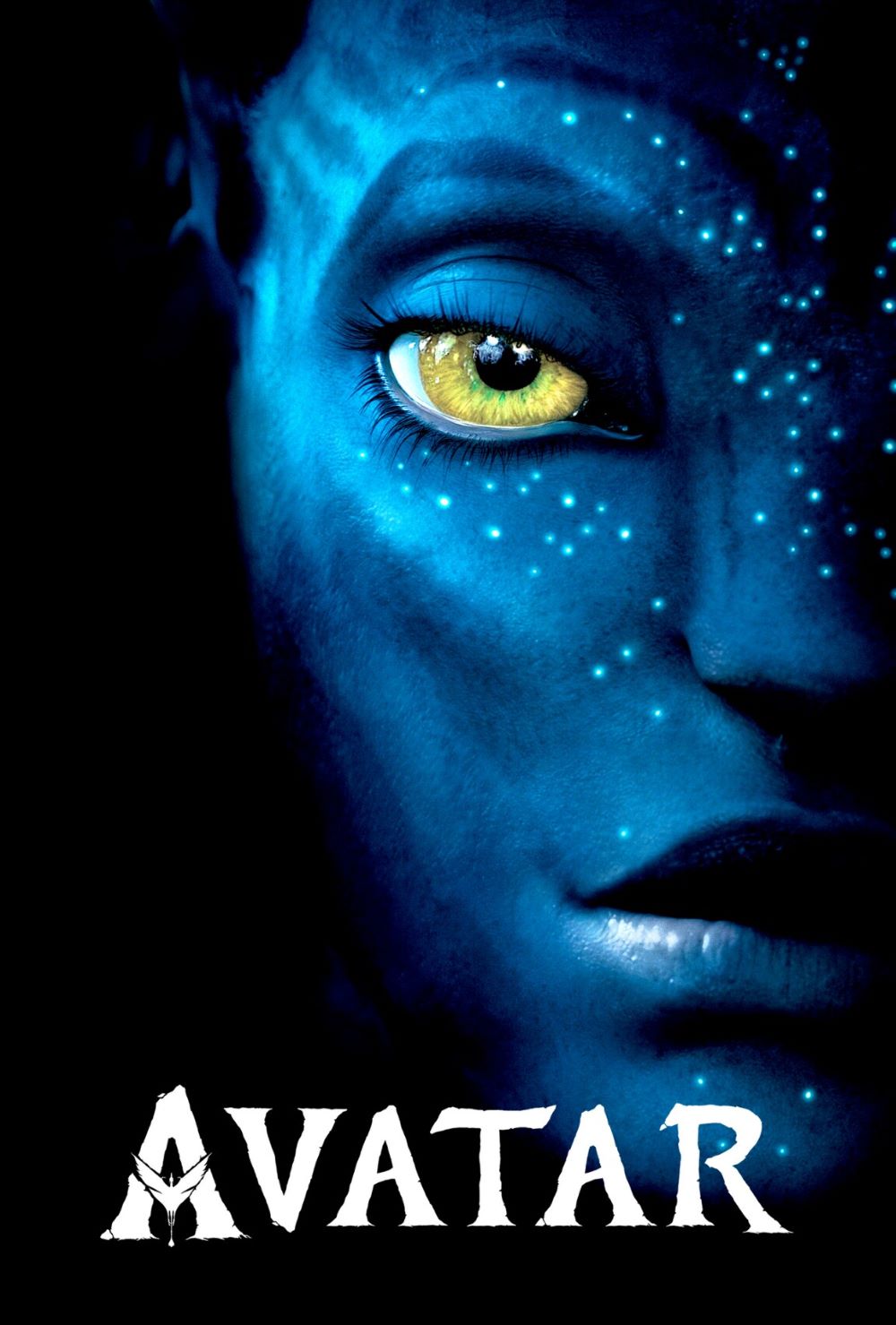
When was the last time a film became an experience for you—not just a story that made you think, but one that swept you up and immersed you completely? The most hyped film of 2009, and likely of this decade, was such an experience for me. James Cameron’s Avatar, a project over fifteen years in the making, more than lived up to the hype that followed it from the earliest production leaks.
Avatar is not the greatest film ever made, nor does it revolutionize filmmaking the way Technicolor did in the late 1950s and early 1960s. What Cameron has accomplished is providing a blueprint for how filmmakers can bring audiences closer to the stories they tell. Stories and ideas once considered unfilmable due to technological limitations are now within reach. Avatar is an experience that should be seen, regardless of whether one embraces its story. The narrative is not original—some may be reminded of an Oscar-winning film directed by Kevin Costner or an animated feature with “Gully” in the title. While the lack of originality is noticeable, the story works within the context of Cameron’s vision. Clichéd and hackneyed dialogue aside, it serves the film well. Cameron’s writing may not rival that of Kaufman or Mamet, but he knows how to tell a simple story and keep the audience engaged.
With that flaw acknowledged, I haven’t felt this way about a film—nor even the best I’ve seen this year—since the first time I watched The Fellowship of the Ring or, before that, Spielberg’s Jurassic Park. Only a few films truly sweep me into their world and hold me there. It didn’t matter that Avatar wasn’t the second coming of Rashomon or this generation’s Citizen Kane. What I watched, I fully bought into. The world of Pandora, imagined by Cameron and brought to life by WETA Digital and ILM, felt real. The detail, clarity, and dedication in its creation gave me hope that creative boundaries once thought uncrossable are now being stepped over.
While the film is also available in 2D for theaters without 3D capabilities, it must be seen in 3D, ideally in IMAX 3D. Cameron’s use of the new “emotion capture” cameras he helped develop achieves a level of CGI photorealism that avoids the “Uncanny Valley” effect seen in films like The Polar Express, Beowulf, and A Christmas Carol. The groundbreaking “mo-cap” technique, refined by WETA Digital for The Lord of the Rings trilogy, convinced Cameron it was time to make Avatar as he envisioned. The Na’vi are now the most realistic CGI characters ever put on screen, surpassing even Gollum. Cameron demonstrates that the limit of CGI use is not quantity, but how it is implemented. Lucas, Bay, and others who have misused CGI have much to learn from Cameron’s achievement.
It took a few minutes to adjust to the 3D effect, but once my eyes adapted, the film’s magic took hold. The distinction between CGI and live-action scenes blurred and eventually disappeared. Even the best CGI-heavy films sometimes break immersion, but Avatar never did. This total immersion helped me overlook the story’s familiarity and, for some, its ordinariness.
Despite the material, the performances ranged from good to excellent. The villains, while written one-dimensionally, were played with enough conviction to be believable. Giovanni Ribisi’s corporate weasel, a clear echo of Burke from Aliens, was cartoonish in motivation, but Cameron is not known for deep, well-rounded characters. The standout was Stephen Lang as Colonel Miles Quaritch. His scenery-chewing performance was riveting, stealing the film from Sam Worthington’s “hero on a journey.” While Lang’s performance may not win awards, it stands as one of the year’s most memorable, joining the ranks of characters audiences love to hate.
Some may think I’ve joined the Cameron fan club, but I can’t explain why I love this film despite its flaws: the familiar story, clichéd dialogue, and one-dimensional characters. Is Avatar just a technical and visual marvel? Yes, and more. Does the CGI and bombastic climax overshadow the storytelling? No, it actually propels the story forward, much like Jake Sully’s own fragile legs.
In the end, my love for Avatar comes down to the experience it provided—a rare occurrence in modern cinema. Cameron didn’t make a perfect film, nor one better than sliced bread. But he created a filmgoing experience that will be remembered decades from now, much like the first time audiences saw Star Wars and believed in Jedi and space battles, or Superman and believed a man could fly. Cameron’s Avatar made me believe in Pandora, a place I hope to visit, or at least experience through his eyes. I’m eager to see what he—and other filmmakers inspired by his work—will create next.





 Through the Shattered Lens