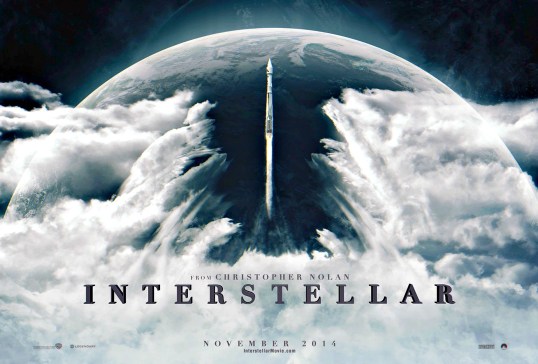
Will Interstellar be as much a game changer as Kubrick’s own 2001: A Space Odyssey? Some are already hyping that it may just be on that very level.
Now, let’s not crown Christopher Nolan upcoming film (his first since concluding his Dark Knight trilogy) as an instant classic when we haven’t seen anything outside of the trailers released. Yet, the teases and brief explanation of the film’s plot hints at something that may just turn out to be incredible.
I know at least one person here at Through the Shattered Lens who is bursting at the seams at trying not to overhype the film for himself. It may just be a losing battle if his reactions to this latest Interstellar trailer is any indication.
Interstellar is set for a limited release on November 5, 2014 (70mm and 35mm film formats) then wide on November 7, 2014 on digital format.
Monday is the first day of school down here in Dallas so it seems only appropriate that this latest entry in our Back to School series should be a look at one of those most quintessential Texas films ever made, the 1971 best picture nominee, The Last Picture Show.
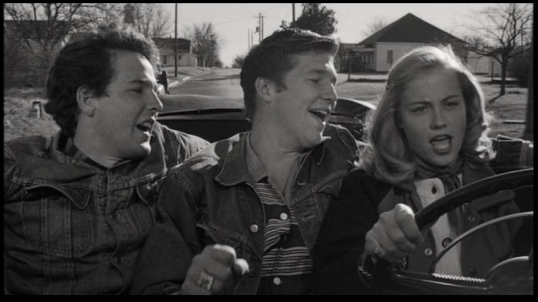
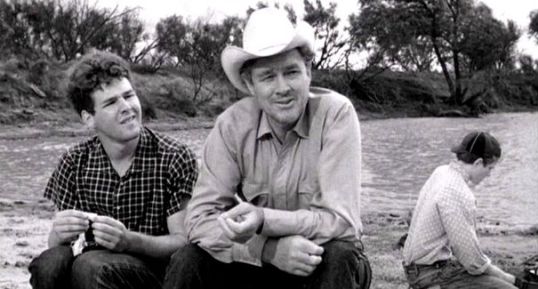
Directed by Peter Bogdanovich and based on a novel by Larry McMurtry, The Last Picture Show takes place in 1951 and tells the story of two high school seniors, best friends Sonny Crawford (Timothy Bottoms) and Duane Jackson (Jeff Bridges, reminding us once again why everbody loves him). Sonny and Duane live in the rural town of Anarene, Texas. With little to look forward to in the future, beyond perhaps getting a job working in the oil fields, Sonny and Duane are both intent on enjoying their final year of high school. Sometimes, that means driving down to Mexico for the weekend. Sometimes, it means going to the only theater in town and seeing a movie. Most of the time, however, it means hanging out in a pool hall owned by the strict but fatherly Sam (Oscar winner Ben Johnson). Often times they are accompanied by the intellectually disabled Billy (Sam Bottoms), who responds to everything with a blank smile and spends most of his spare time wandering around with a broom, futilely trying to sweep the dusty streets.
The charismatic and impetuous Sonny is dating the beautiful and self-centered Jacy Farrow (Cybil Shepherd), who is the daughter of the wealthiest woman in town. Jacy knows that her cynical mother (Ellen Burstyn) is having an affair with an oil worker named Abilene (Clu Gulager) but she’s more concerned with her own future. Even though she’s dating Sonny, Jacy still accepts an invitation from the awkward Lester Marlow (played by a memorably goofy Randy Quaid) to attend a naked indoor pool party. At the party, she meets Bobby Sheen (Gary Brockette), who is rich and will be able to provide her with the future that Duane never will. However, Bobby tells Jacy that he isn’t interested in her because she’s a virgin. If nothing else, this gives Jacy a reason to stay with Duane, at least until after they have sex.
Meanwhile, the far more sensitive Sonny ends up having an affair with Ruth Popper (Cloris Leachman, who won an Oscar for her performance in this film), the wife of the high school football coach. It appears that Sonny truly cares about Ruth but then he finds himself being tempted by none other than his best friend’s girlfriend…
At heart, The Last Picture Show really is basically a small town soap opera, a Texas version of Peyton Place.The difference between the two films — beyond the fact that The Last Picture Show just happens to be a 1oo times better than Peyton Place — is that The Last Picture Show doesn’t take place in a beautiful, idealized small town. Instead, the town ofAnarene is a believably bleak location, one that will be familiar to anyone who, like me, grew up in the American southwest. A good deal of the success of The Last Picture Show is due to the fact that it was actually filmed on location in Archer City, Texas.
(Nothing annoys me more than when I see the mountains of California in the background of a movie that’s supposed to be taking place in North Texas. We don’t have mountains up here. For the most part, we don’t even have hills. The land is flat. You can see forever, if you know where to look.)
Of course, you can’t talk about The Last Picture Show without talking about Robert Surtees’s stunning black-and-white cinematography. Not only does the black-and-white remind us that this is a film about a fading way of life but it drives home the fact that Sonny and Duane don’t have much to look forward to. Growing up in Anarene means they are destined for lives without color or excitement. In the end, can you really blame them for occasionally acting before they think?
Ultimately, the success of The Last Picture Show is due to a lot of things. This was Peter Bogdanovich’s second film as a director and he did such an excellent job here that he’s basically spent the rest of his career trying to live up to this one film. (That said, Bodganovich also left his wife for Cybill Shepherd — despite the fact that his wife was the one who suggested that he make this film and cast Cybill in the first place! Don’t worry though — Polly Platt got her revenge by having a far more successful career than her ex-husband and she even produced Say Anything, a film that we will soon be looking at.) The screenplay, by McMurtry and Bogdanovich, is full of sharp dialogue and memorable characters. As for the performers, this is probably one of the best acted films ever made. Jeff Bridges and Timothy Bottoms play off each other well, Cybill Shepherd is the epitome of casual destructiveness, and Ben Johnson is brilliantly cast as the film’s moral center. My favorite performance comes from Ellen Burstyn, who delivers every line with just the right combination of contempt and ennui.
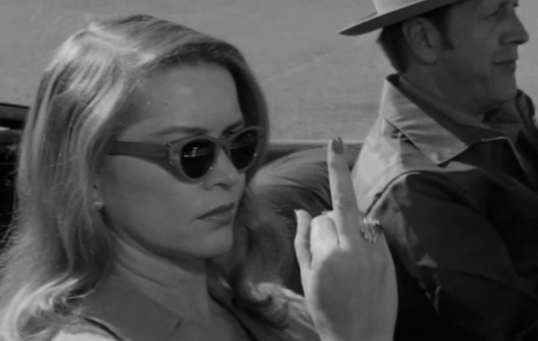
Ellen Burstyn in The Last Picture Show
If you’re a Texan, The Last Picture Show is one of those films that you simply have to see. And if you don’t enjoy it and if you don’t relate to at least a few of the characters (I related to Jacy, though I like to think that I’m a lot nicer in the way I treat people), then you’re not a real Texan.
Last night, I watched the Lifetime original film, Petals On The Wind.
Why Was I Watching It?
It’s the sequel to one of the greatest Lifetime films of all time, Flowers in the Attic. How could I not watch it?
What Was It About?
10 years have passed since the Dollanganger children escaped from the attic. Christopher (Wyatt Nash) is a medical student who, despite being engaged, is still attracted to his sister, Cathy (Rose McIver). Cathy is a dancer who finds herself trapped in an abusive relationship with the handsome but controlling Julian (Will Kemp). And finally, Carrie (Bailey Buntain) is still struggling with her memories of being held prisoner. After several tragedies occur outside of the attic, Cathy returns to Foxworth Hall, looking to get revenge on both her grandmother (Ellen Burstyn) and her mother (Heather Graham).
What Worked?
Heather Graham and Ellen Burstyn reprised their roles from Flowers in the Attic and both of them gave Emmy-worthy performances. Burstyn, in particular, managed to invoke some sympathy for a potentially monstrous character while Graham brought a great combination of immaturity and evil to her character.
On a personal level, I appreciated all of the dancing. It brought back a lot of good memories.
What Did Not Work?
Watching Petals On The Wind really made me appreciate Flowers in the Attic, which was great for Flowers but not so good for Petals. As I sat there, trying to figure out why Petals just wasn’t working for me, it occurred to me that the strength of Flowers in the Attic was that the attic itself became as much a character as any of the Dollangangers. Even more importantly, being trapped in that attic, gave all of the characters a link that went beyond family and sex. For the viewer, that attic allowed us to know when the story had truly begun (when the kids were first locked up there) and when the story was over (when they finally got to leave). In Petals, without the attic, the story of Dollangangers often felt formless and random. As a result, the film may have been watchable but it was rarely compelling.
Since Petals was supposed to take place ten years after the end of Flowers, all of the Dollanganger children were recast. And while Rose McIvar and Wyatt Nash are both talented, they didn’t have much chemistry when they were on screen together (especially when compared to their predecessors in Flowers). That lack of chemistry made all of the incest even ickier than it would normally be.
“Oh my God! Just like me!” Moments
All of the dancing, of course! I also have to admit that, like Cathy, I’ve known a few Julians.
Lessons Learned
From a narrative point of view, it is sometimes better to just stay in the attic.
This weekend, I watched the Lifetime original movie Flowers in the Attic.
Why Was I Watching It?
How could I not watch it? From the minute Lifetime first started to air commercials for it back in November, I knew I was going to watch Flowers in the Attic. What especially captured my attention was the way Flowers in The Attic was referred to as being “the book you weren’t allowed to read.” Even though I hadn’t even heard of the book before I saw the commercials, that tag line hooked me. The forbidden is always so inviting.
Add to that, every time I mentioned Flowers in the Attic on Twitter, Mason Dye (who played Christopher in the film) always favorited my tweet. That was so sweet that there was no way I couldn’t watch the movie.
What Was It About?
The time is the 1950s. The recently widowed Corrine (Heather Graham) returns to her childhood home in Virginia. As Corrine explains to her children, she comes from a rich family but was disowned when she left home. Now, her plan is to make up with her disapproving father and inherit his fortune once he dies. Corrine also claims that the only way for her to win back her father’s love is for her to keep the existence of her children a secret.
Hence, Corrine’s children — teenagers Cathy (Kierna Shipka) and Christopher (Mason Dye) and twins Carrie and Cory — are forced to hide in the attic while Corrine charms her father. The children are watched over by their ultra-religious, abusive grandmother (Ellen Burstyn).
Once in the attic, the children soon realize that Corrine doesn’t seem to be in any hurry to win their freedom. While Cathy and Christopher struggle to come of age without any adult supervision, Grandma occasionally brings up mysterious powdered donuts. Soon, Cathy and Christopher are exploring their desires and the twins are falling ill…
What Worked?
It all worked. This was Lifetime at its absolute best: entertaining, fun, and wonderfully melodramatic. Along with being full of wonderfully gothic Southern atmosphere, Flowers in the Attic featured great performances from Heather Graham, Mason Dye, and Kiernan Shipka. Best of all was veteran actress Ellen Burstyn, who made Grandma into a wonderfully over-the-top monster.
What Did Not Work?
If I have any complaints, it’s that the film’s conclusion felt a bit abrupt. However, a sequel to Flowers is already in production so that ending was actually a perfect set-up for part two of the story.
“Oh my God! Just like me!” Moments
Cathy was into ballet, just like me! If I ever found myself locked in an attic for a year and a half, I’d probably use the time to do some pointe work as well.
Having rescued Batman from the Schumacher age and assisting in the full on destruction of Metropolis, Christopher Nolan has reached an interesting point in his life. He can now walk up on stage, grab a microphone, mutter the words “I’m filming a movie.” and have tons of fans (like myself) lose themselves like swooning chickens.
Christopher and Jonathan Nolan are dreaming about the stars. And with a dash of what I think (what I hope) is Zimmer playing in the background, he tells us absolutely nothing. The gaul! The tease! It’s the movie watcher’s equivalent of seeing a bare expanse of leg exposed on someone walking in a sleek black dress. Or perhaps the equivalent of Beyonce’s album drop, only with a movie? Either way, how dare they leave me drooling like a Pavlovian mutt.
So, what do we know about Interstellar? Well, that his brother is on board, and David Goyer is nowhere to be seen, Nolan could be giving us something just a little different – or rather more along the lines of Inception. I’m one of the fans who feels he actually does much better when working with Jonathan and maybe this is good overall. Now that he’s done with everything Batman, he can focus on telling other stories.
I’m just hoping those stories aren’t like Insomnia.
And I’m hoping they’re better edited than The Dark Knight.
Interstellar, on the surface looks like it has something to do with space travel (stating the more than obvious fact), but this feels more like October Sky to me. We have Matthew McConaughey talking about how we’ve lost our way in being explorers and pioneers and the film suggests some kind of return to that. Of course, this is just a teaser, and we really won’t know the full details until the full trailer appears (which for all we know, could have aliens in it).
The thing that stands out on all of this is what isn’t easily noticed. Interstellar will be the first film that Nolan has done since Following where Cinematographer Wally Pfister wasn’t on board. This is akin to the Coens not using Roger Deakins (which is exactly the case with Inside Llewyn Davis). Visually, this could be a different film as Instellar’s Cinematographer is Hoyte Van Hoytema, who was responsible for Her, Let the Right One In and Tinker, Tailor, Soldier, Spy. Very interesting, indeed.
Interstellar premieres in theatres next year.
Oh, and here are some swooning chickens, for added effect.
When I first read Arleigh’s idea that we devote October to reviewing horror films, I knew immediately that there was no way I could let the month pass without saying a few words about one of the true classics of the horror genre, the 1973 best picture nominee The Exorcist.
Based on an equally scary novel by William Peter Blatty and directed by William Friedkin, The Exorcist is one of those films that has become so iconic that even people who have never seen it know what the movie is about. Chris McNeil (Ellen Burstyn) is an agnostic actress who is shooting a film about student protestors on a college campus. Her 12 year-old daughter, Regan (played by the future Grindhouse queen Linda Blair), spends her time playing with a Ouija Board and talking to her friend “Capt. Howdy.” Unfortunately, Capt. Howdy is actually a Sumerian demon who proceeds to posses Regan. Soon, Regan is levitating, cursing, and masturbating with a crucifix. After trying (and failing with) all the conventional methods of treatment, Chris desperately turns to the God she doesn’t believe in and tries to convince a troubled priest (Jason Miller) to perform an exorcism on Regan. Unfortunately, this priest has begun to question his faith and he fears that he might not be strong enough to “cure” Regan. An elderly priest (Max Von Sydow) is called in to help with the exorcism and, faster than you can say, “The power of Christ compels you,” the two priests are locked in mortal combat for Regan’s soul.
The ultimate test of any horror films is whether or not it’s still unsettling even after you already know what’s going to happen and when all the evil is going to come jumping out of the shadows. In short, the test is whether or not the film holds up to repeat viewings. This is a test that The Exorcist easily passes. I’ve seen this film enough times that I now know exactly when Linda Blair’s head is going to do that 360 degree turn and I now know exactly when to divert my eyes so I don’t have to see possessed Regan puking on the priests. (For all the terrible physical manifestations of Regan’s possessions, it’s always the vomiting that gets to me.) Most of the film’s “shock” sequences aren’t that scary any more because we’ve all seen far worse. However, watching this film remains, for me, a truly unsettling experience. This is due largely to director William Friedkin. Today’s aspiring filmmakers could learn a lot from Friedkin because, for all the attention the film’s grotesque effects received, Friedkin actually devotes more time to setting up the situation and establishing a palpable atmosphere of doom. This is a film full of grainy, almost gray images, the perfect visual suggestion of a world that has perhaps been abandoned by its God. It takes more than an hour before Ellen Burstyn meets Jason Miller and Max Von Sydow doesn’t show up until the final 30 minutes of the film. At first, it seems as if the movie itself is moving slowly but, by the end of it, you realize that what Friedkin has done is that he’s sucked us into the reality of his film. For all the special effects and metaphysical concerns, The Exorcist almost feels like a documentary. He’s also helped by a talented cast that makes the situation feel real, regardless of how extreme things may get. I’ve read that a lot of people decided they needed to be exorcised after seeing this film and I can understand why.
The Exorcist is a film that benefits from debate and it’s also one that is open to multiple interpretations. Quite a few critics have argued that the Exorcist is actually a very reactionary film in that Regan’s possession can be seen as a metaphor for adolescent rebellion and her exorcism is actually more about the establishment regaining control than any attempt to save her eternal soul. I actually think this interpretation is pretty much spot on correct though I also don’t think the filmmakers were intentionally trying to deliver that message. Instead, I think that the Exorcist — like all great films — is simply filled with the subtext of its time. While the filmmakers may have unintentionally created a document of then-contemporary fears, I think the film is even more interesting as an argument about the origin of sin and evil.
Ultimately, for a horror film to be truly timeless, it has to do more than just scare you. The supernatural and/or otherworldly forces have to serve as more than just a cinematic threat; they have to stand-in for our own universal fears and concerns. The Exorcist attempts to answer one of the most basic questions: why is there evil in the world and why do people sometimes behave in such terrible ways? For all of the film’s notoriety, the answers it provides are surprisingly simple. Evil is because of the devil and people behave the way they do because they’re not individually strong enough to resist the lure of sin. The only way to defeat the world’s demons is through sacrifice, suffering, and martyrdom. You don’t have to come from a Catholic background to “get” the Exorcist but it helps. (To be honest, it probably helps even more to be a “fallen” Catholic like me because wow, this movie really knows how to exploit all that lingering guilt.) Thanks to this film, it sometimes seems the only time that priests (and Catholicism in general) are portrayed positively in the movies is when they’re exorcising someone (which, contrary to popular belief, doesn’t really happen all that much). Fortunately, you don’t have to agree with the answers provided by the Exorcist in order to find both the questions and the film itself to be intriguing.



 Through the Shattered Lens