44 Days of Paranoia #3: Winter Kills (dir by William Richert)


MPW-39279Yesterday, I took a look at Executive Action, a 1973 docudrama about the assassination of John F. Kennedy.  Today, I want to take a look at another film inspired by the Kennedys, the 1979 satire Winter Kills.

As the film opens, it’s been 16 years since a popular and dynamic President named Tim Kegan was assassinated in Philadelphia.  Despite constant rumors of conspiracy, the official story is that Kegan was killed by a lone gunman and that gunman was subsequently killed by another lone assassin.  The President’s half-brother, Nick (played by Jeff Bridges, who looks so impossibly young and handsome in this film), has disappointed his father (John Huston) by declining to follow his brother into politics.  Instead, he spends most of his time sailing on corporate oil tankers and dating fashion editor Yvette (Belinda Bauer).  This all changes when a dying man named Fletcher (and played, underneath a lot of bandages, by Joe Spinell) asks for a chance to speak to Nick.  Fletcher reveals that he was the 2nd gunman and that he was hired by to kill President Kegan.  Before dying, Fletcher tells Nick where he can find the rifle that was used to kill the President.

Following Fletcher’s directions, Nick finds both the rifle and proof that his brother’s death was the result of a conspiracy.  Determined to find out who was truly behind the conspiracy, Nick goes to see his father, the flamboyant tycoon Pa Kegan (John Huston) who, we discover, is only alive because he frequently gets blood transfusions from young women.  With Pa’s encouragement, Nick is sent on an increasingly bizarre odyssey into the darkest shadows of America, a world that is populated by militaristic businessmen, sinister gangsters, and an unemotional man named John Cerutti (Anthony Perkins) who very well may be the most powerful man in the world.

The martyred President might be named Tim Kegan, his accused assassin might be named Willie Abbott, and the man who shot Abbott might be named Joe Diamond (and might be played by Eli Wallach) but make no mistake about it — Winter Kills is a thinly disguised look at both the Kennedy assassination and the Kennedy family.  Based on a novel by Richard Condon (who also wrote the conspiracy classic, The Manchurian Candidate), Winter Kills takes all of the various Kennedy conspiracy theories and intentionally pushes them to their most ludicrous extremes.  The end result is a film that tries (and occasionally manages) to be both absurd and sincere, a portrait of a world where paranoia is the only logical reaction.

As I discovered from listening to director William Richert’s commentary on the Anchor Bay DVD, Winter Kills had a long and complicated production history.  The film was produced by two marijuana dealers, one of whom was murdered by the Mafia shortly after the film premiered while the other would later be sentenced to 40 years in prison on federal drug charges.  The production actually went bankrupt more than a few times, which led to Richert, Bridges, and Bauer making and releasing another film specifically so they could raise the money to finish Winter Kills.

When Winter Kills was finally released, it got a good deal of attention because of its spectacular cast.  Along with Bridges, Huston, Perkins, and Wallach, the film also features cameo appearances by Tomas Milian, Elizabeth Taylor, Ralph Meeker, Richard Boone, Sterling Hayden, Dorothy Malone, Toshiro Mifune, and a host of other actors who will be familiar to those of us who enjoy watching old movies on TCM.  And yet, according to Richert, the film itself was barely released in to theaters, the implication being that Winter Kills was a film about conspiracies that fell victim to a conspiracy itself.

Given the film’s history and the subject matter, I was really hoping that Winter Kills would turn out to be a great movie.  Unfortunately, it really doesn’t work.  The film struggles to maintain a balance between suspense and satire and, as a result, the suspense is never convincing and the satire is ultimately so obvious that it ends up being more annoying than thought-provoking.  The cast may be impressive but they’re used in such a way that film ultimately feels like it’s just a collection of showy celebrity cameos as opposed to being an actual story.

That said, Winter Kills remains an interesting misfire.  Jeff Bridges is a likable and compelling lead (and he gives the film much-needed focus) and, playing a role that has a lot in common with his better known work in Chinatown, John Huston is a always watchable if not necessaily likable.  Best of all is Anthony Perkins, who plays a role that, in light of what we now know about the NSA, seems oddly prophetic.

Finally, best of all, Winter Kills remains an interesting time capsule.  If nothing else, it reminds us that mistrust and paranoia are not unique to this century.

3260389_l1

Elizabeth Taylor, R.I.P.


I was at work this afternoon when my boss — who had just gotten to the office after spending the day in court — approached my desk and said, “Lisa, you like old movies, don’t you?”

“Kinda sorta,” I replied and I tried to say that with just a hint of a coy little smile to let him know that I absolutely love movies — new and old — but I’m not sure if he noticed.

“Did you know Elizabeth Taylor died today?” he asked.  I guess I didn’t answer quickly enough because he then added, “She was a movie star, might have been a little bit before your time.”

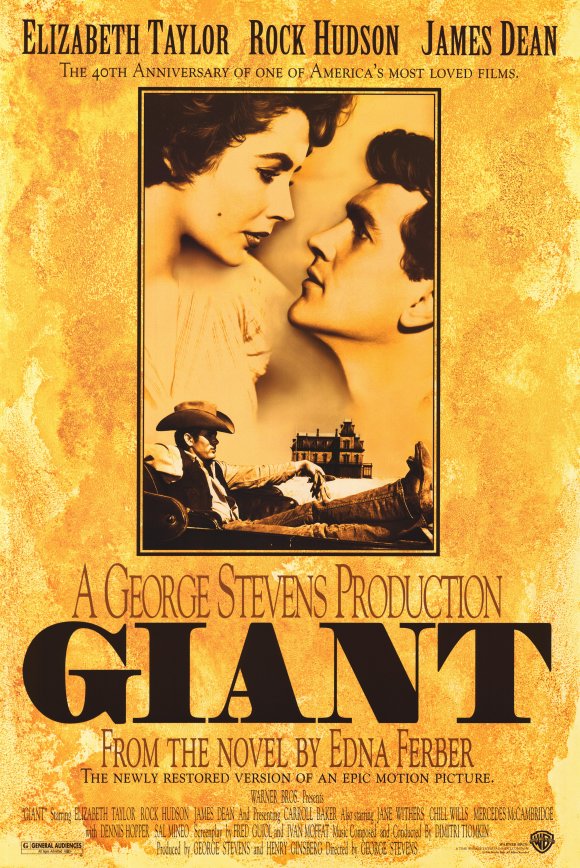
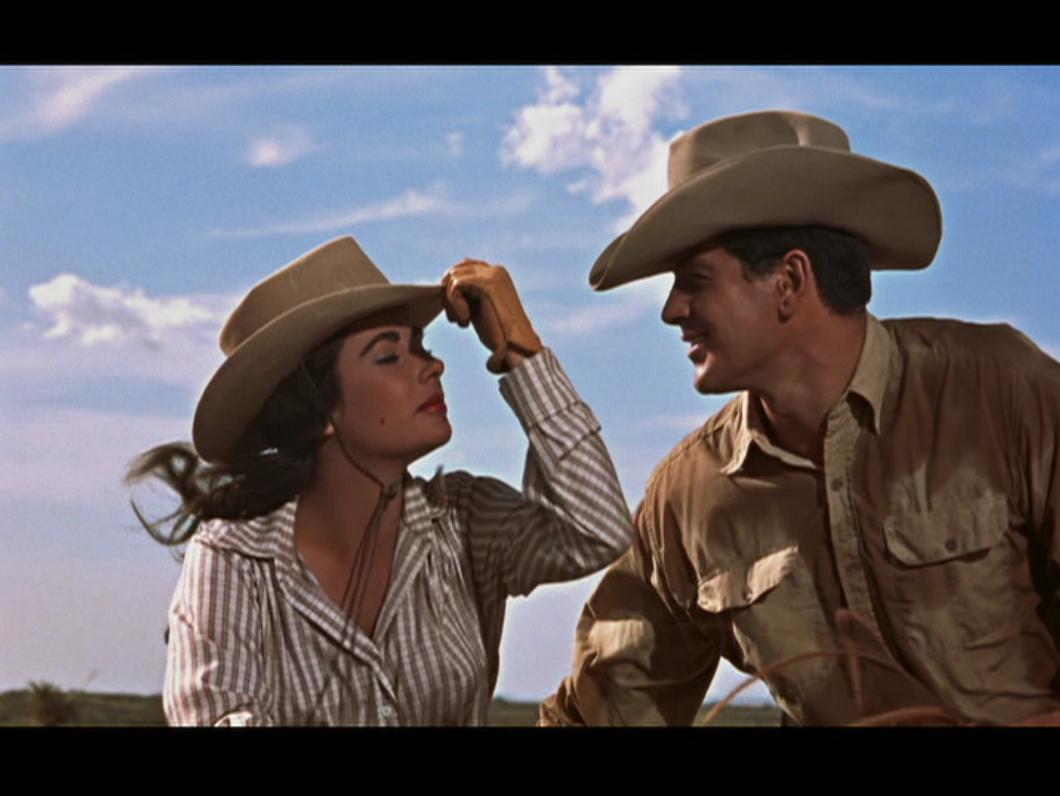
Well, just for the record, I do know who Elizabeth Taylor was.  And even though she pretty much retired from acting before I was even born, she was hardly before my time because — whether it was by appearing in classic films like A Place in the Sun and Giant or films like Cleopatra and Reflections in a Golden Eye that were so bad that they somehow became good — she became one of those timeless icons.   

I think there’s probably a tendency to be dismissive of Elizabeth Taylor as an actress because her private life, in so many ways, seemed to epitomize every cliché of old school Hollywood scandal and glamorous excess.  However, you only have to watch her films from the 50s to see that Elizabeth Taylor actually was a very talented actress who, even more importantly, had the type of charisma that could dominate the screen.

I think that’s why it was so strange to hear that Elizabeth Taylor had died.  It was a reminder that, as opposed to just being an image stored on DVDs that can be viewed as often or as little as one might choose, she was actually a human being just like the rest of us.

Lisa Marie Finds A Place In The Sun (dir. by George Stevens)


As part of my mission to see every film ever nominated for best picture, I watched George Stevens’ A Place In The Sun this weekend.  A Place in the Sun was released in 1951.  It was a front-runner for best picture but in an upset, it lost to An American In Paris.  (Another best picture loser that year: A Streetcar Named Desire.)

Montgomery Clift plays George Eastman, a poor man with a religious fanatic mother and a wealthy uncle.  Looking to make his fortune (i.e., to find his “place in the sun), George gets a job working in his uncle’s factory and quickly starts a romance with one of his co-workers, the shy and insecure Alice (Shelley Winters).  However, even as he and Alice settle down to a life of dreary romantic bliss, George discovers that the Eastman name also allows him to mingle with (if never truly belong to) high society.  He meets the rich (and shallow) Angela Vickers (played by Elizabeth Taylor) and soon, he’s also romancing her.  Neither Angela or Alice is aware of the other’s existence and for a while, George has the best of both the  world he desires and the world in which he actually belongs.  Eventually, George decides that he wants to marry Angela and become a part of her world.  However, there’s a problem.  Alice is pregnant and demanding that George marry her or else.  The increasingly desperate George quickly decides that there’s only one way to get Alice out of his life…

A Place in the Sun was based very loosely on Theodore Dreiser’s 1925 novel, An American Tragedy.  While the movie remains (more or less) faithful to the novel’s plot, director Stevens jettisons most of Dreiser’s heavy-handed Marxism and instead concentrates on the more melodramatic elements of the story.  The end result is a glorious soap opera that is occasionally a bit tacky and heavy-handed but always watchable and entertaining.

Stevens is helped by the three lead performances.  As Angela, a stunningly beautiful Elizabeth Taylor manages to be both calculating and clueless,   seductive and innocent.  As her counterpart, Shelley Winters gives a really brave performance as Alice.  The film is structured that its impossible not to feel sorry for Alice.  The genius of Winters performance is that she (and director Stevens) allowed Alice to become a real, flawed human being as opposed to just a symbol of victimization.  However, the film is truly dominated by Montgomery Clift.  Clift is in just about every scene and his own rather fragile persona translates wonderfully in the role of George.  Was Montgomery Clift ever as handsome as he was in A Place In The Sun?  He gives a perfect performance as the type of guy that every girl has known, the guy that we fell in love with not because of who he was but who we thought he could be.  These are the guys who always end up breaking our hearts, they’re the ones who we still can’t help but think about years later, always wondering “why?”

Unlike a lot of older films, A Place in the Sun remains remarkably watchable and relevent today.  Perhaps its most famous scene involves a capsized rowboat and oh my God, that scene freaked me out so much.  Admittedly, a lot of that had to do with the fact that I have this morbid fear of drowning (and, like one of the characters in this film, I can’t swim) but director Stevens also does a great job building up the scene’s suspense.  He makes brilliant use of sound especially, in much the same way that Francis Ford Coppola would later use that roaring train in The Godfather.  Seriously, I watched that scene with my hands literally over my eyes, just taking an occasional peek until it was all over. 

One last note — there’s an actor in this film who plays a detective.  You’ll see him if you play the trailer at the top of the post.  His big line is “You’re under arrest.”  I have no idea who this actor was but he had one of the most authentic and memorable faces that I’ve ever seen in a movie, regardless of when the movie was made.  He had the type of presence that reminded me why I love character actors.